
Review · UBUD COOKING CLASSES
From Ubud: Authentic Bali Farm Cooking School & Organic Farm
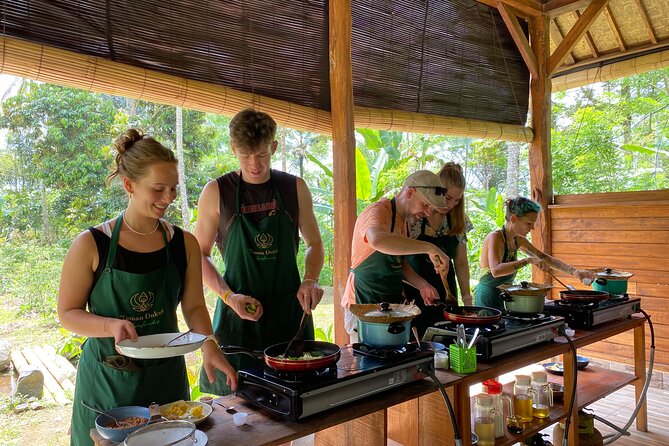
The best part of this Ubud cooking class is that the food begins in the soil. You visit a local market on the morning session, pick vegetables from an 8,000-square-meter organic farm, then turn those ingredients into a full Balinese meal. It feels more connected to local life than a class held in a city kitchen.
I like two things here: you prepare six or more dishes, including dessert, and you get enough instruction to repeat them at home. I also like the relaxed farm setting, where coffee, tea, water, cooking tools, and an apron are included. The main caution is time. Five and a half hours is a long class, and one participant found the repeated chopping of onions and chilies tiring.
Key points to know
- Morning market visit: The morning option includes a traditional market tour and a chance to try unfamiliar local fruits.
- Farm-to-table cooking: You harvest fresh ingredients in the garden before cooking with them.
- Six-course meal: You prepare and eat a broad selection of Indonesian dishes, including dessert.
- Community setting: The school operates on a family organic farm in Taro Village, north of Ubud.
- Useful take-home material: Printed and PDF recipes include substitutes, cooking tips, and links to technique videos.
- Good value at $38: Lunch, drinks, utensils, an apron, and an air-conditioned vehicle are included.
From Ubud’s parking lot to Taro Village
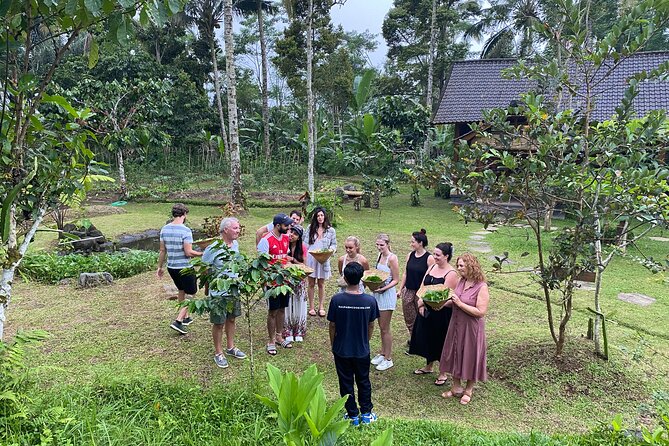
The meeting point is Ubud Central Parking on Jl. Suweta, and the activity finishes back there. A shuttle transfer is available from this point, while some bookings may include pickup from a Ubud hotel. Confirm your exact pickup arrangement when booking, since the published meeting point is the reliable reference.
The drive north takes you away from central Ubud and toward Taro Village. That change matters. You are not simply walking into a cooking studio near the tourist center. The class takes place on a working organic farm surrounded by countryside, so the setting becomes part of the lesson.
The total experience lasts about five hours and thirty minutes. That includes transport, the farm visit, cooking, and the meal. Plan it as a half-day activity rather than something to squeeze between two tightly scheduled attractions.
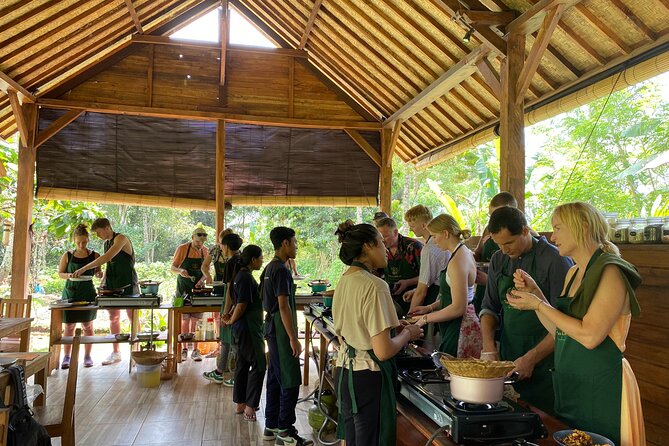
The group can include up to 20 people. That is not an intimate private lesson, but it is small enough for a structured class with several instructors helping at the workstations. If you prefer quiet, individual cooking instruction, a group of this size may feel busy. If you enjoy meeting people from different countries, the shared table and shared tasks add to the fun.
More Farm Cooking Classes in Indonesia
- Balinese Farm Cooking Class by Pemulan Bali
★ 5.0 · 410 reviews - Balinese Cooking Class at Organic Farm
★ 5.0 · 51 reviews - Small-Group Farm Tour & Balinese Cooking Class in Ubud with Kadek
★ 5.0 · 16 reviews
The morning market gives the food a local starting point
Choose the morning session if the market matters to you. It begins with a visit to a traditional market, where you can see the produce, spices, fruit, and local foods that shape Balinese cooking.
This is one of the strongest reasons to book the morning option. A market visit gives you context before you pick up a knife. You begin to recognize the ingredients, rather than meeting them only after they have been measured into bowls at the farm.
You may also try fruits you have never seen before. That small tasting experience helps explain the range of textures and flavors used in Indonesian food. The market is not just a shopping stop. It shows you how food appears in daily Balinese life.
The market is not included in every session. The description specifically identifies it as part of the morning experience, so do not assume an afternoon booking includes it. If this is important to you, select the morning class and check the details before paying.
One practical point: the market can add energy and interest, but it also makes the day longer. You will spend more time on your feet and may arrive at the farm ready for a substantial meal. That is not a problem, but it is worth knowing when planning the rest of your day.
Picking vegetables in an 8,000-square-meter organic farm
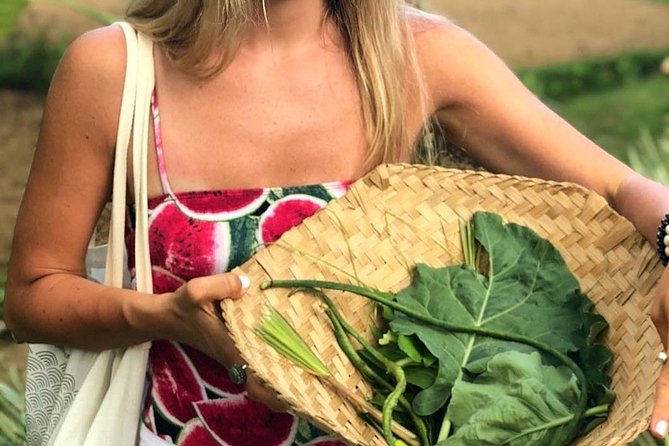
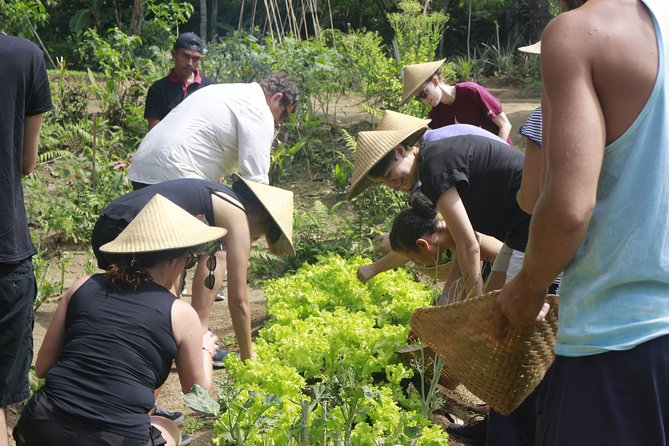
At the farm, you walk through the garden and harvest ingredients for the class. This is where the experience becomes more than a standard cooking lesson.
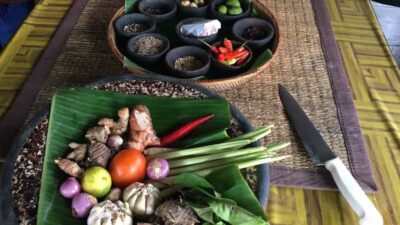
You get to see how vegetables and herbs grow, learn about the farm’s organic approach, and choose some of the produce that will appear in your meal. The setting is carefully maintained, with shady areas and clean facilities, but it still feels like a real farm rather than a decorative garden built only for visitors.
I particularly like this step because it gives you a physical connection to the recipes. You are not simply handed a basket of premeasured ingredients. You see the plants, handle the produce, and then work with it in the kitchen.
The farm is in a rural part of Bali, so expect a natural setting rather than polished city comfort. Paths and garden areas may be less even than a normal indoor venue. The provided information does not specify accessibility arrangements, so anyone with mobility concerns should ask the operator before booking.
You will also learn about sustainable farming practices. The lesson is practical rather than academic: the point is to connect the food on your plate with the land around you. That makes the experience useful for anyone interested in organic growing, not only for confident cooks.
Six or more Indonesian dishes, prepared by you
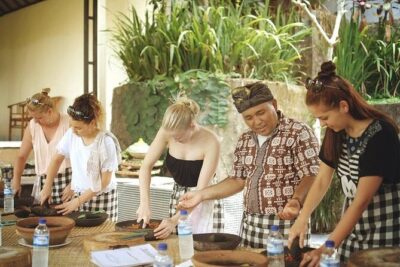
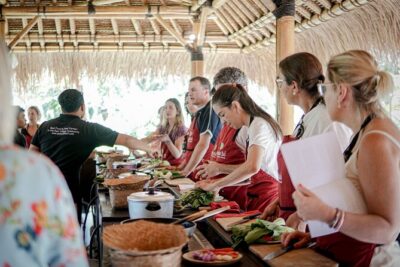
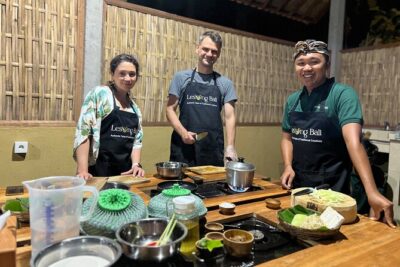
Back at the cooking area, the instructors guide you through a menu of at least six dishes, with dessert included. You cook the food yourself and then eat the complete meal.
The menu is not listed in the supplied details, so you should not book with a fixed expectation of particular dishes. The useful promise is variety. You will work through appetizers or smaller plates, main courses, and something sweet, giving you a broad introduction to Balinese flavors in one sitting.
Instruction is in English. The class is designed for different levels of experience, so you do not need to be an accomplished cook. The instructors demonstrate the techniques, help with timing, and keep the group moving toward a shared meal.
You will likely spend a fair amount of time chopping. That is part of the hands-on format, and it means you learn by doing rather than watching a demonstration from the sidelines. Still, one participant felt the class could be shorter and that staff could prepare some of the onions and chilies in advance. If you have limited patience for repetitive prep work, this is the main drawback to consider.
The positive side is that you leave with real familiarity with the ingredients. You learn how the components are cut, combined, and cooked, rather than only hearing a chef explain the process. The class is also accommodating of dietary needs. A child with a nut allergy was accommodated, but you should state any allergy or dietary requirement when booking and repeat it to the staff on arrival.
More Farm Cooking Classes in Ubud
- Ubud: Organic Farm Harvest, Bali Cooking Class by Pemulan
★ 4.8 · 12 reviews - Bali: Cooking Class with Monkey Forest and Art Village Tour
★ 5.0 · 2 reviews
The meal is the reward for all that chopping
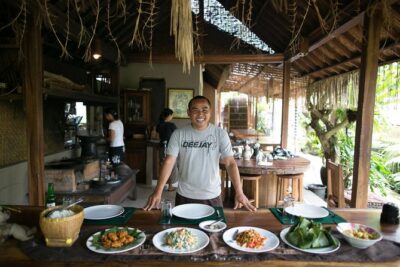
When the cooking is finished, you eat the food you prepared. Lunch is included, as are coffee or tea and bottled water. Soft drinks and alcoholic drinks can be purchased separately.
Come hungry. The menu covers several dishes, and you are expected to eat what the group cooks. One Italian visitor specifically advised arriving with an empty stomach because the meal includes everything prepared, not just a small sample.
The dining area is described as comfortable and shady, which is welcome in Bali’s heat. You are not rushing through a plate before moving to the next attraction. The meal is the final part of the class, giving you time to taste the results and talk with the people who cooked beside you.
This shared meal is also where the class works well for solo visitors. You may arrive alone, but the structure gives you an easy way to meet people. Cooking tasks create conversation without the awkwardness of making small talk from scratch.
The food earns especially high praise, but remember that taste is shaped by the group’s work. You are participating in the cooking, not ordering from a restaurant menu. That makes the meal more satisfying for many people, though anyone seeking a refined, restaurant-style lunch may prefer a dedicated dining experience.
Recipes you can use after Bali
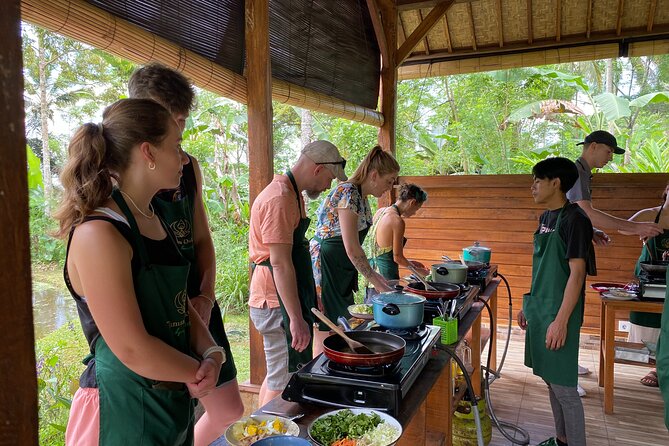
The take-home recipe book is one of the most practical inclusions. You receive printed and PDF versions, with ingredient substitutions, cooking advice, and links to technique videos.
That matters because some Balinese ingredients may be difficult to find at home. Substitution notes help you adapt the recipes without abandoning them entirely. The videos should also help you remember methods that are easy to forget after a busy class.
I would save the PDF before leaving Bali. It gives you a backup if the printed copy gets misplaced in your luggage, and it makes the recipes easier to share with family or friends.
The class is therefore more useful than a meal that exists only for the afternoon. You leave with a small set of recipes and a better sense of how local ingredients fit together. The dishes are described as easy to recreate, though your results will naturally depend on the quality of ingredients available at home.
How the $38 price compares
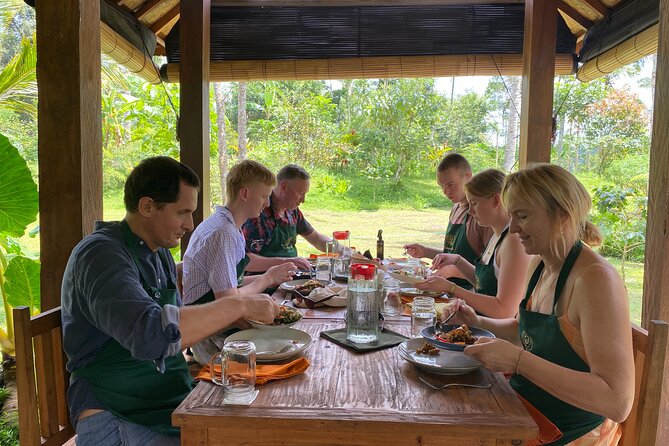
At $38 per person, this is a strong value for a five-and-a-half-hour activity. The price includes the cooking lesson, all the food you prepare, lunch, coffee or tea, bottled water, utensils, an apron, and an air-conditioned vehicle.
The morning market visit adds another useful layer without requiring you to arrange separate transport. You also get the farm visit and take-home recipes, which would otherwise be separate parts of a food-focused day.
The value is best if you want a full half-day experience. If you only want to learn one or two dishes quickly, this class may feel too long. You are paying for the setting, the market or farm context, the group instruction, the meal, and the cultural contact, not just for a recipe demonstration.
Transport is an important part of the calculation. Getting from Ubud to Taro Village on your own would take planning, and the air-conditioned vehicle makes the rural trip easier. Hotel pickup is mentioned in the experience details and in booking information, but the standard meeting point is Ubud Central Parking, so confirm what your reservation includes.
Who will enjoy this class most
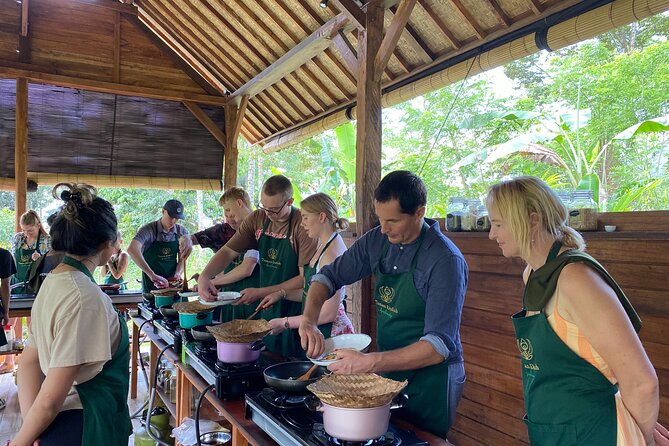
I would recommend this experience to you if you like food, gardens, and a little conversation with other people. It suits beginners because the cooking is guided step by step, but it also gives confident home cooks enough variety to stay interested.
Families can also do well here. Staff accommodated a child with a nut allergy, and the class has a welcoming tone. Still, five and a half hours can be a long stretch for very young children, especially during the chopping sections. Consider your child’s patience before booking.
The class is a good choice for visitors who want a more grounded side of Bali. You see a traditional market, visit an organic farm, and learn about local ingredients rather than spending the whole day in central Ubud.
It is less suitable if you want a private class, a short activity, or a carefully edited gourmet demonstration. The group can reach 20 people, and part of the lesson involves ordinary preparation work. That is the price of a hands-on community format.
The experience also suits people who want to support a local, community-run operation. The farm and school are presented as a family-based enterprise, and the setting gives you direct contact with the people teaching the food rather than with a large hotel kitchen.
Timing, weather, and small practical details
The class requires good weather. If poor weather cancels the activity, you are offered another date or a full refund. It also requires a minimum number of bookings, so a cancellation is possible if that number is not reached.
Free cancellation is available up to 24 hours before the start time. Changes or cancellations made inside that window are not accepted for a refund, so keep your Bali schedule flexible until that deadline passes.
Bring an appetite and wear clothing suitable for cooking and a farm visit. An apron is supplied, along with the cooking equipment, so you do not need to pack special tools.
The activity uses a mobile ticket. Keep the booking confirmation available on your phone, especially when meeting at Ubud Central Parking.
Should you book the Bali farm cooking school?
I would book it if you want a full, food-centered half-day that combines a market, an organic farm, hands-on cooking, and a generous meal. The instructors receive strong praise for being friendly, patient, and good at keeping the class enjoyable. The farm setting and the recipe book add value beyond the food itself.
Choose the morning session if you want the traditional market visit. Tell the operator about allergies in advance, arrive hungry, and allow the full five and a half hours. If repetitive chopping sounds dull or you prefer a short, polished demonstration, choose another cooking experience.
For most food lovers in Ubud, $38 is a fair price for the amount included. You learn where the ingredients begin, how they become Balinese dishes, and how to try the recipes again after you return home.
FAQ
Where does the cooking class meet?
The published meeting point is Ubud Central Parking, Jl. Suweta No. 18, Ubud, Bali. The activity ends back at the same meeting point.
How long does the experience last?
The experience lasts approximately five hours and thirty minutes.
Is hotel pickup available?
Shuttle transfer is available from Ubud Central Parking, and hotel pickup is mentioned in the experience details. Confirm the exact transport arrangement for your booking.
Does every session include a market visit?
The traditional market visit is included with the morning experience. The published details do not state that afternoon sessions include the market.
How many dishes will I cook?
You will prepare at least six Indonesian dishes, including dessert. You eat the food you cook as part of the included lunch.
Is the class taught in English?
Yes. The class provides English instruction.
What is included in the price?
The price includes the cooking lesson, all food you cook, lunch, coffee or tea, bottled water, an air-conditioned vehicle, cooking utensils, and an apron.
Are drinks available for purchase?
Alcoholic drinks and soda are available for purchase, but they are not included in the price.
Can I cancel for a full refund?
You can cancel at least 24 hours before the experience start time for a full refund. If poor weather or an insufficient minimum number of bookings causes the operator to cancel, you are offered another date or a full refund.
Newest classes around Ubud
- The Authentic Balinese Cooking Experience★ 5.0 · 4 reviews
- Ubud: Organic Farm Harvest, Bali Cooking Class by Pemulan★ 4.8 · 12 reviews
- packages cooking class and romantic dinner in a local home★ 5.0 · 4 reviews
- Jambangan bali cooking class with morning market tour★ 5.0 · 35 reviews
- Balinese cooking class/Go shopping at the market, cook, eat★ 5.0 · 12 reviews
- Ubud: Balinese Cooking Class with Hotel Transfers★ 4.8 · 17 reviews
- Bali: Cooking Class with Monkey Forest and Art Village Tour★ 5.0 · 2 reviews
- PRIVATE Ubud Market Tour & Balinese Cooking Class with Putu★ 5.0 · 125 reviews
Ubud Cooking Classes, compared.
Cooking Class with Transfers and Optional Market Visit
Read our review →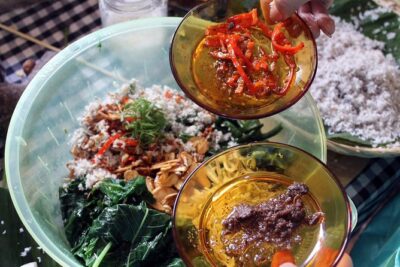
PRIVATE Authentic Balinese Cooking Class in Ubud at Putu’s Home
Read our review →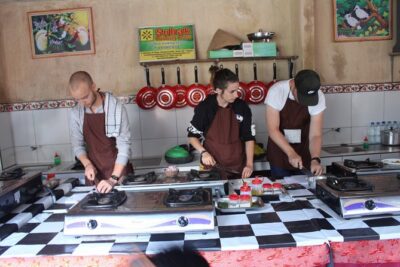
Balinese Ubud cooking school (9 Dish Cooking and Market Tour)
Read our review →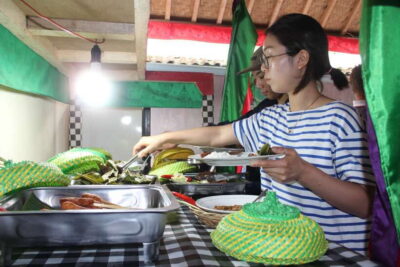
PRIVATE Balinese Cooking Class in Ubud with Dewa with Transfers
Read our review →Browse the lists this tour appears in