
Review · ROME COOKING CLASSES
Enjoy Spritz and Pasta Making in Piazza Navona
Fresh pasta is the real souvenir here. In about two and a half hours near Piazza Navona, you mix your own Spritz, work dough by hand, cut fettuccine and maltagliati, then eat the results at a Roman restaurant. The cooking is practical, not a chef’s demonstration from across the room.
I like the small maximum of 12 people, and I like the easy social rhythm of making dinner together. Instructors such as Maria, Carlotta, Leo, Lori, and Furio are praised for clear help, humor, and patience. The catch is important: you make the pasta, not the sauces, and the format may not satisfy anyone expecting a full restaurant-kitchen lesson.
At a glance
- Handmade pasta near Piazza Navona: Learn dough-making, shaping, and cutting for fettuccine and maltagliati.
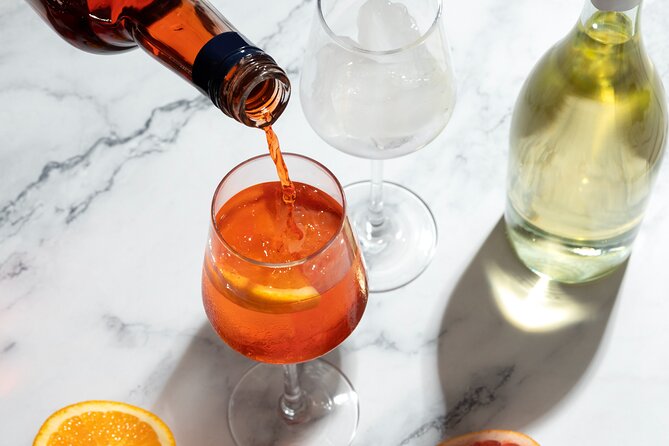
- A Spritz starts the class: You prepare your own welcome drink before turning to the dough.
- Dinner is included: Bruschetta, two pasta dishes, a beverage, tiramisu, and either coffee or limoncello follow the lesson.
- Small-group setting: The advertised maximum is 12 people, with some sessions described as having only 8 to 10.
- Late lunch or early dinner: The timing fits neatly between Rome sightseeing stops.
- Beginner-friendly, but not a full cooking course: Sauces are prepared for you, and extra food or drinks cost more.
What happens near Piazza Navona
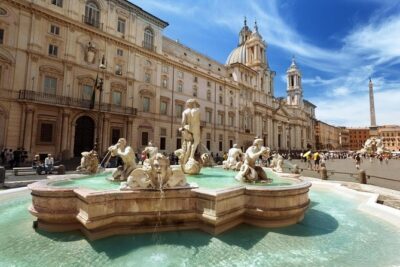
The meeting point is Via Giuseppe Zanardelli 14, a short walk from Piazza Navona. That location makes the class easy to pair with an afternoon of central Rome sightseeing. You can visit the piazza, see Bernini’s Fountain of the Four Rivers, and then trade monuments for a mixing bowl.
The experience lasts about two hours and 30 minutes. It is offered in English, and the activity returns to the same meeting point. Since it is close to public transportation, you do not need to build a complicated transfer into your day.
The first task is your own Spritz. The class presents this as a quick tutorial, not a long cocktail course. You learn the basic method, prepare the drink, and use it as a pleasant companion while the pasta work begins.
That opening matters more than it might seem. It gives everyone something easy to do while introductions happen, and it takes the pressure off the first few minutes. If you are traveling alone, this is also a natural way to start chatting with the people at your table.
More Pasta Making Classes in Rome
- 3 in 1 Cooking Class near Navona: Fettuccine, Ravioli & Tiramisu
★ 5.0 · 7,376 reviews - Rome: Pasta Making Class with Wine, Limoncello, and Dessert
★ 4.9 · 3,177 reviews - Rome Cooking Class: Make Pasta and 3 Spritz Cocktails
★ 5.0 · 2,937 reviews
Turning flour and eggs into pasta
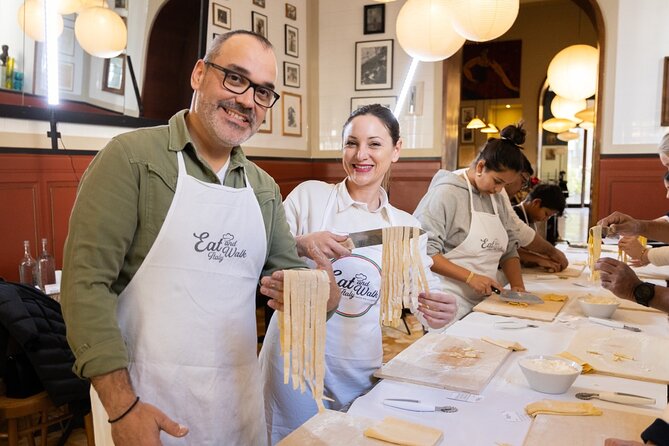
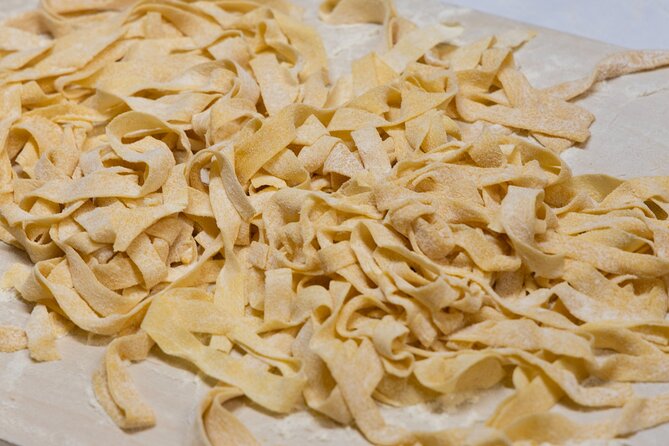
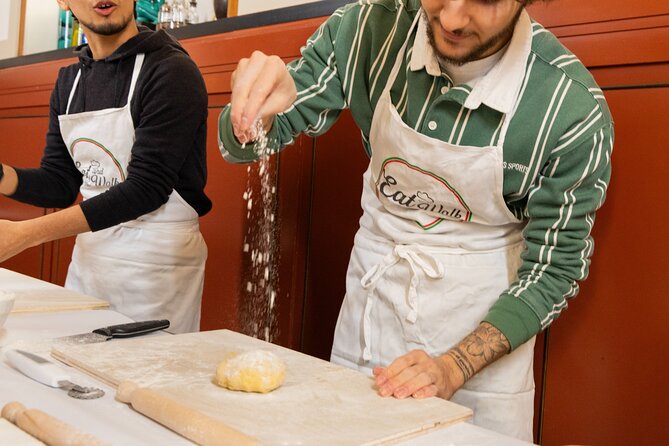
The central lesson is fresh pasta dough. You work through the process by hand, then roll, shape, and cut the dough into two forms: fettuccine and maltagliati.
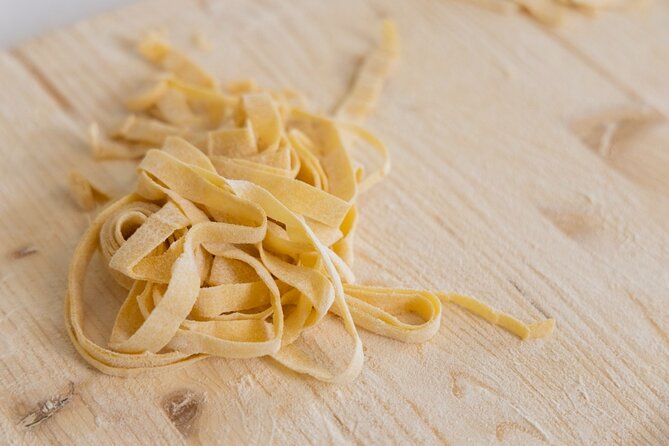
Fettuccine is the familiar long ribbon pasta. Maltagliati means roughly badly cut, and the name fits its relaxed, uneven shape. It is a useful choice for a beginner class because it does not demand perfect geometry. Small irregularities are part of the point.
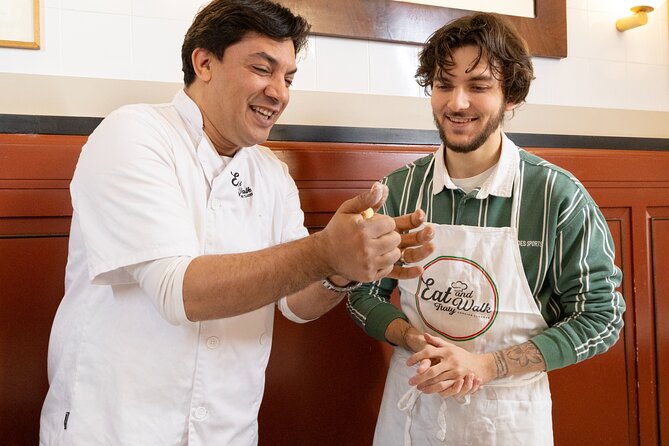
The best part of this activity is the physical work. You quickly learn that pasta dough needs more elbow grease than a quick television demonstration suggests. That hands-on effort gives you a better feel for texture and consistency, and it makes the finished bowl more satisfying.
The instructor works around the table and helps people who need it. Maria is repeatedly praised for clear instructions and lively energy. Carlotta is noted for giving individual attention in a small group, while Leo, Lori, Furio, Paris, Tommy, Marie, and Tiziana are all associated with friendly, patient teaching in different sessions.
The instructor can change, so do not book this around a particular chef unless the operator confirms that detail. The useful point is that the class is built for first-time pasta makers. You do not need prior cooking experience, and the process is broken into manageable steps.
What you eat after the lesson
The meal begins with bruschetta, toasted bread topped with tomatoes, basil, and oregano. It is a simple Roman-style starter, but it gives you something to eat while the pasta is finished.
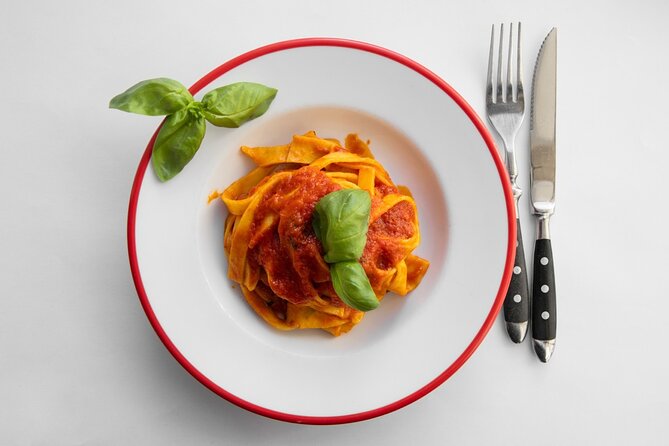
Your handmade fettuccine is served with tomato and basil sauce, described as sugo al pomodoro. The maltagliati comes with basil pesto. A glass of red or white wine is included, and a soft drink is available instead.
Water is also included. At the end, you choose coffee or a shot of limoncello, followed by freshly made tiramisu.
There is a small but important distinction here. You make the pasta, but you do not make the sauces. The kitchen handles the sauce preparation and cooking, so this is not a complete from-scratch meal. You also do not enter the professional kitchen. The operator explains that hygiene rules prevent that, though the chef can discuss how the pasta is cooked and how the sauces are prepared.
That arrangement keeps the class moving and avoids turning a short activity into a much longer kitchen course. Still, I would set your expectations correctly: this is a pasta-making lesson followed by a meal, not a lesson in restaurant production.
Some sessions have included ravioli, extra sauces, or tiramisu preparation, but the core description for this Piazza Navona experience lists fettuccine and maltagliati. If a specific dish matters to you, confirm it before booking. The class format can differ if you are moved to another experience, and one such change left a participant feeling that the lesson was less complete than expected.
The social side of the table
The class works best if you enjoy sharing a table with other people. After the practical work, you sit down together and eat what has been prepared. That turns the lesson into a late lunch or early dinner rather than a quick cooking appointment.
I especially like this setup for solo visitors. You have an immediate group activity, a shared meal, and several natural points of conversation. You do not need to arrive with a party of four to enjoy it.
Families can also make good use of the time. Children must be accompanied by an adult, and the class is described as suitable for families with children as young as six. The hands-on dough work gives younger children something concrete to do, though adults should expect to stay involved and help them keep up.
The class has a maximum of 12 people. Individual sessions may be smaller, sometimes around 8 or 10, which makes it easier for the chef to check each person’s dough and cutting technique. A larger group can feel more social, while a smaller one gives you more room for questions.
Same region, a different dish to learn:
- Rome: 3-in-1 Fettuccine, Ravioli, and Tiramisu Cooking Class
★ 4.9 · 2,704 reviews - Rome: Fettuccine Pasta Cooking Class in Rome’s City Center
★ 4.8 · 2,414 reviews - Fettuccine & Tiramisù: Cooking Class with Wine & Limoncello
★ 4.9 · 2,103 reviews - Pasta Cooking Class Near the Colosseum with 3 Spritz Cocktails
★ 5.0 · 1,686 reviews
How good is the value at $90.70?
At $90.70 per person, this is not the cheapest meal in Rome. You can eat pasta for much less, and the meal itself is not the only thing you are paying for.
The price includes the Spritz lesson and welcome drink, instruction, your fresh pasta, bruschetta, two pasta preparations, water, a glass of wine or soft drink, tiramisu, and your choice of coffee or limoncello. You also receive the benefit of a central location and a planned social activity that fills roughly half an afternoon or evening.
I consider that a fair value if you want an activity as well as dinner. The class gives you a skill you can try at home, and it breaks up a long sequence of churches, museums, and ancient ruins. It can also replace the cost of a separate evening meal.
The value is weaker if you mainly want a serious cooking course. You will not learn to make the sauces, and extra food or drinks are not included. One family also found the included wine disappointing and felt the sauces lacked the depth they expected. Another complaint concerned a possible five-euro-per-person charge for two pieces of bruschetta, although bruschetta is listed in the included menu. I would ask about any surcharge before sitting down.
The meal is best viewed as a pleasant reward for the class, not as a destination restaurant dinner. The pasta you make is the point. If you want a polished tasting menu, spend the money elsewhere.
Timing your Rome day around the class
The late-lunch and early-dinner choices are useful. A morning at the Pantheon, Campo de’ Fiori, or the Vatican can lead into the class, while an afternoon session leaves your evening free for a walk along the Tiber or a night visit to a piazza.
Allow time to find Via Giuseppe Zanardelli 14. The listed meeting point is precise, but central Rome streets can be confusing, especially when you are cutting across pedestrian areas. I would arrive with a little spare time rather than rushing in with the dough already on your mind.
Good weather is required for the activity. If poor weather causes cancellation, you can take a different date or receive a full refund. For your own cancellation, you need to cancel at least 24 hours before the start time for a full refund. Changes or cancellations inside that window are not accepted.
The activity is confirmed when you book, and mobile tickets make entry simple. Vegetarian cooking is available if requested at booking. Give the operator any dietary requirements in advance rather than waiting until the table is set.
What makes the experience authentic, and what does not

The strongest local element is the method. Fresh pasta is a normal part of Italian home cooking, and kneading, shaping, and cutting it by hand gives you a small taste of that tradition. The Spritz, bruschetta, pesto, tomato sauce, wine, and limoncello complete a recognizable Italian meal.
The setting also helps. You are not being sent to a remote cooking school far from the sights. You start in the Piazza Navona area, where the activity fits naturally into a day of seeing central Rome.
But authenticity has limits. This is a commercial class with repeated sessions during the day, and the sauces are prepared by the restaurant kitchen. You are learning a carefully simplified version of pasta making, designed to work for beginners and a mixed group.
That is not a flaw by itself. In fact, the simplified format is why families and first-time cooks can enjoy it. Just do not confuse Italian-style cooking activity with a private lesson inside a Roman grandmother’s kitchen.
Who should book this class?
I would choose it for:
- First-time pasta makers who want direct, step-by-step instruction.
- Solo visitors and couples who enjoy meeting people over a shared meal.
- Families looking for a seated activity that includes food and works for children with adult support.
- Sightseeing-heavy itineraries that need a change of pace from monuments.
- Food-minded visitors who want to take a usable skill home.
I would hesitate if you need strict control over ingredients, expect a full lesson on sauces, or want a refined dinner. I would also avoid booking it as a surprise for someone who dislikes group activities or hands-on cooking.
The class is particularly good for people who want a memory they can recreate. After a successful session, you can buy flour and eggs at home and try again. The lesson may not teach every part of the meal, but it gives you the confidence to start.
Should you book Spritz and Pasta Making in Piazza Navona?
Yes, if you see the value in learning by doing. The best features are the central location, manageable two-and-a-half-hour length, small group size, lively instructors, and the chance to eat pasta you helped shape.
Book it as a social pasta workshop with dinner, not as a professional cooking course. Ask ahead about the exact menu, any bruschetta charge, dietary needs, and whether your session includes only fettuccine and maltagliati or a different format.
At $90.70, I would call it worthwhile for a first pasta lesson, a family activity, or a solo evening with built-in company. If all you want is cheap pasta near Piazza Navona, skip the class and choose a trattoria. If you want to knead the dough, laugh at your uneven cuts, and sit down to eat the result, this is a good use of an afternoon in Rome.
FAQ
Where does the Spritz and pasta class meet?
It meets at Via Giuseppe Zanardelli 14, 00186 Rome, Italy, near Piazza Navona.
Where does the activity finish?
The activity ends back at the meeting point.
How long does the experience last?
It lasts approximately two hours and 30 minutes.
Is the class offered in English?
Yes. The experience is offered in English.
What pasta do I make?
The core menu includes handmade fettuccine and maltagliati. Some sessions connected with this operator have used other pasta shapes, so confirm the exact format if that matters to you.
Do I make the sauces too?
No. The included experience teaches pasta preparation, while the sauces are made by the kitchen.
What food and drinks are included?
You receive a welcome Spritz, bruschetta, fettuccine with tomato and basil sauce, maltagliati with basil pesto, a glass of wine or a soft drink, water, tiramisu, and your choice of coffee or limoncello.
Can children join?
Yes. Children must be accompanied by an adult. The activity is described as suitable for families, including children.
Is a vegetarian option available?
Yes. Request the vegetarian option when booking, and provide any other dietary requirements at that time.
What is the cancellation policy?
You can cancel at least 24 hours before the start time for a full refund. Cancellations or changes made less than 24 hours before the start are not accepted. If poor weather causes the operator to cancel, you can choose another date or receive a full refund.
Newest classes around Rome
- Testaccio: Home Cooking Cacio e Pepe, Amatriciana, Carbonara★ 4.9 · 57 reviews
- Super Fun Pasta and Gelato Cooking Class by the Vatican★ 5.0 · 6 reviews
- Spritz and Spaghetti Traditional Cooking Class in Rome★ 4.9 · 30 reviews
- ROME:Hands-On Lasagna & Marsala Tiramisu Cooking Experience”★ 5.0 · 3 reviews
- Rome: Vatican Food Tours, Cooking classes & Free Tours★ 4.9 · 11 reviews
- Rome: Trastevere Pasta Making Class★ 4.9 · 33 reviews
- Rome: Small Group Pasta cooking class near Piazza Navona★ 4.9 · 8 reviews
- Rome: Traditional Cooking Class in the Jewish Ghetto★ 4.9 · 75 reviews
Rome Cooking Classes, compared.
3 in 1 Cooking Class near Navona: Fettuccine, Ravioli & Tiramisu
Read our review →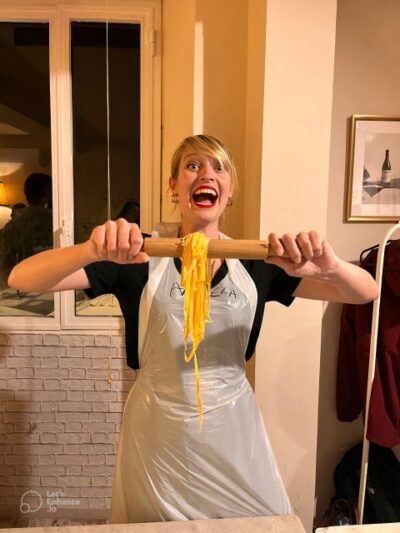
Pasta Making Class with Wine, Limoncello, and Dessert
Read our review →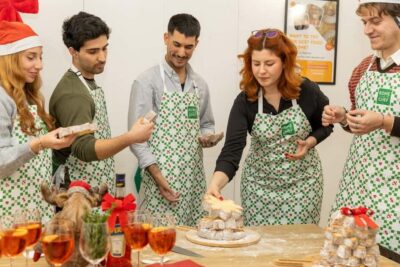
Rome Cooking Class: Make Pasta and 3 Spritz Cocktails
Read our review →
3-in-1 Fettuccine, Ravioli, and Tiramisu Cooking Class
Read our review →
Fettuccine Pasta Cooking Class in Rome’s City Center
Read our review →
Fettuccine & Tiramisù: Cooking Class with Wine & Limoncello
Read our review →
Pasta Cooking Class Near the Colosseum with 3 Spritz Cocktails
Read our review →
Pasta & Tiramisu Cooking Class near the Spanish Steps
Read our review →Browse the lists this tour appears in