
Review · ROME COOKING CLASSES
Rome: Traditional Cooking Class in the Jewish Ghetto
Rome’s Jewish Ghetto is a fine place to trade sightseeing for a place at the kitchen table. You’ll make fresh pasta, prepare a seasonal Roman dish, and finish with dessert and wine inside Taverna del Ghetto. I especially like the hands-on pasta lesson and the chance to hear local stories from guides such as Lilli, Asia, Lisa, and Clelia. The main drawback is that the class may focus more on pasta than on cooking several separate dishes.
- Three-hour Roman menu: Prepare pasta or gnocchi, a seasonal vegetable dish, and traditional dessert.
- Professional kitchen access: Chef Gabriel and other restaurant chefs may bring you into the working kitchen.
- Seasonal cooking: Winter can feature Jewish-style artichokes, while summer may bring zucchini flowers and other vegetables for Roman frying.
- Small English-speaking group: The class is limited to 10 people, with a guide translating and explaining along the way.
- Recipes and Rome tips: Take home the recipes plus recommendations for the rest of your stay.
- Important limits: The class is not kosher, the pasta is not gluten-free, and the setting is not suitable for wheelchair users.
Fresh Pasta in Rome’s Jewish Ghetto
The appeal here is simple: you are not just eating Roman food, you are learning how part of it is made. The class meets at Taverna del Ghetto, right in the Jewish Quarter, then moves into the restaurant kitchen and dining area for a relaxed three-hour session.
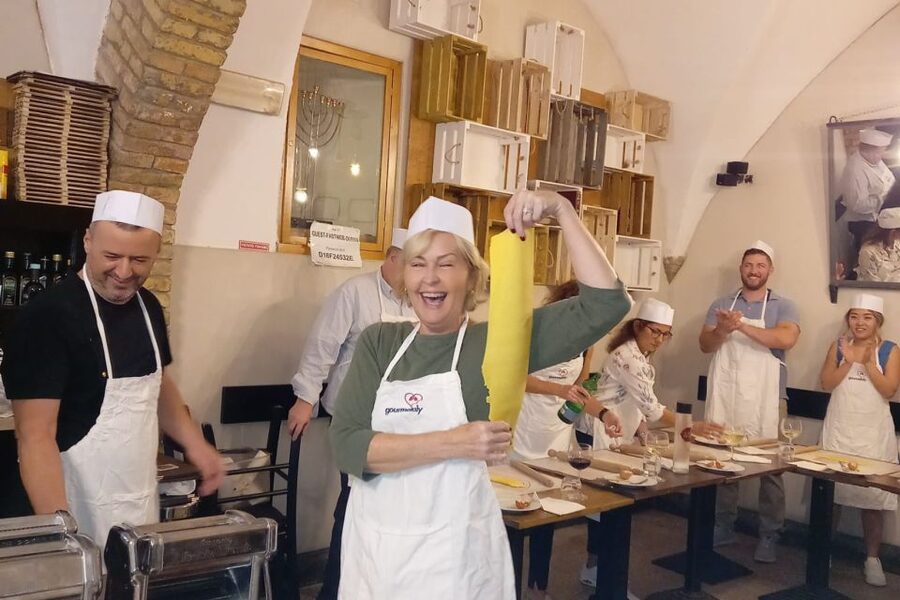
I like the mix of cooking and neighborhood context. The guide may explain the food traditions and stories of the Jewish Ghetto before you start, giving the meal a sense of place. This is not a formal culinary school class with technical lectures. It is closer to an easygoing evening with a local host, a chef, and a small table of fellow pasta makers.
The group is capped at 10 people, which matters. You should have room to see the demonstrations and ask questions without being lost in a large crowd. Still, the amount of hands-on work can vary. Some participants have found the pasta-making very active but wished they had done more of the frying or final cooking themselves.
What Happens During the Three Hours
You meet your English-speaking foodie guide outside the restaurant. Guides have included Lilli, Asia, Lisa, Livia, Clelia, Elisa, Eleonora, and others, so the exact host will depend on the date. Several guides work as translators when the chef speaks mainly Italian.
The session usually begins with an introduction to the neighborhood and the food you will prepare. This short background is useful because Roman cooking is tied closely to local produce, old family methods, and the distinct Jewish-Roman cooking tradition. You are not simply following a recipe in a classroom removed from the city. You are cooking in the middle of the district that gives the meal its setting.
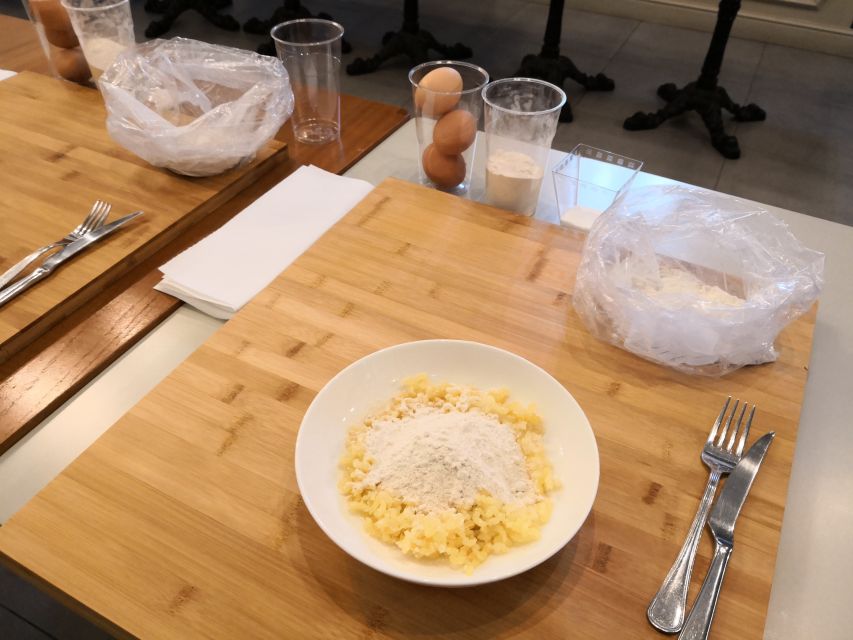
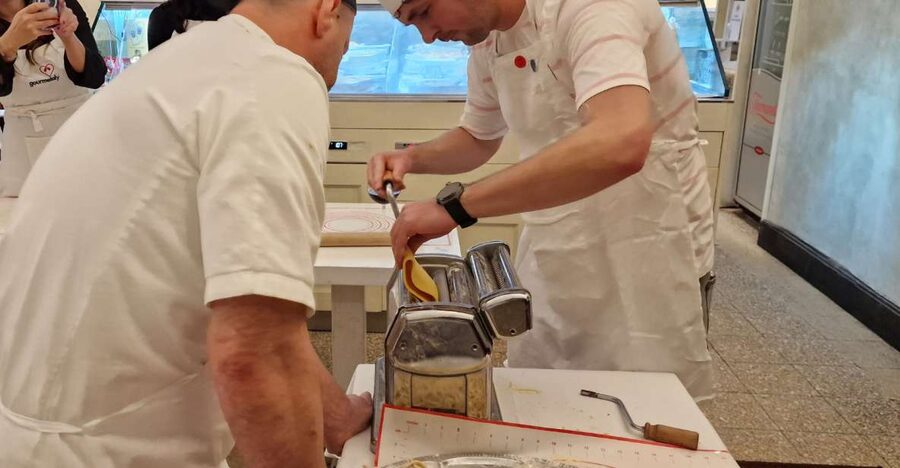
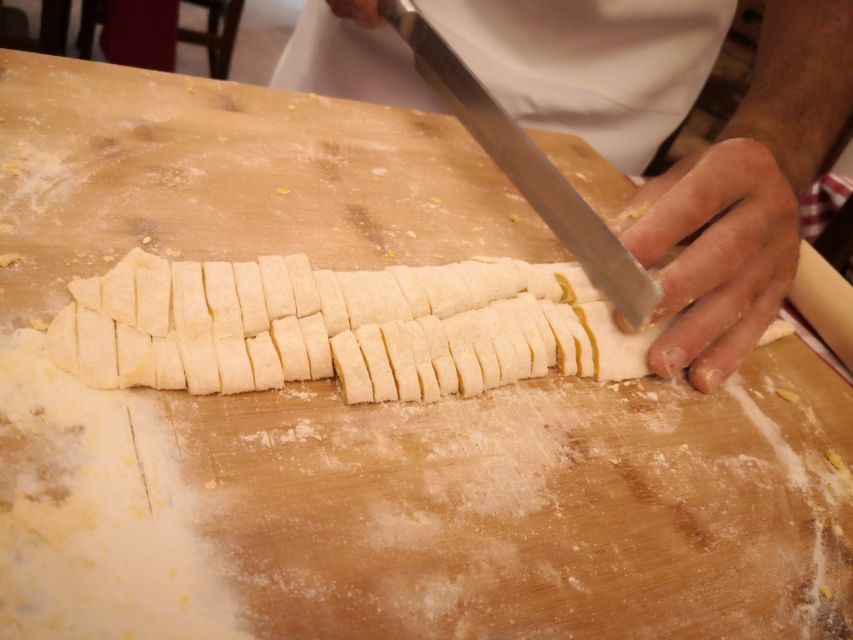
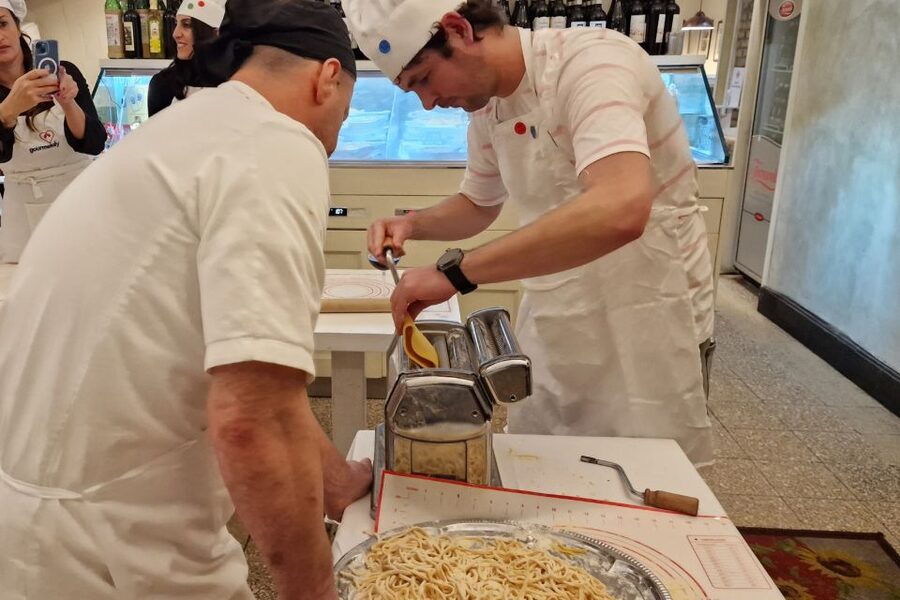
Then comes the flour. You learn how to make fresh pasta from scratch, using a traditional hand method rather than relying only on a machine. A review described working with an old crank pasta machine, while other parts of the class involve handling and shaping the dough by hand. The guide explains the flour and the basic technique so you can repeat it at home.
The class may feature pasta or gnocchi, depending on the menu and season. Do not expect a long list of pasta shapes. The experience normally concentrates on one main pasta preparation, with the fresh pasta later served as part of the meal. That focused approach makes the lesson easier to remember, but it can feel limited if you want a full survey of Italian pasta-making.
More Cooking Classes in Rome:
- 3 in 1 Cooking Class near Navona: Fettuccine, Ravioli & Tiramisu
★ 5.0 · 7,376 reviews - Rome: Pasta Making Class with Wine, Limoncello, and Dessert
★ 4.9 · 3,177 reviews - Rome Cooking Class: Make Pasta and 3 Spritz Cocktails
★ 5.0 · 2,937 reviews
Seasonal Roman Cooking, Not a Fixed Menu
The menu changes with the time of year. That is a real strength because Roman cooking makes good use of what is available instead of forcing the same dishes onto every table.
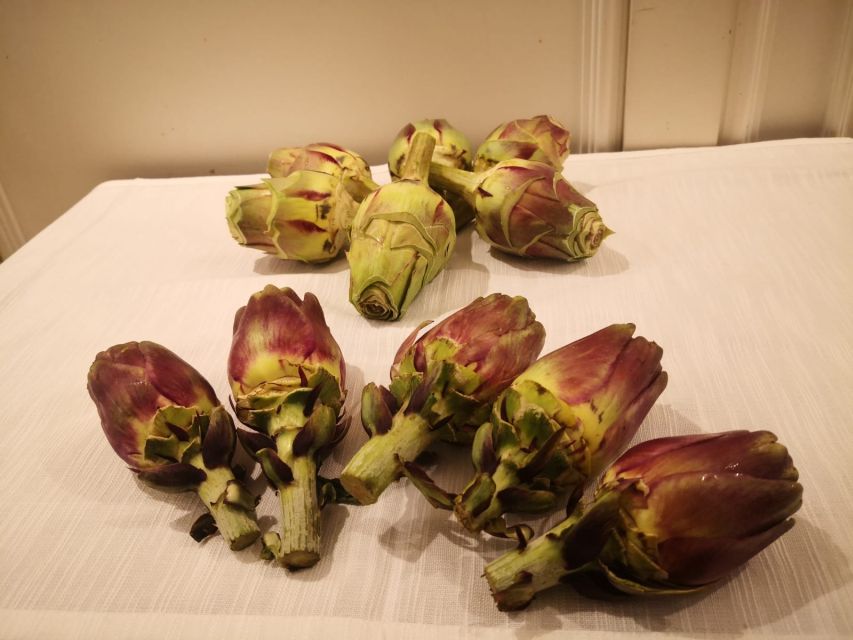
In winter, you may learn to clean and peel artichokes for carciofi alla giudia, the Jewish-style fried artichoke associated with Rome’s Jewish cuisine. Artichokes take patience to prepare, and the lesson gives you a useful look at how much work sits behind a simple-looking Roman dish.
In summer, the vegetable course may feature zucchini flowers or another fresh vegetable prepared as part of the classic Roman fritto. You learn to clean the produce and prepare it for frying. One practical point: this part may be more of a demonstration than a fully independent cooking task, depending on the group and the kitchen workflow.
The meal is presented as a three-course experience:
- Fresh homemade pasta or gnocchi
- A seasonal main course or vegetable dish
- A traditional dessert, often torta di ricotta e visciole
The dessert is a ricotta and sour-cherry tart or cheesecake-style cake made with straightforward ingredients. Some sessions have included several desserts, so you may receive more than the basic description promises, but the exact sweets depend on the kitchen and menu.
Inside a Working Restaurant Kitchen
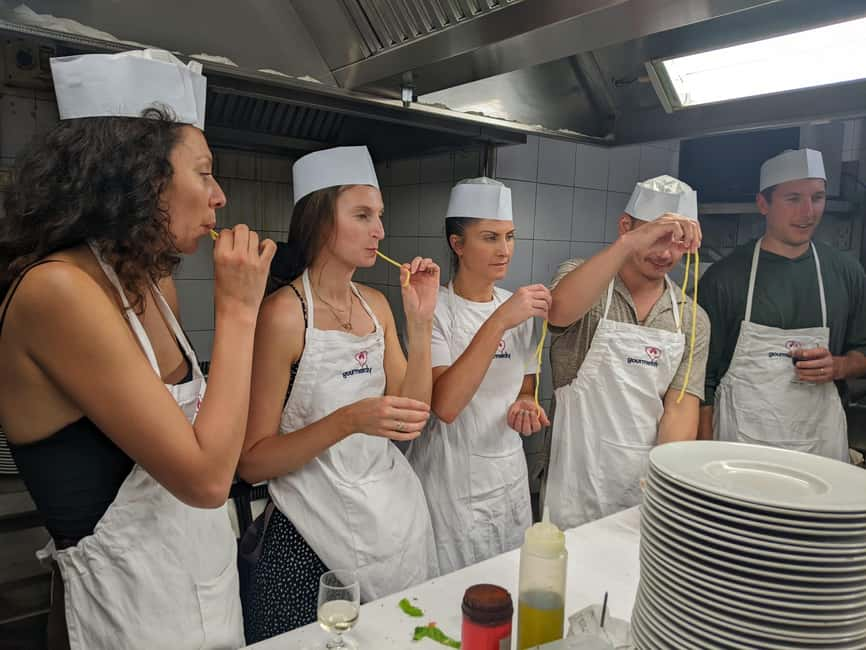
One of the most interesting features is access to the restaurant kitchen. You may watch the chef finish the food, learn the secrets of a Roman sauce such as cacio e pepe, and help with parts of the final preparation.
Chef Gabriel has been especially associated with the experience, although another chef may lead your date. He is described as funny, generous, and willing to open the kitchen to the class. Other chefs have also received praise for explaining each step, checking the pasta, and offering practical corrections.
This restaurant setting gives the class a useful dose of reality. You see how the pasta moves from dough to plate, rather than making a small batch that never reaches a proper meal. It also means the session follows the rhythm of a professional kitchen. At times, the chef may need to take over the frying or final cooking, so this is not the right choice if you want to control every stage yourself.
You can take part or simply watch with a glass of wine. That flexibility helps mixed groups. A serious home cook can work closely with the chef, while a partner or child who prefers watching can still enjoy the food and conversation.
Wine, Dinner, and the Social Side
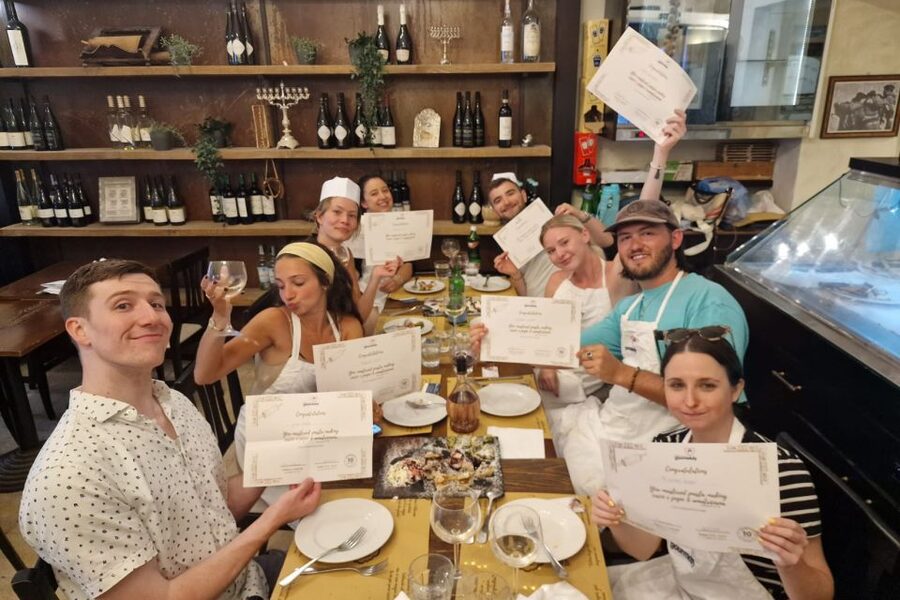
Italian wine and bottled water are included. The wine is part of the relaxed mood rather than a separate tasting course. Some participants have described generous pours throughout the evening, though you should think of this as a cooking dinner with wine, not a dedicated wine education experience.
After the cooking, you sit down to eat what you helped prepare. This is where the three-hour length makes sense. You get instruction, kitchen time, and a proper meal instead of rushing away after shaping the dough.
The social side is important. Guides such as Lilli and Asia have been praised for keeping the class warm, patient, and easy to follow. The chef may speak Italian, with the guide explaining the process in English. That arrangement can add character, though it may feel less polished than a class led entirely by an English-speaking chef.
Families can fit in well here. Teenagers have rated it among the best activities of an Italy trip, and the cooking gives children something concrete to do. Very young children may need close supervision around flour, hot oil, and kitchen equipment, but the experience is described as suitable for families and vegetarian participants.
Same region, a different dish to learn:
- Rome: 3-in-1 Fettuccine, Ravioli, and Tiramisu Cooking Class
★ 4.9 · 2,704 reviews - Rome: Fettuccine Pasta Cooking Class in Rome’s City Center
★ 4.8 · 2,414 reviews - Fettuccine & Tiramisù: Cooking Class with Wine & Limoncello
★ 4.9 · 2,103 reviews - Pasta Cooking Class Near the Colosseum with 3 Spritz Cocktails
★ 5.0 · 1,686 reviews
How Much Value Do You Get for $94?
At $94 per person, this is not the cheapest meal in Rome. You are paying for more than dinner, though. The price covers a three-hour class, ingredients, kitchen equipment, wine, bottled water, a three-course meal, a local guide, and recipes to take home.
The value is strongest if you want an activity that replaces part of an evening meal while giving you a skill you can use later. Fresh pasta is approachable, and the recipes are designed in a home-style tradition rather than as difficult restaurant formulas. The list of Rome tips and recommendations also adds practical value if this is early in your stay.
The value is weaker if your main goal is a broad cooking curriculum. You may prepare one kind of pasta, one seasonal dish, and dessert, but the class is not built around multiple pasta shapes or advanced techniques. One participant felt the amount of food produced was modest for the time and price, while others found the finished meal generous, with pasta, vegetables, wine, and dessert.
I would compare it with the cost of a good dinner plus a guided food activity. If you already plan to spend close to this amount on an evening meal, the class gives you a more memorable way to spend those hours. If you only want a cheap plate of pasta, choose a restaurant instead.
Dietary Needs and Practical Limits
Vegetarians and vegans are welcome, but you should state your needs when booking. The experience has accommodated both, although the exact substitutions are not detailed, so do not assume every seasonal dish will be unchanged.
The pasta made during the class contains gluten. If you can handle flour without a problem but need to eat gluten-free, you may be able to join the activity and receive packaged gluten-free pasta for the meal. Confirm the arrangement before you go, since the cooking lesson itself still involves regular flour.
Potential allergens include milk, eggs, soya, mustard, nuts, and gluten. This is a restaurant kitchen, not an allergy-free environment. Tell the provider about any serious allergy in advance and ask what can safely be prepared.
The restaurant is not kosher. The class takes place in the Jewish Ghetto and teaches Jewish-Roman and Roman food traditions, but the kitchen and menu do not follow kosher rules.
Pets are not allowed, and the experience is not suitable for wheelchair users. Hotel pickup and drop-off are not included, so you need to make your own way to Taverna del Ghetto.
Who Should Book This Class?
I would choose this for someone who wants a break from museums, churches, and ancient ruins without leaving Rome’s cultural center. It works particularly well for couples, families with older children, and solo visitors who enjoy meeting people around a shared meal.
It is also a good fit if you want to bring home a practical souvenir. A small pasta tool or recipe card can gather dust, but the basic dough method and simple Roman dishes are skills you can actually use.
The class is less suitable for a serious culinary student seeking advanced instruction. You will learn useful techniques, but the tone is friendly and informal rather than scholarly. If you want to make several kinds of pasta or spend most of the session cooking independently, another class may suit you better.
Book early if you need a specific date or have dietary needs, since the group is limited to 10 people. The option to cancel up to 24 hours ahead and reserve without paying immediately also makes it easier to fit into a changing Rome schedule.
Should You Book the Jewish Ghetto Cooking Class?
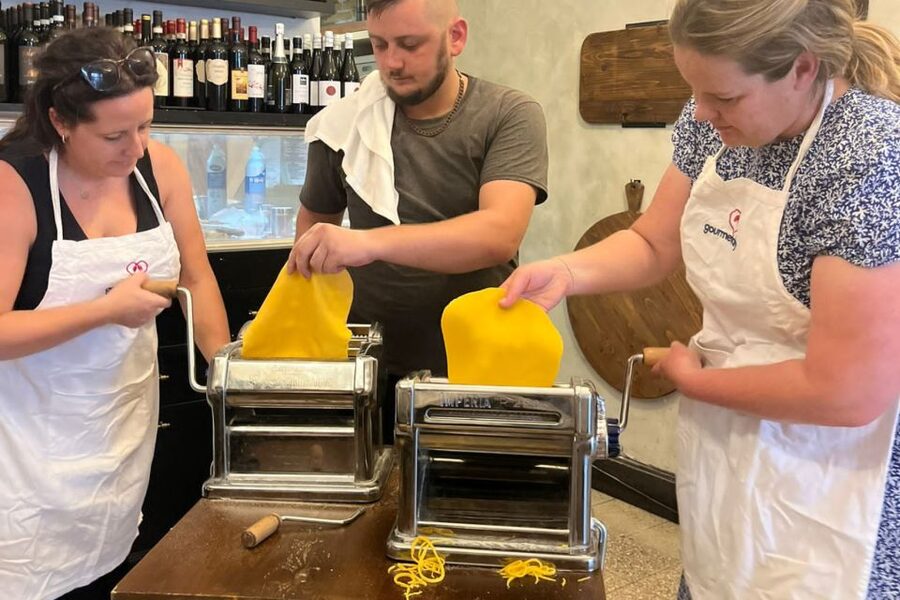
Book it if you want a social Roman evening with food, stories, wine, and a skill to take home. The strongest parts are the small group, the access to a real restaurant kitchen, the seasonal menu, and the guides who help bridge the language gap with the chef.
Skip it if you want a highly technical course, a fully kosher meal, or a completely gluten-free cooking session. You should also think twice if your main goal is extensive hands-on work with several dishes.
For most visitors, the appeal is not the number of recipes. It is the chance to sit in the Jewish Ghetto, work dough with your hands, watch a Roman chef prepare the final meal, and eat together at the end. At $94, that is a fair price for an evening that combines dinner with a genuine local activity.
FAQ
Where does the cooking class meet?
You meet your foodie guide outside Taverna del Ghetto in Rome’s Jewish Ghetto.
How long does the experience last?
The class lasts three hours. Starting times vary, so check availability for your chosen date.
What language is the class conducted in?
The class is offered in English. A guide explains the cooking process and may translate for a chef who speaks mainly Italian.
How many people are in the group?
The small group is limited to 10 participants.
What food is included?
You receive a three-course meal with fresh homemade pasta, a seasonal main course, and a traditional dessert. Italian wine and bottled water are also included.
Is the class suitable for vegetarians and vegans?
Vegetarians and vegans are welcome, but you should provide your dietary information when booking so the kitchen can prepare appropriately.
Is the cooking class kosher or gluten-free?
No. The restaurant is not kosher, and the fresh pasta made in class is not gluten-free. Packaged gluten-free pasta may be available for eating if you can handle contact with regular flour.
Can I cancel or pay later?
You can cancel up to 24 hours before the activity for a full refund. A reserve-now, pay-later option is available.
Newest classes around Rome
- Testaccio: Home Cooking Cacio e Pepe, Amatriciana, Carbonara★ 4.9 · 57 reviews
- Super Fun Pasta and Gelato Cooking Class by the Vatican★ 5.0 · 6 reviews
- Spritz and Spaghetti Traditional Cooking Class in Rome★ 4.9 · 30 reviews
- ROME:Hands-On Lasagna & Marsala Tiramisu Cooking Experience”★ 5.0 · 3 reviews
- Rome: Vatican Food Tours, Cooking classes & Free Tours★ 4.9 · 11 reviews
- Rome: Trastevere Pasta Making Class★ 4.9 · 33 reviews
- Rome: Small Group Pasta cooking class near Piazza Navona★ 4.9 · 8 reviews
- Rome: Traditional Pasta and Tiramisu Cooking Class★ 5.0 · 4 reviews
Rome Cooking Classes, compared.

3 in 1 Cooking Class near Navona: Fettuccine, Ravioli & Tiramisu
Read our review →
Pasta Making Class with Wine, Limoncello, and Dessert
Read our review →
Rome Cooking Class: Make Pasta and 3 Spritz Cocktails
Read our review →
3-in-1 Fettuccine, Ravioli, and Tiramisu Cooking Class
Read our review →
Fettuccine Pasta Cooking Class in Rome’s City Center
Read our review →
Fettuccine & Tiramisù: Cooking Class with Wine & Limoncello
Read our review →
Pasta Cooking Class Near the Colosseum with 3 Spritz Cocktails
Read our review →
Enjoy Spritz and Pasta Making in Piazza Navona
Read our review →Browse the lists this tour appears in