
Review · MARRAKECH COOKING CLASSES
Marrakech: 3-Hour Open-Air Moroccan Cooking Course
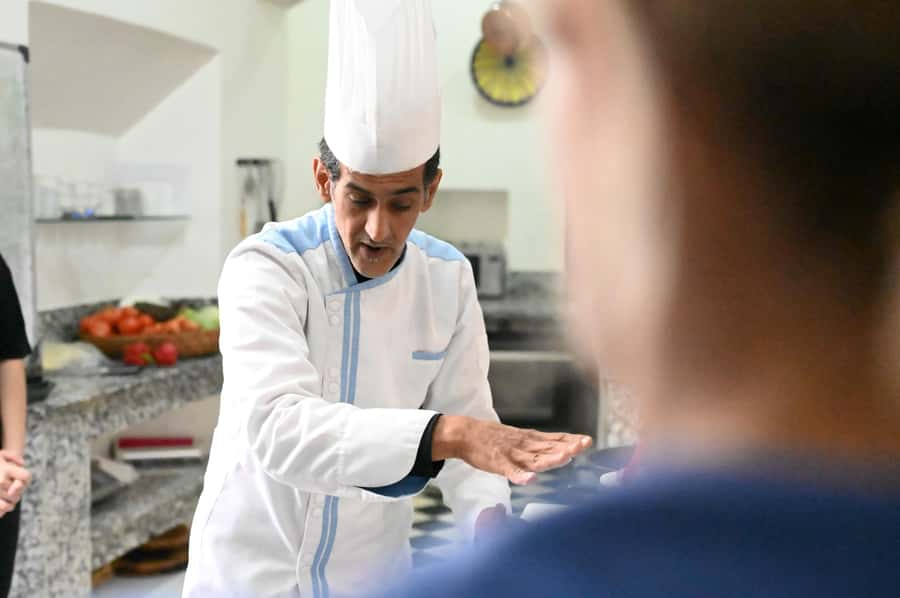
Moroccan cooking makes the most sense when you prepare it slowly, with your hands, in the calm courtyard of a working riad. This course takes you from Jemaa El Fna to Riyad El Cadi, where chef Hassan guides you through tagine, salads, preserved lemon, rose water, and ras el hanout before you sit down to eat what you made.
I like the small group limit of eight, which gives you room to ask questions and take part instead of watching from the edge. I also like the courtyard meal, especially after the cooking, when the bustle of the medina gives way to a quiet table, mint tea, and perhaps a glass of Moroccan wine.
The main consideration is time. Although the experience title calls it a three-hour cooking course, the supplied details describe a four-hour visit, and slow preparation is part of the point. This is not a quick demonstration or a grab-and-go lunch.
Key points at a glance
- Chef-led cooking: Chef Hassan and the kitchen team guide you through traditional Moroccan recipes and methods.
- A 14th-century riad setting: You cook in a courtyard kitchen and eat in the riad garden or on the rooftop terrace.
- A full Moroccan meal: Prepare a tagine and several salads, with the exact menu shaped by the class and available options.
- Hands-on work: You chop, season, marinate, and cook rather than simply watch a chef perform.
- Small groups: The class accepts between 2 and 8 participants, with a minimum of two people over age 14.
- Flexible dietary choices: Vegetarian, vegan, and gluten-free meals can be arranged.
From Jemaa El Fna to Riyad El Cadi
Your day begins at Café de France near Jemaa El Fna, the practical pickup point in the center of Marrakech. Pickup is listed for 10:45 to 11:00 in the morning, though you should call ahead to confirm the exact time.
That short meeting step matters. The medina has narrow lanes and a habit of making familiar places look different from one visit to the next. Rather than trying to find a hidden doorway alone, you meet the staff at a clear landmark and follow them to Riyad El Cadi at 87 Derb Moulay Abdul Kader.
The change in mood is part of the experience. Jemaa El Fna is loud and public, while the riad offers an inward-facing courtyard and a more settled pace. You are not being taken to a generic cooking studio. The class takes place in a traditional house, with the architecture providing much of the atmosphere.
The meeting arrangement does require attention. The details give both the café and the riad address, but the organized pickup is from Jemaa El Fna. Confirm your time before setting out, and allow enough time to reach Café de France without rushing.
More Moroccan Classes in Marrakesh:
- Marrakech: Moroccan Cooking Class with Pickup
★ 4.6 · 1,862 reviews - Marrakech: Traditional Moroccan Cooking Class & Market Visit
★ 4.8 · 1,861 reviews - Marrakesh: Moroccan Dishes Cooking Class with a Local Chef
★ 5.0 · 1,615 reviews
Settling in with mint tea
At the riad, the lead chef welcomes you with Moroccan mint tea while the ingredients are prepared. This first pause is useful, not filler. It gives you time to settle after walking through the medina and introduces the drink that often accompanies Moroccan meals.
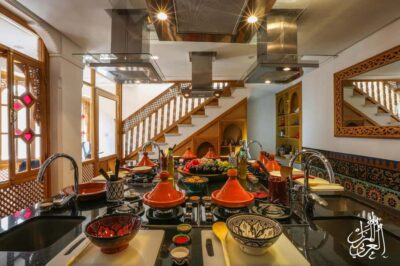
The class then moves into the courtyard kitchen. The setting is stylish, but the emphasis is on practical cooking. You learn what the ingredients do, how they are combined, and why Moroccan food can move between sweet, salty, floral, and aromatic flavors without losing balance.
This is where chef Hassan’s teaching style seems especially valuable. The supplied details describe him as guiding participants through each dish, explaining ingredients and methods, and encouraging questions. Another team member, Khatija, is also praised for her warm instruction and hospitality. The class is offered in English or French, so you should choose the language that lets you ask the most useful questions.
Building the tagine slowly
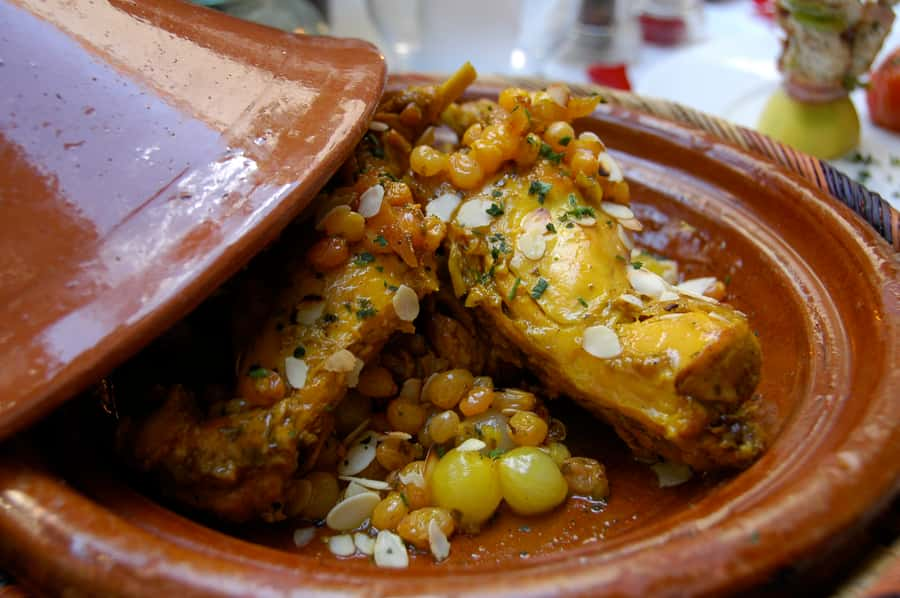
The tagine is the centerpiece of the cooking session. You may prepare lamb tagine, chicken with preserved lemons, or a vegetable version, depending on the class plan and your dietary needs. The important lesson is not just the recipe. It is the pace.
While the tagine cooks over the fire, you have time to work on the side dishes. That slow sequence helps explain Moroccan home cooking better than a short cooking demonstration would. You see how a dish develops while you prepare the rest of the meal, and you have time to notice how spices, herbs, and preserved ingredients change the final result.
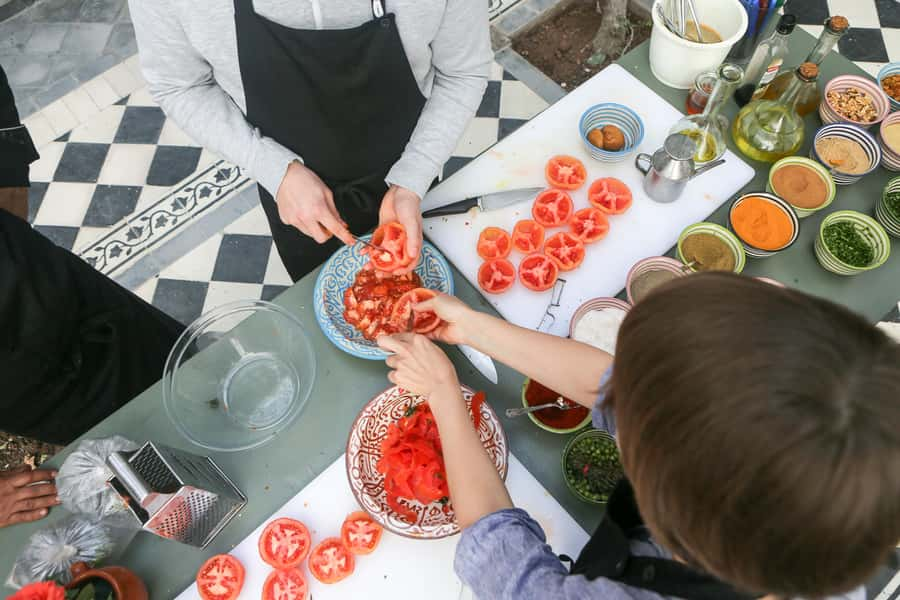
The cooking tasks are hands-on. You may chop, add spices, marinate meat, and assemble the dishes under the chef’s direction. The experience is suited to people who like to participate, not just take photographs of a finished plate.
Preserved lemon gets particular attention. Its flavor is not the same as fresh lemon juice, and it brings a salty, concentrated citrus note to Moroccan cooking. You also learn about rose water and ras el hanout, the aromatic spice blend that appears in many Moroccan kitchens. The class uses these ingredients to show how Moroccan dishes combine sweet and savory notes with fragrance.
The details from previous sessions indicate that preparation can take longer than you first expect, especially when several dishes are being made. That is a good thing if you want technique and context. It may feel slow if your main goal is to eat quickly before an afternoon of sightseeing.
Three salads before the main course
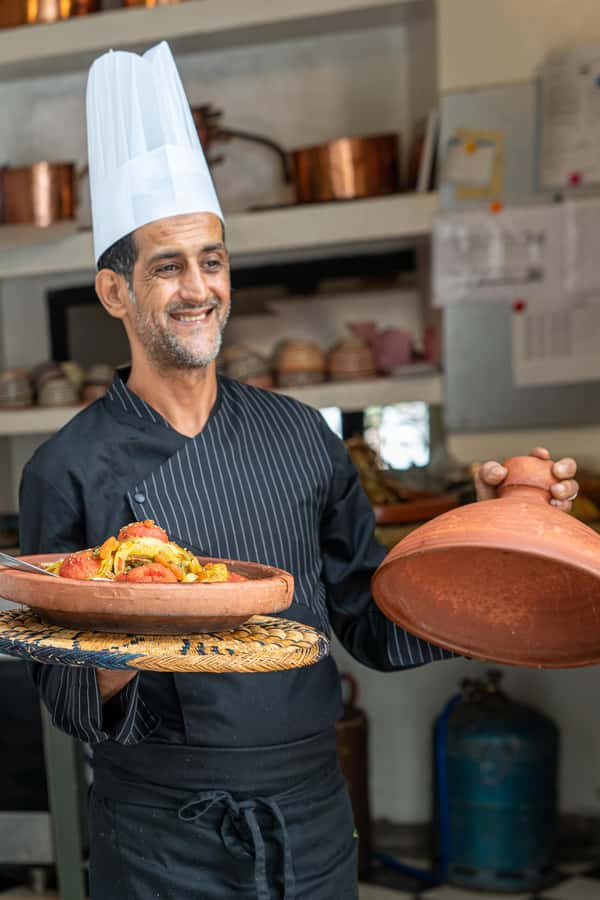
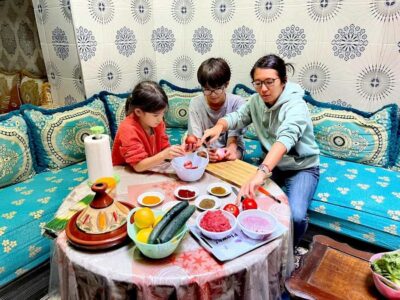
Moroccan salads are not an afterthought here. They form the opening part of the meal and give you several ways to work with vegetables, herbs, seasoning, and texture.
The exact salads are not specified, but the class information and participant accounts describe three side dishes. Preparing several salads lets you compare the different roles of spice, acidity, sweetness, and fresh ingredients. It also gives you useful recipes that are easier to repeat at home than a long-cooked tagine.
This part of the class can be especially helpful for vegetarians and anyone who wants to take Moroccan food beyond the familiar tagine. The salads provide variety, and a meat-free menu can be arranged. Vegan and gluten-free options are also available, but you should request them when booking so the kitchen can plan properly.
Because the group is limited to eight, you should have a reasonable chance to take part in the chopping and seasoning. With only two people, the session can feel almost like a private lesson. With eight, the cooking becomes more social, but you will want to speak up if you have a question or want to handle a particular task.
More Three-Hour Sessions in Marrakesh:
- 3-Hour Cooking Class overlooking the Blue City
★ 5.0 · 36 reviews - 3-hour Tuscan Cooking Class with Wine & Oil Tasting
★ 4.5 · 36 reviews - 3-Hour Siem Reap Guided Cooking Class and Market with Pick up
★ 4.5 · 26 reviews - Sabah Traditional Authentic Cuisine Cooking Class 3 Hours
★ 4.9 · 22 reviews
Lunch in the courtyard or on the roof
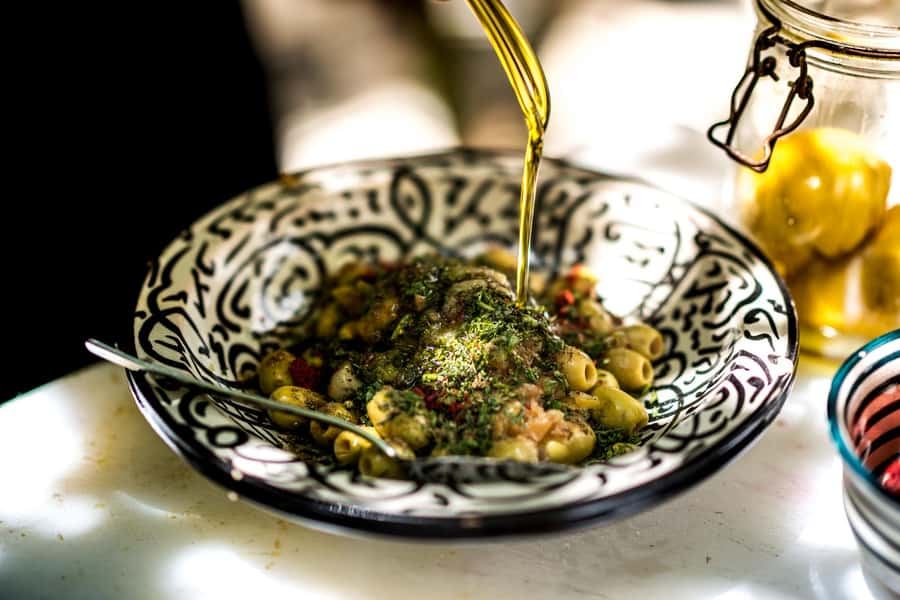
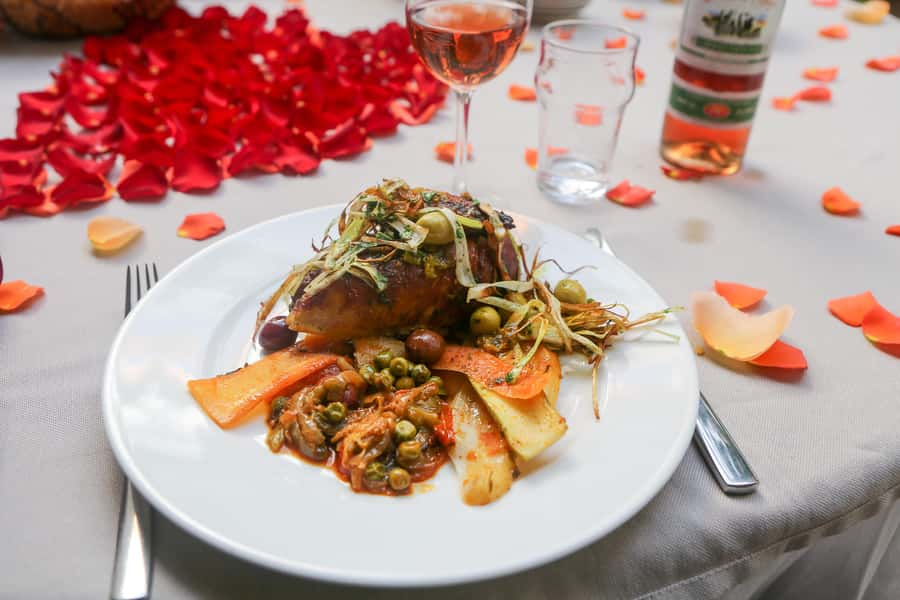
Once the tagine and salads are ready, you sit down to eat the meal you helped prepare. The choice is between a peaceful courtyard setting and a rooftop terrace, depending on your preference and the day’s arrangements.
I like this transition from kitchen to table. You are not handed a token sample at the end of a demonstration. You get a proper lunch, with time to understand how the dishes work together. The riad setting also gives the meal a quiet finish after the sensory overload of Marrakech’s central square.
Mineral water is included, as are tea or coffee at the end. Moroccan mint tea is the natural choice, and lingering with a small glass of tea gives the experience a more relaxed ending. Moroccan wine, beer, and other drinks are available for an extra charge. Alcohol is not included, so budget for it separately if wine with lunch is important to you.
The meal is one of the strongest reasons to choose this class over a shorter market visit. You gain both a cooking lesson and a seated lunch in an attractive setting. At the same time, the price includes only the specified drinks, so you should not assume that every beverage at the table is covered.
What the $88 price really buys
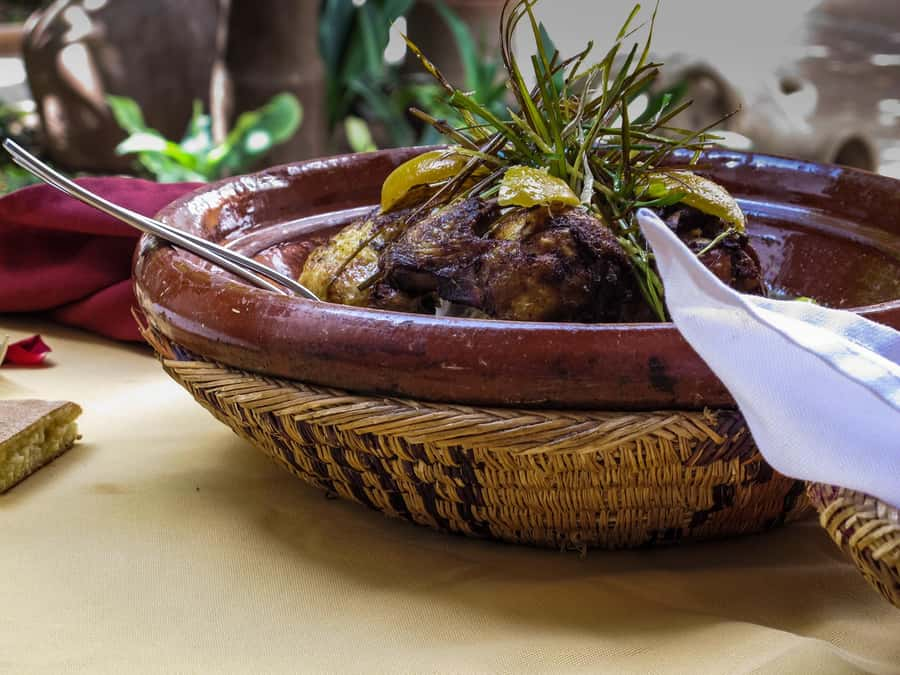
At $88 per person, this is not the cheapest way to eat in Marrakech. You can find a less expensive lunch, and a market tour without a full cooking session may cost less. The value comes from combining several elements into one half-day experience.
You are paying for instruction, ingredients, a small group, the meal, mineral water, tea or coffee, recipes in English or German, and pickup from Jemaa El Fna. You also get access to the riad setting and the time needed to prepare several dishes rather than just watch a chef.
For me, the price makes the most sense if you want to take the experience home. The recipes give the course a lasting use, and the lessons about preserved lemon, ras el hanout, and slow cooking can change how you approach Moroccan food after your trip.
The value is less clear if you dislike group activities, have little interest in cooking, or mainly want a fast lunch. Even a small group means sharing the chef’s attention. The menu may also vary, so you should not book expecting one exact combination of lamb, chicken, and salads unless the provider confirms it.
Timing, seasons, and group size
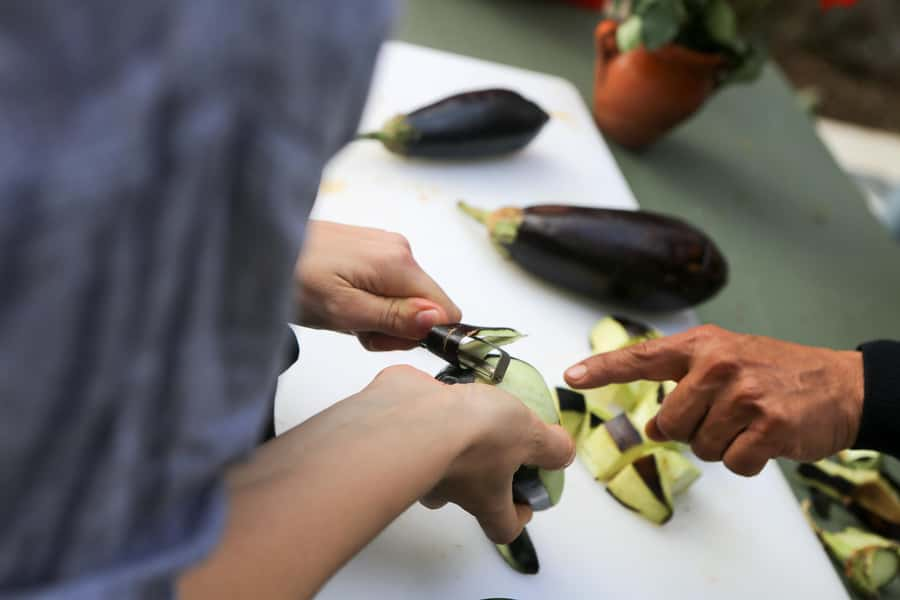
The morning class starts at 11:00, following the 10:45 to 11:00 pickup window. During summer, a 16:30 start is also offered. That later option may suit you better if you want a slower morning or prefer to avoid the strongest midday heat.
The published duration is four hours, while the experience title refers to three hours. Plan your day around the longer figure. Slow cooking, lunch, tea, and movement from the meeting point to the riad all take time.
The minimum is two participants over age 14. Children up to age 13 who are interested in cooking can join at a reduced price, so this is not limited to adults. The group size runs from two to eight people, and dates depend on availability. If the requested date cannot operate, the provider may contact you with another date or time.
The course is not suitable for wheelchair users. That is an important practical limitation because the riad and medina setting may involve access conditions that do not work for every visitor.
Dietary needs and drink choices
Vegetarian, vegan, and gluten-free versions are available. This makes the class more useful for mixed groups, especially when one person wants a traditional meat tagine and another does not eat meat. Tell the provider your needs in advance rather than waiting until you arrive.
The included meal is paired with mineral water, and tea or coffee comes at the end. Wine and beer are available but cost extra. A Moroccan wine can complement the meal, but you can also skip alcohol and stay with mint tea, which is already part of the experience.
The food focus is sweet and savory Moroccan cuisine. Expect lessons about aromatic ingredients and traditional combinations rather than a restaurant-style menu with many choices. The appeal lies in learning how a few carefully handled ingredients become a complete meal.
Who should book this cooking course?
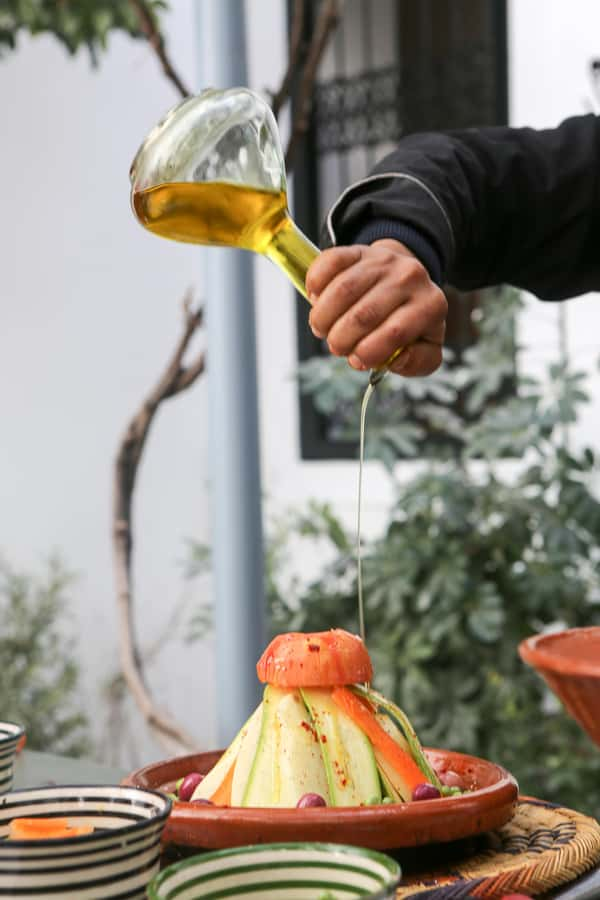
I would recommend it most strongly to you if you want a slower, more personal way to understand Marrakech. It works well for couples, friends, and small family groups who enjoy working together. With only two participants, the instruction can be especially focused.
It also suits food lovers who want practical skills. You will learn more than a list of ingredients, including how slow cooking fits into the meal, why preserved lemon matters, and how salads set up the main course. The recipes in English or German give you a chance to repeat the dishes at home.
Families can consider it too, since children up to age 13 may participate at a reduced price. Still, the length and pace may be better for children who genuinely enjoy cooking. This is not a short entertainment stop with instant results.
You may want to skip it if your schedule is tightly packed, if you need step-free access, or if you are looking only for a market tour. One supplied account refers to an additional market visit, but that is not part of the core inclusions described here, so do not book this class expecting a separate market excursion unless you confirm it directly.
Should you book Riyad El Cadi’s cooking course?
Book it if you want to do more than eat Moroccan food. The strongest parts are the hands-on preparation, the small group, the courtyard meal, and the chance to bring the recipes home. Chef Hassan’s guidance and the warm assistance associated with Khatija add a personal touch to a class that could otherwise feel purely instructional.
I would treat the four-hour timing as a feature, not a flaw, if you have room in your itinerary. Moroccan cooking rewards patience, and the class gives you enough time to see the tagine cook while preparing several salads.
Skip it if the $88 price feels high for lunch, if you prefer a quick activity, or if you require wheelchair access. For everyone else, this is a useful and tasty way to connect Marrakech’s food traditions with the everyday work behind them.
FAQ
Where does the cooking course meet?
Pickup is from Café de France at Jemaa El Fna Plaza. The listed riad address is Riyad El Cadi, 87 Derb Moulay Abdul Kader, Marrakesh 40000, Morocco.
How long does the experience last?
The activity details describe a four-hour experience. The title refers to a three-hour cooking course, so plan for up to four hours.
What time does the morning course start?
Pickup is listed between 10:45 and 11:00, with the cooking class starting at 11:00. You should call ahead to confirm the pickup time.
Is there a summer afternoon start?
Yes. During summer, the cooking class may also start at 16:30. Availability should be checked before booking.
What languages are available?
Instruction is available in English and French. Recipes are supplied in English or German.
What food will I prepare?
You prepare a Moroccan tagine and several Moroccan salads. Examples include lamb tagine, chicken with preserved lemon, and vegetable tagine, but the exact menu may vary.
Can the class accommodate dietary requirements?
Yes. Vegetarian, vegan, and gluten-free options are available. Request the suitable menu when arranging your booking.
Are drinks included?
Mineral water and tea or coffee at the end are included. Alcoholic drinks, including wine and beer, are available for an additional charge.
Newest classes around Marrakesh
- Moroccan Food Cooking Class with a Local Chef in Marrakech★ 4.7 · 90 reviews
- Moroccan cooking class in Marrakech with berber chef★ 5.0 · 16 reviews
- Edgy 8 Dish Private, Fusion Cooking Class, Menu Plan, Market★ 4.9 · 31 reviews
- Marrakech: Moroccan Cooking Class with Amazing Local Chef!★ 4.9 · 100 reviews
- Marrakech: Moroccan Cooking Class with Local Chef★ 4.6 · 87 reviews
- Marrakesh: Private Cooking Class & Local Market Shopping★ 4.7 · 15 reviews
- Marrakech: Cooking Class and Market Visit★ 4.4 · 5 reviews
- Marrakech: Moroccan Cooking Class for vegetarians and vegan★ 4.9 · 156 reviews
Marrakech Cooking Classes, compared.

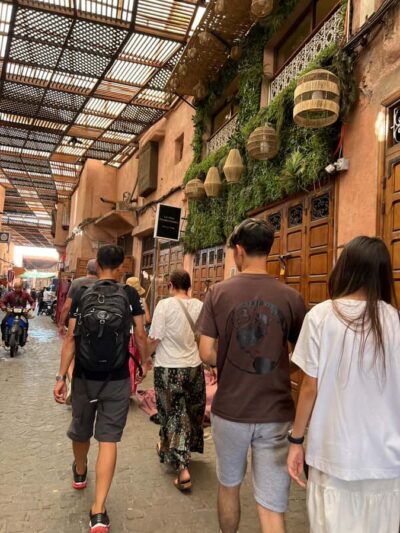
Traditional Moroccan Cooking Class & Market Visit
Read our review →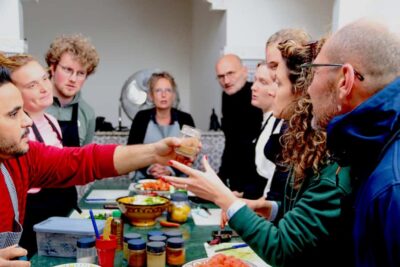
Moroccan Dishes Cooking Class with a Local Chef
Read our review →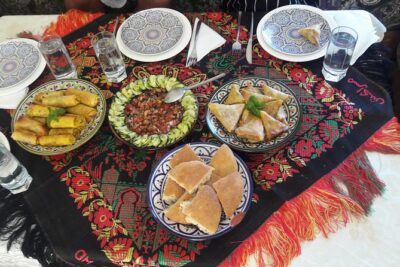
Moroccan Cooking Class & Marrakech Market Visit with Chef Khmisa
Read our review →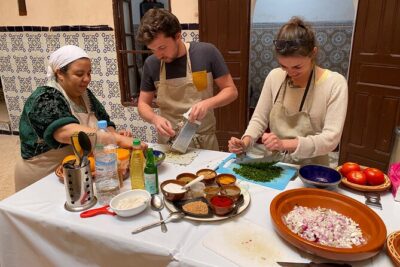
Half-Day Cooking Class with Local Chef Laila in Marrakech
Read our review →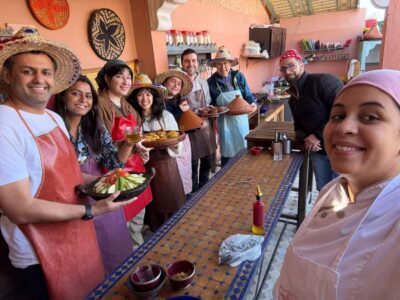
Browse the lists this tour appears in