Review · MARRAKECH COOKING CLASSES
Marrakesh: Private Cooking Class & Local Market Shopping
The best part of this Marrakesh experience is that the market visit leads straight into the kitchen. You do not just watch a chef make tajine. You help choose the ingredients, learn their Arabic names, prepare the food, and eat the finished dish in a traditional riad. The meal is both lesson and reward.
I like the small private-group format and the chance to cook in a local home or family kitchen rather than a polished hotel classroom. I also like the market stop, where saffron, mint, olives, oranges, lemons, herbs, and spices have a clear place in Moroccan cooking. The main caution is timing: the published duration is four hours, but one booking ran closer to three to three and a half hours, and participation in every task may vary.
Key points to know before booking
- Meet at Café France: The starting point is outside the three-story café on the right side of Djemaa El-Fna when you enter through the square’s main entrance.
- Shop before you cook: You select fresh meat, vegetables, herbs, and spices at a local souk, then use them in the kitchen.
- Learn a classic tajine: A professional chef guides you through seasoning and cooking this central Moroccan dish.
- Expect language support: The activity is offered in Arabic, English, and French, with a local English- or French-speaking guide.
- Eat in a Marrakech riad: Your lunch or dinner is prepared during the class, not served as a separate restaurant meal.
- Private does not mean every person does every task: The class is hands-on, but the amount of direct work can depend on the group and the kitchen setup.
From Djemaa El-Fna to the market
Your meeting point is outside Café France in Djemaa El-Fna, one of the easiest places to locate in central Marrakesh. Enter the square through its main entrance and look for the three-story café on the right. This is a useful meeting point, but give yourself time to find the correct side of the square. Djemaa El-Fna has several cafés and entrances, and a first visit can feel confusing.
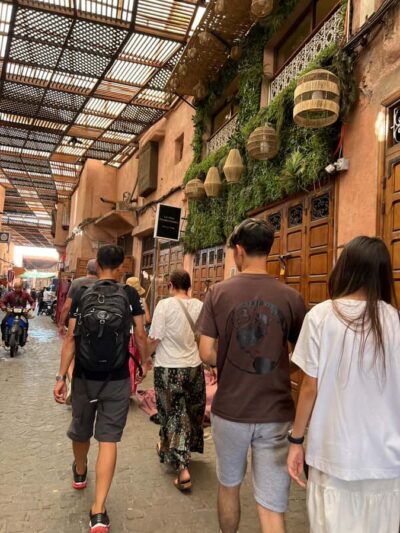
From there, your guide takes you through the streets toward a local market. The shopping is not an isolated sightseeing stop. It is the first lesson in the dish you will cook later. You look for the ingredients that form the base of Moroccan home cooking, including meat, vegetables, herbs, and spices.
I like this order because it gives the cooking a practical reason. Instead of seeing spice stalls as colorful photo stops, you learn how each item is chosen and used. You also hear the Arabic names for common ingredients, which adds a useful local touch when you visit food stalls on your own later.
The market portion can vary in how clearly the choices are explained. If you want to get the most from it, ask direct questions about quality, type, price, and the reason for choosing one ingredient over another. One account found the shopping less satisfying because an interpreter handled much of the communication, leaving the participants unsure what the instructor was seeking. That is a fair concern, especially if the market is important to you.
The experience places special attention on the origin and use of Moroccan ingredients. Taliouine saffron, Meknes mint and olives, and oranges and lemons from Fez are named as examples of local produce. You may not visit every growing area, of course, but these references help explain that Moroccan cookery is shaped by regional ingredients and long-standing trade in herbs and spices.
More Cooking Classes with a Market Tour in Marrakech
- Marrakech: Traditional Moroccan Cooking Class & Market Visit
★ 4.8 · 1,861 reviews - Marrakech: Moroccan Cooking Class with Market Visit and Meal
★ 4.9 · 347 reviews - Edgy 8 Dish Private, Fusion Cooking Class, Menu Plan, Market
★ 4.9 · 31 reviews
Why the spice lesson matters
Moroccan cooking can look simple on the plate, but the balance of seasoning takes care. A tajine may use familiar vegetables and meat, yet the flavor depends on how the herbs and spices are combined and when they are added.
The class gives you a chance to learn this by doing rather than by reading a recipe. You can ask how spices are used in Moroccan kitchens and why certain ingredients belong together. The focus is not only on heat. Moroccan seasoning often depends on fragrance, sweetness, earthiness, freshness, and salt working together.
The Arabic vocabulary is another useful detail. You learn names for common ingredients and spices while standing near the stalls where they are sold. That makes the words easier to remember than a list handed to you in a classroom.
The shopping stop also brings up an important point about value. Market prices and ingredient quality are part of everyday cooking, not just background scenery. If your guide explains what is being selected and why, you gain something you can use later. If communication is limited, the stop may feel more like a purchasing errand than a full lesson.
Cooking tajine with a local host
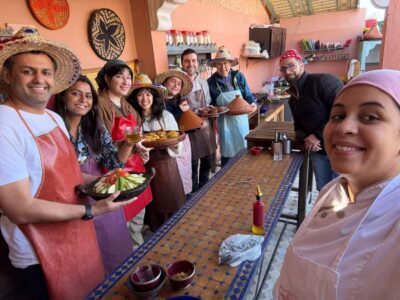
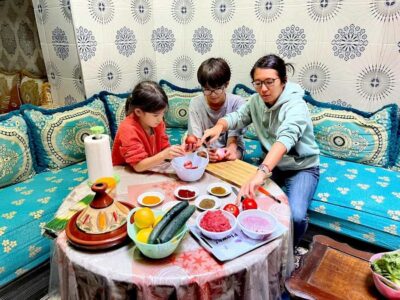
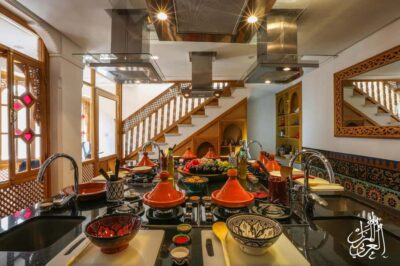
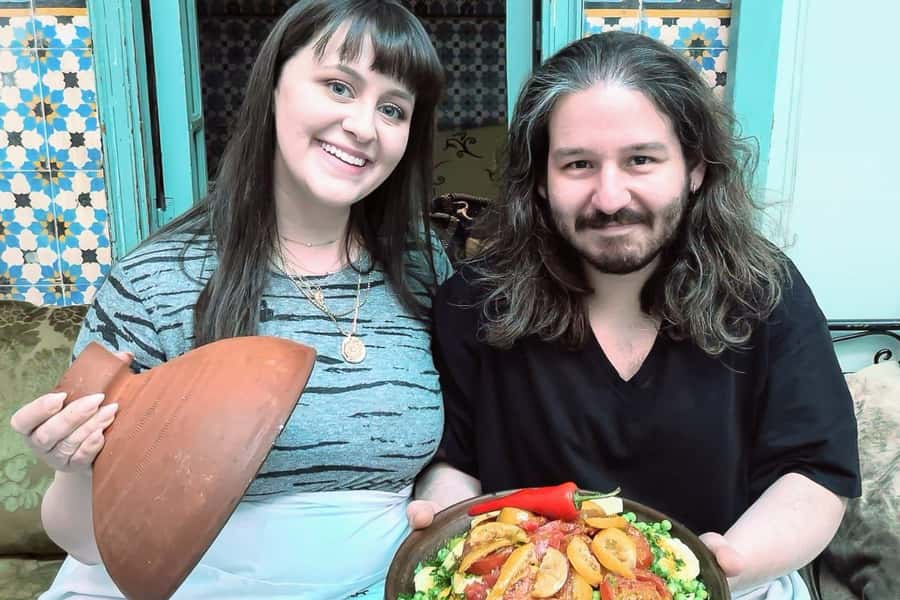
After shopping, you move to the cooking workshop. The setting is described as a charming riad in central Marrakesh, and some bookings have taken place in a local family home or kitchen. That setting matters. A riad kitchen or family home gives you a closer look at how food is prepared outside a restaurant dining room.
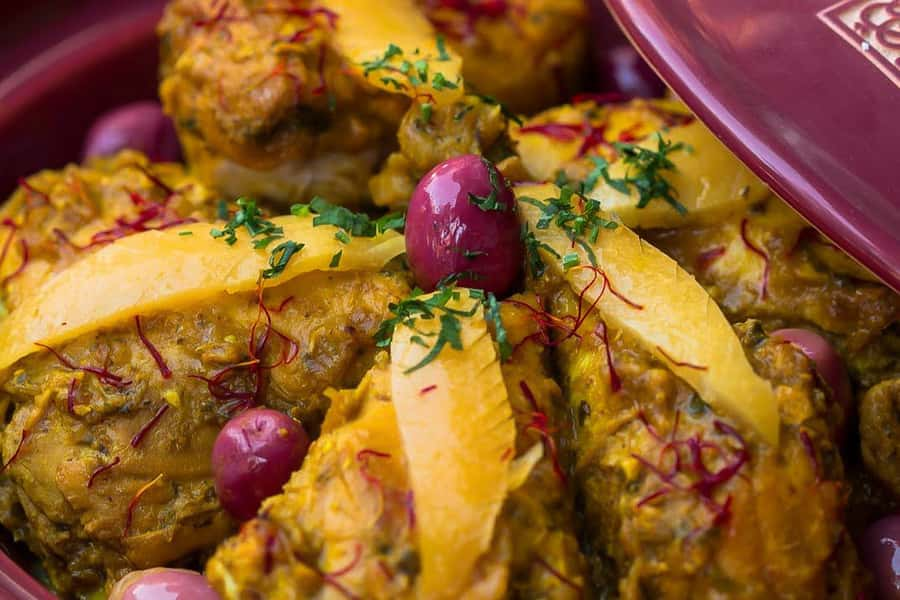
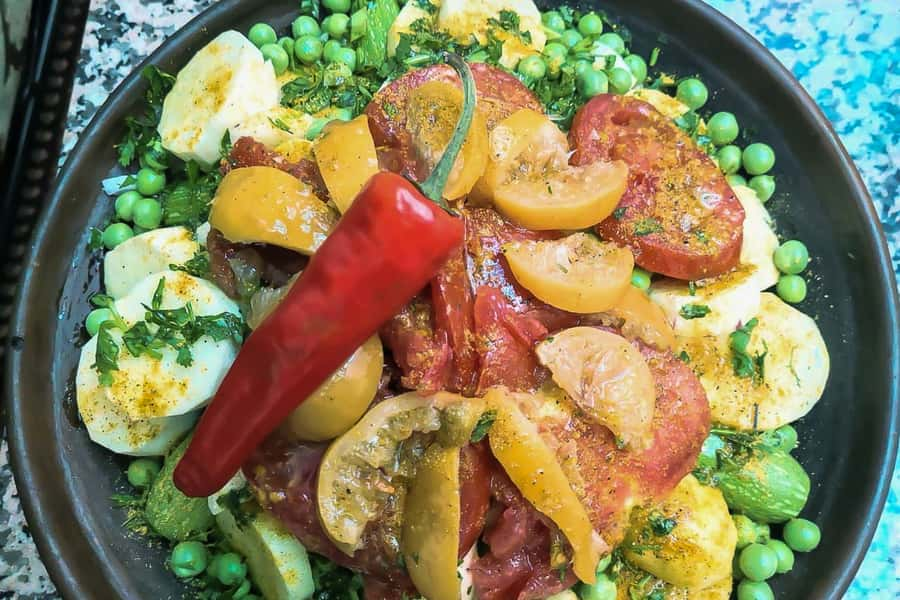
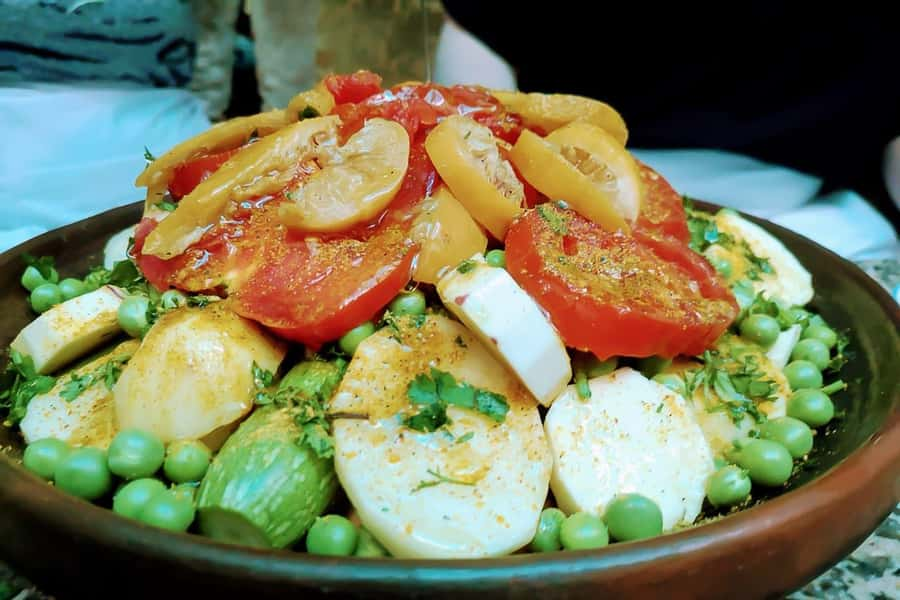
The main task is making a traditional tajine. You work with a chef or local cooking host to prepare the ingredients, season the dish, and cook it in the familiar cone-shaped vessel associated with Moroccan cuisine. The exact menu can depend on the class, but the information provided also refers to Moroccan salad and bread preparation.
The workshop is intended to be hands-on. You should expect to chop, season, arrange, and help with the cooking rather than sit at a demonstration. Still, private does not always mean that every person has equal access to every step. In a small kitchen, one person may be cutting while another watches, or the chef may take over a task that requires speed or care.
For that reason, say early in the class that you want to take part. If you are cooking with a partner or family group, agree on who wants to handle which task. This simple step can help prevent one person from doing most of the work.
The strongest part of the kitchen experience is the contact with the local hosts. One particularly warm description referred to cooking with family members in their home, sharing time together, and receiving practical cooking tips. Another praised the host and guide for making the activity feel personal and welcoming. A booking during Ramadan was also handled with care, which suggests that the schedule and meal can accommodate that period.
A different experience found the mood changed when the owner joined during the meal. The cooking portion had felt relaxed, but the dining portion became more controlled and less comfortable. I would treat this as a useful expectation: the people who teach you may not be the same people who manage the meal, and the tone can shift between the kitchen and dining room.
Eating what you prepared in the riad
Once the tajine is ready, you sit down to eat lunch or dinner. This is a strong finish because the meal has a clear story. You saw the ingredients at the market, handled them in the kitchen, and now taste the result.
The meal is not simply an included restaurant stop. It is the part of the class where you can judge what you learned. You may notice how long cooking changes the meat or vegetables, how the spice mix settles into the sauce, and how the dish works with bread or salad.
The food also gives you a chance to compare your own result with the chef’s method. If something tastes different from what you expected, ask about the seasoning or cooking time while the lesson is still fresh. You are more likely to remember the answer when you are tasting the dish in front of you.
The riad setting adds atmosphere without making the meal feel overly formal. The activity is designed around local hospitality, and several experiences praised the warmth of the household and the cleanliness of the home. One booking described the entire family being present, which made the visit feel especially personal.
Still, the dining arrangement may not suit everyone. If you want to keep talking with the cooks during the meal, ask whether they will eat with you. In one case, the women who had cooked with the group withdrew when the owner took over the dining portion. You should not assume the meal will have the same staff, tone, or conversation as the cooking lesson.
More Cooking Classes with a Market Tour in Morocco
- Marrakech: Cooking Class and Market Visit
★ 4.4 · 5 reviews - Moroccan Cooking Class & Marrakech Market Visit with Chef Khmisa
★ 5.0 · 1,504 reviews - Moroccan Cooking Class with Market Visit and Meal
★ 5.0 · 196 reviews - Fez: Souk Tour and Traditional Home Cooking Class
★ 4.9 · 186 reviews
What the four-hour schedule really means
The published duration is four hours, with starting times available according to the date you select. That is enough time for a market visit, a cooking workshop, and a meal, but it is not a full-day food tour.
Actual timing may be shorter. One booking expected five hours but spent about three to three and a half hours on the complete experience. Another comment asked for clearer information about whether the tajine or couscous option required three or five hours. Since the current description lists tajine and four hours, confirm the exact timing if you are arranging another activity immediately afterward.
I would leave a little space around the class. The market may take longer than expected, and cooking times are not always exact. You also do not want to rush away from the meal simply because you have booked a museum visit across town.
The private format makes this easier than a large group tour. You have more room to ask questions, request a vegetarian meal, or explain food preferences. A vegetarian adjustment was handled for one booking, but do not assume every dietary request is automatic. Tell the provider before the class.
Language, guides, and communication
The activity operates in Arabic, English, and French. A local English- or French-speaking guide is included, and the wider language support includes Arabic. This is useful during the market visit, where ingredient names and bargaining customs can move quickly.
The guide may act as interpreter between you and the cooking host. That can help bridge language gaps, but it can also create some distance if every exchange passes through another person. Ask the guide to translate the chef’s explanation as the task is happening, not afterward.
The guide’s enthusiasm has been a strong part of the experience. One booking praised a guide who explained things clearly and kept the group engaged, while another singled out both the guide and the local women for their warmth. The name Mama Tutu also appears in the experience feedback as a memorable cooking host, described as fun and welcoming.
Because staff may differ by date, I would focus less on expecting a particular personality and more on using the guide well. Ask for the Arabic names, request clarification at the market, and speak up if you want a more active role in the kitchen.
The $81 price and what you receive
At $81 per person, this is not the cheapest way to eat in Marrakesh. You can find a meal for much less, and a market walk by itself may cost less still. The value comes from combining several parts in one private activity: a guide, market shopping, ingredient instruction, cooking tuition, a prepared meal, and recipes sent afterward.
The recipe follow-up matters. A cooking class can be enjoyable but quickly fade once you leave Morocco. Having the recipes gives you a better chance to repeat the tajine, salad, or bread at home. The value is strongest if you actually cook from them.
Photography is included, though the details of how much photography is provided are not specified. Lunch or dinner is also included, so you are paying for the meal as well as the lesson.
I think the price makes the most sense for people who want a personal food experience rather than a basic meal. It is less compelling if you mainly want to eat tajine or spend the afternoon shopping. The private format and local home setting are the reasons to choose it.
Free cancellation is available up to 24 hours before the activity for a full refund, and you can reserve now and pay later. Those terms are helpful if your Marrakesh plans are still shifting. You should still check the available start time before booking because the class takes a substantial part of the day.
Who should book this cooking class?
I would recommend it to couples, families, and small private groups who enjoy food and want more contact with local daily life. It also suits you if you like to ask questions, try unfamiliar ingredients, and take home a skill rather than only photographs.
It is a good choice for first-time visitors who want an easy introduction to Moroccan food. The guide provides language help, the market gives context, and the chef turns the ingredients into a meal you can understand.
Vegetarians can request an adjustment, as one booking successfully did. If you have other dietary needs, raise them in advance because the available information confirms only the vegetarian accommodation.
You may want a different activity if you need a tightly timed schedule, guaranteed equal participation for every person, or a formal cooking school with a fixed menu and clearly defined lesson stages. The home-style approach is part of the appeal, but it can also bring uneven communication and changes in atmosphere.
Should you book it?
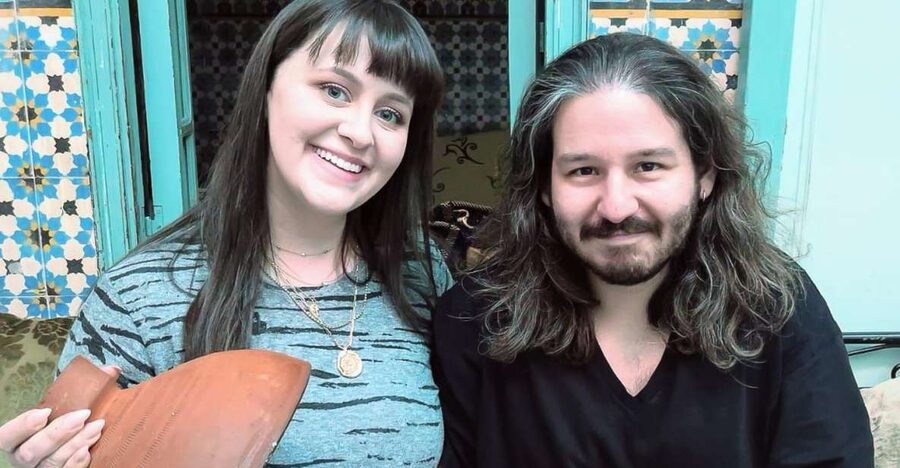
Book this if you want to shop, cook, and eat with a local connection, and if you value a private setting more than a perfectly scripted class. The best moments come from learning how ingredients are chosen, working with the cooking host, and tasting your own tajine in a riad.
Go in with realistic expectations. Allow roughly four hours, ask to be included in the kitchen work, and request clear explanations during the market stop. If you do that, the $81 price can be fair for a private meal, a guided food lesson, and recipes you can use after Morocco.
FAQ
Where does the activity begin?
The meeting point is outside Café France in Djemaa El-Fna. Enter through the main entrance of the square and look for the three-story café on the right.
How long does the cooking experience last?
The published duration is four hours. One booking took about three to three and a half hours, so you should allow some flexibility around the stated time.
What dish will I learn to cook?
The main dish is a traditional Moroccan tajine. The experience information also mentions Moroccan salad and bread as dishes or skills that may be included.
Is the market visit included?
Yes. You visit a local souk to select fresh meat, vegetables, herbs, and spices for the cooking session.
Will I learn Arabic food words?
Yes. The class includes Arabic names for common ingredients and spices used in Marrakesh.
What languages are available?
The activity is offered in Arabic, English, and French. A local English- or French-speaking guide is included.
Is the cooking class private?
Yes. The activity is arranged for a private group.
Is a meal included?
Yes. You eat the lunch or dinner prepared during the cooking class.
Are recipes provided afterward?
Yes. Recipes are sent after the workshop.
Can I cancel the booking?
You can cancel up to 24 hours in advance for a full refund. The activity also offers a reserve-now, pay-later option.
More Cooking Classes with a Market Tour in Marrakesh
- Hanoi Cooking Class: Culture, Local Market & Meaning CSR Impact
★ 5.0 · 5,147 reviews - 5 Traditional Dishes Hanoi Cooking Class with Market Trip
★ 5.0 · 4,890 reviews - Cooking Class and Lunch at a Tuscan Farmhouse with Local Market Tour from Florence
★ 5.0 · 4,831 reviews - Chiang Mai: Cooking Class, Market & Thai Herbs Garden Tour
★ 4.9 · 4,824 reviews
More Private Cooking Classes in Morocco
- Tangier Food Cooking Class and Private City Tour
★ 5.0 · 73 reviews - Tangier Private Cooking Class With a Local Family
★ 4.5 · 49 reviews - Private Casablanca Market Tour and Cooking Class with Chamsi
★ 5.0 · 33 reviews - Private Market Tour & Cooking Class in Casablanca with Transfers
★ 5.0 · 20 reviews
Newest classes around Marrakesh
- Marrakech: 3-Hour Open-Air Moroccan Cooking Course★ 4.9 · 74 reviews
- Moroccan Food Cooking Class with a Local Chef in Marrakech★ 4.7 · 90 reviews
- Moroccan cooking class in Marrakech with berber chef★ 5.0 · 16 reviews
- Edgy 8 Dish Private, Fusion Cooking Class, Menu Plan, Market★ 4.9 · 31 reviews
- Marrakech: Moroccan Cooking Class with Amazing Local Chef!★ 4.9 · 100 reviews
- Marrakech: Moroccan Cooking Class with Local Chef★ 4.6 · 87 reviews
- Marrakech: Cooking Class and Market Visit★ 4.4 · 5 reviews
- Marrakech: Moroccan Cooking Class for vegetarians and vegan★ 4.9 · 156 reviews
Marrakech Cooking Classes, compared.

Traditional Moroccan Cooking Class & Market Visit
Read our review →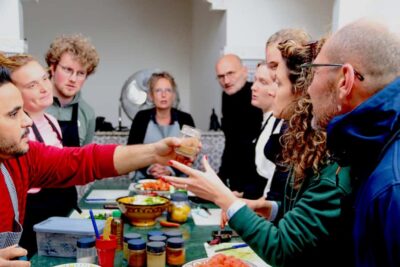
Moroccan Dishes Cooking Class with a Local Chef
Read our review →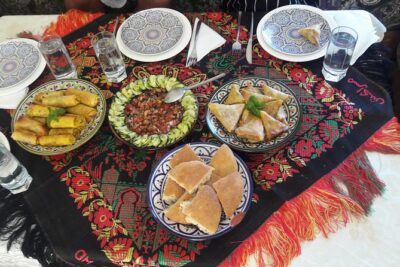
Moroccan Cooking Class & Marrakech Market Visit with Chef Khmisa
Read our review →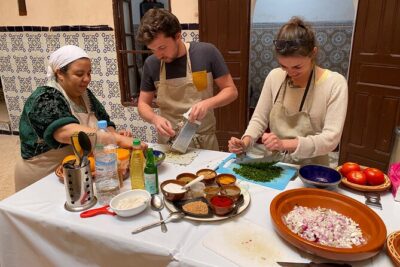
Half-Day Cooking Class with Local Chef Laila in Marrakech
Read our review →