Review · MARRAKECH COOKING CLASSES
Moroccan Cooking Class with Market Visit and Meal
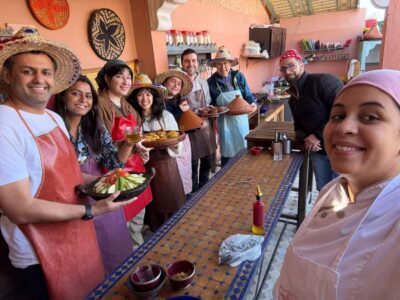
Marrakech’s best cooking lesson starts before you reach the kitchen. The morning session takes you into a local market with your host to choose vegetables, spices, and other ingredients, then brings you back to a home kitchen where you prepare tagine, salads, dessert, and more. It is a practical way to connect Moroccan food with daily life.
I like the market visit, because it gives the cooking a clear sense of place instead of treating spices as a classroom display. I also like the hands-on format: you chop, season, stir, and cook with help from Fatiha, Fatima, Saida, or other members of the kitchen team.
The main thing to consider is timing. The market visit is available only with the 10:30 a.m. class, and the full four-hour session includes preparation, cooking, and a leisurely meal. If you want a quick activity, this is not it.
Key points at a glance

- Morning market option: Shop for fresh vegetables, spices, and other ingredients before cooking.
- Home-kitchen setting: Learn in a spacious, clean kitchen rather than watching a chef from a distance.
- Several Moroccan dishes: Prepare tagine, salads, dessert, and possibly up to six dishes in one session.
- Warm local instruction: Fatiha, Fatima, Saida, and the kitchen team offer patient, friendly help.
- Shared three-course meal: Eat what you prepare with Moroccan tea and coffee in a comfortable salon.
- Small-group scale: The class accepts no more than 10 people, with group discounts available.
Why this class works so well in Marrakech
Moroccan food is easy to admire and harder to reproduce. A restaurant can show you the finished tagine, but it does not show how the vegetables are cut, when the spices go in, or how a simple salad fits into a full meal.
This class deals with those practical details. You work through the food from market purchase to final plate. That makes the lesson useful after your holiday, especially since recipes are provided to take home.
The setting also matters. You are not placed in a large demonstration room with a chef doing everything for you. The class takes place in a home kitchen, with the instructors preparing ingredients in advance and helping each person take part. The result is less polished than a formal culinary school, but more relaxed and personal.
I would think of this as a cultural activity with a meal attached, not just a meal with a recipe card. Conversations cover Moroccan food, cooking methods, spices, and local culture. The teaching is social, and the best moments may come between tasks, while you are sharing a counter or waiting for a tagine to finish.
More Cooking Classes with a Market Tour in Marrakech
- Marrakech: Traditional Moroccan Cooking Class & Market Visit
★ 4.8 · 1,861 reviews - Moroccan Cooking Class & Marrakech Market Visit with Chef Khmisa
★ 5.0 · 1,504 reviews - Marrakech: Moroccan Cooking Class with Market Visit and Meal
★ 4.9 · 347 reviews
Choosing between the 10:30 a.m. and 5:30 p.m. sessions
You can book the class in the morning at 10:30 for lunch or in the evening at 5:30 for dinner. Both sessions last about four hours and return to the same meeting point on Rue Fatima Zahra in Marrakech.
The morning class is the stronger choice for most people. It includes the market visit, which adds roughly the kind of local detail you cannot get from a kitchen alone. You see how ingredients are selected, take part in the shopping, and learn what goes into the meal before you begin cooking.
The market stop also gives the class a natural opening. You are not asked to arrive cold and immediately start chopping. Instead, you first get a look at the produce and spices that shape Moroccan cooking. It can be a lively experience, so stay close to your host and be ready to walk at a practical pace.
The evening class skips the market, but that does not make it a poor choice. It is useful if your morning is already committed, or if you prefer a cooking lesson followed by dinner. You still get the kitchen instruction, the meal, tea and coffee, and the chance to take recipes home.
If the market is the deciding factor, book the morning time. Do not assume the evening class includes a later market visit.
Shopping for ingredients in a Marrakech market
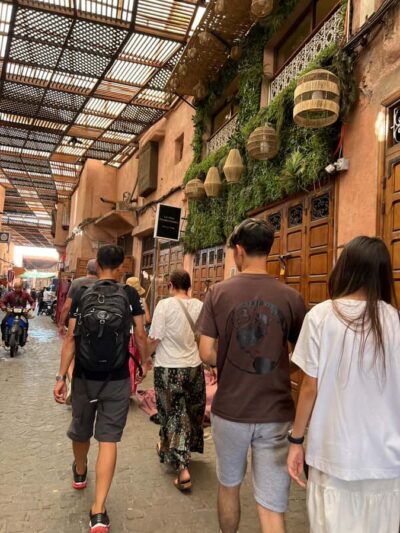
The market visit is not a separate sightseeing stop. It is part of the cooking lesson. You go with the host to select ingredients for the meal, including vegetables, spices, and, depending on the menu, chicken or other items.
This is where the class feels most connected to everyday Moroccan food. You can ask about ingredients as they are chosen, rather than seeing them already measured in small bowls. The activity also gives you a better sense of how familiar market foods become the dishes served at home.
Your host takes the lead, but you are encouraged to take part. Some groups have had each person select or help choose ingredients for the shared meal. That small task makes the later cooking feel more personal.
The drawback is that the exact market experience can depend on the day, group size, and pace. The maximum is 10 people, which keeps the group manageable, but it is still a group activity. You will not be browsing entirely on your own.
Wear comfortable shoes and leave room in your schedule. The class is listed at about four hours, and the market adds movement before the kitchen work begins.
Inside the home kitchen
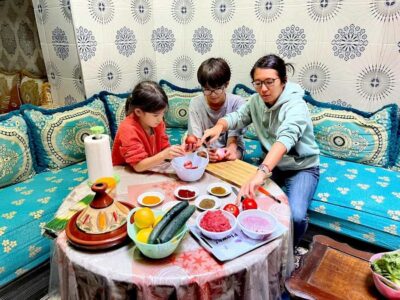
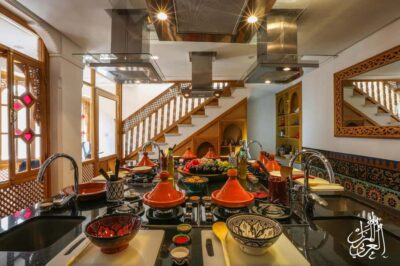
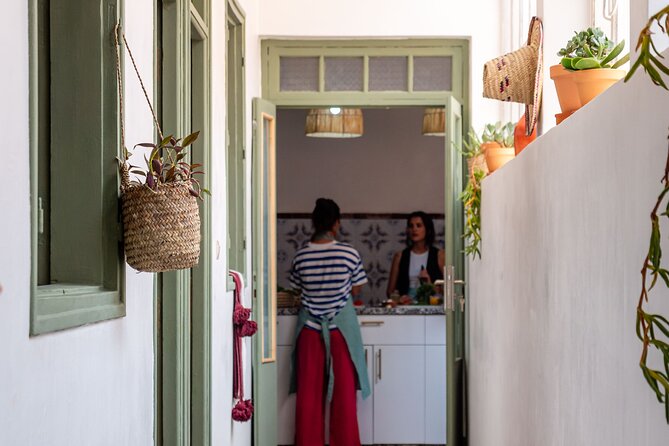
Back at the kitchen, you receive a warm welcome, often beginning with Moroccan tea. The cooking space is described as spacious, clean, well-equipped, and cozy, with a dining salon and sitting areas nearby.
That combination is important. Cooking classes can become cramped when several people work around one small counter. Here, the space is set up for group participation, with the instructors handling prep where useful and guiding you through the rest.
The teaching is aimed at ordinary home cooks. You learn how to chop, season, combine, and cook, with help at each stage. You do not need to arrive with advanced skills. The class has worked well for beginners, while people who already cook can still pick up new spice combinations and Moroccan methods.
Expect plenty of interaction. The instructors explain what you are doing while talking about Moroccan culture and food traditions. Fatiha is often singled out for her humor and friendly manner, while Fatima, Saida, and other kitchen staff help keep the group moving.
The class is not a silent technical workshop. You will talk with the people around you, share jobs, and wait for dishes to cook. That social side is part of the appeal, but anyone seeking a highly formal lesson with exact individual instruction may find the atmosphere loose.
More Cooking Classes with a Market Tour in Morocco
- Edgy 8 Dish Private, Fusion Cooking Class, Menu Plan, Market
★ 4.9 · 31 reviews - Marrakesh: Private Cooking Class & Local Market Shopping
★ 4.7 · 15 reviews - Marrakech: Cooking Class and Market Visit
★ 4.4 · 5 reviews - Fez: Souk Tour and Traditional Home Cooking Class
★ 4.9 · 186 reviews
What you may cook
The central dish is tagine, one of Morocco’s best-known meals. You learn the basic process rather than simply receiving a finished pot. Depending on the day’s menu, that may include chicken and vegetable tagine or another variation.
You also prepare appetizers or salads, using fresh vegetables and Moroccan seasonings. Dessert is included, and past menus have covered several dishes in one session, with some groups preparing as many as six.
The class introduces spices such as ras el hanout, paprika, and cumin. These ingredients are not treated as decoration. You learn how they contribute to the smell, color, and flavor of the food.
The exact menu is not fully fixed in the information provided, so you should not book expecting one guaranteed list of six named dishes. What is consistent is the focus on a complete meal, from salad through main course and dessert.
A vegetarian option is available, which is useful for mixed groups. If your diet is more restrictive, confirm the details before booking rather than assuming every ingredient can be changed at the last minute.
Eating the meal you prepared
The cooking ends with the best kind of test: lunch or dinner. You sit down in the salon and eat the dishes prepared during the class, with tea and coffee provided.
This shared meal gives the session a proper rhythm. You shop, prepare, wait, and then sit together. The food is not rushed out between other bookings, and the salon offers places to relax during parts of the cooking process.
Expect a three-course meal, though the number of individual dishes may be higher. The meal can include tagine, salad, dessert, and other preparations made during the class. Portions and menus may vary, but the experience is designed to leave you well fed.
This is also a good part of the class for asking final questions. You can compare the finished dishes, discuss the spice balance, and make notes about what you want to repeat at home. The recipes help, but watching the process and tasting the result will likely be more useful than a printed formula alone.
One practical point: the meal comes after the work. If you arrive very hungry, keep in mind that you may spend a while preparing the food before sitting down to eat.
The people make the difference

The cooking team is one of the strongest reasons to choose this class. Fatiha is frequently described as warm, funny, patient, and encouraging. Fatima and Saida are also associated with the kitchen, along with other women who help with preparation and instruction.
That team approach suits a group class. One person can explain a technique while another helps with chopping or checks a cooking pot. It also means you are less likely to be left waiting for assistance.
The atmosphere is friendly rather than stiff. Groups may include people from different countries, and the shared jobs give everyone an easy way to talk. Families, couples, solo visitors, and mixed groups can all fit into the format.
At the same time, the personal nature of the class means the experience can vary slightly depending on which hosts are present and how many people attend. The stated maximum is 10, which is a sensible limit for this kind of kitchen activity. Smaller groups may feel more personal, while a full group will bring more conversation and shared energy.
Is $52.34 a fair price?
At $52.34 per person, this is not the cheapest meal you can buy in Marrakech. It is also more than a simple market walk or a short demonstration. The value comes from combining several parts into one half-day activity.
Your price covers roughly four hours, instruction, ingredients, a market visit with the morning session, a full meal, tea and coffee, and recipes to take home. You are also paying for a small-group setting and direct help in the kitchen.
The market and meal make the price easier to justify. If you only want to learn one tagine recipe, a shorter class might suit you better. If you want an activity that occupies much of a morning or evening and includes food, this package is more useful.
Group discounts may improve the value for families or friends booking together. Since the class ends where it begins, you also avoid arranging a separate dining reservation after the lesson.
The strongest value is for people who care about process. If you judge the price only by the food on the plate, you can find cheaper options. If you value the market, the instruction, the social setting, and recipes you can use later, the cost is reasonable.
Who should book this experience?
I would recommend it to first-time visitors who want a direct introduction to Moroccan food without committing to a formal culinary course. You get culture, cooking, and lunch or dinner in one activity.
It also suits families and friends. The instructors make the work team-oriented, and several tasks can be shared. Children’s suitability is not specified, so families should confirm age details before booking.
Vegetarians have a clear reason to consider it, since a vegetarian option is available. People with serious allergies or strict dietary rules should ask ahead for a confirmed menu.
The class is a good match for beginners. You receive help through the steps, and the recipes give you something practical to use at home. Experienced home cooks may enjoy the spice combinations and methods, but should not expect a professional certification course.
I would skip it if you dislike group activities, do not want to spend four hours around food preparation, or prefer a fixed menu and tightly timed instruction.
Practical details before you book
The meeting point is Flavors of Marrakech, Rue Fatima Zahra, Marrakech 40000. The activity ends back at that meeting point, and it is near public transportation.
Confirmation is provided at booking, and the group is limited to a maximum of 10 people. Mobile tickets are accepted, which makes arrival simpler.
Book the 10:30 a.m. session if the market matters to you. The 5:30 p.m. session is the dinner option and does not include the market visit.
Free cancellation is available up to 24 hours before the start time for a full refund. Cancellations or changes made within 24 hours are not refunded or accepted. The activity also requires a minimum number of people, so if the provider cancels for that reason, you are offered another date or experience, or a full refund.
Should you book it?
Book this class if you want more than a recipe demonstration. The market stop, the home kitchen, the patient instructors, and the shared meal create a useful picture of how Moroccan food comes together.
Choose the morning session for the fullest experience, especially if this is your first visit to Marrakech. The evening class still offers good cooking time and dinner, but the market is the feature that adds the most local character.
At $52.34, the class makes sense for anyone who values hands-on learning, a generous meal, and a social setting. It is less suited to people seeking a quick activity or a quiet, private lesson. For most food-minded visitors, though, this is a well-priced way to spend four hours and leave with recipes you can actually use.
FAQ
Where does the cooking class begin?
It begins at Flavors of Marrakech on Rue Fatima Zahra, Marrakech 40000, Morocco.
Where does the activity end?
The activity ends back at the meeting point.
How long does the experience last?
The cooking experience lasts approximately four hours.
What time are the cooking classes offered?
The morning session begins at 10:30 a.m. for lunch, and the evening session begins at 5:30 p.m. for dinner.
Does every class include a market visit?
No. The market visit is available only with the 10:30 a.m. morning session.
How many people can join the class?
The activity has a maximum of 10 participants.
Is food included?
Yes. You prepare and eat a three-course meal, with Moroccan tea and coffee provided.
Can I cancel for a full refund?
Yes, if you cancel at least 24 hours before the experience start time. Cancellations within 24 hours are not refunded, and changes within that period are not accepted.
More Moroccan Classes in Marrakech
- Marrakech: Moroccan Cooking Class with Pickup
★ 4.6 · 1,862 reviews - Marrakesh: Moroccan Dishes Cooking Class with a Local Chef
★ 5.0 · 1,615 reviews - Marrakech: Moroccan Cooking Class with a Local Family
★ 4.9 · 668 reviews - Marrakech: Moroccan Cuisine Cooking Class in Local Home
★ 4.8 · 508 reviews
Newest classes around Marrakech
- Marrakech: 3-Hour Open-Air Moroccan Cooking Course★ 4.9 · 74 reviews
- Moroccan Food Cooking Class with a Local Chef in Marrakech★ 4.7 · 90 reviews
- Moroccan cooking class in Marrakech with berber chef★ 5.0 · 16 reviews
- Edgy 8 Dish Private, Fusion Cooking Class, Menu Plan, Market★ 4.9 · 31 reviews
- Marrakesh: Private Cooking Class & Local Market Shopping★ 4.7 · 15 reviews
- Marrakech: Moroccan Cooking Class with Amazing Local Chef!★ 4.9 · 100 reviews
- Marrakech: Moroccan Cooking Class with Local Chef★ 4.6 · 87 reviews
- Marrakech: Cooking Class and Market Visit★ 4.4 · 5 reviews
Marrakech Cooking Classes, compared.

Traditional Moroccan Cooking Class & Market Visit
Read our review →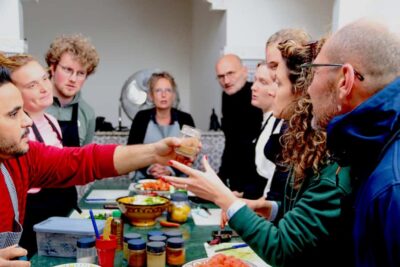
Moroccan Dishes Cooking Class with a Local Chef
Read our review →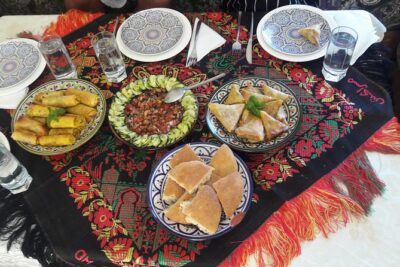
Moroccan Cooking Class & Marrakech Market Visit with Chef Khmisa
Read our review →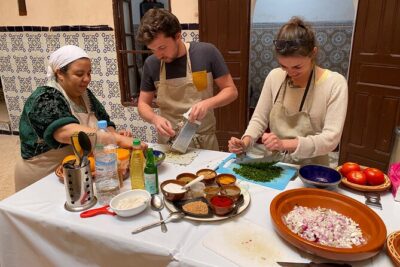
Half-Day Cooking Class with Local Chef Laila in Marrakech
Read our review →