
Review · KANDY COOKING CLASSES
Authentic Sri Lankan Cooking Class in Kandy by Local Family
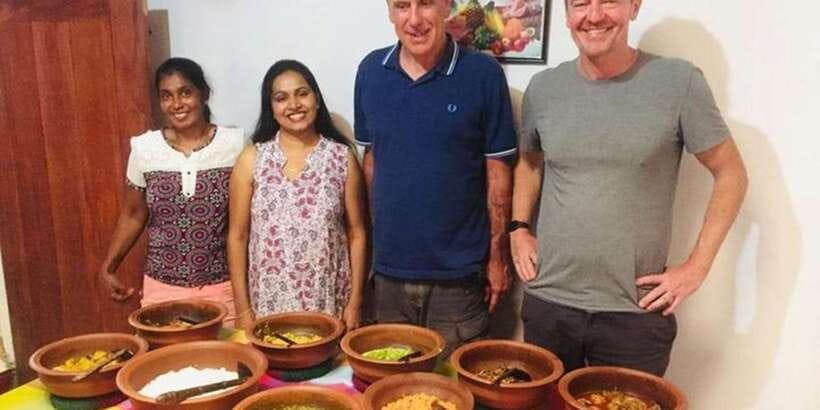
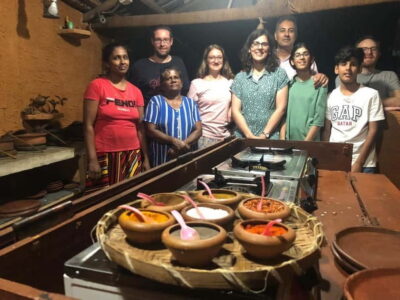
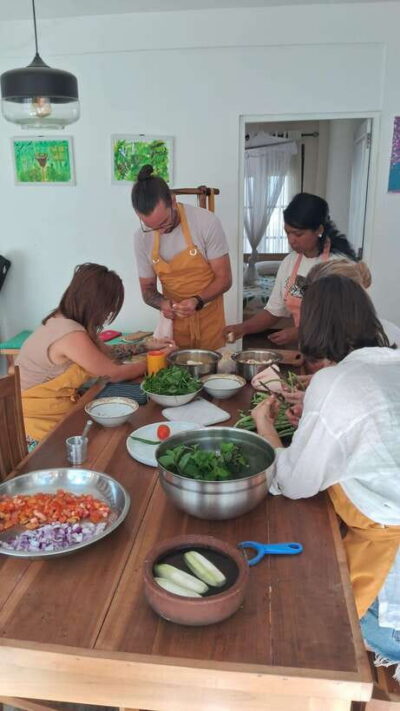
The most memorable part of this Kandy cooking class is the setting: you cook inside a real family home, not a polished restaurant kitchen. Dinesha’s wife, sister, and mother lead the class, and the family’s three young girls may join in. You can also visit a local market before cooking, then use what you find in a feast of ten vegetable dishes, fish or chicken, coconut sambol, and coconut roti.
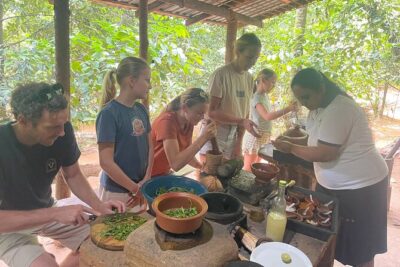
I like the hands-on spice work and the old sambol-making stone board, said to be 100 years old. I also like the small scale, with space for only two people, which makes it easier to ask questions and see how the food is prepared. The main consideration is time: with so many dishes in three hours, the family does much of the chopping and cooking, while you season, stir, learn, and take part.
Key points
- A real family kitchen: Cook in the home of Dinesha’s family near the Bahirawakanda Buddha statue.
- A market option: Add a visit to a local market to learn about Sri Lankan vegetables and spices.
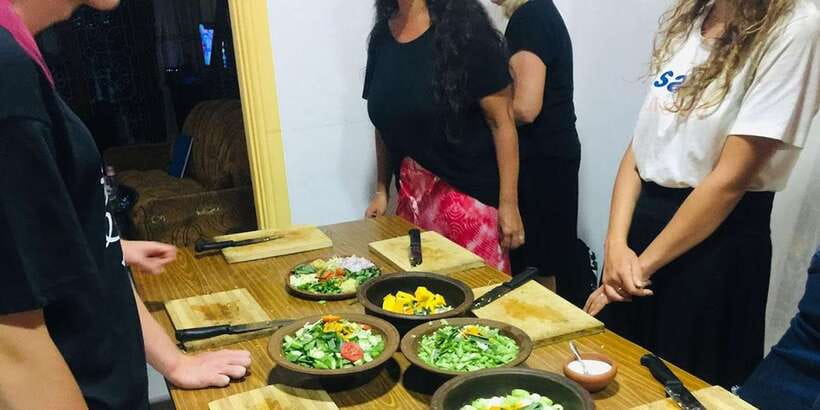
- A serious feast: Prepare ten vegetable dishes, fish or chicken, coconut sambol, and coconut roti.
- A rare kitchen tool: Use or see the family’s roughly 100-year-old stone board for making sambol.
- A tiny group: The class is limited to two participants, useful for questions and close instruction.
- Useful follow-up: You receive the recipes at the end so you can repeat the dishes at home.
A family kitchen near Kandy’s Buddha statue
This class takes place near central Kandy, close to the large Buddha statue on Bahirawakanda Mountain. The home sits in a calm, green setting, which gives the afternoon or evening a different feel from a restaurant-based lesson.
I like this arrangement because the food has a clear connection to daily life. You are not simply shown a finished curry or handed a spice list. You enter a working family kitchen and see how Sri Lankan meals are made at home.
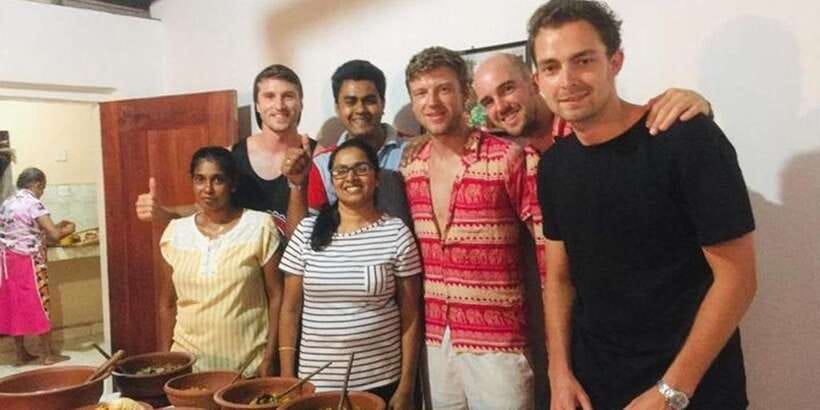
The class is taught by Dinesha’s wife, sister, and mother. Dinesha handles communication and can guide you to the market if you choose that option. His family also explains the food, the spices, and the way traditional dishes are prepared.
The family describes women as the main teachers because they cook these dishes day after day. That point matters. The lesson is based on repeated household practice, not on a chef’s attempt to recreate home cooking for visitors.
You should also expect a friendly, informal setting. The family’s three little girls sometimes join the class. That can add warmth and humor, though it also means this is not a silent, highly choreographed cooking demonstration.
More Home Cooking Classes in Sri Lanka:
- Organic Cooking Class sigiriya home Kitchen(Kumara & family)
★ 5.0 · 116 reviews - Galle: Cooking Class at a Local Home and Market Tour
★ 5.0 · 47 reviews - Nilaveli: Sri Lankan Cooking Class with a Local Family
★ 5.0 · 16 reviews
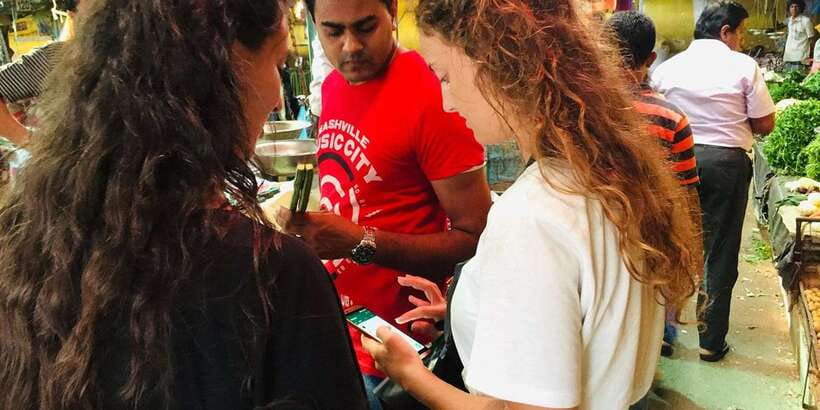
The optional market visit gives the food a starting point
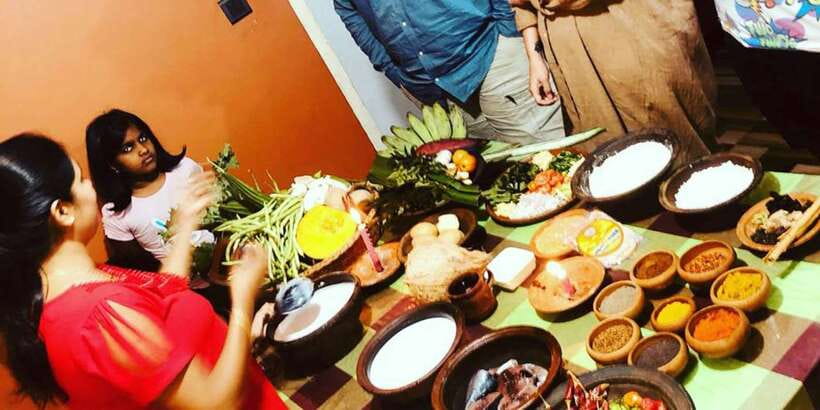
If you want more than a kitchen lesson, ask for the local market visit. The family can guide you through the market and explain the spices and vegetables used in Sri Lankan cooking.
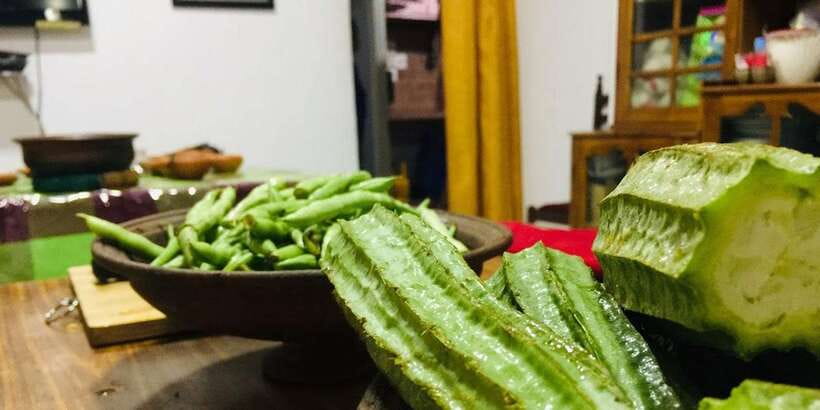
This part helps you understand the meal before you start preparing it. Sri Lankan cooking relies on combinations of vegetables, coconut, spices, and fresh ingredients, and a market walk gives those items a place in the real world. You can see what the family buys, ask questions, and connect the ingredients with the dishes you later eat.
The market visit is also useful if you are curious about everyday cooking rather than only famous Sri Lankan dishes. You are not just learning the names of spices. You are seeing what goes into a family meal and how the ingredients are selected.
The available information does not give a separate duration or extra charge for the market stop, so confirm the exact plan when booking. The full experience lasts three hours, and the market may form part of that time.
Tea, pancakes, and a relaxed start
The kitchen session can begin with a warm welcome, tea, and pancakes while the family prepares ingredients. This is a small detail, but it helps set the tone.
You will have a chance to settle in before the cooking gets busy. It also gives you time to meet the family and ask about the meal. If you have dietary questions or strong dislikes, this is a sensible moment to raise them.
The cooking itself includes a large number of dishes. The advertised meal contains ten types of vegetable dishes, fish or chicken, coconut sambol, and coconut roti. One class covered 13 dishes, so you may be working through a very broad menu rather than mastering one or two recipes in great depth.
That is both the main attraction and the main limitation. You get a generous look at the range of Sri Lankan home cooking, but you should not expect every dish to receive a long, slow lesson.
Why the number of curries affects your role
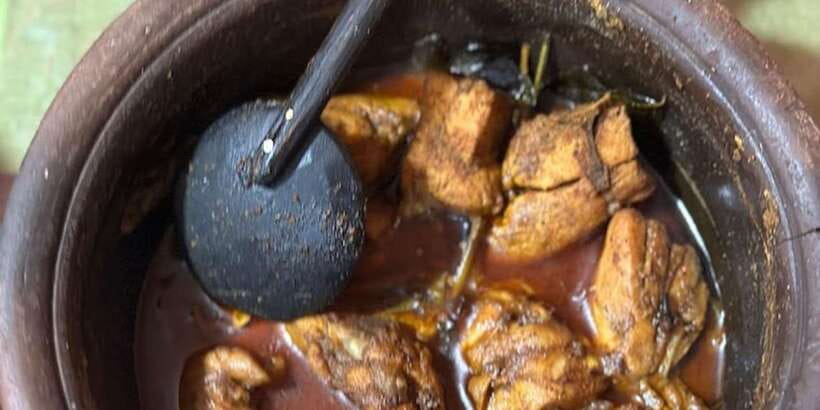
With ten vegetable dishes on the plan, the family handles much of the preparation and cooking. You still season the food yourself, learn how the spice mixtures work, and take part in the key steps.
I see this as a fair trade. If two people had to chop and cook every dish from the beginning, the class would run well beyond three hours. Instead, the family keeps the meal moving while showing you the methods that matter.
You may learn how spices are combined, how vegetables are cooked, and how coconut is used in several forms. The lesson also gives you a chance to ask questions as the food develops. That is more useful than rushing through a single recipe and missing the broader pattern of Sri Lankan cooking.
If your goal is to become an expert at one particular curry, this may not be the right format. If your goal is to understand how a large Sri Lankan family meal comes together, the many-dish approach makes good sense.
More Cooking Classes in Sri Lanka:
- Ella: Traditional Sri Lankan Cooking Class
★ 4.9 · 788 reviews - Organic cooking class sigiriya (kumara & family)
★ 5.0 · 650 reviews - Sri Lanka Cooking Class with Granny
★ 5.0 · 587 reviews - Kandy Village Cooking Class
★ 5.0 · 536 reviews
Coconut sambol and the old stone board
Coconut sambol is one of the highlights of the class. The dish shows how a few basic ingredients can become a sharp, fresh accompaniment to rice and curry.
The family uses a stone board that is about 100 years old to make the sambol. This is the kind of object that gives the class character. It connects the food to older household methods and shows that traditional cooking tools can remain useful long after newer appliances arrive.
The sambol lesson is also practical. You learn more than a recipe on paper. You see the physical process of combining the ingredients and can ask how the texture and seasoning should look.
The class also includes coconut roti. Together, the roti and sambol offer a welcome change from the curries and give you two recipes that may be easier to repeat at home.
Fish or chicken, plus a very large final meal
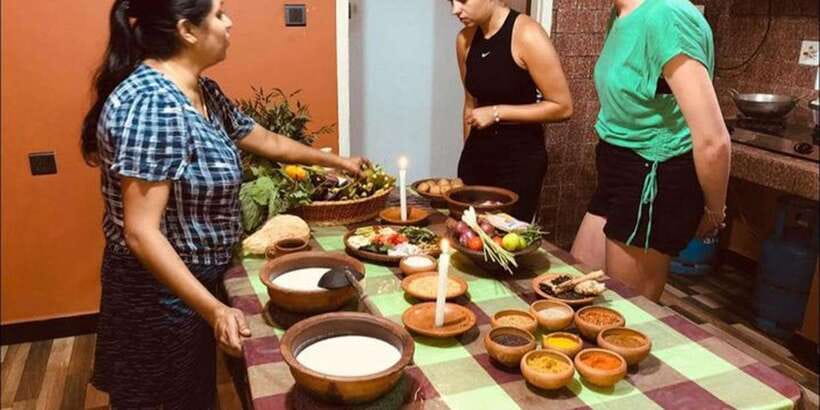
You choose between fish and chicken for the non-vegetable part of the meal. That choice is useful for people with a clear preference, though you should provide it when confirming the booking.
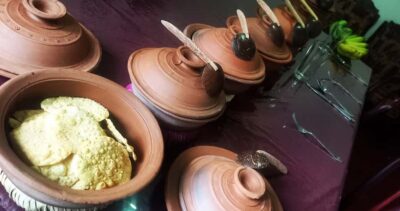
The final spread is the main reward for the work. Ten vegetable dishes create plenty of variety, and the coconut sambol and roti add different textures and flavors. Plan to arrive hungry. One practical tip is to avoid a heavy lunch before the class, since the finished meal is likely to be substantial.
The food is served after the cooking, so this is not a quick demonstration followed by a small tasting. You are preparing a full meal and sitting down to eat it in the family home.
This makes the class a good fit for people who value a shared meal as much as the instruction. It also means the activity may feel long if you do not enjoy eating a large quantity of food or if you prefer a short, tightly focused lesson.
What makes the instruction useful
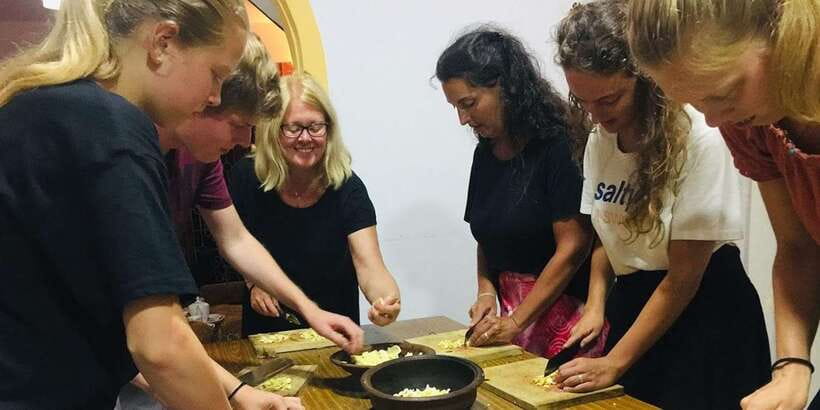
The teachers explain the spice combinations and let you season the food yourself. That hands-on part is important because Sri Lankan cooking often depends on balance rather than one fixed measurement.
You can ask questions throughout the lesson. The class is conducted in English, and the small group size gives you a better chance to get answers without competing with a large group.
The family format also gives you a glimpse of Sri Lankan household life. You see how several family members share the work, how the meal is organized, and how children may be part of the kitchen scene.
Do not expect a professional cooking school with separate stations, matching uniforms, or restaurant-style presentation. The setting is a home kitchen, and the appeal comes from that informality. If you want a polished culinary workshop, this may feel basic. If you want to see how people cook at home, it is a strong match.
The three-hour schedule and its pace
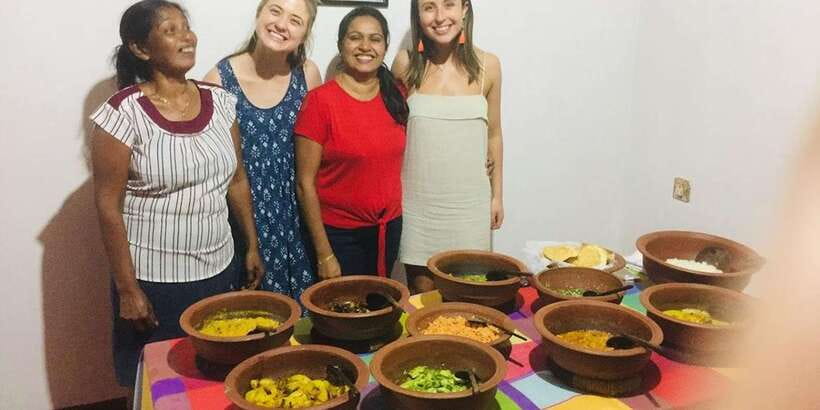
The total duration is three hours. Within that time, you may visit the market, settle in with tea or pancakes, prepare ingredients, cook a large menu, and eat the final meal.
That is a lot to fit into one session. The pace can be lively, especially if the market visit is included. The family’s advance preparation helps make the schedule possible.
I would treat this as an introduction to many Sri Lankan dishes rather than a slow technical course. You will see and do enough to understand the process, but some tasks will naturally be shared or completed by the family.
The short duration is useful if Kandy is one stop on a wider Sri Lanka itinerary. You can learn a great deal without giving up an entire day. The trade-off is that the lesson may not answer every detailed question about every dish.
The $99 price for two people
The price is $99 per group of up to two people. That works out to about $49.50 per person when two people book together.
The price includes the cooking class, the full meal, water bottles, recipes, and pickup and drop-off around Kandy town. The market visit is available as part of the experience, but confirm exactly how it fits into your booking.
For two people, the value is good if you make use of the small group format and the meal. A private or nearly private class in a family home, plus transport around Kandy and a large spread of food, offers more than a simple restaurant meal.
The value is less clear for a solo visitor, since the group price does not appear to change for one participant. You should also remember that the class is priced for the experience, not just the quantity of food. Its strongest feature is the family setting and direct contact with the people who cook these dishes every day.
Pickup and drop-off are available around Kandy town. Wait in your hotel lobby ten minutes before the scheduled pickup time, and send the required pickup details when confirming the booking.
Who should book this cooking class
I would recommend it to you if you want a personal introduction to Sri Lankan food and family life. It suits couples, food-focused visitors, and anyone who prefers a small group to a large cooking school.
It is especially good for you if you like asking questions. The two-person limit gives you room to ask about spices, vegetables, cooking methods, and the family’s daily food traditions.
The experience also works well for people who want recipes to take home. You receive the recipes at the end, so the class can continue in your own kitchen after you leave Sri Lanka.
You may want to choose another activity if you need wheelchair access, since the class is not suitable for wheelchair users. It may also be a poor fit if you dislike informal home settings, prefer a single-recipe lesson, or want to do every stage of the cooking yourself.
Bring a charged smartphone or camera if you want to record the recipes and techniques, along with cash and a change of clothes. The cooking can be hands-on, and a spare shirt is a sensible precaution.
Booking details worth checking before you go
The class lasts three hours and is taught in English. It is limited to two participants, and pickup is offered around Kandy town.
You can cancel up to 24 hours before the start time for a full refund. You can also reserve now and pay later, which helps if your Kandy schedule is still changing.
Pets are not allowed, though assistance dogs are permitted. The activity is not suitable for wheelchair users.
The main question to settle before arrival is your preferred main ingredient: fish or chicken. If you want the market visit, mention that when arranging the booking, since it affects how the time is planned.
Should you book The Best Kandy Kitchen?
Book this class if you want a warm, home-based introduction to Sri Lankan cooking rather than a polished restaurant lesson. The small group, the old sambol board, the market option, and the chance to learn from several generations of one family give it a personal feel.
Go with realistic expectations. You will not prepare every one of the many dishes from start to finish, and the pace may be brisk. But you will season food yourself, learn how the family combines spices and vegetables, eat a generous meal, and leave with recipes.
For two people staying in Kandy, the $99 group price offers solid value, especially with local pickup and drop-off included. If an informal family kitchen sounds more appealing than a formal cooking studio, this is the class I would put near the top of your Kandy food list.
FAQ
Where does the cooking class take place?
It takes place in a family home near Kandy city center, close to the large Buddha statue at Bahirawakanda Mountain.
How long does the cooking class last?
The activity lasts three hours.
How many people can join?
The class is limited to two participants.
What food will I prepare?
The included menu has ten types of vegetable dishes, fish or chicken, coconut sambol, and coconut roti. Water bottles are also included.
Is hotel pickup available?
Yes. Pickup and drop-off are available around Kandy town. You should wait in your hotel lobby ten minutes before the scheduled pickup time and provide your pickup details when confirming.
Is the class suitable for wheelchair users?
No. The activity is not suitable for wheelchair users. Assistance dogs are allowed, but other pets are not.
Newest classes around Sri Lanka
- cooking lesson★ 5.0 · 7 reviews
- Hands-On Cooking Class in Anuradhapura-Cook Like a Local★ 5.0 · 2 reviews
- Sri Lankan Cooking Class in Bentota★ 5.0 · 2 reviews
- Sri Lanka: Cooking Class★ 4.4 · 6 reviews
- Sri Lankan Cookery with Nilu★ 5.0 · 34 reviews
- Cooking Experience from Ella★ 4.9 · 2 reviews
- Private cooking class – Personalized classic menu★ 5.0 · 5 reviews
- Nilaveli: Sri Lankan Cooking Class with a Local Family★ 5.0 · 16 reviews
Kandy Cooking Classes, compared.
Private Traditional Sri Lankan Cooking Class in Kandy with Hotel Transfers
Read our review →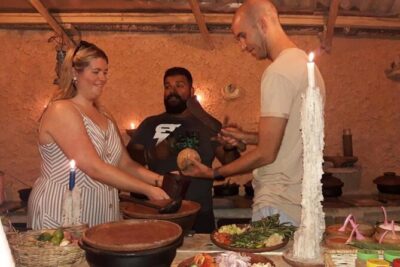
Browse the lists this tour appears in