
Review · CHENNAI COOKING CLASSES
Private tour to learn Traditional Indian Art, craft & Cooking
Chennai’s best cultural lessons may happen away from monuments, in a family home where you can make a kolam, string flowers, play Pallanguzhi, and fry vadas. This five-hour private visit turns everyday customs into hands-on activities rather than a quick look from behind a rope.
I like the wide mix of activities, especially the chance to learn from Nivi and Ganesh in a relaxed home setting. I also like that you leave with more than photos: you make a garland, try craft work, and gain a better sense of how art, clothing, food, and games fit into South Indian life. The main consideration is time. There is a lot packed into five hours, so some sessions may feel like introductions rather than full workshops.
Key things to know before booking
- Kolam starts the cultural lesson: Practice a small design and learn how this familiar South Indian floor art is made.
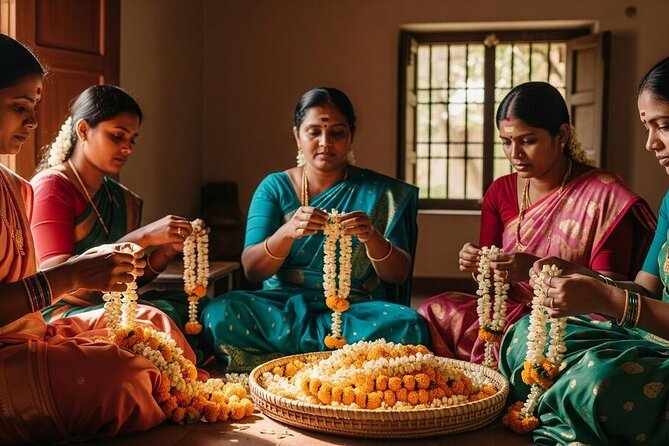
- Flower garland making is hands-on: Use fresh flowers, leaves, and other natural materials, then take your garland with you.
- Pallanguzhi adds a playful history lesson: Try the pit-and-counter board game known in many parts of South India.
- Clothing becomes part of the activity: Learn basic saree draping for women or dhoti wearing for men.
- The craft list is unusually broad: Sessions may include mehendi, doll making, and the hourglass-shaped Udukkai drum.
- Cooking gives the afternoon a tasty finish: Learn to make filter coffee and crispy vadas in a home kitchen setting.
Why this Chennai home visit feels different
Many city tours show you temples, markets, or grand buildings. This one focuses on the things people handle, wear, cook, play, and make at home. That shift matters. You are not only looking at Indian tradition. You are trying to reproduce small parts of it with your own hands.
The setting is a traditional family home in Chennai, and only your group takes part. A private format gives you room to ask questions, make mistakes, and slow down when a technique needs another explanation. It also avoids the common problem of a large class where you can see the demonstration but barely touch the materials.
Nivi and Ganesh host the experience. The available information describes them as informative and engaging, and the activities are built around participation. You should expect guidance rather than a formal lecture. That makes this a good choice if you learn best by doing, though it may be less satisfying if you want a long, specialist workshop devoted to one art form.
The indoor setting is useful in Chennai’s heat. You do not need to spend five hours walking between sights, and pickup is offered. The experience is also near public transportation, giving you two practical ways to reach it. Confirm the pickup details when booking, since the supplied information does not specify the pickup area or schedule.
More Private Cooking Classes in India
- Veg and Non veg : Private Cooking Class in Delhi home (7 meal)
★ 5.0 · 226 reviews - Private Guided Cooking Workshop Experience in Jodhphur
★ 5.0 · 158 reviews - Private Cooking Class in Jodhpur With Pick Up & Drop Off
★ 5.0 · 84 reviews
Making your first kolam design
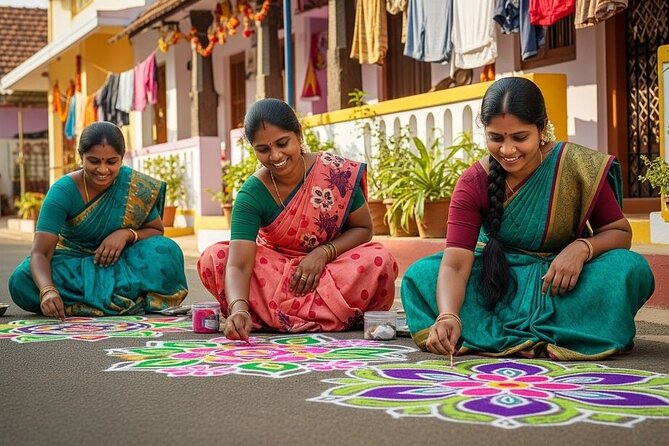
Kolam is often made with lines and patterns placed on the ground, traditionally near the entrance of a home. It can look simple from a distance, but the balance of dots, curves, spacing, and symmetry takes a steady hand.
Here, you learn the basic process and then make a small design yourself. That is an important distinction. You are not expected to produce a large, perfect doorway pattern. The smaller scale makes the activity manageable, especially if your drawing skills are modest.
I would treat this as a lesson in patience and repetition. The point is not to win an art contest. It is to notice how a domestic decoration can carry rhythm and care. Children and adults can both take part, and the private format should make it easier to ask for help with a tricky line.
The activity also gives you a useful visual reference for the rest of your time in South India. Once you understand the basic idea, you may notice kolam patterns more clearly around homes and streets during your wider visit.
Stringing flowers into a take-home garland
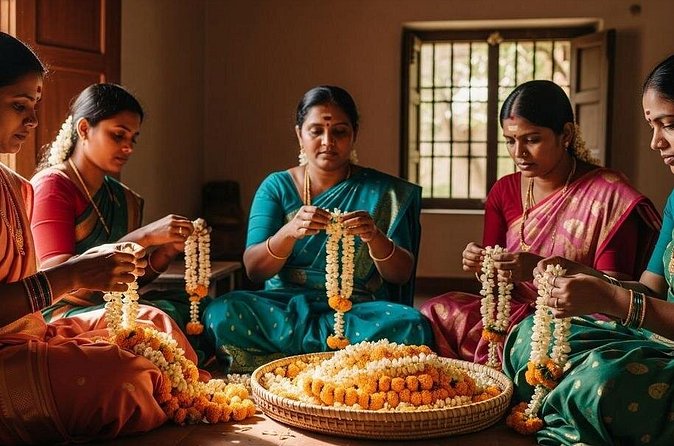
The garland session brings scent, color, and touch into the room. You work with fresh flowers, leaves, and other natural materials, stringing them into a small garland that you can take home.
This is one of the strongest parts of the program for anyone who wants a tangible keepsake. A souvenir from a shop can remind you of Chennai, but making something yourself gives the object a personal connection. The garland may not last forever, yet that is part of its appeal. It is a living, temporary craft rather than a mass-produced trinket.
Do not expect a professional florist’s class. The value is in learning the basic method and understanding how flowers are prepared for ceremonial and decorative use. If you have allergies or dislike strong floral scents, keep that in mind before booking. No specific flower types are listed, so the exact materials may vary.
Pallanguzhi and the pleasure of a slower game
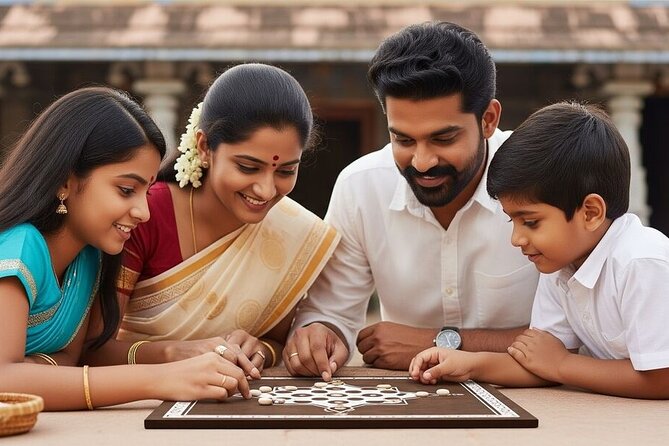
Pallanguzhi, also written as Pullankuzhi in the activity feedback, is a traditional Indian board game with rows of small pits and counters. It belongs to the Mancala family of games, where players distribute and collect pieces according to set movements.
The game is easy to pick up at a basic level, but it can become a test of counting and planning. That makes it a welcome change from simply watching a craft demonstration. You sit, play, ask questions, and see how a board game can bring people together without screens or complicated equipment.
I like this part because it connects culture with ordinary leisure. Art and food often receive the attention on cultural tours, while games are left out. Pallanguzhi gives you a more rounded look at home life and creates a natural way for your group to interact.
If you are not comfortable with games, ask for the rules to be shown slowly. The experience has many activities, and a short introduction may not cover every possible strategy. Still, you do not need to become an expert for the session to be worthwhile.
More Indian Classes in India:
- Indian Cooking Class in an Authentic Local Home – Learn 6 Dishes
★ 5.0 · 195 reviews - New Delhi: Indian Cooking Class in a Local Home
★ 5.0 · 65 reviews - Mumbai: Indian Cooking Class & Cultural Delights
★ 5.0 · 38 reviews - New Delhi: Traditional Indian Cooking Class & Market Visit
★ 5.0 · 32 reviews
Saree draping and wearing a dhoti
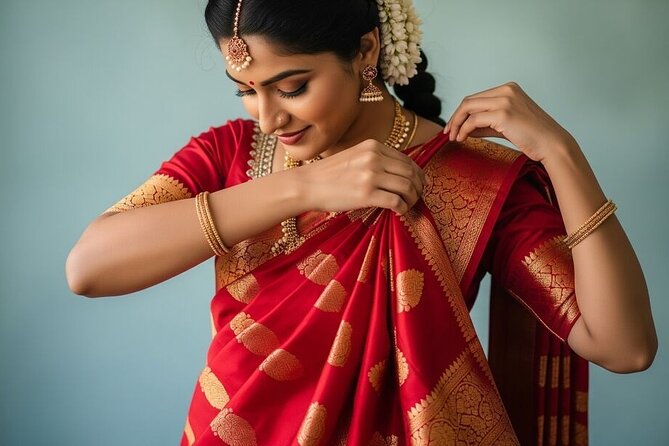
Clothing is not treated as a display here. You learn the basics of wearing a saree or dhoti, depending on your group. For women, the session focuses on saree draping styles and techniques. For men, the guide covers wearing a dhoti.
This can be more revealing than looking at traditional clothing in a shop. A saree is a long, unstitched garment whose folds and placement create its shape. A dhoti also requires some technique to wear comfortably and securely. A guided attempt helps you understand the skill involved and why the garments require practice.
The activity is practical, but you should keep your expectations sensible. The information promises instruction in various styles and techniques, not a full costume history lecture or a professional draping certification. It is best seen as a friendly introduction and a chance to appreciate the work behind clothing that can look effortless when worn by an experienced person.
Because this is a private activity, you can ask for another demonstration if the first attempt goes badly. That matters here. Clothing instruction can be awkward in a large group, while a private setting offers more privacy and less pressure.
Mehendi, dolls, and the Udukkai drum
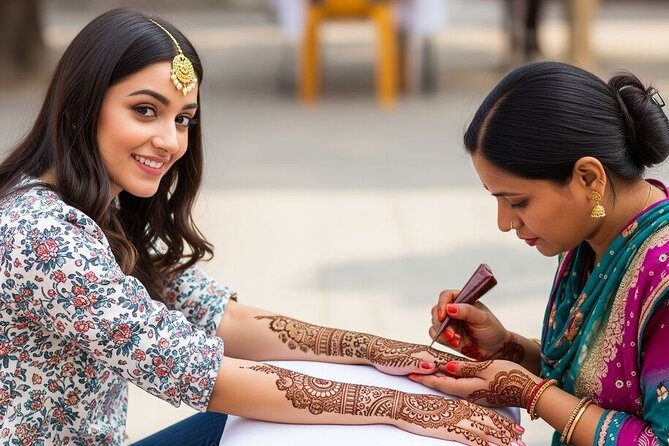
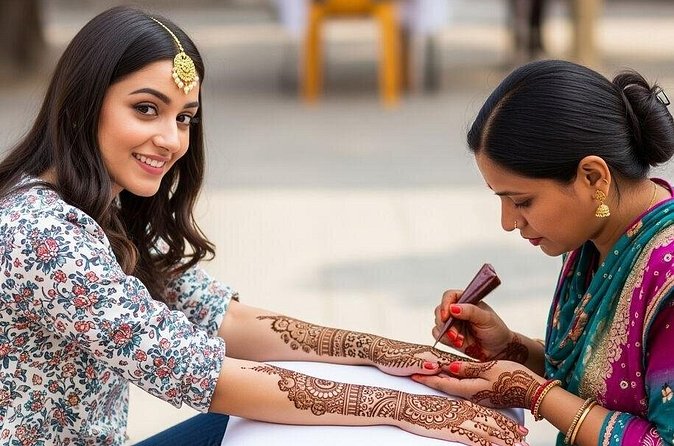
The craft portion continues with basic mehendi application, traditional doll making, and the Udukkai, an hourglass-shaped drum. Each activity gives you a different kind of creative task.
Mehendi, or henna, lets you practice small designs on hands or feet. Fine lines and repeated motifs can be harder than they look, so the goal is to learn the basics rather than produce elaborate bridal work. Ask about the exact materials and design scope if you have a skin sensitivity, since the supplied details do not provide a product list.
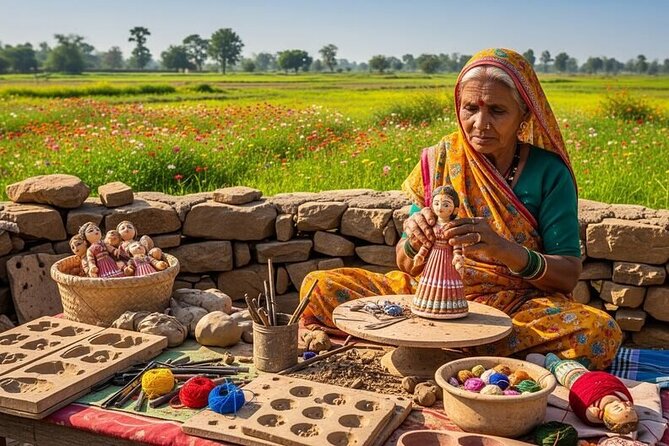
Doll making adds another small-scale craft. The description does not specify the materials, style, or finished size, so you should think of it as an introduction rather than a full doll-making course. Its appeal is the chance to see how a familiar object can be made by hand.
The Udukkai is a particularly distinctive inclusion. This small, hourglass-shaped drum connects craft with sound. You learn the basics of making one, which gives you a look at the physical work behind a musical instrument. The program does not state that you will receive a completed drum or take one home, so book it for the making experience, not as a guaranteed souvenir.
Together, these sessions add variety. You move between drawing, tying, shaping, wearing, and making sound. The tradeoff is that the five-hour schedule may leave limited time for perfecting any single skill.
Vadas and South Indian filter coffee
Cooking provides the most direct connection to the senses. You learn the basics of making vadas, crispy savory fried fritters that are common in South Indian food culture. The process gives you a practical introduction to mixing, shaping, and frying, though the exact recipe and ingredients are not specified.
Vadas are a good choice for a short cooking class because the result is immediate. You can see, smell, and taste the change from mixture to finished snack. It also makes the session social. Cooking in a home, rather than watching a chef work across a restaurant counter, places the focus on participation.
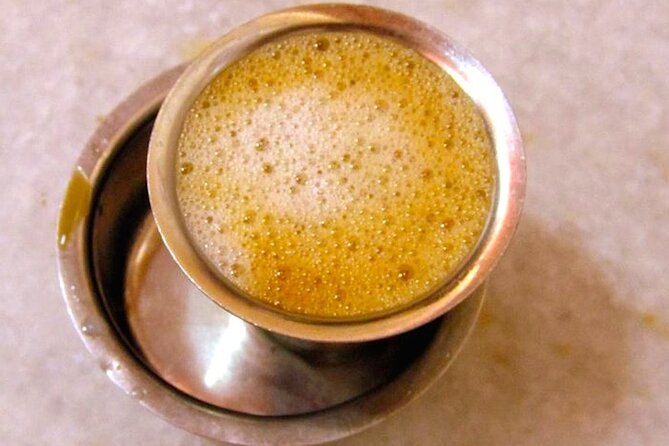
The experience also includes making filter coffee. South Indian filter coffee is known for its strong brewed coffee and milk-based preparation, but the activity details do not spell out the exact method or recipe. You should expect a basic lesson, not a full coffee tasting.
If you have dietary restrictions, ask before booking. The supplied information does not confirm vegetarian, vegan, gluten-free, or allergy-friendly options. Since vadas are fried savory snacks, it is sensible to explain your needs in advance rather than assume substitutions are available.
What five hours and $80 really buy you
The price is $80 per person. For a private five-hour experience, that can be fair value if you want active cultural instruction rather than a short sightseeing stop. You are paying for time with local hosts, a long list of activities, materials for several crafts, cooking instruction, and the privacy of having only your group involved.
The value depends on how you use the time. If you want one polished object or a specialist-level lesson, another focused workshop may suit you better. If you want a broad first look at Chennai’s home arts, games, clothing, and food, this program offers much more variety than a basic city walk.
Group discounts may improve the cost for larger bookings. Since pickup is offered, also consider the time and expense saved if transport is included for your location. The available information does not say how far the pickup service reaches, so confirm that detail before you rely on it.
A five-hour block is long enough to make the booking feel substantial, but it also requires energy and curiosity. You will be sitting for some sessions, handling materials, learning unfamiliar methods, and shifting from one topic to another. That pace suits active participants more than people looking for a quiet, passive cultural talk.
Who should book this private Chennai experience
I would recommend it most strongly to first-time visitors who want contact with daily Tamil and Indian customs but do not know where to begin. The program gives you several entry points, from kolam and games to clothes and food.
It is also a good fit for families, couples, small groups, and solo visitors who prefer a private booking. Children may enjoy the game, garland, doll, and cooking elements, while adults may appreciate the clothing and craft instruction. The information says most people can participate, but it does not list a specific minimum age or accessibility details.
Art lovers should note that this is a broad sampler. You will try many forms, but the schedule does not promise advanced training in any one of them. Food-focused visitors should also keep expectations in check. Vadas and filter coffee are part of the session, but this is not described as a full meal or a multi-course cooking class.
The tour is especially useful at the start of a South India trip. It gives you cultural references you can carry into the rest of your time in Tamil Nadu, from recognizing kolam patterns to understanding how a saree or dhoti is worn.
Practical details before you reserve
Confirmation is provided at booking. The experience is near public transportation, and pickup is offered. Since no exact meeting point, pickup boundary, or timetable is provided, check those details directly before making other plans for the day.
This is a private activity, so only your group participates. That is a real advantage for questions, clothing practice, games, and hands-on craft work. It also means the experience is shaped by the size and interests of your own party.
Free cancellation is available if you cancel at least 24 hours before the local start time. Cancellations within 24 hours are not refunded, and changes inside that window are not accepted. Keep the cutoff in mind if your Chennai schedule may change.
Should you book it?
Book this if you want an active, home-based introduction to Indian traditions and like the idea of trying many small skills in one afternoon. The strongest reasons are the private format, the range of activities, the chance to make a garland and kolam, and the friendly instruction from Nivi and Ganesh.
Skip it if you want a long, technical course in one craft, a formal historical lecture, or a guaranteed handmade item from every session. At $80, it offers good value for a private five-hour cultural sampler, especially with a group discount, but its strength is variety rather than mastery. Bring curiosity, comfortable clothes for practical activities, and enough time to enjoy the process instead of rushing through the checklist.
FAQ
Where does the experience take place?
It takes place in a traditional family home in Chennai.
How long does the activity last?
The experience lasts approximately five hours.
How much does the tour cost?
The listed price is $80 per person.
Is pickup available?
Yes, pickup is offered.
Is the experience near public transportation?
Yes, it is near public transportation.
Is this a private tour?
Yes. Only your group participates in the activity.
Who hosts the experience?
The hosts are Nivi and her husband, Ganesh.
What kind of kolam activity is included?
You learn to create an intricate kolam design and practice making your own small kolam.
Can I make a garland?
Yes. You learn to string fresh flowers, leaves, and other natural materials into a garland that you can take home.
What cooking activities are included?
You learn the basics of making crispy Indian vadas and filter coffee.
Can I cancel for a full refund?
Yes, if you cancel at least 24 hours before the experience start time. Cancellations within 24 hours are not refunded.
Newest classes around India
- Chennai Super Market Tour and Cooking Class with a Fun Local★ 5.0 · 9 reviews
- Traditional Chettinad Cooking Class in a Local Home near Chennai★ 4.5 · 12 reviews
- Neighborhood Market Tour & South Indian Cooking Class in Chennai★ 5.0 · 7 reviews
- Chennai Dosa Making Class & Home-Dining Experience with Jyashree★ 5.0 · 8 reviews
- Traditional Gowda Cooking Class and Meal in a Bangalore Home★ 5.0 · 31 reviews
- Discover Bangalore’s Cuisine: Private Half-Day Cooking Experience★ 5.0 · 3 reviews
- Private South Indian Cooking Class in Bangalore with a Local★ 5.0 · 11 reviews
- Cooking experience in Bangalore, a half day tour★ 5.0 · 5 reviews
Chennai Cooking Classes, compared.
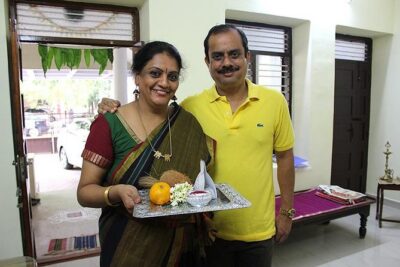
Traditional Cooking Class in Chennai in a Local Home with Sundari
Read our review →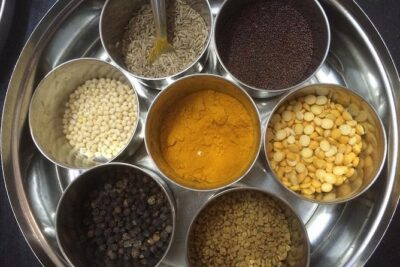
Private South Indian Tamil Cooking Class in Chennai with Srividya
Read our review →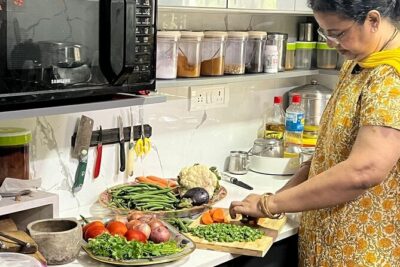
South Indian Vegetarian Cooking Class in Chennai with Meena
Read our review →
Traditional Vegetarian Cooking Class in Chennai with Gayathri
Read our review →
Traditional Chettinad Cooking Class in a Local Home near Chennai
Read our review →
Chennai Super Market Tour and Cooking Class with a Fun Local
Read our review →
Chennai Dosa Making Class & Home-Dining Experience with Jyashree
Read our review →
Neighborhood Market Tour & South Indian Cooking Class in Chennai
Read our review →Browse the lists this tour appears in