
Review · NEW DELHI COOKING CLASSES
Indian Cooking Class in an Authentic Local Home – Learn 6 Dishes
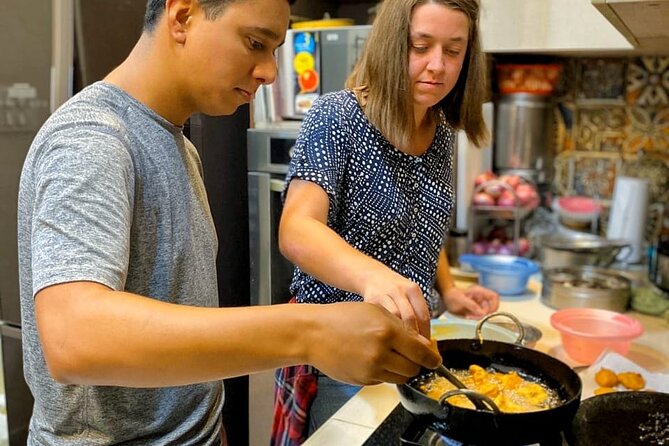
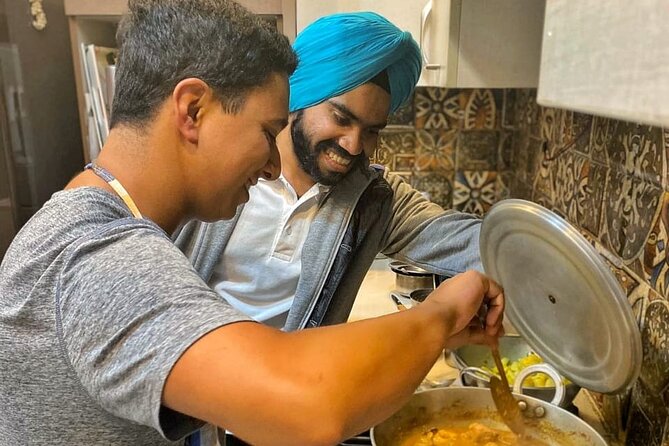
The best part of this New Delhi cooking class is its setting: you cook in a real family home, not a polished studio built for tourists. JD and his father lead you through the meal, explaining how spices work, why certain steps matter, and how recipes have been passed down through the family.
I like the hands-on format, especially the focus on cooking technique rather than simply watching a chef. I also like the small group size, which can reach only 10 people, though the experience is described elsewhere as an intimate group of eight. The one thing to check before booking is the exact menu, since the advertised number of dishes and bread varieties differs slightly in the details.
Key things to know before you book
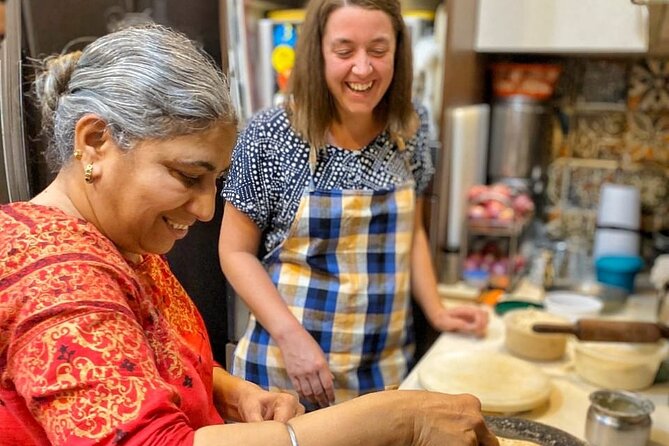
- Cook in a private family home: The class takes place at R-142, Greater Kailash-1, rather than in a commercial cooking school.
- Learn the logic of Indian spices: JD explains how ingredients shape flavor and aroma, not just which spices to add.
- Prepare a full meal: Expect a main dish, rice, breads, and dessert, with the exact menu possibly varying.
- Choose vegetarian or non-vegetarian food: The class is designed to suit both preferences.
- Eat what you make: Lunch or dinner, along with tea, coffee, and bottled water, is included.
- Allow two and a half hours: The experience begins and ends at the same New Delhi meeting point.
Cooking Indian food in a Greater Kailash family home
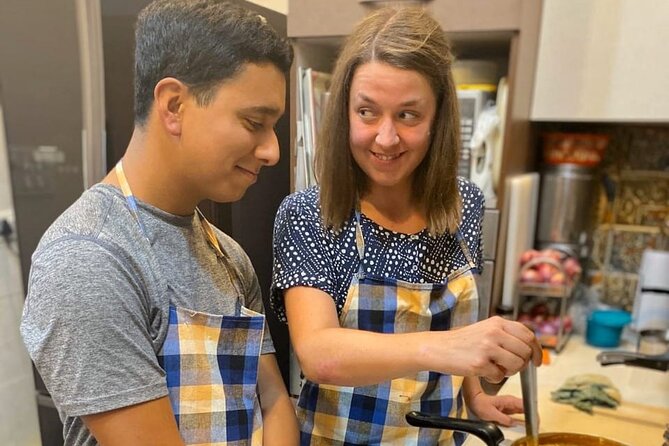
You meet at R-142, Block R, Greater Kailash-1, a location that should be fairly easy to identify in New Delhi. The activity ends at the same address, so you do not need to arrange a second pickup point after the meal.
The setting matters. A cooking class in a purpose-built studio can be tidy and efficient, but it can also feel detached from daily life. Here, you enter the Bindra family home and cook in their kitchen and preparation area. The experience is closer to being welcomed into someone’s house for a meal than attending a formal school.
The home is air-conditioned, and restroom facilities are available. That is useful in Delhi, where the heat can make a long kitchen session tiring. The class also takes place near public transportation, though the information provided does not specify which routes or stations are closest. I would still allow extra time to find the address, especially if you are new to Delhi.
The family’s welcome is part of the experience. The class can begin with masala chai and biscuits before the cooking starts, giving you time to settle in and meet the people sharing the session. For solo visitors, this social start is particularly useful. You are not simply handed a recipe and left at a work station.
More Home Cooking Classes in India
- Jaipur Market Tour & Vegetarian Rajasthani Home Cooking Class
★ 5.0 · 113 reviews - Interactive Cooking Class with a Local Family in Jaipur
★ 5.0 · 90 reviews - Delhi: AI Cooking Class and Much More in a Local Family Home
★ 5.0 · 85 reviews
Starting with spices instead of shortcuts
Indian cooking often looks complicated because several flavor-building steps happen in sequence. This class focuses on those steps. You learn how individual spices affect a dish, how aromas develop, and how small changes in cooking method can alter the final result.
That is more useful than being given a long ingredient list. You may be able to find cumin, coriander, turmeric, chili, and other common spices at home, but using them well requires judgment. The class aims to show you that judgment through practical work in the kitchen.
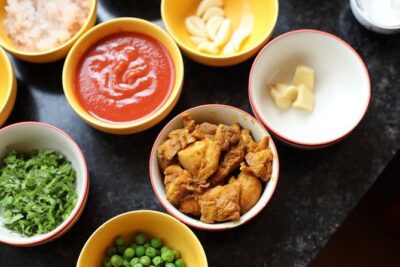
JD is described as patient and clear when explaining why a particular method works. His approach also appears to avoid wasting class time on routine chopping. Ingredients are prepared so that the group can spend more time on spice handling, cooking stages, and texture.
I like that balance. A class should teach you something you can repeat at home, not force you to spend half the session cutting onions. At the same time, the ready-prepared ingredients mean you will not see every part of the meal from the first knife cut. If basic prep is important to you, ask how much of it will be done before you arrive.
Preparing the main dish, rice, breads, and dessert
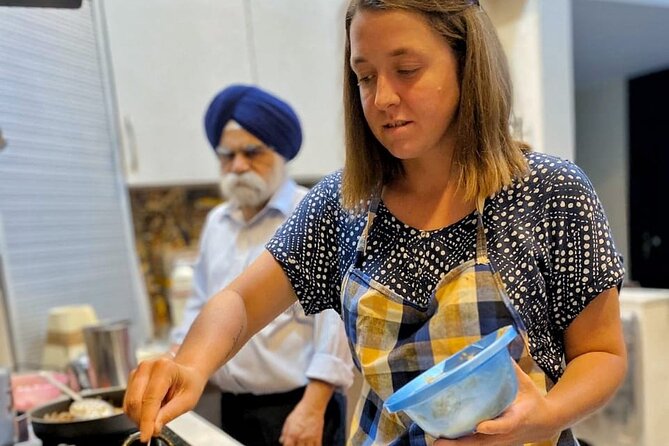
The meal is presented as a complete Indian spread. The detailed plan includes one main dish, one rice dish, two types of bread, and a dessert. Other descriptions refer to six dishes, three types of bread, or even seven dishes, so you should treat the menu as flexible rather than fixed.
That is not necessarily a weakness. Indian home cooking often works from a family menu rather than a rigid restaurant card. Still, anyone booking because of a particular dish should confirm the current menu in advance. Vegetarian and non-vegetarian choices are available, and dietary requirements can be discussed with the host.
The main dish is where the spice lessons become practical. You work with a curry-style preparation and see how a base develops before the central ingredients are added. The useful lesson is not only the recipe itself, but how to judge aroma, heat, and balance while the food cooks.
The rice dish gives you another way to use the same spice ideas. Indian food is not simply a matter of making one heavily seasoned curry. Rice acts as a partner, carrying fragrance and helping balance stronger flavors on the plate.
The bread portion adds physical skill. Flatbreads require attention to dough, rolling, heat, and timing. Some dishes described in the experience include paratha, and one session included three bread varieties. Bread is also a good reason to choose a class over a restaurant meal, since the technique is hard to understand from a printed recipe alone.
Dessert finishes the meal on a sweeter note. Rice pudding is one dessert specifically mentioned, and it was praised as a satisfying end to the class. The dessert also gives the session a wider range than a curry-only lesson.
Eating together at the end of the class
After cooking, you sit down and eat the food prepared during the session. Lunch or dinner is included, depending on the scheduled time, as are coffee or tea and bottled water.
This shared meal is not just a reward for getting through the recipes. It gives you a chance to compare the different dishes and understand how they work together. A curry, fragrant rice, fresh bread, and a sweet finish show more about an Indian meal than a single recipe can.
The family also uses this time to discuss Indian culture and the background of the dishes. The emphasis is on conversation and shared food, not a formal lecture. That makes the experience a good fit if you want cultural context without spending hours in a museum or sitting through a scripted demonstration.
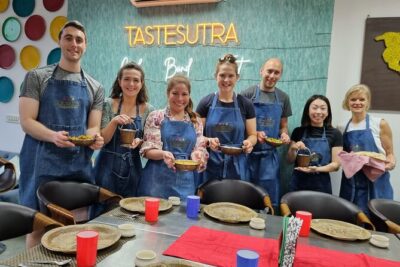
The meal is also where the class feels most personal. JD and his father are central to the activity, and the family may be present as part of the welcome. Several accounts describe the hosts as warm, patient, and generous with their time. The small group helps keep the meal conversational rather than anonymous.
More Indian Classes in India:
- New Delhi: Indian Cooking Class in a Local Home
★ 5.0 · 65 reviews - Mumbai: Indian Cooking Class & Cultural Delights
★ 5.0 · 38 reviews - New Delhi: Traditional Indian Cooking Class & Market Visit
★ 5.0 · 32 reviews - Private South Indian Tamil Cooking Class in Chennai with Srividya
★ 5.0 · 24 reviews
What makes the teaching style useful
The strongest reason to choose this class is the way it explains why Indian food tastes the way it does. You are not only collecting recipes. You are learning how to build flavor, how to recognize the role of each spice, and how traditional methods affect the finished dish.
JD’s father is also involved, which adds a second generation to the lesson. The family connection gives the recipes a sense of continuity, especially when the food is linked to his grandmother’s methods and to the family’s own cooking traditions.
The class is hands-on, but it is not described as demanding. You can expect guidance throughout the process, with the hosts demonstrating techniques and then allowing you to take part. This should suit beginners who want confidence in the kitchen, as well as experienced home cooks looking for North Indian ideas.
Solo participants can fit in well. One person who booked at the last minute received quick joining instructions and ended up in a setting that felt relaxed and safe. A solo booking may even become a very small or private class if few people book that time, although this is not guaranteed.
For couples and friends, the class offers an easy shared activity. You do not need to organize a separate meal afterward, and you leave with recipes and methods you can try at home.
Group size, timing, and the feel of the afternoon
The duration is about two hours and 30 minutes. That is long enough to cover several dishes and eat together, but short enough to fit into a Delhi sightseeing day.
The maximum group size is listed as 10, while the main description calls it a maximum of eight. In either case, this is far smaller than a large demonstration class. A smaller group gives you more chances to ask questions and more room to handle the food directly.
The class can work well as an afternoon activity or as an evening meal. If you schedule it late in the day, remember that the included food may function as dinner. If you are taking the class around sightseeing, do not book it too tightly against another appointment. Cooking has natural pauses, and the meal at the end is part of the experience rather than an afterthought.
The meeting point is in Greater Kailash, a part of south New Delhi. The location is near public transportation, and the address is provided clearly as R-142, Greater Kailash-1. Mobile tickets are supported, and confirmation is sent at booking.
Is $50.22 good value?
At $50.22 per person, this costs more than a standard restaurant meal in New Delhi. You are paying for instruction, ingredients, a multi-dish meal, drinks, and time in a private home.
I think the price makes sense if you want an activity rather than simply food. You receive a meal and a set of techniques that can be used again. The value improves if you are curious about spices, breads, and the structure of a home-cooked Indian spread.
The value is less clear if you mainly want to eat or if you already cook Indian food confidently. In that case, a restaurant crawl could offer more variety for the same money. This class earns its price through access to the kitchen, direct guidance, and the family setting.
Group discounts are available, which may make the experience more attractive for couples, families, or friends booking together. Gratuity is not included, so budget separately if you want to thank the hosts for their work.
Who should book this cooking class?
I would recommend it to you if you meet one or more of these descriptions:
- You want a food experience with a personal, local setting.
- You are a beginner who wants practical help with Indian spices.
- You enjoy making bread and want to learn more than a curry recipe.
- You are traveling alone and would like a small social activity.
- You want a meal that includes cultural conversation, not only cooking.
- You need vegetarian or non-vegetarian choices.
- You prefer a short activity of about two and a half hours.
I would pause before booking if you need a guaranteed dish list, dislike group activities, or want to prepare every ingredient from scratch. The menu appears to change slightly, and some preparation is done before the class to keep the session moving.
The class also requires a minimum number of participants. If that minimum is not met, the activity may be rescheduled or refunded. Poor weather can also lead to a new date or full refund. Standard cancellations are free up to 24 hours before the start time, but changes or cancellations within 24 hours are not refundable.
Should you book it?
Book this class if you want to understand Indian food from inside a family kitchen. The strongest features are the patient instruction from JD and his father, the focus on spice technique, the chance to make breads and dessert, and the shared meal at the end.
The main caution is the flexible menu. Confirm the current dishes if that matters to you, and remember that the experience is designed around cooking and conversation rather than a fast, polished demonstration. For a first visit to New Delhi, or for anyone who wants to bring home more than photographs, this is a practical and personal choice.
FAQ
Where does the Indian cooking class take place?
The class takes place at R-142, Greater Kailash-1, Block R, part-1, Greater Kailash, New Delhi, Delhi 110048, India.
How long does the cooking class last?
The experience lasts approximately two hours and 30 minutes.
Where does the activity end?
The activity ends back at the same meeting point in Greater Kailash-1.
How many people can join the class?
The maximum is listed as 10 participants. The main description also refers to an intimate group of up to eight people.
Is food included?
Yes. Lunch or dinner is included, along with coffee or tea and bottled water.
Are vegetarian and non-vegetarian options available?
Yes. The class offers both vegetarian and non-vegetarian options.
What dishes will be prepared?
You will prepare a main dish, a rice dish, breads, and dessert. The exact number and types of dishes may vary, with descriptions referring to six dishes, two or three bread varieties, and sometimes seven dishes.
Can I cancel for a full refund?
Yes. You can cancel at least 24 hours before the experience start time for a full refund. Cancellations or changes made within 24 hours are not refundable.
Newest classes around India
- Private tour to learn Traditional Indian Art, craft & Cooking★ 5.0 · 4 reviews
- Chennai Super Market Tour and Cooking Class with a Fun Local★ 5.0 · 9 reviews
- Traditional Chettinad Cooking Class in a Local Home near Chennai★ 4.5 · 12 reviews
- Neighborhood Market Tour & South Indian Cooking Class in Chennai★ 5.0 · 7 reviews
- Chennai Dosa Making Class & Home-Dining Experience with Jyashree★ 5.0 · 8 reviews
- Traditional Gowda Cooking Class and Meal in a Bangalore Home★ 5.0 · 31 reviews
- Discover Bangalore’s Cuisine: Private Half-Day Cooking Experience★ 5.0 · 3 reviews
- Private South Indian Cooking Class in Bangalore with a Local★ 5.0 · 11 reviews
New Delhi Cooking Classes, compared.
Veg and Non veg : Private Cooking Class in Delhi home (7 meal)
Read our review →
AI Cooking Class and Much More in a Local Family Home
Read our review →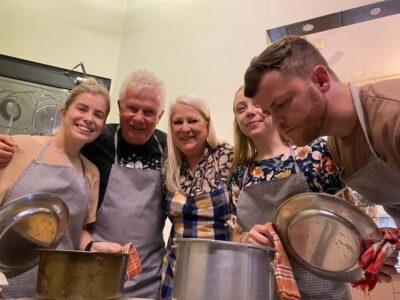
Spice Knight (Cooking Class -> Meal -> Local Market walk)
Read our review →
Talk & Enjoy with Delhi locals at their home while Cooking
Read our review →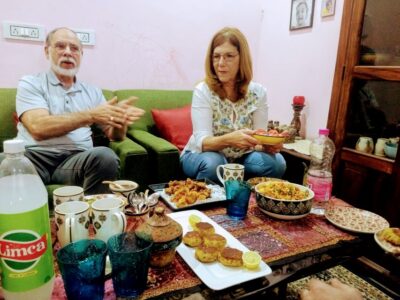
Full-Day Cooking Class learn 8 dishes with Locals
Read our review →Browse the lists this tour appears in