
Review · GREECE COOKING CLASSES
Chania Sourdough Bread Class – Olive Oil Tasting
The best part of this Chania experience is that bread is only the beginning. You shape your own sourdough loaf, then watch it bake in a wood-fire oven while you walk through an olive grove, pick vegetables, and help prepare a full Cretan meal. I like that the food comes from several parts of the property, not just a cooking-school pantry.
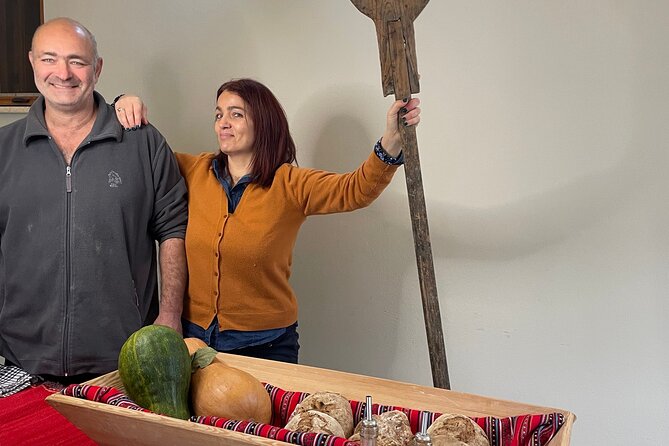
I also like the relaxed family setting. Nikos, known as Uncle Nicos, brings stories, humor, and history to the baking, while Alex keeps the class moving. The olive oil tasting is another strong point, especially when you pair the oil with fresh bread, herbs, salad, fava, and other seasonal dishes.
The main consideration is the four-and-a-half-hour commitment. Transportation is not included in the $106 price, and the class is 10 to 15 minutes from central Chania in Nerokourou, so you need to arrange a taxi, rental car, or paid transfer.
Key points at a glance
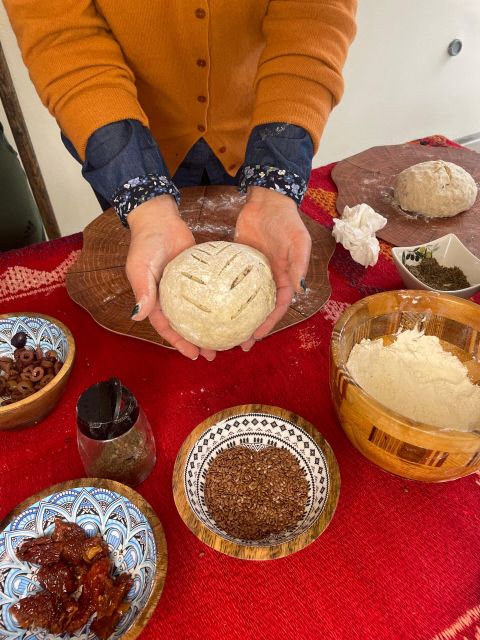
- Your own custom loaf: Add olives, sun-dried tomatoes, seeds, or other preferred ingredients before baking.
- Wood-fire baking: Your bread goes into a traditional oven while you work on the rest of the meal.
- Olive grove visit: Learn how olive oil is harvested and how herbs are mixed into extra-virgin oil.
- Farm-to-table lunch: Pick vegetables and prepare Cretan salad, fava beans, and seasonal side dishes.
- Warm family hosting: Nikos and Alex lead the activity in English or Greek, with plenty of room for conversation.
- A full half-day outing: Lunch, local wine, dessert, ingredients, and hands-on instruction are included.
Bread first, then the rest of Crete
This is a cooking class with a strong sense of place. You do not simply measure flour in a neutral kitchen, bake a roll, and leave. The bread connects to the olive grove, the vegetables, the family table, and the habits of Cretan cooking.
Your arrival begins with a homemade refreshment or Greek coffee from the hostess, along with cookies. That small welcome matters. It gives you time to settle in before working with dough, and it sets a friendly tone for what follows.
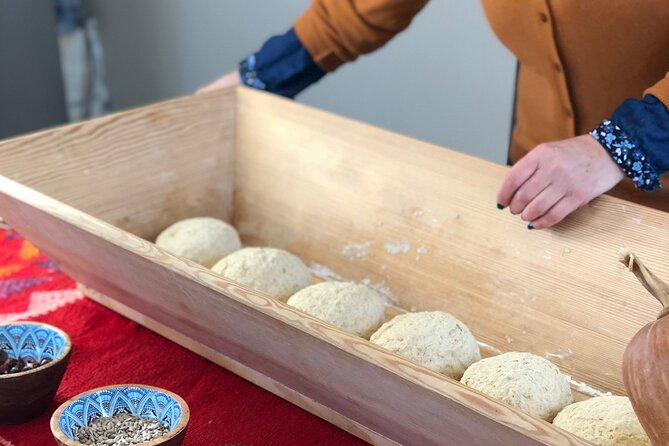
Nikos and Alex introduce the sourdough process while you enjoy your drink. You learn how the ingredients come together and how the dough is prepared before shaping. The class is offered in English and Greek, so English-speaking visitors can follow the instruction directly.
The mood is informal. Nikos uses stories, humor, and personal conversation to explain traditional baking, while Alex helps with the practical steps. If you enjoy cooking with a host who talks as much about daily life and local customs as about measurements, this setting should suit you.
More Baking Classes in Greece:
- From Mykonos: Mykonian Farm Baking Class with Brunch
★ 4.7 · 29 reviews - Phyllo Pie Baking Class @ Lefkada Micro Farm
★ 5.0 · 3 reviews - Lisbon: Pastel de Nata Baking Class
★ 4.9 · 2,106 reviews
Shaping a loaf with olives, seeds, or tomatoes
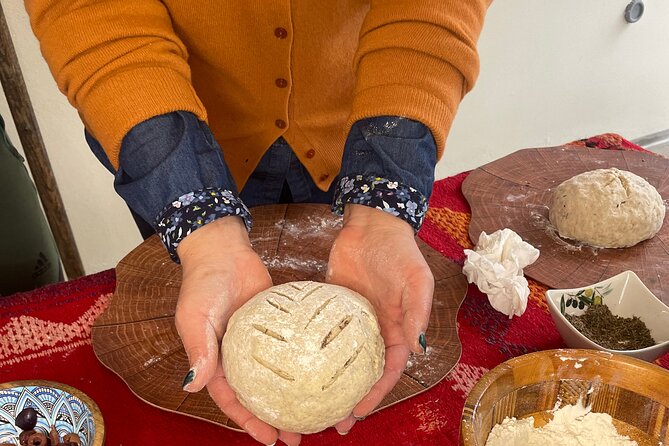
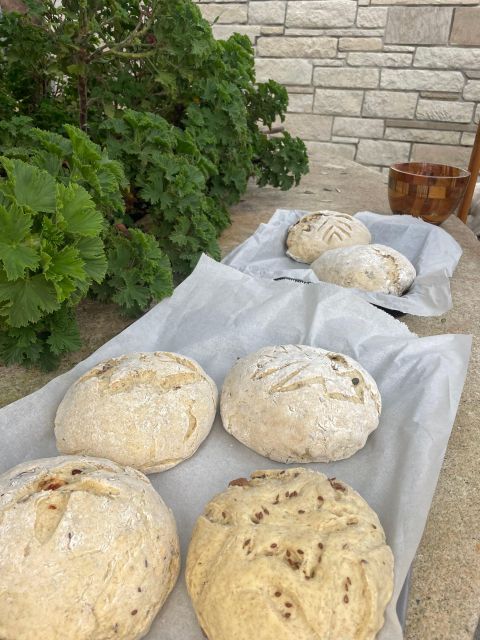
Once the dough is ready, you prepare an individual loaf. This is one of the most appealing parts of the activity because your bread is not a standard item made for the whole group. You choose additions such as olives, sun-dried tomato, seeds, or other available ingredients.
That choice gives the class a personal touch without turning it into a complicated technical workshop. You are learning a traditional food, but you still get to make something that fits your taste.
The information provided does not promise a formal lesson on maintaining a sourdough starter at home, so I would not book this expecting a professional bread-baking course. The focus is a hands-on introduction, a personal loaf, and the pleasure of eating it fresh later.
After shaping, the loaves need time to rest. This pause is used well. Instead of standing around waiting for dough to behave, you move outside to the olive grove and continue the Cretan food story.
Under the olive trees with extra-virgin oil
The olive grove gives the class its strongest local character. You learn about the olive harvest and how olive oil fits into the food traditions of Crete. You also hear about mixing olive oil with herbs, which leads directly to the tasting later in the meal.
One particularly memorable detail from the experience is time spent beneath a 500-year-old olive tree. You may also encounter puppies on the property, a small feature that will be especially welcome for families and animal lovers. These touches make the outing feel like a visit to a working family home rather than a staged demonstration.
The oil tasting is not presented as a formal professional tasting with a long list of technical terms. It is more useful for the ordinary cook. You taste extra-virgin olive oil with herbs and then use it with your bread and lunch. That helps you understand how a simple Cretan table gets much of its flavor from good oil, fresh produce, and herbs.
I would pay attention to the texture and aroma of the oil, then try it with your warm bread. The pairing is the point. On its own, oil can seem like a small detail. Spread over fresh sourdough with herbs, it becomes one of the meal’s central pleasures.
Picking vegetables and building a Cretan lunch
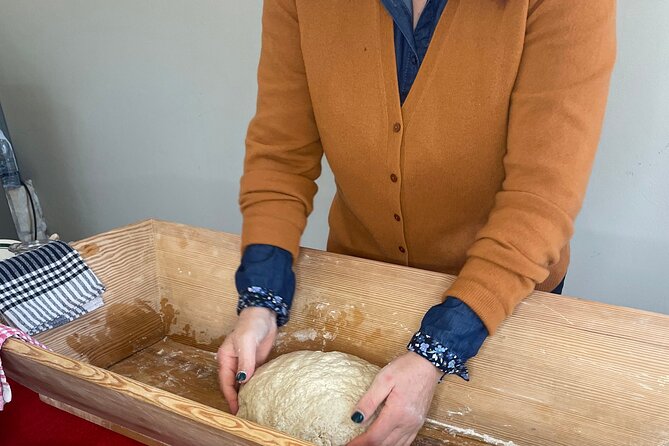
While the dough rests and the bread later bakes, you visit the farm to harvest vegetables. You then use them to prepare Cretan salad and other side dishes.
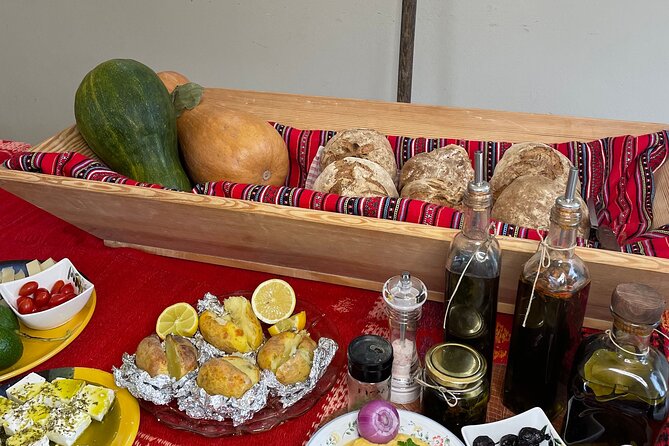
The class includes Greek fava beans and seasonal appetizers, with one menu detail from the experience also noting herbed potatoes. Because the menu depends on the season, you should expect the exact side dishes to vary. That is a benefit if you want food that follows the property and the time of year, but it means you should not book with a fixed menu in mind.
The Cretan salad is a practical lesson in balance. Fresh vegetables, olive oil, and herbs do most of the work. You are not relying on a long recipe or elaborate equipment. The same is true of the fava, which may be new to some visitors. If you have never tried it, this is a good setting to do so, alongside bread and oil rather than as an isolated tasting spoon.
This portion also gives the activity a better rhythm than a class spent indoors from start to finish. You move between mixing, resting, walking, harvesting, and preparing food. The four-and-a-half-hour duration is long, but the changes of pace help.
More Food and Drink Outings in Greece:
- Athens: Food Market Visit and Cooking Class with Wine
★ 4.9 · 1,087 reviews - Santorini: Cooking Class with Lunch and Wine Tasting
★ 4.8 · 289 reviews - Mykonos: Cooking Class with Food and Wine
★ 4.9 · 282 reviews - Cretan Cooking Class and Olive Oil Tasting
★ 5.0 · 178 reviews
The wood-fire oven and the moment everyone waits for
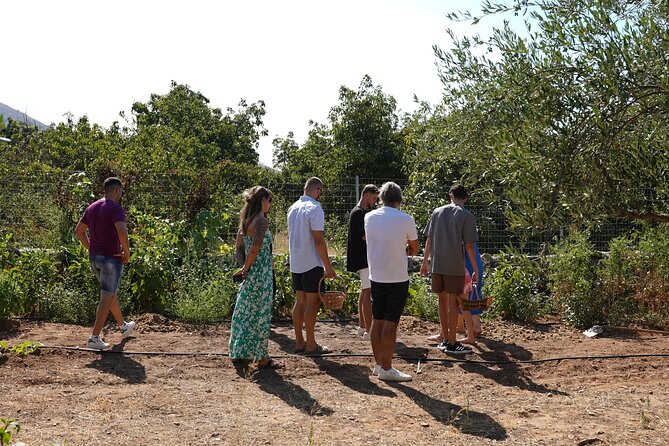
Eventually, the loaves go into the oven. The wood-fire cooking is a major reason to choose this class instead of a standard city cooking lesson. It adds a traditional method and gives the bread a strong sense of occasion.
The timing is not only about the final loaf. While the bread bakes, you have already prepared salad and side dishes, visited the grove, and learned about the oil. By the time the bread comes out, it is the final piece of a meal rather than a takeaway item.
Fresh bread also changes the tasting. You can tear into your own loaf, add herb-flavored olive oil, and eat it with the dishes you helped prepare. The aroma is part of the experience, and the final serving gives the class a satisfying payoff.
You will not leave with an elaborate series of dishes or a restaurant-style cooking certificate. You leave with the memory of one loaf, a better feel for sourdough, and a clear example of how Cretan meals use ordinary ingredients well.
A long table with wine and dessert
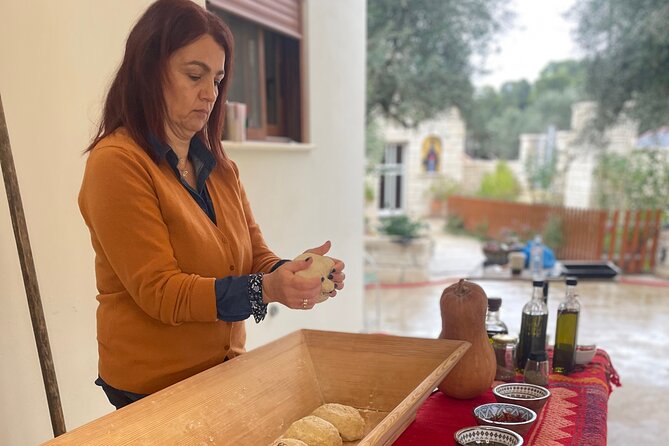
Lunch is included, along with generous amounts of local wine. The meal may include your bread, Cretan salad, fava beans, potatoes, seasonal appetizers, and other food prepared during the class.
This is where the class shifts from instruction to hospitality. Conversation becomes as important as the cooking. The hosts are part of the attraction, especially if you enjoy meals that take their time and allow room for questions, stories, and laughter.
Wine is served generously, so plan your return to Chania with care. If you drive, you should decide in advance who will not drink. A taxi or paid transfer can be the easier choice, especially since transportation is separate from the $106 activity fee.
Dessert is offered at the end, though the exact sweet item is not specified. You are told to leave room for it, which is sensible advice after a meal built around fresh bread and several side dishes.
What the $106 price really covers
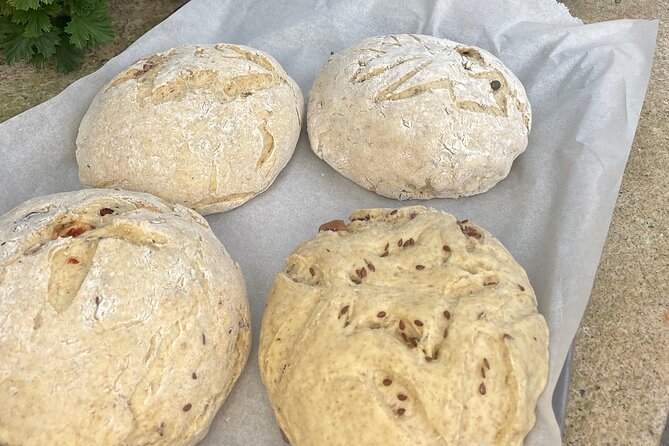
At $106 per person, this is not a cheap quick cooking lesson. It is a half-day food outing that includes instruction, ingredients, lunch, local wine, dessert, the olive grove visit, and the farm portion.
I see the value in the full setting. A cheaper class might teach you a recipe and offer a tasting, but this experience adds a personal loaf, outdoor time, a farm visit, an oil tasting, and a complete meal. The price makes more sense if you plan to enjoy the whole four-and-a-half-hour visit rather than focus only on sourdough technique.
Transportation is the main extra cost. The class is in Nerokourou, about 10 to 15 minutes from the center of Chania. You can reach it by car or taxi, and parking is available along the fence. Paid transfer service is offered from your location for an extra fee.
The transfer is semi-private. The provider uses a nine-seat van and an electric vehicle, and you may share transportation with other people attending the cooking class. Ask about the extra charge when booking if you do not have a car.
Who should book this class
I would recommend it to couples, families, and small groups who want food, conversation, and a rural setting in one outing. It also suits anyone who would rather learn through doing than sit through a long cooking lecture.
Bread lovers will enjoy the chance to shape a personal loaf, but you do not need advanced baking skills. The activity is also a good choice for people who want to understand olive oil in the context of a meal. You taste it with bread, herbs, salad, and other food, which makes the lesson easy to remember.
Families may appreciate the open setting, the vegetable harvesting, and the chance to see puppies. The activity is listed as wheelchair accessible, though you should still confirm the exact arrangements when booking if you have specific mobility needs.
I would think twice if you want a short activity near the Old Town, a tightly timed professional baking course, or a class with no alcohol. The location is outside the center, the meal takes time, and generous local wine is part of the experience.
Practical details before you reserve
The class lasts 4.5 hours, and starting times depend on availability. Plan it as a major half-day activity rather than something to squeeze between two sightseeing stops.
The price is $106 per person. Ingredients, everything needed for the experience, lunch, and generous amounts of local wine are included. Transportation is not included unless you arrange the paid transfer service.
The class is led in English and Greek. Nikos and Alex are the key hosts named in the experience, with the wider family helping at different points. The small-class atmosphere can be especially pleasant in the off-season, when there may be more time for conversation.
You can cancel up to 24 hours in advance for a full refund. Reserve-now, pay-later booking is available, which helps if your Chania schedule is still changing.
Should you book the Chania sourdough class?
Book it if you want a personal, food-centered half-day outside central Chania. The best reasons are the wood-fire bread, the olive grove, the herb-infused oil, and the chance to sit down to a meal made with your help.
The activity is less suitable if you only want bread instruction. For that, a shorter baking class may be a better fit. But if you like the idea of combining baking, farming, olive oil, wine, local stories, and a long lunch, the $106 price is reasonable.
Arrange transportation ahead of time, arrive hungry, and keep space for dessert. This is not just a recipe lesson. It is a practical introduction to how food, family, and the Cretan countryside meet at the same table.
FAQ
Where is the Chania sourdough bread class held?
The class is in Nerokourou, a beautiful neighborhood about 10 to 15 minutes from central Chania.
Is transportation included?
No. You can arrive by car or taxi, and paid transfer service is available depending on your location.
How much does the activity cost?
The listed price is $106 per person.
How long does the class last?
The experience lasts 4.5 hours.
What do I make during the class?
You mix sourdough ingredients, shape your own bread loaf, and add ingredients such as olives, sun-dried tomatoes, or seeds. You also help prepare Cretan salad and seasonal side dishes.
Is the bread baked in a traditional oven?
Yes. Your loaf is baked in a wood-fire oven.
What food is included?
Lunch is included, with your bread, Cretan salad, fava beans, seasonal appetizers, and other side dishes. Dessert is also offered.
Is wine included?
Yes. Generous amounts of local wine are included with the meal.
What languages are spoken?
The instructors offer the activity in English and Greek.
Can I cancel for a refund?
Yes. You can cancel up to 24 hours in advance for a full refund. Reserve-now, pay-later booking is also available.
Newest classes around Greece
- Authentic and Traditional Cooking Class in Chania Crete★ 5.0 · 5 reviews
- Chania Cooking Class in Crete with rustic, delicious and homely Cretan food!★ 4.5 · 14 reviews
- Private Cooking Class – A Culinary Journey in Argostoli★ 5.0 · 2 reviews
- Greek Cooking Class with Acropolis View★ 5.0 · 76 reviews
- Private Walking Meze Cooking Course★ 5.0 · 6 reviews
- Private Greek Cooking Class in Athens-Learn to Cook with Angelina★ 5.0 · 3 reviews
- Cook with Katerina: Authentic Greek Home Cooking Class in Athens★ 5.0 · 15 reviews
- Hands On Greek Cooking Classes in Athens★ 5.0 · 7 reviews
Greece Cooking Classes, compared.
Classic Cooking Class with Market Visit and Wine
Read our review →
Food Market Visit and Cooking Class with Wine
Read our review →
Greek Cuisine Cooking Class in Santorini with Recipes and Wine
Read our review →
Naxos: Half-Day Cooking Class at Basiliko Family Tavern
Read our review →
Greek Cooking Class in Athens Including Rooftop Dinner with Acropolis View
Read our review →
Greek Small-Group Athens Cooking Class & Dinner
Read our review →
Exclusive Cooking Experience in our Cave Home by Petra Kouzina
Read our review →
Chania: Authentic Cooking Class in the White Mountains
Read our review →Browse the lists this tour appears in