
Review · SIEM REAP COOKING CLASSES
Khmer Cooking Class at a Local’s Home in Krong Siem Reap
The best part of this Siem Reap experience is that you do not just watch someone cook Cambodian food. You visit a local market, inspect the ingredients, choose four dishes, and prepare the meal yourself under close guidance. Fish amok, tom yam, salads, fried dishes, and banana tapioca may all find a place on your table.
I like the small groups of up to six and the friendly, hands-on teaching from guides such as Sorya, Sivorn, Kong, and Sky. I also like the practical tuk-tuk pickup and drop-off, plus the chance to see herbs and vegetables growing in the garden. The main point to consider is that the activity is not always held inside a private family home. It may take place in a shared open-air cooking area with several groups nearby.
Key points at a glance
- Choose four Khmer dishes: You select your own menu, and each person can prepare different dishes to share.
- Start with a local market visit: The guide explains Cambodian ingredients, shopping habits, and everyday food.
- Cook in a small group: The maximum group size is six, with close help from the instructor.
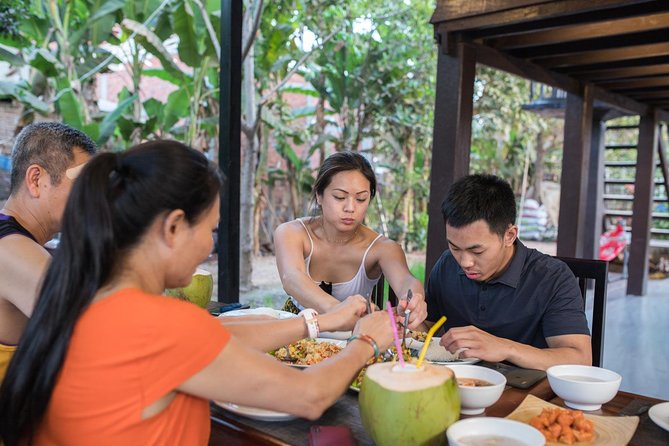
- Eat what you make: Your cooking becomes a large four-course meal, often more food than two people can finish.
- Ride by traditional tuk-tuk: Hotel pickup and return transport are included.
- Ask about food needs early: Vegetarian options and some allergy adjustments are possible if arranged in advance.
From Siem Reap hotel to local market
Your experience begins with pickup by tuk-tuk from your hotel. This is a useful touch in Siem Reap, where a short ride beyond the center can quickly lead you into quieter residential streets. The provider confirms the pickup details, and several guides and drivers use WhatsApp to keep communication clear.
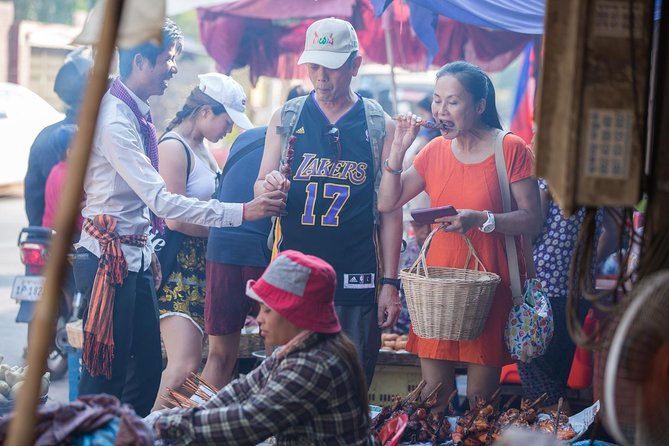
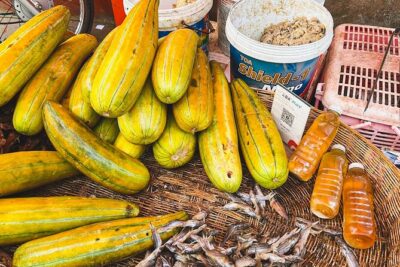
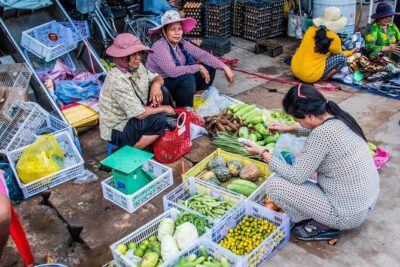
The first stop is a local market. This is not only a place to gather ingredients. It gives you a quick look at the foods used in everyday Cambodian cooking, from fresh produce and herbs to fish, meat, and other market staples. Your guide explains what you are seeing and how different ingredients are used.
Sorya has been praised for making this portion especially interesting, while guides such as Kong show guests around the stalls and explain the local context. You should expect about 20 to 30 minutes at the market, although the exact flow depends on your class time.
The timing matters. The morning session, listed at 9:30 a.m., is the best choice if the market visit is important to you. At that time, you can see the market during its main shopping period and watch ingredients being selected for the class.
The later sessions, listed at 12:30 p.m. and in the evening, may offer a quieter or shorter market visit. One afternoon schedule included a quick market stop after the class because the market was quiet in the middle of the day. It was still useful, but it did not have the same feel as a morning visit. If you care most about market life, book the early class.
More Home Cooking Classes in Siem Reap:
- Local Home Korean Cooking Class & Market Adventure in Seoul
★ 5.0 · 1,024 reviews - Marrakech: Moroccan Cooking Class with a Local Family
★ 4.9 · 668 reviews - Mexican Cooking from Scratch in a Local Home in Tulum
★ 5.0 · 585 reviews
A garden stop before the cooking begins
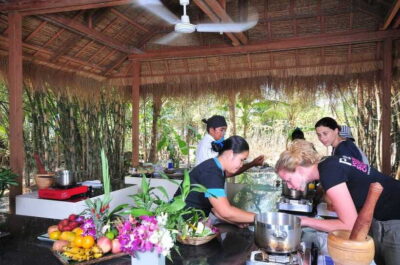
After the market, you continue by tuk-tuk to the cooking site. The setting has been described in two ways: the activity is sold as cooking in a local home, but some sessions take place in an open tiled kitchen in a residential neighborhood rather than inside a family house.
That difference is worth knowing before you book. You still get a locally run activity, a personal teaching style, and access to a garden with herbs and vegetables. But if you picture sitting in a Cambodian family kitchen, you may find the actual setup more like a small cooking school with an open-air work area.
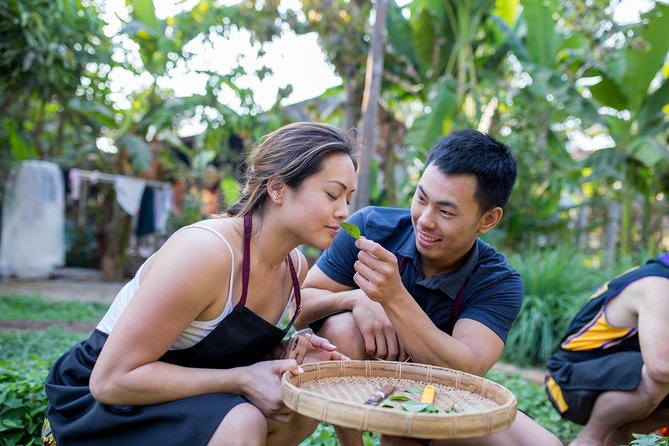
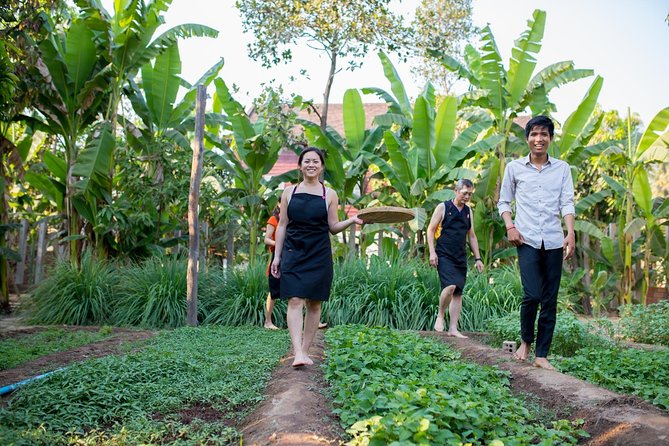
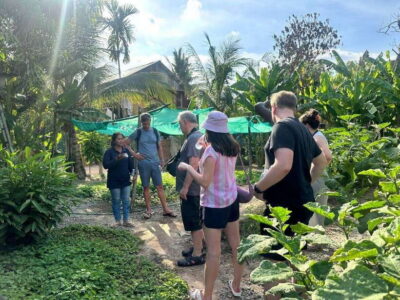
The garden adds a pleasant local touch. You can see fresh ingredients growing near the kitchen, and guides explain which herbs and vegetables are used in the recipes. Some participants have enjoyed smelling the plants and learning which produce comes directly from the garden.
Several groups may cook at the same time, usually in small groups of about five or six. That means the atmosphere is social rather than private. You will have your own instruction and work area, but you may hear other classes nearby. I see this as a fair trade for the low price and small maximum group size.
Choosing four dishes from the Khmer menu
The central feature is the menu choice. Instead of preparing one fixed recipe while everyone else watches, you choose four dishes from the available options. Each person can select different recipes, which lets a couple or family prepare a wider range of food.
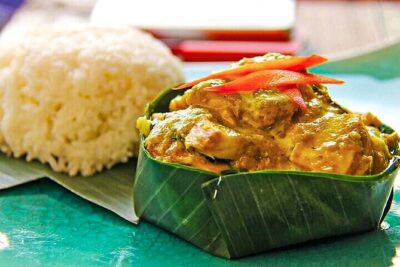
Common choices include fish amok, one of Cambodia’s best-known dishes, and hot and sour tom yam or tom yum soup. Other dishes may include steak salad, tempura-style vegetables or seafood, and banana tapioca dessert. The exact menu can vary, so you should treat these as examples rather than a guaranteed list.
This format works well for curious eaters. If you are with a partner, you can each choose different dishes and share the results. One couple prepared four dishes each, giving them eight plates to sample. That is a lot of food, so arrive hungry and pace yourself.
The recipes are designed for a class rather than a long professional kitchen session. The instructions are clear, practical, and broken into manageable steps. You may also see a few shortcuts that make the recipes easier to repeat at home. I consider that a benefit. You are learning food you can actually attempt again, not a restaurant recipe that requires hard-to-find equipment.
Hands-on cooking with Sorya, Sivorn, Kong, or Sky
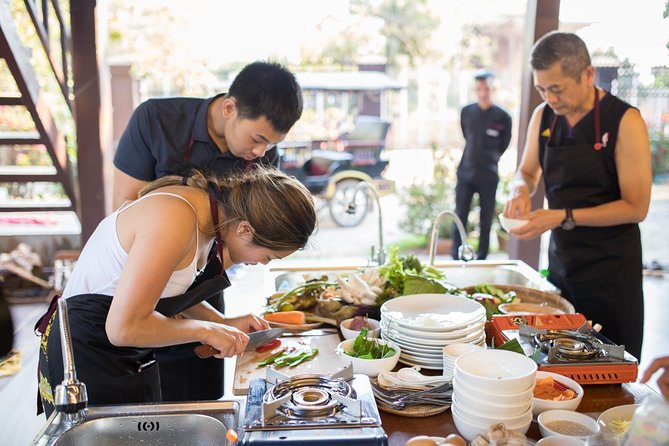
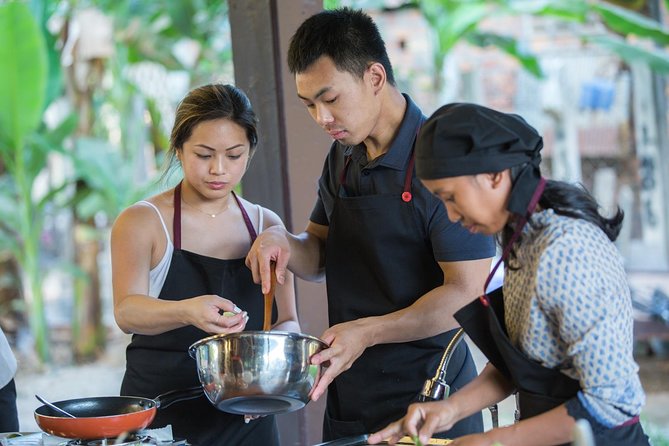
The teaching is the strongest part of the experience. Instructors work beside you, explain the steps, answer questions, and help when your chopping, mixing, or cooking needs correction. You are not expected to have any cooking experience.
Kong is often described as funny and encouraging, which helps keep the class relaxed. Sorya and Sivorn are noted for clear instruction and patience, while Sky is praised for guiding each step and taking photos during the session. The names may depend on the day and schedule, but the teaching style is personal rather than formal.
You will handle the ingredients yourself, including washing and preparing the food. That small detail matters. It gives you a better feel for the work behind each dish and helps you understand how fresh herbs, vegetables, spices, and sauces fit together.
The instructors also keep the class moving. With several dishes being prepared at once, good organization is important. You may work on one recipe while another dish simmers, then move to the next step. The process feels active without requiring you to rush.
The class lasts about three hours, including transportation, the market or garden visit, cooking, and the meal. It fits nicely into a Siem Reap day, especially if you want a break from temple visits. The lunch and dinner options also make it easy to place the activity around your sightseeing plans.
More Cooking Classes in Siem Reap:
- Siem Reap: Khmer Cooking Class at a Local’s Home
★ 5.0 · 1,108 reviews - Award-Winning Cooking Class Experience with Professional Teacher
★ 5.0 · 745 reviews - Cambodian Village Cooking Class
★ 5.0 · 265 reviews - Cambodian Cooking Class from Siem Reap
★ 4.9 · 190 reviews
What the four-course meal is really like
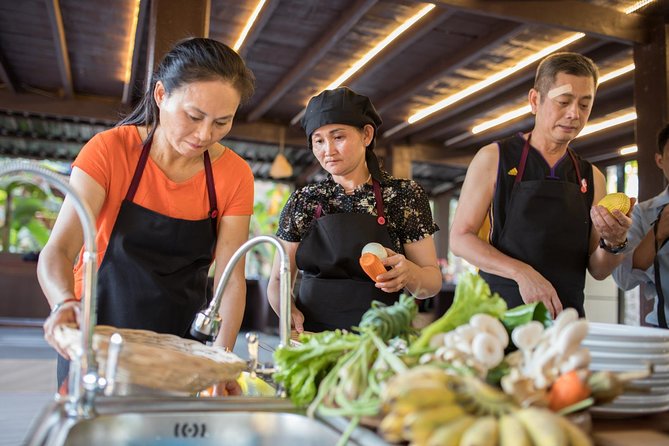
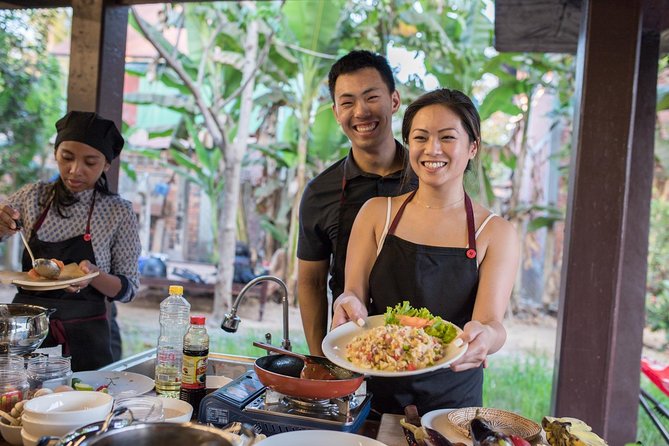
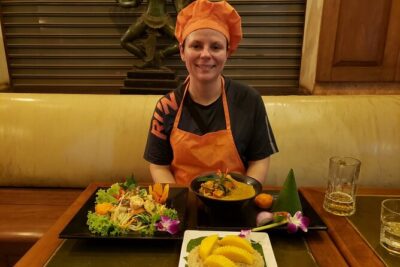
At the end, you sit down and eat the dishes you prepared. This is more satisfying than simply receiving a meal because you know which steps went into each plate. It also gives you a chance to compare different choices within the group.
Fish amok is a natural highlight for many people. It is one of the dishes most closely associated with Cambodian food, and preparing it yourself helps you understand the balance of fish, aromatics, coconut, and seasoning. The hot and sour soup adds a sharper contrast, while salads and fried dishes provide different textures.
The dessert course gives the meal a proper finish. Banana tapioca is one possible choice, and its soft, sweet texture works well after the stronger flavors of the savory dishes.
You may get more food than you can eat. That is especially true if everyone chooses different recipes and shares. The class is not a light tasting session. Plan it as a full meal, and do not schedule an elaborate dinner right afterward.
Beer and wine are not included. Water is provided, according to the practical information from the experience, but you may want to bring or purchase another drink if you prefer something with your meal. Alcohol can be bought separately.
Vegetarian choices and food restrictions
Vegetarian cooking is possible, but you need to mention it before the class. The same applies to allergies or other food restrictions. The provider says allowances can be made, but the kitchen needs advance notice to plan suitable ingredients.
This is not the kind of class where you should wait until the instructor hands you a plate and then announce a serious allergy. Send the information when booking, and repeat it to the guide at pickup or on arrival.
The menu choice also helps. Several dishes can be adapted, and one class included options that worked well for a vegetarian participant. Still, the exact substitutions are not listed in advance, so specific requests should be confirmed ahead of time.
The value of the $27 price
At $27 per person, this is strong value for a three-hour activity. The price includes hotel pickup and drop-off by tuk-tuk, the guide, market and garden visits, all ingredients, instruction, and a four-course meal.
If you paid separately for transport, a meal, and a cooking lesson, the total would likely be higher. More important, the activity combines several small Siem Reap experiences in one outing: local transport, food shopping, a garden visit, cooking instruction, and dinner or lunch.
The low price does come with a few trade-offs. The kitchen may be shared with other groups, and the setting may not match the private-home description exactly. You are paying for a friendly local cooking school experience, not a fully private meal in a family dining room.
For most people, that is a reasonable compromise. The group is still capped at six, the instructors provide direct help, and you get a substantial meal at the end. Couples, families, and solo visitors who enjoy meeting others should find the format worthwhile.
Which class time should you choose?
The early 9:30 a.m. session is the best fit if you want the fullest market experience and a cooked lunch afterward. You are more likely to see the market at its active morning stage, and the ingredients can be selected as part of the day’s preparation.
The 12:30 p.m. class works for people who want a midday activity. Just understand that the market portion may be brief or may happen after the cooking, depending on the day. The market can be quiet at that hour.
The evening option suits you if you prefer cooking dinner and keeping your morning free for Angkor Wat or other sightseeing. It also gives the class a relaxed end, since you finish with the meal you have prepared.
All sessions last about three hours, but pickup and local traffic can affect the total time. Keep your schedule loose around the activity rather than booking a tight appointment immediately afterward.
Practical details before you book
Children must be accompanied by an adult. The activity is near public transportation, but the included tuk-tuk transfer makes public transport unnecessary for most people.
The maximum group size is six, though the cooking area may contain several small groups at once. Pickup and drop-off are included, and mobile tickets are accepted. Free cancellation is available if you cancel at least 24 hours before the start time. Changes or cancellations inside that window are not refunded.
The provider also lists extra visits to a mushroom farm and crocodile farm with a local guide. The available details do not explain how these visits fit into every schedule, so ask at booking if they are important to you. Do not assume they are part of the standard three-hour cooking sequence.
The experience provider is Angkor Wat Travel Tour. The activity has received a five-star rating from more than 2,700 submissions and is recommended by 100 percent of the supplied rating summary. Those numbers suggest a very reliable crowd-pleaser, but the setting clarification still matters if the private-home idea is central to your decision.
Who should book this cooking class?
I would choose this for you if you want a practical introduction to Khmer food rather than another guided tour of monuments. It is especially good for couples, families with older children, solo visitors who enjoy a small group, and anyone who likes to learn by doing.
It also suits people who want to try Cambodian food but feel unsure about ordering from a menu. You will learn the ingredients, prepare the dishes, and eat a full meal in one session.
I would hesitate only if you require a truly private class, a guaranteed family-home setting, or a highly polished culinary school. The shared open-air kitchen may feel less intimate than the name suggests. The market visit can also be shorter outside the morning session.
Should you book it?
Yes, if you want good food, a little local context, and a useful skill to take home. The combination of tuk-tuk transport, market visit, garden stop, four dishes, and personal instruction makes the $27 price easy to justify.
Book the morning class if the market is a priority. Tell the provider about vegetarian needs or allergies before arrival. And keep your expectations accurate: this is a locally run, open-air cooking experience that may include several groups, not necessarily a private lesson inside someone’s house.
For most visitors, that is still a very good way to spend three hours in Siem Reap. You leave with a full stomach, a better sense of Khmer ingredients, and recipes you can try again at home.
FAQ
How long does the Khmer cooking class last?
The experience lasts approximately three hours, including the market or garden visit, cooking lesson, and meal.
What dishes will I cook?
You choose four Khmer dishes from the available menu. Possible dishes include fish amok, tom yam or tom yum soup, steak salad, tempura-style dishes, and banana tapioca dessert. The exact choices can vary.
Is hotel pickup included?
Yes. Hotel pickup and drop-off by traditional tuk-tuk are included in the price.
How many people can join the class?
The maximum group size is six people. The cooking site may host several small groups at the same time.
Is the class held inside a local home?
The experience is presented as a local-home cooking class, but some sessions take place in an open-air kitchen in a residential area rather than inside a private home. Several groups may cook there at once.
Can vegetarians join?
Yes. Vegetarian adjustments may be possible, but you need to tell the provider in advance. You should also report any allergies before the class.
What is included in the $27 price?
The price includes tuk-tuk transfers, an experienced local host or guide, cooking ingredients, the four-course meal you prepare, and the listed market or garden experience. Beer and wine are not included.
Newest classes around Siem Reap
- Siem Reap: Morning Cooking Class & Market Tour★ 5.0 · 7 reviews
- Siem Reap: Khmer Cooking Class at a Local’s Home★ 5.0 · 2 reviews
- Siem Reap: Guided Day Trip to Local Village & Cooking Class★ 5.0 · 3 reviews
- Siem Reap: Half-Day Cambodian Cooking Class★ 4.9 · 6 reviews
- Siem Reap: Cambodian Desserts Cooking Lesson with Tastings★ 4.8 · 9 reviews
- Cambodian Cooking Class★ 4.9 · 25 reviews
- Siem Reap: Afternoon Cooking Class & Village Tour★ 5.0 · 5 reviews
- Full Day Siem Reap Farm Tour with Cooking Class and Monk Blessing★ 5.0 · 6 reviews
Siem Reap Cooking Classes, compared.
Award-Winning Cooking Class Experience with Professional Teacher
Read our review →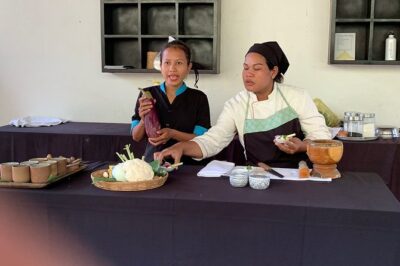
3-Hour Siem Reap Guided Cooking Class and Market with Pick up
Read our review →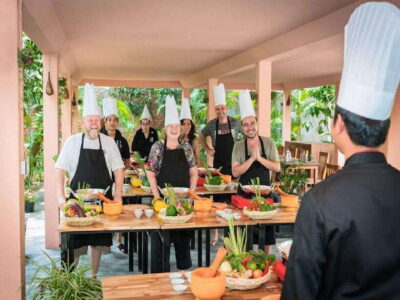
Morning Cooking Class and Market Tour in Siem Reap
Read our review →Browse the lists this tour appears in