
Review · SIEM REAP COOKING CLASSES
Siem Reap Cooking Class
The best part of this Siem Reap cooking class happens before you reach the stove. You begin at a local market, where a guide explains the vegetables, meat, fish, fruit, and other ingredients used in Cambodian cooking. Then Chef Dee leads you through three dishes in a covered garden pavilion.
I like the small group limit of eight, which gives you room to ask questions and work with the chef. I also like the practical menu: one starter, one main course, and one dessert, with choices such as fish amok, spring rolls, and bananas in palm sugar. The main caution is that the class has had at least one cancellation communication problem, so confirm the pickup and start details before the day.
Key points to know before booking
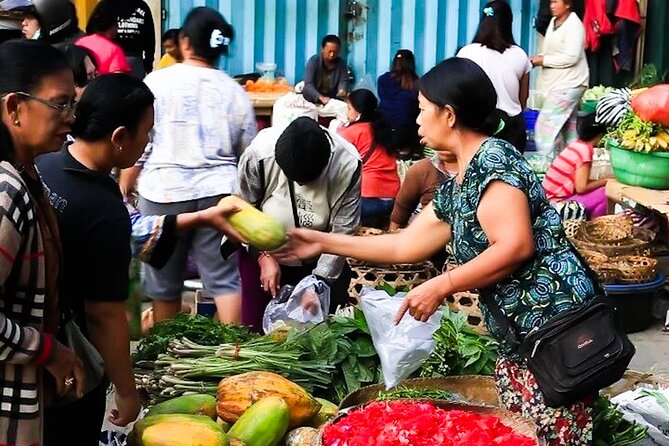
- A market visit comes first: You learn about Cambodian ingredients before cooking with them.
- Chef Dee leads the class: Her teaching includes ingredient explanations, recipe changes for vegetarian diners, and hands-on work.
- You cook three dishes: Pick one starter, one main course, and one dessert from the Khmer menu.
- The class takes about three hours: It is a useful half-day break from temple sightseeing.
- The group is capped at eight: This is a more personal setup than a large demonstration class.
- The price is $35 per person: Pickup, the market visit, cooking instruction, and your meal make this a solid value for a food-minded visitor.
Why this class makes a good break from Angkor
Siem Reap can fill your days with temples, temple roads, and early alarms. A cooking class gives you a different view of Cambodia, one based on ordinary ingredients and daily food rather than monuments.
This experience lasts about three hours, so it fits well on a morning or afternoon when you want a change of pace. You are not simply shown a finished plate. You visit a market, handle ingredients, cook with guidance, and eat what you prepare.
I especially like that no prior skill is required. You do not need to know how to balance a curry paste or prepare fish amok before arriving. The class is designed for beginners, but people who already cook can still pick up useful ideas about Cambodian flavors and methods.
The setup is also family-friendly and suitable for groups and students. Since the maximum is eight people, the class should feel more manageable than a large session where everyone watches from the edge of a cooking station. Still, the exact amount of individual attention can depend on the size and mix of your group.
More Cooking Classes in Siem Reap:
- Khmer Cooking Class at a Local’s Home in Krong Siem Reap
★ 5.0 · 2,731 reviews - Siem Reap: Khmer Cooking Class at a Local’s Home
★ 5.0 · 1,108 reviews - Award-Winning Cooking Class Experience with Professional Teacher
★ 5.0 · 745 reviews
Starting at the market with Cambodian ingredients
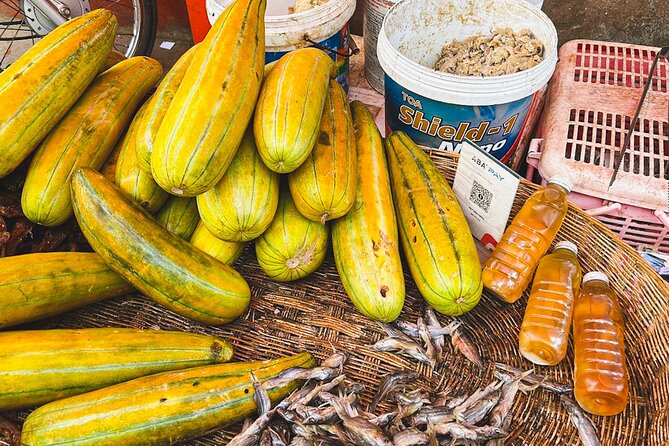
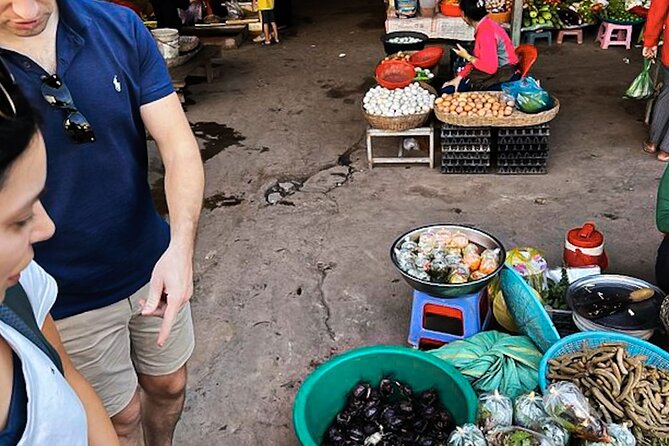
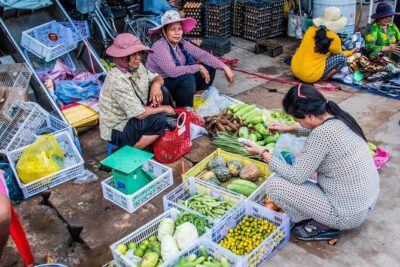
The market visit gives the class its local character. Your guide takes you through a market in Siem Reap and explains the vegetables, fish, meat, fruit, and other foods being sold. This matters because Cambodian recipes can look simple on paper, yet the ingredients do much of the work.
Instead of seeing a list of unfamiliar names in a recipe, you get to see the food in its everyday setting. You can learn what the ingredients look like before they are chopped, mixed, steamed, or cooked in coconut-based sauces.
Past participants have found this part especially useful because the guide explains the produce as you walk. One account describes a tuk-tuk driver discussing the vegetables at the market before taking the group onward. That suggests the market stop is not just a quick shopping errand. It is part of the lesson.
The market may be busy and informal, and it is not presented as a polished tourist attraction. That is part of its value, but it also means you should expect a working food market rather than a quiet, staged tour. The experience is about seeing ingredients in use, not about browsing a set of souvenir stalls.
Moving from the market to the garden pavilion
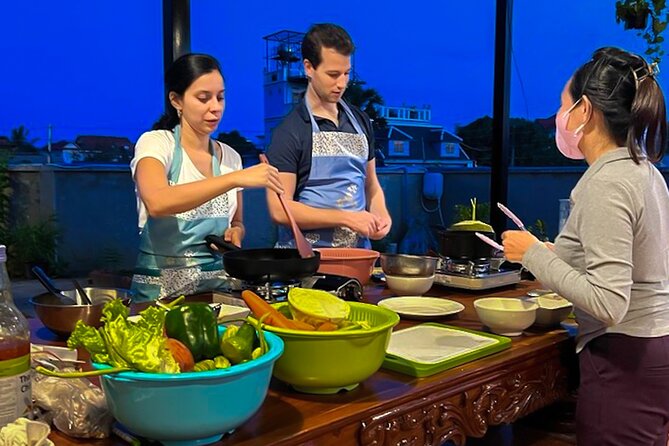
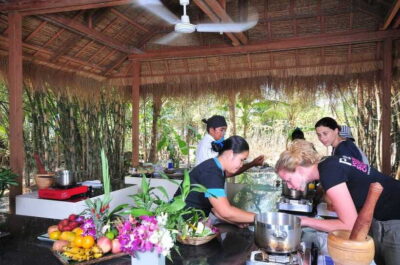
After the market, you go to a purpose-built garden pavilion for the cooking session. The setting is described as a covered cooking porch or garden cooking area, giving you shelter while keeping the class connected to an open-air home setting.
This is a useful middle ground. You get more structure than cooking in a private household kitchen, but the setting still feels personal rather than industrial. One detailed account describes Chef Dee’s home and a lovely covered cooking porch, while another highlights the clean kitchen and cold water available throughout the activity.
Clean facilities matter when you are handling food. Cold drinking water is a small detail, but it is welcome in Siem Reap’s heat, especially after time at the market. The class has also been able to adjust recipes for vegetarian diners, which is useful if you tell the chef about your needs at the start.
Do not expect a restaurant kitchen or a formal culinary school. This is a hands-on introduction to Khmer home cooking. You are there to learn useful steps, prepare food with a local chef, and share a meal in a relaxed setting.
Choosing your starter, main course, and dessert
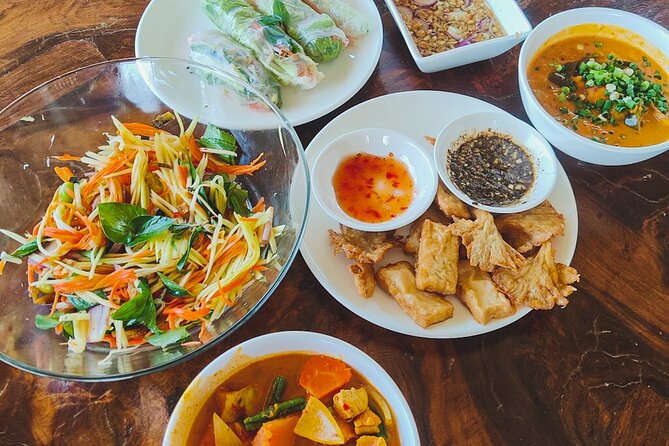
The menu gives you three dishes to prepare: one starter, one main course, and one dessert. The exact choices come from the Khmer menu, so you should check what is offered when you book if you have a strong preference.
The listed examples show the range:
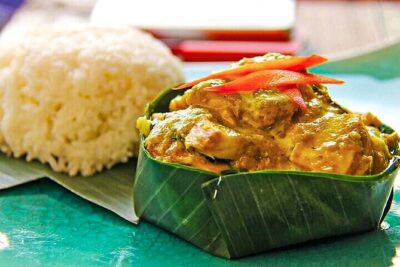
- Fish amok, served with steamed rice
- Vegetable or meat spring rolls
- Bananas in palm sugar with coconut juice
Fish amok is one of Cambodia’s best-known dishes, and learning it in Siem Reap gives you a useful introduction to the country’s gentle, aromatic style of cooking. The steamed rice served with it makes the main course more complete.
Spring rolls provide a different kind of lesson. You may choose a vegetable or meat version, making this a flexible starter for mixed groups. They are also a practical dish to recreate at home because the ingredients and assembly are easy to understand once you have seen the process.
The banana dessert shows another side of Cambodian cooking. Palm sugar and coconut juice create a sweet finish without turning the meal into a heavy pastry course. If you are interested in local ingredients, this is a good chance to see how familiar fruit can be prepared in a distinctly Khmer way.
The menu works well for a short class because it covers several parts of a meal. You learn a starter, a main dish, and a dessert instead of spending the entire session on one recipe. The tradeoff is that three dishes in three hours leaves limited time for long technical lessons.
Same region, a different dish to learn:
- Cambodian Village Cooking Class
★ 5.0 · 265 reviews - Cambodian Cooking Class from Siem Reap
★ 4.9 · 190 reviews - 3-Hour Siem Reap Guided Cooking Class and Market with Pick up
★ 4.5 · 26 reviews - Cambodian Cooking Class
★ 4.9 · 25 reviews
Cooking with Chef Dee
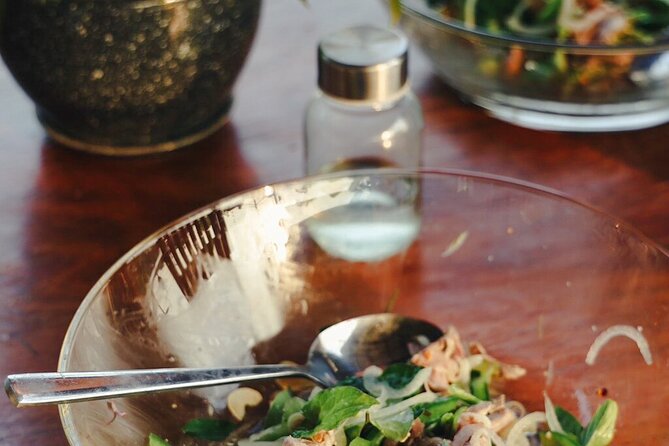
Chef Dee is the named chef associated with this experience, and her teaching style is an important part of what you are booking. The class is built around doing the work yourself, with the chef explaining the basic processes as you go.
That hands-on format is better for most home cooks than watching a demonstration from a distance. You can see how the ingredients are handled and follow the order of preparation as the dish takes shape. The goal is not to turn you into a professional cook in one afternoon. It is to give you techniques you can use in your own kitchen.
Chef Dee also uses ingredients from her garden for some classes or dishes. That adds a personal touch and helps connect the food on your plate with the plants and produce around the cooking area.
Her approach appears flexible. One class adapted recipes for vegetarian diners, which is a useful sign for groups with different diets. You should still state your requirements when booking and remind the chef at the start. The available information confirms vegetarian adjustments, but it does not promise every possible dietary substitution.
Different cooking abilities should work well here. A beginner can follow the chef’s steps, while a more experienced home cook can focus on ingredient combinations and methods. If your group includes children or students, the active format should be easier to enjoy than a long lecture, though adult supervision and participation will still matter.
Eating what you prepare
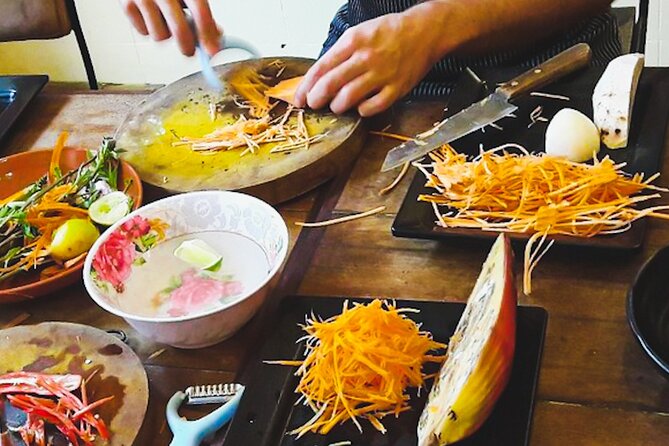
After the cooking, you sit down to eat the dishes you made. This is more than a reward at the end. It lets you see how the starter, main course, rice, and dessert work together as a Cambodian meal.
I like this part because it gives the lesson a clear finish. You can taste the result while the preparation is still fresh in your mind. If something turned out differently from what you expected, you can ask about it right away.
The meal is also where the class becomes social. A small group of up to eight people can share dishes and compare choices without the noise of a large tour. If you are traveling with friends or family, cooking together gives you a shared activity that does not depend on another temple visit.
Keep your expectations sensible. The price is $35 per person, so you are paying for a short cooking experience and meal rather than a long restaurant tasting or advanced chef training. For that price, the combination of transport assistance, market orientation, instruction, ingredients, and food offers good value.
Pickup, timing, and the meeting point
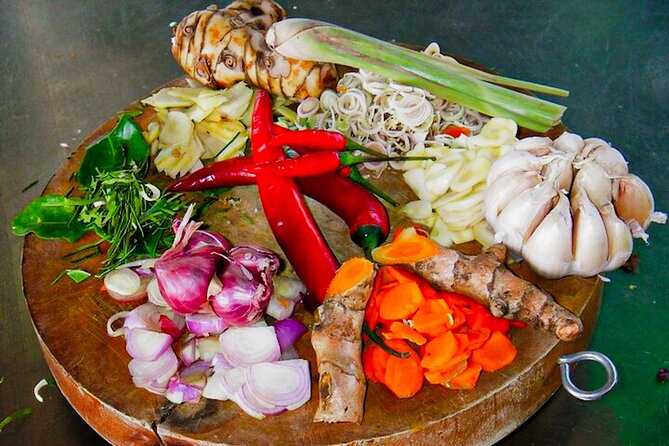
Pickup is offered from your accommodation, and you are asked to provide the place where you are staying and a contact number when booking. The listed start point is Siem Reap Pub Hostel, behind the Angkor Night Market, and the activity ends back at the meeting point.
Because both accommodation pickup and a named meeting point are mentioned, confirm which arrangement applies to you. This is especially important if your hotel is outside central Siem Reap or if you are staying at a guesthouse that is hard for a tuk-tuk to find.
The class takes about three hours. Allow a little extra time around the stated duration if you are being collected, since the market and transport portions may not feel as exact as a timed museum visit. The experience is near public transportation, but pickup can make the morning or afternoon simpler.
The class is often booked well ahead, with an average booking lead time of about 33 days. That does not mean you must reserve a month early every time, but it does suggest booking before your Siem Reap schedule fills up, especially if you want a particular date.
The one concern: communication around cancellations
The cancellation terms are straightforward: cancel at least 24 hours before the start time for a full refund. Changes or cancellations within 24 hours are not refunded, and the cut-off follows local time.
The activity can also be canceled because of poor weather or because the minimum number of participants is not met. In those cases, you should be offered another date or experience, or a full refund.
There has been at least one case in which a class was canceled without the customer being notified until they called. That is a serious communication flaw, even though it appears to be an exception rather than the normal pattern. I would confirm the class and pickup details in advance, particularly if you have planned the rest of your day around it.
Who will get the most from this class
This is a strong choice for you if you want an active food experience rather than another sightseeing stop. It suits first-time cooks, couples, families, students, and small groups who enjoy preparing and eating a meal together.
It is also useful for anyone curious about Cambodian ingredients but unsure where to begin. The market visit gives you context, while Chef Dee’s instruction turns that context into something you can practice.
Vegetarians may find the class workable because recipes have been adjusted for vegetarian diners. Make your needs clear before the cooking begins. The experience is less suitable if you want a fully private class, a long professional lesson, or a highly technical course with extensive written instruction.
It may also be a poor fit for anyone who dislikes markets, hands-on food preparation, or a flexible home-style setting. The appeal is the connection between the market, the cooking area, and the meal. If you want a polished restaurant meal with no participation, choose something else.
Is the Siem Reap cooking class worth $35?
I would book this class if I had three free hours in Siem Reap and wanted to understand Cambodian food beyond ordering it at a restaurant. The market visit, small group size, Chef Dee’s practical teaching, and three-course format give the price real value.
Before booking, confirm the pickup plan, tell the operator about vegetarian needs, and check the cancellation and weather arrangements. If you want an easy, social, beginner-friendly activity that sends you home with useful cooking ideas, this is a good fit. If your priority is advanced technique or a guaranteed formal schedule, choose with more caution.
FAQ
How long does the Siem Reap cooking class last?
The activity lasts approximately three hours.
Where does the class start and finish?
The listed meeting point is Siem Reap Pub Hostel behind Angkor Night Market. The activity ends back at the meeting point.
Is hotel pickup available?
Yes. Pickup is offered from accommodations. You should provide your accommodation details and a contact number when booking.
How many people can join the class?
The maximum group size is eight people.
Do I need previous cooking experience?
No. The class is suitable for people with no cooking experience.
What dishes can I learn to cook?
The class includes one starter, one main course, and one dessert. Examples include fish amok with steamed rice, vegetable or meat spring rolls, and bananas in palm sugar with coconut juice.
Can vegetarian recipes be prepared?
Vegetarian adjustments have been made for diners in the past. Tell the operator about your needs when booking and confirm the available choices.
What is the cancellation policy?
You can cancel at least 24 hours before the start time for a full refund. Cancellations or changes made within 24 hours are not refunded. If poor weather or an insufficient number of participants causes the operator to cancel, you should be offered another date or experience, or a full refund.
Newest classes around Siem Reap
- Siem Reap: Morning Cooking Class & Market Tour★ 5.0 · 7 reviews
- Siem Reap: Khmer Cooking Class at a Local’s Home★ 5.0 · 2 reviews
- Siem Reap: Guided Day Trip to Local Village & Cooking Class★ 5.0 · 3 reviews
- Siem Reap: Half-Day Cambodian Cooking Class★ 4.9 · 6 reviews
- Siem Reap: Cambodian Desserts Cooking Lesson with Tastings★ 4.8 · 9 reviews
- Cambodian Cooking Class★ 4.9 · 25 reviews
- Siem Reap: Afternoon Cooking Class & Village Tour★ 5.0 · 5 reviews
- Full Day Siem Reap Farm Tour with Cooking Class and Monk Blessing★ 5.0 · 6 reviews
Siem Reap Cooking Classes, compared.
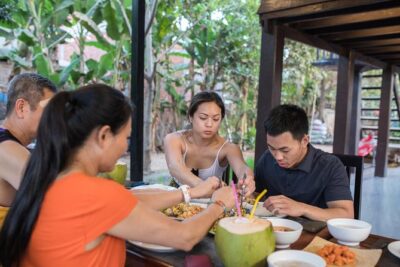
Khmer Cooking Class at a Local’s Home in Krong Siem Reap
Read our review →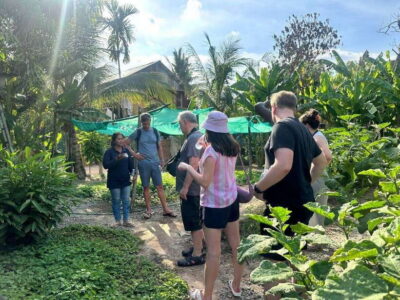
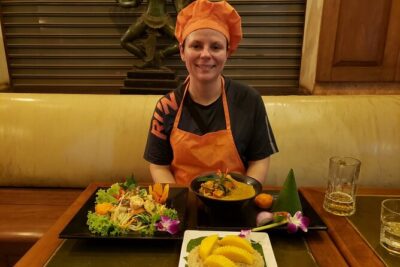
Award-Winning Cooking Class Experience with Professional Teacher
Read our review →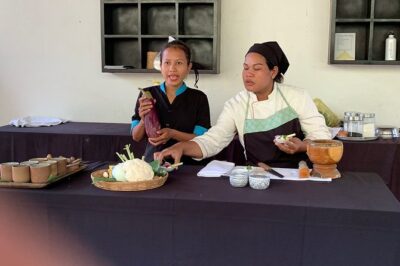
3-Hour Siem Reap Guided Cooking Class and Market with Pick up
Read our review →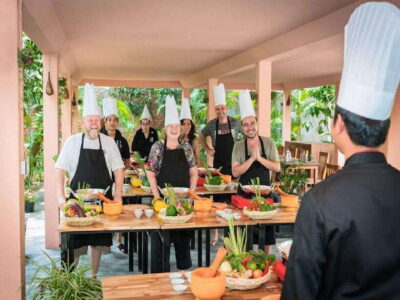
Morning Cooking Class and Market Tour in Siem Reap
Read our review →Browse the lists this tour appears in