
Review · SIEM REAP COOKING CLASSES
Cambodian Cooking Class from Siem Reap
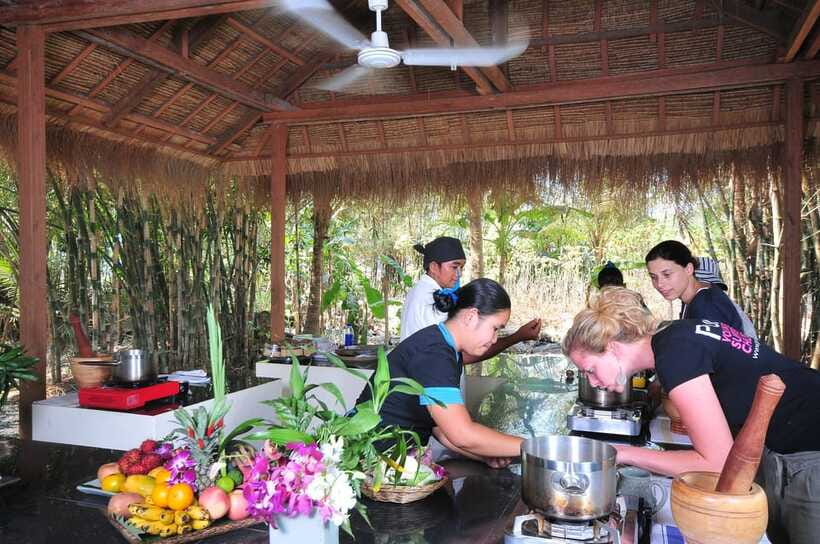
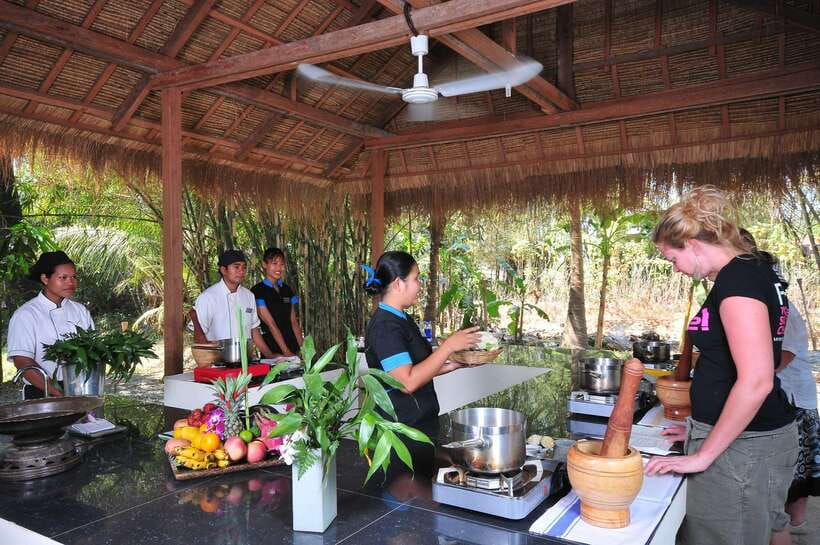
The best part of this Cambodian cooking class is that it starts beyond the hotel zone. You ride a tuk tuk into the countryside, visit a local market or family home, inspect the herbs and vegetables used in Khmer kitchens, then cook beside a pond in an open-air pavilion. I like the small groups, capped at six, and the fact that each person gets a proper cooking station. I also like the practical recipes and ingredient substitutions, which make it possible to try the dishes at home.
The main thing to consider is the heat. The cooking area is outdoors under cover, and the short village walk can feel warm, so bring a hat, water-friendly patience, and comfortable shoes. Children must be over 12 unless you arrange a private family class.
Key points at a glance
- A small class with real hands-on work: You get your own station, equipment, and share of the cooking rather than simply watching a demonstration.
- A look beyond Siem Reap’s tourist center: The tuk tuk ride takes you to a rural village, local market, family home, and vegetable garden.
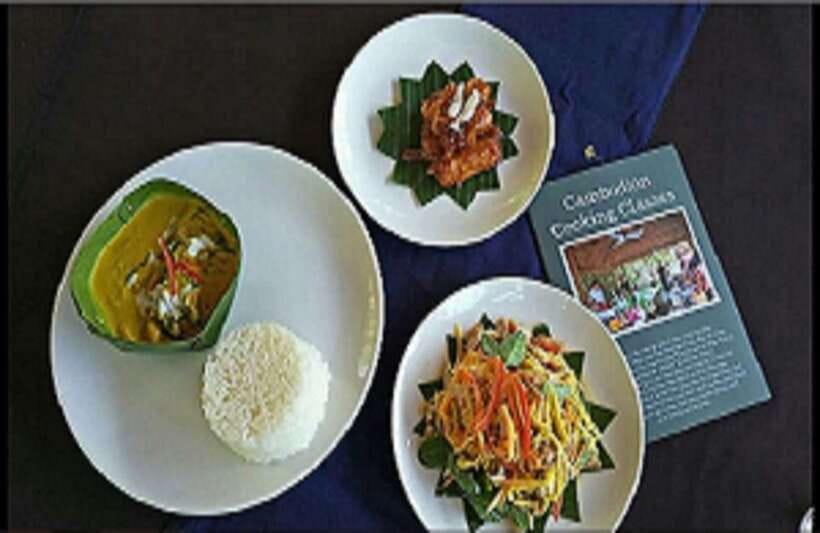
- Khmer dishes you can repeat at home: Menus include fish amok, mango salad, Cambodian curry, minced fish on sugar cane, and palm-sugar desserts.
- A peaceful meal beside the pond: After cooking, your dishes arrive one by one in the wooden pavilion, with a beer, soft drink, or water.
- A genuinely small operation: Groups are limited to six, and guides such as Sophia Lauren have been praised for patient explanations and personal attention.
- Good value at $32: The price covers transport, instruction, ingredients, lunch, one drink, and a recipe book.
Leaving Siem Reap by tuk tuk
This is a half-day activity, lasting about three and a half hours. Pick-up is arranged from your hotel in Siem Reap, and the tuk tuk takes you out of the city toward a rural village.
That ride matters. You are not arriving at a hotel kitchen or a polished restaurant classroom. You get a short look at the roads and homes outside the center, with the open sides of the tuk tuk making the trip part of the experience. One earlier schedule described a roughly 20-minute ride, though the exact time depends on your pick-up point and traffic.
At the end, the tuk tuk returns you to the central Beyond office rather than necessarily taking you back to your hotel. Check that detail when planning the rest of your day. You will be close to the main part of town, but you may need to arrange your own onward transport.
More Cooking Classes in Siem Reap:
- Khmer Cooking Class at a Local’s Home in Krong Siem Reap
★ 5.0 · 2,731 reviews - Siem Reap: Khmer Cooking Class at a Local’s Home
★ 5.0 · 1,108 reviews - Award-Winning Cooking Class Experience with Professional Teacher
★ 5.0 · 745 reviews
Starting with a market and local ingredients
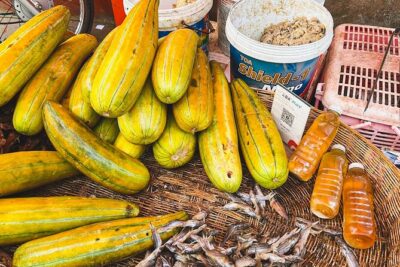
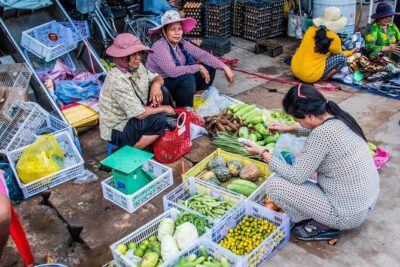
The food lesson begins before you sit at the stove. Current arrangements may include a stop at a local market, where your guide introduces the produce, leaves, herbs, spices, and other ingredients used in Cambodian cooking.
This is one of the most useful parts for anyone who has trouble telling one Southeast Asian herb from another. Your guide can explain what each ingredient does, how it is used, and what substitute might work when you return home. Sophia Lauren is one guide frequently associated with especially clear explanations, including taking time to let people smell and examine the produce.
You may also have the chance to taste local fruit or small market treats. The market is not just a shopping stop for the chef. It gives you a better sense of how Khmer cooking begins, with fresh ingredients chosen for the day.
Market conditions are practical rather than polished. Expect a working local market, not a staged food display. It can be warm, wet, crowded, or strongly scented. That is part of the point, but people who prefer air-conditioning and a quiet start should know what they are signing up for.
Meeting a Cambodian family near the cooking school
After the market, the class continues in a village setting. You walk through the area and learn about daily life from local villagers, then visit a family home, kitchen, and vegetable garden.
The visit helps connect the recipes to ordinary Cambodian life. Herbs and vegetables are not presented as abstract ingredients on a printed menu. You see where some of them grow and how a household kitchen works. The setup may be simple, and the visit is brief, but it gives the cooking class a human setting that a city restaurant cannot provide.
The exact order can vary. Some schedules place the family visit before the market, while others begin with the market and continue to the house. Either way, you should expect a short walk outdoors. Wear sandals or shoes that are comfortable on uneven ground, and bring a hat for sun protection.
This part also calls for some cultural awareness. You are visiting someone’s home, not entering a museum. Listen to your guide about where to stand, what to photograph, and how to behave respectfully.
Cooking beside the pond
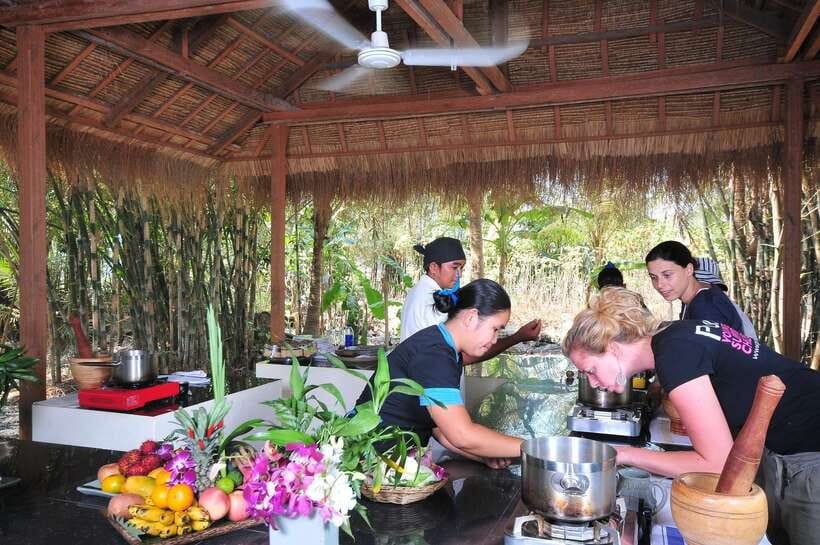
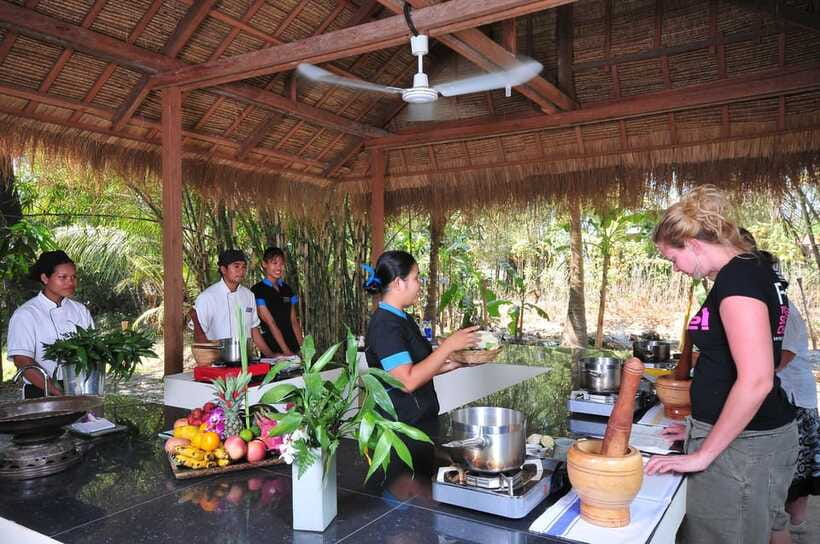
The main class takes place in an outdoor wooden pavilion near a pond. It is covered, so you are protected from direct sun, but it is not an enclosed, air-conditioned kitchen.
The setting is one of the pleasures of the class. Once the chopping and mixing are done, you eat with water and greenery around you instead of looking at a tiled restaurant wall. One account even noted turtles in the pond. Conditions can be hot, especially in warmer months, so loose clothing and a hat are sensible.
The class is fully hands-on. Each person has a separate station and equipment, and the chef guides you through the preparation step by step. You do not need previous cooking experience. The instructors demonstrate the process, then help you as you chop, mix, pound, season, and cook.
The teaching style is practical. You learn how ingredients work together, not only when to add them. Previous classes have included curry paste made with a mortar and pestle, an especially useful lesson because the paste provides much of the flavor in Khmer dishes.
The chefs and guides are also willing to explain alternatives for ingredients that may be difficult to find outside Cambodia. That small detail makes the recipe book more useful. A recipe is only worth taking home if you can adapt it to the supermarket near you.
Same region, a different dish to learn:
- Cambodian Village Cooking Class
★ 5.0 · 265 reviews - Siem Reap Cooking Class
★ 5.0 · 170 reviews - 3-Hour Siem Reap Guided Cooking Class and Market with Pick up
★ 4.5 · 26 reviews - Cambodian Cooking Class
★ 4.9 · 25 reviews
What you cook in the morning
The morning menu gives you a good introduction to Cambodian flavors without making the meal too heavy.
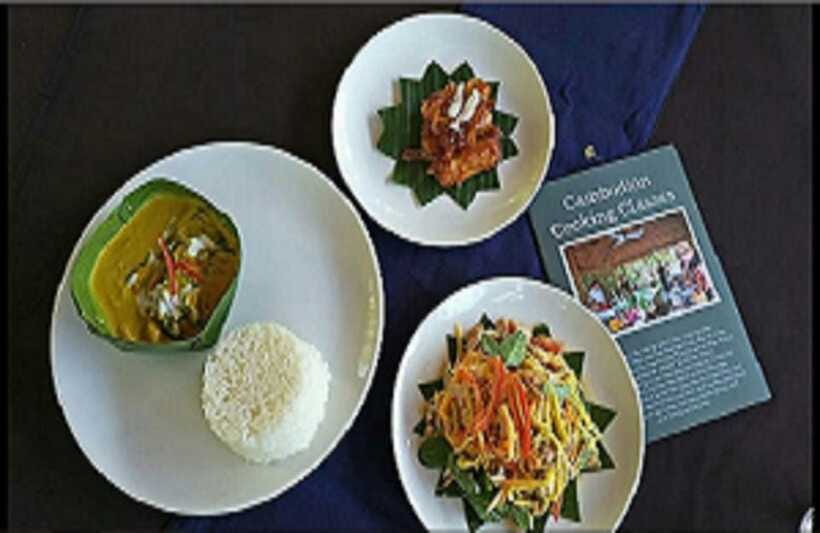
Cambodian mango salad uses fresh, light ingredients and provides a crisp contrast to the main course. It is a simple dish to repeat at home, provided you can find suitable mangoes and the herbs used in the class.
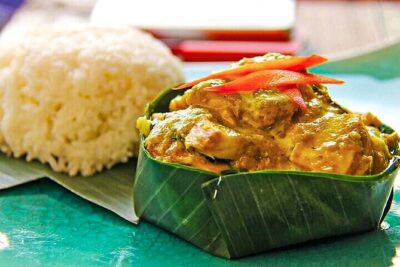
Fish amok is the star for many people. Amok is a smooth Cambodian curry, traditionally made with fish, chicken, or tofu, and cooked in a young coconut. It is fragrant rather than fiercely hot, with flavor built from spices and aromatics instead of the sharp heat associated with some Thai dishes.
The dessert is sticky rice balls with palm sugar and grated young coconut. This gives the meal a sweet finish while introducing ingredients that may be unfamiliar in a Western kitchen.
The menu is substantial. You cook and eat a three-course lunch, and some groups have had enough food left over for takeaway containers. Do not plan a large meal immediately afterward.
What you cook in the afternoon
The afternoon menu offers a different set of dishes.
Prahet Chien is minced fish prepared on sugar cane. It is a good example of the class’s focus on traditional Khmer recipes rather than generic fried rice or noodles.
Cambodian curry shows how the local style differs from neighboring cuisines. Cambodian food uses plenty of herbs and spices, but it is not usually as hot as Thai food. The emphasis is on layered fragrance and a balanced paste.
For dessert, you prepare Nom Tong Noun, described as Khmer brandy snaps. This slightly sweet treat adds a more delicate finish than the morning sticky rice balls.
If you have a particular menu in mind, check the available starting time before booking. The morning and afternoon menus are different, and the menu may be the deciding factor for you.
Eating what you prepared
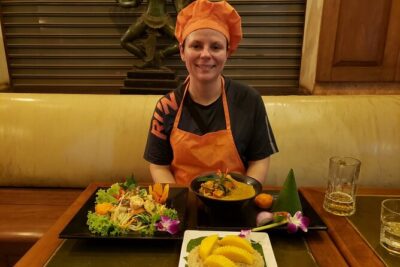
When the cooking is finished, you sit down in the pavilion and your dishes are served one at a time. This gives you a chance to compare each course and notice how the flavors change from the mixing bowl to the finished plate.
A complimentary beer, soft drink, or bottled water is included. One older booking record reported being charged for beer, so if you choose an alcoholic drink, confirm the current arrangement with the guide. The supplied information says a beer, soft drink, or water is included, but a quick check avoids confusion.
The meal is not an extra restaurant lunch added after the class. It is the lunch you made. That makes the final sitting feel worthwhile, especially after working through the preparation yourself.
You also receive a recipe book. It includes the dishes prepared during your class, and it may contain additional recipes as well. Keep it somewhere dry in your luggage. The booklet is one of the better parts of the value because it gives you a way to continue the experience after leaving Cambodia.
A closer look at the teaching
The class works best because it is small. With a maximum of six people, the chef can watch each station and correct a technique before it becomes a problem. If only one or two people book, the class may feel almost private.
Guides and chefs have included Sophia Lauren, Sophie, Sopheap, Prey, and Prayer in different periods. Names and staff can change, but the format calls for an English-speaking guide and chef. The strongest teaching feedback focuses on patience, clear instructions, good English, and help with dietary needs.
Tell the operator about dietary restrictions before the class. The available information confirms that alternatives can be arranged, but it does not give a fixed list of substitutions. Fish amok, for example, may be prepared with chicken or tofu, and the menu can be adjusted for some requirements.
This is a cooking class, not a chef certification course. You will learn useful home techniques, but the pace is relaxed and designed for ordinary people. That makes it a good choice if you want to cook without pressure.
Price, group size, and practical value
At $32 per person, the price is strong for a three-and-a-half-hour outing. It includes hotel pick-up by tuk tuk, the village or market visit, an English-speaking guide and chef, ingredients, the full meal, one drink, a recipe book, and the return to the Beyond office.
You are also paying for access to a part of Siem Reap that would be difficult to arrange alone. Finding a rural family willing to explain its kitchen, locating the right ingredients, organizing cooking equipment, and translating the process would take time and local contacts.
The value is highest for people who care about food and culture rather than simply eating lunch. If you only want a quick cooking demonstration, this may feel longer than necessary. If you want to understand how dishes are built and then eat your own work, the price is fair.
The small group limit is especially helpful. Larger classes can turn a cooking lesson into a row of people watching one chef. Here, you should have room to work and ask questions.
Free cancellation is available up to 24 hours before the start, and you can reserve now and pay later. Starting times vary, so check availability for the date you want.
Who should book this class
I would choose this for anyone who enjoys local food, hands-on activities, and a few hours away from Siem Reap’s main sights. It is a good change of pace during a temple-heavy itinerary.
It suits couples, friends, solo visitors, and older children. Children over 12 may join the regular class, while private family classes can be arranged on request. Families with younger children should not assume they can join the standard group.
It also suits people with modest cooking skills. You do not need to know how to make curry paste or handle a wok. The chef takes you through the process and helps when you need it.
I would think twice if you dislike heat, outdoor settings, village walks, or unfamiliar market smells. The pavilion is covered, but it is not climate-controlled. The short walk is manageable, though comfortable footwear and a hat will make the morning better.
Final call: is it worth booking?
Yes, if you want more than a meal and prefer a small, personal activity. The combination of market ingredients, a family home, village life, hands-on cooking, and lunch by a pond gives you a fuller picture of Cambodian food than a restaurant visit can.
Book the morning session if fish amok, mango salad, and sticky rice appeal most. Choose the afternoon for Cambodian curry, minced fish on sugar cane, and Nom Tong Noun. If you have dietary needs, tell the operator early.
At $32, this is one of the easier Siem Reap activities to recommend for value. Just prepare for outdoor heat, confirm the day’s meeting and return point, and arrive ready to work rather than simply watch.
FAQ
How long does the Cambodian cooking class last?
The activity lasts about three and a half hours, including transport, the village or market visit, cooking, and the meal.
What is included in the price?
The price includes tuk tuk pick-up from your hotel, transport to the class, the return to the Beyond office, an English-speaking chef and guide, the village visit, ingredients, lunch, one complimentary beer, soft drink, or bottled water, and a recipe book.
Where does the class take place?
The class takes place in a rural village in Siem Reap Province, in an outdoor wooden pavilion near a pond.
How many people can join?
Groups are limited to a maximum of six participants.
Do I need cooking experience?
No. The class is designed as a fully hands-on lesson, and the chef guides you through each recipe at your own cooking station.
What dishes are on the menu?
The morning menu includes Cambodian mango salad, fish amok, and sticky rice balls with palm sugar and grated young coconut. The afternoon menu includes Prahet Chien, Cambodian curry, and Nom Tong Noun.
Can children join the class?
Children over 12 can join the regular cooking class. Private classes for families can be arranged on request.
Is Cambodian food very spicy?
Cambodian cuisine uses herbs and spices, but it is generally not as hot as food from neighboring countries. Tell the operator about dietary restrictions before the class so suitable adjustments can be discussed.
Newest classes around Siem Reap
- Siem Reap: Morning Cooking Class & Market Tour★ 5.0 · 7 reviews
- Siem Reap: Khmer Cooking Class at a Local’s Home★ 5.0 · 2 reviews
- Siem Reap: Guided Day Trip to Local Village & Cooking Class★ 5.0 · 3 reviews
- Siem Reap: Half-Day Cambodian Cooking Class★ 4.9 · 6 reviews
- Siem Reap: Cambodian Desserts Cooking Lesson with Tastings★ 4.8 · 9 reviews
- Cambodian Cooking Class★ 4.9 · 25 reviews
- Siem Reap: Afternoon Cooking Class & Village Tour★ 5.0 · 5 reviews
- Full Day Siem Reap Farm Tour with Cooking Class and Monk Blessing★ 5.0 · 6 reviews
Siem Reap Cooking Classes, compared.
Khmer Cooking Class at a Local’s Home in Krong Siem Reap
Read our review →
Award-Winning Cooking Class Experience with Professional Teacher
Read our review →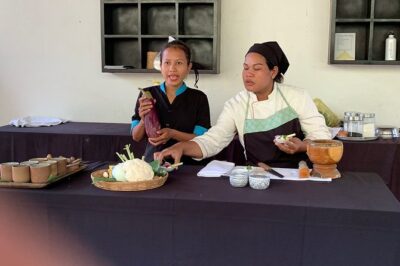
3-Hour Siem Reap Guided Cooking Class and Market with Pick up
Read our review →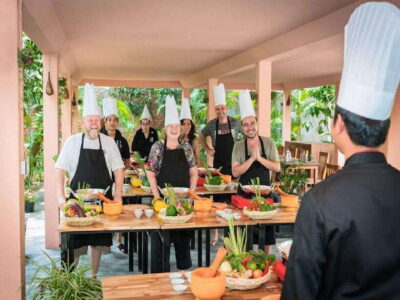
Morning Cooking Class and Market Tour in Siem Reap
Read our review →Browse the lists this tour appears in