
Review · SEMINYAK COOKING CLASSES
Nia Bali Seminyak Cooking Class
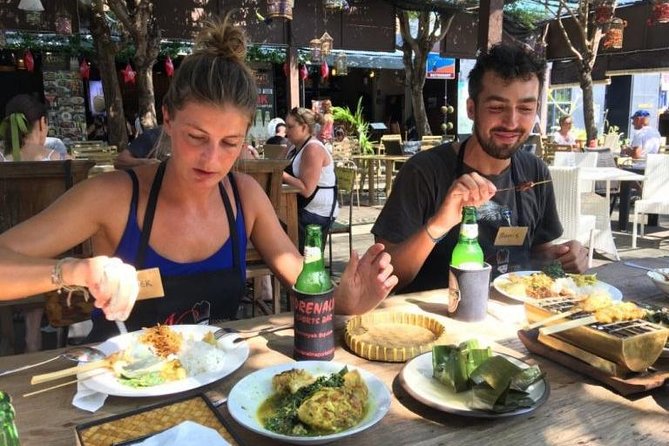
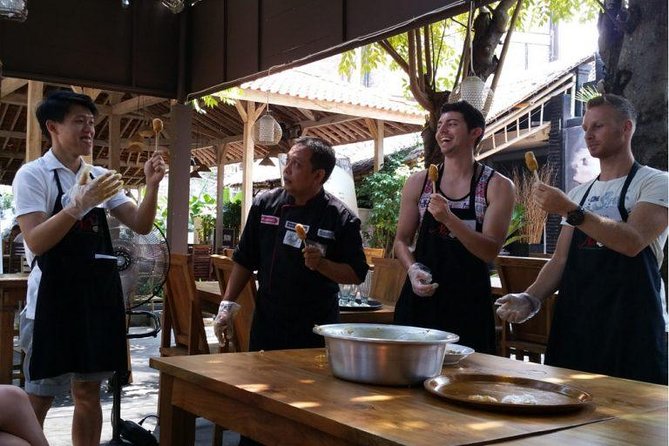
Nia Bali Seminyak Cooking Class puts the food first. You begin at a local morning market, choose ingredients, then turn them into 12 Balinese dishes, including ayam betutu, sate lilit ikan, nasi goreng ayam, and peanut-sauce salads. The class is taught in a lively, hands-on way, with the meal you make served as lunch.
I like the market visit because it gives meaning to the spices, meats, fish, fruit, and vegetables you later use. I also like the generous menu, since most cooking classes cover only a few recipes. Chef Tommy Ford is singled out for his humor, cultural background, and ability to keep people involved.
The main consideration is the size and pace of the session. Although the activity is listed as private for your group, accounts of the class describe some large sessions. You should also note that pickup is offered from Seminyak, but drop-off is not included, and the booking is non-refundable.
Key points to know before booking
- Twelve dishes in one morning: You prepare spice pastes, meat, seafood, vegetables, rice, and snacks before lunch.
- The market comes first: An early visit helps you understand the raw ingredients behind Balinese cooking.
- Chef-led and social: Tommy Ford is praised for his humor and clear teaching, while staff help people of different skill levels.
- Dietary needs can be discussed: You are asked to report allergies, and the class can tailor food for requirements such as pescatarian diets.
- Good practical value: The $71.50 price includes pickup in Seminyak, the market visit, the class, lunch, a cookbook, and a certificate.
- Plan your own ride home: The activity returns to the meeting point, but no drop-off service is included.
Starting early at Seminyak Square
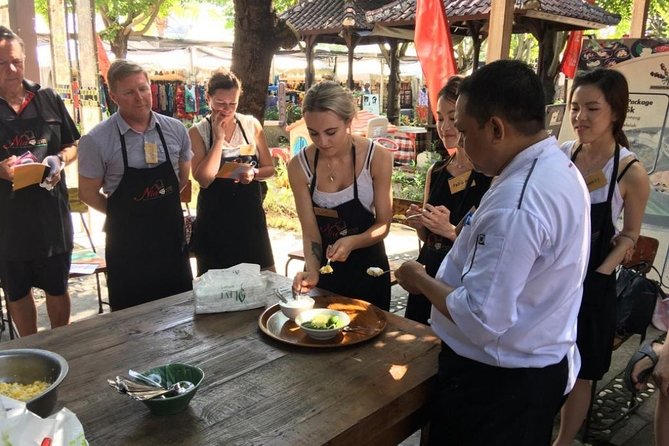
Your morning begins at 8 am. Pickup is available in the Seminyak area, and the listed meeting point is Warung Nia Balinese Food & Pork Ribs at Jl. Kayu Aya No. 19-21. Seminyak Square is also listed as the first stop, so check the exact pickup arrangement when you book.
The early start matters. A morning market gives you a better look at daily food shopping than a polished cooking studio alone. You will see the raw materials before they are chopped, ground, seasoned, and cooked. That helps you understand why Balinese recipes often begin with a spice paste rather than a single bottled seasoning.
Pickup is a useful part of the price if you are staying in Seminyak. It removes one short transport problem at the start of the day. The limit is clear: this is pickup only, not a hotel-to-hotel service for the full outing. At the end, you return to the meeting point and make your own plans from there.
More Cooking Classes in Indonesia:
- Ubud: Balinese Cooking Class at an Organic Farm
★ 5.0 · 1,786 reviews - Ubud Cooking Class Bali with Balinese Chef
★ 5.0 · 1,609 reviews - From Ubud: Authentic Cooking Class in a Local Village
★ 4.9 · 1,325 reviews
Choosing ingredients at a traditional market
The market portion is not just a quick photo stop. You are introduced to the ingredients used in the class, including meat, fish, poultry, tropical fruit, and spices. You then select fresh produce before heading to the kitchen.
This is one of the best reasons to choose this class over a lesson that begins with premeasured bowls. It links the finished dishes to the shopping that comes before them. If you have wondered what gives Balinese food its layered taste, the market visit sets up the answer: several fresh aromatics and spices are combined into pastes that form the base of the meal.
The market may feel more practical than comfortable. You should expect a working food market, not a quiet culinary display. If you prefer a short, tidy class with no early outing, this first stop may feel like extra time. If you want food culture with your cooking lesson, it is a useful part of the morning.
Learning the twelve-dish menu
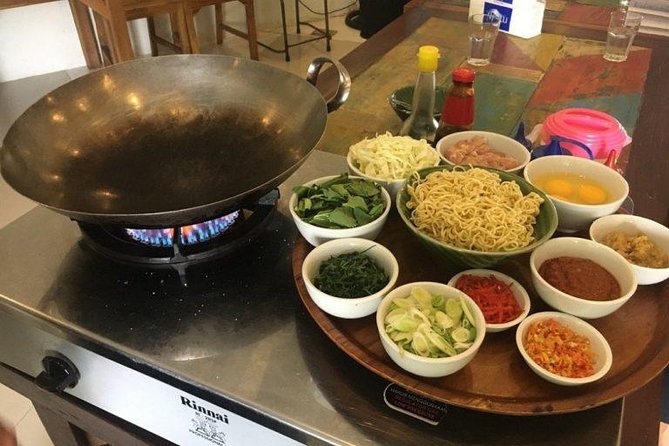
The class covers a wide spread of Balinese cooking. You work with spice pastes, meat, seafood, vegetables, rice, salads, and a sweet snack. The menu includes:
- Base be pasih, an orange spice paste for seafood
- Base be siap, a yellow spice paste for chicken
- Ayam betutu Bali, chicken roasted in banana leaf
- Be celeng base manis, pork in sweet soy sauce
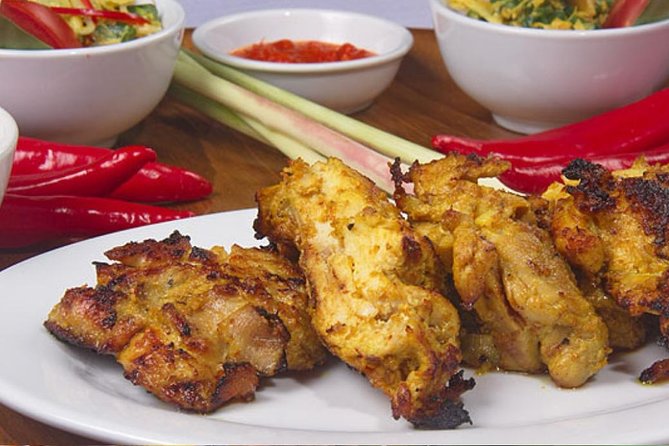
- Sate ayam, chicken satay
- Base sate, peanut sauce
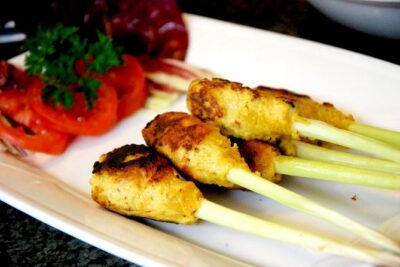
- Sate lilit ikan, minced seafood satay
- Tum ayam, minced chicken cooked in banana leaf
- Green papaya salad with chicken
- Pecelan, vegetable salad with peanut sauce
- Urab jagung, a sweet corn and coconut snack
- Nasi goreng ayam, fried rice with chicken
That is a serious amount of food for a half-day class. You will not simply prepare one curry and wait for lunch. The work is spread across many smaller preparations, so you can see how sauces, pastes, wraps, salads, and grilled foods fit together.
The strength of this menu is variety. You get a broad introduction to Balinese flavor building instead of a narrow lesson focused on one dish. The drawback is that twelve dishes can mean less time on each recipe. If you want to master one technically demanding dish from start to finish, a smaller class may offer more repetition.
Still, the menu has a practical advantage at home. You can choose a few recipes to repeat, then use the cookbook to return to the others. The class also explains substitutions for ingredients that may be hard to find outside Bali, which is especially useful if you want to recreate nasi goreng or a spice paste after your holiday.
Building flavor with Balinese spice pastes
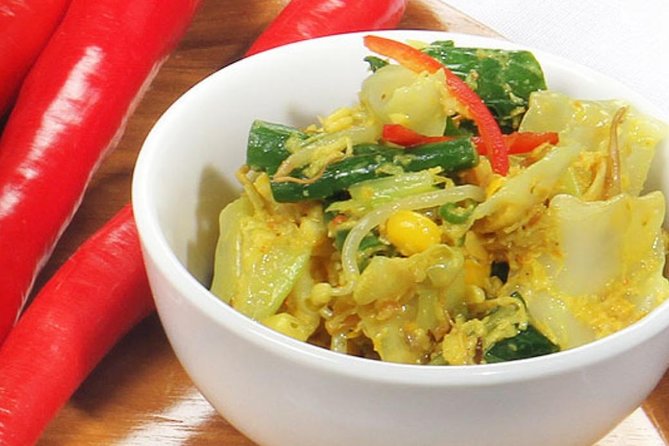
The spice pastes are central to the class. Base be pasih is orange and used with seafood, while base be siap is yellow and used with chicken. These are not minor side notes. They show you how color, aroma, and heat are built before the main ingredient reaches the pan.
You also prepare the peanut sauce for satay. That gives you a second lesson in balance, since the sauce works with chicken satay and helps define the vegetable salad. The class is at its most useful when it explains not only what goes into a paste, but also how that paste changes the final dish.
Chef Tommy Ford receives particular praise for making this information easy to follow. His teaching style is described as funny and full of cultural context, which can help keep a long list of preparations from feeling like kitchen homework. Other staff members assist during the cooking, so you are not left to manage twelve dishes on your own.
You should tell the provider about allergies before the class. The information specifically asks you to report them, and the class can adjust food for dietary needs. A pescatarian menu was accommodated in one account, but you should still arrange this ahead of time rather than assume a change can be made at the last minute.
Same region, a different dish to learn:
- Ubud: Cooking Class with Transfers and Optional Market Visit
★ 4.9 · 824 reviews - PRIVATE Authentic Balinese Cooking Class in Ubud at Putu’s Home
★ 5.0 · 644 reviews - Balinese Ubud cooking school (9 Dish Cooking and Market Tour)
★ 5.0 · 540 reviews - Ubud: Balinese Cooking Class and Market Tour
★ 4.8 · 531 reviews
From banana leaves to satay
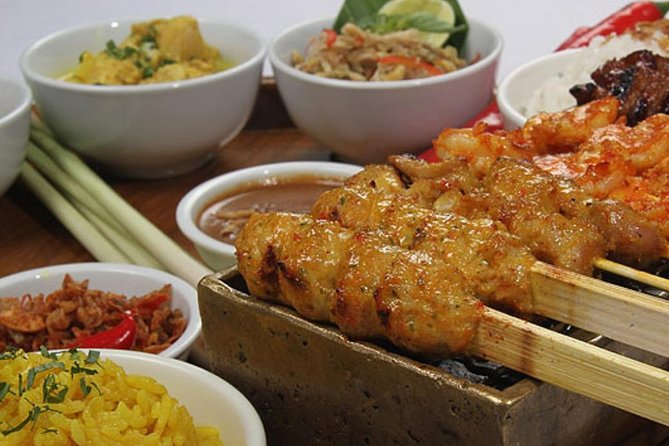
Several dishes give you a direct feel for traditional preparation. Ayam betutu is roasted in banana leaf, while tum ayam uses minced chicken in banana leaf. These recipes show how wrapping food can protect it during cooking and add another layer to the preparation.
Sate lilit ikan is another distinctive item. Instead of threading chunks onto a skewer, minced seafood is shaped around the stick. Along with chicken satay, it gives you two different approaches to one of Indonesia’s best-known food traditions.
The salads keep the meal from becoming a parade of heavy dishes. Green papaya salad with chicken and pecelan add freshness, while the corn and coconut snack brings a sweet finish. Nasi goreng ayam provides a familiar comfort food, but the class lets you see how it fits into a wider Balinese meal.
Expect to take part in selected stages rather than cook every single dish alone from beginning to end. With a twelve-dish menu, a chef-led rhythm is necessary. People of different cooking abilities can join in, but the session will move quickly at times.
Lunch is the payoff
After the preparation, you sit down to eat the food made during the class. Lunch is included, along with coffee or tea. This is more than a convenient meal. It lets you taste the relationship between the individual elements you have prepared.
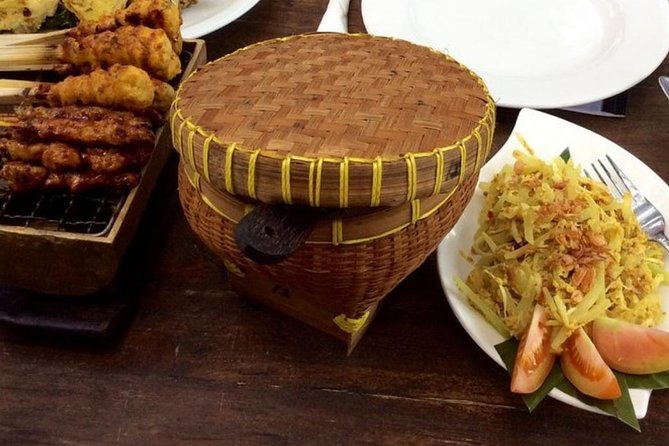
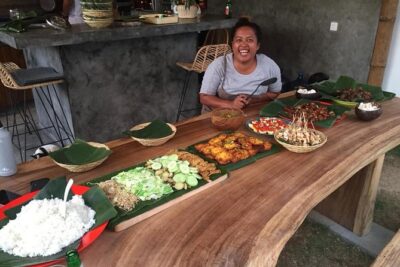
The final spread is likely to be the most satisfying part for anyone who enjoys food more than formal instruction. You can compare the spice pastes, salads, satay, rice, and wrapped dishes on one table. The class also has a social side, since people from different countries may cook and eat together.
Solo visitors can find this especially useful. The activity offers a natural setting to meet people without needing a separate social event. Couples, families with older children, and groups of friends also have enough shared work to keep everyone involved.
Come hungry. Twelve dishes and lunch make this a substantial morning. If you have a small appetite, the value of the meal may be less important to you than the lesson itself. For most people, though, eating the finished food is what turns the class from a demonstration into a complete experience.
How the $71.50 price works
At $71.50 per person, this is not the cheapest food activity in Bali. The price makes more sense when you count what is included: Seminyak pickup, the traditional market visit, coffee or tea, a class covering twelve dishes, lunch, a cookbook, and a completion certificate.
The cookbook adds value beyond the four-and-a-half-hour session. You can use it to repeat dishes later, and the class helps you understand the basic ingredients before you try. The certificate is a pleasant keepsake, though its practical value is modest compared with the recipes and market knowledge.
Group discounts are available, which may help families or friends booking together. The activity has a 98 percent recommendation rate and a 4.9 rating from 127 ratings, so the experience has been consistently well received. Still, price comparisons should include the menu size and included lunch, not just the class length.
The best value comes if you want both a market visit and a cooking lesson. If you only want to learn one or two recipes, you may find the wide menu less efficient. If you want a full food morning with plenty to eat and a cookbook to take home, the cost is easier to justify.
Group size, pace, and teaching style
The description identifies this as a private activity for your group, but practical accounts also describe large sessions with many people cooking at once. That may reflect different booking arrangements or session sizes. I would confirm the setup directly if a small, quiet class is important to you.
A larger class is not automatically a problem here. The format is designed to keep many hands busy, and reports describe the team as well organized even when attendance is high. You may get less individual time with the chef, but you also gain a more social cooking table.
The teaching suits beginners. You do not need advanced kitchen skills to take part, and the chef guides the preparation. More experienced cooks may enjoy the cultural explanations and ingredient work, though they should not expect a specialist master class focused on fine technique.
Families can also make good use of the session. Children enjoyed the food and learning in one family group, but parents should consider the early start and the long menu. Older children who can safely help with simple preparation are likely to get more from it than very young children.
What to bring and how to plan the morning
Wear comfortable clothes suitable for cooking and market walking. The supplied details do not list a dress code or equipment requirements, so you do not need to pack special gear based on the information available.
Tell the provider about allergies before the date of the class. This is especially important because the menu includes seafood, chicken, pork, peanuts, coconut, and other common ingredients. Dietary adjustments are possible, but advance notice is the sensible approach.
Keep the rest of your morning flexible. The stated duration is about four hours and thirty minutes, beginning at 8 am. Since the class includes transport, market shopping, many dishes, and lunch, it is not a quick activity you can squeeze between two tightly timed plans.
You should also arrange transport after the class. The activity ends back at the meeting point, and no drop-off service is included. The location is near public transportation, which gives you an option if you do not want to arrange a taxi.
The cancellation rule is strict. The booking is non-refundable and cannot be changed for any reason. Confirmation arrives within 48 hours, subject to availability. If the provider cancels because the minimum number is not met, you are offered another date or experience, or a full refund.
Who should book Nia Bali Seminyak Cooking Class?
I would choose this class if you want a broad introduction to Balinese food rather than a single-recipe lesson. It suits people who enjoy eating as much as cooking, since lunch is a major part of the morning.
It is also a good match for solo visitors, couples, families with older children, and friends who want a shared activity. The social setup can help solo visitors meet people, while the generous menu gives a group plenty to discuss around the table.
I would pause before booking if you need a very small class, a quiet pace, or a flexible cancellation policy. The twelve-dish format is ambitious, and large sessions are possible. You should also avoid booking without checking dietary arrangements if you have a serious allergy or a strict diet.
FAQ
Where does the cooking class start?
The listed meeting point is Warung Nia Balinese Food & Pork Ribs, Jl. Kayu Aya No. 19-21, Seminyak, Bali. Seminyak Square is listed as the first stop.
What time does the activity begin?
The activity starts at 8:00 am. Free pickup is offered from the Seminyak area.
How long does the cooking class take?
The full experience lasts about four hours and thirty minutes.
How many dishes will I learn to make?
The class covers up to 12 Balinese dishes, including spice pastes, satay, salads, banana-leaf dishes, fried rice, and a corn and coconut snack.
Is lunch included?
Yes. Lunch made during the class is included, as are coffee and tea.
Is transportation included after the class?
Pickup is included from the Seminyak area, but drop-off is not. The activity ends back at the meeting point.
Can the class accommodate food allergies or dietary requirements?
You should inform the provider about allergies before the class. The food can be tailored for dietary requirements, including a pescatarian preference.
Should you book it?
Book it if you want a full morning built around Balinese food, with a market visit, a large menu, hands-on preparation, and lunch at the end. The cookbook and ingredient guidance also make it useful after you leave Bali.
Skip it if you want a short specialist lesson or a guaranteed intimate class. For everyone else, the mix of market shopping, spice-paste work, 12 dishes, and a shared meal gives the $71.50 price solid value, provided you can manage the early start and arrange your own ride home.
Newest classes around Indonesia
- Pure Bali Village Experience, Cooking & Jamu Class+VIP Transfer★ 5.0 · 16 reviews
- Spice Garden, Jamu & Cooking Class in Bali Village★ 5.0 · 5 reviews
- The Authentic Balinese Cooking Experience★ 5.0 · 4 reviews
- Seminyak : cooking class traditional food bali★ 5.0 · 5 reviews
- Seminyak: Vegetarian Cooking Class★ 5.0 · 3 reviews
- Quad ride, waterfalls & aunthentic cooking class in munduk★ 4.9 · 53 reviews
- Pure Bali Village Experience Cooking & Jamu Class, Transfer★ 4.8 · 5 reviews
- Ubud: Organic Farm Harvest, Bali Cooking Class by Pemulan★ 4.8 · 12 reviews
Seminyak Cooking Classes, compared.
Cooking class in the comfort of your own personal villa. Yes, I’ll come to you!
Read our review →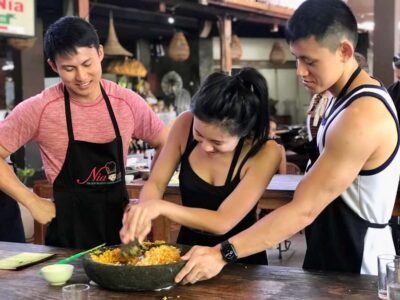
Browse the lists this tour appears in