
Review · INDONESIA COOKING CLASSES
From Ubud: Authentic Cooking Class in a Local Village
A trip to the local market and family compound gives this cooking class more character than a lesson held in a hotel kitchen. You choose or examine local produce, learn how rice is grown, then cook in the traditional village of Laplapan with Mama Puspa and her team.
I like the warm, social setup, where you chop, pound, mix, and cook rather than simply watch. I also like the practical recipe book, which gives you a real chance to repeat the food at home. The main drawback is that the afternoon class skips the market visit, and pickup outside Ubud costs extra.
Key points
- Morning class includes the market: See local produce, taste some fruits, and buy spices or tea if you wish.
- Cooking takes place in Laplapan: You enter a traditional village setting and see a family temple and home compound.
- Everyone gets involved: Tasks are shared in pairs and rotated so you are not left watching from the side.
- Dietary needs can be handled: Vegetarian dishes are available, and the team has adapted recipes for garlic, onion, capsicum, and gluten-free needs.
- The meal is substantial: You prepare several Balinese dishes and a dessert, then sit down to eat together.
- Transfers add value: Hotel pickup and drop-off are included within the Ubud area, with extra charges for other locations.
Why this Ubud cooking class feels different
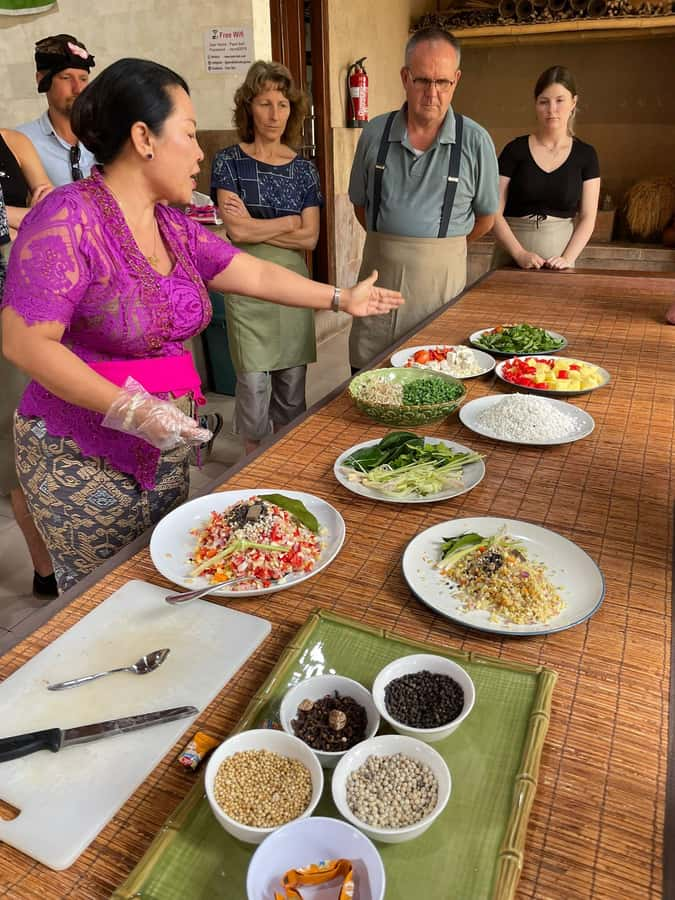
Many cooking classes teach you how to follow a recipe. This one also shows you where the ingredients fit into daily Balinese life. That begins at the market, continues through the rice fields, and ends around a table in a village home.
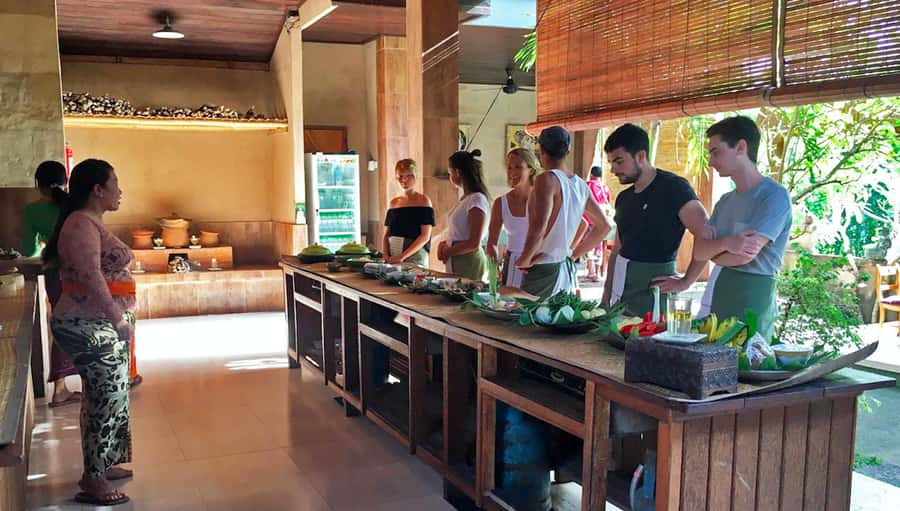
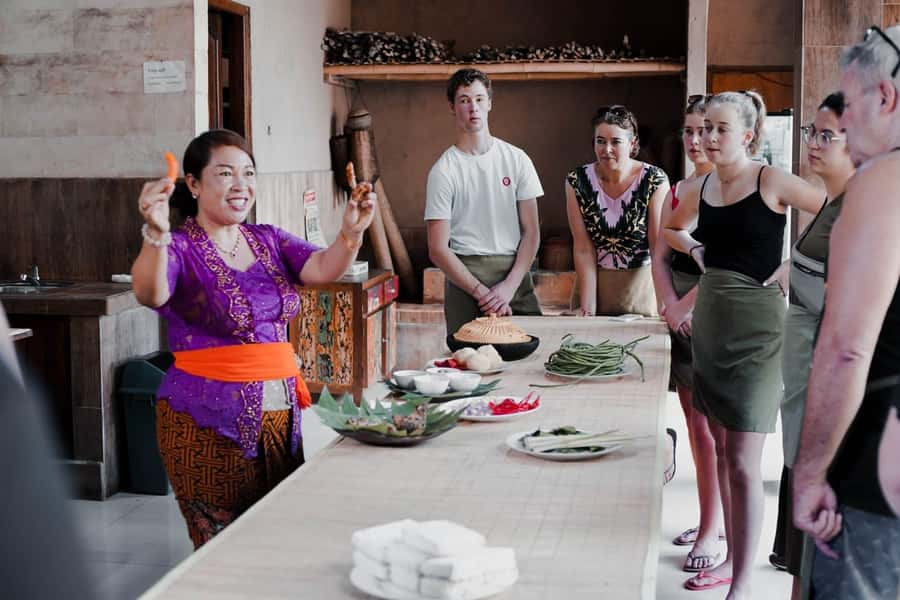
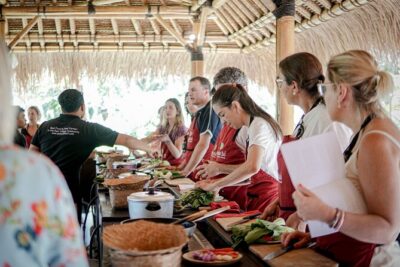
The setting matters. You are not cooking in an anonymous demonstration kitchen. You visit Laplapan, meet the local team, and see a traditional family compound with its temple. The class still has a clear structure, but the atmosphere is closer to being welcomed into someone’s home than attending a formal school.
I especially like that the food is not treated as an isolated tourist activity. You learn about ingredients before they reach the chopping board, then prepare them with guidance from people who use these methods every day. That gives the spices, herbs, vegetables, and rice more meaning.
The group can include up to 15 people. That is small enough for a social class, though your experience will depend on the final group size. Some sessions have been much smaller, while others have reached the stated limit. The teaching team rotates tasks so each person has a chance to participate.
More Farm Cooking Classes in Indonesia
- Ubud: Balinese Cooking Class at an Organic Farm
★ 5.0 · 1,786 reviews - Balinese Farm Cooking Class by Pemulan Bali
★ 5.0 · 410 reviews - From Ubud: Authentic Bali Farm Cooking School & Organic Farm
★ 5.0 · 122 reviews
The morning begins at a local market
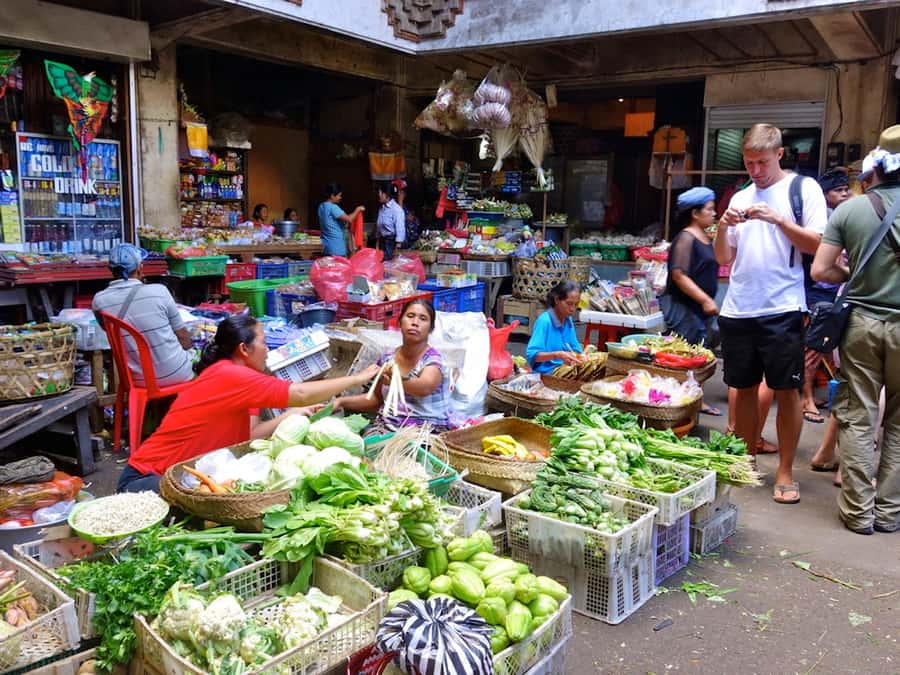
Choose the morning session if the market interests you. After pickup from your Ubud hotel, you visit a fresh food market with a guide who explains the local produce, herbs, meat, vegetables, and spices.
This is not simply a quick walk past stalls. You have a chance to ask what ingredients are used for and how they fit into Balinese cooking. Some participants have tasted unfamiliar fruits, and the market is also a practical place to buy spices or tea at reasonable prices.
I find this part most useful if you are curious about ingredients but do not know their names. A market visit can turn a plate of food into something you can understand later. You may not remember every spice, but you will have a better idea of what makes Balinese cooking taste different from the Indonesian food served abroad.
Keep your expectations sensible. The market is included with the morning class, but it is not a separate food tour lasting several hours. It is one part of a wider half-day activity, so the pace needs to keep the cooking schedule on track.
The afternoon option is shorter because it does not include the market. That may suit you if you have limited time, prefer a later start, or have already visited a market in Bali. Still, I would choose the morning session when possible. The market gives the class useful context and adds another local stop before you begin cooking.
Rice fields and the staple behind the meal
The route continues to a rice plantation, where you learn how Bali’s staple crop is cultivated and prepared. You also have time to take in the surrounding views.
This is a brief educational stop rather than a full agricultural tour. Its value is in connecting the food on your plate with the work behind it. Rice is central to Balinese meals and daily life, and seeing where it begins adds a simple but helpful layer to the cooking lesson.
The stop also breaks up the transfer from the market to Laplapan. If you have already spent several days in Ubud, you may have seen rice fields from roads or walking paths. Here, the explanation about cultivation gives the view a purpose, even if the stop does not involve hands-on farm work.
Arriving in Laplapan and meeting the hosts
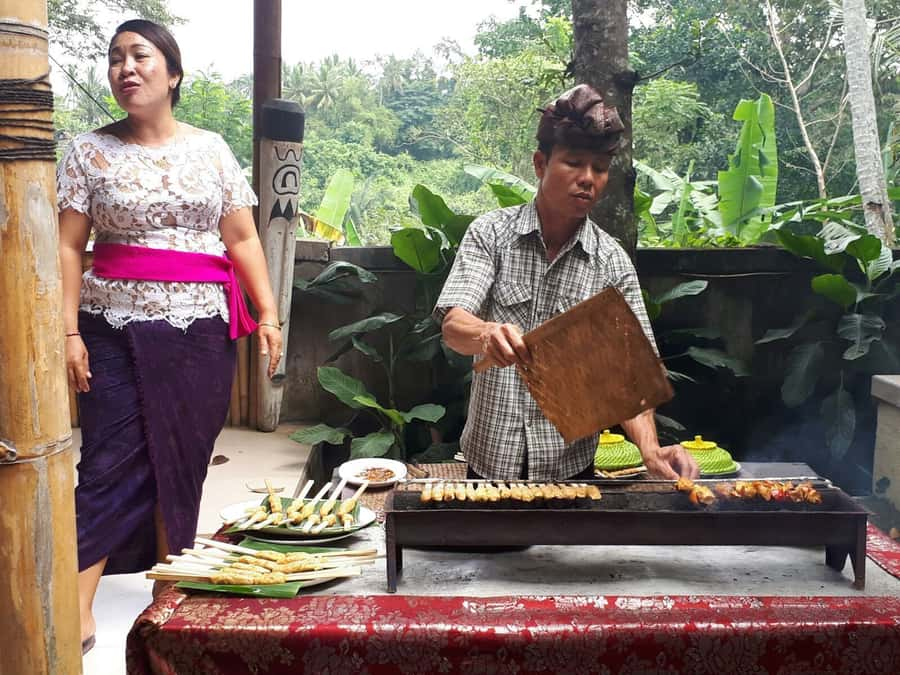
At Laplapan, you receive a warm welcome from the local team. Balinese tea or coffee is included, and some sessions begin with a refreshing drink. The family compound and temple help establish the setting before the lesson begins.
Mama Puspa is a lively host with a clear sense of humor. The instructors keep the mood light while explaining the food and organizing the work. Names can vary among the staff, but guests have also singled out guides such as Wayan and Wayan Arianta for friendly, helpful transport and local explanations.
The family temple is not just a decorative backdrop. You may be shown around the compound and have an opportunity to take photographs, provided the hosts allow it at the time. Treat this part with the same care you would show at any active place of worship. Follow the team’s instructions about where to walk and what to photograph.
I like the balance here. You get a look at an everyday family setting without the activity turning into a staged village performance. The kitchen and dining area are part of the welcome, and the class keeps moving soon after you arrive.
Same region, a different dish to learn:
- Ubud Cooking Class Bali with Balinese Chef
★ 5.0 · 1,609 reviews - Ubud: Cooking Class with Transfers and Optional Market Visit
★ 4.9 · 824 reviews - PRIVATE Authentic Balinese Cooking Class in Ubud at Putu’s Home
★ 5.0 · 644 reviews - Balinese Ubud cooking school (9 Dish Cooking and Market Tour)
★ 5.0 · 540 reviews
Cooking seven or more Balinese dishes by hand
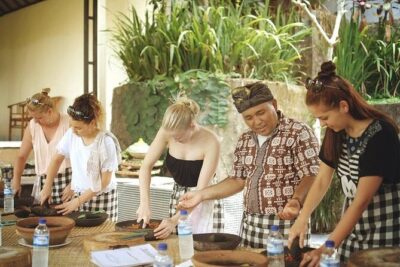
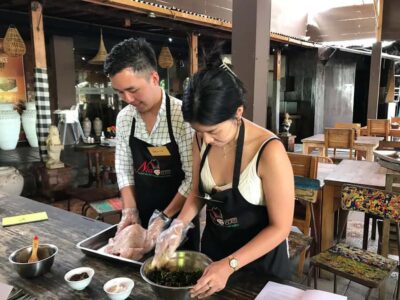
The class is designed to keep you busy. You may chop vegetables, pound spice mixtures, combine ingredients, shape food, and cook at the stations. The teachers explain each method and guide you through the steps rather than expecting you to know anything in advance.
The advertised menu includes three starters, four main courses, and an authentic dessert. Specific dishes can vary, and descriptions of completed sessions often refer to seven dishes in total, usually six savory dishes plus dessert. The useful point is that you prepare a broad selection rather than one recipe.
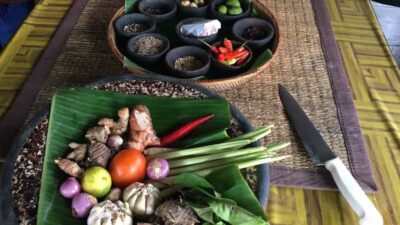
This variety lets you sample different parts of Balinese cooking. You learn how fresh ingredients work together, how spice pastes are built, and how simple techniques can produce food with strong flavor. The recipes are presented in a way that home cooks can follow, with suggestions for substitute ingredients when certain products are hard to find outside Bali.
The class is hands-on, but not every person will perform every step simultaneously. Work is commonly divided among pairs or small groups, then rotated. That keeps the kitchen organized and gives everyone a turn. If you are traveling alone, the group format also makes it easy to speak with other participants.
The instructors are praised for making difficult-looking food feel manageable. You should still expect a busy kitchen and some standing while food is prepared. The reward is that you understand the dishes better because you helped make them.
Dietary needs and menu choices
You can choose meat or vegetarian dishes. This is useful for couples or groups with different preferences, since one person does not have to sit out while everyone else cooks.
The team has also adapted recipes for several dietary needs. Garlic and onion have been removed from separate preparations for guests with allergies, and capsicum and gluten-free requirements have also been accommodated. Separate pans and ingredients have been used when needed.
You should state your requirements clearly when booking and confirm them again with the staff at the start. The class can adapt many recipes, but you should not assume every ingredient or cross-contact concern will be handled automatically. If your allergy is serious, explain exactly what you need before cooking begins.
This is one of the strongest practical features of the class. The staff do not simply offer a plain substitute meal at the end. They have adjusted the cooking process so participants can take part in the same general experience.
Sitting down to share the food
After the preparation, everyone sits down to eat the food they have made. This shared meal is more than a final tasting. It gives the group time to compare results, talk with the instructors, and enjoy the dishes without rushing between cooking tasks.
Portions are generous enough to form a full lunch. The combination of several savory dishes and dessert makes the $35 price look strong, especially when you add the market visit, transport within Ubud, ingredients, tea or coffee, instruction, and certificate.
The social side is part of the value. You may arrive as a couple, family, or solo participant, but the cooking stations encourage conversation. The shared meal then gives everyone a natural reason to keep talking.
Families can also consider this class. The instructors adjust the tasks through the group, and the activity has been suitable for children according to the supplied information. Children who enjoy food preparation will get more from it than those who want a passive sightseeing stop.
A recipe book that earns its place in your luggage
The recipes and notes are yours to keep. This is one of the most useful inclusions because the cooking class would lose much of its value if the techniques disappeared as soon as lunch ended.
The recipe book gives you a way to recreate the dishes at home and includes useful reminders about alternative ingredients. If you live somewhere without easy access to Balinese produce, the substitution advice matters more than a list of ingredients alone.
You also receive a certificate. It is a small souvenir, but the recipe notes are the practical keepsake. I would make a few notes of your own during the class, especially beside any spice combination or cooking method you want to remember.
Transfers from Ubud and the time involved
Pickup and drop-off are included for hotels in the Ubud area. That removes the need to find the village yourself and makes the morning easier, particularly if you are staying in central Ubud and do not have a driver arranged.
The total duration is listed as 210 minutes to four hours. The morning session takes longer because of the market visit. The afternoon class is shorter and leaves out that stop.
Communication about pickup is important. Most transport arrangements run smoothly, but pickup times can shift, and one participant reported that a driver arrived early and called repeatedly while the group was returning from another activity. I would be ready a little early, but I would also confirm the exact pickup time and meeting point in advance.
Hotels outside Ubud can sometimes be served for an added fee. Ask about this when booking rather than assuming the included transfer applies to your location. Transport received a perfect score from 88 percent of the available ratings, which suggests it is generally a strong part of the operation, with occasional timing issues worth keeping in mind.
Free cancellation is available up to 24 hours before the activity, and you can reserve now and pay later. Those terms are useful if your Bali schedule is still moving around, but check the exact booking conditions at the time you reserve.
What the $35 price really buys you
At $35 per person, this is good value if you want more than a single cooking demonstration. You receive transport within Ubud, a market visit on the morning schedule, the rice plantation stop, ingredients, instruction, drinks, lunch, a certificate, and recipes.
The meal alone is not the only measure. You are paying for access to a local setting, a guided introduction to ingredients, and several hours of instruction. You also avoid buying every spice and ingredient yourself, then trying to work out the method from memory.
The price is less compelling if you only want a quick lunch or a short chef demonstration. It is also worth comparing carefully if you are staying far outside Ubud, since the extra transfer cost may change the total.
The exceptionally high overall score, 4.9 from 1,325 ratings, fits the strongest parts of the experience: friendly hosts, clear teaching, tasty food, and careful organization. No class can guarantee a tiny group or perfect transport timing, but the basic value is solid.
Who should book this experience
I would recommend it to first-time visitors who want a practical introduction to Balinese food and culture. It also suits returning visitors who have seen temples and rice fields but want a more active way to connect with daily life.
Food lovers will get the most from the market and hands-on preparation. Families can share the tasks, couples can cook together, and solo visitors can meet people without needing to arrange their own group.
Choose the morning class if the market and ingredient explanations appeal to you. Choose the afternoon class if you mainly want the cooking and shared meal, or if your schedule makes an early start difficult.
You may want to skip it if you dislike group activities, cannot stand for parts of a cooking lesson, or want a highly specialized culinary course. This is a welcoming cultural cooking experience, not professional chef training.
Should you book Paon Bali Cooking Class?
Yes, if you want a friendly, useful introduction to Balinese food rather than a short demonstration. The strongest reasons are the visit to the market, the village setting in Laplapan, the active cooking, and the recipe book you can use afterward.
Book the morning session if you can. It gives you the fullest itinerary and helps you understand the ingredients before you prepare them. Confirm your pickup location and dietary needs in advance, and allow up to four hours for the full experience.
At $35, this is a particularly good choice for anyone who wants lunch with a story behind it, not just another meal in Ubud.
FAQ
How much does the cooking class cost?
The listed price is $35 per person.
How long does the experience last?
The activity lasts between 210 minutes and four hours, depending on the schedule. The morning class is longer because it includes the market visit.
Is hotel pickup included?
Yes. Pickup and drop-off are included for hotels in the Ubud area. Pickup from other areas may be available for an additional fee.
Does the class include a market visit?
The morning class includes a visit to a local fresh food market. The afternoon class does not include the market tour.
What food will I prepare?
You prepare several Balinese dishes and an authentic dessert. The advertised format includes three starters and four main courses, though the exact menu can vary.
Can I choose vegetarian food?
Yes. You can choose between meat and vegetarian dishes.
Can the class accommodate allergies?
The team has adapted dishes for garlic, onion, capsicum, and gluten-free requirements. Tell the provider about your needs when booking and confirm them before cooking begins.
Is the class taught in English?
Yes. The live tour guide and cooking instruction are in English.
Do I receive the recipes afterward?
Yes. Recipes and notes are provided for you to keep, along with a certificate.
Newest classes around Indonesia
- Pure Bali Village Experience, Cooking & Jamu Class+VIP Transfer★ 5.0 · 16 reviews
- Spice Garden, Jamu & Cooking Class in Bali Village★ 5.0 · 5 reviews
- The Authentic Balinese Cooking Experience★ 5.0 · 4 reviews
- Seminyak : cooking class traditional food bali★ 5.0 · 5 reviews
- Seminyak: Vegetarian Cooking Class★ 5.0 · 3 reviews
- Quad ride, waterfalls & aunthentic cooking class in munduk★ 4.9 · 53 reviews
- Pure Bali Village Experience Cooking & Jamu Class, Transfer★ 4.8 · 5 reviews
- Ubud: Organic Farm Harvest, Bali Cooking Class by Pemulan★ 4.8 · 12 reviews
Indonesia Cooking Classes, compared.
Cooking Class with Transfers and Optional Market Visit
Read our review →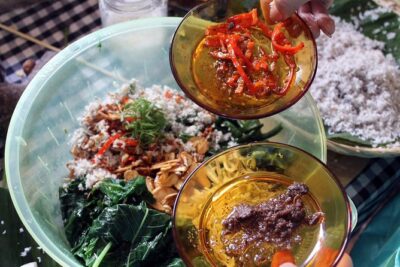
PRIVATE Authentic Balinese Cooking Class in Ubud at Putu’s Home
Read our review →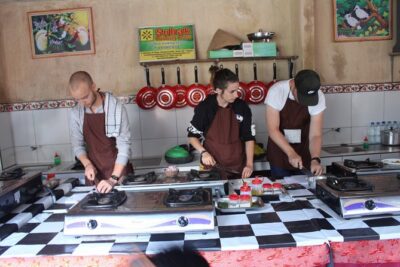
Balinese Ubud cooking school (9 Dish Cooking and Market Tour)
Read our review →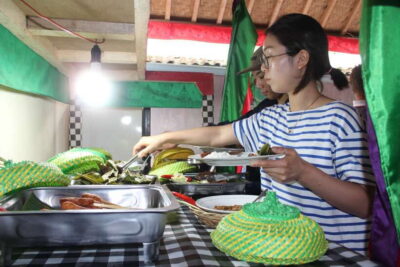
Browse the lists this tour appears in