
Review · SEMINYAK COOKING CLASSES
Nia Balinese Cooking Class
Balinese cooking becomes much clearer when you see the ingredients before they reach the pan. This five-hour class starts with a market visit, then brings you back to Warung Nia to prepare dishes such as Ayam Betutu, Nasi Goreng, fresh spice pastes, and other local favorites. The banana-leaf folding for Ayam Betutu is one of the more memorable details.
I like the market stop because you see where the herbs, spices, vegetables, and other ingredients are sold. I also like the generous lunch, recipe book, and certificate included in the $45 price. The main drawback is the length: you can be on your feet from 8:00 am until after 1:00 pm, and the class prepares shared dishes rather than one separate meal for each person.
Key points at a glance
- Market first, cooking second: Begin around 8:30 am with a look at local ingredients before returning to the kitchen.
- A full Balinese menu: The plan centers on about nine dishes, with some sessions preparing ten or eleven.
- Shared cooking format: You work as a group, taking part in different preparation and cooking jobs rather than making individual portions.
- Lunch is built in: Everything prepared during class becomes a large meal at the end.
- Useful take-home items: You receive a recipe book and cooking class certificate.
- Good value at $45: Market visit, instruction, lunch, and class materials are included, but transport after the class is not.
Starting at Warung Nia in Seminyak
You meet at Warung Nia Balinese Food & Pork Ribs, at Kayu Aya Square on Jalan Kayu Aya, Seminyak. The stated start time is 8:00 am, with the market portion beginning around 8:30. Allow time to find the meeting point and arrive ready to leave promptly.
The class returns to the same spot at the end. That makes the morning fairly simple to plan, especially if you are staying around central Seminyak. The area is near public transportation, but the activity does not include private transport or a drop-off service.
Staff can help you arrange transport after the class. That is useful because you may finish shortly after 1:00 pm, when you will probably be ready for a shower, a rest, or another meal despite having just eaten a large lunch.
The group is advertised at a maximum of 15 people. That is small enough for a social class, but it is not a private lesson. You will share equipment, preparation space, and the attention of the cooking team.
More Balinese and Indonesian Classes in Indonesia:
- Ubud: Balinese Cooking Class at an Organic Farm
★ 5.0 · 1,786 reviews - Ubud Cooking Class Bali with Balinese Chef
★ 5.0 · 1,609 reviews - PRIVATE Authentic Balinese Cooking Class in Ubud at Putu’s Home
★ 5.0 · 644 reviews
Seeing ingredients at the local market
The market visit is more than a quick shopping stop. You get to see the raw materials used in Balinese cooking where they are actually sold, rather than looking at neatly arranged ingredients already laid out in the classroom.
This matters because many Balinese dishes begin with a paste made from fresh herbs, spices, chilies, and aromatics. At the market, you can connect those ingredients with the finished food you later eat. It also gives the class some cultural context, since the shopping area shows part of everyday food life in Bali.
The experience includes a stop at Seminyak Square and the Flea Market Seminyak. The exact market route and timing can vary, but the morning is built around finding and discussing ingredients before cooking begins.
One practical detail is worth knowing: the market can be busy, and a group may feel large in narrow shopping areas. You will need to stay with the guide and pay attention to the meeting point. The market is interesting, but it is not a quiet, private food tour.
Some people may find that the market visit adds real value. Others may prefer to spend all five hours cooking. If you already know Balinese produce well, this part may feel less important. If you are new to the cuisine, it helps you understand why the food tastes the way it does.
Learning the Balinese method in the kitchen
After the market, you return to Warung Nia for a drink and snacks before the cooking starts. The structure is practical: a chef demonstrates a preparation, the group works on it, and staff help keep the kitchen moving.
Chefs named in the class feedback include Tommy and Komang. Tommy is described as lively and playful, while Komang is praised for keeping a large group organized and explaining the work with patience and humor. The cooking team also helps with preparation, cleaning, photographs, and moving completed dishes along.
That last point affects the style of the lesson. Staff may take a dish away to finish it while you begin the next recipe. This keeps the class moving, but it means you may not personally complete every dish from the first cut to the final serving.
The cooking is hands-on, not just a demonstration. You should expect to chop, mix, season, shape, and cook as part of a shared team. Everyone gets a role, but the exact job can change from dish to dish.
The class is designed to teach the way Balinese food comes together, especially the spice pastes and careful preparation behind the finished dishes. You are not simply shown a plate and handed the recipe later.
The dishes you prepare
The published plan says nine dishes. The actual number can vary, with some sessions including ten or even eleven preparations. This is a lot of food for one morning, and it explains why the class lasts about five hours.
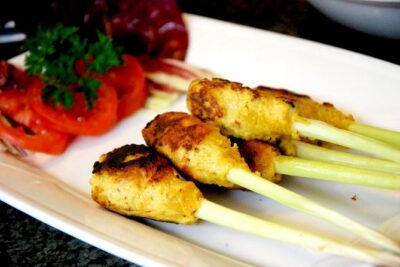
The menu includes the popular Nasi Goreng and traditional Ayam Betutu. Ayam Betutu is especially interesting because it involves wrapping the chicken in banana leaves and folding the leaves in a particular way. That small technique gives the lesson a clear Balinese identity.
You also work with fresh pastes and several other local dishes. The precise menu is not listed in full, so you should not book this expecting a fixed restaurant-style menu with every dish guaranteed in advance.
The number of recipes sounds impressive, but quantity changes the teaching style. You get a broad introduction to Balinese food rather than a slow, detailed master class focused on two or three dishes. If you want to learn a few recipes in great depth, this may feel rushed. If you want to taste a wide range of food and learn several useful techniques, the format works well.
Because the food is prepared for the whole group, you are cooking toward a shared lunch. That is social and efficient, but it is different from classes where every person makes an individual portion from start to finish.
More Cooking Classes in Indonesia:
- From Ubud: Authentic Cooking Class in a Local Village
★ 4.9 · 1,325 reviews - Ubud: Cooking Class with Transfers and Optional Market Visit
★ 4.9 · 824 reviews - Balinese Ubud cooking school (9 Dish Cooking and Market Tour)
★ 5.0 · 540 reviews - Ubud: Balinese Cooking Class and Market Tour
★ 4.8 · 531 reviews
A shared lunch with a big payoff
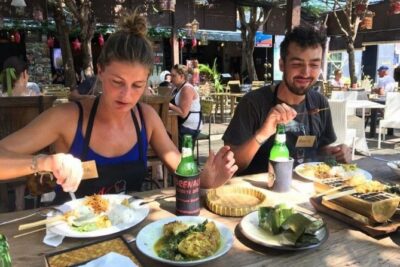
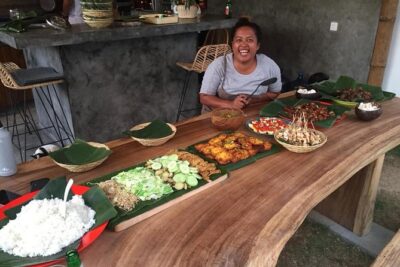
At the end, the dishes are brought together for lunch. You eat the food prepared during the session, including the recipes you helped make. This is the point when the many small jobs in the kitchen make sense as one large Balinese meal.
Plan to arrive hungry. Snacks and drinks are provided early, and you may begin tasting food before the final meal, but the main lunch is substantial. Several dishes can add up to far more food than you expect from a cooking class.
Lunch also gives you time to talk with the other people at your table. The group format works well for solo visitors, couples, and friends who enjoy meeting people from different countries. It can feel like a shared kitchen party, though the social side depends on the group you join.
Do not expect a polished restaurant tasting menu. This is food made in a class, with the group helping prepare it. That is part of the appeal. You get to eat the result of your own work, and you can compare how the spice, texture, and wrapping techniques affect each dish.
What the $45 price really covers
At $45 per person, the class offers a solid package. You receive the market visit, cooking instruction, snacks and drinks during the session, a multi-dish lunch, a recipe book, and a certificate.
The recipe book is the most useful souvenir. It gives you a chance to repeat some of the dishes at home, although ingredients may vary depending on where you live. The certificate is a pleasant keepsake, especially if this is your first cooking class.
The value is strongest if you want a half-day activity that combines food, culture, and a meal. A simple lunch in Seminyak can cost far less, but it will not include the market tour, instruction, group activity, or recipes.
Transport is the main extra cost to consider. You must reach Warung Nia yourself, and no drop-off is provided afterward. Staff can assist with transport arrangements, but private transportation is not included in the price.
The class is also a good use of time on a day when you want a planned activity without filling the entire day. You start early and finish around lunchtime, leaving the afternoon open.
Who will enjoy this class most
You are likely to enjoy Nia Balinese Cooking Class if you like food markets, group activities, and a large lunch. It suits people who want to learn several Balinese dishes in one session rather than spend a full day on one recipe.
It is also a good fit for couples, friends, solo visitors, and anyone who enjoys meeting other people. The playful teaching style associated with Tommy and the organized approach associated with Komang should help keep the long session moving.
Food-focused visitors will get the most from the market stop and the spice-paste work. Even if you rarely cook at home, you will see how much preparation goes into Balinese dishes before they reach the table.
You may want to choose another activity if you dislike group cooking, standing for long periods, or shared food preparation. The class can last five hours, and the format is active. It is not a short demonstration followed by a quick meal.
The description also says the activity is not recommended for people with a vitamin allergy. That wording is unusual, so you should raise any dietary or allergy concern before booking rather than assume the kitchen can make changes.
Practical advice for a smoother morning
Eat a light breakfast before you arrive, but do not fill up. You will have snacks and drinks before lunch, followed by a considerable amount of food. Coffee or breakfast before the 8:00 am meeting time may be sensible if you need it, but save room for the dishes you prepare.
Wear comfortable clothes and shoes. You may be standing and moving around for more than five hours, and the kitchen can feel hot. Bring water if you prefer to have more than the provided drink.
Keep your schedule flexible after class. The stated duration is approximately five hours, and sessions have finished shortly after 1:00 pm. The market, group size, and number of dishes can affect the exact finish.
If you want to buy cooking ingredients after learning about them, allow time around the market area or Seminyak Square. The experience can help you recognize ingredients, but any shopping afterward is your own expense.
Free cancellation is available if you cancel at least 24 hours before the local start time. Late cancellations and late changes are not refunded. The activity can also be moved or refunded if poor weather or an insufficient number of participants causes cancellation.
Should you book Nia Balinese Cooking Class?
I would book this if you want a social, food-centered morning with plenty to eat and a clear connection to local ingredients. The market visit, hands-on preparation, broad menu, recipe book, and lunch give the $45 price real substance.
I would skip it if you want a private lesson, exact one-to-one instruction, or a short class. The shared format means the staff may finish some dishes while you move to the next task, and five hours is a serious block of time.
For most food-loving visitors in Seminyak, this is a strong choice. Arrive hungry, wear comfortable shoes, expect a warm and active kitchen, and think of the class as a lively introduction to Balinese cooking rather than a quiet culinary workshop.
FAQ
Where does the Nia Balinese Cooking Class start?
The class starts at Warung Nia Balinese Food & Pork Ribs at Kayu Aya Square, Jalan Kayu Aya No. 19-21, Seminyak, Bali.
What time should I arrive?
The stated start time is 8:00 am. The market portion begins around 8:30 am.
How long does the activity last?
The activity lasts approximately five hours and may finish shortly after 1:00 pm.
Is lunch included?
Yes. Lunch made during the cooking class is included in the price.
How many dishes will I prepare?
The planned class includes nine dishes. The number can vary, with some sessions preparing ten or eleven dishes.
Is transportation included?
No. Private transportation and drop-off transport are not included. Staff can assist you with arranging transport after the class.
What do I take home?
You receive a cooking class certificate and a recipe book.
Newest classes around Indonesia
- Pure Bali Village Experience, Cooking & Jamu Class+VIP Transfer★ 5.0 · 16 reviews
- Spice Garden, Jamu & Cooking Class in Bali Village★ 5.0 · 5 reviews
- The Authentic Balinese Cooking Experience★ 5.0 · 4 reviews
- Seminyak : cooking class traditional food bali★ 5.0 · 5 reviews
- Seminyak: Vegetarian Cooking Class★ 5.0 · 3 reviews
- Quad ride, waterfalls & aunthentic cooking class in munduk★ 4.9 · 53 reviews
- Pure Bali Village Experience Cooking & Jamu Class, Transfer★ 4.8 · 5 reviews
- Ubud: Organic Farm Harvest, Bali Cooking Class by Pemulan★ 4.8 · 12 reviews
Seminyak Cooking Classes, compared.
Cooking class in the comfort of your own personal villa. Yes, I’ll come to you!
Read our review →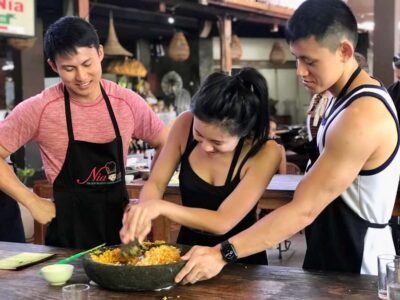
Browse the lists this tour appears in