Review · PARIS COOKING CLASSES
Croissant Baking Class, Mastering the Art with a Pastry Chef
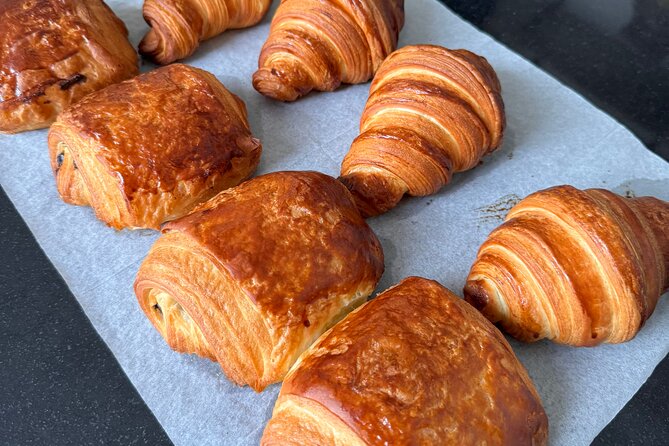
The best part of this Paris class is that you do not just watch a pastry chef make croissants. You handle the dough yourself, from butter and flour to rolling, layering, shaping, and baking. Chef Leo and Maria keep the mood friendly and explain the small details that make flaky pastry work.
I like the eight-person limit, which gives you real help at the worktable, and I like that the class produces both croissants and pain au chocolat. The main caution is that this is hands-on baking, not a passive tasting. You need to be at least 17, and kneading and rolling take some strength.
Key points at a glance
- Small group: No more than eight people, with room for individual help.
- Three hours of baking: You work through dough, butter, lamination, shaping, and baking.
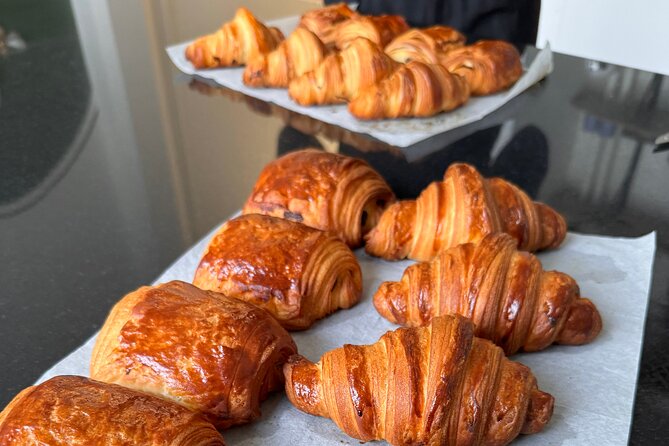
- Two classic pastries: Make crescent-shaped croissants and pain au chocolat.
- Useful technique: Learn how measurements, folding, rolling, and proofing affect the final pastry.
- Take-home reward: Past class formats have provided four croissants and four pain au chocolat per person, though exact quantities can vary.
- Central Paris setting: Meet at Studio Pâtisserie, 85 Rue de Rome, in the 17th arrondissement.
Why this croissant class is worth your Paris morning
Paris has no shortage of excellent bakeries. You can buy a croissant quickly, eat it on a bench, and move on. This class gives you something different: a look at why the pastry works and the chance to make one with your own hands.
I particularly like the way the class connects the finished pastry with the work behind it. A good croissant is not simply dough with butter folded inside. The flour, butter, measurements, rolling pressure, layers, shaping, and baking all matter. The pastry chef explains these links as you go, so the class feels practical rather than decorative.
The price is $143.92 per person. That is a serious cost for breakfast, but this is not breakfast. You are paying for about three hours of instruction, ingredients, equipment, a small class, finished pastries, and recipes or techniques that you can use later. If you want only a taste of French pastry, a bakery visit is far cheaper. If you want a useful cooking lesson and a memorable activity, the price is easier to justify.
The class is also a good break from museum interiors and busy sightseeing schedules. You spend a few hours at a worktable, talk with other baking enthusiasts, and leave with something made during your time in Paris. For many people, that personal connection is worth more than another packaged food tour.
More Baking Classes in France
- Paris Croissant Small-Group Baking Class with a Chef
★ 5.0 · 910 reviews - Paris: French Croissant Baking Class with a Chef
★ 4.9 · 712 reviews - Paris Macarons Small-Group Baking Class with a Chef
★ 5.0 · 316 reviews
Finding Studio Pâtisserie on Rue de Rome
The meeting point is Studio Pâtisserie at 85 Rue de Rome, 75017 Paris. The address is near public transportation, and the class ends at the same place, so you do not need to find your way across Paris after baking.
Allow enough time to reach the studio without rushing. A baking class depends on everyone being ready at the start, and the preparation is part of the lesson. Your mobile ticket and booking confirmation should be easy to keep on your phone.
Rue de Rome places you in the 17th arrondissement, away from the most crowded tourist routes. That gives the outing a more everyday Paris feel. Do not expect a grand historic monument at the meeting point. The appeal here is the working pastry studio and the chance to spend time in a local neighborhood.
The opening lesson: flour, butter, and control
The class starts with an introduction to French pastry making. The chef explains the role of quality ingredients, exact measurements, and the structure needed for laminated dough.
This first stage matters because croissant dough is less forgiving than many home baking projects. Too much pressure, the wrong temperature, or uneven rolling can affect the layers. The chef shows you what to watch for instead of asking you to copy movements without context.
You will work with dough and butter in a way that makes the recipe easier to understand. The point is not simply to follow a list of instructions. You begin to see why the dough needs careful treatment and why the butter must be folded into the dough in a controlled way.
The lesson is taught in English. That is useful for a technical class where small instructions matter. Past sessions have included Chef Leo and Maria, both of whom are described as clear, patient, friendly, and comfortable answering questions.
Rolling and laminating: the real work begins
The most physical part of the class is rolling the dough into rectangles and folding it with butter. This creates the thin layers that later separate into flaky pastry.
You should be ready to roll several different rectangles. One is used for the butter, another for lamination, and later shapes are used for cutting and forming the pastries. A helpful tip is to write down the measurements as you go. That information is easy to forget once you return home, but it can make your first attempt much more accurate.
One useful detail of this class is the way the dough is handled across sessions. Dough made by an earlier class can be used when it has had enough time to proof, while dough made by your class may be used by the next day’s group. This allows the class to teach the process without forcing you to wait through every hour of proofing during your three-hour visit.
That setup is worth understanding. You will learn the full method, but the dough you shape may not be the same dough that later finishes baking. The arrangement makes the timing work, though people who want to follow one batch from mixing to final bake should know this in advance.
The class has a maximum of eight people. That is small enough for the chef to check your rolling, answer questions, and help when the dough is not behaving. You are not left watching from the back of a large demonstration room.
More Baking Classes in Paris
- Paris: Macaron Baking Class for Families and Kids
★ 4.7 · 270 reviews - Paris: Macaron Baking Class in Central Paris
★ 5.0 · 208 reviews - Paris: Croissant Baking Class with a Chef
★ 5.0 · 201 reviews - Paris French Baking Class Baguettes and Croissants in a Bakery
★ 4.5 · 172 reviews
Shaping croissants and pain au chocolat
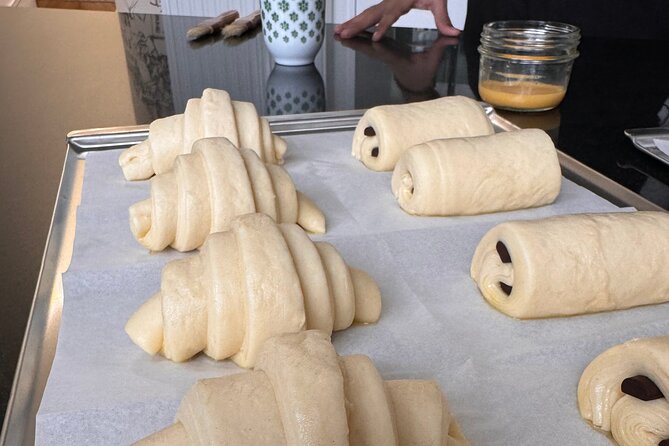
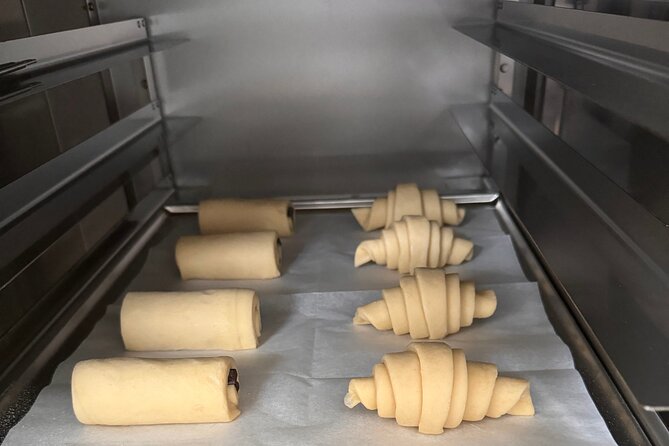
Once the dough has been rolled and prepared, you cut it into the shapes needed for the pastries. Croissants are formed into the familiar crescent shape. Pain au chocolat uses a different shape and includes chocolate inside the folded dough.
This is where the class becomes especially satisfying. The rectangle you have been rolling starts to look like something you recognize from a Paris bakery. Shaping also gives the chef a chance to correct small problems before baking, such as uneven pieces or loose folds.
You do not need to arrive as an experienced baker. The instruction is designed to guide you through each step, and help is available at the table. At the same time, you should not expect the chef to do all the difficult work for you. The fun comes from taking part, including the occasional imperfect shape.
Several people have found the process clear enough to repeat at home. The instruction includes recipes and practical tips, with some participants receiving the recipes by email. If you plan to bake later, keep notes on measurements, dough sizes, and the order of the folds. Metric measurements are used, so visitors from the United States should be prepared to convert length, weight, and volume.
Baking, tasting, and taking pastries home
After shaping, the pastries go into the oven. This is the payoff for the rolling and folding, as the dough turns golden and the buttered layers become light and crisp.
While the pastries bake, the class has time for conversation. You can compare your shapes, exchange baking tips, and ask the chef about pastry or Paris. The atmosphere is meant to be relaxed and social, not stiff or formal.
The exact number of pastries can depend on the session, but one format has sent each person home with four croissants and four pain au chocolat. That is a generous finish, especially if you plan to share them later. You get to eat or sample the results and carry the rest with you.
The fresh pastries are also a useful test of the lesson. A class can be entertaining without teaching much, but here the final food tells you whether the method worked. The pastry should give you a clear sense of the difference between a properly layered croissant and an ordinary roll.
The chefs make a real difference
The strongest part of the class is the teaching. Chef Leo is repeatedly described as patient, funny, attentive, and generous with baking advice. His style appears to put beginners at ease, which matters when you are trying to handle dough that can feel difficult at first.
Maria is also praised for making the class friendly, interactive, and easy to follow. The teaching seems to focus on showing each stage, then helping people correct their own work rather than taking over.
That is important for a small cooking class. You want enough help to avoid frustration, but you also want to leave knowing what you did. The best instruction gives you both confidence and a realistic sense of what still takes practice.
The class also includes informal conversation about Paris. That is a pleasant extra, though the main value remains the baking lesson. If you are looking for a formal food history lecture or a tour of several bakeries, this is not that. It is a practical workshop in one studio.
Who should book this class
This class suits couples, parents and older children, friends, solo visitors, and anyone who wants a food activity with a clear result. It is especially good for a parent and adult child because the work can be shared while still giving each person a chance to shape pastries.
You should book it if you want to learn a French baking skill rather than simply eat one. It also suits people who enjoy meeting others in a small group. The room is capped at eight, so it can feel more personal than a large cooking demonstration.
You should think twice if you dislike repetitive hands-on work. Rolling and shaping take time, and the dough needs care. The activity is not suitable for children under 17, and the operator notes that you need strength to knead the dough.
Service animals are allowed. The studio is near public transportation, but the available information does not specify step-free access or other mobility details. If those details matter to you, ask before booking.
Timing, advance planning, and cancellation
The class lasts about three hours. That is long enough to feel substantial, but short enough to fit into a day of sightseeing. I would avoid placing a major timed museum visit immediately afterward, since the baking session may be more relaxed than a tightly scheduled attraction.
The class is often reserved about 47 days ahead. That suggests planning early, especially if your Paris dates are fixed or you want a particular day. The experience is offered in English and uses a mobile ticket.
Free cancellation is available if you cancel at least 24 hours before the start time. A cancellation made less than 24 hours before the class is not refunded, and changes inside that window are not accepted. The cut-off follows local Paris time, so check your booking before making last-minute changes.
Is $143.92 a fair price?
At first glance, $143.92 is a lot for a pastry class. You can buy several excellent croissants in Paris for a small fraction of that amount.
The comparison changes when you count the full experience. You receive about three hours with a pastry chef, personal help in a group of no more than eight, ingredients, hands-on practice, baked pastries, and recipes or measurements to use later. You also get an activity that does not depend on good weather.
I would call it good value for someone who enjoys cooking and wants a skill to take home. It is weaker value for someone who mainly wants a cheap meal or a quick demonstration. The class earns its price through participation and instruction, not through the amount of food alone.
Final verdict: book it if you want to make, not just eat
I would book this class if you have room in your Paris schedule for a relaxed, hands-on morning or afternoon. The small group, strong teaching from chefs such as Leo and Maria, and mix of croissants and pain au chocolat give it more substance than a simple tasting stop.
Go in ready to roll dough, remember measurements, and accept that pastry takes patience. You may leave with flour on your hands and a few imperfect shapes, but you will also leave with fresh pastries and a much clearer idea of how to repeat the process at home.
Skip it if your budget is tight, if you need a fast activity, or if you would rather spend your food money sampling several bakeries. For everyone else, this is a tasty and useful way to bring a piece of Paris back to your own kitchen.
FAQ
Where does the croissant class take place?
The class takes place at Studio Pâtisserie, 85 Rue de Rome, 75017 Paris, France.
How long does the experience last?
The class lasts approximately three hours.
What pastries will I make?
You will learn to make croissants and pain au chocolat, including rolling, laminating, cutting, and shaping the dough.
How many people can join the class?
The maximum group size is eight participants.
Is the class taught in English?
Yes. The experience is offered in English.
What age do participants need to be?
Participants need to be at least 17 years old. Strength is also needed for kneading the dough.
Can I cancel for a full refund?
Yes, if you cancel at least 24 hours before the experience starts. Cancellations or changes made less than 24 hours before the start time are not accepted for a refund.
More Tiramisu and Dessert Classes in Paris
- Paris: Lemon Tart Baking Class with a Pastry Chef
★ 5.0 · 4 reviews - Eclair Baking Class with A Pastry Chef
★ 5.0 · 3 reviews
More Tiramisu and Dessert Classes in France
- Paris Cooking Class: Chocolate Éclairs and Cream Puffs
★ 5.0 · 87 reviews - Paris: 2.5-Hour French Pastry Cooking Class
★ 4.9 · 71 reviews - Paris Desserts and Pastries Small Group Cooking Class with a Chef
★ 4.5 · 49 reviews - Paris Cooking Class: French Desserts Class
★ 4.9 · 13 reviews
Newest classes around Paris
- Paris: The Soufflé Baking Class with Chef★ 4.5 · 2 reviews
- Paris: Millefeuille baking class with a chef★ 5.0 · 5 reviews
- Paris: Traditional Croissant Cooking Class With Local Baker★ 5.0 · 2 reviews
- Paris: Lemon Tart Baking Class with a Pastry Chef★ 5.0 · 4 reviews
- Paris: Macaron Baking Class★ 4.4 · 26 reviews
- Paris: Hands-On Small Group Cooking Class★ 4.9 · 19 reviews
- Paris: Evening Cooking Class with Optional Market Visit★ 4.8 · 19 reviews
- Eclair Baking Class with A Pastry Chef★ 5.0 · 3 reviews
Paris Cooking Classes, compared.
Paris Cooking Class and Lunch with Wine plus Market Visit Option
Read our review →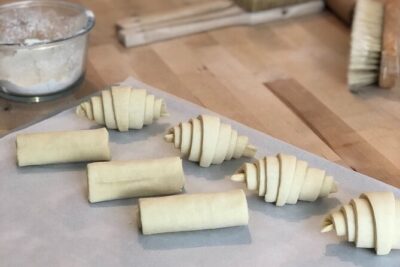
Paris Croissant Small-Group Baking Class with a Chef
Read our review →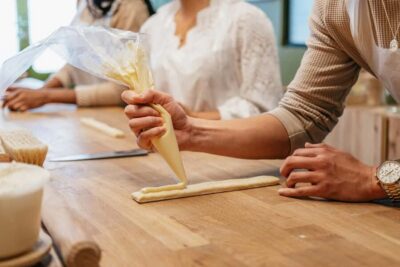
Paris Cooking Class: Learn How to Make Macarons
Read our review →
Paris Evening Cooking Class French Dinner and Market Visit Option
Read our review →
Paris French Cuisine Small Group Cooking Class with Lunch
Read our review →