
Review · NEW ORLEANS COOKING CLASSES
New Orleans Demonstration Cooking Class with Meal
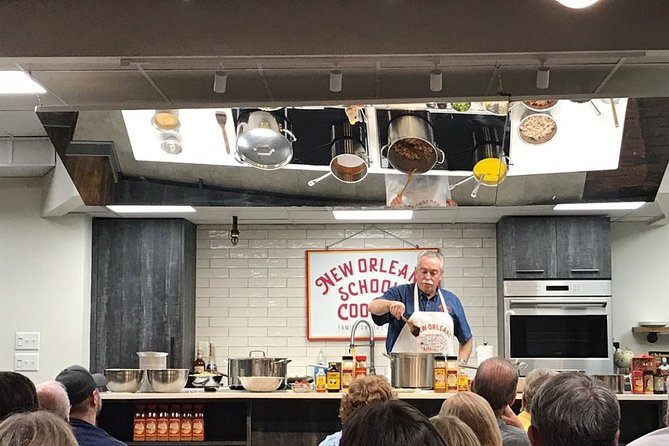
New Orleans cooking is part lesson, part lunch, and part stage show. In a converted 19th-century molasses warehouse, a local chef explains the roux, spices, and cultural mix behind gumbo, jambalaya, crawfish étouffée, and pralines while preparing a generous meal in front of you. The class earns a 4.9 rating from about 3,000 bookings, with 97 percent recommending it.
I like the way the food and New Orleans history stay connected, and I like that you taste every dish instead of leaving with only notes and recipes. Chefs such as Lynn, Eric, Austin, Vivian, Rene, and Terri have been praised for their humor and clear instruction. The main drawback is the size: classes can approach 48 people, with a maximum of 68, so this is not a quiet, hands-on cooking lesson.
Key points
- A full Creole meal for $43: You sample several dishes, desserts, and one local beer, along with iced tea, coffee, and water.
- The roux gets proper attention: You see the base of many Louisiana dishes made and learn how seasoning shapes the final flavor.
- It is demonstration only: You watch the chef cook and ask questions, but you do not prepare the food yourself.
- The setting has character: The New Orleans School of Cooking occupies a converted 19th-century molasses warehouse at 524 St. Louis Street.
- Menus can change: Gumbo, jambalaya, bisque, shrimp or chicken Creole, étouffée, bread pudding, bananas Foster, pralines, and pecan pie may appear.
- You can take the lesson home: Recipes are provided, and you can receive a diploma by submitting photos of dishes you make from them.
A cooking class inside a former molasses warehouse
The New Orleans School of Cooking sits at 524 St. Louis Street, right in the French Quarter. You start and finish at the school, so the experience fits neatly into a morning, afternoon, or evening in the Quarter.
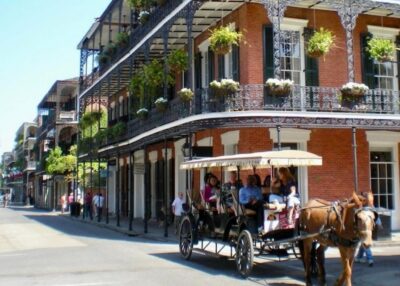
The building itself adds something to the class. A former molasses warehouse is a fitting place to talk about sugar, spice, trade, and the food traditions that grew from Louisiana’s mix of cultures. You are not simply sitting in a modern studio kitchen. You are in a working part of the French Quarter, surrounded by the setting that makes the lesson feel tied to New Orleans.
The class lasts about two hours. The format is social and informal, with other people seated around the demonstration area. The room can hold a large crowd, so choose this experience for its energy and entertainment, not for personal coaching at a counter.
The school is near public transportation. Your mobile ticket is accepted, and confirmation arrives when you book. I would arrive with enough time to find the St. Louis Street address without rushing, especially if you are coming from another part of the Quarter.
More Cooking Classes in the USA:
- New Orleans Hands-On Cooking Class with Meal
★ 5.0 · 1,183 reviews - Undiscovered Charleston: Half Day Food, Wine & History Tour with Cooking Class
★ 5.0 · 948 reviews - New Orleans: Cajun and Creole Cooking Class
★ 4.9 · 730 reviews
The opening lesson: Cajun, Creole, and the New Orleans table
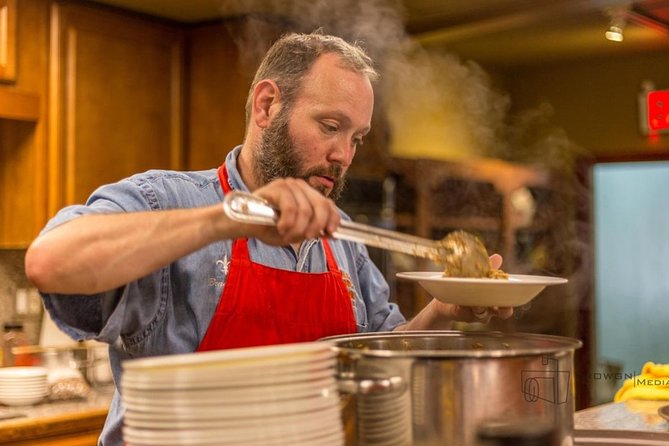
The chef begins by placing Louisiana food in context. You hear how Cajun and Creole cooking overlap, where they differ slightly, and how French, African, Spanish, Caribbean, and other influences helped shape the dishes served today.
That background matters because Louisiana food can be confusing when you first encounter it. Gumbo, jambalaya, étouffée, and Creole preparations are not just a list of restaurant menu items. Each has its own method, texture, and seasoning pattern. A good chef helps you notice those differences instead of treating every dish as simply spicy Southern food.
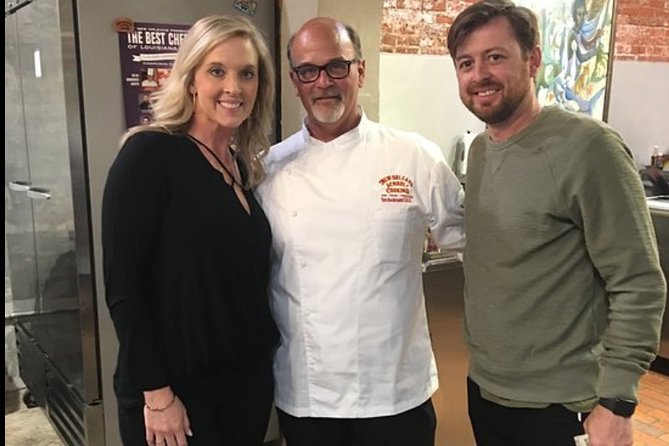
The presentation style varies by chef, but the strongest instructors bring plenty of personality. Lynn has been praised for combining cooking instruction with Louisiana stories. Eric has been singled out for being funny and clear, while Austin has been described as keeping the class entertained while answering questions. Other named instructors include Dianne, Vivian, Rene, and Terri.
You do not need to be a serious cook to follow the lesson. One useful feature of this class is that the chef explains the reasons behind each step. You learn what the ingredients do, not only the order in which they go into the pot.
Why the roux is the real lesson
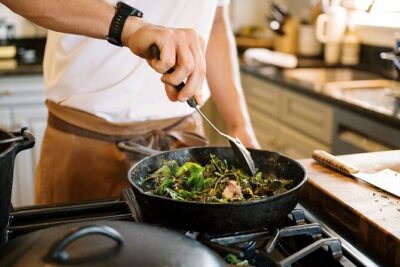
The most useful cooking idea here is the importance of a good roux. A roux is a mixture of fat and flour cooked together, and in Louisiana cooking it can supply body, color, and a toasted flavor to dishes such as gumbo.
The chef demonstrates how this foundation affects the finished meal. You also learn about the spice blends used in New Orleans cooking. The goal is not simply to make food hot. Seasoning should build flavor, and the class leaves room for you to adjust the finished dishes with condiments at the table.
One point is worth keeping in mind: the food is not made especially spicy. Seasonings such as Joe’s Stuff, Bayou Blend, and a hot blend are available so you can doctor your serving to taste. If you expect every bowl to arrive with a strong kick, you may find the base seasoning mild. If you prefer control, this approach works well.
The demonstration also gives you a chance to ask questions while the cooking is happening. You can ask about the difference between Cajun and Creole dishes, the purpose of a particular spice, or how to approach the recipe at home. In a large room, your question may not always receive a long personal answer, but the format is open to participation.
What you actually eat during the two hours
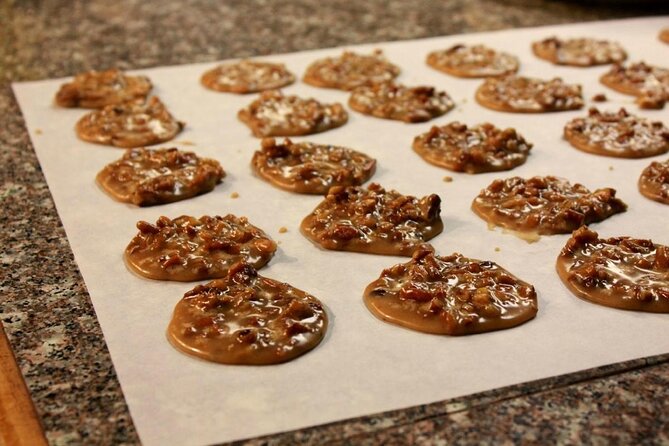
The menu changes, so do not book this expecting one fixed lineup. A sample menu includes corn and crab bisque, gumbo, jambalaya, shrimp or chicken Creole, crawfish étouffée, bread pudding, bananas Foster, pralines, and pecan pie.
You may not receive every item listed at every class. The supplied menu says items may include any of these dishes, and the chef prepares a selection. The important point is the quantity and range: you sample several savory dishes and desserts rather than tasting one small spoonful at the end.
The food is served after each live demonstration. That timing works well because you can watch the preparation, hear the explanation, and then taste the result while the method is still fresh in your mind. The meal is not an afterthought. It is the practical part of the lesson.
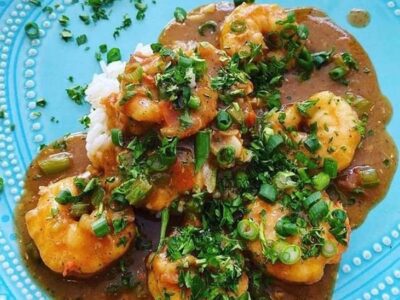
Gumbo usually gives you the clearest look at the roux and seasoning. Jambalaya shows how rice, meat, seafood, and spices come together in one pot. Shrimp or chicken Creole offers another view of tomato-based Creole cooking. Crawfish étouffée brings a different texture and a rich sauce.
The desserts add variety and plenty of Louisiana character. Bread pudding is comforting and substantial. Bananas Foster gives the chef a chance to add a little showmanship, including the possibility of a flaming dessert. Pralines and pecan pie bring the meal back to the state’s love of sugar and nuts.
Bring an appetite. Several people describe the portions as generous, and you are likely to leave full rather than merely satisfied by a few sample bites. Coffee, iced tea, water, and one local beer are included. The beer is a nice local touch, while iced tea and coffee give you nonalcoholic choices.
Same region, a different dish to learn:
- Hands-on Cajun Roux Cooking Class in New Orleans
★ 5.0 · 356 reviews - Hands-On Hawaiian Imu Cooking and Cultural Dining Experience
★ 5.0 · 95 reviews - Hands-on Cooking Class in Charleston
★ 5.0 · 83 reviews - Farm to Table Cooking Class at Kulaniapia Falls
★ 4.5 · 36 reviews
The difference between a cooking class and a demonstration
This distinction should guide your booking decision. You do not chop vegetables, stir a pot, or prepare your own roux. The chef performs the cooking while you watch, listen, eat, and ask questions.
For some people, that is exactly the appeal. You can focus on the food and stories without worrying about keeping up with a recipe or sharing a workstation. It is a comfortable choice for couples, families, and anyone who wants a culinary activity without turning the afternoon into work.
For others, the lack of hands-on practice will be a disappointment. If you want to leave having personally made gumbo, this is not the right format. You do receive recipes, and the class gives you enough information to try them at home, but the skill-building comes from observation rather than practice.
The size of the room affects the experience. A class may have around 48 people and can reach 68. Most people find the presentation lively, but a large group can make it harder to hear if people nearby hold side conversations. Sit where you can see the cooking area and hear the chef clearly. If you need a small, quiet setting, keep this limitation in mind.
The value of $43 in the French Quarter

At $43 per person, the price is strong for what is included. You receive about two hours of entertainment and instruction, a full set of samples, dessert, one local beer, iced tea, coffee, water, and copies of the recipes.
A comparable meal in the French Quarter could use much of that budget before you add a guided food lesson. Here, the cooking demonstration gives the meal a purpose. You learn why the dishes taste the way they do, then eat the results.
The value is even better if you are curious about New Orleans food but do not know where to begin. Instead of ordering several unfamiliar dishes and trying to work out the differences yourself, you get a guided introduction to several classics in one sitting.
The value is less clear if you are paying mainly for hands-on instruction or an intimate chef encounter. The class is designed for a broad audience, and the chef must cook for everyone in the room. The price reflects that group format.
Gratuity is not included. A 15 to 20 percent tip is recommended, so add that to your budget. Bring cash if you prefer to tip that way.
Dietary restrictions and menu limits
The school can accommodate certain dietary restrictions, but you need to call the reservations line after booking and tell the staff about your needs. A $5 charge, paid at check-in, covers substitutions of gumbo z’herbes and Creole z’herbes.
Those substitutions are vegan, gluten-free, and nut-free. They are discussed during the class but are not the dishes being demonstrated, and you receive copies of the substitution recipes.
The school cannot alter the recipes being prepared for the entire class. Depending on your restrictions, you might be able to eat the soup but not the main dish. Tell the stewards when you check in so they can explain what is suitable.
This is an important point for anyone with a serious allergy. The class prepares several dishes in one shared demonstration, and the substitutions are separate dishes rather than modified versions of every recipe.
Recipes, home cooking, and the diploma
The class sends you home with copies of the recipes. That is more useful than a souvenir menu because the cooking lesson continues after you leave New Orleans.
You also have the option of receiving a diploma by submitting photos of recipes you make at home. That small follow-up gives the class a clear goal. You can try the gumbo, jambalaya, or another dish later and show the school what you made.
The recipes are especially useful for first-time Louisiana cooks. The chef explains the role of the roux and seasonings, and you leave with a better sense of how the dishes should come together. Experienced home cooks can still pick up practical tips, but beginners will probably gain the most.
Do not expect the recipe sheet alone to replace the demonstration. The value lies in seeing texture, timing, and technique in real time. Pay attention to the color of the roux, the order of ingredients, and the chef’s small comments about seasoning. Those details are easy to miss if you focus only on getting the printed recipes.
Who should book this experience
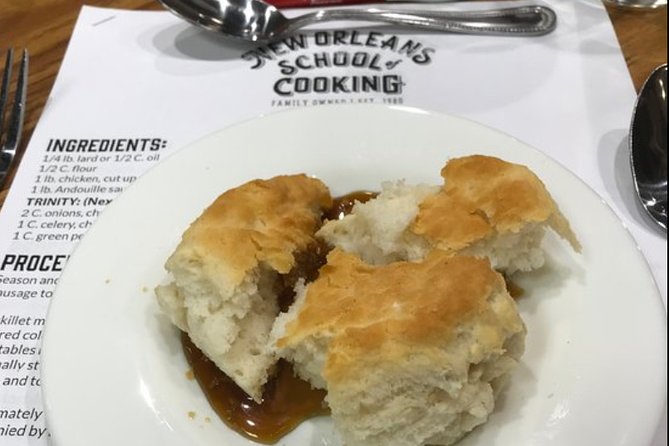
I would recommend this class to you if you want a relaxed introduction to New Orleans food, enjoy local stories, or need a meal break with more substance than a standard restaurant visit. It also suits a mixed group where one person loves to cook and another simply enjoys good food and a funny presentation.
It works well as a first-day activity because it gives you a guide to the dishes you will see elsewhere in the city. After the class, you will have a better idea of how gumbo differs from étouffée and what makes jambalaya its own dish.
Families and couples can enjoy it, though the large class size may not suit young children who need constant activity. Solo visitors can ask questions and eat with the group, but you should choose a seat with a clear view if hearing the chef is important to you.
I would think twice if you want a private lesson, hands-on practice, a small class, or highly customized recipes. The chef-led format is entertaining and efficient, but it cannot give each person individual attention.
Booking timing and cancellation terms
This activity is commonly booked about 24 days ahead, which suggests you should reserve early if your New Orleans dates are fixed. Confirmation is provided at booking, and mobile tickets are accepted.
You can cancel for a full refund up to 24 hours before the start time. Cancellations or changes within 24 hours are not refunded or accepted. The school may also cancel if poor weather affects the activity or if the minimum number of participants is not reached. In those cases, you are offered another date or experience, or a full refund.
Should you book the New Orleans School of Cooking?
Book it if you want a meal, a show, and a practical food lesson in one stop. The generous tastings, included drinks, recipes, and strong chefs make $43 a sensible price in the French Quarter.
Go in knowing that it is a demonstration, not a workshop, and that the room can be large. Sit near the front if possible, arrive ready to listen over the surrounding conversation, and ask questions when the chef opens the floor.
For a first look at gumbo, jambalaya, Creole cooking, and Louisiana food culture, this is an easy recommendation. It gives you enough context to eat more confidently around New Orleans, and enough recipes to keep the experience going at home.
FAQ
Where does the cooking demonstration take place?
It takes place at the New Orleans School of Cooking, 524 St. Louis Street, New Orleans, Louisiana 70130. The building is a converted 19th-century molasses warehouse in the French Quarter.
How long does the experience last?
The demonstration and meal last about two hours. The activity ends back at the school.
Is this a hands-on cooking class?
No. This is a demonstration class. You watch the chef prepare the dishes, listen to the instruction, ask questions, and sample the food.
What food might be served?
Possible dishes include corn and crab bisque, gumbo, jambalaya, shrimp or chicken Creole, crawfish étouffée, bread pudding, bananas Foster, pralines, and pecan pie. The exact menu may vary.
Are drinks included?
Yes. Coffee, iced tea, water, and one local beer are included with the meal.
Can dietary restrictions be accommodated?
Yes, but you must call the reservations line after booking and tell the school about your restrictions. For a $5 charge paid at check-in, vegan, gluten-free, and nut-free gumbo z’herbes and Creole z’herbes can replace some dishes. These substitutions are discussed but are not demonstrated.
Newest classes around the USA
- Hands-on Cooking Class in Charleston★ 5.0 · 83 reviews
- Sushi Making Cooking Class at a Local Brewery in Charlotte★ 5.0 · 2 reviews
- Authentic Asian Cooking Class in NYC (Includes 4-Course Meal)★ 5.0 · 8 reviews
- Baumkuchen Campfire Baking Class★ 5.0 · 3 reviews
- Hands-On Hawaiian Imu Cooking and Cultural Dining Experience★ 5.0 · 95 reviews
- Farm to Table Cooking Class at Kulaniapia Falls★ 4.5 · 36 reviews
- French Cooking Class in Baltimore (Includes 3-Course Meal)★ 5.0 · 2 reviews
- Private Atlanta Cooking Class with a Fun Local Chef Naina★ 5.0 · 2 reviews
New Orleans Cooking Classes, compared.
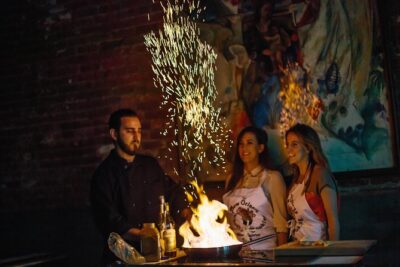
New Orleans Hands-On Cooking Class with Meal
Read our review →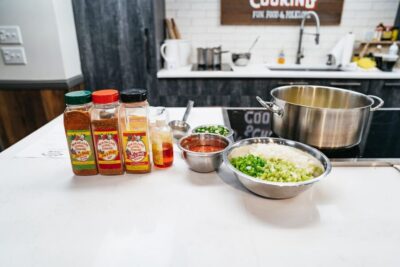
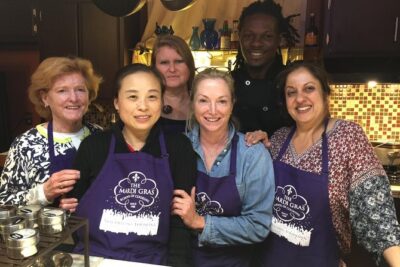
Hands-on Cajun Roux Cooking Class in New Orleans
Read our review →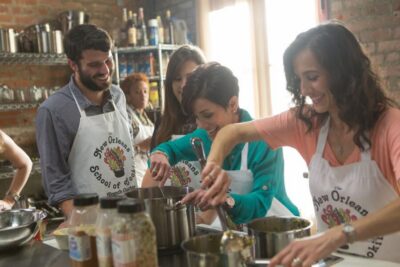
Private New Orleans Cajun Cooking Class with a Local Courtland
Read our review →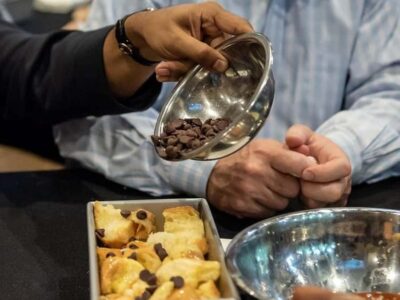
Browse the lists this tour appears in