
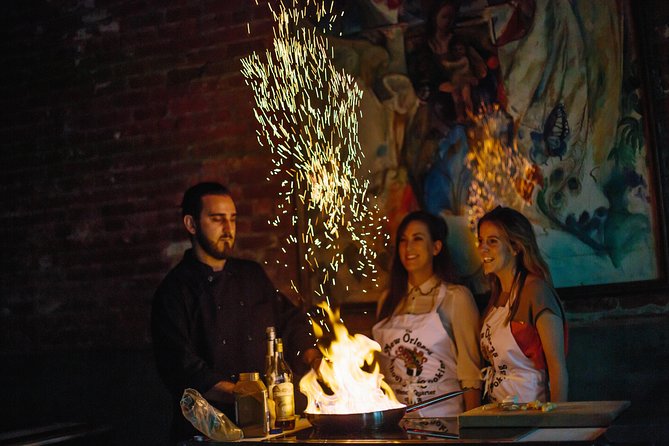
Review · NEW ORLEANS COOKING CLASSES
New Orleans Hands-On Cooking Class with Meal
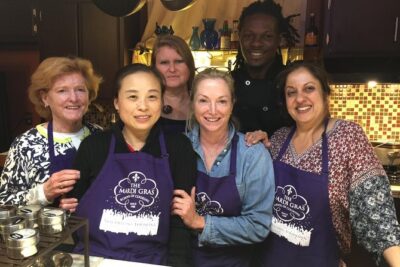
The best part of this New Orleans experience is simple: you do not just watch a chef make gumbo or bananas Foster. You cut, season, stir, cook, and eat the meal yourself. I like the small setup, with up to 10 people sharing five cooktops, and I like that the class connects food with Louisiana culture and history. Chefs such as Austin, Eric, Cindy, Ricardo, Vivian, and Chef G have all been praised for making the work clear, funny, and welcoming.
The main drawback is that this is an active class, not a sit-down meal with a short demonstration. You may be on your feet for much of the three hours, and singles may be paired with another person at a cooktop. At $162, it is a splurge, though the price includes a full meal, drinks, an apron, and recipes.
Key points to know before you book
- Hands-on cooking: You prepare every course rather than simply watching a demonstration.
- Small working groups: The class is limited to 10 people and uses five cooktops, so you get a real role in the cooking.
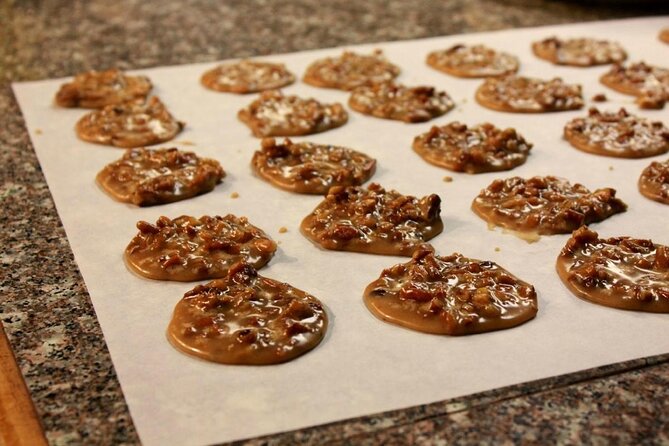
- Classic Louisiana menu: Expect a starter, main course, and dessert, with dishes such as gumbo, shrimp and grits, jambalaya, pralines, or bananas Foster.
- A social meal afterward: You sit down with the group to eat what you made, with wine, Abita Amber Beer, and nonalcoholic drinks included.
- Useful take-home extras: You receive a white New Orleans School of Cooking apron and a copy of the recipes.
- A three-hour commitment: Plan for a full half-day, and skip a large meal beforehand.
What happens at 524 St. Louis Street
You begin at the New Orleans School of Cooking at 524 St. Louis Street, in the French Quarter. The setting puts you in a useful part of town for a cooking class: you can pair it with time in the Quarter before or after, and the meeting point is near public transportation.
The class lasts about three hours. It is built around cooking and eating a complete Louisiana meal, not around a long lecture. Your chef leads the group through the recipes, explains techniques, and gives you a hand with the tasks at your cooktop.
The working arrangement matters. There are five cooktops for a maximum of 10 people, so you are likely working in a pair or a small group rather than standing at the back of a large room. If you book alone, you may be paired with another participant. That can be a plus if you enjoy meeting people, though it is worth knowing if you prefer to cook privately with your own party.
The class is in English, and the minimum age is 18. Dress is casual. Since you will be chopping and cooking for a good part of the session, comfortable clothes and shoes make more sense than dressing for a fancy dinner.
More Cooking Classes in the USA:
- New Orleans Demonstration Cooking Class with Meal
★ 5.0 · 3,000 reviews - Undiscovered Charleston: Half Day Food, Wine & History Tour with Cooking Class
★ 5.0 · 948 reviews - New Orleans: Cajun and Creole Cooking Class
★ 4.9 · 730 reviews
The menu: three courses with a Louisiana accent
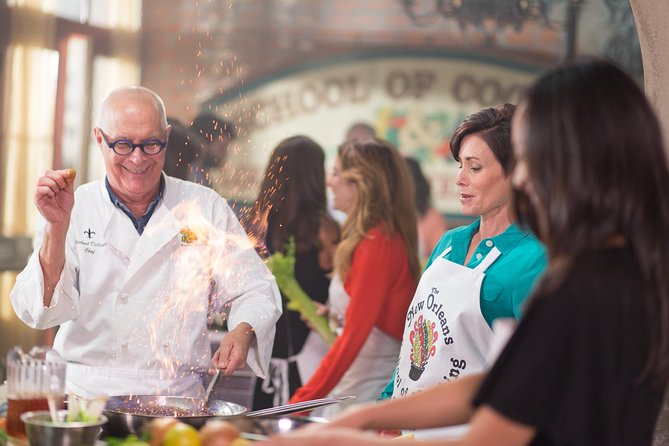
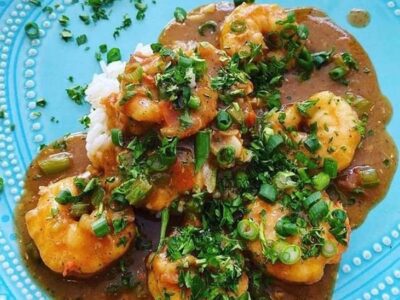
The sample menu gives you a good idea of the food focus. For the starter, you may prepare yam-crab bisque or gumbo. The main course may be BBQ shrimp and grits or jambalaya. Dessert can be bananas Foster or pralines.
The exact choices matter because this is not a generic cooking lesson dressed up with a New Orleans label. These dishes show several sides of local cooking. Gumbo brings together a seasoned base, vegetables, and a long tradition of Louisiana home cooking. Shrimp and grits gives you a lesson in texture and seasoning. Jambalaya offers a one-pot route into the region’s blend of ingredients and influences.
Dessert is not an afterthought. Bananas Foster gives the class a dramatic finish and lets you practice a dish closely associated with New Orleans. Pralines offer a different lesson in sugar and technique. If you are interested in cooking at home, the dessert may be the easiest part of the meal to repeat for friends.
Menu options are not presented as personal substitutions in the information provided. If you have dietary restrictions, tell the school when you book. A special request can carry a $10 fee payable on site, so do not wait until the class begins to raise the issue.
Why the hands-on format works
A demonstration can show you what gumbo should look like. A hands-on class makes you pay attention to the order of the steps, the texture of the ingredients, and the way seasoning changes as a dish cooks.
Here, you help prepare the full dinner. That means you are not only watching a chef’s knife work or listening to a recipe. You are involved in the process, then you eat the result at the end. The format also breaks the session into manageable parts: prepare one course, cook and eat it, then continue with the next course.
That pace keeps the three hours moving. It also gives you a chance to taste the food while the instructions are still fresh. Several participants have found the hands-on approach more useful than a demonstration because it leaves them with recipes they can actually try at home.
I would not book this class if you want a quiet afternoon away from other people. Cooking at five stations creates conversation, shared tasks, and a bit of kitchen movement. For a date, a family outing with adults, or a solo activity where you want to meet people, that social side is part of the value.
The chefs make the difference
The class is led by a professionally trained chef, but the personality of the individual instructor can shape your experience. The named chefs associated with recent sessions include Austin, Eric, Cindy, Ricardo, Vivian, Eduardo, and Chef G.
Austin has been praised for mixing practical cooking tips with humor. Cindy’s format is especially good for people who want clear instruction, moving through one course at a time and adding historical context along the way. Eric is described as patient, friendly, and easy to follow. Chef G has been singled out for thorough instruction and for making the room fun.
Ricardo and Monique have helped participants understand different cooking styles, spices, and ingredients. Vivian has used music, humor, and a lively presence to keep the group engaged. You should not assume that a particular chef will lead your session, but the range of comments suggests that the school’s strength is not only its recipes. It is the staff’s ability to teach without making beginners feel out of place.
The tone is casual. You do not need professional cooking skills, and the class is designed for people who enjoy food even if they rarely cook. The chef and assistant can help when a step gets tricky, but you still take part in the work.
Same region, a different dish to learn:
- Hands-on Cajun Roux Cooking Class in New Orleans
★ 5.0 · 356 reviews - Hands-On Hawaiian Imu Cooking and Cultural Dining Experience
★ 5.0 · 95 reviews - Hands-on Cooking Class in Charleston
★ 5.0 · 83 reviews - Farm to Table Cooking Class at Kulaniapia Falls
★ 4.5 · 36 reviews
A meal that also explains New Orleans
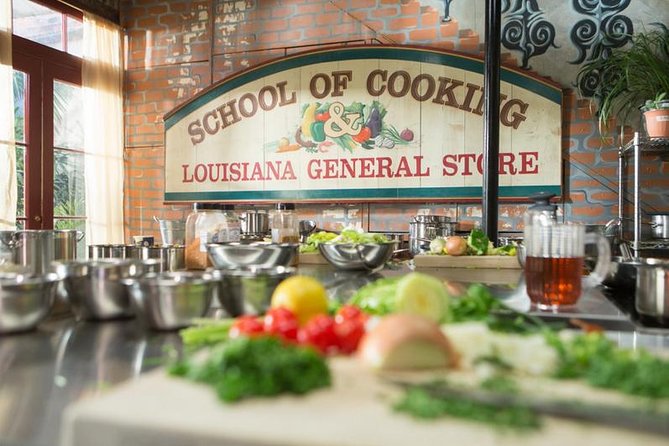
Food here is used as a doorway into local culture. The cooking includes information about how different cultures shaped Louisiana food, along with practical explanations of technique.
That context gives the meal more meaning than a simple recipe card. You learn why certain ingredients and methods belong together, then see how those ideas appear in the dish you are preparing. The class can be a good first activity in New Orleans because it gives you a basic sense of the city’s food traditions before you spend the rest of your trip eating around town.
I especially like that the cultural material is tied to something you are doing with your hands. A short explanation about a roux, seasoning, or a regional dish tends to stick better when you immediately use it. One of the most useful moments for many participants is making the roux, a central technique in several Louisiana dishes.
Do keep your expectations sensible. This is a three-hour introduction, not a complete course in Cajun and Creole cooking. You will leave with useful recipes and a better feel for several dishes, but you will not master every style of New Orleans food in one sitting.
Drinks and the final table
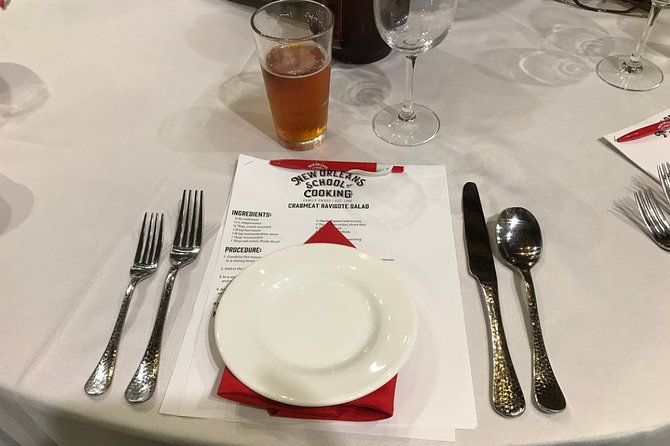
The price includes red and white wine, Abita Amber Beer, iced tea, lemonade, and coffee. Alcoholic drinks are included for adults, but you can take part without drinking. That makes the experience easier to recommend to a mixed group.
After the cooking, you sit down and eat the full meal. This is an important part of the design. You are not sent away with a small tasting portion after doing the work. The aim is a complete dinner shared with the people from your class.
Plan accordingly. You may be eating three courses and having drinks during a session that lasts about three hours. Skipping a heavy lunch beforehand is sensible. If you are booking a morning class, you may find that it works as a substantial brunch or early lunch rather than a light activity before another meal.
The shared table also gives the class a warm, informal finish. You have cooked with the group, and now everyone gets to compare the results. That fellowship is a real part of the experience, especially if you are traveling alone or want something more personal than a standard sightseeing stop.
Is $162 a fair price?
At $162 per person, this is not a budget meal. You are paying for instruction, ingredients, a full three-course experience, drinks, an apron, recipes, and a small-group format.
The value is strongest if you would otherwise pay for a good dinner and are interested in learning something during the same outing. A comparable restaurant meal would give you food and service, but not the practical instruction, social cooking, or take-home recipes. The apron alone is listed as an $18.99 value, though the real value is in the class itself.
The price is harder to justify if you only want to sample Louisiana food. New Orleans has plenty of restaurants where you can eat gumbo, shrimp, or pralines without spending three hours cooking. This class makes sense when you want the process, not just the plate.
I also see value in the small group. A larger demonstration might cost less, but it would give you less time at the stove. With five cooktops and no more than 10 people, you have a better chance to ask questions and take an active role.
Tips are not included. A 15 to 20 percent gratuity is recommended, so include that in your planning. The total cost can rise if you request a special dietary adjustment, which carries a $10 on-site fee.
What you take home
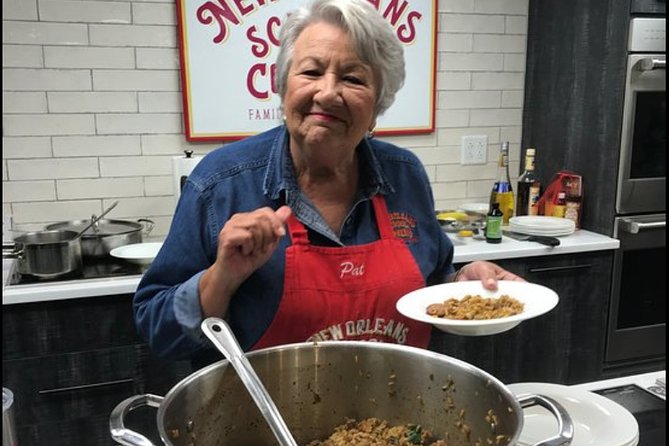
Everyone receives a New Orleans School of Cooking white apron and a copy of the class recipes. These are practical souvenirs rather than disposable trinkets.
The recipes are the more useful keepsake. You can try the dishes again at home, and the school offers a diploma if you submit photos of recipes you make after returning home. That gives the experience a small follow-up element and encourages you to use what you learned.
The apron has a clear souvenir value, too. It is a reminder of the class, and it can go straight into your kitchen kit. If luggage space is tight, it is still a fairly manageable item compared with many New Orleans souvenirs.
Who will enjoy this class most
I would recommend it to:
- Couples looking for a date activity with more substance than a standard dinner
- Friends who enjoy cooking, eating, and meeting other people
- Solo adults who are comfortable sharing a cooktop
- Families traveling with adult children, since the minimum age is 18
- Food-focused visitors who want context for Louisiana dishes
- Beginners who want clear guidance rather than a technical chef course
I would be more cautious about recommending it to someone who dislikes group activities, cannot stand for an extended period, or wants to choose every dish personally. The class is casual, but it is still active and organized around a set menu.
It also suits an early place in your New Orleans schedule. You gain recipes and food knowledge that can shape the rest of your eating plans. If you book it late in your trip, you can still enjoy it, but you will have less time to use that new understanding at local restaurants.
Booking, timing, and cancellation details
The class is often booked about 37 days ahead, so I would reserve early if your New Orleans dates are fixed. Confirmation arrives at booking, but the school requires a minimum number of participants. If that minimum is not reached, the activity can be canceled after confirmation, with an alternative or full refund offered.
You can cancel for a full refund up to 24 hours before the start time. Cancellations or changes made within 24 hours are not accepted for a refund. The cut-off follows New Orleans local time.
The activity ends back at the meeting point on St. Louis Street. Since it is in the French Quarter and near public transportation, it is easy to pair with other plans, but leave yourself the full three-hour window rather than trying to squeeze it between tightly scheduled attractions.
Should you book the New Orleans cooking class?
Book it if you want to do more than eat your way through New Orleans. The strongest reasons are the small group, the active cooking, the complete meal, and the instructors’ mix of technique, humor, and local food context.
Skip it if $162 feels too high for a meal, or if you would rather spend those three hours at restaurants and bars. This is a hands-on class with some standing and shared work, not a passive food tasting.
For the right person, it is a useful New Orleans souvenir in the best sense: you take home an apron, recipes, and enough practical experience to make gumbo, shrimp and grits, jambalaya, pralines, or bananas Foster part of your own kitchen routine.
FAQ
How long does the New Orleans cooking class last?
The class lasts approximately three hours, including the cooking instruction and the meal.
Where does the activity begin and end?
It begins and ends at the New Orleans School of Cooking, 524 St. Louis Street, New Orleans, Louisiana 70130.
How many people are in each class?
The class has a maximum of 10 participants and uses five cooktops. Someone booking alone may be paired with another individual.
What dishes might be on the menu?
The sample menu includes yam-crab bisque or gumbo, BBQ shrimp and grits or jambalaya, and bananas Foster or pralines.
Are drinks included?
Yes. The price includes red and white wine, Abita Amber Beer, iced tea, lemonade, and coffee.
Do I receive anything to take home?
Yes. You receive a New Orleans School of Cooking white apron and a copy of the class recipes. You can also receive a diploma by submitting photos of recipes you make at home.
Is the class suitable for people with dietary restrictions?
You should provide dietary requirements when booking. A special request may require a $10 fee payable on site.
What is the cancellation policy?
You can cancel at least 24 hours before the start time for a full refund. Cancellations and changes made less than 24 hours before the start time are not accepted for a refund.
Newest classes around the USA
- Hands-on Cooking Class in Charleston★ 5.0 · 83 reviews
- Sushi Making Cooking Class at a Local Brewery in Charlotte★ 5.0 · 2 reviews
- Authentic Asian Cooking Class in NYC (Includes 4-Course Meal)★ 5.0 · 8 reviews
- Baumkuchen Campfire Baking Class★ 5.0 · 3 reviews
- Hands-On Hawaiian Imu Cooking and Cultural Dining Experience★ 5.0 · 95 reviews
- Farm to Table Cooking Class at Kulaniapia Falls★ 4.5 · 36 reviews
- French Cooking Class in Baltimore (Includes 3-Course Meal)★ 5.0 · 2 reviews
- Private Atlanta Cooking Class with a Fun Local Chef Naina★ 5.0 · 2 reviews
New Orleans Cooking Classes, compared.
New Orleans Demonstration Cooking Class with Meal
Read our review →
Hands-on Cajun Roux Cooking Class in New Orleans
Read our review →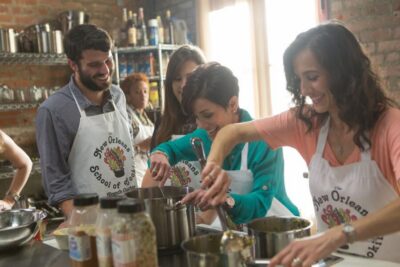
Private New Orleans Cajun Cooking Class with a Local Courtland
Read our review →

Browse the lists this tour appears in