
Review · NEW ORLEANS COOKING CLASSES
New Orleans: Cajun and Creole Cooking Class
New Orleans cooking comes alive here through a chef-led demonstration, a generous meal, and stories that explain why gumbo, jambalaya, pralines, and etouffee matter. I like the restored molasses warehouse setting and the way the class connects food with the city’s Cajun, Creole, and family traditions. I also like that you leave with recipes, not just a full stomach.
The main catch is simple: you do not cook. You watch the chef prepare the dishes, ask questions, and eat the finished food. That suits anyone who wants a relaxed lesson, but it may disappoint you if you expected a hands-on workshop with knives, pans, and your own cooking station.
Key points to know before booking
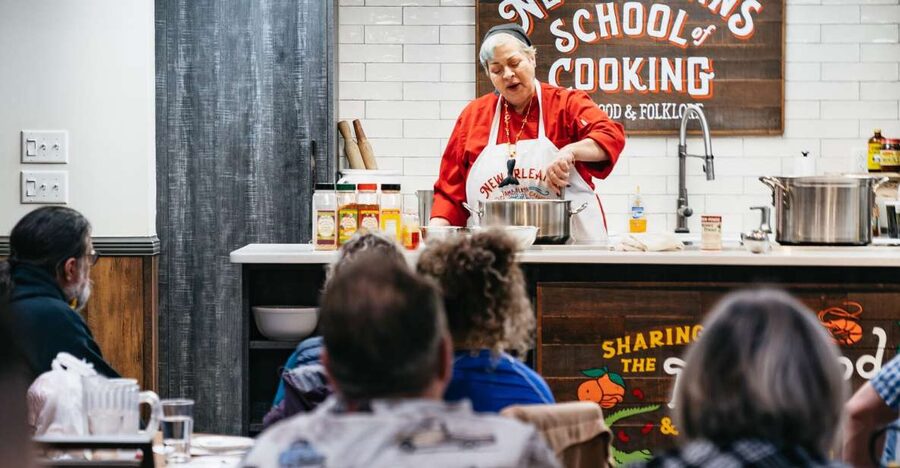
- Watch a full Cajun and Creole meal come together: Menus can include gumbo, jambalaya, red beans and rice, shrimp Creole, crawfish etouffee, pralines, and more.
- Expect a demonstration, not hands-on cooking: The chef cooks while you follow the steps, hear stories, and ask questions.
- Eat a three or four-course lunch: The food is served during or after the demonstration, with Dixie beer, iced tea, and lemonade included.
- The setting has real New Orleans character: Class takes place inside a renovated molasses warehouse built in the early 1800s, in the French Quarter.
- Chef personalities shape the class: Instructors such as Austin, Lynn, Eric, Dianne, Harriet, and Chef T have been praised for humor, clear explanations, and local food knowledge.
- Plan for a filling meal: Portions can be large, so avoid scheduling a big lunch immediately afterward.
Inside the old molasses warehouse
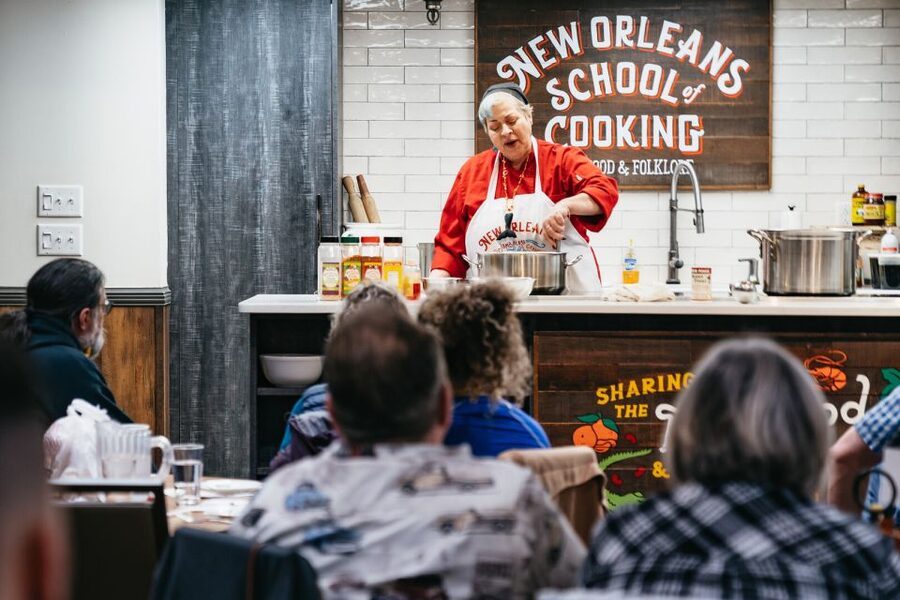
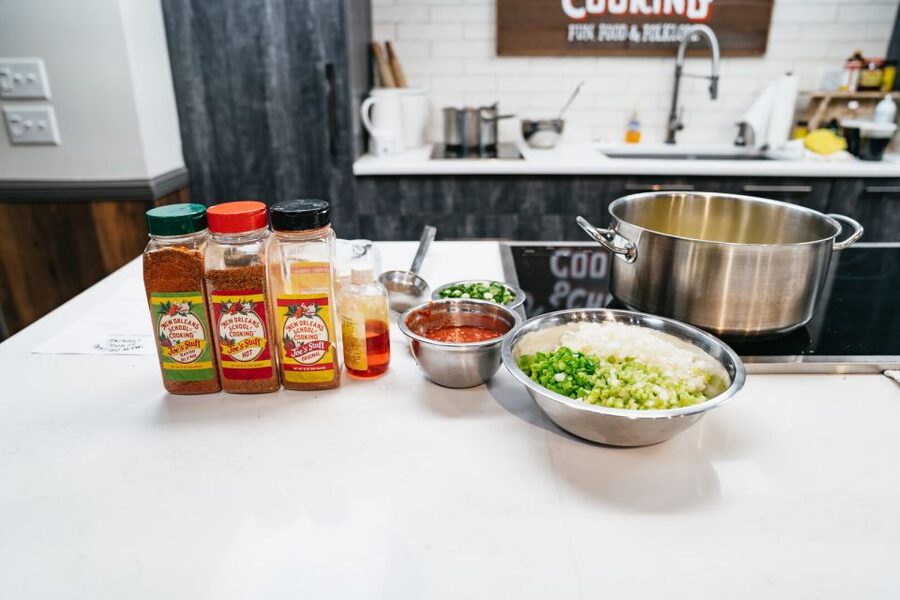
You check in at the register inside the New Orleans School of Cooking General Store. The store is part of the experience, not merely a place to wait. It carries locally sourced products and the school’s well-known Joe’s Stuff Creole Seasoning, a useful souvenir if you want to try Louisiana cooking at home.
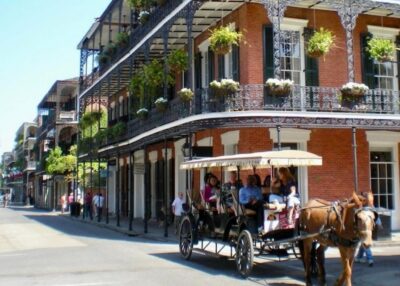
The class takes place in a renovated molasses warehouse built in the early 1800s. That setting gives the lesson more character than a plain modern classroom. You are in the French Quarter, surrounded by the city’s food and music culture, yet the focus stays on the cooking rather than on a long walking tour.
Arrive with enough time to check in and look around the shop. You receive a coupon for the general store at the end, so you can save your browsing until after the meal and decide what is worth packing home.
More Cooking Classes in the USA:
- New Orleans Demonstration Cooking Class with Meal
★ 5.0 · 3,000 reviews - New Orleans Hands-On Cooking Class with Meal
★ 5.0 · 1,183 reviews - Undiscovered Charleston: Half Day Food, Wine & History Tour with Cooking Class
★ 5.0 · 948 reviews
What the chef actually does
The chef prepares the menu in front of the class and explains the ingredients, cooking methods, and background of each dish. You watch the process from start to finish, with chances to ask questions along the way.
That distinction matters. The experience is marketed as a cooking class, but it is best understood as a cooking demonstration with lunch. Several people booked it expecting to chop, stir, or cook themselves. If that is what you want, this may not be the right format. If you prefer to sit back, listen, and eat, the arrangement is easy and enjoyable.
The instructors bring plenty of personality. Austin has been praised for high energy and humor. Lynn combines jokes with clear explanations, while Eric has been singled out for entertaining presentations and strong food. Dianne, also known as Gumbo Marie, brings an especially personal connection to the dishes and their background. Chef Harriet has been described as lively, warm, and good at pausing to answer questions.
The instructor changes, so you should not book expecting one particular chef unless the current schedule confirms it. The changing personalities are part of the appeal, but the tone and teaching style may differ from one class to another.
The food and the changing weekly menus
The menu depends on both the day and the start time. That is important if you have your heart set on a particular dish.
The 10 a.m. class offers the broadest selection of menus. On Saturday, Sunday, and Wednesday, the meal includes gumbo, jambalaya, bread pudding, and pralines. Monday brings gumbo, red beans and rice, pecan pie, and pralines. Tuesday pairs gumbo and jambalaya with bananas Foster and pralines.
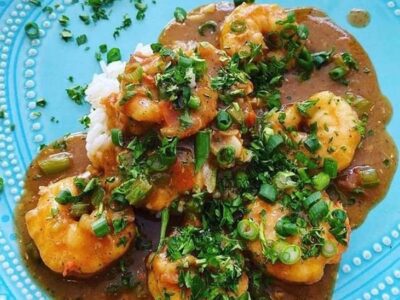
Thursday changes direction with corn and crab bisque, shrimp Creole, bananas Foster, and pralines. Friday offers crawfish etouffee, shrimp and artichoke soup, bread pudding, and pralines.
The 2 p.m. class has its own pattern. Saturday features crawfish etouffee, shrimp and artichoke soup, and pralines. Sunday and Tuesday include corn and crab bisque, chicken etouffee, and pralines. Monday, Thursday, and Friday bring gumbo, jambalaya, and pralines. Wednesday offers gumbo, chicken Creole, and pralines.
This variety is a real benefit for repeat visits, but it makes checking the date essential. A morning booking is not simply the same class at an earlier hour. The dishes can be quite different.
You receive a three or four-course meal, depending on the menu. The food is not a small tasting plate. One family with three teenagers found the servings large enough that they advised avoiding a meal right before or right after the class. I would treat this as lunch, especially for the 10 a.m. session.
Gumbo, jambalaya, and the story behind them
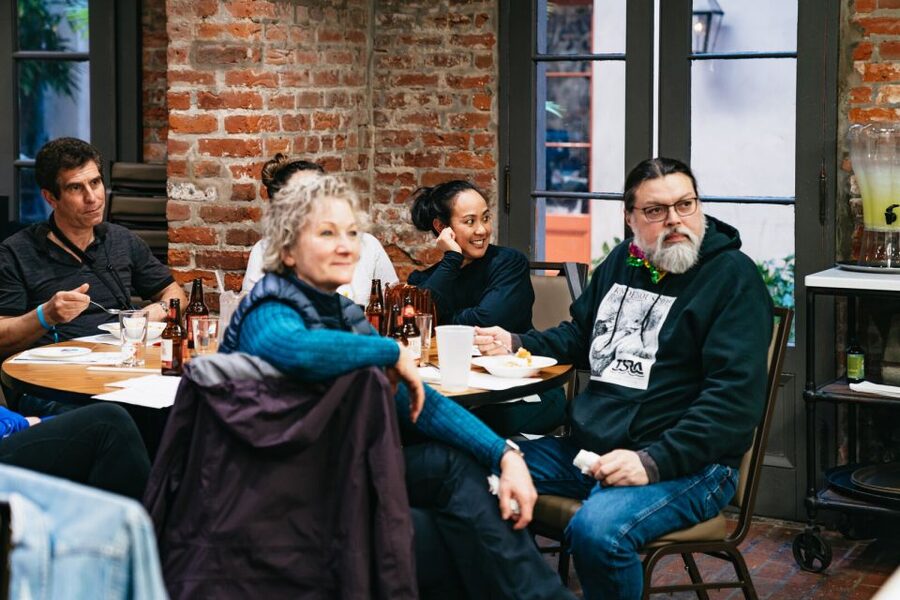
Gumbo is often the star of the class. It appears on many menus, and several instructors have used it to explain both cooking technique and local food culture. The lesson can show how a dish develops layers of flavor and why preparation choices matter.
Jambalaya gives you another view of Louisiana cooking, with a hearty rice-based dish that works well in a demonstration format. You can watch the chef explain the process without needing to manage several pots yourself.
The class also helps separate Cajun and Creole traditions without treating them as simple labels. You learn how food, migration, family cooking, local ingredients, and New Orleans history connect. The goal is not an academic lecture. It is a lively food lesson, with the chef using stories and folklore to make the background easier to remember.
That combination is one of the strongest parts of the experience. You do not just learn that a dish is associated with New Orleans. You hear why it developed, how it fits into local culture, and how to approach it in your own kitchen.
Same region, a different dish to learn:
- Hands-on Cajun Roux Cooking Class in New Orleans
★ 5.0 · 356 reviews - Hands-On Hawaiian Imu Cooking and Cultural Dining Experience
★ 5.0 · 95 reviews - Hands-on Cooking Class in Charleston
★ 5.0 · 83 reviews - Farm to Table Cooking Class at Kulaniapia Falls
★ 4.5 · 36 reviews
Local drinks and a sweet finish
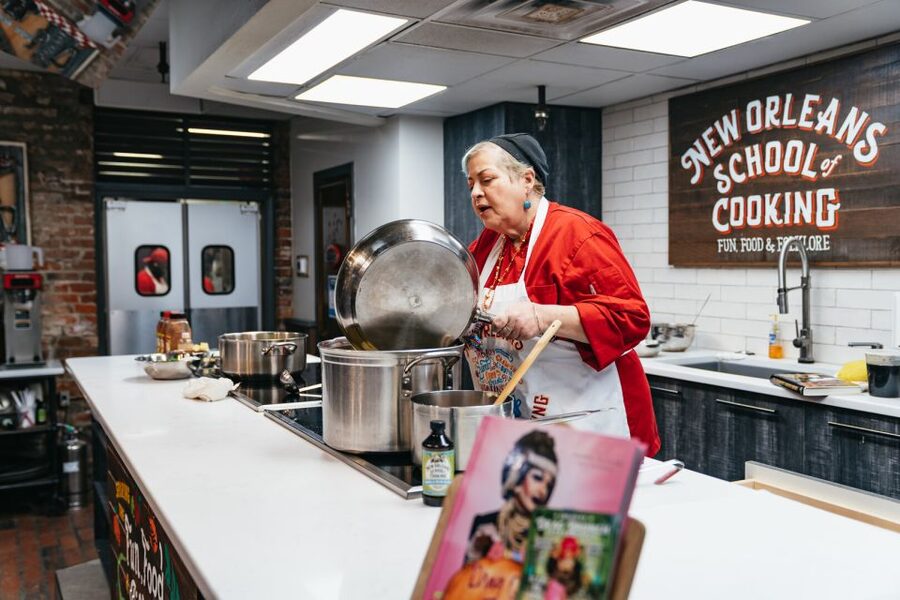
Dixie beer, iced tea, and lemonade are included. The drinks help turn the demonstration into a proper meal rather than a cooking lecture with a sample at the end.
The 10 a.m. class also includes hot coffee. That small detail matters if you are starting early, especially after a morning walk through the French Quarter.
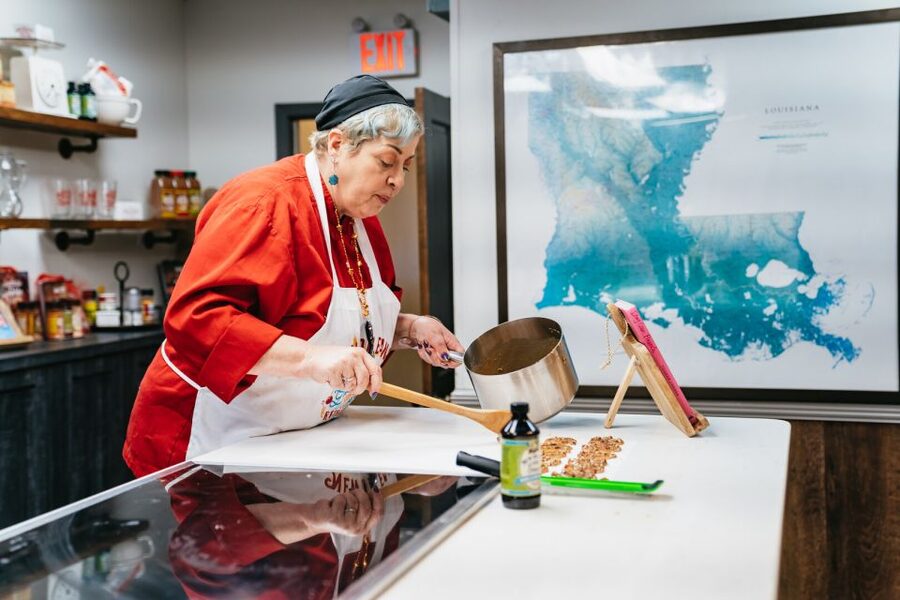
Dessert changes with the day, but pralines appear on every listed menu. Bread pudding, pecan pie, and bananas Foster also appear at different sessions. The pralines are especially useful as a lesson in classic New Orleans sweets, and they travel better than many of the hot dishes if you want a taste to share later.
Outside drinks are not allowed. The included beverages are enough for the class, so you do not need to bring your own.
Why the history adds real value
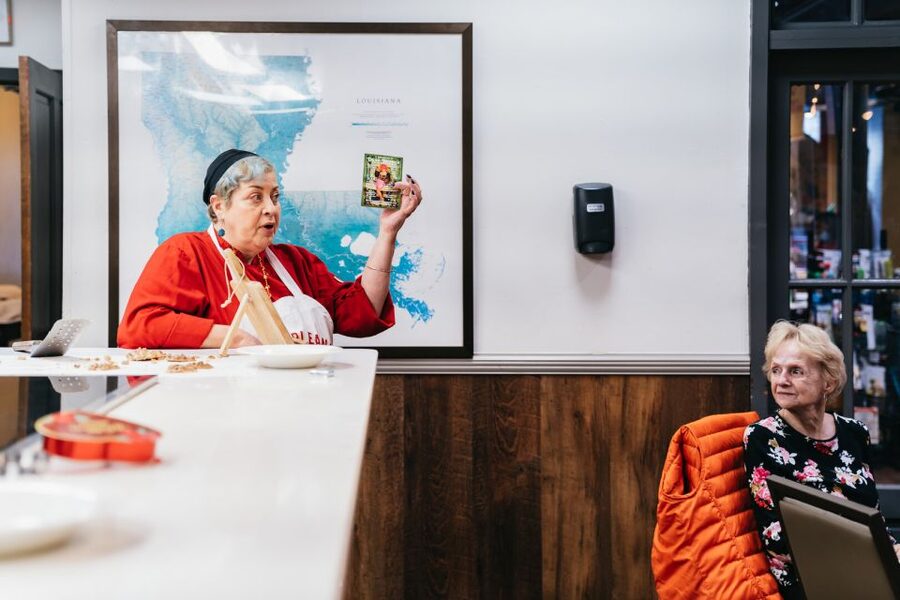
You can find gumbo and jambalaya in restaurants all over New Orleans. The reason to book this experience is not simply access to those foods. It is the chance to understand what you are eating before you order it again elsewhere.
The chef explains how food and culture developed together in the region. Stories about local people, customs, and cooking traditions give the dishes a clearer place in the city’s story. Several instructors have also welcomed questions beyond the exact recipe, which makes the class feel more like a conversation than a scripted show.
I especially like this for a first visit to New Orleans. It gives you useful background early in your stay, so later meals have more meaning. You may notice the difference between dishes described as Cajun or Creole, and you will have a better idea of what to order when a menu offers etouffee, bisque, or red beans and rice.
The tone is generally relaxed and funny. That helps the information stick, though a lively room can create a practical issue: one person found it hard to hear everything and suggested a microphone. If hearing every word matters to you, sit near the chef and avoid choosing a distant seat if seating is flexible.
Recipes and the general store coupon
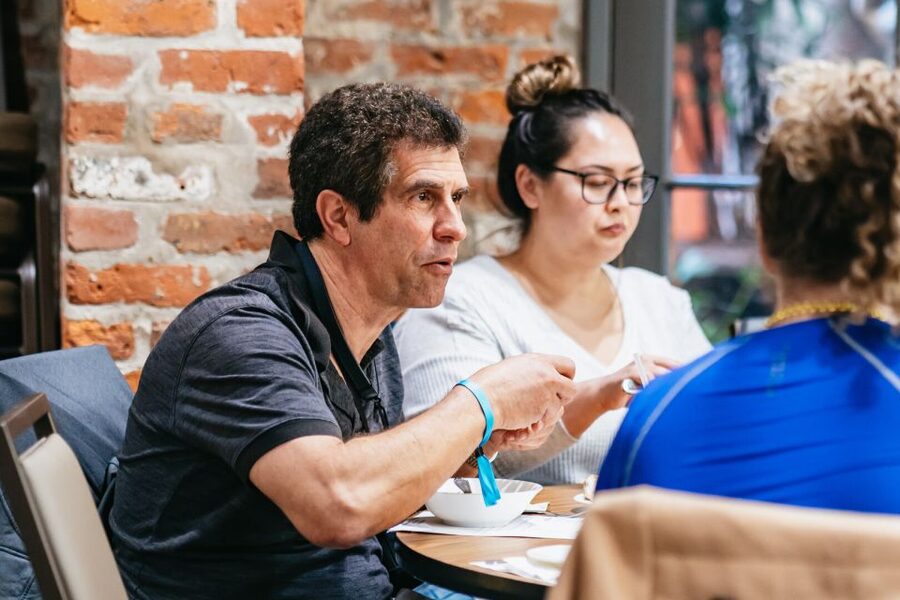
You receive copies of the recipes to take home. This is a better souvenir than a vague memory of a good lunch because the recipes give you a clear starting point for recreating the dishes.
The class does not turn you into a Louisiana chef in two hours. You will still need to buy ingredients, manage cooking times, and adjust seasoning. But you leave with methods and proportions that can help you make gumbo, jambalaya, pralines, or another dish from the menu.
The general store coupon gives you a chance to buy seasoning and other local products after the class. Joe’s Stuff Creole Seasoning is the signature item associated with the school and has been a popular take-home purchase. Use the coupon as a chance to buy something you will actually cook with, rather than filling your suitcase with novelty goods.
Timing, price, and practical planning
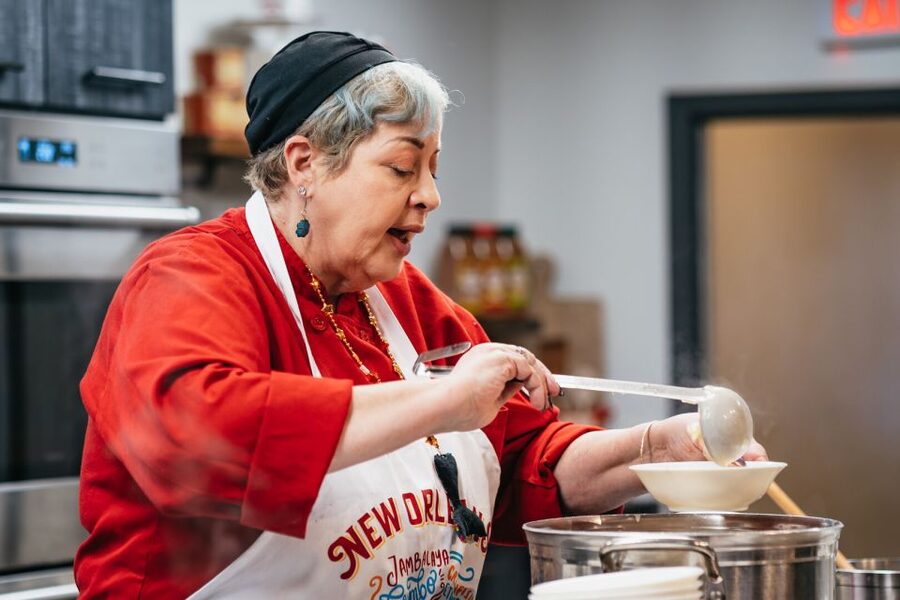
The price is $40 per person, with a duration listed as two hours to 150 minutes. For that cost, you receive a chef-led food lesson, a three or four-course meal, local drinks, recipes, and a store coupon.
That is good value if you would otherwise pay for lunch and want a cultural activity at the same time. The value is strongest for people who enjoy food stories and generous portions. It is less compelling if you only want a hands-on class, since the experience does not provide individual cooking practice.
You can choose a 10 a.m. or 2 p.m. class, depending on the date and menu. The morning session works well as an early lunch and includes hot coffee. The afternoon session can replace a late lunch or early dinner, but remember that the serving is substantial.
There is no hotel pickup or drop-off. You make your own way to the New Orleans School of Cooking General Store in the French Quarter and check in at the register. The activity is wheelchair accessible.
You can cancel up to 24 hours before the start time for a full refund, and the reserve-now, pay-later option helps if you are still arranging your New Orleans plans. Check the exact start time and menu before booking because both the schedule and dishes matter.
Who should book this New Orleans cooking class
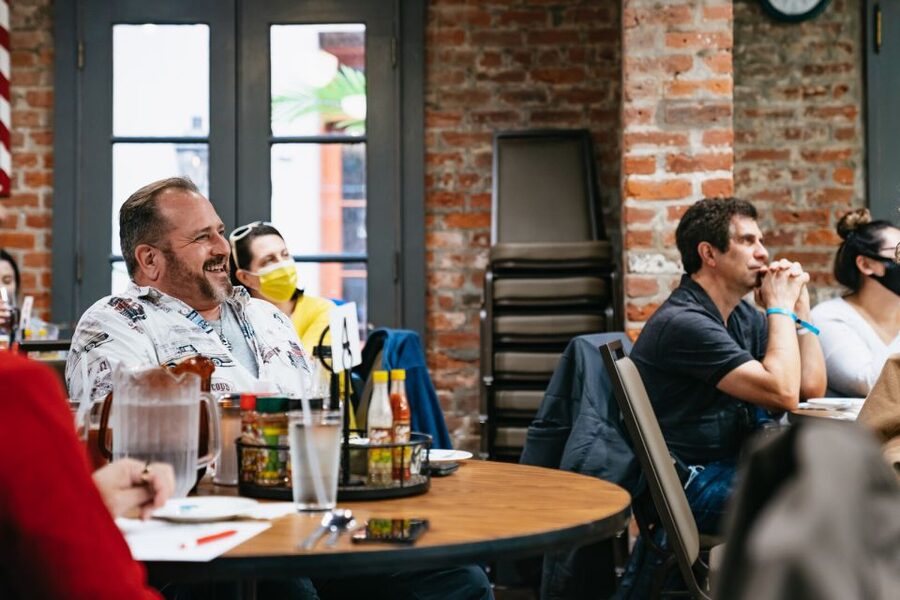
I would recommend it to food-minded visitors, families, couples, and small groups who want a seated activity with plenty to eat. It also works well for teenagers, since the humor, stories, and meal make the session easier to enjoy than a formal history talk.
It is a good choice if you want to learn without spending an entire day in a kitchen. You can listen, ask questions, taste the food, and then continue exploring the French Quarter.
People with seafood allergies should raise the issue before or at the start of class. One class accommodated shellfish-free dishes, but the menus often include shrimp, crab, crawfish, or other seafood. Do not assume every date will have the same alternatives.
Vegetarians should also ask about the day’s menu. A vegetarian alternative has been prepared successfully, but the posted menus are built around dishes that may include meat or seafood. Confirming your needs in advance is the sensible move.
Should you book it?
Book this experience if you want New Orleans food with context, a filling meal, and a chef who can make the lesson lively. The setting, changing menus, local drinks, recipes, and general store coupon add up to a strong $40 experience.
Skip it if your main goal is hands-on cooking. You will not spend the session chopping vegetables or preparing your own pot of gumbo. For everyone else, especially first-time visitors, it is an easy and useful introduction to Cajun and Creole cooking, with enough food to count as lunch and enough background to improve the rest of your dining time in the city.
FAQ
Is this a hands-on cooking class?
No. The chef prepares the dishes while you watch, listen, and ask questions. You eat the finished food and receive recipe copies to use at home.
Where does the class meet?
Enter the New Orleans School of Cooking General Store in the French Quarter and check in at the register.
What food might be served?
The menu changes by day and time. Dishes can include gumbo, jambalaya, red beans and rice, crawfish etouffee, chicken Creole, shrimp Creole, corn and crab bisque, bread pudding, bananas Foster, pecan pie, and pralines.
Are drinks included?
Yes. Dixie beer, iced tea, and lemonade are included. Hot coffee is included with the 10 a.m. class only.
Are recipes provided?
Yes. You receive copies of the recipes used in the class, along with a coupon for the general store.
Can I cancel or pay later?
You can cancel up to 24 hours in advance for a full refund. A reserve-now, pay-later option is also available.
Newest classes around the USA
- Hands-on Cooking Class in Charleston★ 5.0 · 83 reviews
- Sushi Making Cooking Class at a Local Brewery in Charlotte★ 5.0 · 2 reviews
- Authentic Asian Cooking Class in NYC (Includes 4-Course Meal)★ 5.0 · 8 reviews
- Baumkuchen Campfire Baking Class★ 5.0 · 3 reviews
- Hands-On Hawaiian Imu Cooking and Cultural Dining Experience★ 5.0 · 95 reviews
- Farm to Table Cooking Class at Kulaniapia Falls★ 4.5 · 36 reviews
- French Cooking Class in Baltimore (Includes 3-Course Meal)★ 5.0 · 2 reviews
- Private Atlanta Cooking Class with a Fun Local Chef Naina★ 5.0 · 2 reviews
New Orleans Cooking Classes, compared.
New Orleans Demonstration Cooking Class with Meal
Read our review →
New Orleans Hands-On Cooking Class with Meal
Read our review →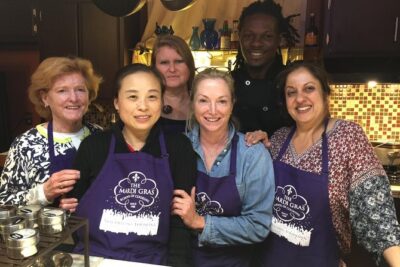
Hands-on Cajun Roux Cooking Class in New Orleans
Read our review →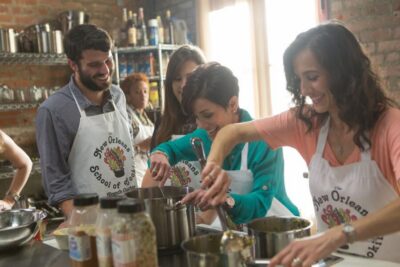
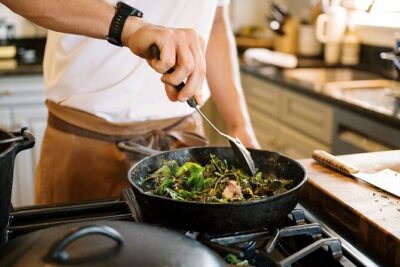
Private New Orleans Cajun Cooking Class with a Local Courtland
Read our review →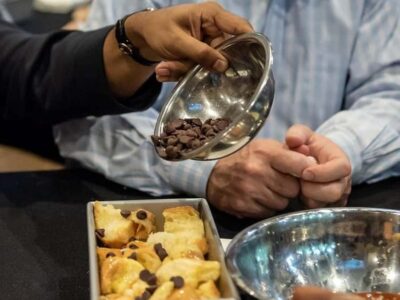
Browse the lists this tour appears in