
Review · INDIA COOKING CLASSES
Indian Curry 5-Hour Cooking Classes In Mumbai
Mumbai’s best cooking lesson may happen far from a polished restaurant kitchen. This private class brings you into a local home, where you learn dishes such as chicken tikka, fish curry, biryani, and chapati, then sit down to eat what you made. The setting gives you a useful look at daily Indian life, not just a stack of recipes.
I like the one-to-one attention and the chance to adjust the menu to your taste. I also like that the experience may include a look at a pottery area, where you can watch pots being shaped by hand. The main consideration is time: about three of the five hours are used for cooking, while the rest covers pickup and drop-off.
Key points at a glance
- Cook in a local home: Learn Indian food in a real household kitchen rather than a formal culinary studio.
- A flexible Indian menu: Possible dishes include chicken tikka, Hyderabadi biryani, fish curry, egg curry, khichdi, chapati, cumin rice, and a sweet.
- Private instruction: Only your own group takes part, allowing more direct help from the chef or instructor.
- Lunch is part of the lesson: Sit with your host and eat the dishes you prepared.
- A pottery stop may be included: See local potters shape useful and decorative pieces by hand.
- Pickup and drop-off included: The full experience lasts about five hours, with roughly three hours devoted to cooking.
Cooking Indian food inside a Mumbai home
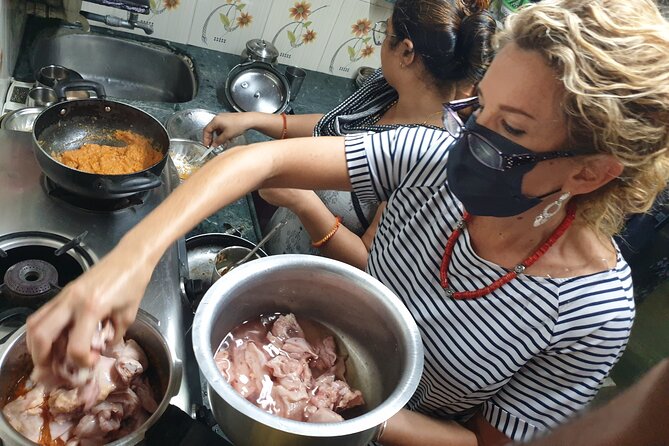
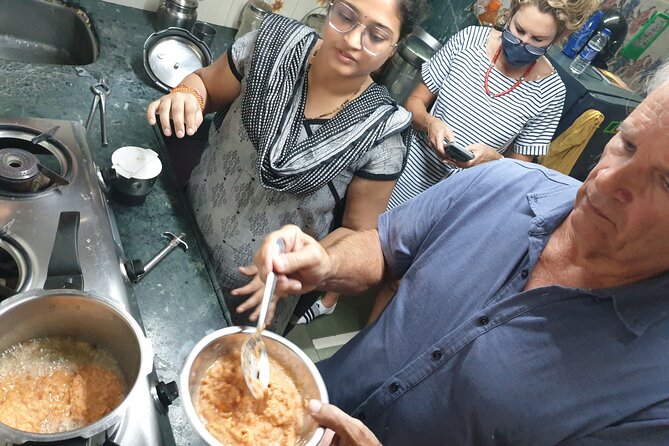
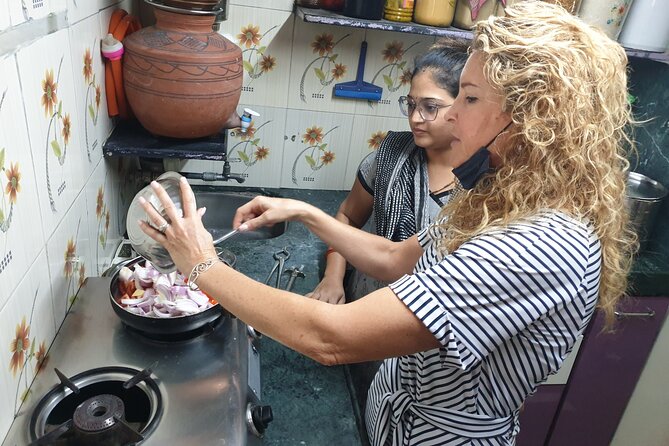
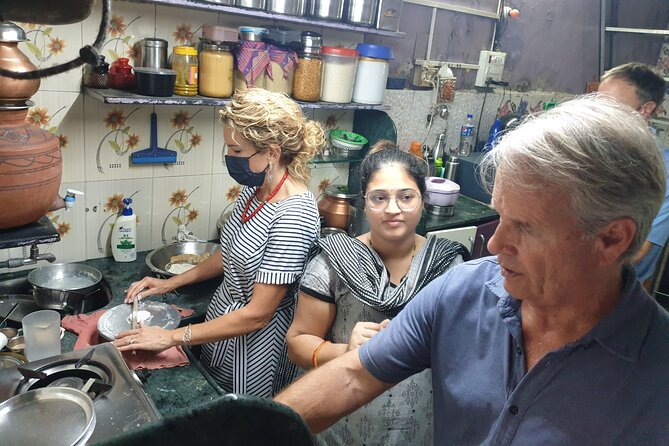
The heart of this experience is simple: you enter a local home, meet your instructor and host family, and cook together. That changes the tone from a demonstration to a shared household activity. You are not only watching someone prepare curry. You are learning how ingredients, heat, timing, and family food traditions fit together.
The cooking portion lasts about three hours. That is enough time to work through several dishes without turning the class into a rushed parade of ingredients. Your exact menu is sent to you, and the available choices cover a broad range of Indian cooking.
You might prepare chicken tikka, fish curry, egg curry, Hyderabadi biryani, khichdi, chapati, cumin rice, and a sweet. Another menu may include fewer dishes or a slightly different combination, so check the menu before booking if you have strong preferences. The opportunity to customize the food to your taste is useful, especially if you prefer vegetarian dishes, milder spice, or a particular regional style, though the available options should be confirmed in advance.
More Indian Classes in India:
- Indian Cooking Class in an Authentic Local Home – Learn 6 Dishes
★ 5.0 · 195 reviews - New Delhi: Indian Cooking Class in a Local Home
★ 5.0 · 65 reviews - Mumbai: Indian Cooking Class & Cultural Delights
★ 5.0 · 38 reviews
What the three-hour cooking lesson can teach you
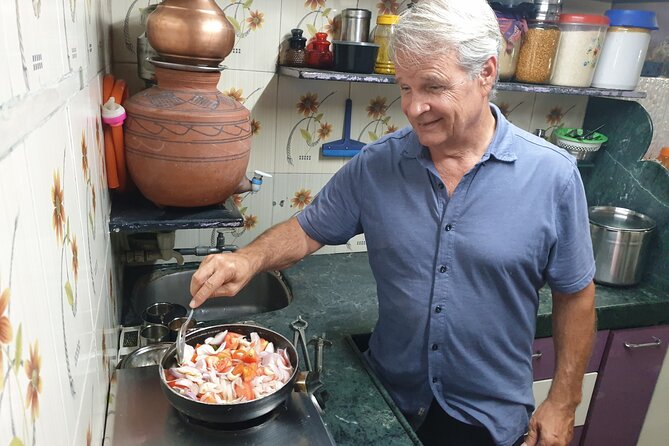
This is not presented as a professional chef-training course. It is a practical introduction to Indian home cooking, guided by a local instructor who can explain methods and ingredients as you work.
A dish such as chicken tikka gives you a look at seasoning and preparation before cooking. Fish curry shows another side of Indian food, with its emphasis on sauce and spice. Biryani brings in rice, fragrant seasoning, and careful timing, while chapati offers a hands-on task that is easy to understand but takes practice to do well.
Khichdi and cumin rice are useful additions because they show how everyday comfort food can be just as important as celebratory dishes. Egg curry can be a good choice if you want a familiar ingredient prepared in a distinctly Indian way. A sweet at the end rounds out the meal, though the specific dessert is not stated.
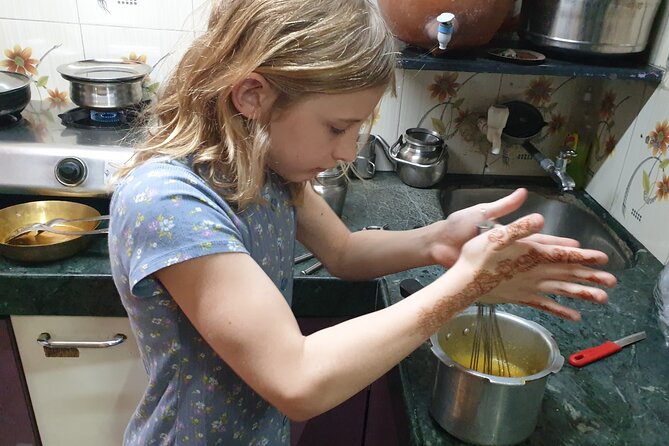
The value here is the chance to ask questions while the food is being made. You can see how your instructor handles the ingredients and adjust your own technique with immediate help. Since the activity is private, you are not competing for a place at the counter or trying to hear a lesson over a large group.
Meeting the instructors and hosts
Several instructors and hosts are associated with this experience, including Deepika, Rahul, Hardik, Harsha, Nashrah, and Noory. The exact person leading your class may vary, so you should not book expecting one particular instructor unless the provider confirms it.
Deepika is identified as a teacher, while Rahul, Hardik, and Harsha appear in the hosting and cooking sessions. Nashrah and Noory have also led classes. The consistent thread is a family-style setting, with the hosts helping you prepare food and explaining local life as you go.
One useful point is the language experience. The class is described as having no language barrier, which matters in a hands-on lesson where instructions need to be clear. Still, cooking terms and spice names can be unfamiliar, so asking questions as you work is part of the fun and part of the learning.
The mood may be social and informal. People may come and go within the household, and the atmosphere can feel more like being welcomed into family life than attending a fixed class. If you want a quiet, highly structured cooking school with polished equipment and exact course timings, this may feel loose. If you want contact with ordinary home life, that informality is one of its best features.
Lunch with the people who taught you
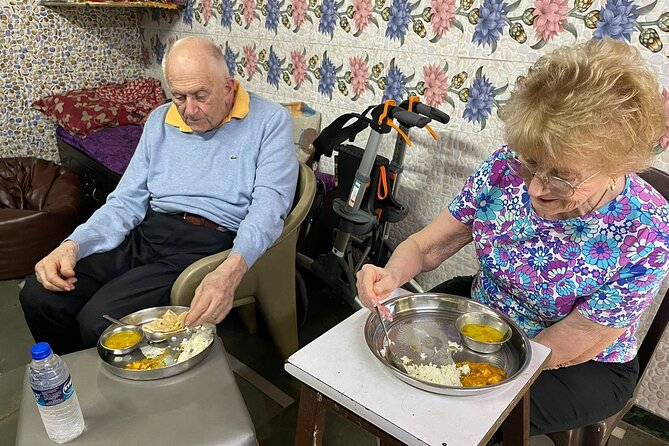
After the preparation, you eat the food you have made with your host. This is more than a practical ending to the class. Sitting down together gives you time to talk, compare flavors, and understand how the dishes fit into a home meal.
The lunch also helps you judge the cooking lesson honestly. You can taste the balance of spice, see how the rice turned out, and notice the difference between a dish prepared under instruction and one served in a restaurant. If you are cooking with other members of your private group, the meal gives everyone a shared result to enjoy.
The setting may be modest, and some sessions have taken place in a local neighborhood with slum housing. That can be meaningful, but it also calls for respect. You are entering someone’s home and community, not visiting a staged cultural display. Ask before taking photographs, follow the host’s lead, and remember that the family setting is part of the experience.
The provider also connects its work with Young Cares Foundation, an NGO supporting women and children in Dharavi. The booking responses state that participation helps support this work. If the social purpose matters to you, you can ask the operator how your booking contributes and what current programs it supports.
More Cooking Classes in India:
- Pink City Cooking Class
★ 5.0 · 452 reviews - Five Course Cooking Class & Meal
★ 5.0 · 250 reviews - Veg and Non veg : Private Cooking Class in Delhi home (7 meal)
★ 5.0 · 226 reviews - Durga Cooking Class
★ 5.0 · 159 reviews
Pickup, timing, and the five-hour schedule
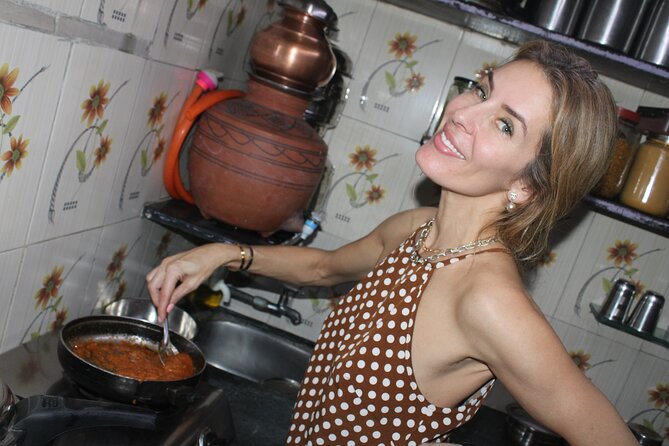
The advertised duration is about five hours, but only around three hours are spent cooking. The remaining two hours are used for pickup and drop-off. This distinction is important when you plan a busy Mumbai day.
Pickup and return transportation are offered from your accommodation, which can save you the trouble of arranging local transport to an unfamiliar neighborhood. It also makes the experience easier if you are traveling with family or carrying shopping bags after the class. The exact driving time will depend on your accommodation and Mumbai traffic, so do not place a fixed sightseeing appointment immediately afterward.
Near public transportation is listed as an additional feature, but the experience is built around pickup and drop-off. Confirm the meeting details when booking, especially if your accommodation is outside the normal pickup area.
The private format is another practical advantage. Only your group participates, so you can spend more time on the dishes you care about and ask questions without holding up a large class. Group discounts are available, which improves the value for couples, families, and friends booking together.
The pottery area and the wider cultural setting
The pottery visit adds a second skill-based activity to the day. You may see local potters make beautiful pots by hand, giving you a quick look at an old practical craft rather than another food stop.
This part should be viewed as an extra, not the main reason to book. The supplied details do not specify how long the pottery visit lasts or whether you make a pot yourself. Expect to watch the process rather than assume you will receive a pottery lesson.
It works well beside the cooking class because both activities show work done by hand. In the kitchen, you shape dough, season food, and build a meal. In the pottery area, you see raw material turned into a useful object. Together, the activities offer a broader view of local skills and daily life.
Is $59 a fair price?
At $59 per person, the price includes a private cooking class, food, lunch, and roundtrip transportation from your accommodation. You are paying for access to a home setting and personal instruction, not just a meal.
The value is strongest if you would otherwise pay separately for a cooking lesson, a meal, and transport across Mumbai. A private class also usually costs more than a large group demonstration, so the price makes more sense for two or more people who want direct help.
The calculation is less attractive if you only want to eat Indian food or if you are looking for a full five hours of activity. About two hours may be spent in transit, and the pottery portion is not described in detail. I would book this for the home access, instruction, and personal contact rather than for the length alone.
The activity is often booked around 17 days ahead, so advance planning is sensible. Free cancellation is available until 24 hours before the start time. Inside that window, the cost is not refunded, and changes are not accepted.
Who will enjoy this Mumbai cooking class?
This is a strong choice if you like learning by doing. You will get the most from it if you are willing to handle ingredients, ask questions, and accept that a home kitchen may be less polished than a culinary school.
It suits couples, families, and friends who want a private activity. The group discount can help larger private groups, and the lack of other participants means you can shape the lesson around your interests.
Food lovers will appreciate the range of possible dishes, especially if you want to understand the difference between curry, biryani, flatbread, and rice-based comfort food. The class also suits people who want a cultural meeting rather than a standard sightseeing stop.
It may not suit you if you have limited time in Mumbai, need a guaranteed exact menu, or expect a formal lesson with precise timings. The menu can be customized, but the specific dishes and instructor should be confirmed. Also, anyone with allergies or strict dietary needs should explain those needs before booking.
Practical tips for a better class
Ask for the proposed menu before the day of the activity. This helps you request preferred dishes and flag ingredients you cannot eat.
Wear clothing that is comfortable for cooking and easy to move in. The class takes place in a home, so follow household customs and ask permission before photographing people, food preparation, or private spaces.
Keep your schedule flexible after the class. Mumbai traffic can make the pickup and return portion longer than expected, and the five-hour estimate includes transport.
If you want to remember what you learned, take notes on spice combinations, cooking order, and dough handling. The class is useful precisely because you can carry those methods into your own kitchen later.
Should you book it?
Book this experience if you want a private home-based cooking lesson, a shared lunch, and a direct look at Mumbai family life. The personal instruction, flexible menu, pickup service, and possible pottery visit make it a fuller cultural activity than a restaurant meal.
Think twice if you need a tightly timed five-hour program, a guaranteed named chef, or a fixed list of dishes. The most rewarding part is the informal home setting, and that also means the experience may feel less polished and less predictable than a professional cooking school.
For food-focused visitors with half a day to spare, $59 is a reasonable price for cooking, eating, transport, and time with a local host. I would confirm the menu, pickup area, dietary needs, and instructor before paying, then arrive ready to cook rather than simply watch.
FAQ
How long does the Indian cooking class last?
The full activity lasts about five hours. Roughly three hours are used for cooking, while about two hours cover pickup and drop-off.
Is pickup and drop-off included?
Yes. Roundtrip transportation from your accommodation is offered as part of the experience.
Is this a private activity?
Yes. Only your own group participates in the cooking class.
What dishes might I learn to make?
Possible dishes include chicken tikka, Hyderabadi biryani, khichdi, fish curry, egg curry, chapati, cumin rice, and a sweet. The menu is sent to you and may be customized to your taste.
Do I eat the food I prepare?
Yes. You share lunch with your host and eat the dishes prepared during the class.
Is the pottery visit included?
The activity provides an opportunity to explore a pottery area and watch potters make pots by hand. The available details do not specify how long this part lasts.
What is the cancellation policy?
You can cancel at least 24 hours before the local start time for a full refund. Cancellations or changes made within 24 hours are not accepted and are not refunded.
Newest classes around India
- Chennai Super Market Tour and Cooking Class with a Fun Local★ 5.0 · 9 reviews
- Private tour to learn Traditional Indian Art, craft & Cooking★ 5.0 · 4 reviews
- Traditional Chettinad Cooking Class in a Local Home near Chennai★ 4.5 · 12 reviews
- Neighborhood Market Tour & South Indian Cooking Class in Chennai★ 5.0 · 7 reviews
- Chennai Dosa Making Class & Home-Dining Experience with Jyashree★ 5.0 · 8 reviews
- Traditional Gowda Cooking Class and Meal in a Bangalore Home★ 5.0 · 31 reviews
- Discover Bangalore’s Cuisine: Private Half-Day Cooking Experience★ 5.0 · 3 reviews
- Private South Indian Cooking Class in Bangalore with a Local★ 5.0 · 11 reviews
India Cooking Classes, compared.
Veg and Non veg : Private Cooking Class in Delhi home (7 meal)
Read our review →
Indian Cooking Class in an Authentic Local Home – Learn 6 Dishes
Read our review →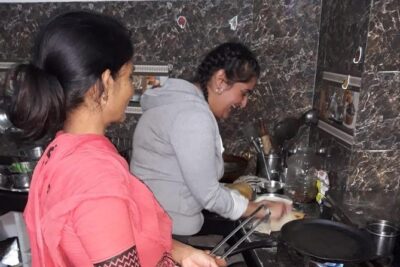
Private Guided Cooking Workshop Experience in Jodhphur
Read our review →
Jaipur Market Tour & Vegetarian Rajasthani Home Cooking Class
Read our review →
Cooking Class in Jaipur – Family Experience with Meal & Transport
Read our review →Browse the lists this tour appears in