
Review · MARRAKECH COOKING CLASSES
Cooking Classes Farm to Table Marrakech
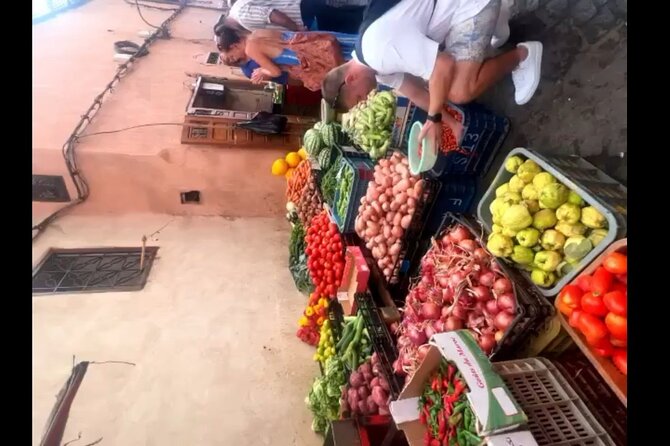
The best part of this Marrakech cooking class happens before the first onion is chopped. You walk through a local market with your guide, choose vegetables, meat, herbs, fruit, and spices, then take those ingredients to a quiet farm setting outside the medina. It gives you a useful look at Moroccan food from market stall to lunch plate.
I like the small maximum group of 12, which leaves room for questions and hands-on work. I also like the choice built into the meal: past classes have included several tajines, couscous, fresh bread, and as many as nine Moroccan salads. The one thing to keep in mind is that this is a half-day commitment, and the market portion can feel busy before the calm of the farm.
Key points to know before booking
- Market shopping comes first: You help choose the fresh produce, meat, poultry, herbs, and spices used later in the meal.
- Chef Abdel leads the class: He explains Moroccan ingredients, preparation methods, and the role of spices such as ras el hanout and preserved lemon.
- The cooking is hands-on: You prepare your own tajine rather than simply watching a demonstration.
- The farm changes the mood: Tea, sweets, trees, vegetation, and an outdoor kitchen offer a quiet break from Marrakech’s medina.
- Small groups matter: The class accepts no more than 12 people, with group discounts available.
- Plan around five hours: You get a substantial cooking session while keeping the rest of your day free.
From Koutoubia to a Marrakech food market
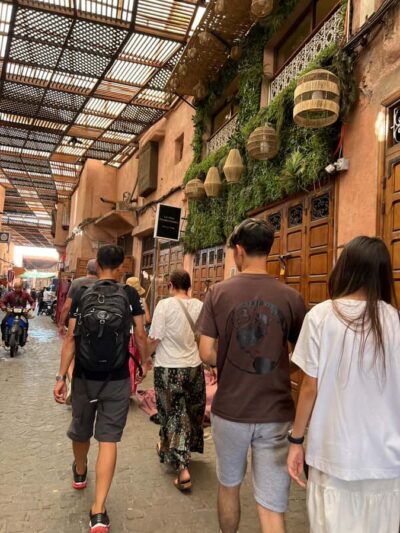
The experience begins at Koutoubia in Marrakech’s old city. From there, you meet your guide and walk through the medina’s alleys toward a local market. Pickup is offered, but the stated meeting point is Koutoubia, so check the exact arrangement when you book.
This opening walk is not filler. It helps you see Moroccan cooking as a daily practice rather than a list of restaurant dishes. You look at vegetables, meat, poultry, fruit, fresh herbs, and spices with the meal in mind. You can take photos and videos along the way, though the market is a working place, so keep your camera use polite and unobtrusive.
The market also gives you a chance to ask practical questions. Why use one spice blend instead of another? How do preserved lemons affect a tajine? Which vegetables hold up during a long, slow cook? Chef Abdel and his team use the shopping trip to explain these choices before you begin cooking.
I find this more useful than a class that starts with bowls of premeasured ingredients. You see the raw materials and learn how they are selected. The tradeoff is that the market can be crowded and lively, so anyone hoping for a quiet start should expect a little sensory overload.
More Farm Cooking Classes in Morocco
- Organic Moroccan Cooking Class At Secret Berber Garden CT
★ 5.0 · 147 reviews - Authentic Moroccan Cooking Class in a Farm in Marrakech
★ 5.0 · 64 reviews - Moroccan Cooking Class: Farm-to-Table Tagine
★ 5.0 · 50 reviews
The farm kitchen provides a welcome change
After shopping, the group heads to the farm cooking site. The exact transfer details are not fully spelled out, but the experience includes a move from the medina to a country garden setting. That shift is part of the appeal. Marrakech can be noisy and tightly packed, while the farm offers trees, vegetation, and open-air cooking space.
You begin with Moroccan tea and sweets before touring the farm. This pause gives you time to settle in and look around. The setting is not just a backdrop for photographs. It gives the class a relaxed rhythm, with food preparation taking place outdoors and lunch enjoyed in the same peaceful surroundings.
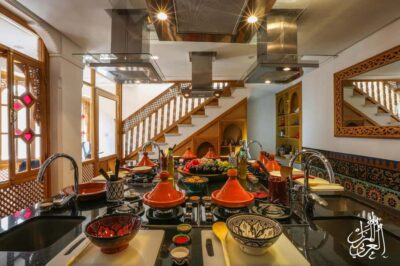
The cooking area has been described as a beautiful outdoor kitchen, with some dishes prepared over coals. That detail matters. Moroccan cooking depends on patient heat, layered seasoning, and the way ingredients soften together. Working in this setting makes the food feel connected to the place instead of reduced to a quick city demonstration.
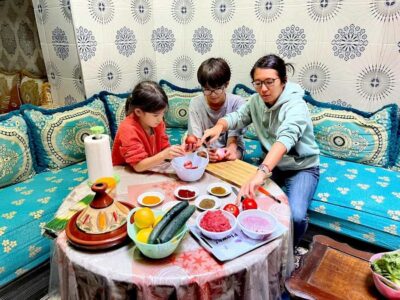
The farm is also where the class becomes social. Some tasks are individual, such as preparing your own tajine, while other dishes are made together. Fathima assists behind the scenes, helping the kitchen run smoothly while Chef Abdel teaches.
What you actually cook during the five hours
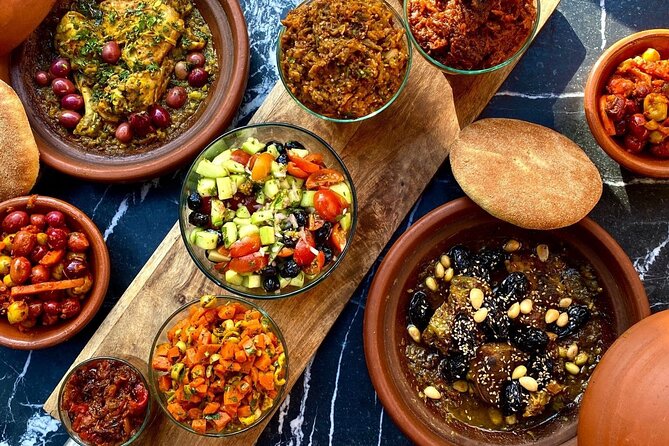
The advertised focus is a traditional Moroccan tajine. You wear a provided apron, prepare the ingredients, and cook the dish with your own hands. The class is not a watch-and-eat demonstration, so come ready to chop, mix, season, and ask questions.
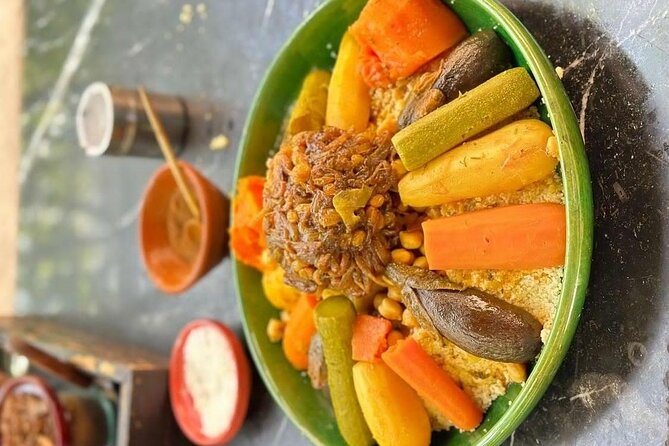
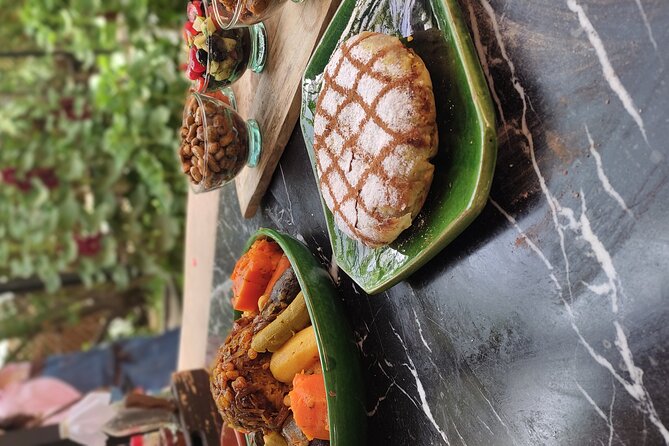
The precise menu can vary. Past sessions have included sweet and savory tajines using chicken, lamb, beef, or vegetables. Couscous, fresh bread, meatballs, and several Moroccan salads may also be part of the meal. One session included four different salads, while another featured nine hot and cold salad dishes.
That variety is one of the strongest reasons to book this instead of taking a class centered on one tajine alone. You get to compare different textures and seasoning styles. A tajine teaches slow cooking and spice balance, while salads show how Moroccan meals use fresh, cooked, pickled, and herb-filled side dishes to create contrast.
If you have a preference for meat, poultry, or vegetarian food, raise it when booking or at the start of the class. The information provided indicates that participants have sometimes chosen between different tajine options, but it does not promise the same menu every day.
The dish that receives the most attention is the tajine. That makes sense. It is one of Morocco’s signature preparations, yet the name refers to both the cooking vessel and the meal cooked inside it. The cone-shaped lid helps return moisture to the dish as it cooks, which suits the slow, gentle method used for many Moroccan recipes.
You also learn how ingredients such as ras el hanout and preserved lemons affect the final result. These are not decorative extras. Ras el hanout can bring warmth and complexity, while preserved lemon adds a salty, sharp note that cuts through rich sauces. The class connects those flavors to actual cooking decisions instead of treating spices as souvenirs.
Chef Abdel turns recipes into a cultural lesson
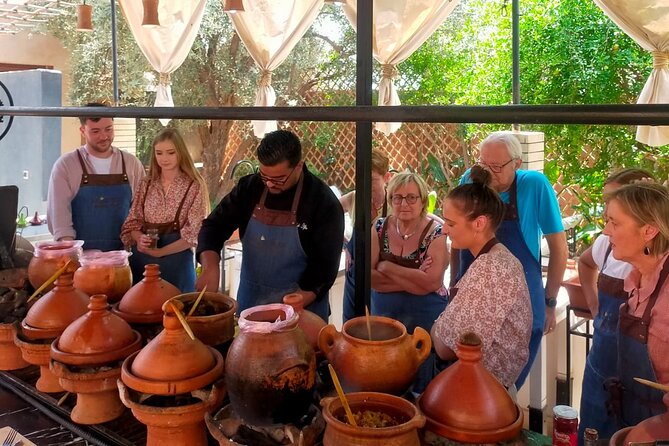
Chef Abdel is described as the main instructor, with Abdelhak also associated with welcoming and guiding the group. The teaching style appears informal but organized. You can ask questions about Moroccan food, preparation, and culture while working at your station.
That combination suits beginners. You do not need to arrive with cooking experience, and you do not need to plan a menu or shop for ingredients. At the same time, people who already cook will find useful details in the methods, spice combinations, and market choices.
Chef Abdel’s English is described as strong, and his approach includes humor as well as instruction. That matters in a class lasting several hours. A teacher who explains clearly and keeps the pace moving can make the difference between an enjoyable lesson and a long wait beside a simmering pot.
The class also provides cultural context without turning the day into a formal lecture. You learn through the market, the ingredients, the outdoor kitchen, and the meal itself. For me, this is the right balance. You leave with recipes and techniques, but also a better sense of how food fits into Moroccan daily life.
More Farm Cooking Classes in Marrakech:
- Marrakech: Authentic Moroccan Cooking Class in a Farm
★ 4.8 · 8 reviews - Half-Day Thai Cooking Class at Organic Farm in Chiang Mai
★ 5.0 · 19,087 reviews - Cooking Class and Lunch at a Tuscan Farmhouse with Local Market Tour from Florence
★ 5.0 · 4,831 reviews - Chiang Mai: Authentic Cooking Class with Market & Farm Visit
★ 4.9 · 4,546 reviews
Eating what you prepared
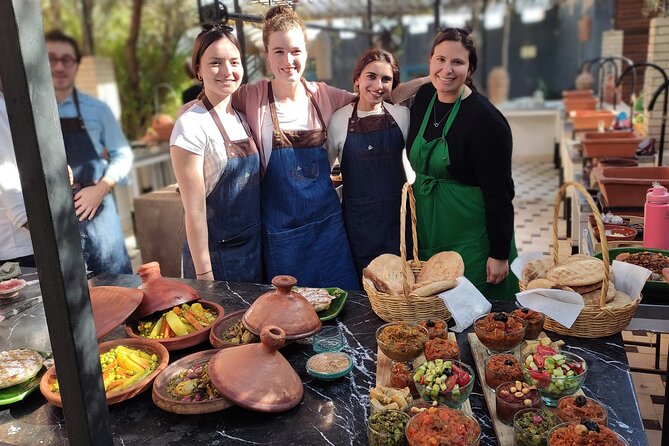
The payoff is a shared meal made from the ingredients you helped select. Portions have been described as generous, which is useful to know because the class is built around lunch rather than a small tasting.
You may eat several dishes, depending on the day’s menu. The spread can include your tajine, couscous, salads, bread, and other preparations made by the group. Moroccan tea and sweets are served as part of the experience, either at the start or around the meal.
The food is likely to taste different from a standard restaurant tajine because you have seen every stage. You know which vegetables were chosen, how the spices were combined, and how long the dish cooked. That connection is a major part of the value.
If you are taking the class with children or teenagers, the format can work well. The experience has been suitable for a family group with children from 8 to 15, and the hands-on tasks give younger participants something real to do. Still, this is a five-hour activity, so a child who dislikes waiting or group cooking may need extra patience.
Is $75.60 a fair price?
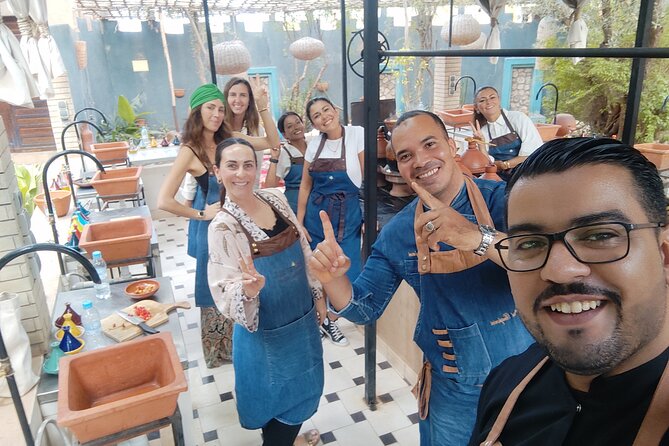
At $75.60 per person, this is not the cheapest meal you will eat in Marrakech. It is also more than a short demonstration in a restaurant kitchen. The price includes a market visit, instruction, ingredients, tea and sweets, the farm setting, and a full meal.
I consider it good value if you want more than a recipe card. You are paying for access to a local food market, a guide who explains the ingredients, a prepared outdoor kitchen, and several hours of instruction. The meal itself is only one part of the experience.
The value is strongest for people who enjoy learning by doing. If you only want to taste Moroccan food, a restaurant will cost less and take less time. If you want to understand how a tajine comes together and bring the method home, the class earns its price.
The average booking lead time is about 37 days. That suggests you should reserve ahead if your Marrakech dates are fixed, especially if you want a particular day or are arranging the activity for a group. Group discounts may help families or larger parties.
Who will enjoy this class most?
I would recommend it to first-time visitors who want a break from the medina without giving up contact with local life. The market walk keeps the experience tied to Marrakech, while the farm provides room to slow down.
It is also a strong choice for anyone who collects recipes while traveling. One participant who paid extra for a private class received recipes by email afterward, though that message initially went to a junk folder. If recipes matter to you, ask how they will be sent and check your spam folder after the class.
Couples, families, and small groups should all find something to like. The maximum of 12 keeps the experience intimate without requiring a private booking. A private option may be available for an added fee, but the supplied details do not state the exact cost or availability on every date.
I would be more cautious if you have limited mobility, since the experience includes walking through medina alleys and moving between the market and farm. No specific accessibility details are provided, so ask the provider before booking if this is important for you.
Timing, weather, and cancellation details
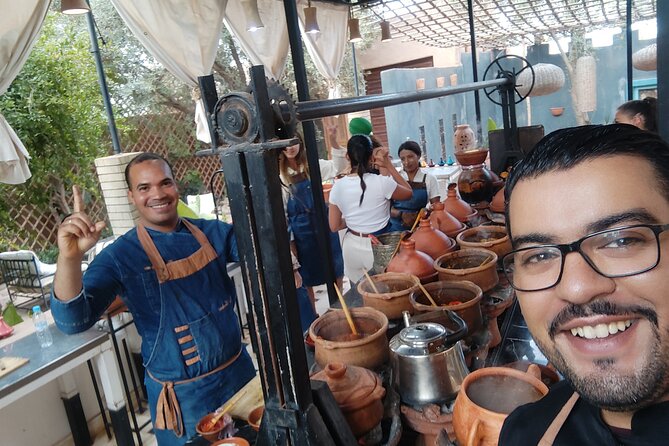
The activity lasts about five hours and ends back at the meeting point near Koutoubia. That leaves the rest of your day open, though a substantial meal and the transfer to the farm make this more than a quick morning stop.
Wear comfortable clothing and shoes suitable for a market walk and an outdoor cooking area. An apron is provided, but ordinary clothes can still pick up food smells or splashes, so avoid wearing anything precious.
The experience requires good weather. If poor conditions force a cancellation, you can choose another date or receive a full refund. You can also cancel for a full refund up to 24 hours before the start time. Cancellations or changes made less than 24 hours ahead are not refunded or accepted, and the provider may also cancel if the minimum number of participants is not reached.
Should you book Farm to Table Marrakech?
Book it if you want to learn Moroccan cooking through the whole chain, from market shopping to a shared meal. The strongest features are the small group, the hands-on tajine preparation, the range of possible dishes, and the calm farm setting led by Chef Abdel and his team.
Skip it if you prefer a short, polished food tasting or if five hours feels too long. For most food-focused visitors, though, the $75.60 price buys a fuller experience than a restaurant meal and leaves you with techniques you can use after Morocco. I would reserve early, confirm the meeting and pickup details, and ask about the menu if you have dietary needs or a preferred tajine.
FAQ
Where does the cooking class begin?
The stated meeting point is Koutoubia in Marrakech, Morocco, inside the old medina area.
Where does the activity end?
The class ends back at the meeting point near Koutoubia.
How long does the experience last?
The cooking experience lasts approximately five hours.
How many people can join the class?
The activity has a maximum of 12 participants.
Is pickup offered?
Yes, pickup is offered, but the listed meeting point is Koutoubia. Confirm the exact pickup arrangement when booking.
What will I cook?
You will prepare a traditional Moroccan tajine. Depending on the day, the class may also include couscous, fresh bread, meatballs, and several Moroccan salads.
Do I visit a market?
Yes. You walk through a local market and help buy fresh vegetables, proteins, fruit, herbs, and spices for the cooking session.
Is an apron provided?
Yes. You are provided with an apron to wear during the class.
Can I cancel for a refund?
You can cancel at least 24 hours before the start time for a full refund. Cancellations made less than 24 hours in advance are not refunded. If poor weather or an insufficient minimum number of participants causes the provider to cancel, you are offered another date or a full refund.
Newest classes around Marrakech
- Marrakech: 3-Hour Open-Air Moroccan Cooking Course★ 4.9 · 74 reviews
- Moroccan Food Cooking Class with a Local Chef in Marrakech★ 4.7 · 90 reviews
- Moroccan cooking class in Marrakech with berber chef★ 5.0 · 16 reviews
- Edgy 8 Dish Private, Fusion Cooking Class, Menu Plan, Market★ 4.9 · 31 reviews
- Marrakech: Moroccan Cooking Class with Local Chef★ 4.6 · 87 reviews
- Marrakesh: Private Cooking Class & Local Market Shopping★ 4.7 · 15 reviews
- Marrakech: Moroccan Cooking Class with Amazing Local Chef!★ 4.9 · 100 reviews
- Marrakech: Cooking Class and Market Visit★ 4.4 · 5 reviews
Marrakech Cooking Classes, compared.

Traditional Moroccan Cooking Class & Market Visit
Read our review →
Moroccan Dishes Cooking Class with a Local Chef
Read our review →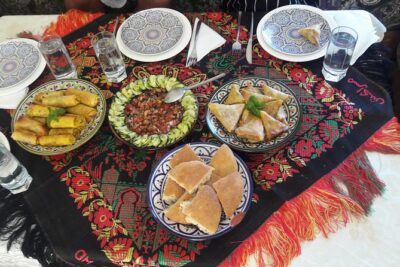
Moroccan Cooking Class & Marrakech Market Visit with Chef Khmisa
Read our review →
Half-Day Cooking Class with Local Chef Laila in Marrakech
Read our review →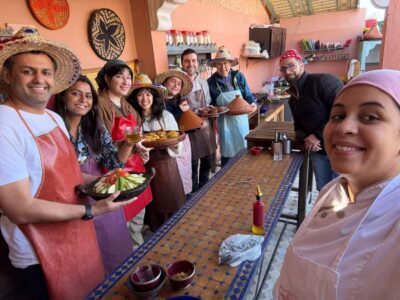
Browse the lists this tour appears in