
Review · LISBON COOKING CLASSES
Lisbon Portuguese Cooking Class with 3-Course Dinner
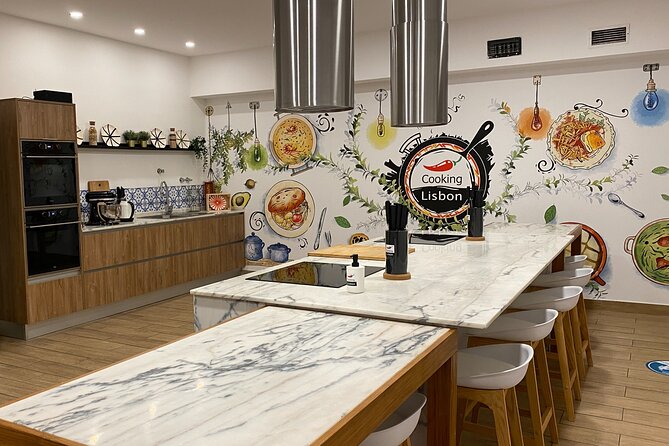
The best part of this Lisbon cooking class is that you do not simply watch someone prepare Portuguese food. You work through a full meal, from starter to dessert, then sit down and eat what the group has made. Portuguese wine and small bites keep the evening social while the dishes come together.
I like the way the class connects food with home cooking, rather than treating Portuguese cuisine as a museum piece. I also like that chefs such as Pedro, Carolina, Giu, and Philipa have been praised for clear instruction, patience, and adapting recipes for allergies. The main caution is group size: the advertised maximum is 12, but one past session was much larger and felt slow, with dinner not served until about 10 pm.
Key points to know before booking
- Four-part menu: Expect a starter, fish dish, meat dish, and dessert, even though the experience is also described as a three-course dinner.
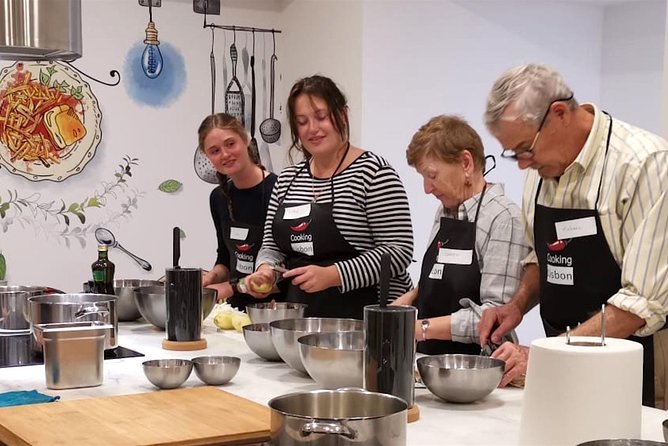
- Hands-on preparation: You take part in chopping, mixing, cooking, and assembling dishes rather than sitting back for a demonstration.
- Portuguese drinks included: Wine, beer, water, juice, and soft drinks are provided, with coffee or tea available as well.
- Dietary needs matter: Tell Cooking Lisbon about allergies, health restrictions, or religious restrictions before the class so the menu can be adjusted.
- Social evening: You cook and eat with a small international group, making this a good choice for couples and solo visitors who enjoy meeting people.
- Useful timing tip: The class begins at 6:30 pm and usually lasts about three and a half hours, but a lively session may run longer.
What happens at 6:30 pm on Rua Bernardim Ribeiro
You meet at R. Bernardim Ribeiro 9, 1150-068 Lisboa, at 6:30 pm. The activity returns to this same meeting point, and no hotel pickup or drop-off is included.
The location is near public transportation, which helps since the class finishes in the evening. I would allow a little extra time to find the address and arrive ready to start. This is not an experience to squeeze between two tightly scheduled evening plans. The stated duration is about three hours and 30 minutes, and the shared meal can stretch beyond that when the group is having a good time.
Once everyone is together, the chef lays out the evening’s work. The exact dishes can vary, but the meal follows a Portuguese format with four parts: a starter, a fish dish, a meat dish, and dessert. The wording around the number of courses is a little mixed. The experience is sold as a three-course dinner, while the cooking description clearly lists four stages. I would plan on four preparations and a substantial meal.
More Dinners Out in Lisbon:
- Pasta Making & Wine Tasting with Dinner in Frascati from Rome
★ 5.0 · 1,326 reviews - Rome: Pasta Making with Wine Tasting and Dinner in Frascati
★ 4.9 · 979 reviews - Palermo: Pizza and Gelato Cooking Class with Dinner and Wine
★ 4.9 · 951 reviews
Starting with local products and Portuguese appetizers
The class begins with food and drink, not a long lecture. You taste local products and enjoy Portuguese appetizers while the cooking gets underway. That matters because it gives you something to do during the early preparation and sets a friendly tone before everyone takes on a task.
The drinks package includes Portuguese wines, water, juice, Coke, and beer. Coffee and tea are also included. You must be at least 18 to drink alcohol, but nonalcoholic choices are available, so the class is not built around wine alone.
This opening portion also gives the chef a chance to explain ingredients and cooking habits. The strongest instruction reported from the class focuses on the why behind Portuguese food, including the origin of ingredients, differences between Portuguese and American cooking, and ways to adapt recipes at home when the exact ingredients are not available.
That practical approach is one of the class’s best features. You are not expected to recreate a professional kitchen. Instead, you learn methods that can work in an ordinary home kitchen, which makes the recipes more useful after your holiday ends.
Preparing a starter with the whole group
The starter is the first proper cooking task. You work through the recipe step by step, with the chef organizing the group and explaining what each part contributes to the finished dish.
The exact starter is not specified in advance, so you should not book this expecting one particular soup, salad, or seafood preparation. The menu is selected for the group, and restrictions can influence the final choice. That flexibility is helpful, but it also means the class is less suitable if you want to learn one fixed signature recipe.
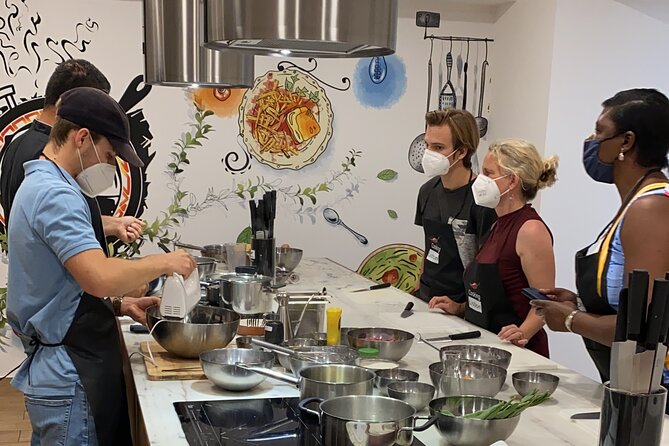
The best sessions divide the work so everyone has something useful to do. Past instruction has included group members preparing different dishes while the chef moved around to guide them. When the class is kept near the advertised limit of 12, that format can turn dinner preparation into a shared project rather than a demonstration.
There is a clear tradeoff here. A cooking class with several dishes gives you a broad taste of Portuguese food, but each participant may spend part of the evening watching another person handle a task. If you want constant knife work and stove time, ask how the current class divides duties when you book.
Fish, meat, and the rhythm of a Portuguese meal
After the starter, the group prepares a fish dish and a meat dish. This is where the class offers more than a single recipe lesson. You see two different types of Portuguese cooking in one evening and get a better sense of how a complete meal is put together.
The chefs are expected to guide the class through timing, seasoning, and preparation. Pedro has been praised for making beginners comfortable and helping the group work together. Carolina has been noted for explaining where the food comes from, while Giu and Philipa have received strong praise for keeping the class involved and entertaining.
Names can vary by date, so do not assume one particular chef will lead your session. The useful point is the teaching style the experience aims for: clear directions, steady help, and a relaxed home-cooking feel. Several instructors have also been praised for handling different levels of cooking experience without making beginners feel out of place.
Food restrictions should be discussed before arrival. The class specifically asks you to report health, allergy, or religious restrictions so the menu can fit the group. One particularly useful detail is that fish allergies have been accommodated. Still, do not wait until the first knife hits the cutting board. Send the information ahead of time.
The pacing depends heavily on the group. One past class with 18 people took more than two hours to prepare the food, leaving people standing around and delaying the meal. The official maximum is 12, which should make for a better balance, but I would still treat the three-and-a-half-hour schedule as an estimate rather than a guarantee.
More Places to Eat in Lisbon:
- Seville: Spanish Cooking Class with Dinner
★ 4.9 · 900 reviews - Greek Cooking Class in Athens Including Rooftop Dinner with Acropolis View
★ 5.0 · 826 reviews - Tuscan Cooking Class and Dinner in Florence
★ 4.5 · 732 reviews - Greek Small-Group Athens Cooking Class & Dinner
★ 5.0 · 574 reviews
Dessert and the payoff at the shared table
Dessert completes the cooking sequence. Past classes have included Portuguese sweets, with pastel de nata receiving special praise for turning out well. You may also learn other traditional desserts, but the exact recipe is not guaranteed.
This final course is more than a sweet ending. It gives you a chance to see how a familiar Portuguese treat is made rather than simply ordering one in a café. If pastel de nata is on your wish list, confirm the planned menu before booking, since the supplied menu only identifies dessert in general.
When the dishes are ready, everyone sits down to eat together. The meal is the central payoff, but the social side is nearly as important. The format encourages conversation with people from different countries, and the shared work gives you an easy subject to discuss.
I would expect a casual dinner rather than polished restaurant service. You help make the meal, taste several preparations, compare favorites, and continue with the wine supplied during the class. That is part of the charm. It is also why the evening may run late.
How much food and drink you actually receive
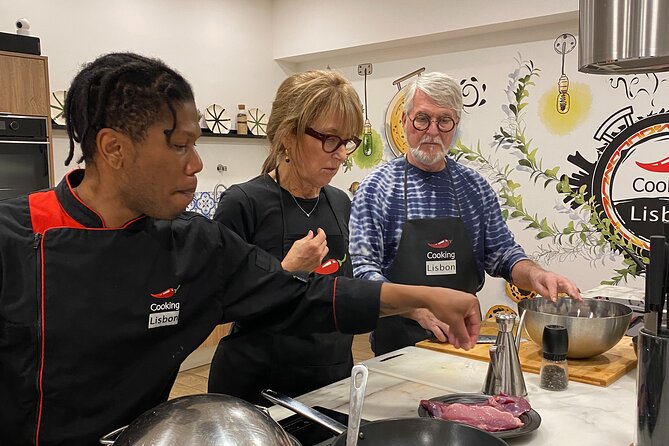
The basic package includes dinner, drinks, and coffee or tea. The meal is described in different places as three courses, four courses, and, in some accounts, as many as seven or nine dishes. The safest interpretation is that the menu can include several separate preparations within the starter, fish, meat, and dessert categories.
You should expect a full meal, not a token tasting. The included beverages add value, especially in Lisbon, where a restaurant dinner with Portuguese wine can quickly push the bill higher. At $130.60 per person, this is not the cheapest way to eat in the city, but it combines instruction, food, drinks, and a social evening.
The price makes the most sense if you want an activity as well as dinner. If you only want to sample Portuguese dishes, a traditional restaurant will likely be simpler and less time-consuming. If you want recipes, participation, and a meal you helped prepare, the cost is easier to justify.
I would also factor in the time. Three and a half hours gives the class room to explain the food and prepare several dishes, but it uses most of your evening. That is a good value for someone who enjoys slow, shared meals. It is less appealing if you are trying to fit in a fado show or a late restaurant reservation afterward.
The small-group promise and what it means
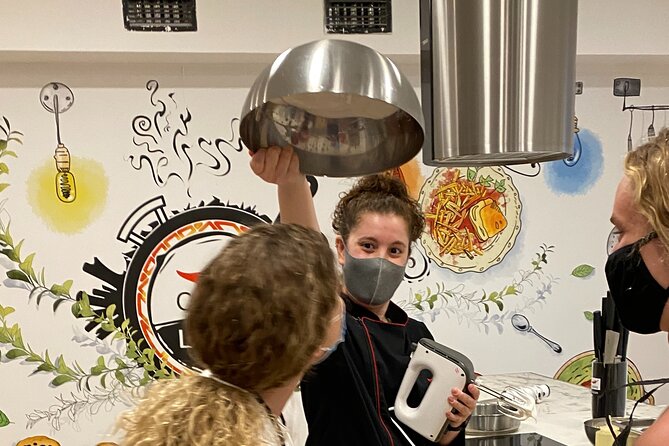
The advertised maximum is 12 people. That is a workable size for a cooking class because the chef can move between stations while participants still meet one another.
A group of 12 also explains why the class feels social rather than private. You may prepare one part of the meal while another pair handles something else. That arrangement lets the class cover more dishes, but it can reduce the amount of direct cooking time each person gets.
The size is worth checking at booking, especially if close instruction is your priority. The strongest accounts describe everyone taking part, while the clearest criticism came from a session with 18 people. The difference between 12 and 18 is significant in a working kitchen.
For solo visitors, the group format can be a benefit. You do not need to arrive with a dining party, and the cooking gives you a natural way to meet people. Couples and friends should also enjoy it, though you may not work side by side for every dish.
Who will get the most from this Lisbon cooking class

I would recommend this experience to you if you:
- Want a practical introduction to Portuguese food and cooking
- Enjoy shared meals and meeting people from other countries
- Prefer a hands-on activity to a standard restaurant dinner
- Have enough flexibility for an evening that may run long
- Want recipes and techniques you can repeat at home
- Are comfortable with a menu that may change according to restrictions and group needs
It is less suitable if you need a quiet, private meal, dislike group activities, or want complete control over the menu. It may also disappoint you if you expect every minute to involve direct cooking. A class with several dishes naturally includes some waiting and watching.
The experience works particularly well early in a Lisbon visit. You get an introduction to local ingredients, meal customs, and familiar dishes, then have the rest of your stay to recognize those foods on restaurant menus and in markets. It can also make a good final-night activity, provided you do not have an early departure the next morning.
Practical details that affect your decision
Confirmation arrives at booking, and the experience is offered in English. The meeting point is near public transportation, but hotel transfers are not included. Plan your route in advance, since the class begins at a fixed time.
Free cancellation is available if you cancel at least 24 hours before the 6:30 pm start. Cancellations or changes made inside that window are not accepted for a refund. The cutoff follows Lisbon local time.
The experience is booked around 40 days ahead on average, so I would not leave it until the last moment if your dates are fixed. That is especially true if you need dietary adjustments or hope for a particular evening.
Should you book the Cooking Lisbon class?
Book it if you want to cook, eat, and talk your way through Portuguese food in one evening. The strongest reasons are the hands-on format, included drinks, practical teaching, and chefs who have been praised for patience and clear guidance. The high overall rating of 4.8 from 445 ratings and recommendation by 97 percent of customers support its appeal, but the class size warning is worth taking seriously.
Before paying, send every allergy, health restriction, or religious restriction in advance. Also ask about the current group size and planned menu if you care about a specific dish such as pastel de nata.
At $130.60, this is best viewed as a cooking lesson plus dinner, not simply a meal. For that combination, it offers solid value. Just keep your evening open, arrive ready to share the kitchen, and accept that the exact menu and pace may depend on the group.
FAQ
Where does the cooking class meet?
The class meets at R. Bernardim Ribeiro 9, 1150-068 Lisboa, Portugal. The activity ends back at the same meeting point.
What time does the class begin?
The start time is 6:30 pm. The experience lasts approximately three hours and 30 minutes, though it may finish later if the group takes extra time.
What food will I prepare?
You will prepare a starter, a fish dish, a meat dish, and a dessert. The exact recipes are selected for the class and may vary.
Are drinks included?
Yes. Portuguese wine, water, juice, Coke, and beer are provided. Coffee and tea are also included. The minimum drinking age for alcohol is 18.
Can the class accommodate allergies or other restrictions?
You should report allergies, health restrictions, and religious restrictions before the class. The menu can then be selected to suit the participants, and fish allergies have been accommodated in past sessions.
What is the cancellation policy?
You can cancel for a full refund up to 24 hours before the experience start time. Cancellations or changes made less than 24 hours in advance are not accepted for a refund.
Newest classes around Lisbon
- Lisbon: Portuguese Petiscos Cooking Class★ 4.7 · 6 reviews
- Lisbon: Traditional Portuguese Cooking Class★ 5.0 · 41 reviews
- Lisbon: Portuguese street food cooking class with Drinks★ 4.9 · 37 reviews
- Lisbon: Setúbal Market and Wine tour with Cooking class★ 5.0 · 4 reviews
- Lisbon: Portuguese Cooking Class with Wine Tasting★ 5.0 · 4 reviews
- Lisbon: Portuguese Cooking Class for Beginners★ 4.9 · 78 reviews
- Lisbon: Pasteis de Nata Baking Class★ 5.0 · 134 reviews
- Private Traditional Portuguese Cooking Class in Lisbon with Paula★ 5.0 · 50 reviews
Lisbon Cooking Classes, compared.



Traditional Portuguese Cooking Class in Lisbon
Read our review →

Lisbon Market and Food Tour with Cooking Class and Lunch
Read our review →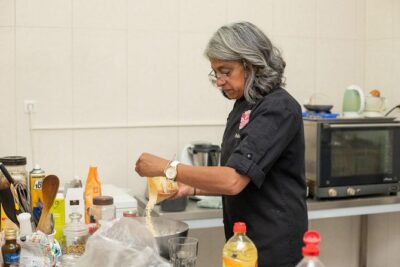
Private Lisbon Market Tour & Portuguese Cooking Class with Paula
Read our review →Browse the lists this tour appears in