
Review · LISBON COOKING CLASSES
Lisbon: Portuguese street food cooking class with Drinks
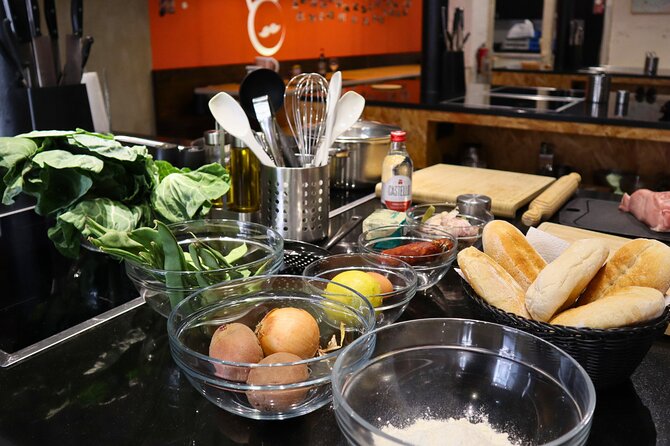
Lisbon’s street food is simple, filling, and full of stories. In this two-hour class at Compadre Cooking School, you’ll make a pork bifana, collard greens soup, and peixinhos da horta, the battered green beans that helped inspire tempura. Then you’ll sit down with the group and eat what you made.
I like the mix of cooking and food history, and I like that the recipes are practical enough for your home kitchen. The class also gives you a real meal, wine, and a taste of ginja for $55, which is solid value in Lisbon. The main consideration is access: the school is not suitable for wheelchair users, and the shared format means you may have less individual instruction than in a private lesson.
Key points to know before booking
- Three classic Portuguese dishes: Make bifana, caldo verde, and peixinhos da horta rather than the usual pastel de nata.
- A hands-on class: You take part in the cooking instead of only watching a chef demonstrate.
- Local food stories: Learn how these everyday dishes connect to Portuguese homes, snack bars, festivals, and wider food traditions.
- A full meal is included: Sit down together to eat the finished dishes with a glass of red or white wine.
- Ginja finishes the class: Taste Portugal’s traditional cherry liqueur at the end.
- Good for beginners: No cooking experience is needed, but wear comfortable clothes and shoes.
What you cook at Compadre Cooking School
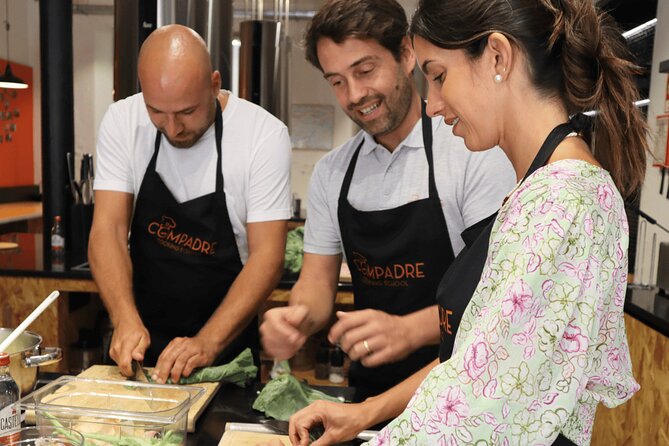
The class focuses on food Portuguese people eat in ordinary settings, not only dishes made for a special occasion. That gives the experience a useful edge. You are not simply learning a recipe. You are learning why a sandwich, soup, or fried vegetable became part of daily life.
The exact order may vary, but the session begins with an introduction to the dishes and their place in Portuguese culture. Your English-speaking chef explains the ingredients and the background before the work starts. That short opening matters because each recipe has a story attached to it.
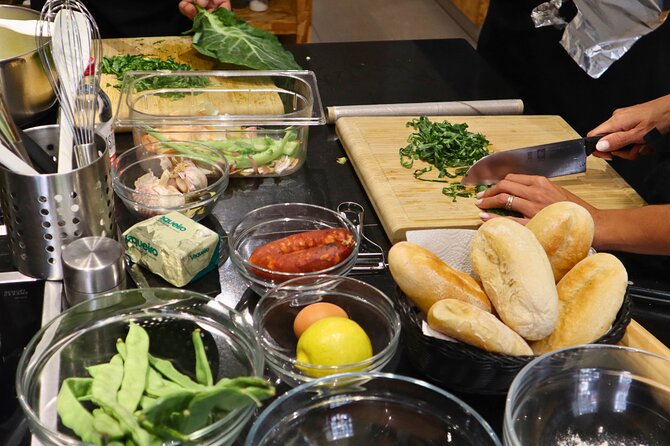
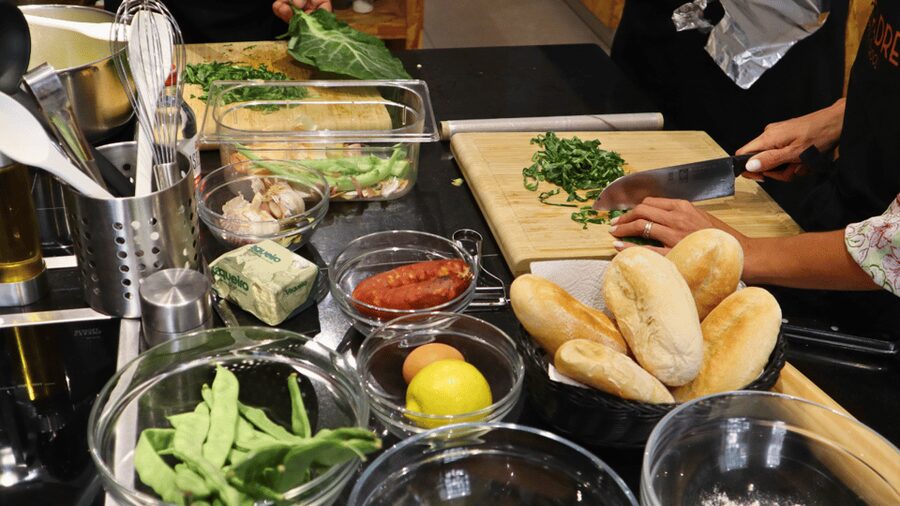
The bifana is the main crowd-pleaser for many people. It is a seasoned pork sandwich, usually served as a quick, inexpensive meal. In this class, you learn how the meat and bread come together to make something far more satisfying than its short ingredient list suggests.
You also prepare caldo verde, a traditional soup made with potatoes and collard greens. It is one of Portugal’s best-known comfort foods, and the class gives you a chance to see how a few basic ingredients can produce a warm, hearty dish.
The third recipe, peixinhos da horta, is especially interesting for food-minded visitors. These battered green beans are fried in a way that recalls tempura. The dish gives the class a link between Portuguese cooking and a famous Japanese preparation, without turning the lesson into a lecture.
The recipes are designed to be manageable. You do not need to know how to chop like a restaurant cook or understand professional kitchen terms. You need comfortable shoes, a willingness to take part, and an appetite for trying something new.
More Food and Drink Outings in Lisbon:
- Lisbon Market and Food Tour with Cooking Class and Lunch
★ 5.0 · 117 reviews - Lisbon: Portuguese Cooking Class with Wine Tasting
★ 5.0 · 4 reviews - Small Group Cooking Class & Market Food Tour in Florence
★ 5.0 · 1,574 reviews
Why the food stories add value
Lisbon has no shortage of places to eat. You can find bifanas and soup around the city without taking a class. The reason to book this activity is the context.
A snack eaten at a counter can seem basic until you know where it came from and why people value it. The chef explains the role these foods play in Portuguese daily life, from casual snack bars to local festivals. That background helps you recognize the dishes later instead of treating them as anonymous items on a menu.
The peixinhos da horta lesson is a good example. You get a familiar fried texture, but the Portuguese version has its own identity and story. Small details like this make the class more worthwhile than a generic cooking session built around internationally famous recipes.
I also like that the menu avoids the most predictable tourist choices. You are not spending the whole class on codfish or pastel de nata. Those foods are important, but these less obvious recipes offer a closer look at everyday Portuguese cooking.
How the hands-on cooking works
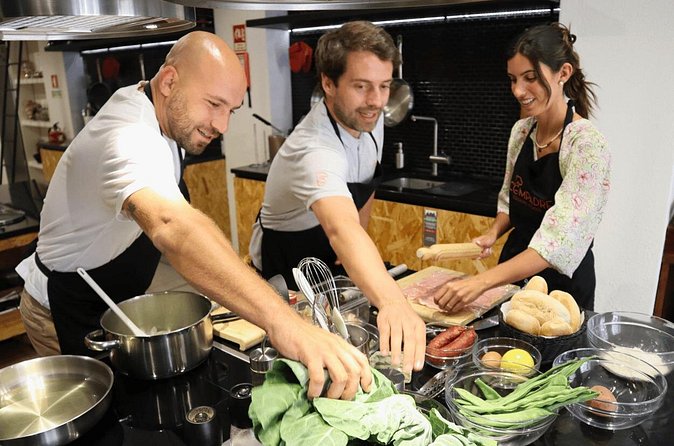
After the introduction, you work at the kitchen stations with the other participants. The teachers guide the group through the preparation, and the cooking is arranged so people can take part during most of the process.
That shared setup is useful if you are traveling alone or want an easy way to meet people. You prepare food side by side, then share the finished meal at the same table. The class has a social rhythm without requiring you to make small talk with strangers for two straight hours.
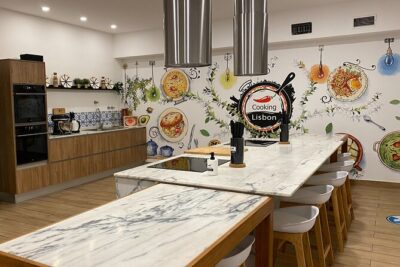
The school itself is described as modern, clean, and spacious. Those details matter in a cooking class. You want enough room to work without constantly bumping into another person, and a tidy kitchen makes it easier to concentrate on the food.
Instruction appears to be friendly and clear. Several instructors have been singled out by name, including Marta, Anna, Martha, and Roy. The teaching style can vary by instructor. One person found there was a little too much direct help from Anna instead of explanation, so if you want a highly technical, chef-school lesson, this may feel more relaxed and group-oriented.
For most people, that is likely a fair trade. You get enough guidance to succeed, but the purpose is not to train as a professional cook. It is to make good Portuguese food and understand what you are doing.
Sitting down to eat what you made
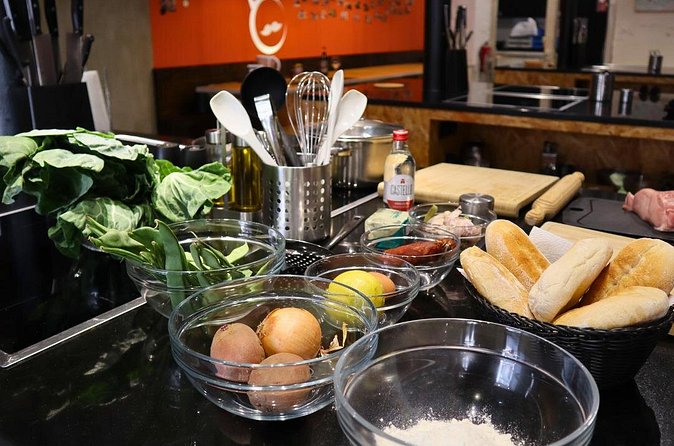
The class ends with a shared meal, not a quick taste at the counter. You sit with the other participants and eat the bifana, caldo verde, and peixinhos da horta together.
This is one of the strongest parts of the experience. Cooking gives you a task, but the meal gives the class a sense of completion. You can compare the dishes, talk about the recipes, and enjoy the food while it is fresh.
The meal also improves the value of the $55 price. You are paying for instruction, ingredients, and a social meal rather than a short demonstration followed by a tiny sample. A glass of wine is included, red or white, and the class finishes with a tasting of ginja, the traditional Portuguese cherry liqueur.
Additional drinks cost extra, so do not expect an open bar. Still, the included wine and ginja cover the main drink element promised by the class. If you do not drink alcohol, contact the school about your needs before booking, especially since the supplied details mention recipe adaptations for specific diets but do not spell out a nonalcoholic drinks plan.
More Food Outings in Lisbon:
- Athens: Food Market Visit and Cooking Class with Wine
★ 4.9 · 1,087 reviews - Undiscovered Charleston: Half Day Food, Wine & History Tour with Cooking Class
★ 5.0 · 948 reviews - Vietnamese Food Cooking Class in Hanoi with Market Experience
★ 5.0 · 778 reviews - Milan: Italian Cooking Class with Food and Wine
★ 4.7 · 509 reviews
Dietary needs and practical comfort
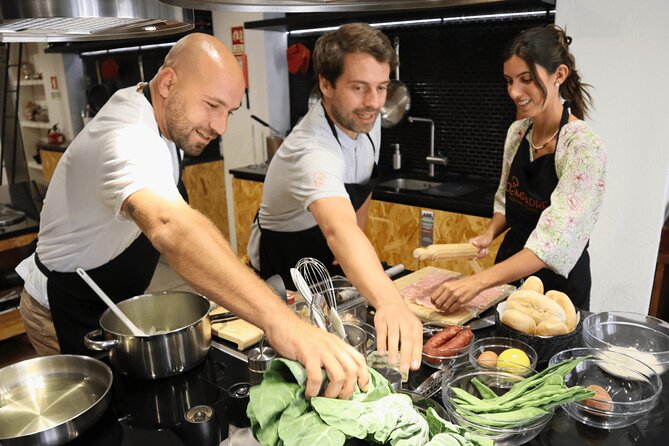
The school asks people with specific dietary requirements to make contact because the recipes can be adapted. That is helpful, but you should arrange this in advance rather than arrive and assume every substitution is possible.
The standard dishes include pork and fried vegetables, so people with vegetarian, vegan, religious, or allergy-related needs should explain their situation clearly. The available information confirms that adaptations may be made, but it does not list every alternative menu.
Wear comfortable clothing and shoes suitable for cooking. You will be standing and working around a kitchen for much of the two hours, so this is not the place for delicate clothing or uncomfortable footwear.
Arrive about five minutes early. That is enough time to settle in without turning a short class into a rushed start. Transportation is not included, so you need to make your own way to the Compadre Cooking School kitchen in Lisbon District.
The activity is taught in English. That makes it a practical choice for English-speaking visitors who want instruction rather than a class where they must follow gestures and guess at the method.
Is two hours enough?
Two hours is a compact format, but it suits the food. These are approachable dishes, not a multi-course restaurant menu requiring an entire afternoon.
The short length works well in a Lisbon itinerary. You can fit the class between other plans without losing a full day. It also keeps the experience focused. You learn the background, prepare the food, eat together, and finish with ginja.
The tradeoff is that you will not get a long technical lesson on Portuguese pantry staples, knife skills, or regional variations. If you already cook often and want detailed culinary training, you may find the session basic. For first-time cooks and people who want a cultural food experience, the pace should feel more useful.
The class has received a 4.9 rating from 37 reviews, with praise centered on the food, the friendly instruction, the clean kitchen, and the chance to participate. That pattern tells me the strongest reason to book is the complete experience, not advanced cooking theory.
What the $55 price really covers
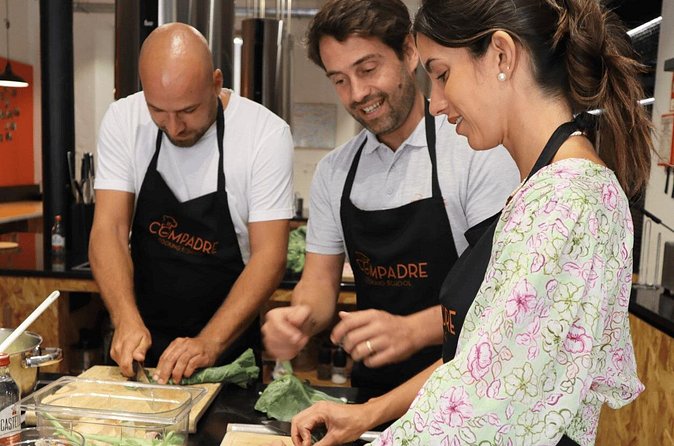
At $55 per person, this class is priced above a casual Lisbon meal but below many private culinary experiences. The comparison is fair only if you count what is included.
Your price covers the chefs’ guidance, all ingredients, the three prepared dishes, a shared meal, one glass of wine, and ginja. You also receive the recipes and methods in a form you can try at home, although the supplied details do not specify whether a printed recipe booklet is provided.
A restaurant meal may cost less if you choose a simple bifana and soup. It will not give you the preparation lesson, the stories behind the dishes, or the social meal with other participants. A private cooking class may offer more personal attention, but it would normally cost more as well.
I see the best value here for people who want both food and an activity. If you only want to eat Portuguese street food, spend the $55 on several meals around Lisbon instead. If you want to understand the dishes and reproduce them later, the class makes better financial sense.
Who will enjoy this class most
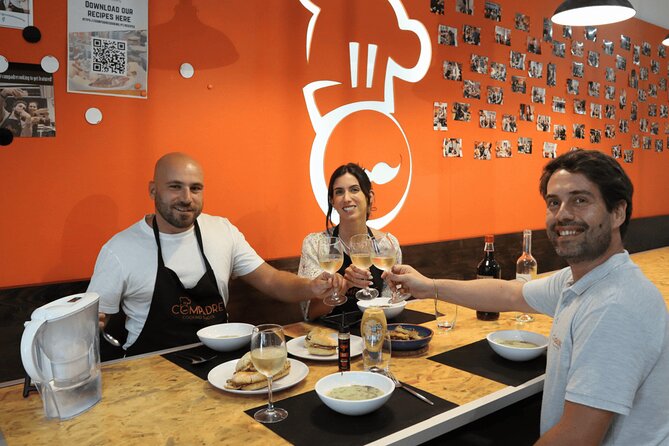
This experience suits couples, solo visitors, friends, and families with older children who enjoy taking part rather than sitting through a formal talk. The shared table makes it easy to meet people, and the food is familiar enough to appeal to cautious eaters while still offering something different.
It is also a good pick for anyone who has already tried Portugal’s famous pastries and cod dishes and wants a less predictable taste of the country. The bifana and caldo verde are recognizable classics, while peixinhos da horta adds a more unusual point of interest.
The class may not suit you if you want a private lesson, a serious professional kitchen course, or a fully accessible activity. Wheelchair users cannot take part according to the stated requirements. You should also consider the shared format if you prefer a quiet meal or one-on-one coaching.
No prior cooking experience is required. The key question is not whether you can cook. It is whether you are willing to work with a group and follow the chef’s lead.
Small details that make the day easier
Book this class when you want a meal built into your schedule. Since the activity lasts two hours and ends with the food you prepare, you may not need to plan a separate lunch or early dinner immediately afterward.
Keep your timing realistic. The school recommends arriving five minutes early, and transportation is your responsibility. I would avoid scheduling another fixed activity directly afterward, since the shared meal is part of the experience and rushing away would cut short the social side.
The cancellation policy is traveler-friendly: you can cancel up to 24 hours in advance for a full refund. You can also reserve and pay later, which helps if your Lisbon plans are still changing.
Smoking, alcohol, and drugs beyond the drinks provided are not allowed during the activity. The class includes wine and ginja as controlled tastings, not an invitation to treat the kitchen like a bar.
Should you book the Portuguese street food class?
I would book this class if you want a practical introduction to Portuguese food and like the idea of eating a proper meal at the end. The combination of bifana, caldo verde, and peixinhos da horta gives you a better look at daily cooking than a lesson built only around famous tourist dishes.
The strongest reasons to choose it are the hands-on format, the clear cultural background, and the included wine, ginja, and shared meal. The clean kitchen and welcoming instructors also matter, especially if you are new to cooking classes.
Skip it if you need wheelchair access, want a private chef, or are mainly searching for an advanced technical course. For everyone else, $55 is a reasonable price for two hours of cooking, food, drinks, and a useful taste of Lisbon’s everyday table.
FAQ
Where does the cooking class take place?
The class takes place at the Compadre Cooking School kitchen in Lisbon District, Portugal.
How long does the experience last?
The cooking class lasts two hours.
What dishes will I prepare?
You will learn to prepare bifana, a Portuguese pork sandwich, caldo verde, a traditional collard greens soup, and peixinhos da horta, battered green beans associated with the origins of tempura.
Are drinks included?
Yes. The price includes one glass of red or white wine and a tasting of ginja, a traditional Portuguese cherry liqueur. Additional drinks are not included.
Do I need cooking experience?
No. The class is designed for beginners, and the chef guides you through the recipes and preparation.
Can the recipes be adapted for dietary needs?
The school states that recipes can be adapted for specific diets. Contact the school before the class to discuss your requirements.
Newest classes around Lisbon
- Lisbon: Portuguese Petiscos Cooking Class★ 4.7 · 6 reviews
- Lisbon: Traditional Portuguese Cooking Class★ 5.0 · 41 reviews
- Lisbon: Setúbal Market and Wine tour with Cooking class★ 5.0 · 4 reviews
- Lisbon: Portuguese Cooking Class with Wine Tasting★ 5.0 · 4 reviews
- Lisbon: Portuguese Cooking Class for Beginners★ 4.9 · 78 reviews
- Lisbon: Pasteis de Nata Baking Class★ 5.0 · 134 reviews
- Private Traditional Portuguese Cooking Class in Lisbon with Paula★ 5.0 · 50 reviews
- Lisbon Cooking Class with Market Experience★ 5.0 · 13 reviews
Lisbon Cooking Classes, compared.
Lisbon Portuguese Cooking Class with 3-Course Dinner
Read our review →
Traditional Portuguese Cooking Class in Lisbon
Read our review →

Lisbon Market and Food Tour with Cooking Class and Lunch
Read our review →Browse the lists this tour appears in