
Review · CRETE COOKING CLASSES
Chrysoula’s Traditional Cretan Home Cooking
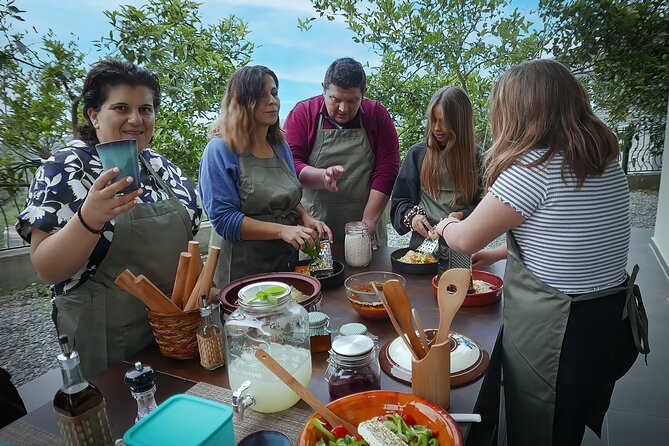
The best part of this experience is that you cook in Chrysoula’s home, not in a polished restaurant classroom. You work beside Chrysoula and Dee, prepare a full Cretan meal, then sit down to eat it together. The setting, humor, and easy teamwork make this feel closer to joining a Greek family lunch than attending a formal lesson.
I like two things in particular. First, the class uses ingredients tied to the area, including vegetables, herbs, olive oil, bread, and cheese from Chrysoula’s property or her family’s nearby farm. Second, you get plenty of hands-on work, from preparing moussaka and stuffed vegetables to making dessert, rather than simply watching someone cook.
The main consideration is the fixed morning schedule. The class starts at 10:00 a.m. and lasts about three and a half hours, so you need to reach the meeting point in Arkadi on time. It is also a group activity, with as many as 12 people, and the menu may not suit someone looking for a light meal.
Key points to know before booking
- Cook in a Cretan home: The class takes place at Chrysoula’s house, with a garden and views toward nearby olive groves.
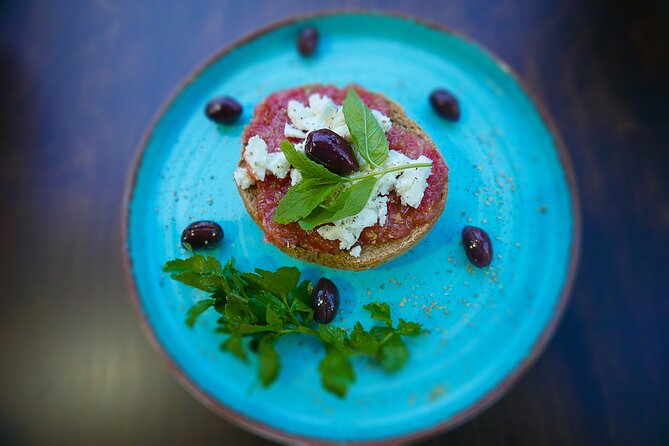
- Prepare a full meal: The sample menu includes dakos, moussaka, stuffed vegetables, and homemade ice cream.
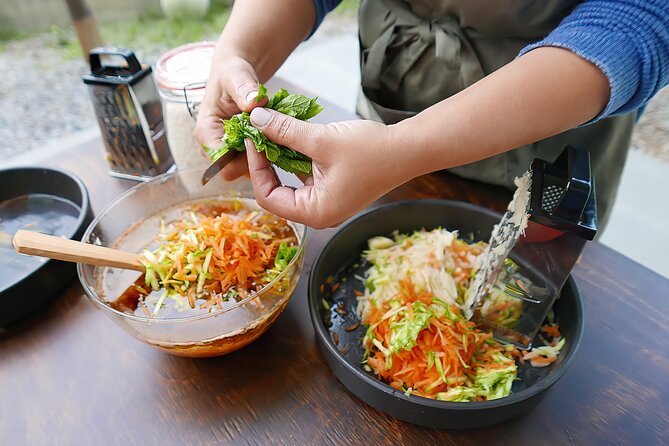
- Expect real participation: You help chop, mix, assemble, cook, and prepare dessert under direction from Chrysoula and Dee.
- Local ingredients matter: Produce, herbs, olive oil, bread, and cheese may come from the property or Chrysoula’s family farm.
- Small but social group: The maximum is 12 people, a size that allows shared tasks and conversation.
- Bring an appetite: The food is served as a generous meal, often with raki and plenty of time at the table.
Arriving at Chrysoula’s home in Arkadi
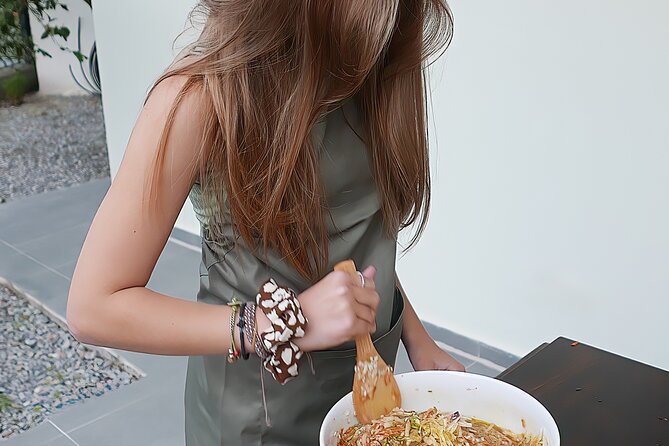
The experience begins at 10:00 a.m. in Arkadi, at the listed meeting point near Chrysoula’s home. You return to the same place at the end, so the day has a simple start and finish rather than several stops around Crete.
The location matters. You are not being moved from one commercial venue to another. You arrive at a lived-in home, enter the garden, and begin with the kind of welcome that sets the tone for the morning. Chrysoula and Dee are known for greeting people warmly, using humor, and helping strangers relax around one another.
That social side is not just decoration. A cooking class works better when everyone feels comfortable taking a task, asking a question, or admitting that a dish needs another splash of olive oil. The group can include couples, families, friends, and solo participants from different countries, so you should expect a shared table rather than a private lesson unless you book a private arrangement separately.
The listed maximum of 12 people is a useful limit. It is large enough to create conversation and a lively kitchen, but small enough that you should still have a role in the preparation. If you prefer silent, one-to-one instruction, this may feel busy. If you like meeting people over food, the group format is part of the appeal.
The meeting point is near public transportation, and service animals are allowed. The available details do not specify a transfer service, so check your route to Arkadi before booking. You should also allow enough time to arrive by 10:00 a.m., since missing the opening tasks could leave you playing catch-up.
More Home Cooking Classes in Greece
- Mykonos: Group Cooking Class at the Home of a Local Family
★ 5.0 · 166 reviews - Rethymno: Chrysoula’s Cretan Home Cooking Lessons
★ 5.0 · 98 reviews - Mykonos Home Cooking Class & Traditional Greek Meal with Angelina
★ 5.0 · 54 reviews
The morning begins with Cretan kitchen basics
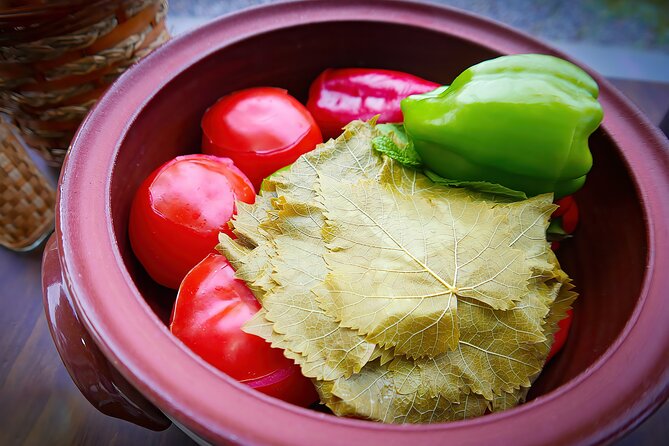
The exact order of the cooking tasks can vary, but the sample menu gives you a good idea of the meal. You will prepare dakos, moussaka, stuffed vegetables, and homemade ice cream. Other classes have also included dishes such as stuffed grape leaves, squash blossoms, tzatziki, fresh salad, and a traditional Greek pastry, so the menu may change with the season or the group.
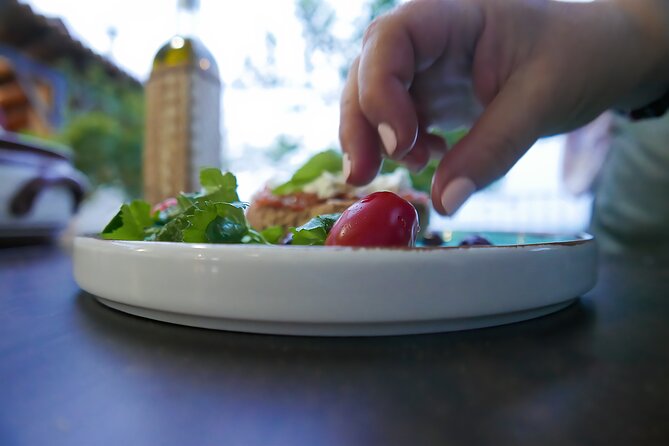
Dakos is a smart opening dish for a Cretan cooking lesson. It is built around crisp or dried bread, ripe ingredients, herbs, olive oil, and cheese, showing how a few well-chosen local foods can create a satisfying starter. You get a quick introduction to the basic flavors of the island without beginning with a complicated recipe.
This is also where you may notice that Cretan cooking does not depend on strict measuring in the way many home cooks expect. The class has a relaxed, instinctive style, with generous pours of olive oil and instructions based on sight, texture, and taste. That is entertaining in person, though you may need to pay attention when you later recreate the food at home.
The recipes are sent after the class, which is helpful. You do not need to write down every amount while handling vegetables or talking with the group. Still, if you want to reproduce the dishes exactly, ask questions during the lesson and make a few notes about the texture and cooking time.
Moussaka and stuffed vegetables make the class substantial
Moussaka is the main project that gives the class weight. It requires several stages, so you can expect to help with preparation rather than simply place a finished dish in the oven. The process also gives Chrysoula room to explain how the ingredients work together and how a home cook judges when the dish is ready.
Stuffed vegetables offer a different kind of task. They are hands-on and social, since several people can prepare, fill, and arrange them at once. The work gives you a practical feel for the patient, communal side of Greek cooking. It is less about racing through a recipe and more about preparing food for a long meal shared with family and friends.
One of the most useful features is the chance to perform different jobs during the class. You might chop ingredients, assemble a dish, season a mixture, or help prepare dessert. That variety keeps the three-and-a-half-hour session from feeling like a lecture.
You should also expect some disorder. A home kitchen with up to 12 people, several dishes, conversation, and jokes will not run like a television cooking set. If you want precise timing and quiet concentration, you may find the mood too loose. I see that informality as a fair trade for the personal setting, but it is worth knowing before you arrive.
Dietary needs should be noted when you book. The class has accommodated a vegetarian by preparing a separate dish, and other food concerns have been handled when mentioned in advance. The supplied details do not list every possible dietary option, so you should not assume all requests can be met without confirmation.
Homemade ice cream finishes the cooking
Dessert is included, and the sample menu lists homemade ice cream. That is a nice change from a class that ends as soon as the main course leaves the kitchen. You get one more preparation task, then a proper finish to the meal.
The dessert also helps balance the menu. Dakos, moussaka, and stuffed vegetables are hearty dishes, so a cold homemade sweet gives the afternoon a lighter final note. Other versions of the class have included a traditional Greek pastry, which suggests the dessert can vary.
Do not expect a restaurant-style dessert course with elaborate presentation. The value is in making something together and eating it at the same table. The class is built around home cooking, not culinary theater.
If you are marking a birthday or another special occasion, tell Chrysoula in advance. She has prepared a homemade birthday cake for a family celebration, which shows that the experience can be adapted for a personal event when arrangements are made ahead of time. That kind of extra touch should be treated as a possibility, not a guaranteed part of the standard booking.
Same region, a different dish to learn:
- Athens: Classic Cooking Class with Market Visit and Wine
★ 5.0 · 1,101 reviews - Athens: Food Market Visit and Cooking Class with Wine
★ 4.9 · 1,087 reviews - Greek Cuisine Cooking Class in Santorini with Recipes and Wine
★ 5.0 · 969 reviews - Naxos: Half-Day Cooking Class at Basiliko Family Tavern
★ 5.0 · 887 reviews
The meal is as important as the lesson
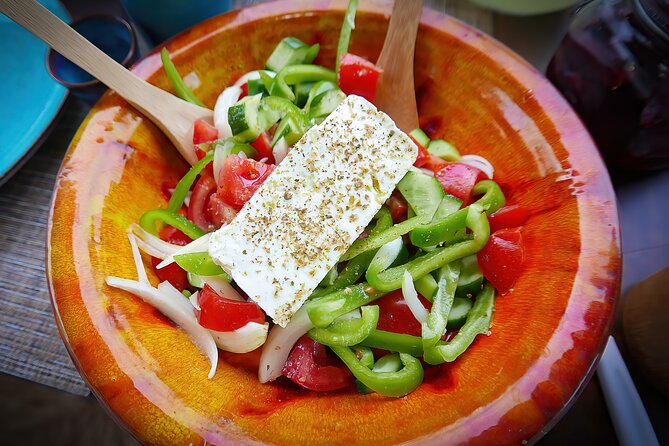
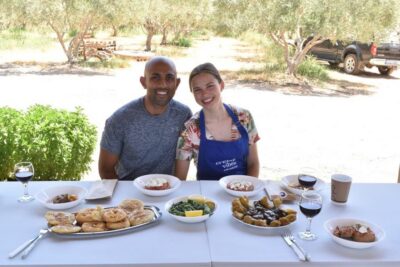
Once the dishes are ready, you sit down to eat what the group has made. This is where the activity shifts from class to Cretan hospitality. You are not simply tasting small samples before leaving. The meal is intended to be generous, and you should arrive hungry.
Raki may be offered during the gathering. It is part of the convivial atmosphere, but you do not need to drink it to take part. If you choose to try it, go slowly. The class lasts several hours, and the focus is food, conversation, and cooking rather than drinking.
The table is also where solo participants can feel most at ease. The format naturally creates conversation because everyone has worked on the same dishes. You may arrive alone and leave knowing people from several countries, which is a pleasant bonus for anyone who wants more than a private demonstration.
Chrysoula’s personality is central to the experience. She is described as warm, funny, generous, and quick to make people feel at home. Dee helps with the class, and their teamwork keeps the morning moving while maintaining a relaxed mood.
That warmth may not suit every personality. If you prefer a formal chef-led course with technical instruction and little personal conversation, you may find the teasing and family-style welcome distracting. For most people seeking a connection to everyday Cretan life, it is exactly what gives the class character.
Why the local ingredients add real value
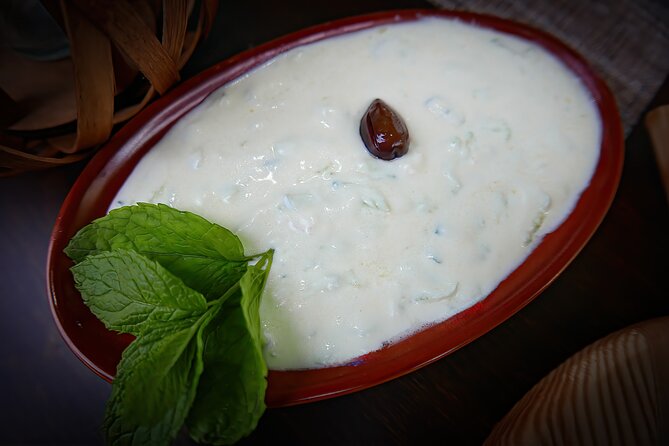
The class makes a strong point of using ingredients connected to the surrounding area. Olive oil, herbs, vegetables, bread, and cheese may come from Chrysoula’s property or her family’s nearby farm. That changes how you understand the recipes.
A dish such as dakos can seem simple on paper. In Crete, the quality of the tomato, oil, cheese, herbs, and bread does much of the work. Handling those ingredients in the place where they are grown helps you see why Cretan food often relies on freshness and restraint rather than complicated sauces.
The setting adds to that lesson. The garden and nearby olive-grove views give you a sense of the food’s connection to the land without turning the class into a sightseeing tour. You are there to cook, but the setting helps explain the cooking.
You should keep your expectations realistic. This is not a farm visit with a long agricultural program, and the available details do not promise a tour of the property or family farm. The value is more direct: you cook with local products and hear the personal context behind them.
Is the $113.84 price fair?
At $113.84 per person, this is not the cheapest meal you will have in Crete. It is also more than the cost of buying the ingredients and eating at a casual taverna. The question is what you receive beyond the food.
You get about three and a half hours, instruction from Chrysoula and Dee, a hands-on meal preparation, dessert, drinks such as raki, the setting of a private home, and the social experience of eating with the group. You also receive recipes afterward, which gives the class value beyond the morning itself.
I would consider the price reasonable if you want an activity that combines food, conversation, and local hospitality. It is less attractive if you only want a meal or if you already plan to take several cooking classes during your trip.
The value is strongest for people celebrating something, couples who want a shared activity, families, and solo visitors who enjoy meeting others. A private birthday class can make the price feel more justified, especially if the personal touches are arranged in advance.
The high 4.9 rating from 38 reviews and the 97 percent recommendation rate suggest strong satisfaction, but I would still focus on fit rather than numbers. The class is generous, social, and informal. Those qualities are the reason to book it, and also the reason it may not suit someone seeking a quiet technical workshop.
Timing, weather, and cancellation details
The class begins at 10:00 a.m., lasts approximately three hours and 30 minutes, and ends back at the meeting point. Confirmation is provided when you book, and the experience is offered in English.
Most people can participate, and service animals are allowed. The activity requires good weather, which matters because the home and garden setting are part of the experience. If poor weather causes a cancellation, you are offered another date or a full refund.
You can cancel for a full refund if you do so at least 24 hours before the start time. Cancellations or changes made less than 24 hours before the start are not refunded or accepted. The class also requires a minimum number of participants, so a cancellation for that reason comes with the choice of another date or experience, or a full refund.
Because the experience is booked on average 10 days ahead, I would reserve early if your Crete schedule is tight. That gives you more room to choose a suitable date and adjust if weather or minimum group requirements affect the booking.
Who should book this Cretan cooking class?
I would choose this class if you want food to be a doorway into local life. You will spend less time studying restaurant technique and more time preparing dishes, laughing with the group, and eating in a home setting.
It suits:
- Couples looking for a relaxed shared activity
- Families who enjoy cooking together
- Solo visitors who want a social morning
- Food lovers interested in Cretan ingredients and recipes
- Anyone celebrating a birthday or special occasion
- Visitors who prefer a personal home setting to a commercial cooking school
I would think twice if you need a strict timetable, highly technical instruction, or a small private class with no group interaction. I would also check dietary arrangements before booking if you have serious allergies or restrictions.
Should you book Chrysoula’s Traditional Cretan Home Cooking?
Yes, if you want a warm, food-centered morning that feels personal rather than polished. The strongest reasons to book are the home setting, the local ingredients, the full meal, the hands-on tasks, and the easy companionship created by Chrysoula and Dee.
Go in expecting laughter, generous portions, flexible cooking methods, and a group atmosphere. Arrive on time, come very hungry, mention dietary needs before the class, and leave room in your day for a long meal. For many visitors, this will be less about mastering moussaka than about seeing how Cretan food is made and shared at home.
FAQ
Where does the cooking class take place?
The class begins and ends at the listed meeting point in Arkadi, Greece. It takes place at Chrysoula’s home, with a garden setting and views toward nearby olive groves.
What time does the experience start?
The class starts at 10:00 a.m.
How long does the cooking class last?
The experience lasts approximately three hours and 30 minutes.
What food will I prepare?
The sample menu includes dakos, moussaka, stuffed vegetables, and homemade ice cream. Other dishes may be included, such as stuffed grape leaves, squash blossoms, tzatziki, salad, or a traditional Greek pastry.
Is the class taught in English?
Yes. The experience is offered in English.
How many people can attend?
The maximum group size is 12 people.
Can I cancel for a refund?
Yes. You can receive a full refund if you cancel at least 24 hours before the experience begins. Cancellations or changes made less than 24 hours before the start time are not refunded or accepted.
Newest classes around Greece
- Authentic and Traditional Cooking Class in Chania Crete★ 5.0 · 5 reviews
- Chania Cooking Class in Crete with rustic, delicious and homely Cretan food!★ 4.5 · 14 reviews
- Private Cooking Class – A Culinary Journey in Argostoli★ 5.0 · 2 reviews
- Private Walking Meze Cooking Course★ 5.0 · 6 reviews
- Greek Cooking Class with Acropolis View★ 5.0 · 76 reviews
- Cook with Katerina: Authentic Greek Home Cooking Class in Athens★ 5.0 · 15 reviews
- Private Greek Cooking Class in Athens-Learn to Cook with Angelina★ 5.0 · 3 reviews
- Hands On Greek Cooking Classes in Athens★ 5.0 · 7 reviews
Crete Cooking Classes, compared.
Chania: Authentic Cooking Class in the White Mountains
Read our review →
Chania Cooking Class-The Authentic Enjoy traditional Cretan meal
Read our review →
Moires: Cooking Class and Olive Oil Tasting at a Family Farm
Read our review →
Sightseeing Day Trip with Cooking Lesson and Lunch
Read our review →
Heraklion: Cretan Cooking Lesson with Lunch in Arolithos
Read our review →
Browse the lists this tour appears in