
Review · USA COOKING CLASSES
Hands-on Cooking Class in Charleston
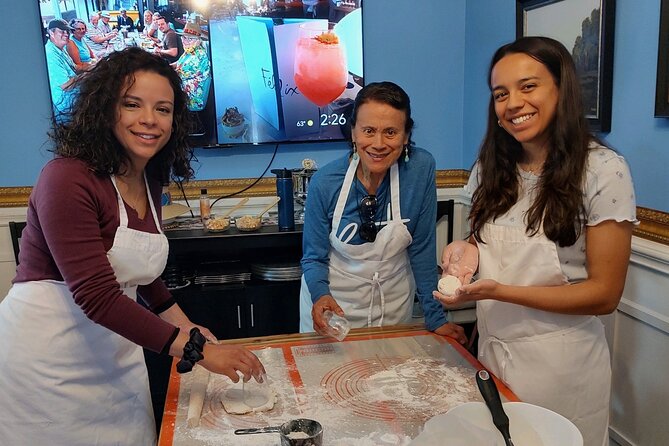
Charleston’s food story makes the most sense when you get your hands into it. In this class, you chop, stir, season, and bake three Lowcountry dishes, then sit down to eat them in a charming 19th-century dining room. The morning menu covers buttermilk biscuits, pimento cheese, and Huguenot torte. The afternoon session turns to red rice, skillet cornbread, and seasonal cobbler.
I like two things right away: the recipes are simple enough to make again at home, and the cooking comes with useful stories about Charleston ingredients and traditions. Instructors such as Martha explain the small tricks that matter, especially with biscuits. The main caution is size. The class can reach 16 people, so the amount of hands-on work may vary from one session to another.
Key points at a glance
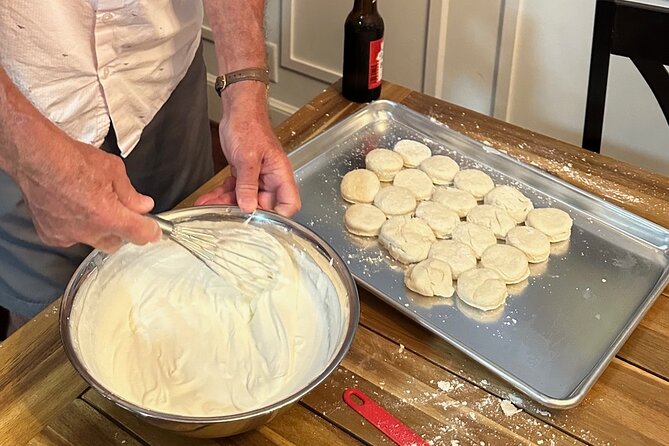
- Two distinct menus: Morning focuses on Huguenot torte, buttermilk biscuits, and pimento cheese; afternoon features Charleston red rice, skillet cornbread, and seasonal cobbler.
- Cooking and eating are combined: You prepare all three dishes, then enjoy them with coffee or tea at the meeting point.
- Martha is a memorable instructor: Her teaching blends practical kitchen advice with stories about Charleston and Lowcountry food.
- No cooking background is required: The recipes are approachable, and several dishes come with techniques you can use at home.
- Small enough for conversation, but not always intimate: The maximum is 16 people, and some tasks may be shared in a fuller class.
- Plan on two hours: One earlier description gave a shorter time, but the current timing is about two hours, which matters if you have another activity booked afterward.
What this Charleston cooking class is really like
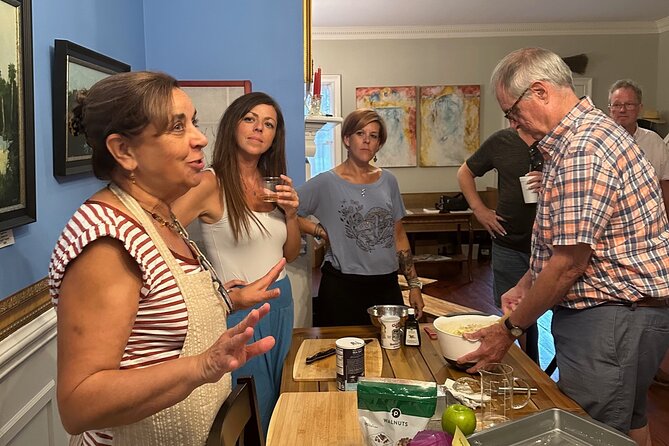
This is not a restaurant meal with a short demonstration added on. You take part in the preparation. That distinction matters if you want to leave Charleston with more than a list of dishes you sampled.
The class is held at 184 East Bay Street, in central Charleston, and finishes at the same location. After arriving, you work with a Lowcountry Culinary Expert to prepare three regional foods. The instruction is designed for mixed skill levels, so you do not need to arrive with polished knife skills or much baking experience.
The class has a social side, too. You work alongside other people, divide up tasks, and share the finished meal. That makes it a good choice for a couple, a family, or friends looking for an indoor activity that feels different from another walking tour.
The cooking itself is only half the point. The instructor explains where the recipes fit into Charleston food culture and why particular ingredients matter in the region. The result is a basic cooking lesson with a strong sense of place.
More Cooking Classes in the USA:
- New Orleans Demonstration Cooking Class with Meal
★ 5.0 · 3,000 reviews - New Orleans Hands-On Cooking Class with Meal
★ 5.0 · 1,183 reviews - Undiscovered Charleston: Half Day Food, Wine & History Tour with Cooking Class
★ 5.0 · 948 reviews
Choosing between the morning and afternoon menus
The two sessions are not repeats. You are choosing between two separate menus, so timing should depend on the foods you most want to learn.
The morning menu: biscuits, pimento cheese, and Huguenot torte
The morning class prepares buttermilk biscuits, Charleston pimento cheese, and apple and walnut Huguenot torte.
The biscuits are likely to be the most technique-focused part of the session. Several participants singled out the biscuit instruction, including practical tips that helped even people who do not usually bake. This is useful because biscuits can look easy on paper but depend on handling, mixing, and baking details.
Pimento cheese is a more forgiving recipe and a clear example of a Southern spread that fits easily into home cooking. It is also a good group dish because several people can help prepare it without waiting for a single cooking station.
The Huguenot torte gives the class a dessert centerpiece. You learn about a Charleston dessert with French Huguenot connections while preparing an apple and walnut version. It adds a bit more character than a generic cake or cookie lesson, and it rounds out the menu nicely.
This session suits you if breakfast foods, baking, and sweets appeal to you. It also works well for families. One 16-year-old participant enjoyed the class, and the recipes were provided afterward, making it easier to repeat the meal at home.
The afternoon menu: red rice, cornbread, and seasonal cobbler
The afternoon menu shifts to savory Lowcountry cooking. You prepare Charleston red rice, skillet cornbread, and a seasonal cobbler.
Red rice is the most region-specific item of the three. It gives the class a chance to explain a dish tied to Charleston and the wider Lowcountry, rather than focusing only on familiar Southern staples.
Skillet cornbread brings a practical, home-kitchen element. It is the kind of food that can serve as a useful side dish long after your trip, especially since the recipes are intended to be taken home.
The seasonal cobbler changes with the time of year, so the exact fruit is not fixed in the information provided. That gives the afternoon menu a little flexibility, but it also means you should not book expecting one particular cobbler flavor.
Choose the afternoon class if you prefer a lunch-style menu or want to concentrate on rice, cornbread, and a fruit dessert. If you have time in Charleston, the two menus offer enough difference that taking both could make sense, though each class is priced separately.
Same region, a different dish to learn:
- New Orleans: Cajun and Creole Cooking Class
★ 4.9 · 730 reviews - Hands-on Cajun Roux Cooking Class in New Orleans
★ 5.0 · 356 reviews - Hands-On Hawaiian Imu Cooking and Cultural Dining Experience
★ 5.0 · 95 reviews - Farm to Table Cooking Class at Kulaniapia Falls
★ 4.5 · 36 reviews
Learning from Martha and the cooking team
Martha is the instructor most often named in the available feedback, and her role seems to be central to the character of the class. She combines clear preparation instructions with stories about Charleston food and the South.
Her teaching style is described as warm and down to earth rather than formal or intimidating. That matters if you are not a regular cook. You can follow along without feeling that the class is aimed only at experienced home chefs.
Martha’s strength appears to be the link between method and meaning. You do not simply hear that a dish is traditional. You learn about its ingredients, its place in regional culture, and the small choices that help it work.
One class also had Mimi assisting Martha. Other sessions refer to a chef or instructor without naming that person, so staffing may vary. The consistent feature is an instructor-led format with a Lowcountry focus, not a self-guided kitchen activity.
If you want a highly technical culinary school lesson, this may feel light. One person found the recipes simple and the space less like a formal cooking school. That is a fair point. The class aims for approachable food, shared participation, and Charleston context rather than advanced culinary training.
How hands-on is the work?
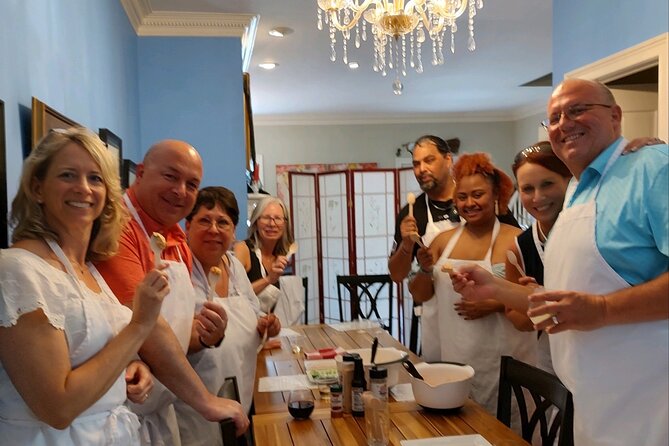
You are expected to chop, mix, season, and prepare the dishes, but the precise division of tasks depends on the size of your class.
With a smaller group, you may get a more direct turn at each recipe. With a fuller group of up to 16, tasks may be split among participants. One account found that a larger group reduced the amount of hands-on work, while another found six people close to ideal.
That difference is worth considering. If you want every minute at the cutting board, ask about the expected group size when booking if that information is available. If your main goal is to learn the recipes, hear the stories, and enjoy a shared meal, a larger group should not ruin the experience.
The class is designed so that cooks of different levels can participate. You do not need to be confident in the kitchen, and the recipes are not presented as difficult projects. That makes this a better fit for a mixed group than a class built around advanced techniques.
The meal at the end is part of the value
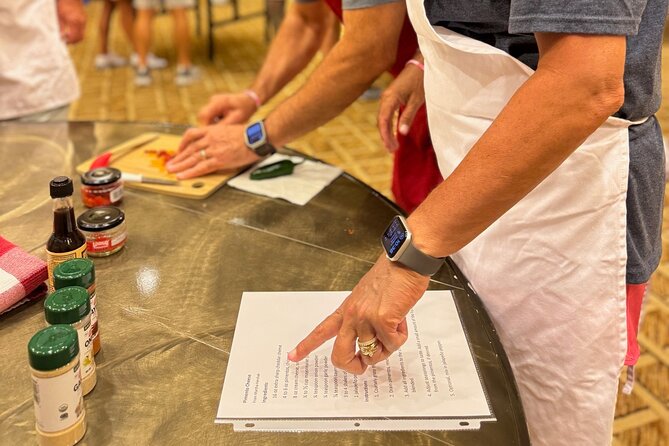
After preparing the food, you sit down and eat what you made. Coffee and tea are included, and the prepared dishes are enjoyed during the activity rather than sent home as a boxed meal.
This final sitting changes the rhythm of the class. You are not rushing from one recipe to another and then leaving with a quick taste. You get time to see how the dishes work together and to talk with the people you cooked beside.
The setting also adds something. The class takes place in a charming 19th-century dining room, which gives the meal a stronger Charleston feel than a plain demonstration room would. It is still a cooking workshop, not a historic house tour, but the surroundings support the food-and-culture theme.
The food is described as delicious across the strongest feedback, but keep expectations sensible. The menus use approachable recipes, and the class is not built around a chef’s tasting menu or rare ingredients. Its value comes from making the dishes, understanding them, and eating together.
What the $99 price gets you
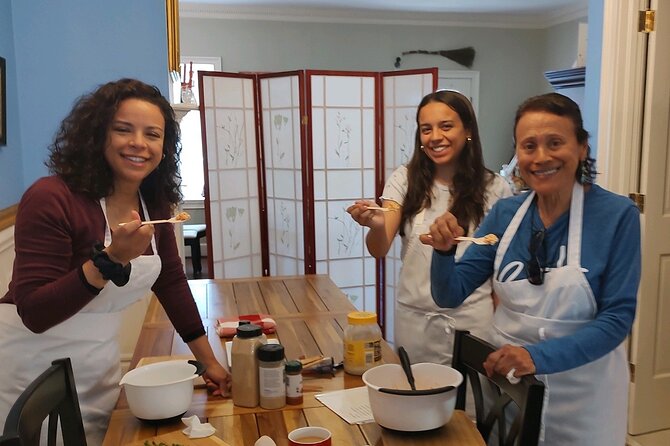
At $99 per person, this is not the cheapest way to have a meal in Charleston. The price makes more sense when you count the instruction, ingredients, kitchen supplies, three dishes, coffee or tea, and the meal at the end.
You also receive more than a recipe demonstration. The instructor provides background on the dishes and the region, while you practice methods that can be repeated at home. That is a better deal for someone who enjoys participating than for someone who simply wants to sample Southern food.
The recipes are intentionally practical. People specifically valued being able to recreate the biscuits, pimento cheese, torte, rice, cornbread, or cobbler later. If you cook at home, that take-home usefulness adds real value.
The price is less compelling if you dislike group activities or want a formal kitchen with individual stations. One lower rating described the recipes as basic and the setup as unlike a traditional cooking environment. I would treat that as a useful warning, not a reason to dismiss the class. You are paying for an approachable regional food lesson, not professional chef training.
Timing, location, and planning your day
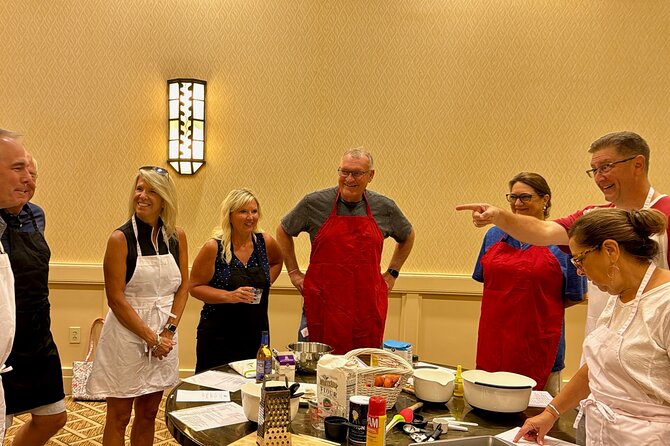
The class lasts about two hours and begins and ends at 184 E Bay Street, Suite 103. It is near public transportation, and you receive a mobile ticket.
Allow the full two hours when planning your day. A previous description used a shorter estimate, but the class is now described as approximately two hours. The difference is enough to affect a lunch reservation, museum visit, or another tour immediately afterward.
The morning session works neatly as a 10 a.m. to noon activity based on the timing described by one family. The afternoon session gives you a different menu and a later start, though the exact start time should be checked when you book.
Because the class ends where it begins, you do not need to arrange a separate return transfer. That is handy if you have a compact Charleston schedule. You can also make this an easy indoor break if the weather is unpleasant, though no specific accessibility details are provided.
Food allergies can be addressed when advance notice is given and accommodation is possible. Contact the operator before the class rather than waiting until arrival. This is especially important when the menu includes baked goods and prepared spreads.
Who will enjoy this most?
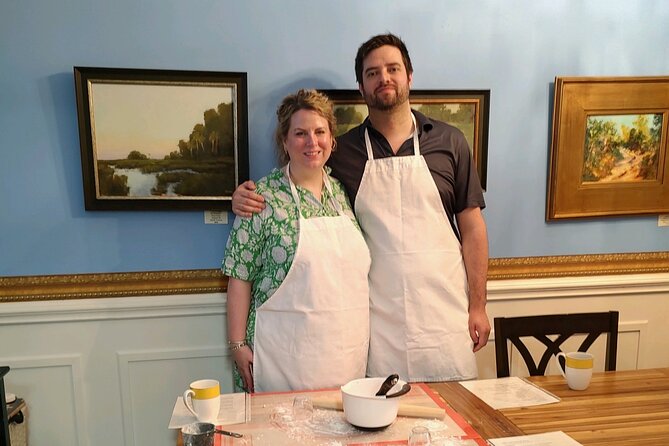
I would recommend this class to you if you want a food activity with context and participation. It is especially suitable for:
- Couples who want an activity beyond sightseeing
- Families with older children or teenagers
- Friends marking a birthday or special trip
- People who cook at home and want regional recipes
- Beginners who prefer clear guidance over a demanding lesson
- Repeat visitors to Charleston looking for something different
It also works well for solo participants because the group format encourages conversation. The class can help you meet people without making social interaction the whole point.
I would think twice if you want a quiet private lesson, a professional-grade kitchen, or complex recipes. The maximum group size is 16, and the class favors easy-to-follow food over elaborate technique.
Cancellation and booking details
You can cancel for a full refund up to 24 hours before the start time. Cancellations or changes made within 24 hours are not refunded or accepted.
The class requires a minimum number of participants. If that minimum is not met and the activity is canceled, you are offered another date or experience, or a full refund.
The experience is offered in English. It is commonly booked about 25 days ahead, so planning early is sensible if you need a particular morning or afternoon menu.
Should you book this Charleston cooking class?
Book it if you want to understand Charleston through food and then make the food yourself. The strongest reasons are the approachable recipes, the story behind each dish, Martha’s engaging instruction when she leads the class, and the chance to sit down with the results.
Pick the morning session for biscuits, pimento cheese, and Huguenot torte. Pick the afternoon for red rice, skillet cornbread, and seasonal cobbler. At $99, it is a fair value for a two-hour cooking lesson, ingredients, supplies, and a shared meal, but it is not the right choice if you expect advanced instruction or a private kitchen.
My practical advice is simple: allow the full two hours, give advance notice about food allergies, and choose your menu before booking. For a hands-on introduction to Lowcountry cooking with a social, story-filled format, this is one of the more useful food activities you can add to a Charleston visit.
FAQ
Where does the cooking class begin and end?
It begins at 184 E Bay St, Suite 103, Charleston, South Carolina 29401, and ends back at the same meeting point.
How long does the class last?
The class lasts approximately two hours. Plan your next activity with the full two-hour schedule in mind.
How much does the class cost?
The listed price is $99 per person.
What food is prepared in the morning class?
The morning menu includes Huguenot torte, buttermilk biscuits, and pimento cheese.
What food is prepared in the afternoon class?
The afternoon menu includes Charleston red rice, skillet cornbread, and seasonal cobbler.
Are coffee and tea included?
Yes. Coffee and tea service are included, along with the prepared food you make during the class.
Do I need cooking experience?
No. The class is designed for different skill levels, and the recipes are approachable for people who do not cook often.
How many people can attend?
The class has a maximum of 16 participants.
Can I cancel for a full refund?
Yes. You can cancel at least 24 hours before the start time for a full refund. Cancellations within 24 hours are not refunded.
Newest classes around the USA
- Sushi Making Cooking Class at a Local Brewery in Charlotte★ 5.0 · 2 reviews
- Authentic Asian Cooking Class in NYC (Includes 4-Course Meal)★ 5.0 · 8 reviews
- Baumkuchen Campfire Baking Class★ 5.0 · 3 reviews
- Hands-On Hawaiian Imu Cooking and Cultural Dining Experience★ 5.0 · 95 reviews
- Farm to Table Cooking Class at Kulaniapia Falls★ 4.5 · 36 reviews
- French Cooking Class in Baltimore (Includes 3-Course Meal)★ 5.0 · 2 reviews
- Private Atlanta Cooking Class with a Fun Local Chef Naina★ 5.0 · 2 reviews
- Thai Cooking Class in Fullerton, California★ 5.0 · 3 reviews
USA Cooking Classes, compared.
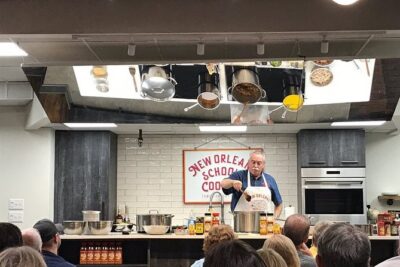
New Orleans Demonstration Cooking Class with Meal
Read our review →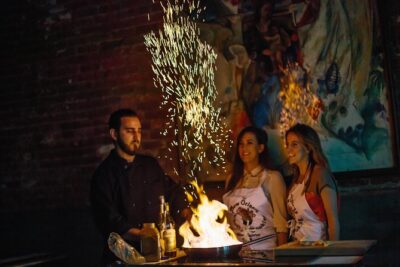
New Orleans Hands-On Cooking Class with Meal
Read our review →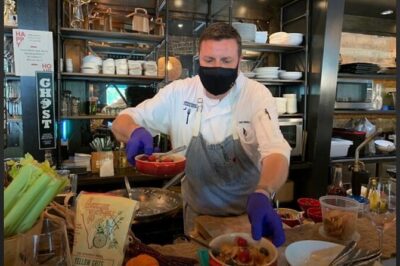
Undiscovered Charleston: Half Day Food, Wine & History Tour with Cooking Class
Read our review →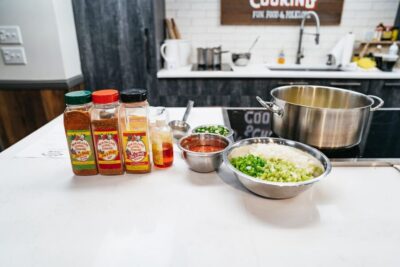
Hands-on Cajun Roux Cooking Class in New Orleans
Read our review →
Hands-On Hawaiian Imu Cooking and Cultural Dining Experience
Read our review →
Farm to Table Cooking Class at Kulaniapia Falls
Read our review →
Atlanta: Historic Market Food Tour and Biscuit Cooking Class
Read our review →Browse the lists this tour appears in