
Review · PARIS COOKING CLASSES
Paris: The Soufflé Baking Class with Chef
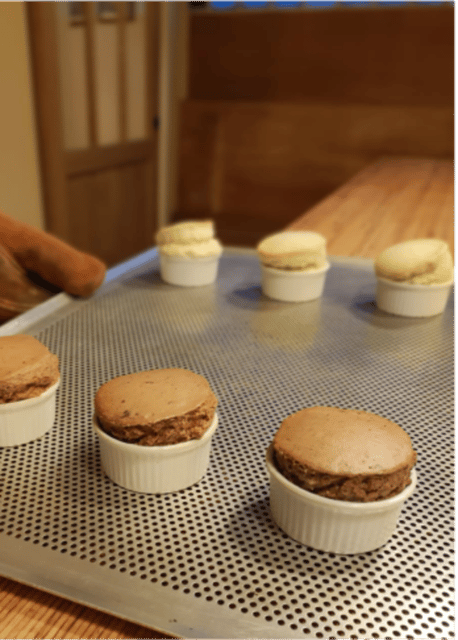
A soufflé class in Paris gives you something more useful than another pretty food photo: you learn why this famously delicate dish rises, falls, and sometimes misbehaves. In 150 minutes, you prepare your own soufflé from scratch with a professional pastry chef, then take it with you.
I like the small class size of eight, which leaves room for questions and hands-on work. I also like the practical finish: you take home your soufflé, its transport packaging, and a digital recipe so the lesson does not end at the studio door.
The main drawback is the narrow focus. The class centers on one classic soufflé, and one participant wished savory soufflés had also been included. At $159, you should book this for careful instruction and a memorable Paris activity, not for a broad pastry course.
Key points to know before booking
- A focused soufflé lesson: You prepare one classic French soufflé from raw ingredients rather than watching a chef do all the work.
- Small groups of up to eight: The format should give you a better chance to ask questions and receive help during delicate steps.
- Chef-led instruction in English: A professional pastry chef explains the method, including the history and science behind the dessert.
- A useful takeaway: You leave with your baked soufflé, transport packaging, and a digital recipe.
- A Notre-Dame district setting: The class fits neatly into a day spent around central Paris and Île de la Cité.
- Flexible booking terms: You can cancel up to 24 hours before the class for a full refund, and reserve now without paying immediately.
Why a soufflé class makes sense in Paris
Paris offers plenty of ways to eat pastry. A soufflé lesson gives you a different role. Instead of simply ordering dessert, you learn the basic decisions that shape it: how ingredients come together, how air is handled, and how timing affects the final rise.
That matters because soufflé has a reputation for being difficult. The dish looks simple on the plate, but its texture depends on technique. The airy result is not accidental. You will be shown the process step by step, then asked to repeat it with ingredients supplied by the studio.
I like that the experience is built around one clear goal. You are not rushing through croissants, macarons, sauces, and several desserts in the same afternoon. You have time to listen, work, bake, and ask questions about the parts that seem uncertain.
The class also suits a range of cooking backgrounds. You do not need advanced pastry skills, and the instruction is in English. If you already bake, you can focus on the details that make soufflé different from an everyday cake or custard. If you are new to French pastry, the chef guides you through the process rather than expecting you to know kitchen shorthand.
More Baking Classes in France
- Paris Croissant Small-Group Baking Class with a Chef
★ 5.0 · 910 reviews - Paris: French Croissant Baking Class with a Chef
★ 4.9 · 712 reviews - Paris Macarons Small-Group Baking Class with a Chef
★ 5.0 · 316 reviews
Starting with the science behind the rise
The class begins with an introduction to the history and science of soufflé. That opening is useful because it gives meaning to the steps that follow. You are not just told to mix, fold, or bake. You learn why the technique matters.
For a dish with such a light appearance, soufflé requires care. The class explains the method before you begin, then follows with a demonstration. This structure helps you see the full process once before handling the ingredients yourself.
The demonstration is especially valuable for anyone who learns by watching. You can note the order of the steps and the chef’s handling before you try it. When your turn comes, you are not working from a recipe alone. You have just seen the movement and timing in practice.
One recent session was led by chef Guillaume, who was praised for being clear, patient, and attentive. The teaching style matters here. Soufflé is the sort of recipe where a small question can prevent a large mistake, so a chef willing to stop and explain is a real advantage.
Preparing your own soufflé from scratch
After the introduction and demonstration, you move into the hands-on part. The studio supplies all raw materials, so you can concentrate on the work rather than shopping for ingredients or measuring everything before class.
You prepare your own soufflé rather than sharing one large batch. That gives the lesson a practical edge. You can see how your decisions affect the mixture, and you have a direct connection to the final result.
The class is designed for all skill levels, but do not mistake that for a casual demonstration. The word soufflé still means you need to pay attention. Follow the chef’s instructions closely, especially during the mixing and baking stages.
This is also where the small group becomes important. With a maximum of eight participants, the chef can keep an eye on the work in progress. You can ask for clarification without trying to get the instructor’s attention across a crowded room.
The activity does not promise a full professional kitchen training course. It is a focused workshop with one main recipe. That is a strength if you want to leave with a clear understanding of one French classic. It may feel limited if you expect several dishes or a wider pastry syllabus.
The baking stage is part of the lesson
Baking is where the recipe becomes a real test. You have prepared the soufflé, but the oven determines how the final texture and appearance develop. The class allows you to see that final stage rather than stopping after preparation.
The wait also gives you time to talk with the chef and the other participants. Tea, coffee, and water are included during the workshop, which is a small but welcome touch during a two-and-a-half-hour activity.
Do not expect a full meal. Food and drinks outside the workshop are not included, and the class is built around the soufflé itself. If you need lunch or dinner, plan to eat separately before or after the session.
The finished soufflé is yours to taste and take away. Transport packaging is included, so you are not left carrying a delicate dessert in your bare hands through central Paris. Still, treat it as a fragile item and plan your day sensibly around it.
More Baking Classes in Paris
- Paris: Macaron Baking Class for Families and Kids
★ 4.7 · 270 reviews - Paris: Macaron Baking Class in Central Paris
★ 5.0 · 208 reviews - Paris: Croissant Baking Class with a Chef
★ 5.0 · 201 reviews - Paris French Baking Class Baguettes and Croissants in a Bakery
★ 4.5 · 172 reviews
Tasting the result and getting the recipe
The tasting is more than a final photo opportunity. It lets you compare the result with the method you have just learned and discuss it with the chef. If the texture or rise is not exactly what you expected, that conversation can help you understand what happened.
You also receive a digital recipe. This is one of the strongest practical features of the class. A cooking activity has limited value if you remember only the general idea but cannot repeat it later. The recipe gives you a reference when you try to recreate the dish at home.
One participant was still waiting for the recipe after the class, so it is sensible to check that you have received it before putting the experience completely behind you. The recipe is meant to extend the lesson beyond Paris, but the timing of delivery may require a little follow-up.
The take-home soufflé adds a second benefit. You do not have to choose between tasting it at the studio and sharing it later. The included packaging makes it possible to carry your creation with you, although the dessert is naturally more delicate than a box of macarons.
A central Paris setting near Notre-Dame
The studio is in the Notre-Dame district, making this easy to pair with sightseeing in central Paris. You can place the class alongside time around the cathedral area and Île-de-France’s most central sights without committing to a full-day excursion outside the city.
The location is a practical part of the experience. You are learning a distinctly French dish in Paris, rather than taking a generic cooking class in an outlying area. The setting adds context without requiring extra transport during the activity.
Exact starting times depend on availability, so check the schedule before building the rest of your day. The 150-minute duration is long enough to require a real time block. Allow extra time around it if you have timed admission elsewhere.
The studio setting also shapes the mood. This is a hands-on workshop, not a restaurant meal or a large public demonstration. You should expect to spend much of the session working and listening, with the food itself as the main focus.
What $159 buys you
At $159 per person, this is not a bargain cooking lesson. The price makes the most sense if you value professional instruction, a small group, ingredients, a take-home result, and a recipe you can use later.
You are paying for more than the raw materials. The chef’s guidance is the core of the activity, especially because soufflé technique can be hard to understand from a written recipe alone. The small group of up to eight should also give the class a more personal feel than a large workshop.
The value is weaker if you mainly want to eat a soufflé. A Paris restaurant may offer that for less, and you will not need to spend 2.5 hours preparing it. This class is for you if the process is part of the pleasure.
The price would feel stronger to some people if a second preparation, such as a savory soufflé, were included. That option is not part of the stated class, so you should book with the single-recipe format in mind.
Who will enjoy this class most
I would recommend this experience to home cooks, curious food lovers, couples, solo visitors, and families with an interest in French pastry. The all-skill-level format makes it approachable, while the professional chef gives experienced bakers something more useful than a basic recipe card.
It also works well for a solo participant. In one class, a participant was alone, and the activity still went ahead. The result was highly personal instruction from the chef and assistant rather than a canceled session. That is reassuring if you are visiting Paris on your own or booking outside the busiest season.
The class may suit you less if you want a fast activity between major sights. Two and a half hours is a serious commitment, and cooking requires attention. It is also not ideal if you want a large meal, a tour of several French dishes, or instruction in another language.
Wear comfortable clothing suitable for a kitchen environment. You do not need to arrive as a trained cook, but you should be ready to work rather than simply watch.
Booking details that matter
Classes are taught in English, and the group is limited to eight participants. The small number is worth noting because it affects how much direct help you may receive during the preparation.
The activity lasts 150 minutes, or 2.5 hours. Starting times vary, so check availability before booking. You can reserve and pay later, which helps if your Paris schedule is still shifting.
Cancellation is free up to 24 hours in advance for a full refund. That gives you some protection if your plans change, but it does not remove the need to arrive on time for a hands-on class.
Tea, coffee, and water are included. Meals and drinks outside the workshop are not, and no wider sightseeing transport is part of the activity.
Should you book this soufflé workshop?
Book it if you want a focused, hands-on Paris food experience and like the idea of learning one classic recipe properly. The English instruction, small group, take-home soufflé, and digital recipe make it more useful than a quick tasting.
I would be especially comfortable recommending it to solo visitors and people who enjoy cooking at home. The personal attention can be excellent when the group is small, and the recipe gives you a way to keep using what you learned.
Think twice if $159 feels high for one dessert or if you expect several recipes. The missing savory option is the clearest limitation. For the right audience, though, the class offers a memorable afternoon near Notre-Dame and a skill you can try again after Paris.
FAQ
How long does the soufflé class last?
The class lasts 150 minutes, or 2.5 hours.
Where does the class take place?
The workshop takes place in a studio in the Notre-Dame district of Paris, in the Île-de-France region.
Is the class taught in English?
Yes. The instructor teaches the class in English.
How many people can join the class?
The class is limited to a maximum of eight participants.
Is the class suitable for beginners?
Yes. The workshop is suitable for all skill levels.
What is included in the price?
The price includes all raw materials, transport packaging, a digital recipe, and tea, coffee, and water during the workshop.
Can I cancel the booking?
Yes. You can cancel up to 24 hours in advance for a full refund. You can also reserve now and pay later.
Newest classes around Paris
- Paris: Millefeuille baking class with a chef★ 5.0 · 5 reviews
- Paris: Traditional Croissant Cooking Class With Local Baker★ 5.0 · 2 reviews
- Paris: Lemon Tart Baking Class with a Pastry Chef★ 5.0 · 4 reviews
- Paris: Macaron Baking Class★ 4.4 · 26 reviews
- Paris: Hands-On Small Group Cooking Class★ 4.9 · 19 reviews
- Paris: Evening Cooking Class with Optional Market Visit★ 4.8 · 19 reviews
- Paris Cooking Class: French Desserts Class★ 4.9 · 13 reviews
- Eclair Baking Class with A Pastry Chef★ 5.0 · 3 reviews
Paris Cooking Classes, compared.
Paris Cooking Class and Lunch with Wine plus Market Visit Option
Read our review →
Paris Croissant Small-Group Baking Class with a Chef
Read our review →
Paris Cooking Class: Learn How to Make Macarons
Read our review →
Paris Evening Cooking Class French Dinner and Market Visit Option
Read our review →
Paris French Cuisine Small Group Cooking Class with Lunch
Read our review →
Paris Macarons Small-Group Baking Class with a Chef
Read our review →Browse the lists this tour appears in