
Review · INDONESIA COOKING CLASSES
Bali: Private Balinese Cooking Class in a Family Home
The best part of this experience is not the recipe card. It is the setting: you visit a local market, then cook in a real Balinese family home, often in the countryside east of Ubud. Guides such as Indah, Sana, Putu, and Nyoman add cultural context during the drive and help bridge the language gap at home.
I like the hands-on cooking and the chance to eat food you prepared from fresh ingredients. I also like the personal scale. This is a private group, not a large demonstration where you watch someone else do all the work. The main caution is travel time: from Nusa Dua or Seminyak, the drive can take two hours each way.
Key points to know
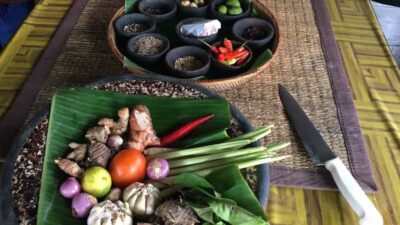
- Market first: Select or inspect fresh vegetables, herbs, spices, meat, and other ingredients before cooking.
- Family-home setting: The class takes place in a traditional Balinese home, with a direct look at village life and local customs.
- Five to six dishes: You prepare a full meal, with standard non-vegetarian and vegetarian menus available.
- Private and hands-on: You cook at your own station with help from an English-speaking instructor.
- Six-hour day: The cooking takes about four hours, with transport, market time, breaks, and possible stops making up the rest.
- Long transfers matter: The rural setting is the attraction, but it can make this a full-day commitment from southern Bali.
A cooking class that begins at the market
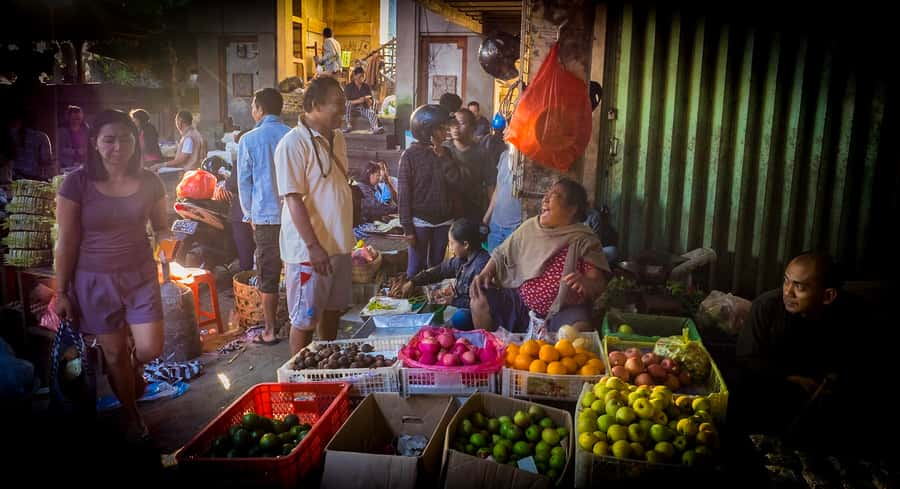
This is a food tour with a cultural trip attached. Your day begins with hotel pickup, followed by a ride to a local market. The exact market experience depends on the time of day and local regulations, but the purpose is clear: you get to see the ingredients before they become lunch.
Your guide can explain what you are looking at and answer questions about Balinese produce, spices, and cooking habits. This part is especially useful if you are curious about ingredients that rarely appear in a standard restaurant meal. You may see piles of vegetables, herbs, chilies, coconuts, and other supplies used in everyday home cooking.
The market is not just a shopping stop. It gives you a better sense of how the meal is built. You can see that Balinese food depends on fresh preparation, careful chopping, spice pastes, coconut, herbs, and sauces rather than a single bottled seasoning.
The market may be quieter or less complete during local celebrations. That happened on one afternoon, and the guide adjusted the route with a nearby coffee stop. This is worth keeping in mind: the market visit is included, but it is not a fixed theatrical performance.
More Private Cooking Classes in Indonesia
- PRIVATE Authentic Balinese Cooking Class in Ubud at Putu’s Home
★ 5.0 · 644 reviews - PRIVATE Balinese Cooking Class in Ubud with Dewa with Transfers
★ 5.0 · 213 reviews - PRIVATE Ubud Market Tour & Balinese Cooking Class with Putu
★ 5.0 · 125 reviews
The drive to a traditional family home
After the market, you continue to the family home where the class takes place. Several itineraries describe homes in or near Bangli and east of Ubud, with rice fields, household animals, and a slower village setting nearby.
The drive can become one of the most informative parts of the day. Guides including Sana, Putu, and Wayan Sana have been praised for explaining Balinese traditions, Hindu customs, and points of interest along the road. The countryside setting also gives you a look at Bali beyond the main beach resorts and busy restaurant districts.
There is a tradeoff. A ride from Nusa Dua or Seminyak may take more than two hours each way, and a group of five may find the vehicle tight. From Ubud, the journey is likely to be more manageable, though the exact pickup time and route vary.
I would not book this class if you want a quick activity near your hotel. I would book it if the trip to a village home sounds like part of the appeal. In that case, the drive is not wasted time. It is the bridge between resort Bali and the family setting you came to see.
Cooking in a home instead of a classroom
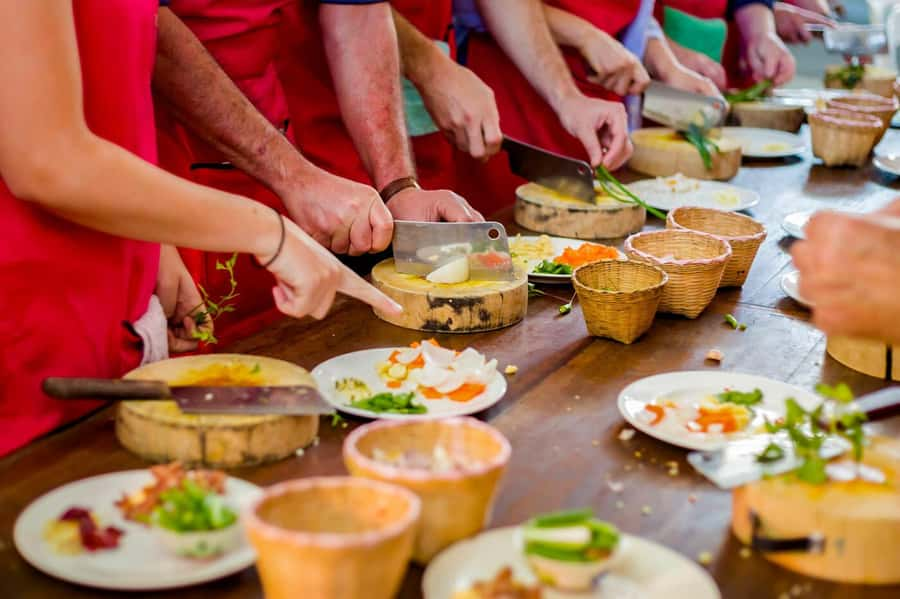
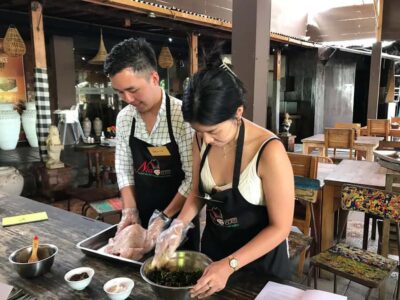
At the home, you receive a welcome drink and meet the local family. The cooking space is fully equipped with aprons and utensils, and the class is designed for active participation.
The instructor first demonstrates the dishes. Then you move to the stoves and prepare your own food with help from the chef. The pace is friendly and practical, with advice on chopping, mixing, seasoning, and handling the ingredients.
One useful lesson is that texture and preparation matter as much as the ingredient list. Balinese spice mixtures often require very fine chopping, and the way ingredients are cut can affect the final flavor. Satay Lilit is another good example. It is formed around sticks and traditionally cooked over charcoal, sometimes using coconut shells for the grill.
The class is private, but that does not mean you receive a private chef who does everything for you. You need to be ready to chop, stir, shape, grill, and ask questions. One account found that the local cook did more of the preparation than expected, while the guide did his best to explain. If you want maximum instruction, tell the guide at the start that you want to handle as much of the work as possible.
Language can also shape the lesson. The activity is conducted in English, but not every family member speaks English. Your guide usually acts as the interpreter and cultural explainer, though some moments may be more demonstration than conversation.
What you cook on the standard menu
The standard menu offers a broad taste of Balinese home cooking rather than one signature dish. You may prepare:
- Basic yellow sauce and peanut sauce with vegetables
- Sate Lilit Bawi, charcoal-grilled pork sticks
- Pepes Ikan, fish cooked in banana leaves with herbs and spices
- Balinese fried chicken
- Lawar Bali, a mixture of vegetables, coconut, meat, herbs, and spices
- Mie Goreng, fried noodles
- Kolak Pisang, bananas cooked in palm sugar gravy
That is a substantial meal for a half-day class. The number of dishes also means you experience several cooking methods: grilling, frying, steaming or wrapping in banana leaves, mixing, and preparing sauces.
The menu is not simply a list of restaurant favorites. Dishes such as Lawar Bali and Pepes Ikan show how herbs, coconut, vegetables, meat, and spice pastes work together in Balinese food. Sate Lilit is particularly memorable because the mixture is shaped around a stick rather than formed into the familiar cubes of many other satays.
The class may include five or six dishes depending on the chosen menu and the flow of the session. You also receive breaks for fresh tropical fruit and Loloh Cem Cem, a homemade herbal drink associated with Bali. These pauses are welcome because the class involves a lot of preparation before you sit down to eat.
More Balinese and Indonesian Classes in Indonesia:
- Ubud: Balinese Cooking Class at an Organic Farm
★ 5.0 · 1,786 reviews - Ubud Cooking Class Bali with Balinese Chef
★ 5.0 · 1,609 reviews - Balinese Ubud cooking school (9 Dish Cooking and Market Tour)
★ 5.0 · 540 reviews - Ubud: Balinese Cooking Class and Market Tour
★ 4.8 · 531 reviews
The vegetarian menu is a proper meal
The vegetarian option is not a reduced version of the standard class. It includes its own set of dishes:
- Basic yellow sauce and peanut sauce with vegetables
- Balinese vegetable soup, described as a Balinese green curry
- Pepes Tempeh, tempeh cooked in banana leaves with herbs and spices
- Tempeh Manis, stir-fried tempeh with sweet soy sauce
- Gado Gado, vegetable salad with peanut dressing
- Kolak Pisang, bananas cooked in palm sugar gravy
This menu gives you a useful introduction to tempeh, a central ingredient in Indonesian cooking. The banana-leaf preparation adds another traditional technique, while Gado Gado shows how a peanut dressing can turn simple vegetables into a satisfying dish.
Choose the menu before the class. Some recipes contain peanuts, soy, spices, meat, fish, or other animal products, so you need to disclose dietary restrictions in advance. The experience is not suitable for people with food allergies, and staff should know about any concern before the day begins.
Eating your own lunch with the family
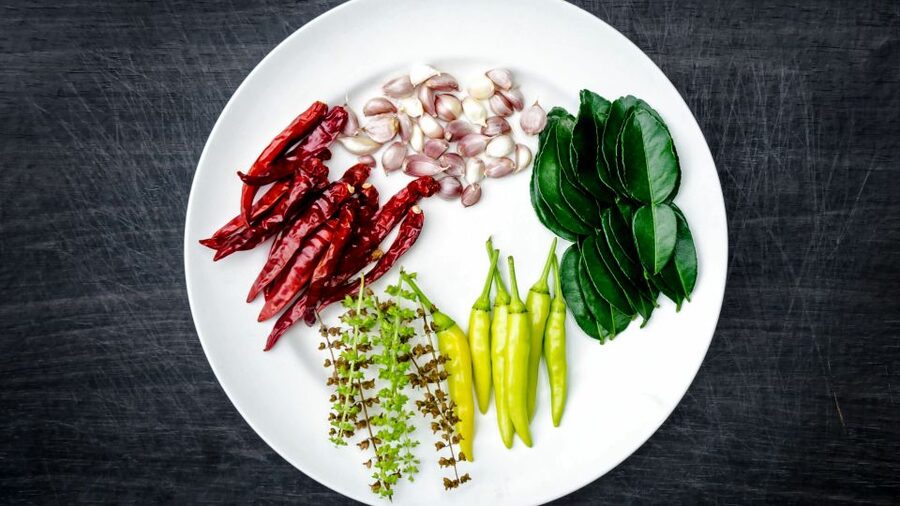
After the cooking, you move to the dining area and eat what you have prepared. This is the payoff, but it also gives you a chance to understand the meal as a whole rather than tasting each item in isolation.
The atmosphere is informal. You may eat with the family, guide, or driver, depending on the arrangement. That shared meal helps the home visit feel less like a staged class and more like an invitation into someone’s daily setting.
The food is likely to taste more personal than a restaurant version because you have seen each stage. You know how finely the ingredients were cut, how the spice mixture was built, and how the dishes were cooked. Any remaining food can be taken back with you.
A handwritten ingredient list has also been provided on some outings, which is useful if you want to recreate the meal at home. Do not expect every recipe to be measured like a Western cookbook. Part of the lesson is learning by look, smell, texture, and taste.
Add-ons that can change the shape of the day
The basic experience already includes hotel pickup and drop-off, ingredients, the cooking class, five to six dishes, an apron, and utensils. Optional add-ons can make the day longer or more varied.
Available additions can include:
- A one-hour or two-hour traditional massage
- Luwak coffee tasting
- Jungle swing with coffee
- Polaroid camera and 10 photographs
- Female guide
- German, Japanese, or Korean-speaking guide
Some add-ons are available only with certain options, so check the exact combination before booking. The coffee stop has been a pleasant extra for some visitors, especially when the market was partly closed, but it is not the core reason to choose this experience.
The massage may appeal to you if you want a slower wellness day. The swing is better suited to people who want a popular photo stop alongside the cooking. If your priority is food and culture, I would keep the basic version and avoid adding too many extras. The rural family visit is already the main event.
Is the $52 price good value?
At $52 per person, the price is fair if you use the transport and care about the cultural setting. You are paying for a private activity, hotel transfers, ingredients, an English-speaking instructor, a market visit, and a full meal rather than for a short kitchen lesson alone.
The value improves for people staying some distance from the cooking location. A private transfer to a village, a local market visit, and several hours with a family would cost more if arranged separately. You also avoid having to navigate rural roads on your own.
The value is weaker if you are staying far south and see the ride as a burden. Two hours each way can turn a six-hour activity into a much longer day. Check your pickup area and ask for a realistic door-to-door estimate before committing.
The 4.8 rating from 87 reviews reflects a very consistent pattern: the food, family welcome, guides, and cultural explanations receive the strongest praise. The less positive points concern the distance, occasional language limits, and the fact that the amount of hands-on cooking may vary.
Who will enjoy this most
I would recommend it to you if you:
- Want to cook rather than sit through a demonstration
- Care about Balinese home life and local traditions
- Enjoy eating a full meal after preparing it
- Prefer a private group to a crowded class
- Are happy to spend much of the day on the road
- Want a guide who can explain culture during the drive
It suits couples, solo participants, and families with older children. Children under 10 are officially not suitable for the activity, and anyone under 18 must be accompanied by an adult.
You should think twice if you have serious food allergies, need wheelchair access, dislike long car rides, or want a polished cooking school with exact measurements and a fixed classroom format.
Practical details before you book
The total duration is six hours, including the market visit, transport, breaks, and cooking. The cooking portion itself is described as about four hours, and morning and afternoon departures are available depending on the date.
The instructor language is English. Female, German-speaking, Japanese-speaking, and Korean-speaking guides can be selected as add-ons when available.
Wear clothing you do not mind cooking in, and follow the family’s customs inside the home. Alcohol and drugs are not allowed, and pets are not permitted as part of the activity.
Cancellation is free up to 24 hours before the start time, and you can reserve now and pay later. Those terms help if your Bali plans are still shifting, but they do not remove the need to confirm the menu and any allergies ahead of time.
Should you book the family cooking class?
Book this experience if you want food, conversation, and a look at village life in the same day. The strongest reason to go is the combination of a local market, a family home, and hands-on cooking. Guides such as Indah, Sana, Putu, and Nyoman have helped make the day personal by explaining Balinese culture along the way.
Skip it if you want a short, central Bali activity or if a long transfer would sour your day. For everyone else, $52 buys more than lunch. It buys a practical introduction to Balinese food and a chance to see how that food fits into family life.
FAQ
How long does the Balinese cooking class last?
The full activity lasts six hours. The cooking session takes about four hours, with transport, the market visit, breaks, and possible stops included in the day.
Is hotel pickup and drop-off included?
Yes. Hotel pickup and drop-off are included in the activity.
Is the cooking class private?
Yes. The class is offered for a private group.
Which languages are available?
The standard instructor language is English. Female, German-speaking, Japanese-speaking, and Korean-speaking guides may be available as optional add-ons.
Can I choose a vegetarian menu?
Yes. You must choose either the standard non-vegetarian menu or the vegetarian menu before the class.
How many dishes will I cook?
Each class includes five to six dishes. The exact dishes depend on the menu you select.
Is a market visit included?
Yes. You visit a local market before the cooking session, although market availability can vary with the time of day and local regulations.
Can I take leftover food home?
Yes. The remaining dishes can be taken home after you eat.
Is the activity suitable for young children?
Children under 10 are not considered suitable for this activity. Children who take part must remain with an accompanying adult.
Can I cancel the booking?
You can cancel up to 24 hours in advance for a full refund. Reserve now and pay later is also available.
More Home Cooking Classes in Indonesia
- Munduk Balinese Cooking Class lunch/Dinner at a Local Home
★ 5.0 · 26 reviews - packages cooking class and romantic dinner in a local home
★ 5.0 · 4 reviews - Khmer Cooking Class at a Local’s Home in Krong Siem Reap
★ 5.0 · 2,731 reviews - Local Home Korean Cooking Class & Market Adventure in Seoul
★ 5.0 · 1,024 reviews
Newest classes around Indonesia
- Pure Bali Village Experience, Cooking & Jamu Class+VIP Transfer★ 5.0 · 16 reviews
- Spice Garden, Jamu & Cooking Class in Bali Village★ 5.0 · 5 reviews
- The Authentic Balinese Cooking Experience★ 5.0 · 4 reviews
- Seminyak : cooking class traditional food bali★ 5.0 · 5 reviews
- Seminyak: Vegetarian Cooking Class★ 5.0 · 3 reviews
- Quad ride, waterfalls & aunthentic cooking class in munduk★ 4.9 · 53 reviews
- Pure Bali Village Experience Cooking & Jamu Class, Transfer★ 4.8 · 5 reviews
- Ubud: Organic Farm Harvest, Bali Cooking Class by Pemulan★ 4.8 · 12 reviews
Indonesia Cooking Classes, compared.
Cooking Class with Transfers and Optional Market Visit
Read our review →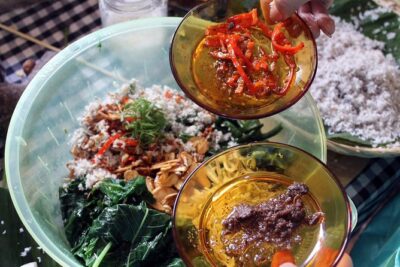
PRIVATE Authentic Balinese Cooking Class in Ubud at Putu’s Home
Read our review →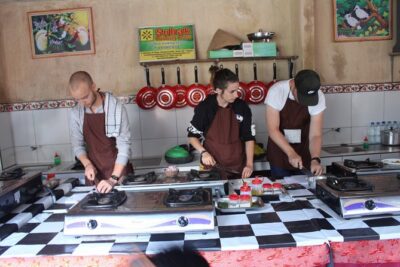
Balinese Ubud cooking school (9 Dish Cooking and Market Tour)
Read our review →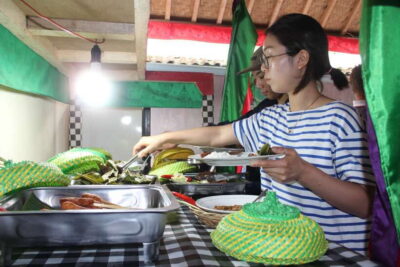
Browse the lists this tour appears in