
Review · LIMA COOKING CLASSES
Miraflores: Amazing Peruvian Cooking Class Ceviche Seafood and Pisco Sour
Peru’s famous ceviche is best understood with a knife in your hand and a plate of fresh fish in front of you. This 2.5-hour Miraflores class combines ceviche, tuna tartare, exotic fruit, and a pisco sour, with José Antonio and María explaining the ingredients and the customs behind them.
I like the small group of up to eight, which keeps the class personal, and the chance to taste 10 house-made pisco flavors before choosing one for your cocktail. The main consideration is that much of the fish and onion may already be cut before you arrive, so this is more of a guided preparation and tasting than a full culinary school session.
Key points at a glance
- Ten infused piscos: Taste a wide selection of house-made flavors before preparing your pisco sour or chilcano.
- Three edible projects: Make one tuna tartare, one ceviche, and one cocktail per person.
- Local hosts: José Antonio and María lead the class themselves and share food, drink, and destination advice.
- Handy Miraflores location: Meet at the Wong Supermarket, only half a block from Kennedy Park.
- Useful extras: You receive recipes, photos, videos, and recommendations for Lima, Cusco, Paracas, northern Peru, and the jungle.
- Accessible format: The room has an elevator and no stairs, and a vegetarian option is available if requested.
Why this Miraflores class feels personal
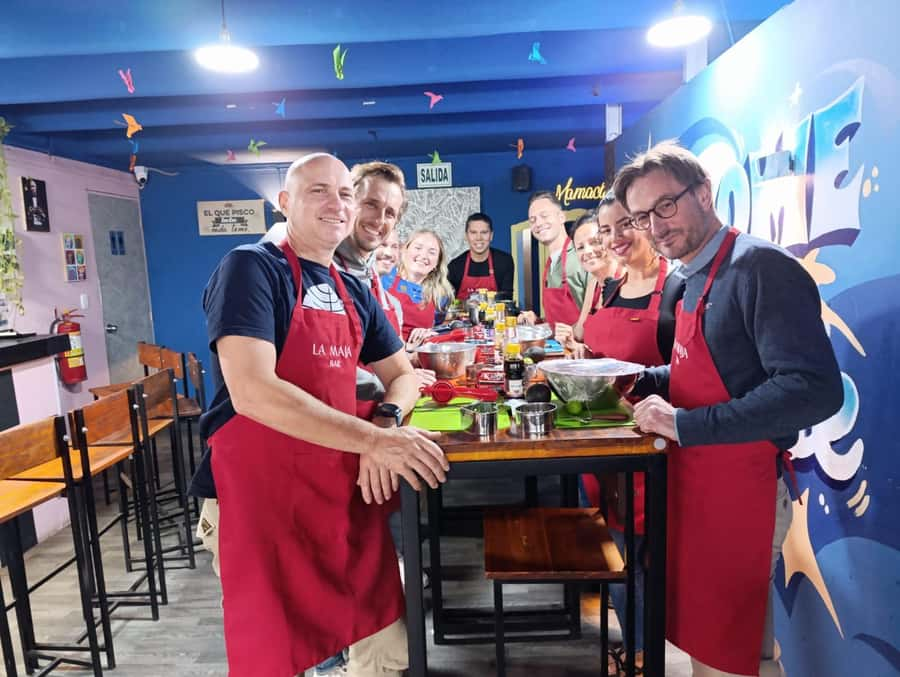
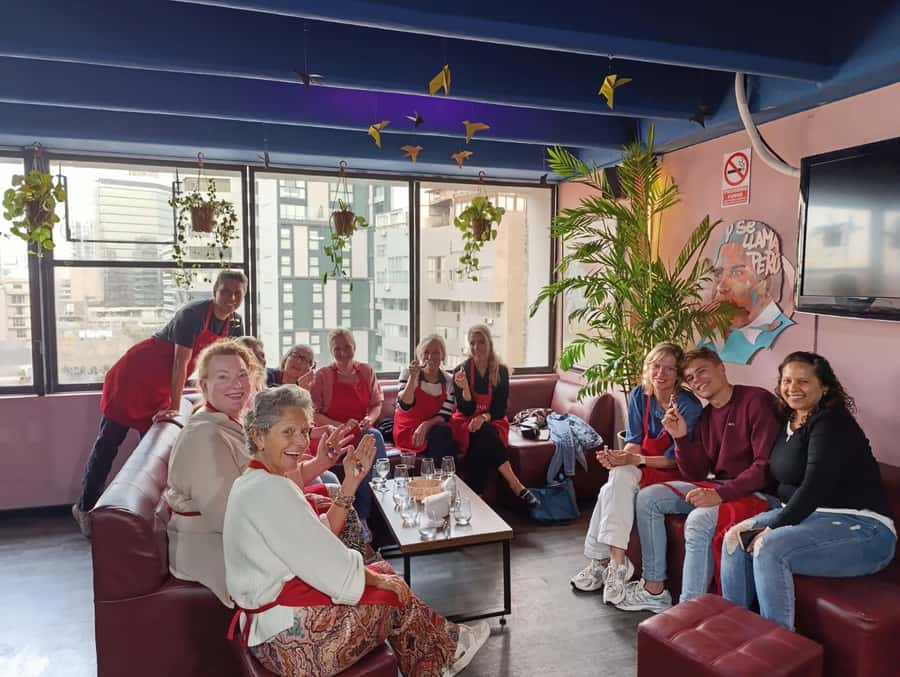
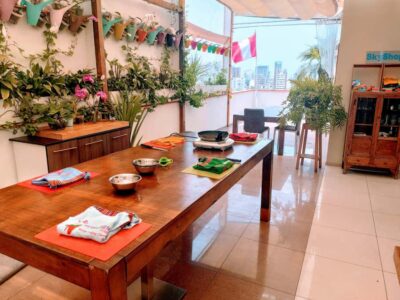
The class begins at the door of the Wong Supermarket, where the host wears a red apron. From there, you go to the private experience room, decorated with Peruvian art and set up for the cooking and tasting session.
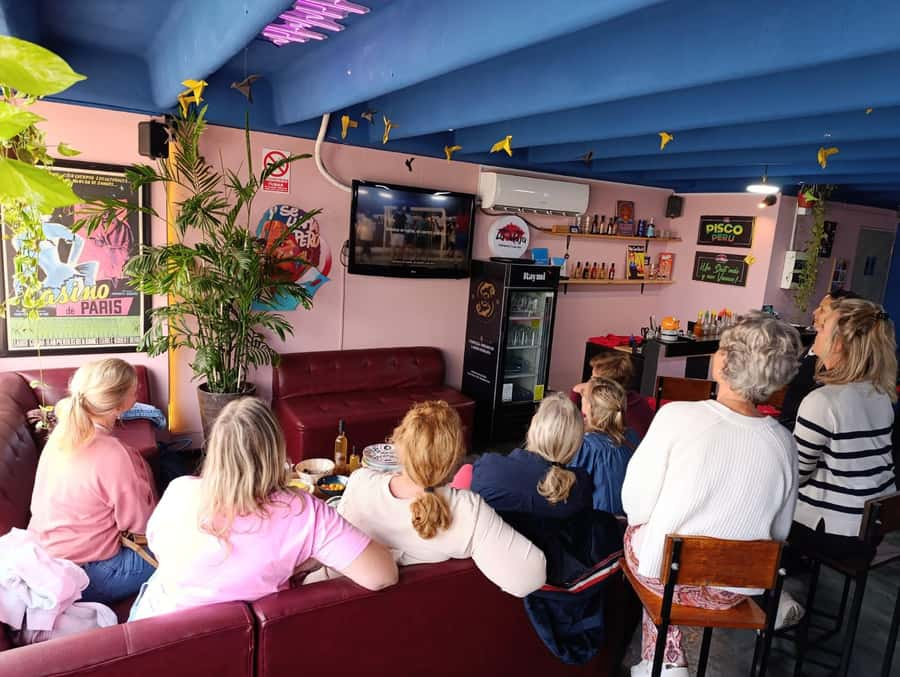
A short video introduces Peru’s coast, highlands, and jungle. That opening matters because Peruvian cooking changes sharply from one region to another. It gives you a quick map of the country before you start tasting its fruit, seafood, and spirits.
José Antonio and María are not simply there to hand you ingredients and read instructions. They talk about their own connection to pisco production and the work behind their distillate. Their personal approach is one of the strongest reasons to choose this class over a larger demonstration with little contact between instructor and participant.
The setting is close to the center of Miraflores, so you do not need to spend much of your afternoon crossing Lima. The meeting point is near Kennedy Park and several hotels. At the end, you return to the same place, which makes this easy to fit into a day of walking, shopping, or sightseeing.
More Seafood Classes in Peru:
- Tokyo Tsukiji Fish Market Tour and Sushi Making Lesson
★ 5.0 · 390 reviews - Seafood paella cooking class, tapas and visit to Ruzafa market.
★ 5.0 · 328 reviews - Barcelona: Paella Seafood Master Cooking Class with Sangria
★ 5.0 · 73 reviews
Tasting exotic fruit and ten kinds of pisco
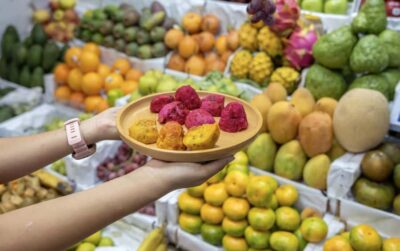
The first tasting introduces exotic Peruvian fruit. You get to try flavors that may be unfamiliar, while the hosts explain how fruit, herbs, and regional produce connect with the country’s food culture.
The exact fruit selection can vary, but the session includes unusual ingredients and gives you a gentle start before the seafood preparation. Some food-focused activities rush straight to the cooking. Here, the fruit tasting helps you pay attention to flavor, smell, and texture before the stronger pisco tasting begins.
Next comes pisco macerado, or pisco infused with other flavors. The hosts produce their own pisco and offer up to 10 variations. The selection has included flavors such as passion fruit and chicha morada, and you can buy bottles from the instructor if you want to take one home.
This is a generous part of the experience, but pace yourself. Ten samples can add up quickly, especially before a cocktail and two seafood dishes. The point is to compare the flavors, not to treat the tasting like a race.
The hosts also explain the story and origins of pisco, including its place in Peruvian culture. You will learn how the drink is used in a pisco sour and a chilcano, then choose the flavor that suits your own cocktail. That choice gives the drink a little more personality than a standard, one-recipe demonstration.
Making tuna tartare with fresh ingredients
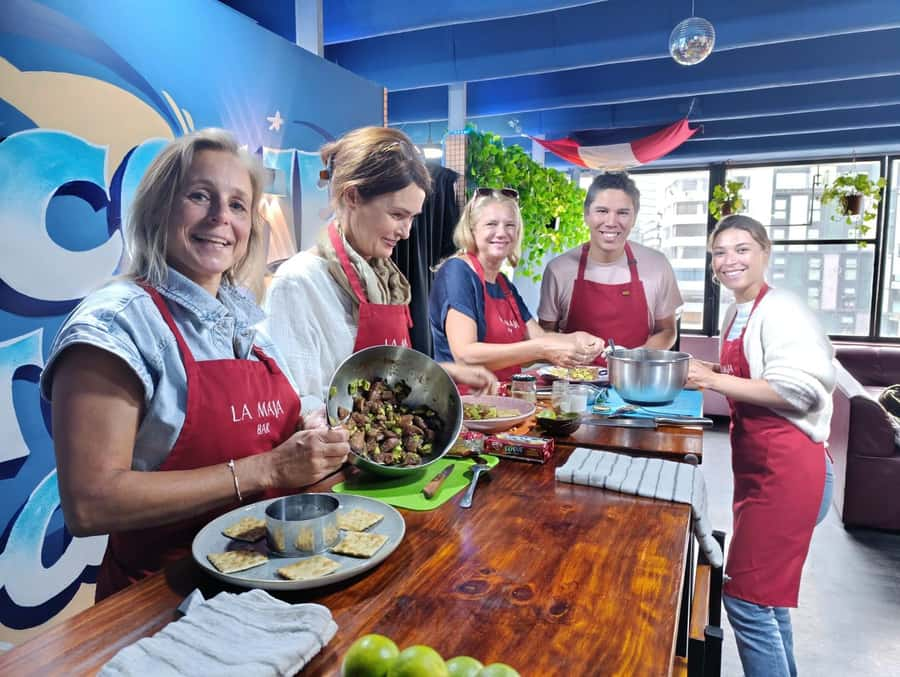
The first dish is tuna tartare. The tuna is mixed with soy sauce, sesame oil, avocado, and lemon, then served on crackers. It is a simple recipe, but the balance matters. The soy brings salt, the sesame oil adds aroma, the avocado supplies softness, and the lemon keeps the mixture bright.
This is a good first dish because the flavors are easy to understand and the preparation does not take long. You will see how a few strong ingredients can turn fresh fish into something polished without a complicated cooking process.
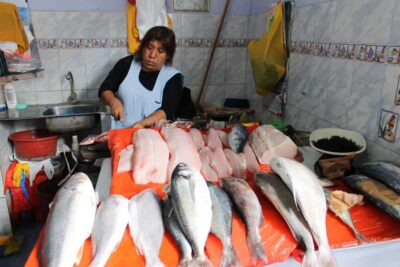
The seafood quality is central here. Several sessions have used fish caught that day, and the hosts place clear importance on freshness. That is especially useful in Lima, where seafood is not an optional side note but one of the city’s main culinary signatures.
One small limitation is worth knowing. Some ingredients, including fish and onions, may be cut and prepared before the session begins. That keeps the timing under control and lets you focus on seasoning and assembly, but it means you may not practice every single knife step yourself.
The tartare is served during the class, so this is not just a demonstration where you watch a plate disappear into the kitchen. You prepare one portion per person and eat what you make.
Shaking your own pisco sour
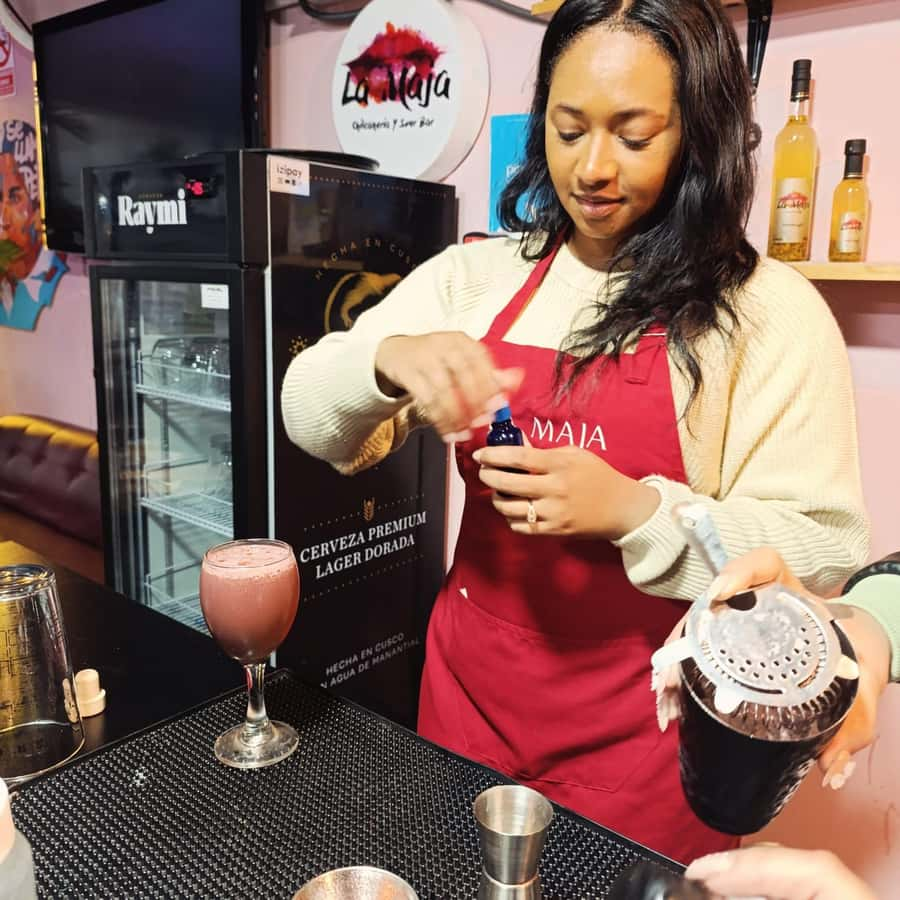
After the tartare, you move to the professional bar to prepare your cocktail. The hosts explain the origins of the pisco sour and guide you through the official recipe. You can make either one pisco sour or a chilcano per person.
This is one of the most enjoyable parts for anyone who likes drinks as much as food. You choose from the infused pisco flavors, then mix and shake your own cocktail. The hands-on step gives you something practical to repeat at home, rather than leaving you with only a pleasant memory and no method.
The pisco sour is also a useful introduction to Peru’s national drink culture. Pisco is not treated as a generic clear spirit here. José Antonio explains his own production, the different infusions, and the reasons certain fruit or herb flavors work in a cocktail.
The bar portion can be lively, especially in a small group. At the same time, alcohol makes this the point where you should slow down and drink water. Unlimited water is included, and using it is sensible before moving on to the final dish.
If you do not want a pisco sour, the listed cocktail option is a chilcano. Tell the hosts about your preference when you arrive so they can guide you through the suitable preparation.
More Cooking Classes in Peru:
- Cusco: Peruvian Cooking Class, Cocktails & Local Market Tour
★ 4.9 · 512 reviews - Cooking class and market tour with a local chef
★ 5.0 · 186 reviews - Market Tour, Tasting of 35 Fruits, and 4-Course Peruvian Cooking Class in Lima
★ 5.0 · 86 reviews - #1 Rated Cooking Classes with Local Market Tour & Pickup
★ 5.0 · 69 reviews
Preparing the ceviche that defines the class
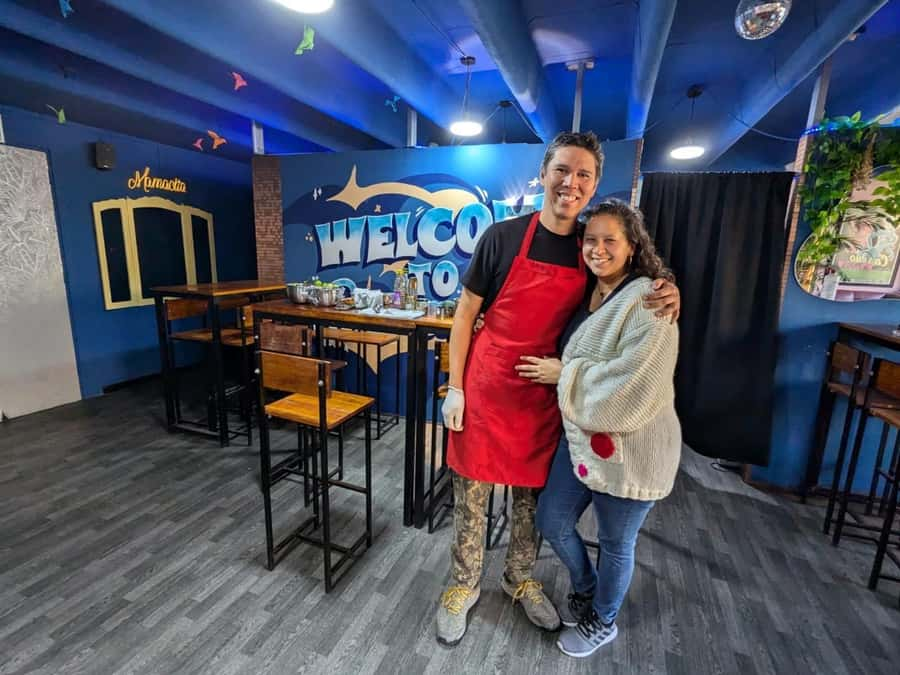
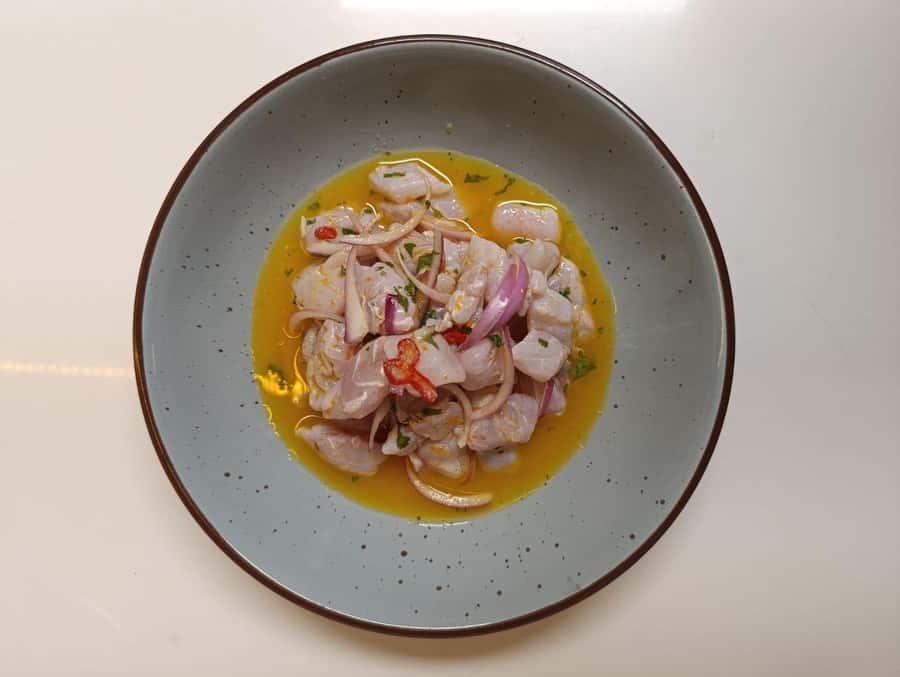
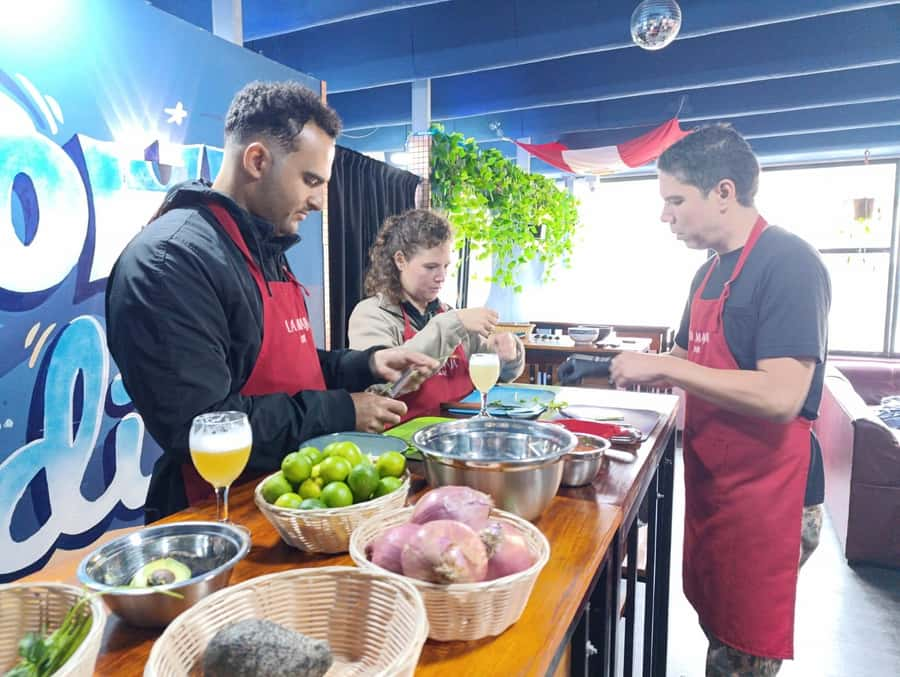
The final cooking project is fish ceviche, the dish most closely tied to Lima’s coastal identity. You prepare one plate per person using the hosts’ own recipe.
Ceviche looks simple on the plate, but it depends on timing. Fresh fish, citrus, onion, seasoning, and heat must work together without allowing the fish to lose its texture. The hosts explain the origins of ceviche and show you the steps behind their version.
This is not a generic recipe copied from a standard cooking manual. The class presents it as a house preparation with a distinctive Lima style. You will learn the basic method, but also how the hosts think about the balance of the dish.
The ceviche is prepared after the tartare and cocktail, so the class ends with its most famous Peruvian plate. That order works well. You first learn the clean, rich flavor of tuna tartare, then practice a cocktail, and finally handle the sharper citrus and seafood combination of ceviche.
The portion is one plate per person, and the food servings are described as generous. Combined with fruit, pisco samples, and a cocktail, the class functions as a substantial light meal rather than a small snack.
What the food and drink quality means for the price
At $40 per person, this is not the cheapest way to eat ceviche in Lima. A restaurant meal will usually be less time-consuming, and you can order a finished cocktail without preparing it yourself.
The value comes from what is added around the food. Your price covers a fruit tasting, up to 10 infused piscos, a tuna tartare, a pisco sour or chilcano, a full ceviche plate, the cultural video, instruction, and unlimited water. You also receive recipes and local recommendations afterward.
The small group matters here. With no more than eight participants, you have a better chance to ask about ingredients, clarify the cocktail method, and speak directly with José Antonio or María. Some sessions have even operated as private classes when no one else booked the same time.
You also receive photos and videos taken during the experience. The hosts send a video compilation afterward, which is a thoughtful extra for couples, solo visitors, or anyone who wants a record of the cooking session without holding a phone over the cutting board.
I would judge the price as fair if you care about food culture and personal instruction. If you only want a quick ceviche meal, a restaurant will suit you better. If you want to learn, taste several pisco styles, and leave with recipes, the added time and attention make the price easier to justify.
The local advice is part of the experience
José Antonio and María offer more than cooking instructions. They share suggestions for Lima and other parts of Peru, including Paracas, Cusco, the jungle, and northern Peru.
That can be useful early in a trip. You can ask about where to eat, which parts of Miraflores to explore, and what activities might fit your route. The hosts have also helped solo participants and couples with ideas for the rest of their stay.
Do not treat every recommendation as a fixed itinerary. Use the conversation to ask specific questions about your own plans. A good question might be which restaurant suits a seafood lunch, or how to divide time between Lima and another destination.
The hosts also take photos and videos throughout the class, so you can stay present instead of documenting every step yourself. This is a small but practical benefit, particularly if you are cooking with both hands or sharing the experience with a partner.
Who will enjoy it most
I would recommend this class to food-focused visitors, couples, solo participants, and young adults looking for an easy evening activity in Miraflores. It works especially well if you want your first structured introduction to Peruvian cuisine without committing to a full-day excursion.
It is also a good choice for anyone curious about pisco. Most Lima activities include a single pisco sour at most. Here, you compare up to 10 infused versions and then choose the one used in your own cocktail.
People with gluten restrictions can request an appropriate option. A previous class accommodated a gluten-free participant, and the provider asks you to report allergies in advance. A vegetarian option is also available, but you should request it before the session.
The activity is wheelchair accessible, with an elevator and no stairs. Still, tell the provider about your needs when booking so the arrangements are clear.
You should be comfortable with seafood if you want the full experience. The menu centers on tuna tartare and fish ceviche, so this is not the right choice for someone avoiding fish. The vegetarian alternative makes it more flexible, but ask what that version includes before you arrive.
Timing, language, and practical details
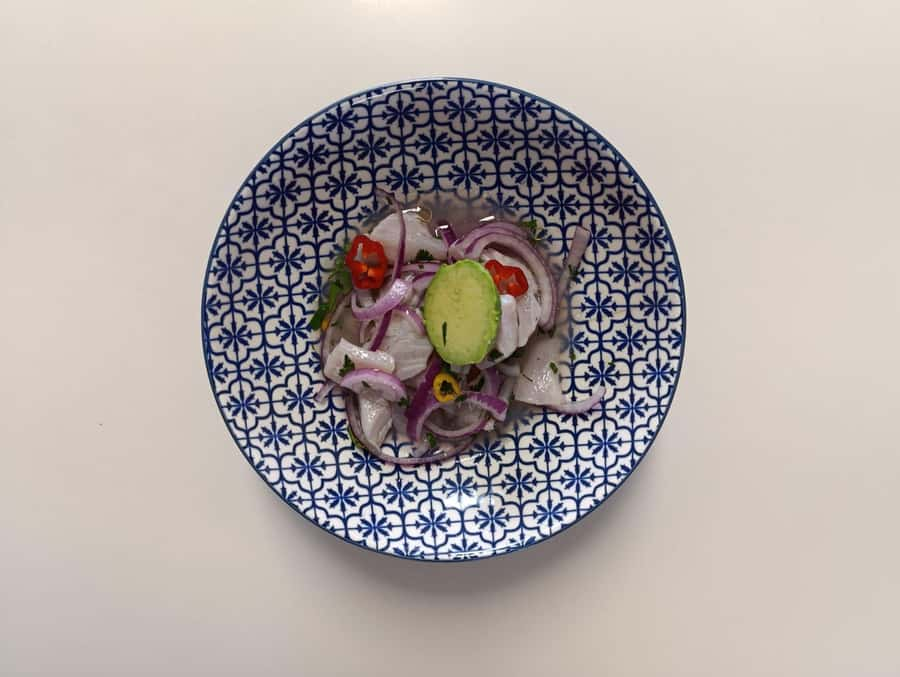
The experience lasts about 2.5 hours. That is long enough for the video, tastings, three preparations, and conversation without taking up an entire day in Lima.
Classes are offered in English and Spanish. Tell the host which language you prefer, particularly if you are booking close to the activity date.
The usual meeting point is the door of the Wong Supermarket, where you look for the red apron. The activity ends back at this same meeting point. The location is half a block from Kennedy Park and about five minutes from nearby hotels, according to the provider.
Starting times vary, so you need to check availability for the date you want. If the listed time does not work, you can write to ask about another schedule. Private mobility can also be requested, but it needs to be arranged in advance.
Cancellation is flexible up to 24 hours before the activity for a full refund. You can also reserve and pay later, which helps if your Lima plans are still moving around.
The main strengths and one honest limitation
The most praised feature is the hospitality. José Antonio and María create a warm, personal setting, and their own stories about pisco production give the class a human side. You are not just following a recipe from an anonymous instructor.
The second major strength is the combination of food and drink. You make ceviche and tartare, then prepare your own cocktail after tasting a wide range of pisco infusions. That variety gives the two-and-a-half-hour session a good rhythm.
The fresh seafood is another strong point. Fish caught that day has been used in some sessions, and the emphasis on quality is clear. Freshness matters more in ceviche than in many cooked dishes, so this is worth considering when comparing classes.
The class is not a full professional cooking course. Ingredients may be cut before you arrive, and the aim is to teach you the key steps, flavor balance, and cultural background rather than every technical task from start to finish.
That limitation will not bother most people booking a social food activity. It matters mainly if you want serious knife practice or a detailed lesson in seafood handling.
Should you book this Miraflores cooking class?
Book it if you want a friendly, compact introduction to Peruvian food and pisco, especially if you are staying near Kennedy Park. The combination of fresh seafood, 10 infused pisco samples, a hands-on cocktail, recipes, and local advice gives you more than a standard restaurant meal.
I would be especially keen to book this early in a Lima stay. You can use José Antonio and María’s recommendations to shape the rest of your time, and you will have a fresh ceviche method to compare with the dishes you order elsewhere.
Skip it if you do not eat seafood, want a formal chef-led course, or prefer a quiet tasting without alcohol. For everyone else, $40 buys a generous amount of food, drink, conversation, and practical Peruvian cooking knowledge in a convenient Miraflores setting.
FAQ
Where does the cooking class meet?
You meet at the door of the Wong Supermarket in Miraflores, where the host will be wearing a red apron.
How long does the experience last?
The class lasts 2.5 hours. Starting times vary, so check availability for your chosen date.
How much does the class cost?
The listed price is $40 per person.
What food will I prepare?
You will prepare one tuna tartare and one plate of fish ceviche per person.
What drink will I make?
You will prepare one pisco sour or chilcano per person.
How many pisco flavors can I taste?
The experience includes tasting up to 10 different infused pisco flavors.
Is the class available in English?
Yes. The activity is conducted in English and Spanish. Tell the provider your preferred language.
Is a vegetarian option available?
Yes. A vegetarian option is available, but you should request it in advance.
Is the experience wheelchair accessible?
Yes. The location has an elevator and no stairs.
Can I cancel the booking?
Yes. You can cancel up to 24 hours in advance for a full refund. Reserve now and pay later is also available.
Newest classes around Peru
- Lima: Cooking Workshop and Water Circuit Tour★ 5.0 · 16 reviews
- Lima: Peruvian cooking class and tour of Surquillo market★ 5.0 · 2 reviews
- Lima: Market Tour and Cooking Class with Pisco Sour★ 5.0 · 3 reviews
- Lima: Market Tour, 35 Fruits Tasting & Cooking Class★ 5.0 · 3 reviews
- Lima: 4-Course Peruvian Cooking Class in Miraflores★ 5.0 · 4 reviews
- Lima : Cooking Class – A Peruvian Culinary exploration★ 5.0 · 2 reviews
- Lima: Demo Cooking Class with Lunch at Cala Restaurant★ 4.1 · 4 reviews
- Cusco: Peruvian Cooking Class★ 5.0 · 2 reviews
Lima Cooking Classes, compared.
Market Tour, Tasting of 35 Fruits, and 4-Course Peruvian Cooking Class in Lima
Read our review →
#1 Rated Cooking Classes with Local Market Tour & Pickup
Read our review →
Cook with Maido’s creative chef and chef de cuisine
Read our review →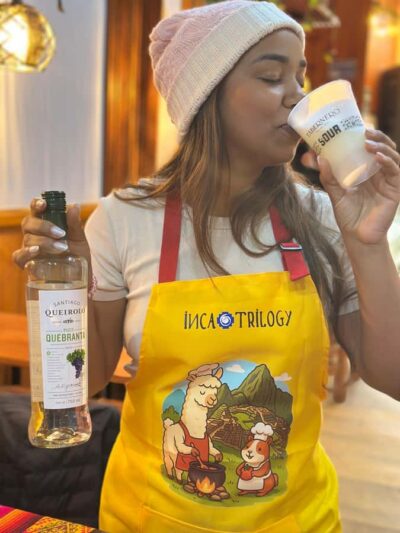
Browse the lists this tour appears in