
Review · VALENCIA COOKING CLASSES
Seafood paella cooking class, tapas and visit to Ruzafa market.
Valencia’s paella makes more sense once you have seen the ingredients being chosen at Ruzafa Market and helped cook the dish yourself. This 3.5-hour class turns lunch into a local lesson, with market shopping, sangria, tapas, seafood paella, and a shared table.
I like the market visit because it gives the meal a sense of place, and I like the hands-on format because you do more than watch a chef work. The main caution is that the meeting point can be confusing, and the walk to the kitchen may be tiring for anyone with limited mobility.
Key points at a glance
- Ruzafa shopping trip: Learn about seafood, vegetables, ham, and the origins of paella while buying the ingredients.
- Hands-on cooking: Help prepare and cook the seafood paella rather than simply watching a demonstration.
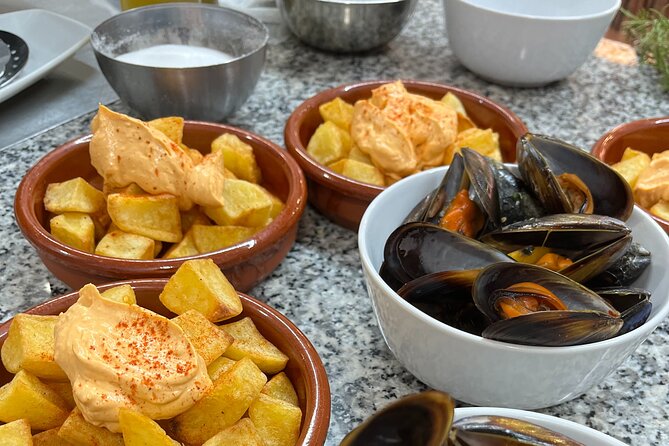
- Sangria and tapas first: Start with homemade sangria, patatas bravas, jamón, Manchego, mussels, olives, and other small plates.
- A social meal: Share cooking stations and a long meal with people from different countries.
- Generous food and drink: Paella comes with tomato salad, wine, beer, soft drinks or water, fruit, Valencian cake, sweet wine, and coffee.
- Small-group feel: The maximum is 20 people, though some sessions have been much smaller.
Why paella begins at Ruzafa Market
The class starts at 11:00 a.m. outside San Valero Parish, at Carrer del Pare Perera, 6, in Valencia’s L’Eixample district. From there, you walk together to Mercado de Ruzafa, a neighborhood market where the day’s ingredients are purchased.
This is more useful than a quick market photo stop. You get to see the raw materials before they become lunch. The market visit can include seafood, vegetables, fruit, ham, and other products tied to the meal. Your guide also explains the origins of paella and customs connected with Valencian food culture.
That context matters. Paella is not simply a Spanish rice dish chosen from a long restaurant menu. In Valencia, it has a strong local identity and a social role. The shopping trip helps you understand why the cooking process takes time and why the ingredients are handled in a particular order.
Guides have included Ana, Guillermo, José, Cristina, and Valentín. The exact team may vary, and the activity can be led in English, Spanish, or Russian. The English delivery is the key point for most international visitors, but you should be prepared for a multilingual group.
One thoughtful detail is the way the group is handled inside the market. Participants may be split into smaller units so they do not block stalls or interfere with local shoppers. That is good practice. It keeps the visit closer to an ordinary market stop and less like a large tour group taking over the aisle.
The market is closed on Sundays, so there is no Ruzafa Market visit that day. This is the clearest difference between a weekday or Saturday booking and a Sunday booking. If seeing the market is important to you, avoid Sunday.
More Cooking Classes with a Market Tour in Spain
- Barcelona: Paella Cooking Experience & Boqueria Market Tour
★ 4.8 · 3,661 reviews - Barcelona Paella Cooking Class with Market Visit, Tapas & Sangria
★ 5.0 · 2,531 reviews - Paella Cooking Class, Wine Tasting & Central Market in Valencia
★ 5.0 · 1,150 reviews
The eight-minute walk to the cooking kitchen
After shopping, the group walks about eight minutes to the kitchen. That is not a long distance for most people, but it is worth noting if you have trouble walking or prefer a seated activity from start to finish.
The class is not held at the church or inside the market. The church is only the meeting point, and the market is the first stop. One practical weakness is that the meeting location has not always been easy to identify from the address alone. Look for the entrance to San Valero Parish and arrive early rather than wandering around the surrounding streets at 11:00.
The experience ends back at the original meeting point. Since the activity lasts about three and a half hours, you should leave the middle of your day open. This is not a quick cooking lesson squeezed between museum visits.
Sangria, tapas, and the first taste of the meal
At the kitchen, the chefs begin with a sangria workshop. You learn how the drink is assembled, then settle in with a glass and a spread of tapas.
The sample menu includes:
- Patatas bravas with sojanesa
- Jamón serrano
- Manchego cheese
- Steamed mussels
- Olives
This opening course is more than a snack while the paella cooks. It sets the social tone of the class and gives you time to meet the people sharing your station. Beer, water, soft drinks, and wine are also available during the experience.
The food portions are described as generous, so avoid arriving after a large breakfast. You will eat several tapas, a full serving of paella, tomato salad, dessert, and drinks. The amount of alcohol can also be substantial, with sangria, wine, sweet wine, and optional beer included. If you do not drink, water and soft drinks are available, but it is sensible to tell the staff early.
The tapas are part of the value. At $78.64 per person, you are not paying only for a recipe lesson. You are also getting the market visit, instruction, ingredients, a prepared meal, drinks, dessert, and coffee. For someone who would otherwise pay separately for lunch, wine, and a guided food activity, the price is reasonable.
Cooking seafood paella as a group
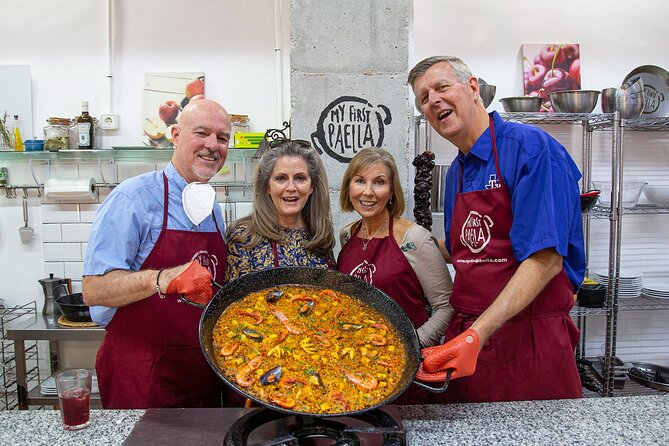
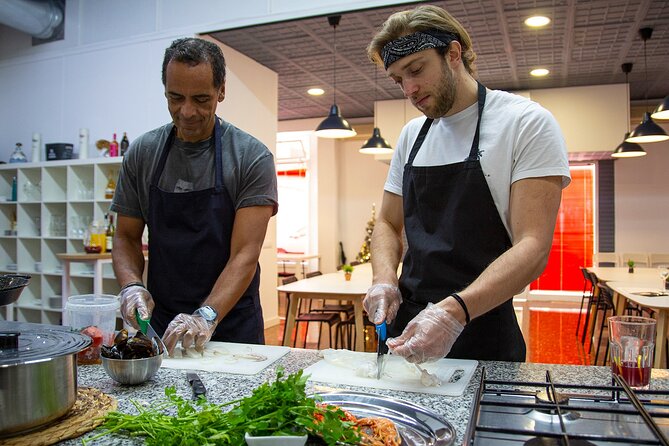
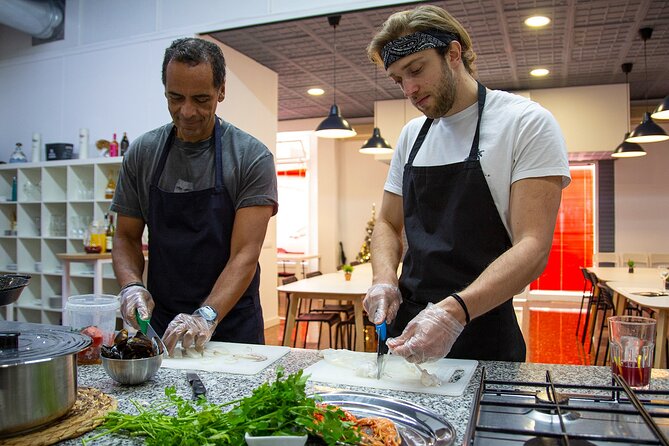
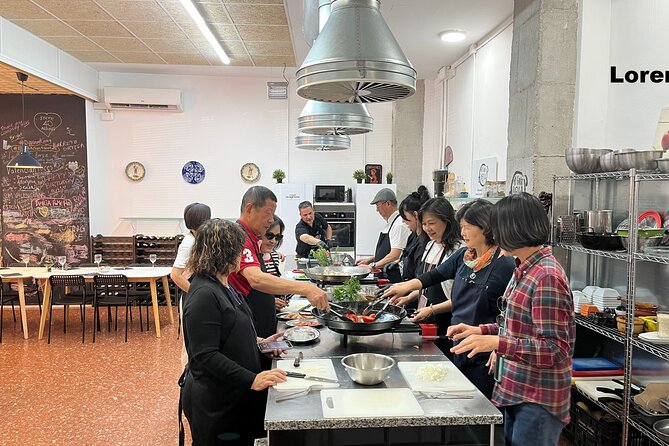
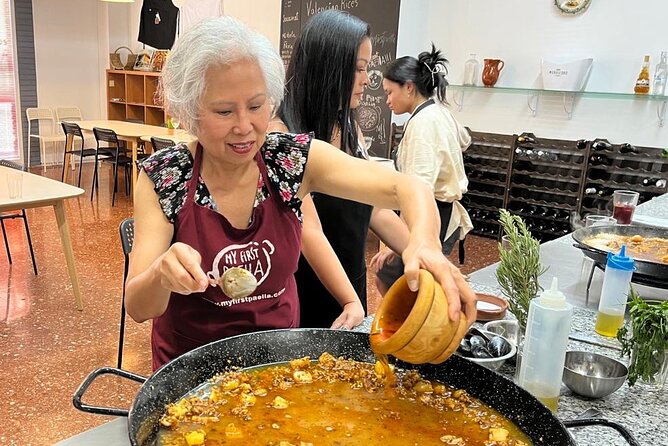
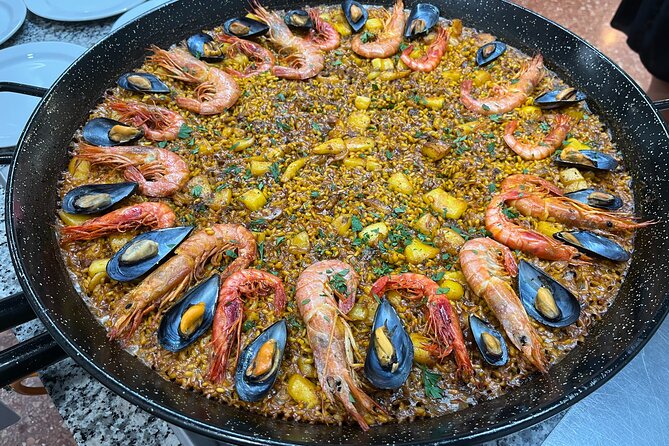
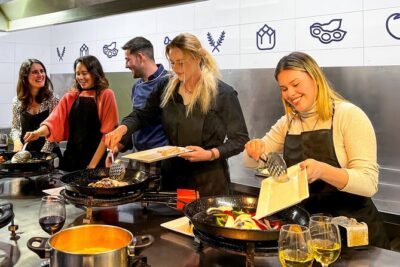
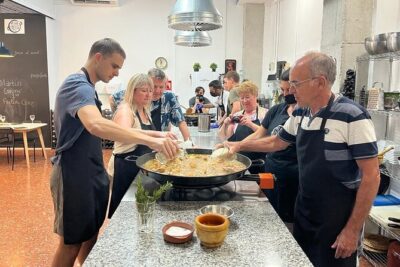
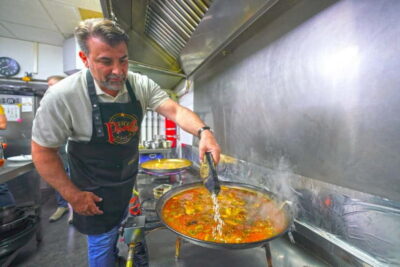
The main lesson focuses on seafood paella. The chefs explain the preparation step by step, then divide the group among cooking stations. Everyone gets a role, from preparing ingredients to helping with the cooking.
This group format works best if you want a social activity rather than a private lesson. You may cook beside people working on another version, such as traditional Valencian paella with meat or a vegetable paella. Seeing several pans prepared at the same time can help you compare ingredients and methods.
The class is designed to be hands-on but not rushed. Chefs such as José, Ana, Cristina, and Valentín have been praised for keeping the atmosphere relaxed, funny, and welcoming while still explaining the technique clearly. Their job is not only to entertain. They watch the cooking, answer questions, and keep the different stations moving toward lunch.
There is one small limitation. A session may have two chefs overseeing three paellas, rather than one chef assigned to each pan. That can mean slightly less individual attention at certain moments. Still, the format allows everyone to participate, and the staff guide the process closely enough that first-time paella cooks can follow along.
The lesson is especially useful if you have tried making paella at home and never quite got the texture or timing right. You can ask about the order of cooking, the seafood, the rice, and the small choices that separate a passable pan from a good one. The class is not presented as a formal culinary school course, but it gives you a practical method to take home.
More Seafood Classes in Spain:
- Barcelona: Paella Seafood Master Cooking Class with Sangria
★ 5.0 · 73 reviews - Rooftop Paella Seafood Cooking Class Experience in Barcelona
★ 5.0 · 59 reviews - Barcelona: Black Ink Seafood Paella Cooking Class
★ 5.0 · 2 reviews - Barcelona: Seafood Paella Cooking Class & Boqueria market
★ 4.5 · 2 reviews
Sitting down to eat what you made
Once the paella is ready, the group sits down together. The main course is served with a Valencian tomato salad and Valencia wines.
This shared meal is one of the best reasons to choose a cooking class instead of a standard restaurant lunch. You have watched the dish develop, handled the ingredients, and worked with the people who will eat it beside you. The meal becomes a group achievement, not just a plate brought from the kitchen.
Dessert includes seasonal fruit, Valencian sponge cake, sweet wine, coffee, and mistela. That is a full finish to the meal, especially after the tapas and paella. Mistela, a sweet local wine, adds a specifically Valencian touch rather than ending with an ordinary coffee and biscuit.
The food has been a major strength of this experience. The patatas bravas receive particular praise, and the seafood paella is often described as flavorful and successful even for people who already know the dish. Results can always depend on the group and the chefs working that day, but the structure gives you a good chance to eat well.
Group size, pace, and the social side
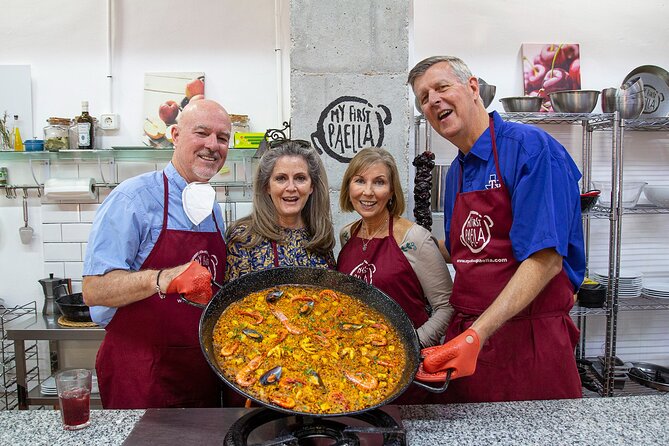
The maximum group size is 20, though some sessions have only 8 to 12 people. That range matters. A smaller group gives you more time with the chefs and makes it easier to take part at the cooking station.
You should expect a friendly, talkative afternoon rather than a quiet technical workshop. There is laughter, drinking, shared preparation, and conversation around the table. The class suits solo visitors, couples, families with older children, and friends who want an activity that creates an easy reason to meet other people.
Children must be accompanied by an adult. The supplied information does not give a minimum age, so families should confirm that the format suits their children before booking. The food and drink program is adult-friendly, but the cooking itself can be a good family activity when children are supervised.
The class also suits people who want a first introduction to Valencia through food. You learn about the city’s market culture, local products, paella customs, and table traditions in one outing. It is less suitable if you want a quiet, private lesson focused only on technique.
What the $78.64 price really covers
At $78.64, the cost is higher than buying a plate of paella at a casual restaurant. That comparison is not quite fair, since the experience includes much more than lunch.
Your fee covers the market visit, all ingredients, cooking equipment, the sangria workshop, tapas, seafood paella, tomato salad, drinks, dessert, coffee, and mistela. You also get instruction from several chefs and a guided explanation of Valencian food culture.
I see the price as good value if you plan to enjoy the included drinks and food and want a participatory activity. It is less compelling for someone who only wants to taste paella or who does not drink and would prefer a short, focused lesson.
The class is also a practical choice for a first or second day in Valencia. It gives you an early sense of local eating habits and may help you choose better dishes during the rest of your visit. Because it is often booked about a month ahead, reserve early for a particular date, especially during a busy season.
Practical details before you book
The activity is offered in English, with the possibility of a multilingual guide using English, Spanish, and Russian. Confirmation is provided at booking, and the ticket is mobile, so you can keep it on your phone.
Arrive before 11:00 and find the main entrance of San Valero Parish. The meeting address is specific, but the actual meeting spot has caused confusion for some participants. Giving yourself extra time is a simple fix.
Wear comfortable shoes. You walk through the market and then continue for about eight minutes to the kitchen. The supplied information does not describe special accessibility arrangements, so anyone with limited mobility should ask the provider before booking.
The cancellation rule is straightforward: cancel at least 24 hours before the local start time for a full refund. Cancellations or changes made within 24 hours are not accepted for a refund. One isolated issue has involved a cancellation when the chefs were ill and there were no other bookings, with alternative arrangements offered. It is wise to keep a little flexibility in your schedule.
Who should book this paella class?
I would choose this experience if you want three things in one: a local market visit, practical cooking instruction, and a long social lunch. It is particularly good for couples, solo visitors, food-focused families, and anyone who wants to understand why Valencia claims paella as its own.
You should also book it if you want to learn a method you can repeat at home. The chefs break the work into clear stages, and you take part rather than standing at the back of a demonstration.
I would skip it if you want a private class, dislike group activities, have difficulty walking, or only want a quick meal. Sunday is also the wrong day if the Ruzafa Market visit is essential, since the market is closed.
FAQ
Where does the paella class meet?
The meeting point is outside Parroquia de San Valero at Carrer del Pare Perera, 6, in L’Eixample, Valencia. The activity ends back at this meeting point.
What time does the experience start?
The class starts at 11:00 a.m. and lasts approximately three hours and 30 minutes.
Is the Ruzafa Market visit included?
Yes. The group visits Mercado de Ruzafa to buy the fresh ingredients needed for the paella and learn about Valencian food customs.
Does the market visit take place on Sunday?
No. Ruzafa Market is closed on Sunday, so the market visit is not included that day.
What food and drinks are included?
The experience includes tapas, seafood paella, Valencian tomato salad, sangria, wine, beer, soft drinks or water, seasonal fruit, Valencian cake, sweet wine, coffee, and mistela.
Is the cooking class taught in English?
The experience is offered in English. It may also be operated by a multilingual guide using English, Russian, and Spanish.
Can I cancel for a refund?
Yes. You can cancel at least 24 hours before the local start time for a full refund. Cancellations or changes made less than 24 hours before the start are not eligible for a refund.
Should you book it?
Book this class if you want to eat Valencia as well as see it. The market shopping, sangria, shared cooking, seafood paella, local wine, and dessert create a full half-day experience at a fair price.
Go in with the right expectations: this is a friendly group class, not a private culinary tutorial. Arrive early at the church, avoid Sunday if the market matters, wear comfortable shoes, and save room for a very substantial lunch. For most food-minded visitors, it is one of the more useful ways to turn Valencia’s famous paella from a restaurant order into something you understand.
More Paella and Spanish Classes in Spain
- Barcelona Interactive Spanish Cooking Experience
★ 4.5 · 2,155 reviews - Spanish Cooking Class Paella Tapas and Sangria in Madrid
★ 5.0 · 1,340 reviews - Paella Cooking Class in Madrid with Bottomless Wine Pairing
★ 5.0 · 985 reviews - Seville: Spanish Cooking Class with Dinner
★ 4.9 · 900 reviews
Newest classes around Spain
- Pintxos and Tapas Cooking Class in Bilbao★ 5.0 · 38 reviews
- Basque Pintxos and Tapas Cooking Class in Bilbao★ 5.0 · 73 reviews
- Small-group Immersive Basque Cooking Class in Bilbao with Open Bar★ 5.0 · 65 reviews
- Paella and Burnt Basque Cheesecake Cooking Class (in Bilbao)★ 5.0 · 46 reviews
- Barcelona Tapas Cooking & Cocktail Class with Veronique & Mattias★ 5.0 · 3 reviews
- Rooftop Paella Seafood Cooking Class Experience in Barcelona★ 5.0 · 59 reviews
- Private Authentic Paella Cooking Class in Barcelona with Josh★ 5.0 · 3 reviews
- Private Barcelona Market Tour & Paella Cooking Class with Josh★ 5.0 · 4 reviews
Valencia Cooking Classes, compared.
Paella Cooking Class, Wine Tasting & Central Market in Valencia
Read our review →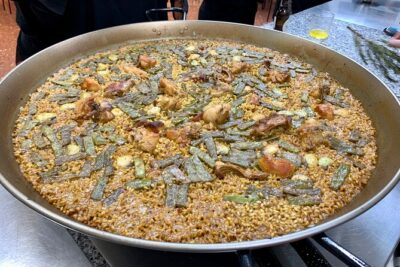
Valencian paella cooking class, tapas and visit to Ruzafa market.
Read our review →
Valencian Paella Cooking Class, Tapas & Sangria – Evening
Read our review →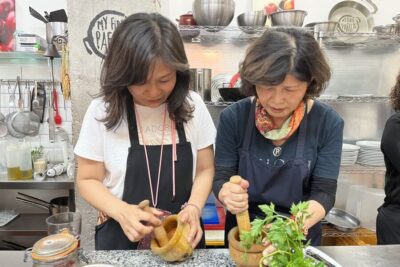
Real Paella Cooking Class – Market Visit & Sangría Workshop
Read our review →
Browse the lists this tour appears in