
Review · PERU COOKING CLASSES
Cooking class and market tour with a local chef
Cusco’s best food lesson may begin before you reach the kitchen. This four-hour experience takes you through San Pedro Market to taste local fruit, cheese, bread, and other ingredients, then puts you beside chef Ronal to prepare a proper Peruvian meal. You do not just eat the food. You learn why it matters.
I like the strong local connection, since Ronal was born in Cusco and links ingredients to the city’s culture. I also like the choice built into the meal: you can make lomo saltado or ceviche, select a pisco cocktail or nonalcoholic fruit drink, and ask for changes to suit allergies or a vegetarian diet.
The main consideration is value. At $57 per person, this is more than a quick market walk or a basic cooking lesson. The fee makes sense if you want a full meal, a guided food tour, fresh ingredients, and hands-on instruction. If you only want to sample dishes, you may find it costly.
Key points to know before booking
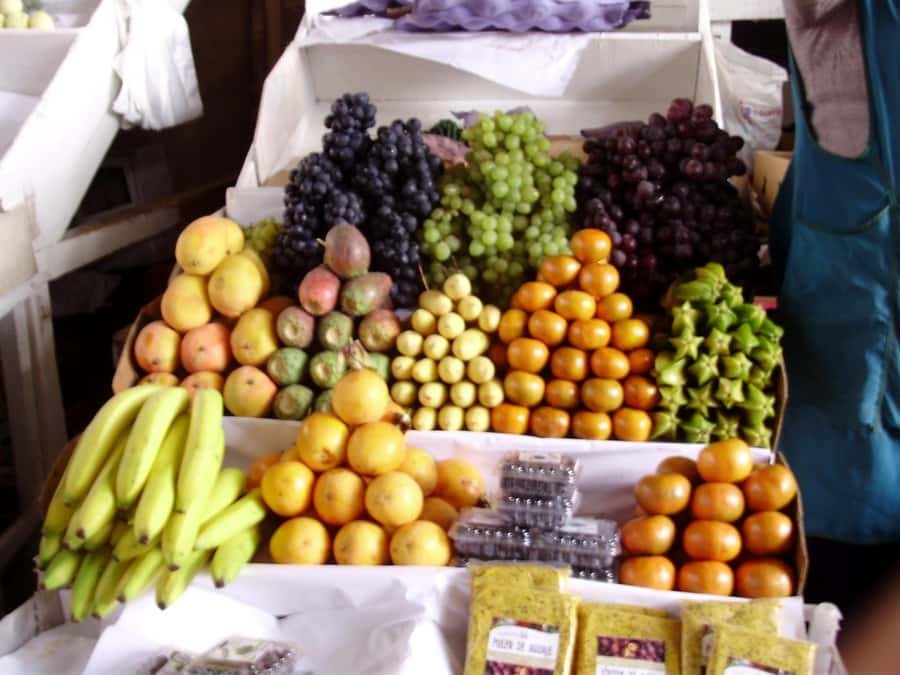
- San Pedro Market comes first: Taste Peruvian fruits and cheeses while learning how local ingredients are used.
- Chef Ronal leads the class: He teaches in English or Spanish and explains both cooking methods and Cusco food culture.
- You prepare several dishes: The menu includes rocoto relleno, causa rellena, lomo saltado or ceviche, and one cocktail or fruit drink.
- Dietary needs are taken seriously: Vegetarian meals and adaptations for allergies, gluten intolerance, dairy-free diets, and other restrictions are available.
- The class is hands-on: You chop, mix, cook, season, and make your own drink rather than watching a demonstration.
- Plan your timing carefully: Transportation is not included, and the meeting point can be easy to miss because the entrance has no advertising.
Why this Cusco cooking class works so well
The clever part of this experience is the order. You begin with ingredients in their everyday setting, then use them in a working kitchen. That gives the class a sense of purpose. When you see unfamiliar potatoes, herbs, fruits, cheeses, or cuts of meat at the market, you soon learn how they fit into a dish.
Chef Ronal is central to the experience. He grew up in Cusco and teaches in both English and Spanish. His role is not limited to handing out recipes. He explains local food traditions, answers questions, offers kitchen tips, and connects the meal to Cusco and Peru.
That matters in a city where food can otherwise become a short list of restaurant dishes. Ceviche, lomo saltado, rocoto relleno, and pisco sour are not just items on a menu. They reflect Peru’s mix of native ingredients, Spanish influence, Asian cooking methods, mountain produce, and modern restaurant culture.
The class is also friendly to different cooking levels. If you are new to the kitchen, you get help with basic cutting and preparation. If you already cook often, you can still pick up useful details about seasoning, timing, and Peruvian ingredients.
More Cooking Classes with a Market Tour in Peru:
- Cusco: Peruvian Cooking Class, Cocktails & Local Market Tour
★ 4.9 · 512 reviews - Market Tour, Tasting of 35 Fruits, and 4-Course Peruvian Cooking Class in Lima
★ 5.0 · 86 reviews - #1 Rated Cooking Classes with Local Market Tour & Pickup
★ 5.0 · 69 reviews
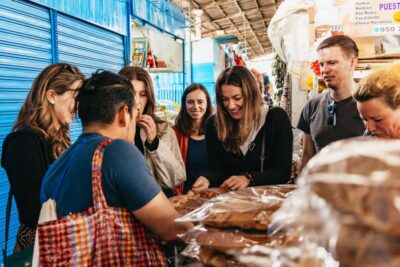
Start at San Pedro Market with fruit, cheese, and local context
The meeting point is at 264 San Juan de Dios Street, opposite the Aranwa Boutique Hotel. Look for a glass and wooden door with no advertising. That detail matters, since the entrance is not marked like a typical tour office.
From there, the market visit introduces the ingredients used later in class. You can expect to see and taste local fruit and cheese, along with vegetables, herbs, meats, and other Peruvian products. The exact selection will depend on what is available that day, but the food-focused approach gives you more than a quick walk through the stalls.
One useful fact to take away is Peru’s remarkable potato range. The country is associated with thousands of potato varieties, and the market helps explain why potatoes are so central to Peruvian cooking. Causa, one of the dishes in the class, shows how a simple potato can become a carefully seasoned dish with a soft, layered texture.
The fruit tasting is another strong part of the visit. You get to try produce that may be unfamiliar at home, often at a stage of ripeness that makes its flavor easier to understand. This is a good place to ask what is seasonal, what is native to the region, and which ingredients you might find in other parts of Peru.
You should expect a real market rather than a polished food hall. That means unfamiliar products, raw meat displays, and the normal sights and smells of a working market. The tour information also notes that meat from animals eaten by local communities may be shown. If that would make you uncomfortable, consider this before booking.
Turning market ingredients into rocoto relleno and causa
Back at the kitchen, the group begins preparing the starter course, which is the same for everyone: rocoto relleno. This traditional dish uses a stuffed chili filled with meat, onions, peas, carrots, peanuts, and raisins. It is topped with local cheese and baked.
Rocoto is not an ordinary bell pepper. It has a sharper heat, so the dish gives you a direct taste of Peruvian ingredients and cooking habits. The filling also shows how sweet, savory, nutty, and spicy notes can work together in one dish.
The second preparation is causa rellena, a seasoned potato cake mixed with yellow chili sauce. It is filled with avocado, fish tartare, mayonnaise, and spices. This is a useful lesson in texture as much as flavor: the potato mixture must hold together, while the filling adds richness and freshness.
The starter course is not a passive demonstration. You work with the ingredients, learn how to cut them, and receive help as needed. Chef Ronal also checks the food as it develops, which is reassuring if you are unsure about seasoning or cooking time.
There is room for adjustments. The class has handled vegetarian, dairy-free, gluten-free, allergy-related, and other food preferences. Tell the provider about your needs before the class, not only after you arrive, so the menu can be prepared properly.
Choose between lomo saltado and trout ceviche
For the main course, you choose one of two options before the class begins. That choice is important because the dishes use very different methods and flavors.
Lomo saltado combines beef tenderloin, rice, onions, tomato, soy sauce, oyster sauce, vinegar, and native potato fries. It is one of Peru’s best-known fusion dishes, bringing together beef, potatoes, rice, and Chinese-influenced stir-frying.
The cooking process gives you a good lesson in speed and order. Ingredients need to be ready before the pan gets hot, and the sauce must bring the pieces together without making them soggy. The dish is filling and familiar enough for cautious eaters, but the sauces and native potatoes keep it distinctly Peruvian.
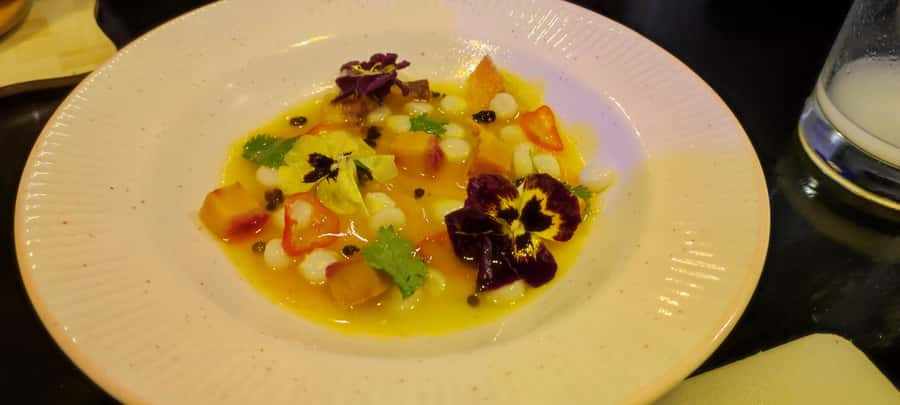
The second option is ceviche, made here with trout, mango, avocado, lime juice, onions, celery, ginger, corn, and sweet potato. This is not the same as a coastal seafood ceviche made with ocean fish. Using trout makes sense in the Cusco Region, where freshwater fish is more available.
Ceviche is especially useful for learning about balance. Lime brings acidity, mango adds sweetness, avocado gives softness, and ginger and onion sharpen the mix. The corn and sweet potato provide contrast and make the dish feel like a complete meal rather than a small appetizer.
The class can adapt the ceviche for vegetarian diners, as shown by the menu options used in past classes. You should still confirm the exact replacement when booking, since the available substitute may vary.
More Cooking Classes in Peru:
- Miraflores: Amazing Peruvian Cooking Class Ceviche Seafood and Pisco Sour
★ 4.9 · 57 reviews - Cook with Maido’s creative chef and chef de cuisine
★ 5.0 · 53 reviews - Cusco: Peruvian Cooking Class & Market Tour
★ 4.9 · 19 reviews - Lima: Cooking Workshop and Water Circuit Tour
★ 5.0 · 16 reviews
Make a pisco cocktail or a Peruvian fruit drink
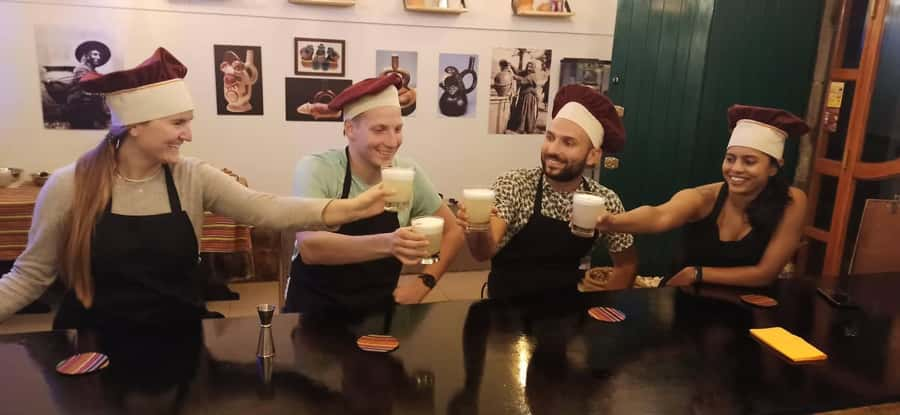
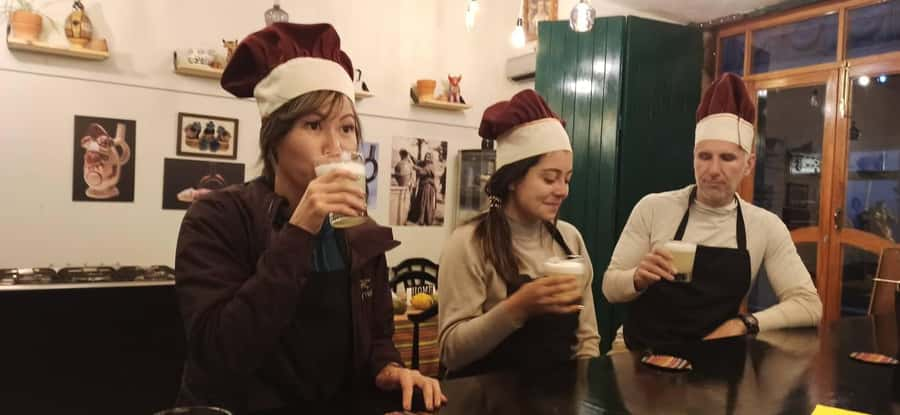
The drink portion adds a social touch to the meal. You choose one cocktail made with pisco, Peru’s national spirit, or a nonalcoholic drink made with Peruvian fruit and honey.
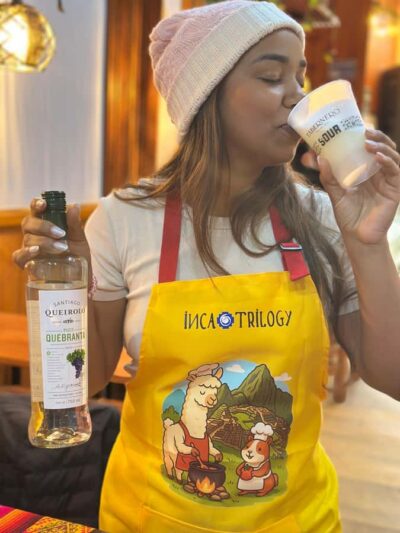
The classic option is a pisco sour, made with pisco, lime, syrup, and egg white. You may also choose a passion fruit sour, which uses fresh passion fruit juice. Both drinks teach you how Peruvian flavors work in liquid form, with sour citrus, sweetness, fruit, and the distinctive character of pisco.
If you do not drink alcohol, the fruit and honey drink means you can still take part in the preparation. Alcohol and drugs are not allowed beyond the planned cocktail service, and the class is not suitable for anyone who should avoid alcohol.
One small value point is worth noting: the included drink is one cocktail or one nonalcoholic option. If you are comparing this class with another experience that includes several drinks, factor that into the price. The food, instruction, market walk, and equipment are the larger parts of the package.
A friendly class for solo visitors, couples, and families
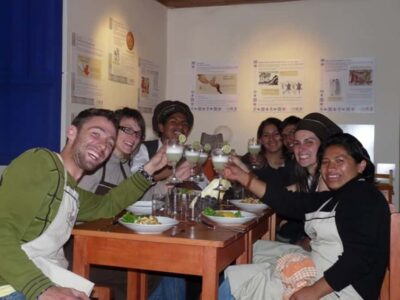
The experience suits solo visitors particularly well. Cooking gives you an easy way to talk with other people, and past classes have included small groups where participants cooked and ate together. Group size can vary, so do not assume every session will be private.
Couples and friends get a shared activity that is more memorable than simply booking another restaurant meal. You can divide tasks, compare your dishes, and take home a practical understanding of Peruvian flavors.
Families can also enjoy it, but age rules matter. The activity is not suitable for babies and young children, with restrictions listed for children under several age thresholds, including under 2, 3, 5, and 6 years. The supplied information also lists a maximum age of 70, along with weight limits. These details are unusually specific and somewhat repetitive, so check the current booking conditions if they apply to you.
Children who are old enough to follow kitchen instructions may find the class engaging, but the activity involves knives, hot cooking surfaces, and market food. It is not a child-care activity.
Timing, altitude, and practical details
The activity lasts four hours. That is long enough for a market visit, several preparations, a drink, and a sit-down meal, but it also means you should not schedule it immediately before a fixed appointment.
There is no transportation included. You need to make your own way to Calle San Juan de Dios 264 and allow time to find the unmarked door opposite the Aranwa Boutique Hotel.
Cusco’s altitude deserves attention. The provider says the class is not suitable for people with altitude sickness, although natural medicine for altitude symptoms and digestive teas may be offered if needed. I would not treat that as a substitute for rest or medical advice. If you have just arrived and feel unwell, postpone the class rather than forcing yourself through a four-hour activity.
Morning and afternoon sessions may feel different. An earlier visit can give you a calmer market experience, while a later class may have a livelier feel. Starting the class early in your Cusco stay can also be a smart way to learn about local foods before ordering meals around town, but only if your body is handling the altitude.
The kitchen provides aprons, cooking and bar utensils, fresh ingredients, water, and the meal itself. You do not need to bring specialist equipment. Wear clothes you can move in and shoes suitable for a market and kitchen floor.
Is $57 a fair price?
At $57 per person, this is not the cheapest way to eat in Cusco. A local restaurant meal will usually cost less, and a market visit alone may cost much less. The question is what you want your money to buy.
Here, the price covers a professional chef and guide, a market tour, ingredient tasting, fresh food, kitchen equipment, an apron, a starter, a main course, water, and one drink. You also get direct instruction and the chance to prepare the food yourself.
I see the value most clearly if you care about food or want a cultural activity that is not centered on monuments. The class can also save you from guessing what unfamiliar ingredients are and how to use them. Some participants receive recipes by email, which gives the experience value after you return home.
The price is harder to justify if you are looking for a quick, low-cost introduction to Peruvian dishes. Four hours is a serious block of your day, and the single included cocktail means this is more cooking lesson than food-and-drink tasting tour.
What to confirm before you book
Tell the provider about allergies, vegetarian requirements, gluten intolerance, dairy restrictions, or other dietary needs in advance. The menu can be adapted, but the kitchen needs clear information before shopping and preparation.
Confirm the language you want. Instruction is available in English and Spanish, and chef Ronal is the main guide named for the experience.
Check the meeting point carefully. The door at 264 San Juan de Dios Street is opposite the Aranwa Boutique Hotel and has glass and wood with no sign. Transportation is not included.
The cancellation policy is practical: you can cancel up to 24 hours before the activity for a full refund. You can also reserve now and pay later, which helps if your Cusco plans are still shifting.
Strollers and baby carriages are not allowed. The activity also lists restrictions for young children, people over 70, people with altitude sickness, and several maximum weight limits. If any of those conditions apply, ask before paying.
Should you book this Cusco cooking class?
Book it if you want more than a recipe demonstration. The combination of San Pedro Market, local produce, hands-on cooking, cultural explanation, and a full meal gives you a useful introduction to Cusco through food.
I would especially recommend it early in your stay, provided you are coping well with the altitude. You can use what you learn when choosing dishes at restaurants and markets for the rest of your trip.
Skip it if you dislike markets, cannot manage a four-hour kitchen activity, or want a cheap meal rather than an experience. For everyone else, the class offers strong value, careful dietary support, and a personal connection through chef Ronal. The best reason to book is simple: you leave with a better idea of what Peruvian food is, how it is made, and why the ingredients matter.
FAQ
How long does the cooking class and market tour last?
The activity lasts four hours, including the market visit, cooking workshop, drink preparation, and meal.
Where is the meeting point?
Meet at 264 San Juan de Dios Street in Cusco, opposite the Aranwa Boutique Hotel. Look for a glass and wooden door with no advertising.
Which languages are available?
The experience is offered in English and Spanish.
Which dishes can I prepare?
The shared starter is rocoto relleno. You then choose between lomo saltado and trout ceviche for the main course. The drink choices include a classic pisco sour, a passion fruit sour, or a nonalcoholic Peruvian fruit and honey drink.
Can the menu accommodate dietary restrictions?
Yes. Vegetarian options are available, and the provider says the menu can be adapted for allergies and other dietary requirements. Give the provider your needs before the class.
Is transportation included?
No. You are responsible for reaching the meeting point. You can cancel up to 24 hours in advance for a full refund, and reserve now while paying later.
Newest classes around Peru
- Lima: Peruvian cooking class and tour of Surquillo market★ 5.0 · 2 reviews
- Lima: Market Tour and Cooking Class with Pisco Sour★ 5.0 · 3 reviews
- Lima: Cooking Workshop and Water Circuit Tour★ 5.0 · 16 reviews
- Lima: Market Tour, 35 Fruits Tasting & Cooking Class★ 5.0 · 3 reviews
- Lima: 4-Course Peruvian Cooking Class in Miraflores★ 5.0 · 4 reviews
- Lima : Cooking Class – A Peruvian Culinary exploration★ 5.0 · 2 reviews
- Lima: Demo Cooking Class with Lunch at Cala Restaurant★ 4.1 · 4 reviews
- Cusco: Peruvian Cooking Class★ 5.0 · 2 reviews
Peru Cooking Classes, compared.
Peruvian Cooking Class, Cocktails & Local Market Tour
Read our review →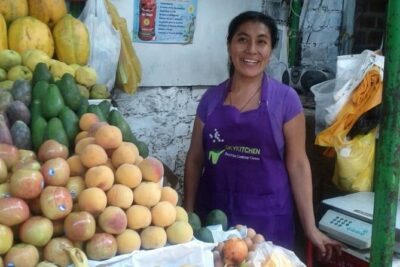
Market Tour, Tasting of 35 Fruits, and 4-Course Peruvian Cooking Class in Lima
Read our review →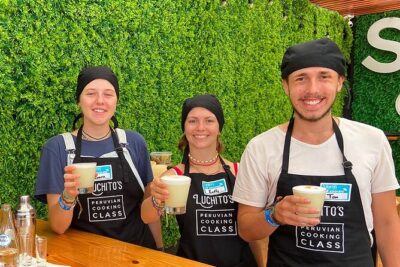
#1 Rated Cooking Classes with Local Market Tour & Pickup
Read our review →
Miraflores: Amazing Peruvian Cooking Class Ceviche Seafood and Pisco Sour
Read our review →
Cook with Maido’s creative chef and chef de cuisine
Read our review →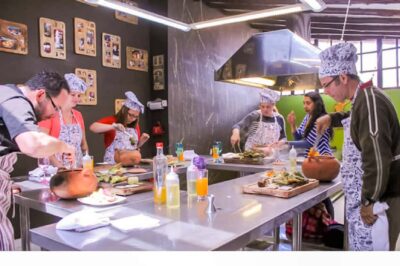
Browse the lists this tour appears in