
Review · VALENCIA COOKING CLASSES
Valencia: Traditional Paella Cooking Class and Dinner
Paella is not just a dish in Valencia. It is a lesson in place, timing, and patience. In this two-hour cooking class, you work with a local chef, prepare seafood paella, and eat the result at the same table. Antonio, Pepe, and other chefs have led the class, with a friendly style that helps beginners join in without feeling tested.
I like the small groups of up to eight, since you get a real chance to help rather than watch from the back. I also like the generous food lineup: Valencian snacks, several starters, sangria or another drink, paella, and dessert. The main consideration is pace. Two hours is enough for a lively meal and lesson, but not for a slow market tour or a long culinary seminar.
Key points at a glance
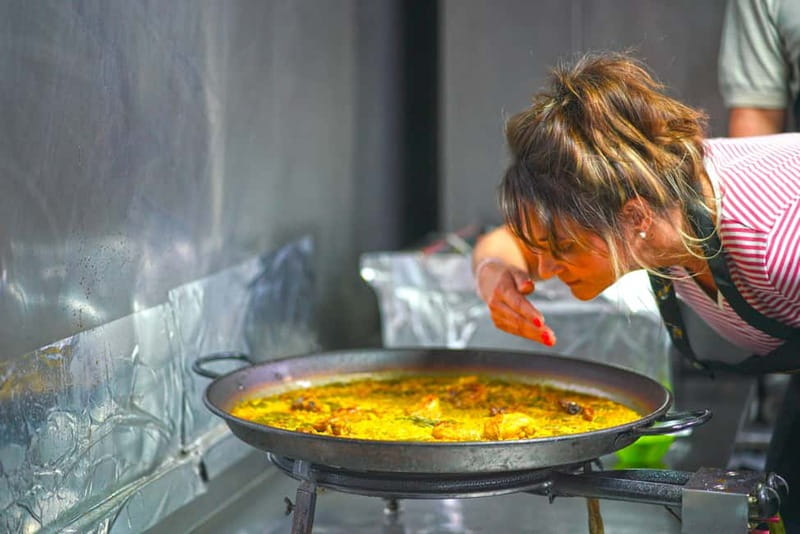
- Cook seafood paella yourself: You take part in the preparation instead of simply watching a chef work.
- Learn from local chefs: Antonio and Pepe are named in past bookings, and both are praised for clear instruction and an easygoing manner.
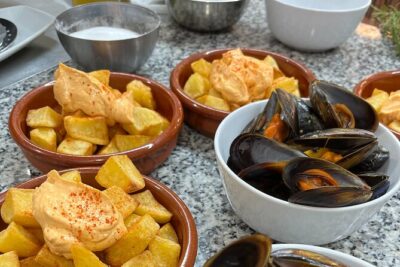
- Taste more than paella: Valencian cocoa, olives, potatoes, esgarraet, Russian salad, ham croquettes, dessert, and drinks are included.
- Keep the group small: The class is limited to eight participants, which suits hands-on cooking and conversation.
- Hear the story behind the dish: The chef explains the difference between Valencian, seafood, and mixed paella.
- Book with some flexibility: You can cancel up to 24 hours before the class for a full refund and reserve now while paying later.
Why this class makes sense in Valencia
Valencia is the home of paella, so learning the dish here gives your meal useful context. You are not only following a recipe. The chef explains why ingredients, heat, and timing matter, along with the differences between the main styles of paella.
That distinction is worth hearing. A traditional Valencian paella is not the same thing as a seafood paella, even though both belong to Valencia’s culinary tradition. This experience focuses on seafood, using fish and shellfish from the region, while the discussion helps you understand how the dish changes from one version to another.
I like this approach because it avoids treating paella as a generic Spanish rice dish. You get a practical lesson in what makes the Valencian version special, then put that lesson to work in the pan.
More Paella and Spanish Classes in Spain:
- Barcelona: Paella Cooking Experience & Boqueria Market Tour
★ 4.8 · 3,661 reviews - Barcelona Paella Cooking Class with Market Visit, Tapas & Sangria
★ 5.0 · 2,531 reviews - Barcelona Interactive Spanish Cooking Experience
★ 4.5 · 2,155 reviews
Entering the Valencian kitchen
The class begins with a welcome and an introduction to the ingredients. The food is described as fresh and locally sourced, with products coming from Valencia’s Central Market. That gives the opening of the class a clear sense of place, even though this is not presented as a separate market visit.
The meeting point can take a little care. The instructions say the entrance is at Derecha 2, meaning the local on the right side, number 2. Read this closely before setting out, especially if you are meeting the group in a busy area. The exact wording is unusual, so keep your booking details handy.
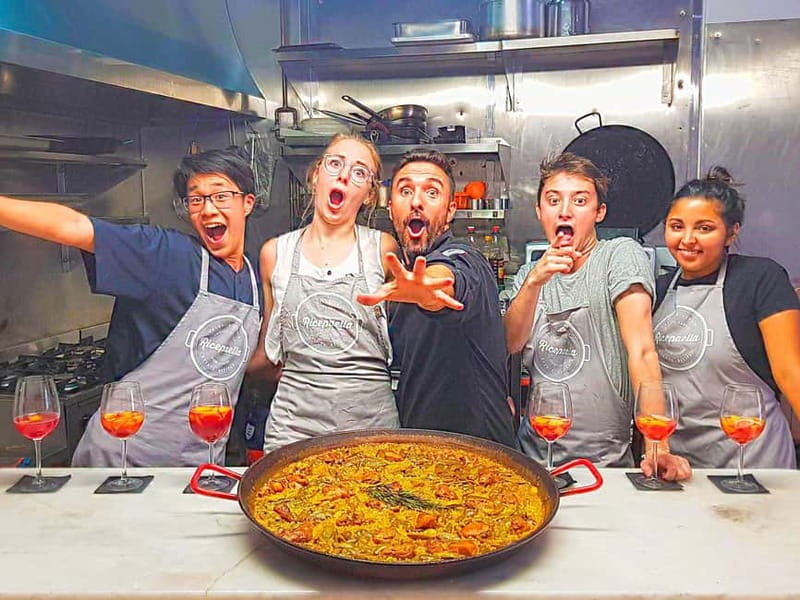
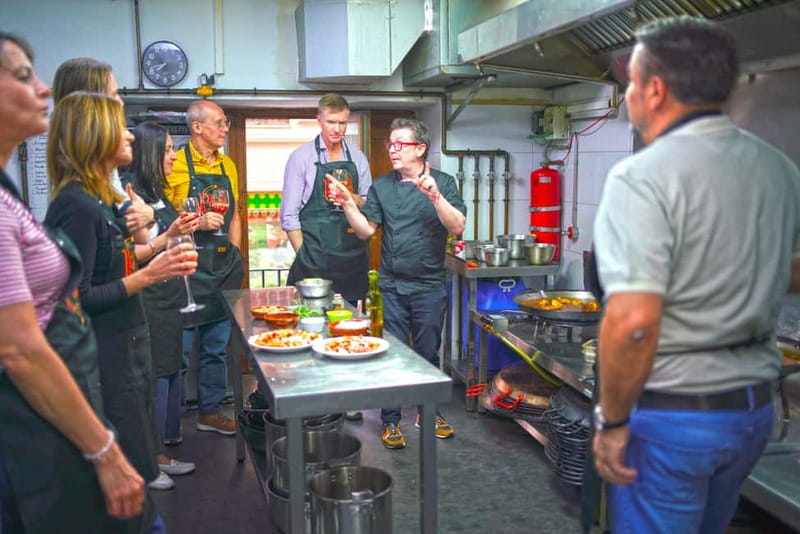
Once inside, you can expect a warm, social kitchen setting rather than a formal culinary school. English and Spanish are offered, and the small group makes it easier to ask questions or get a turn with the preparation.
Snacks, tapas, and the first glass of sangria
Before the main cooking is finished, the class includes a generous spread of small foods. Snacks include Valencian cocoa, potatoes, and olives. The starters include esgarraet, a Valencian preparation, along with Russian salad and a ham croquette.
These dishes matter because they give you a wider taste of the region. The class is not built around one plate arriving at the end. You get to sit, nibble, talk, and drink while the paella takes its time.
Homemade sangria is included, along with beer, a soft drink, and water. The drink selection keeps the class relaxed, but you can choose according to your own preference. Since this is a cooking lesson with alcohol available, pacing yourself is sensible if you want to remember the chef’s instructions and take part in the work.
The starters also help fill the time while the paella cooks. That is a practical touch. Rice dishes need attention, but they also require waiting, and a good class gives you something useful and enjoyable to do during that pause.
Preparing the seafood paella
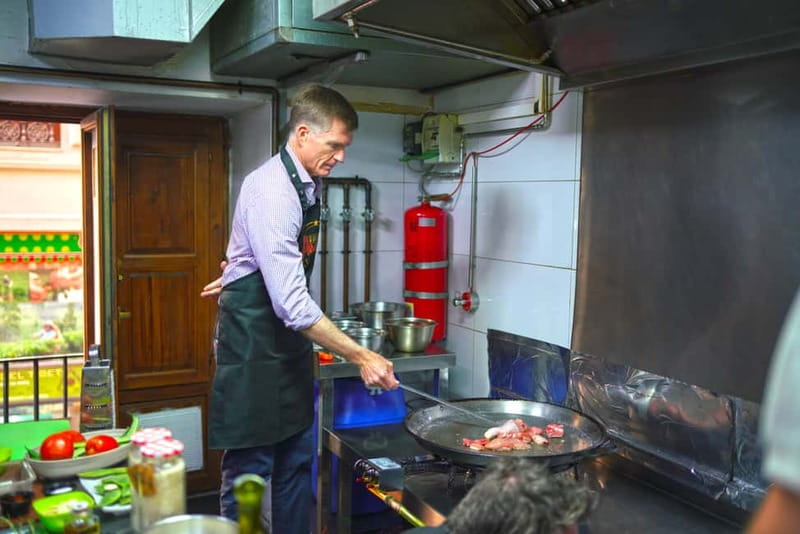
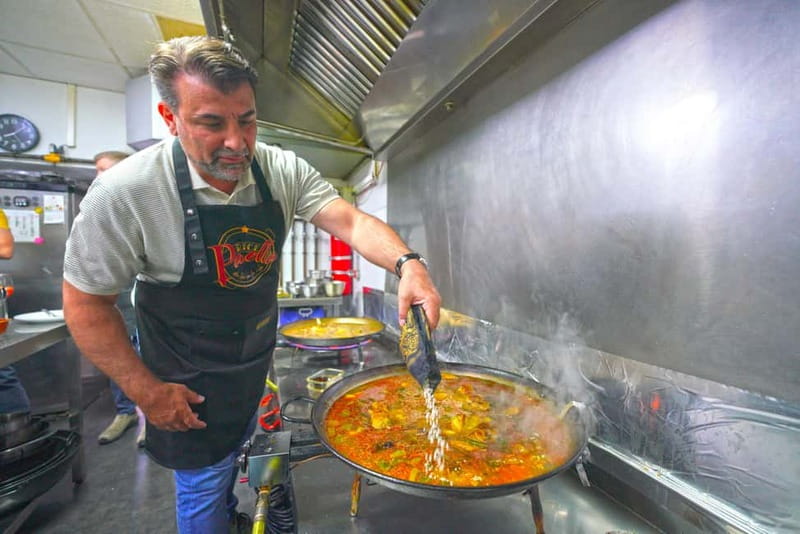
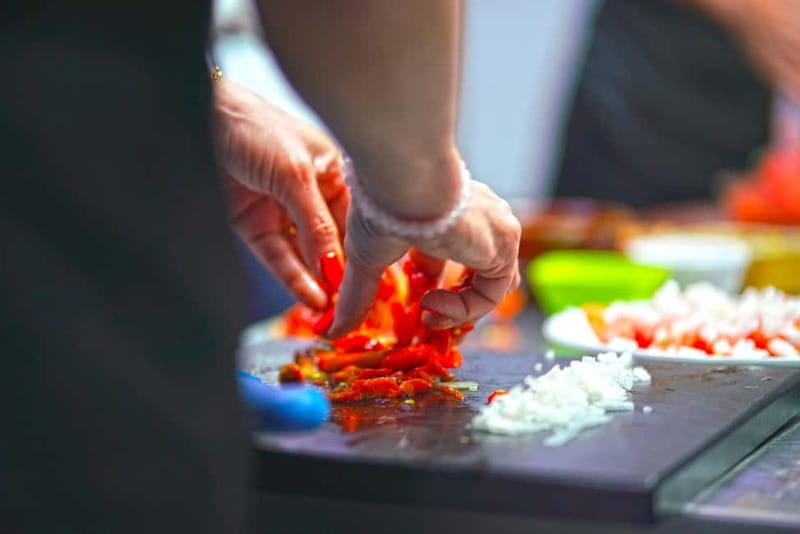
The central part of the experience is hands-on preparation of a seafood paella. You work with fish and shellfish from the region and follow the chef’s instructions through the key stages.
The most useful part for a home cook is the focus on technique. You learn about the ingredients, the order of work, and the timing that allows the rice and seafood to come together properly. The chef also explains the traditions behind paella, so you understand not only what to do but why the steps matter.
Your exact role may depend on the size of the group and the stage of the cooking. With no more than eight people, you should have a fair chance to participate, but this is still a group lesson, not a private chef service. If you want every minute of cooking time for yourself, a private class would offer more control, though no private option is specified here.
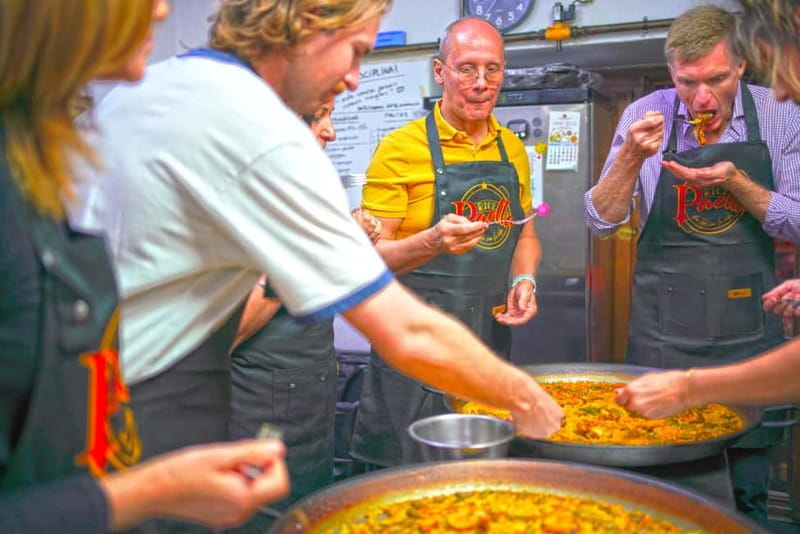
Past groups have cooked two large pans, which gives you a sense of the communal side of the meal. This is food meant to be shared. The class works best if you enjoy taking turns, asking questions, and cooking alongside people you may not know.
More Dinners Out in Spain:
- Seville: Spanish Cooking Class with Dinner
★ 4.9 · 900 reviews - Paella Cooking Class with Professional Chef: Four Course Dinner
★ 5.0 · 561 reviews - Spanish Cooking Class and Dinner in Seville
★ 5.0 · 261 reviews - Pasta Making & Wine Tasting with Dinner in Frascati from Rome
★ 5.0 · 1,326 reviews
Learning from Antonio, Pepe, and the other chefs
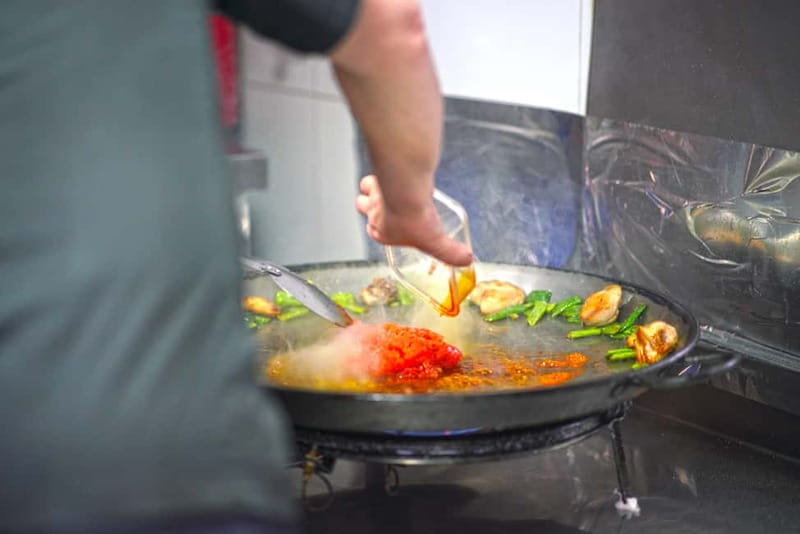
The chef is a major part of this experience. Antonio is repeatedly praised for his friendly teaching style, practical tips, and ability to make the class feel comfortable. He has also offered advice for making paella at home, which is exactly the sort of information you want from a class you plan to continue after Spain.
Pepe is also named as a warm and engaging teacher. His class has been described as feeling like a family meal, with everyone taking part in the paella and accompanying tapas. That tone is important. Cooking classes can become stiff when the instructor talks too much or assumes you already know kitchen basics. Here, the teaching appears aimed at ordinary home cooks.
The class has also been led by Grego, and the strong response to different chefs suggests that the experience is not dependent on one personality alone. Still, the named chefs are worth noting if you are hoping for a particular instructor. Chef assignments can vary, so do not assume Antonio or Pepe will lead every session.
The language options are English and Spanish. If you are comfortable in either language, you can focus on the cooking rather than worrying about following instructions.
Sitting down to eat what you made
The payoff is simple: you sit down and eat the paella you helped prepare. That changes the meal from a restaurant stop into something personal. You know which steps went into the pan, and you can judge the result with the chef’s explanation still fresh in your mind.
The meal includes dessert. Your stated choices are traditional cheesecake, chocolate cheesecake, or Valencian oranges. That gives the ending some range, from a richer sweet to a lighter local fruit option.
I like the balance of the meal. There are snacks, starters, a full main course, drinks, and dessert, but the experience still stays within two hours. You are getting a social dinner as well as instruction, without giving up an entire afternoon or evening.
The main limitation is that the paella may not be the only thing you eat, so arrive ready for a full meal. If you prefer a very focused class with little food before the main dish, this format may feel more like a hosted dinner with cooking than a technical workshop.
What the $105 price buys you
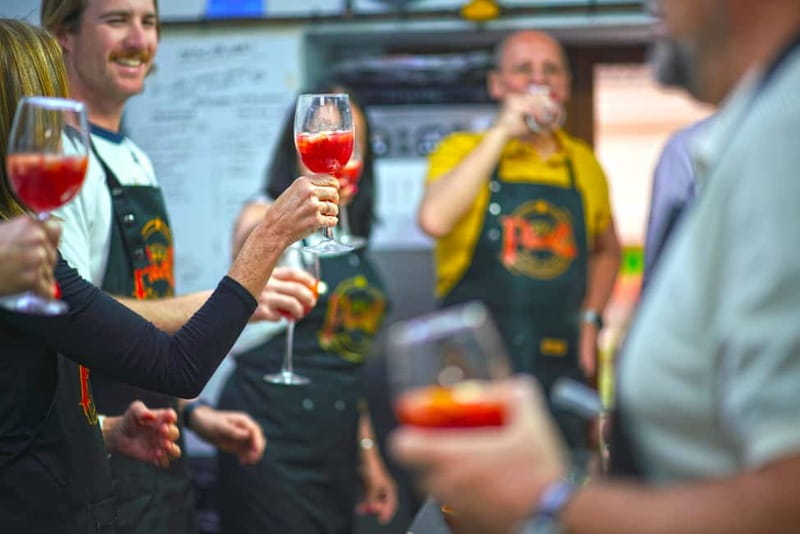
At $105 per person, this is not the cheapest way to eat paella in Valencia. It is also not simply a restaurant meal. The price covers the instruction, the cooking activity, snacks, several starters, paella, dessert, and drinks including homemade sangria, beer, soft drinks, and water.
That package improves the value, especially if you would otherwise pay separately for a meal and a food activity. You are also paying for the chef’s guidance and the chance to learn a dish you can try at home. Antonio’s practical tips are particularly useful for people who want to repeat the recipe after returning home.
The value is strongest for couples, friends, and families who enjoy shared activities. If your only goal is to eat the best paella possible with no participation, a restaurant may be a better match. Here, part of the cost is the time spent preparing the food and hearing its background.
The small group also matters. A class limited to eight feels more personal than a large demonstration, and it gives you better access to the chef. For a visitor who wants a social evening and a meal in one booking, the price is easier to justify.
Who should book this experience
I would point this class toward first-time visitors to Valencia who want a clear connection between the city and its signature dish. You do not need advanced cooking skills. The teaching is designed to help ordinary participants take part, and the relaxed tone should suit beginners.
It also works well for:
- Couples who want a shared evening activity
- Friends looking for a meal with more structure than a restaurant booking
- Families whose children or adults enjoy helping with food
- Home cooks who want practical paella tips
- People who prefer small groups to large demonstrations
- Anyone curious about the difference between Valencian, seafood, and mixed paella
You may want to skip it if you have a strict seafood allergy, although the provided details do not explain allergy procedures. You should ask the provider directly before booking. The same applies to dietary restrictions, since the included starters and main course are clearly specified but no substitutions are promised.
Timing, meeting details, and booking flexibility
The experience lasts two hours, with starting times available according to the date you choose. Since the class includes both cooking and a full meal, allow yourself enough time to arrive early and find the entrance marked Derecha 2.
The host or greeter speaks English or Spanish. The group is limited to eight people, which is a useful detail to check if you are traveling with a larger party. A large group may need more than one booking or separate arrangements.
You can cancel up to 24 hours in advance for a full refund. You can also reserve now and pay later, which helps if your Valencia schedule is still shifting. Those terms are useful for a short city stay, where museum visits, day trips, and weather can change your plans.
Tips for getting the most from the class
Read about the meeting point before leaving your hotel. The Derecha 2 wording is easy to miss, and arriving at the correct entrance matters more here than simply reaching the general neighborhood.
Come hungry, but not so hungry that you cannot focus during the early instruction. Snacks and starters arrive before the paella, followed by dessert, so this is a full food experience.
Ask the chef about the steps you find hardest to repeat at home. The class is especially valuable when you leave with practical answers about timing, ingredients, and the differences between paella styles.
If you have a seafood allergy or dietary restriction, contact the provider before booking. The available information does not confirm alternative ingredients.
Finally, treat the class as a social event. The best part is not just the finished pan. It is working alongside a small group, sharing the starters and sangria, and learning why Valencia treats paella as more than a simple recipe.
Should you book the Valencia paella class?
Book it if you want to do more than order paella at a table. The combination of a small group, local instruction, generous food, and a full meal makes this a strong choice for a first visit to Valencia. Antonio and Pepe are especially noted for clear teaching and an easy manner, while the class itself gives you useful ideas to take home.
Skip it if you want a quiet dinner, have strict dietary needs that have not been confirmed, or prefer a long and technical cooking course. For most food-loving visitors, though, the $105 cost is reasonable because it combines dinner, drinks, cultural context, and a hands-on lesson in one two-hour experience.
FAQ
Where does the paella class take place?
The class takes place in an authentic Valencian kitchen in Valencia, in Spain’s Valencian Community.
What is the meeting point?
The entrance is at Derecha 2, described as the local on the right side, number 2.
How long does the experience last?
The class and dinner last two hours.
How many people can join the group?
The group is limited to eight participants.
Which languages are available?
The host or greeter speaks English and Spanish.
What type of paella will I prepare?
You will prepare a seafood paella using fish and shellfish from the region.
What food is included besides paella?
Included food includes Valencian cocoa, potatoes, olives, Valencian esgarraet, Russian salad, a ham croquette, paella, and dessert.
What drinks are included?
The experience includes homemade sangria, beer, a soft drink, and water.
What dessert choices are available?
Dessert is offered as traditional cheesecake, chocolate cheesecake, or Valencian oranges.
Can I cancel the booking?
Yes. You can cancel up to 24 hours in advance for a full refund. You can also reserve now and pay later.
More Places to Eat in Spain
- Rome: Pasta Making with Wine Tasting and Dinner in Frascati
★ 4.9 · 979 reviews - Palermo: Pizza and Gelato Cooking Class with Dinner and Wine
★ 4.9 · 951 reviews - Greek Cooking Class in Athens Including Rooftop Dinner with Acropolis View
★ 5.0 · 826 reviews - Tuscan Cooking Class and Dinner in Florence
★ 4.5 · 732 reviews
Newest classes around Spain
- Pintxos and Tapas Cooking Class in Bilbao★ 5.0 · 38 reviews
- Basque Pintxos and Tapas Cooking Class in Bilbao★ 5.0 · 73 reviews
- Small-group Immersive Basque Cooking Class in Bilbao with Open Bar★ 5.0 · 65 reviews
- Paella and Burnt Basque Cheesecake Cooking Class (in Bilbao)★ 5.0 · 46 reviews
- Rooftop Paella Seafood Cooking Class Experience in Barcelona★ 5.0 · 59 reviews
- Private Authentic Paella Cooking Class in Barcelona with Josh★ 5.0 · 3 reviews
- Barcelona Tapas Cooking & Cocktail Class with Veronique & Mattias★ 5.0 · 3 reviews
- Private Barcelona Market Tour & Paella Cooking Class with Josh★ 5.0 · 4 reviews
Valencia Cooking Classes, compared.
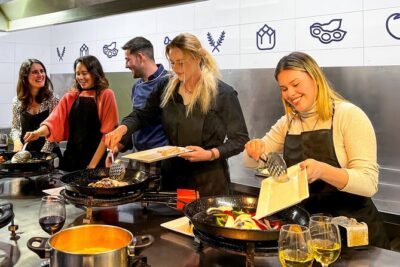
Paella Cooking Class, Wine Tasting & Central Market in Valencia
Read our review →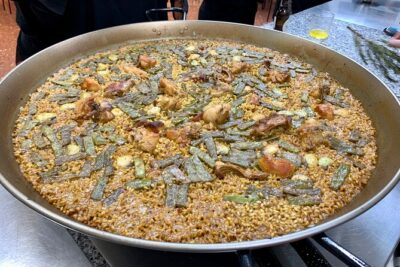
Valencian paella cooking class, tapas and visit to Ruzafa market.
Read our review →
Seafood paella cooking class, tapas and visit to Ruzafa market.
Read our review →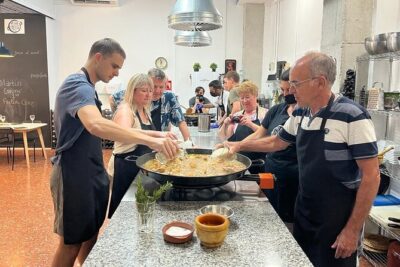
Valencian Paella Cooking Class, Tapas & Sangria – Evening
Read our review →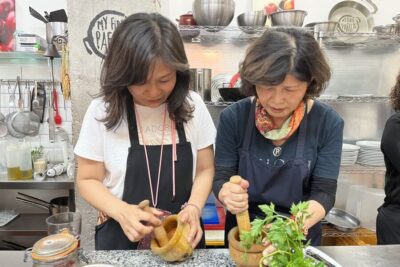
Real Paella Cooking Class – Market Visit & Sangría Workshop
Read our review →
Browse the lists this tour appears in