
Review · SHANGHAI COOKING CLASSES
2.5hrs Chinese Kitchen Cooking Class: Xiaolongbao Soup Dumplings
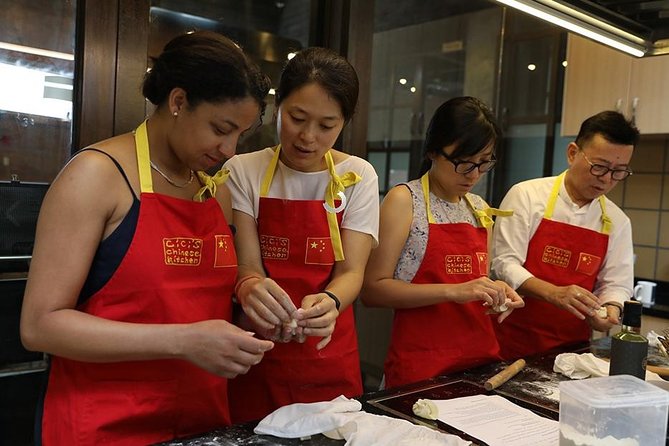
Shanghai’s signature soup dumpling is a clever little trick: a thin wrapper holds seasoned filling and hot broth, then bursts when you bite it. This 2.5-hour cooking class shows you how that soup gets inside, rather than simply putting a finished plate in front of you.
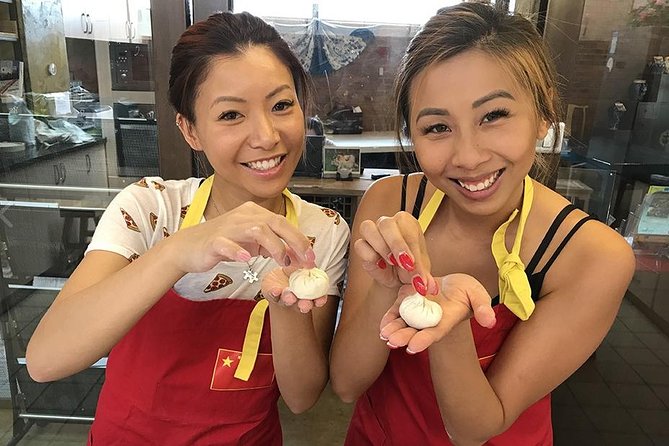
I like two things right away. You make the dough and filling yourself, then cook the dumplings in two ways, including steamed and pan-fried versions. I also like the small-group limit of 15, since shaping delicate folds is much easier when the teacher has time to help.
The main drawback is the meeting information. The description refers to Changshu Road, while the stated meeting point is Guangyuan Road, so check the final address carefully before setting out. The studio is in an old lane, and the entrance may look rough before you reach the clean, compact kitchen.
Key points at a glance
- Soup inside the dumpling: Learn how broth is wrapped into xiaolongbao instead of added afterward.
- Two cooking methods: Prepare both steamed and pan-fried dumplings.
- Patient English-speaking instruction: Cici and Yin are named as instructors in participant feedback, with praise for their humor, patience, and clear teaching.
- A real small-group class: The maximum is 15 people, with plenty of hands-on work.
- Family-friendly format: Children are welcome, and the activity is listed for ages 3 to 100.
- Vegetarian options by request: Vegan and vegetarian versions can be arranged if you state your preference when booking.
Why making xiaolongbao is worth your morning
Xiaolongbao is often translated as soup dumpling or soup bun, but the name does not quite explain the skill involved. You are working with a small parcel that must hold liquid broth without breaking before it reaches the steamer or pan.
That makes this more useful than a standard food demonstration. You learn the sequence from start to finish: dough, filling, soup, folding, cooking, sauce, and eating. I like classes that explain the trick behind a famous dish, and this one focuses on the exact part that makes xiaolongbao different from an ordinary dumpling or baozi.
The class is led in English by a friendly chef. Cici is praised for being fluent, organized, patient, and funny. Yin is also named as an instructor and is described as an excellent teacher who adjusts to a participant’s pace and skill level. Since the available information names both instructors, your teacher may depend on the date.
You do not need to arrive with expert folding skills. One particularly useful detail is that the instruction is intended to work for different ability levels. If your first dumplings look more like wrinkled pillows than neat little purses, that is part of the lesson. The goal is to understand the technique and enjoy the meal, not win a dumpling-making contest.
More Chinese Classes in China:
- Flavors of Beijing: Eat Like A Real Chinese
★ 5.0 · 78 reviews - Shanghai-Cooking Dumpling & Meal in Local Family-w/Vegan
★ 4.9 · 36 reviews - Private Cooking Class: Make Your Own Dim Sum In Shanghai
★ 5.0 · 27 reviews
Meeting in Shanghai’s old lanes
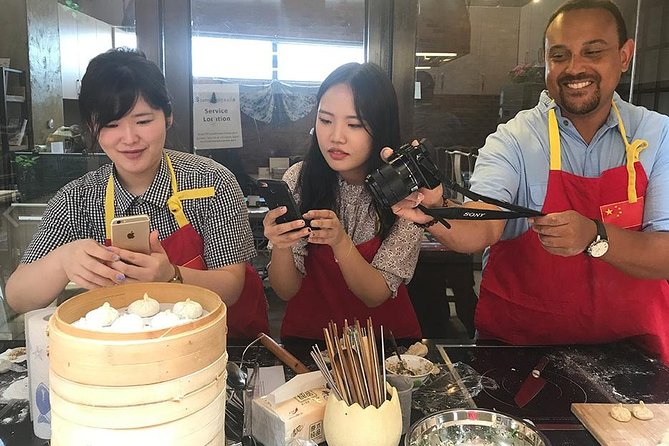
The class begins at 10:00 am and ends around 12:30 pm. The stated meeting point is on Guangyuan Road in Xuhui District, near public transportation. The overview also refers to Changshu Road as an easy meeting area, so I would treat the exact location as something to verify at booking and again before the class.
This matters because the kitchen is not presented as a large commercial cooking school with a prominent street entrance. One participant found the approach through an old, somewhat abandoned-looking kitchen and alley confusing at first, until Yin came out to meet them. Once inside, the studio was described as clean, small, and functional.
That contrast is worth understanding. You may not get a polished storefront or a grand culinary school setting. Instead, the class takes place in a modest local-style space, with an old-lane approach that offers a glimpse of everyday Shanghai. If you prefer a slick, purpose-built studio, this may feel basic. If you like settings that feel connected to local life, the plain entrance is part of the appeal.
Give yourself enough time to locate the meeting point. The class starts with an introduction, so arriving late could mean missing the explanation of the cooking culture and ingredients. The activity ends back at the meeting point, and hotel pickup and drop-off are not included.
10:00 am: A short introduction to Shanghai cooking
The first part of the morning introduces the cooking culture and local ingredients. This begins around 10:20 am after the group meets and settles in.
That short introduction gives the dumpling a useful context. Xiaolongbao is not simply a wrapper around meat. Its appeal comes from the balance between a delicate skin, savory filling, and broth held inside. The lesson explains how these parts work together and how Chinese spices add fragrance to the filling.
I appreciate this kind of opening because it gives you something to notice when you eat later. You are not just making a snack. You are learning why the wrapper must be thin, why the filling needs the right texture, and why the soup must be contained until the dumpling is cooked.
Tea is included, which suits the relaxed pace of the class. There is no need to rush through a long list of dishes. The whole session concentrates on one Shanghai specialty and the techniques needed to make it properly.
Making the dough and filling by hand
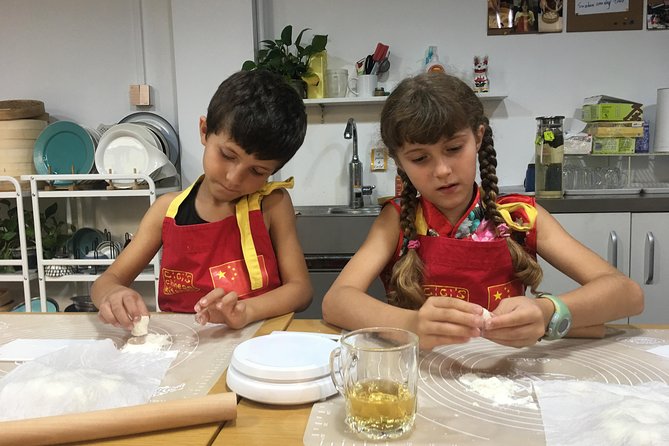
At about 11:00 am, the hands-on cooking begins. You learn to make the dough and prepare the filling with Chinese spices. The class then explains the unusual part: how soup can be wrapped inside the dumpling.
The supplied information does not give a full ingredient list or exact recipe quantities, so you should not expect a detailed menu before arrival. You will receive the recipe at the end, though, which gives you a practical way to try the dish again at home.
The dough stage is important. The wrapper must be thin enough to feel delicate but strong enough to hold the broth. That is easier to understand when your own dough changes under your hands. The teacher can also see where you need help, which is more useful than watching a perfect demonstration from across a room.
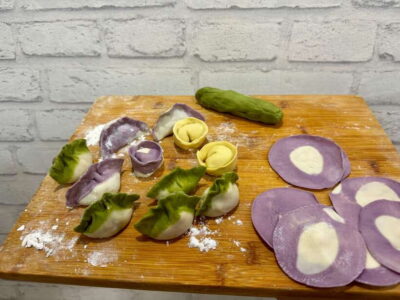
The folding stage will likely be the most demanding part for beginners. The characteristic top knot requires control, and the filling cannot be handled carelessly. The class is designed as an interactive lesson, so you are expected to make your own dumplings rather than simply observe.
That hands-on approach is one of the strongest reasons to choose this activity. A restaurant meal lets you taste a finished xiaolongbao. Here, you learn why the dumpling behaves the way it does, including why an overfilled or poorly sealed wrapper can lose its soup.
More Cooking Classes in China:
- Half-Day Chengdu Cooking Class with a Local Market Visit
★ 5.0 · 465 reviews - Chengdu: Cooking Class with Fresh Market Half Day Experience
★ 5.0 · 42 reviews - Half-Day steamed Buns Cooking Class with a Local Market Visit
★ 5.0 · 26 reviews - Half-Day Professional Mapo Tofu Cooking with a Local Market Visit
★ 5.0 · 19 reviews
Steamed and pan-fried dumplings at noon
The dumplings are cooked in two ways. One method is steaming, the classic approach for soup dumplings. The other is pan-frying, which adds a firmer, browned base and a different texture.
This comparison makes the class more interesting than a single cooking method. You can see how the same dough and filling change with heat. The steamed version focuses on the soft wrapper and broth, while the pan-fried version brings more texture to the bottom.
You also learn to make a Chinese sauce to serve with the dumplings. The sauce gives the final meal another layer of flavor and turns the class into a full little meal rather than a single tasting.
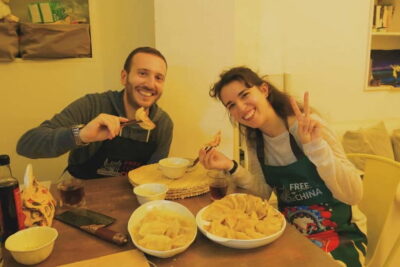
At noon, everyone sits down to enjoy the dumplings together. That shared meal is a nice finish to the work. You get to compare the results, taste both cooking styles, and see which folds held together best.
The meal is not an extra restaurant stop, and it is not meant to replace a full food tour of Shanghai. It is the reward for the cooking session. If you arrive very hungry, keep in mind that the class centers on one dumpling dish, even though it includes a filling meal for the activity.
What makes the teaching effective
The most praised part of the experience is the instruction. Cici is described as fluent in English, organized, well informed, patient, and good-humored. Yin is described as easy to talk to, skilled, and able to teach at a participant’s pace.
Those details matter because dough and folding techniques are hard to follow when instructions move too quickly. A patient teacher can correct your method without making the class feel like a test. That is especially helpful for families and first-time cooks.
The class also includes cultural information along with the cooking. One participant specifically valued the way Chinese culture was included during the lesson, while another appreciated Yin’s recommendation for a nearby tea shop. The tea-shop suggestion is not listed as a formal part of the itinerary, so treat it as a possible personal recommendation rather than a guaranteed stop.
The maximum group size is 15. That is still large enough to have a social meal at the end, but small enough to keep the focus on the work. A smaller group also helps if you need the chef to demonstrate a fold again or adjust the recipe for a vegetarian or vegan diet.
Families, vegetarians, and first-time cooks
Children are welcome, and the activity is listed for ages 3 to 100. Children under 3 are stated to be free, while the main age range begins at 3, so families with very young children should confirm how the provider handles seating and participation.
The format can work well for a family because the task is physical, visual, and easy to understand in stages. Younger children may enjoy shaping dough, while older children can follow the filling and folding process. The cooking area is described as small, so adults should expect to supervise children closely.
Vegetarian and vegan options are available on request. You need to write your food preference when booking. Do not wait until the morning of the class, since the filling and ingredients need to be prepared in advance.
The class suits beginners especially well. You do not need prior cooking experience, and the teacher is described as supportive of different skill levels. Experienced cooks may still enjoy it for the specific xiaolongbao technique, though the class is focused on one dish rather than a broad survey of Shanghai cuisine.
Is $98.88 a fair price?
At $98.88 per person, this is not a bargain dumpling meal. You are paying for instruction, ingredients, hands-on preparation, tea, the shared meal, an English-speaking chef, and the recipe to take away.
The value depends on what you want from a food activity. If you only want to eat inexpensive xiaolongbao, Shanghai offers cheaper options. If you want to understand how the broth gets inside and learn a skill you can repeat at home, the price makes more sense.
The small-group setting strengthens the value. You are not just watching a cooking show. You make the dough and filling, shape the dumplings, cook them in two ways, prepare a sauce, and eat the results. The recipe adds a practical benefit after the class.
Group discounts may be available, which could help families or friends traveling together. The activity is often booked about 18 days ahead, so I would not leave it until the last minute if this is important to your Shanghai plans.
Practical details before you book
Confirmation is provided at booking, and the activity is available with a mobile ticket. Public transportation is nearby, but no hotel transfer is included.
The most important practical point is the location wording. Guangyuan Road is given as the formal meeting point, while Changshu Road appears in the overview. Check your confirmation for the final address, and allow extra time to find the entrance through the lane.
The class is non-refundable and cannot be changed for any reason after booking. If the minimum number of participants is not reached and the provider cancels, you are offered another date or experience, or a full refund.
The activity lasts about 2 hours and 30 minutes. Plan for a 10:00 am start and a 12:30 pm finish at the same meeting point. Since the meal is part of the class, you do not need to schedule a separate lunch immediately afterward.
Who should book this Shanghai cooking class?
I would choose this class if you want a focused food experience with real participation. It is especially suitable for first-time cooks, families with children, couples, friends, and anyone curious about the technique behind Shanghai’s most famous dumpling.
You should also choose it if you value a local setting over polished presentation. The old lane and compact studio may feel less comfortable at first, but they help the class feel like a small look at ordinary Shanghai life.
I would skip it if you want a broad cooking course covering many dishes, a luxury studio, hotel pickup, or a flexible cancellation policy. This is a specific lesson built around xiaolongbao, with a fixed morning schedule and a simple kitchen.
For most food-focused visitors, the strongest reason to book is the combination of soup-wrapping technique and two cooking methods. You leave with more than a meal. You understand why the dumpling works, and you have a recipe to try again.
FAQ
How long does the xiaolongbao cooking class last?
The class lasts approximately 2 hours and 30 minutes, from 10:00 am to 12:30 pm.
Where does the class meet?
The stated meeting point is on Guangyuan Road in Xuhui District, Shanghai, near public transportation. The activity description also refers to Changshu Road, so check your booking confirmation for the exact meeting instructions.
What cooking techniques will I learn?
You learn to make the dough and filling, wrap soup inside xiaolongbao, prepare a Chinese sauce, and cook the dumplings in two ways.
Are the dumplings steamed or pan-fried?
Both methods are included. The class prepares steamed and pan-fried xiaolongbao.
Are vegetarian or vegan options available?
Yes. Vegetarian and vegan options are available by request. State your food preference when booking.
Can children take part?
Yes. Children are welcome, and the activity is listed for ages 3 to 100. Children under 3 are stated to be free to join.
Is hotel pickup included?
No. Hotel pickup and drop-off are not included. You meet at the cooking studio and finish back at the meeting point.
Can I cancel or change my booking?
No. The experience is non-refundable and cannot be changed for any reason. If the provider cancels because the minimum number of participants is not reached, you are offered another date or experience, or a full refund.
Newest classes around China
- Private Panda Tour with Cooking Class One-day Trip★ 5.0 · 11 reviews
- Half-day Chengdu Handmade Tofu Making and Mapo Tofu Cooking Class★ 5.0 · 3 reviews
- Half-day Dandan Noodles Cooking Class with a Local Market Visit★ 5.0 · 8 reviews
- Half-Day Private Hot-Pot Cooking Class with a Local Market Visit★ 5.0 · 3 reviews
- Half-Day Sichuan Cooking Class Experience in Chengdu★ 4.0 · 17 reviews
- Half day Chengdu Dumpling Class: Make from Scratch★ 5.0 · 8 reviews
- Chengdu Dujiangyan Leshan Buddha Tea Plantation and Sichuan Cooking 3 Days★ 5.0 · 2 reviews
- Beijing: Private Dumpling Cooking Class in Local Family★ 5.0 · 3 reviews
Shanghai Cooking Classes, compared.
Private Cooking Class: Make Your Own Dim Sum In Shanghai
Read our review →
Browse the lists this tour appears in