
Review · SHANGHAI COOKING CLASSES
Private Cooking Class: Make Your Own Dim Sum In Shanghai
Shanghai’s best cooking lesson here is wonderfully focused: you choose two dim sum dishes, then learn to shape, fill, steam, fry, and eat them in a private kitchen class. The menu ranges from shrimp dumplings and soup-filled xiaolongbao to egg rolls, sesame balls, and sweet soups.
I like the full attention from the instructor, especially if you want to ask why a dough behaves a certain way instead of simply copying a recipe. I also like that your finished food becomes the meal, so the $88 price includes more than a demonstration. The main drawback is that two hours goes quickly, and the workshop can be tricky to spot from the street.
Key points at a glance
- Pick two dishes in advance: Choose from dumplings, buns, egg rolls, sesame balls, and sweet soups.
- Private instruction: Only your group takes part, making it easier to ask questions and work at your own pace.
- A hands-on meal: You make the dim sum and eat your finished dishes afterward.
- Patient English-language teaching: Instructor Mike has been praised for clear English, patience, and a good sense of humor.
- Useful for families: Children from age 3 pay the adult rate, and children under 2 can join free with an adult.
- Plan the meeting carefully: The class meets at Moganshan Road, while the activity description places the kitchen in Shanghai’s French Concession.
Choosing Your Two Dim Sum Dishes
The first decision matters. You need to tell the chef which two items you want when you book, rather than waiting until you arrive. That lets the kitchen prepare the right ingredients and gives the lesson a clear plan.
The list covers a good spread of Shanghai and wider Chinese favorites:
- Shrimp dumpling
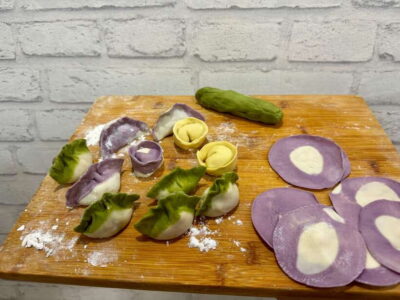
- Goldfish dumpling
- Four Happiness dumpling
- Sui mai
- Xiaolongbao, the steamed pork dumpling with soup
- Big wonton
- Leaf bun
- Fried bun
- Egg roll
- Sesame ball
- Red bean paste sweet soup
- Coconut sago sweet soup
For a first class, I would choose one savory item and one sweet or fried item. Xiaolongbao and egg rolls give you two very different techniques. Shrimp dumplings and sesame balls also make a nice contrast, with delicate wrappers followed by a chewy, sweet finish.
If your main goal is to understand dumpling technique, choose two dumpling styles. That gives you a better chance to compare folding methods and dough handling. If you are traveling with children, egg rolls, fried buns, sesame balls, and the decorative goldfish dumpling may keep the lesson playful.
The class is not presented as a broad survey of every dim sum style. You get two dishes, taught with enough attention to make the choice useful. That limit is a strength if you want practical instruction, but it may disappoint you if you hope to cook a whole banquet.
More Private Cooking Classes in China
- Private Home Cooking Class with Shanghai Mama
★ 5.0 · 14 reviews - Private Panda Tour with Cooking Class One-day Trip
★ 5.0 · 11 reviews - Private Home Cooking Class:Dumpling Cooking Class Tour in Xi’an
★ 5.0 · 7 reviews
Inside the Two-Hour Chinese Cooking Workshop
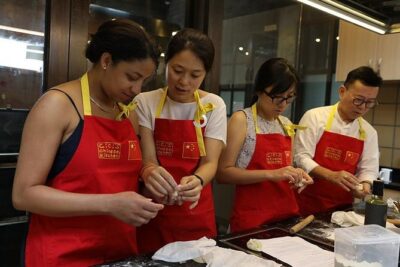
The activity takes place at a Chinese Cooking Workshop in Shanghai. The setting is described as a fun, industrial-style kitchen, with the equipment and ingredients ready for your group.
You should expect a working lesson rather than a formal restaurant meal. Your instructor demonstrates the important steps, then you make the food yourself. That format matters. Dim sum looks simple when it arrives on a bamboo steamer, but the wrapper thickness, filling amount, folding pattern, and cooking time all affect the result.
The instructor can correct small errors as you go. That is far more useful than watching a polished demonstration and trying to remember every movement later. One particularly valuable part of a private lesson is the chance to stop and ask about technique. If a wrapper tears, a filling leaks, or a fold looks uneven, you can address the problem at once.
The class includes cooking equipment, professional instruction, ingredients, and your handmade dim sum meal. You are not expected to bring tools or supplies. You should still wear practical clothing, since the activity operates in all weather and takes place in a kitchen environment.
Why Private Instruction Makes a Difference
A private class changes the pace. You do not have to wait for a large group to finish folding, and the chef can spend time with the person who needs another demonstration.
That is especially helpful for xiaolongbao. Soup dumplings require careful handling because the wrapper must hold both the filling and the hot broth. The same is true for decorative options such as goldfish dumplings and Four Happiness dumplings, where appearance is part of the challenge.
A private format also works well for families. One parent can help a child while the instructor focuses on the next step. The age policy allows children under 2 to join free, while adult pricing applies from age 3. Children must be accompanied by an adult.
The class is also suited to couples and small groups who prefer a personal lesson instead of a public demonstration. Group discounts are available, though the exact discount is not provided, so check the current price when booking.
Meeting at Moganshan Road
The stated meeting point is Moganshan Road, written as Mo Gan Shan Lu, in Putuo District. The class ends back at the meeting point, and the activity is near public transportation.
Pay close attention to the meeting instructions. The experience is described as taking place in Shanghai’s French Concession, but the listed start point is Moganshan Road. Those are not the same area, so you should confirm the exact workshop address and room details before setting out.
The kitchen can be hard to identify from the street because there are few signs. Allow extra time, especially if this is your first visit to the area. A clear meeting point is useful, but a workshop hidden inside an industrial-style space may not look like a cooking school from outside.
The standard start time listed is 10:00 a.m., but you can request a morning, afternoon, or evening cooking time when booking. Do not assume your preferred time is fixed until the provider confirms it.
More Chinese Classes in China:
- Flavors of Beijing: Eat Like A Real Chinese
★ 5.0 · 78 reviews - Shanghai-Cooking Dumpling & Meal in Local Family-w/Vegan
★ 4.9 · 36 reviews - 2.5hrs Chinese Kitchen Cooking Class: Xiaolongbao Soup Dumplings
★ 5.0 · 12 reviews - Half day Chengdu Dumpling Class: Make from Scratch
★ 5.0 · 8 reviews
The Instructor and Teaching Style
Instructor Mike is specifically praised for speaking excellent English, explaining steps clearly, and staying patient when learners need extra help. That is important in a class built around small hand movements and food terms that can be difficult to communicate through gestures alone.
One useful detail is that he does not rush the lesson. That gives you time to ask about techniques and repeat a step instead of producing a quick batch with no idea why it worked.
The teaching style appears practical and friendly, with room for questions and a little humor. That can make a difference when a dumpling refuses to close or a decorative fold looks less like a goldfish than planned.
The instructor also explains the background of the food, adding context without turning the class into a lecture. You come away with cooking skills and a better sense of how these small dishes fit into Chinese food culture.
Because the activity is private, your experience may depend on the instructor assigned on your date. Mike is one named instructor associated with the class, but you should not assume he will personally teach every session.
What You Actually Eat
Your handmade dim sum becomes the meal at the end. That gives the class a satisfying finish and lets you judge the results while the techniques are still fresh.
The menu includes savory dumplings, buns, wontons, and egg rolls, along with sweet options such as sesame balls, red bean paste sweet soup, and coconut sago sweet soup. If you choose soup dumplings, eat them carefully and follow the chef’s instructions, since the filling contains hot broth.
The amount of food can be generous for a two-hour lesson, particularly if you select two substantial dishes. Still, this is not described as a full-day food tour or a large restaurant tasting. Your meal is the food you prepare, so the final portion depends partly on your chosen dishes and the class preparation.
A vegetarian option is available, but you must request it when booking. Do not wait until you arrive, since the filling and ingredients need to be planned in advance.
What the $88 Price Gets You
At $88 per person, this is not the cheapest way to eat dumplings in Shanghai. You can find prepared dim sum for far less. The value comes from the private instruction, hands-on practice, equipment, ingredients, and meal included in the two-hour session.
For a private cooking class in a major city, the price is reasonable if you want to learn a technique you can repeat at home. You are paying for direct correction and personal attention, not just food.
The price works best for people who enjoy participating. If you only want to eat dim sum, spend the money at a restaurant. If you want to understand how wrappers are folded, how soup dumplings are handled, or how sesame balls are made, this class offers more lasting value.
The class is also a sensible choice for a small group because the private format lets everyone work together. Ask about the available group discount before booking, since no specific percentage is given.
Who Should Book This Class
I would recommend this experience to you if you enjoy food and want a break from simply ordering at restaurants. It is particularly good for:
- Couples who want a shared activity
- Families with children who can take part in simple preparation
- First-time visitors who want a practical introduction to dim sum
- Home cooks who want help with dumpling folding
- Small groups looking for a private lesson
- Anyone who prefers asking questions to watching a large group demonstration
It may not suit you if you dislike hands-on activities, have very little free time, or expect to learn a long list of recipes in one sitting. Two dishes allow for useful instruction, but they also set a firm limit.
The class is likely most rewarding early in your Shanghai visit. You can use the food knowledge during the rest of your stay, then compare the dishes you make with those you order elsewhere. It also gives you a relaxed morning or afternoon activity away from the usual sightseeing circuit.
Booking Tips That Matter
Choose your two dishes before booking or send your choices promptly afterward. Mention vegetarian requirements at the same time. Also request your preferred time of day, since the provider asks for morning, afternoon, or evening preferences.
The activity is usually booked about nine days ahead. That is not a formal required lead time, but it suggests that you should not leave the class until the last day if you have a fixed schedule.
You receive confirmation at booking. The class runs in all weather, so dress appropriately and wear clothing that will be comfortable in a kitchen.
Free cancellation is available if you cancel at least 24 hours before the local start time. Changes or cancellations within 24 hours are not accepted for a refund.
Should You Book the Shanghai Dim Sum Class?
Book it if you want to do more than taste Shanghai food. The private format, patient instruction, choice of two dishes, and handmade meal make this a useful two-hour activity, especially for families, couples, and home cooks.
I would choose the class early in a Shanghai stay and select one dumpling plus one contrasting item, such as egg rolls or sesame balls. Confirm the exact Moganshan Road meeting details, request vegetarian food if needed, and allow extra time to locate the workshop.
Skip it if your priority is a long list of dishes, a large meal, or a simple restaurant outing. For everyone else, $88 buys a personal lesson you can carry home, which is a fair trade for two focused hours and a plate of food you made yourself.
FAQ
How long does the private dim sum class last?
The class lasts approximately two hours.
Where does the class meet?
The listed meeting point is Moganshan Road, Mo Gan Shan Lu, in Putuo District, Shanghai. The activity ends back at the meeting point.
What time does the class start?
The listed start time is 10:00 a.m. You can request a morning, afternoon, or evening cooking time when booking.
Which dim sum dishes can I learn to make?
You can choose two items from a menu that includes shrimp dumplings, goldfish dumplings, Four Happiness dumplings, sui mai, xiaolongbao, big wontons, leaf buns, fried buns, egg rolls, sesame balls, red bean paste sweet soup, and coconut sago sweet soup.
Do I need to bring cooking equipment or ingredients?
No. Cooking equipment and ingredients are included, along with professional instruction.
Is a vegetarian option available?
Yes. Vegetarian food is available, but you must request it when booking.
Can children join the class?
Yes. Children must be accompanied by an adult. Children under age 2 can join free, while adult pricing applies to children from age 3.
Can I cancel for a refund?
Yes. You can cancel at least 24 hours before the experience start time for a full refund. Cancellations or changes made less than 24 hours before the start time are not accepted for a refund.
Newest classes around China
- Private Panda Tour with Cooking Class One-day Trip★ 5.0 · 11 reviews
- Half-day Chengdu Handmade Tofu Making and Mapo Tofu Cooking Class★ 5.0 · 3 reviews
- Half-day Dandan Noodles Cooking Class with a Local Market Visit★ 5.0 · 8 reviews
- Half-Day Private Hot-Pot Cooking Class with a Local Market Visit★ 5.0 · 3 reviews
- Half-Day Sichuan Cooking Class Experience in Chengdu★ 4.0 · 17 reviews
- Half day Chengdu Dumpling Class: Make from Scratch★ 5.0 · 8 reviews
- Chengdu Dujiangyan Leshan Buddha Tea Plantation and Sichuan Cooking 3 Days★ 5.0 · 2 reviews
- Beijing: Private Dumpling Cooking Class in Local Family★ 5.0 · 3 reviews
Shanghai Cooking Classes, compared.
2.5hrs Chinese Kitchen Cooking Class: Xiaolongbao Soup Dumplings
Read our review →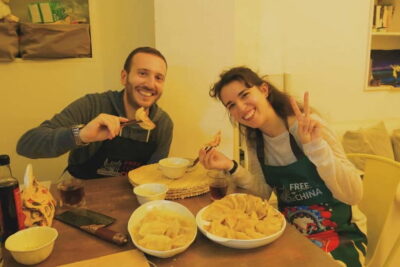
Browse the lists this tour appears in