
Review · PORTO COOKING CLASSES
Porto: Portuguese Cooking Class on the Terrace
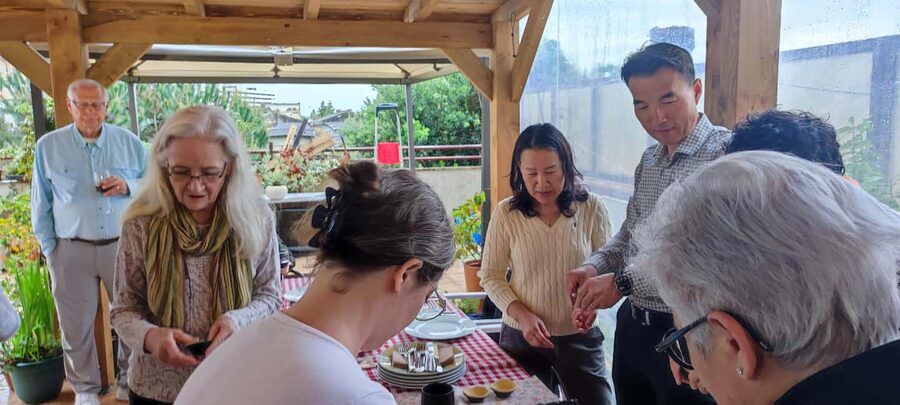
The best part of this Porto cooking class is that you are welcomed into a real family home, not a restaurant kitchen built for tourists. You help prepare the full meal, then sit down together on a spacious terrace to eat, talk, and enjoy the evening.
I like the hands-on menu, especially the chance to make bacalhau, pork with chestnuts, tomato rice, and pastel de nata in one sitting. I also like the personal touch: Jorge, João, Isabel, and Miguel host the class with music, drinks, family conversation, and even a neighborhood cat nearby.
The setting is intimate, which is part of the charm but also something to consider. This takes place in a small one-bedroom apartment, so you should expect a close, informal home visit rather than a polished cooking studio or market tour.
Key points at a glance
- A private class in a family apartment: You meet the hosts at the door and cook in their small home, with a spacious terrace for the meal.
- A complete Portuguese menu: Prepare pataniscas de bacalhau, fresh salad, rojões de porco with chestnuts, tomato rice, and pastel de nata.
- Personal guidance throughout: The hosts explain preparation methods and share practical tips as you work through each dish.
- A relaxed social evening: Welcome drinks, appetizers, music, conversation, and the neighborhood cat give the class a homey feel.
- Dietary flexibility: The menu can be adjusted for some requirements, including substituting the meat.
- A private 3.5-hour booking: The class is offered for a private group, with Portuguese, English, and French spoken.
A Porto cooking class that feels like a family visit
Many cooking classes put you at a long worktable with a professional chef moving quickly from one demonstration to the next. This one takes a different path. You enter a small one-bedroom apartment, meet the resident family, and spend several hours cooking and talking on a spacious terrace.
That difference matters. I like food classes best when they explain not only what goes into a dish, but also how food fits into daily life. Here, the meal gives you an easy reason to talk about Portuguese customs, local habits, and details about Porto and the country.
The class is led by Jorge, João, Isabel, and Miguel. The setting is informal and personal, with music playing and the family cat adding a small bit of neighborhood life. It is not a formal cultural lecture, and that is the point. You learn through conversation while your hands are busy with onions, fish, meat, pastry, and rice.
The format also works well for people who prefer a private activity. You are not placed in a large mixed group, and the hosts can focus on your party. A private group can be especially useful if you are traveling with family or friends who want to cook at their own pace.
More Cooking Classes in Portugal:
- Lisbon: Pastel de Nata Baking Class
★ 4.9 · 2,106 reviews - Porto: Pastel de Nata Cooking Class with Grandma’s Recipe
★ 5.0 · 1,565 reviews - Porto: Pastel de Nata Cooking Class with Port Wine – Sé
★ 4.8 · 888 reviews
Starting with a drink and a taste of Porto
The visit begins at the apartment door, which is also the meeting point. The exact location is in Porto at coordinates 41.17914581298828, -8.614091873168945. Since no street address is supplied here, I would save the coordinates and allow extra time to find the door.
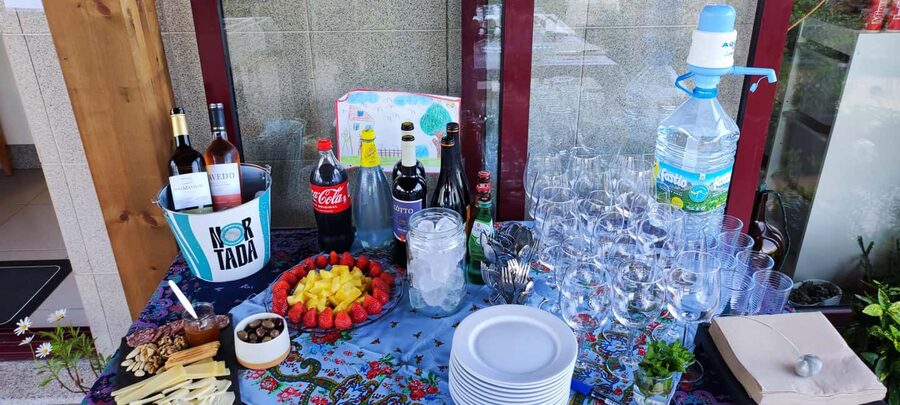
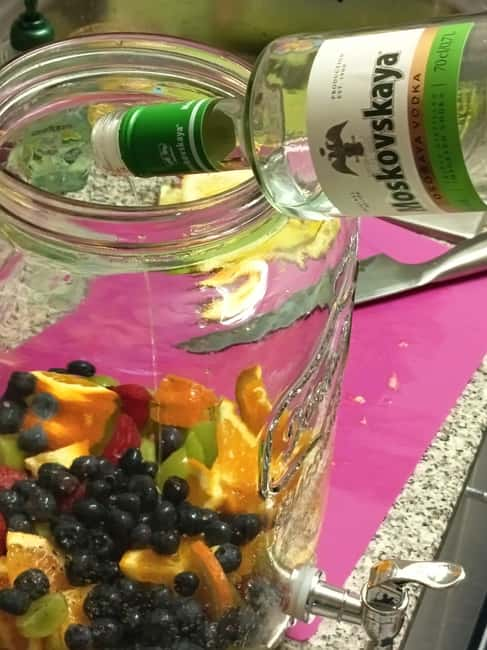
Once you arrive, you receive a welcome drink and an appetizer. The family introduces themselves and explains how the class will run. Drinks and small appetizers remain available for tasting during the preparation, so the evening begins socially rather than with an immediate rush to the chopping board.
This opening helps set the tone. You have time to meet the people who will be cooking with you, ask questions, and settle into the apartment. The class is designed around conversation as much as food, so the first few minutes are important.
Alcoholic drinks are served only to people over 21, according to the activity details. If that age rule affects your group, clarify drink arrangements when booking. The information provided does not specify a separate nonalcoholic menu, so it is sensible to mention any preferences in advance.
Preparing the full Portuguese menu
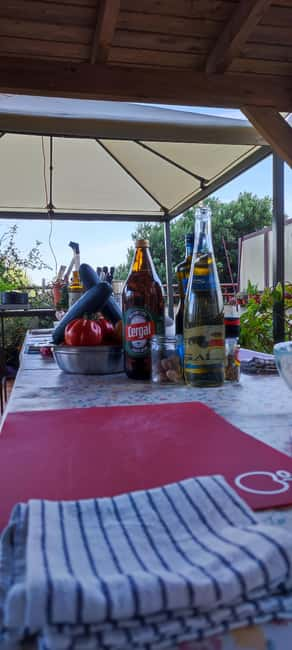
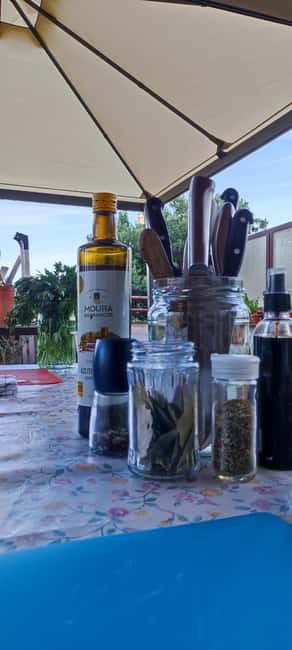
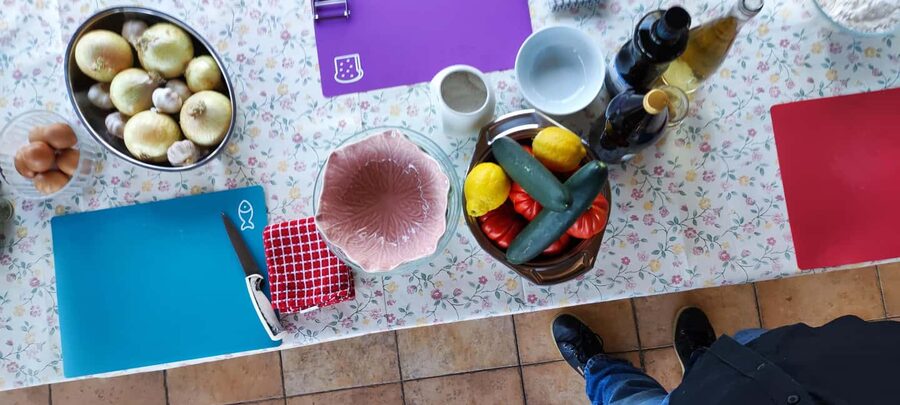
The main work begins with the ingredients. Rather than watching one long cooking demonstration, you take part in preparing the entire menu. The hosts explain methods, offer tips, and guide you through the order of work.
The planned menu includes:
- Pataniscas de bacalhau
- Fresh salad
- Rojões de porco with chestnuts
- Tomato rice
- Pastéis de nata
This is a useful menu for learning about Portuguese cooking because it covers several different styles. You work with salted cod, pork, chestnuts, rice, fresh vegetables, and pastry in one session. The dishes also vary in texture and technique, so the class does not feel like repeating the same task five times.
The menu is described as a collection of products widely used in Portuguese cuisine rather than a single traditional set meal. That is worth understanding before you book. If you want a strictly regional menu tied to one historic recipe or one particular town, this may not be the right format. If you want a broad introduction to familiar Portuguese ingredients, it makes good sense.
Bacalhau first, with hands-on preparation
Pataniscas de bacalhau are a strong opening dish for the meal. Bacalhau, or salted cod, is one of the best-known ingredients in Portugal, and working with it gives you a direct lesson in how an everyday staple becomes a crisp, shareable appetizer.
You help prepare the mixture rather than simply receiving a finished plate. The hosts provide tips as you work, which is useful because cod fritters depend on balance. Too much mixture can make them heavy, while too little can make them fragile. The class gives you a chance to see the process at close range.
A fresh salad accompanies the savory dishes. It may seem like the simplest course, but preparing it alongside the richer food gives the meal some balance. The salad also adds a straightforward task for anyone in the group who prefers lighter kitchen work.
The menu can be adapted for some customer requirements. One specific option mentioned is replacing the meat. The details do not promise that every allergy or dietary need can be handled, so you should contact the host before booking if you have serious restrictions.
Same region, a different dish to learn:
- Lisbon: Traditional Portuguese Cooking Class
★ 4.9 · 592 reviews - Porto: Pastel de Nata Cooking Class from Scratch
★ 4.9 · 468 reviews - Lisbon: 2-Hour Pastel de Nata Cooking Class
★ 4.8 · 461 reviews - Lisbon Portuguese Cooking Class with 3-Course Dinner
★ 5.0 · 445 reviews
Rojões, chestnuts, and tomato rice
The main course is rojões de porco with chestnuts, served with tomato rice. Together, these dishes show a hearty side of Portuguese cooking. Pork and chestnuts make a filling pairing, while the tomato rice adds color, moisture, and a familiar side dish that can support the main course.
I like this part of the menu because you are not just learning a single headline dish. You are building a complete plate. The rice must be prepared in a way that fits the pork, and the chestnuts add another ingredient to handle and taste.
The host’s tips are likely most useful here, since timing becomes more important when several dishes are being prepared for one meal. The activity description specifically promises explanations and practical advice as the ingredients are prepared. You can ask questions as you go instead of trying to remember a long lecture at the beginning.
The pork can be substituted for some dietary requirements, but the provided information does not state which replacement will be used or how far the menu can be changed. I would be clear about your needs before arrival rather than expecting a last-minute redesign.
Pastéis de nata to finish the evening
Dessert is pastel de nata, Portugal’s famous custard tart. Making it yourself gives the class a sweet finish and adds a pastry element to a menu otherwise centered on savory cooking.
This is also a practical souvenir of the evening. You may forget the exact order of a rice dish, but the sight and smell of a freshly made custard tart can bring the class back quickly. The activity includes tips for preparation, so you get more than a tasting.
The supplied details do not list a separate pastry demonstration or specify how much of the tart-making process you handle. You should expect to participate, since the overall class is built around preparing the full menu, but the exact division of tasks may depend on the group and the hosts.
Eating together on the terrace
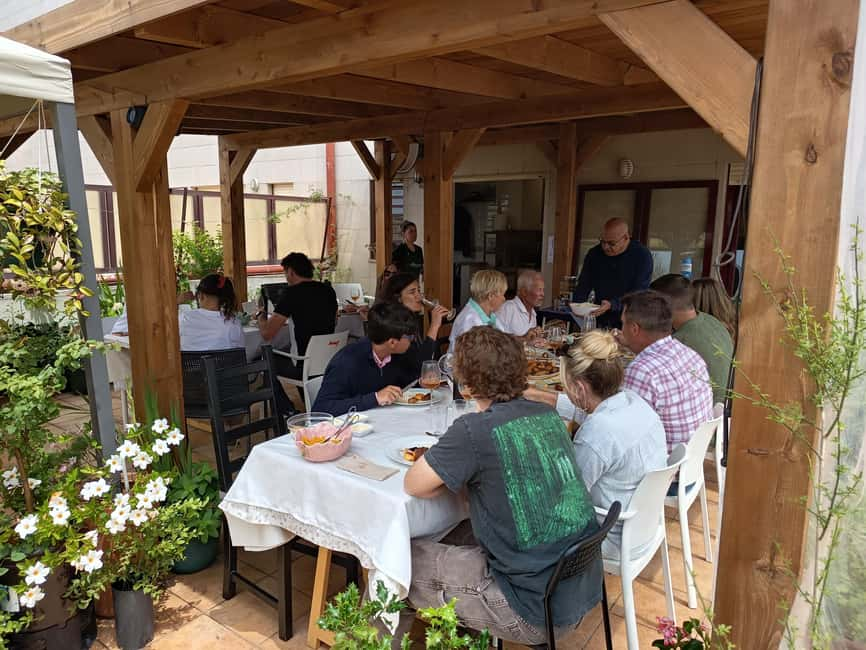
Once the menu is ready, everyone sits at the table and eats together. This is not a class where you cook, take a quick bite, and leave. The meal is the second half of the activity.
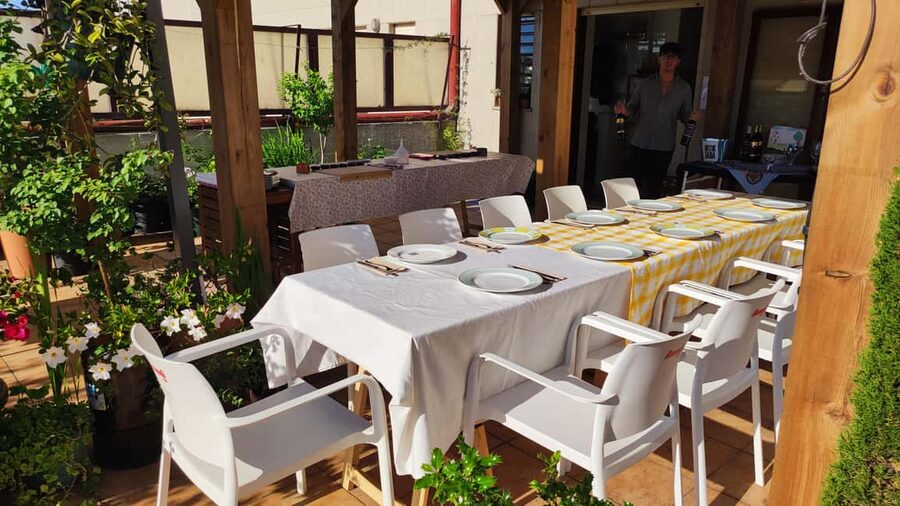
The terrace is a major part of the appeal. A spacious outdoor area gives the group room to relax after working in the kitchen. Music continues, and the family uses the meal as a chance to chat about Portuguese habits, customs, and interesting facts about Porto and the country.
That setting can make the class feel less like a scheduled attraction and more like an evening with local hosts. One highly praised feature is the warmth of the family, with the atmosphere described as kind, accommodating, and full of laughter. Another is the feeling of being welcomed into the home rather than processed through a standard activity.
The small apartment is also the main practical limitation. If you want a sleek venue, professional equipment, or a quiet meal with plenty of personal space, this may feel too informal. If you like close contact and a social evening, the compact setting works in its favor.
What the family atmosphere adds
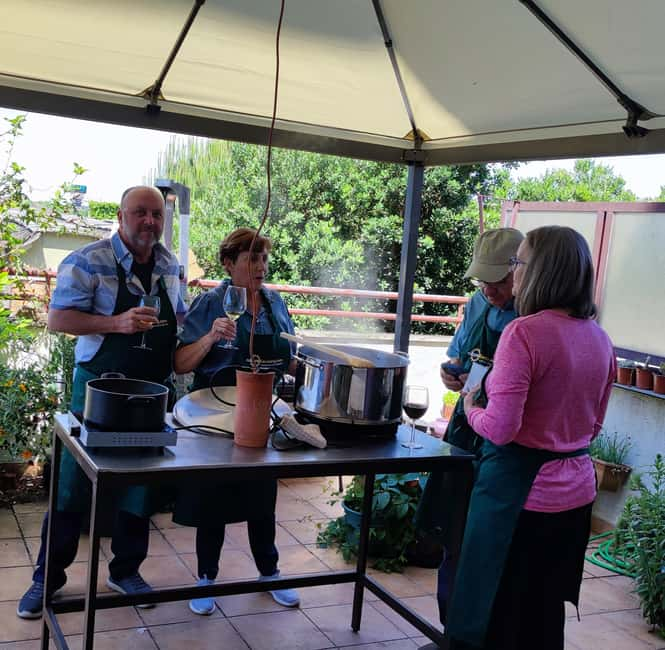
The hosts’ hospitality is central to this activity. Jorge, João, Isabel, and Miguel are not presented simply as instructors who give directions and disappear. They welcome you, cook alongside you, eat with you, and talk with you.
That personal approach was especially useful for dietary needs in one recent booking. The hosts handled restrictions thoughtfully and generously, which suggests that communication before the class can make a real difference. I would still send your requirements ahead of time, since flexibility is mentioned but not unlimited.
The atmosphere is designed to be relaxed. You can laugh, drink, cook, and repeat the cycle through the evening. This suits people who want a social food experience, not just a recipe lesson.
The music and cat are small details, but they help explain the mood. They make the apartment feel lived in. You are not visiting a staged set with a carefully controlled script. You are spending time in a family space where everyday sounds and interruptions are part of the evening.
How the three and a half hours are used
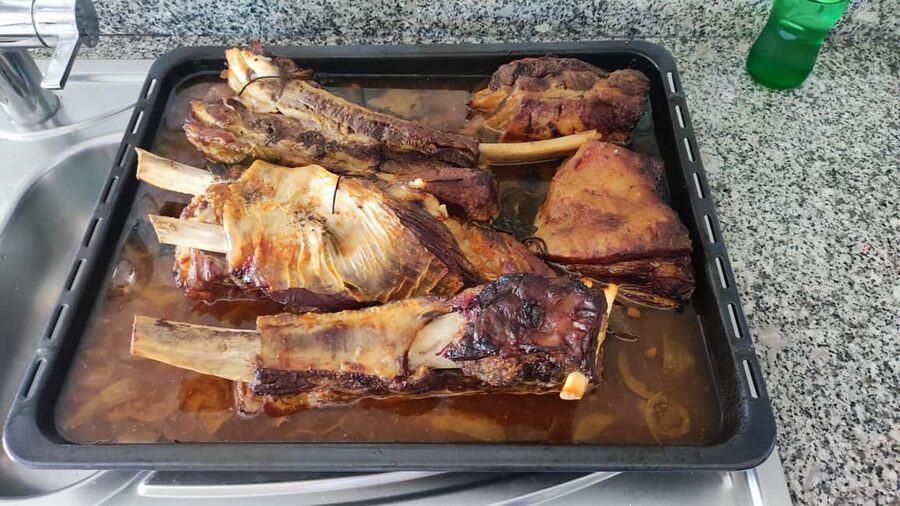
The activity lasts 3.5 hours. That gives you enough time for introductions, the welcome drink, ingredient preparation, cooking, conversation, and the final meal without turning the class into a rushed demonstration.
The length is worth considering when planning your Porto schedule. This is an evening-sized commitment, not a quick stop between sightseeing visits. You should avoid placing an important timed attraction immediately afterward, since the meal and conversation are part of the experience.
The timetable can vary depending on the chosen starting time. Availability shows the start times when you book. The class is offered as a private group, so the pace may feel more flexible than a large class, although the information does not promise a custom start time.
The hosts speak Portuguese, English, and French. That makes the class accessible to a broad range of visitors, and language support matters in a cooking activity where instructions and small practical tips are important.
Value compared with other Porto food classes
No price is provided in the available information, so I cannot judge the exact cost. I can explain what you are paying for. The value comes from the private format, a complete meal, drinks and appetizers, hands-on preparation, a terrace setting, and several hours of direct contact with a Portuguese family.
A market tour and cooking class would give you a different kind of value. You might see ingredients being bought and learn more about shopping, but you would not necessarily receive the same home setting or family conversation. A pastry-only workshop would let you focus more closely on pastel de nata, but it would not cover fish, pork, rice, salad, and dessert in one meal.
This class makes the most sense if you want breadth and personal contact. It is less suitable if you want one specialized lesson, a professional chef’s technique, or a market visit built into the schedule.
The private-group format can also change the value calculation. For a family or group of friends, having the hosts focus on your party may justify a higher price than a large shared class. For a solo visitor, the cost may feel harder to compare unless the booking allows you to join others, and the supplied information does not say that it does.
Who should book this terrace cooking class?
I would recommend it to you if you enjoy food, conversation, and informal cultural contact. It is a good match for couples, families, and small groups who want to spend an evening doing something together rather than sitting passively at a restaurant.
It should also suit people who like to ask questions. The hosts invite conversation about customs and city life, and the small group format gives you room to engage.
Families with children should check the booking details directly, since no age policy is supplied. The same applies to guests with food allergies, vegetarian requirements, or other restrictions. Meat substitution is possible in some cases, but the host needs advance notice.
I would hesitate if you dislike private homes, close quarters, or social meals with your hosts. The apartment is small, and the activity depends on a warm, communal mood. It is not the place for someone who wants to keep to themselves.
Cancellation is flexible up to 24 hours before the activity for a full refund, and you can reserve now and pay later. Those terms are useful if your Porto schedule is still changing.
Should you book it?
Book this class if you want a personal evening built around cooking, family hospitality, and a full Portuguese meal. The strongest reasons are the private setting, the range of dishes, the chance to work with the hosts, and the relaxed terrace meal afterward.
Skip it if your priority is a market visit, a formal chef-led lesson, or a single focused recipe. The small apartment and informal style are not drawbacks for everyone, but they are important to understand before you commit.
For most food-loving visitors, I would choose this when I wanted a memory of people as much as a memory of food. The bacalhau, pork, tomato rice, and pastel de nata give the evening structure. Jorge, João, Isabel, Miguel, the music, the terrace, and the cat give it its character.
FAQ
Where does the Porto cooking class take place?
The activity takes place in a small one-bedroom apartment with a spacious terrace. You meet the hosts at the door, which is also the activity location.
How long does the cooking class last?
The class lasts 3.5 hours. Starting times vary, so you should check availability when booking.
What food will I prepare?
The planned menu includes pataniscas de bacalhau, a fresh salad, rojões de porco with chestnuts, tomato rice, and pastéis de nata for dessert.
Can the menu be adapted?
Yes. The menu can be adapted for some customer requirements, including substituting the meat. You should share dietary needs before the activity.
Which languages do the hosts speak?
The activity is offered in Portuguese, English, and French.
Is the class private?
Yes. The activity is offered for a private group.
Are drinks included?
A welcome drink, appetizers, and drinks for tasting are available during the preparation. Alcoholic drinks are served only to people over 21.
Can I cancel the booking?
You can cancel up to 24 hours in advance for a full refund. You can also reserve now and pay later.
Newest classes around Portugal
- Cooking Workshop in Cascais (group of 4 min)★ 5.0 · 13 reviews
- Cooking Class★ 5.0 · 17 reviews
- Terceira Island: Azores Cooking Class Experience★ 5.0 · 14 reviews
- Porto: Coastal Villages Market & Seafood Cooking Tour★ 5.0 · 2 reviews
- Porto: Cooking Class with Local Market Visit★ 5.0 · 15 reviews
- Porto: Local Market Tour & Cooking Class/Showcooking★ 4.9 · 32 reviews
- Lagos: Market Tour and Cataplana Cooking Class★ 5.0 · 9 reviews
- Lisbon: Portuguese Petiscos Cooking Class★ 4.7 · 6 reviews
Porto Cooking Classes, compared.
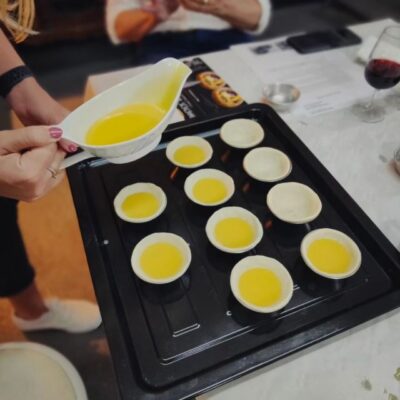
Pastel de Nata Cooking Class with Port Wine – Sé
Read our review →
Pastel de Nata Cooking Class with Porto Wine (Sé do Porto)
Read our review →
Portuguese Cooking Class in Porto with Portuguese Wine
Read our review →
Porto Hands On Cooking Class-3 course-wine included-trained chef
Read our review →
Private Portuguese Cooking and Wine Experience in Porto
Read our review →
Browse the lists this tour appears in