
Review · GREECE COOKING CLASSES
Paros: Greek Cooking Class with Meal and Wine
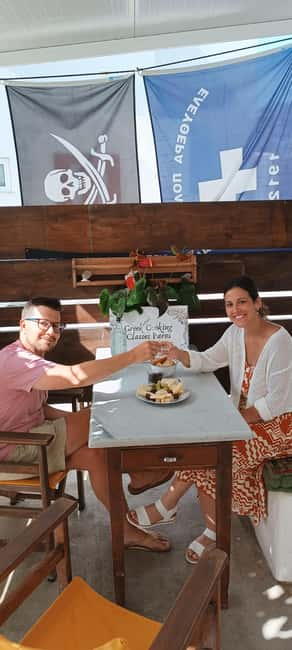
Paros has plenty of good restaurants, but this four-hour cooking class lets you understand what is on the plate. At Parea Cuisine Paros, Iro and George lead you through island cooking with local produce, family-made olive oil, homemade wine, cheese, olives, and souma. You do not simply eat a Greek meal. You help make it.
I like the strong farm-to-table focus, and I like that the class covers more than recipes. Iro brings in Greek food traditions, farming culture, the Mediterranean diet, nutrition, and practical kitchen skills. The generous meal, with several courses and wine, also gives the $160 price more weight than a short demonstration.
The main consideration is the format. This is a four-hour, food-heavy experience for adults and older teenagers, not a quick activity between beach stops. It requires at least two participants, is available by appointment, and does not include transportation to Parea Cuisine.
Key points to know
- Start with island flavors: Taste local olive oil, cheeses, olives, and souma before cooking.
- Cook real Greek staples: Prepare tzatziki, keftedakia, Greek salad, a traditional main course, and dessert.
- Meet Iro and George: Their teaching combines hands-on cooking with stories about Greek food and Paros farming.
- Expect a large meal: Homemade wine accompanies a generous multi-course lunch or dinner.
- Plan ahead: Classes need a 24-hour minimum notice, and allergies should be shared at least 24 hours in advance.
- Best for adults and teens: Children under 14 and wheelchair users cannot take part.
Why this Paros cooking class feels personal
The setting matters here. You meet at Parea Cuisine Paros, the traditional restaurant connected with your hosts, and the experience also draws on their family home and farm-based ingredients. That gives the class a more personal tone than a standard cooking demonstration.
Iro and George have experience teaching at a public culinary school for chefs. You can expect instruction that goes beyond tossing ingredients into a bowl. The class includes cooking methods, knife skills, food traditions, and the reasons behind certain Greek ingredients and combinations.
I especially like the way the class links food to island life. Paros is not treated as a backdrop for a generic Greek menu. The focus stays on local cheeses, island produce, olive oil, olives, wine, and the farmers who supply them.
The class is taught in English and Greek. The available information does not promise a fixed group size, but the experience can be arranged for larger groups on request. If you want a smaller, more intimate class, ask about the group arrangement before booking.
More Cooking Classes with Wine Tasting in Greece
- Athens: Classic Cooking Class with Market Visit and Wine
★ 5.0 · 1,101 reviews - Athens: Food Market Visit and Cooking Class with Wine
★ 4.9 · 1,087 reviews - Greek Cuisine Cooking Class in Santorini with Recipes and Wine
★ 5.0 · 969 reviews
Olive oil, cheese, olives, and souma come first
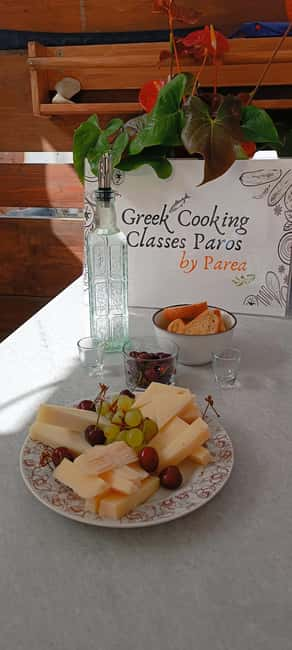
The opening tasting is more than a snack before the cooking begins. You start with Greek olive oil, a platter of local cheeses, homemade olives, and souma from a local distillery.
The cheese selection is made up of characteristic island cheeses produced by a farmers’ cooperative on Paros. That is useful context because Greek cheese is not one single flavor or texture. The tasting gives you a chance to notice the differences before the ingredients appear in the meal.
The olive oil tasting also sets up an important part of Greek cooking. Instead of treating oil as a background ingredient, the class gives it attention on its own. You learn to taste the product that will later carry flavor through salads, dips, and cooked dishes.
Souma is a local spirit made from grapes. It is not the same as wine, and it adds a distinctly regional touch to the opening. You may want to pace yourself, since wine is served throughout the meal as well.
Come hungry. The early cheese, bread, olives, and tastings are followed by several cooked dishes, a main course, dessert, and homemade wine. Many of the dishes are served in generous portions, so this is not the time for a large breakfast.
Making tzatziki, keftedakia, and Greek salad
The first cooking stage focuses on familiar Greek favorites. You prepare tzatziki, keftedakia, and traditional Greek salad.
Tzatziki is a good starting point because it shows how a few fresh ingredients can make a complete dish. The class gives you a chance to work with the balance of yogurt, cucumber, garlic, and seasoning rather than simply receiving a prepared dip.
Keftedakia are Greek meatballs, usually shaped and seasoned before cooking. They offer more hands-on work than the opening tastings and let you practice the kind of simple preparation you can repeat at home.
Greek salad may sound easy, but its quality depends on the produce and the balance of olive oil, cheese, olives, and vegetables. This is where the local ingredients matter most. The salad is not a complicated recipe, but it shows why Greek cooking often relies on freshness rather than heavy sauces.
The cooking is interactive. You are not only watching Iro prepare each dish. You help with the food, ask questions, and learn small practical details that can make a difference in your own kitchen. The pace should feel social rather than rushed, although the exact order may change with the menu and the group.
Choosing the main course from seasonal Paros dishes
The main course gives the class its biggest choice. Depending on the season and availability, you may prepare stuffed tomatoes, peppers, zucchini, or aubergine. Other options include moussaka, pasticcio, or fresh fish of the day cooked in a traditional style.
This seasonal approach is a plus, but it also means you should not expect every dish listed to appear in one class. Ask what is planned when you book if you have a strong preference.
Stuffed vegetables are a particularly good match for the island setting. They use fresh produce as the center of the meal and show how Greek cooking turns vegetables into something filling and satisfying.
Moussaka and pasticcio are heartier choices. They require more preparation and give you a better sense of the layered, baked dishes found across Greece. One class participant’s menu included moussaka, zucchini balls, Greek salad, tzatziki, and halva, which gives you a useful idea of how varied the finished meal can be.
Fresh fish may be used when available. Since the exact fish and preparation depend on the day, this option is best for people who enjoy a little uncertainty in exchange for seasonal cooking.
I like that the class does not force every group through an identical menu. The choice allows the hosts to use what is fresh and available, which is a more honest way to teach island cooking. The tradeoff is that you cannot count on one specific main course unless it is confirmed ahead of time.
More Greek Classes in Greece:
- Greek Cooking Class in Athens Including Rooftop Dinner with Acropolis View
★ 5.0 · 826 reviews - Greek Small-Group Athens Cooking Class & Dinner
★ 5.0 · 574 reviews - Athens: Greek Cooking Class & Dinner on a Rooftop
★ 5.0 · 383 reviews - Athens: Greek Cuisine Cooking Class and 3-Course Dinner
★ 4.8 · 270 reviews
Dessert and a long meal with homemade wine
Dessert is either Greek halva or baklava. Both are traditional finishes, but they offer different experiences. Halva is simpler and often highlights semolina, nuts, and sweetness, while baklava brings layers of pastry, nuts, and syrup.
The meal that follows is a major part of the value. You sit down to eat the dishes you helped prepare, along with the cheese, olives, salad, main course, and dessert. Homemade local wine from the family farm is served during the meal.
This is not a class where you cook one small dish and leave. The format is closer to a shared Greek table, with food arriving in stages and time to talk about what you have made. It can be an excellent choice for a couple or small group that wants a social evening rather than another scheduled sightseeing stop.
The generous portions also deserve practical attention. If you plan to eat a full meal afterward, you may find the day’s schedule uncomfortable. I would arrange this class as your main meal for the time period and avoid a heavy breakfast.
The wine is included, but drink at your own pace. You begin with souma and continue with homemade wine, so the experience is best approached as a meal with tastings, not as a drinking tour.
What the class teaches beyond recipes
The strongest part of this experience is the context. Iro connects the food with the Mediterranean diet, nutrition, farming, Greek history, and the daily work behind local ingredients.
That information helps you understand why Greek cooking often feels straightforward. Olive oil, vegetables, cheese, herbs, grains, meat, and fish are treated with care rather than buried under complicated technique.
You also get useful lessons that can travel home with you. Knife skills, preparation methods, seasoning, and the logic behind each dish are more valuable than a recipe card alone. The goal is not just to copy one Paros meal. It is to understand enough to make similar food in your own kitchen.
The class also has a clear connection to local farmers. Produce, olive oil, cheese, olives, and wine are presented as part of the island’s food network. If you care about regional cooking and supporting small producers, this aspect gives the experience extra meaning.
I would not book this expecting a formal restaurant-school lesson with strict timing and technical drills. The tone is warm and family-oriented. That is part of its appeal, but people seeking a highly structured professional course may prefer a different format.
Price, timing, and practical planning
At $160 per person, the class is not a budget activity. It lasts four hours and includes the instruction, tastings, appetizers, main course, dessert, and homemade wine. When you add up the amount of food and the meal you replace at a restaurant, the price becomes easier to justify.
The greater value is the access to people who cook with these ingredients every day. You are paying for a meal, but also for instruction, local food knowledge, conversation, and a connection to Paros beyond the usual restaurant menu.
The class is by appointment only and requires at least 24 hours’ notice. You should also report allergies at least 24 hours before the class. That matters because the menu includes several common allergen concerns, including dairy, nuts, wheat, and possibly fish, depending on the dishes prepared.
Transportation to Parea Cuisine is not included. Check the meeting point and allow enough time to arrive without rushing. The experience lasts four hours, and starting times vary, so confirm the available slot before fitting it around ferries, beach plans, or other reservations.
Free cancellation is available up to 24 hours in advance for a full refund. You can also reserve and pay later, which helps if your Paros schedule is still shifting.
The experience is not suitable for children under 14 or wheelchair users. Those limits are important to check before booking, especially for a family group or anyone needing step-free access.
Who will enjoy this best
I would choose this class if you want food to be part of your understanding of Paros, not just something served between activities. It suits couples, friends, and small groups who enjoy eating slowly, asking questions, and working together.
It is also a good fit for people who want to recreate Greek dishes at home. The menu includes recognizable classics, and the teaching covers methods and food ideas rather than only one finished plate.
Food-focused visitors will get the most from the cheese, olive oil, souma, seasonal vegetables, farm products, and homemade wine. People with Greek family backgrounds may also find it worthwhile, since the class includes explanations of technique and food traditions that can add new detail to familiar dishes.
I would think twice if you dislike long meals, do not drink alcohol, have serious dietary restrictions that were not discussed in advance, or want an activity with no food preparation. The class is also a poor fit for younger children and anyone requiring wheelchair access.
Should you book the Parea Cuisine cooking class?
I would book this if you have four free hours and want one of your Paros meals to become a real cultural experience. The strongest reasons are the local ingredients, the hands-on menu, and Iro and George’s connection to cooking education, farming, and family food traditions.
The price is fair for a four-hour class with multiple tastings, a full meal, dessert, and wine, though it is more than a simple cooking lesson. Book at least a day ahead, tell the hosts about allergies, and arrive very hungry.
Skip it if you want a quick activity or a fixed menu with no seasonal changes. For everyone else, this is a thoughtful way to eat well, learn useful Greek cooking skills, and leave Paros with more than restaurant memories.
FAQ
Where does the Greek cooking class take place?
The meeting point is Parea Cuisine in Paros.
How long does the cooking class last?
The experience lasts four hours. Starting times vary, so you need to check availability when booking.
What food and drinks are included?
The class includes an olive oil tasting, local cheese, homemade olives, souma, Greek appetizers, a traditional Greek main course, dessert, and homemade local wine.
Which dishes might I prepare?
You may prepare tzatziki, keftedakia, Greek salad, stuffed seasonal vegetables, moussaka, pasticcio, or fresh fish of the day. Dessert is either Greek halva or baklava, and the exact menu can depend on seasonal ingredients.
Are children allowed to join?
Children under 14 are not permitted. The class requires at least two participants.
Do I need to tell the hosts about allergies?
Yes. You should provide allergy information at least 24 hours before the class.
Newest classes around Greece
- Authentic and Traditional Cooking Class in Chania Crete★ 5.0 · 5 reviews
- Chania Cooking Class in Crete with rustic, delicious and homely Cretan food!★ 4.5 · 14 reviews
- Private Cooking Class – A Culinary Journey in Argostoli★ 5.0 · 2 reviews
- Greek Cooking Class with Acropolis View★ 5.0 · 76 reviews
- Private Walking Meze Cooking Course★ 5.0 · 6 reviews
- Cook with Katerina: Authentic Greek Home Cooking Class in Athens★ 5.0 · 15 reviews
- Private Greek Cooking Class in Athens-Learn to Cook with Angelina★ 5.0 · 3 reviews
- Athens: Traditional Vegan Cooking Class incl. Drinks★ 5.0 · 41 reviews
Greece Cooking Classes, compared.
Classic Cooking Class with Market Visit and Wine
Read our review →
Food Market Visit and Cooking Class with Wine
Read our review →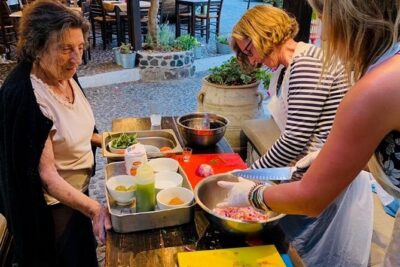
Greek Cuisine Cooking Class in Santorini with Recipes and Wine
Read our review →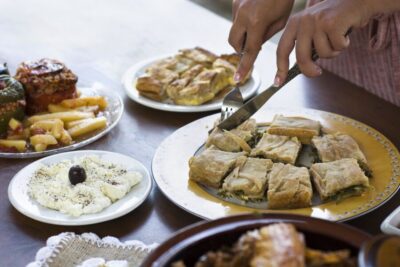
Naxos: Half-Day Cooking Class at Basiliko Family Tavern
Read our review →
Greek Cooking Class in Athens Including Rooftop Dinner with Acropolis View
Read our review →
Greek Small-Group Athens Cooking Class & Dinner
Read our review →
Exclusive Cooking Experience in our Cave Home by Petra Kouzina
Read our review →
Chania: Authentic Cooking Class in the White Mountains
Read our review →Browse the lists this tour appears in