
Review · ATHENS COOKING CLASSES
Athens: Traditional Vegan Cooking Class incl. Drinks
Greek cooking gets a clever plant-based makeover at SOYBIRD in Koukaki, just near the Acropolis. You’ll prepare moussaka with cashew béchamel, almond feta, spanakopita, fava, tzatziki, and more, then sit down to eat the full spread with drinks.
I like the broad menu and the social setup. You cook several dishes instead of spending the whole evening on one recipe, and the digital recipe book gives you a real chance to repeat the meal at home. The small working groups also let you take part rather than simply watch.
The main caution is that this is an informal, hands-on class, not a polished demonstration. The kitchen can feel tight, utensils and ingredients may not always be obvious, and one instructor may be juggling many tasks at once.
Key points to know before booking
- Seven Greek dishes in one evening: Prepare moussaka, fava, dakos, spanakopita, koulouri, tzatziki, and ekmek.
- A plant-based Greek menu: Cashew béchamel, almond feta, and vegan yogurt-style tzatziki replace the usual dairy ingredients.
- A social meal in Koukaki: Cook in teams, then eat together at the same meeting point.
- Small-group format: The class is designed for 5 to 10 people, while the general activity limit is listed as 14.
- Drinks are included: Water, white wine, and beer accompany the meal.
- Take-home value: A digital recipe book helps you recreate the dishes after Athens.
Cooking Greek food without meat or dairy
This class is not simply a lesson in substituting tofu for meat. It focuses on familiar Greek dishes and shows how their flavor can come from vegetables, legumes, herbs, nuts, olive oil, and careful seasoning.
The menu gives you a useful cross-section of Greek home cooking. Moussaka brings layers and a creamy cashew béchamel. Fava provides a smooth legume spread topped with caramelized onions. Dakos uses crisp bread with homemade almond feta, while spanakopita brings the spinach and pastry combination many people associate with Greek food.
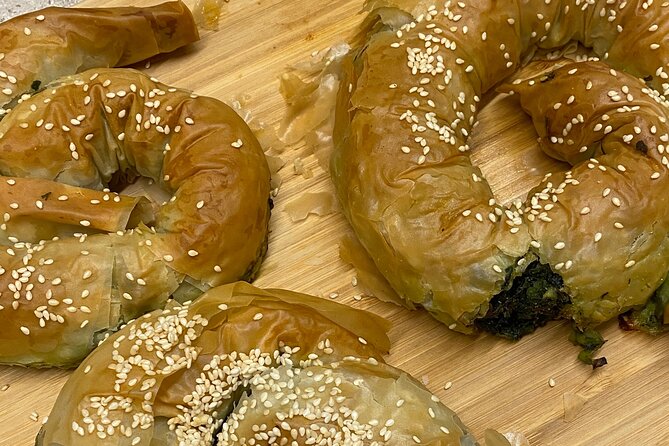
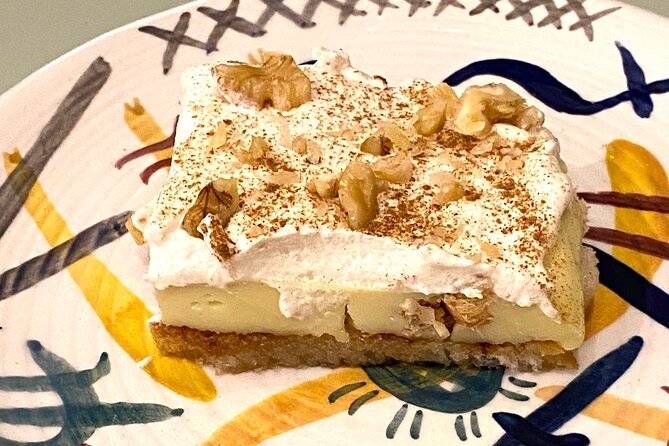
You’ll also prepare tzatziki, using a plant-based yogurt-style base, plus koulouri, the sesame-covered rings commonly seen in Greek bakeries. Dessert is ekmek, a Greek specialty that rounds out a menu heavy on savory dishes.
I like this range because it lets you see how a vegan meal can still feel unmistakably Greek. The class is useful for people who already avoid animal products, but it also works for vegetarians, curious omnivores, and anyone who wants practical ideas for lighter home cooking.
More Vegetarian Cooking Classes in Athens:
- Oaxacan Vegetarian Cooking Class
★ 5.0 · 235 reviews - Marrakech: Moroccan Cooking Class for vegetarians and vegan
★ 4.9 · 156 reviews - Hoi An: Vegetarian Cooking Class w Local Family and transfer
★ 4.9 · 145 reviews
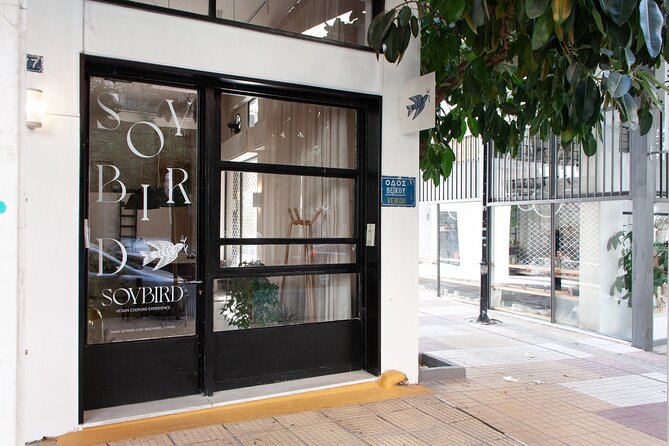
Arriving at SOYBIRD in Koukaki
The meeting point is SOYBIRD, at Veikou 75-77 in Athens 117 41. The location is near public transportation and close to the Acropolis area, so it fits well into a day spent around central Athens.
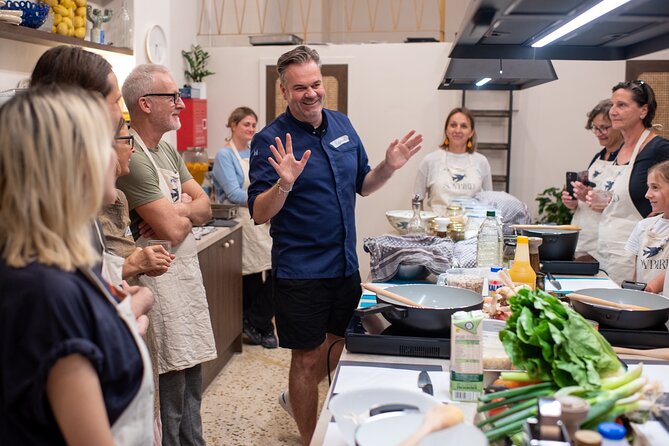
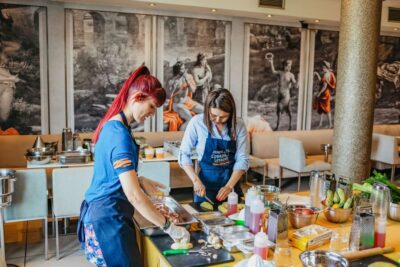
The class begins with a short introduction. You are not simply handed a finished plate, and you are not expected to sit quietly while someone cooks in front of you. The format is built around participation from the start.
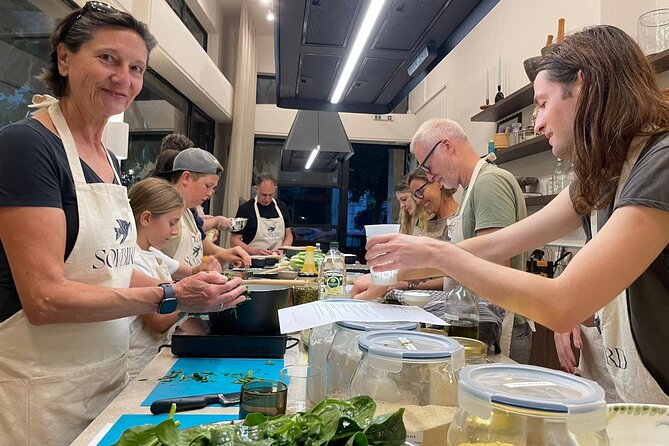
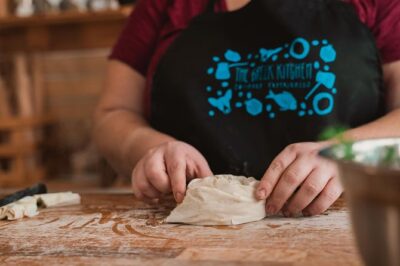
You then split into two teams. Each team works through several recipes, usually with ingredients and written instructions ready to use. The cooking is collaborative, so you may be chopping, mixing, seasoning, assembling, or helping with pastry and toppings while another person handles a different step.
That setup creates a friendly kitchen atmosphere. It also means you should arrive ready to communicate with the people around you. This is a better match for someone who enjoys sharing counter space than for someone who wants a private, perfectly ordered lesson.
What the three-and-a-half-hour schedule feels like
The total duration is about three hours and 30 minutes. That is enough time to prepare a full meal, but the pace is active because the menu is unusually broad.
The opening introduction is brief, then the class moves quickly into preparation. You may work on more than one recipe during the evening, with different dishes reaching the assembly or cooking stage at different times.
There is no promise of a formal demonstration for every technique. The class uses a more relaxed approach, with the instructor moving between participants and offering help as needed. This can feel personal and practical, but it may also feel hectic when several people need guidance at once.
The strongest version of this format depends on clear instructions and good communication. Keep an eye on where utensils are stored, ask when an ingredient is unclear, and do not be shy about checking a step before moving ahead. A few ingredients, including seasonings, may not always be obvious at first glance.
One useful detail: the host may rely on the group to help keep the kitchen moving. Washing or drying dishes can become part of the shared effort. That is not the same as restaurant service, but it helps explain the informal, cook-together character of the evening.
The dishes you will prepare
More Food Outings in Athens:
- Athens: Food Market Visit and Cooking Class with Wine
★ 4.9 · 1,087 reviews - Small Group Cooking Class & Market Food Tour in Florence
★ 5.0 · 1,574 reviews - Undiscovered Charleston: Half Day Food, Wine & History Tour with Cooking Class
★ 5.0 · 948 reviews - Vietnamese Food Cooking Class in Hanoi with Market Experience
★ 5.0 · 778 reviews
Moussaka with cashew béchamel
Moussaka is the menu’s main showpiece. The familiar layered structure remains, but the sauce uses cashews instead of dairy for a creamy finish.
This is a good dish for learning how texture matters in plant-based cooking. The richness does not come from meat or cheese, so the balance of vegetables, seasoning, and sauce does more of the work.
Fava with caramelized onions
Greek fava is a smooth split-pea or legume dish, not the broad bean dip its name might suggest in other cuisines. Here it is paired with caramelized onions, which add sweetness and depth.
This recipe is especially useful for home cooks because it is simple, filling, and adaptable. One class participant specifically came away with a good fava recipe, which says something about the dish’s practical value.
Dakos with homemade almond feta
Dakos is a Cretan-style combination built around crisp bread, tomato, and toppings. The almond feta gives it a plant-based, nutty alternative to the usual cheese.
Making the almond feta yourself is one of the more distinctive parts of the menu. It shows how nuts can provide both flavor and a firm, crumbly texture without trying to imitate dairy too closely.
Spanakopita
Spanakopita brings spinach, herbs, and pastry together in a savory pie. It is also one of the more hands-on recipes, since pastry assembly rewards care and a light touch.
The class is a good place to learn the basic idea, but do not expect a long pastry workshop devoted only to folding technique. You are sharing time across six other recipes.
Koulouri
Koulouri are sesame rings with a pleasant contrast between a chewy center and a sesame-coated exterior. They offer a simple baking element within a menu otherwise dominated by dips, vegetables, and layered dishes.
Tzatziki
The vegan tzatziki gives you a familiar Greek dip without dairy. It is a useful example of how cucumber, herbs, garlic, acidity, and plant-based yogurt can create a fresh side dish with the right balance.
Ekmek
Ekmek is the dessert course. It provides a sweet finish after a meal that includes several savory, legume-based, and vegetable-heavy preparations.
The exact preparation details are not specified, so you should think of it as part of the shared menu rather than booking this class for a particular dessert technique.
Eating the meal together
Once the cooking is finished, the class sits down to eat what it prepared. This is where the evening shifts from lesson to shared meal.
Water is included, along with white wine and beer. The drinks help make the final meal feel social, especially when the group has spent several hours working side by side.
The communal table is a major part of the value. You may arrive knowing nobody and leave with a story about where someone comes from, how their dish turned out, or which recipe they plan to make first. The class has a natural date-night appeal, but it also suits solo visitors and small groups.
Do keep your expectations realistic. You are not receiving restaurant-style service after a quiet cooking demonstration. You are eating food made by the group, in the same kitchen where you worked. That is the charm, but it also means the final meal reflects the pace and skill of the people in the room.
The instructors and teaching style
The class has been led by instructors including Alexandra and Mirka. Alexandra is noted for managing multiple recipes and different skill levels at once, while Mirka is described as warm and helpful when adapting Greek dishes into vegan versions.
Your specific instructor may vary, so book this as a style of class rather than a guarantee of a particular teacher. The teaching approach is friendly and active, with the instructor moving around the kitchen instead of delivering a long lecture.
That hands-on format suits beginners because you are involved in each step. It also gives experienced cooks room to contribute. Still, the class may not satisfy someone who wants precise chef demonstrations, carefully labeled mise en place, and a perfectly controlled sequence.
The space can feel small with eight people plus the host. The planned class size is generally 5 to 10 people, though the overall activity information allows up to 14. If personal space and close instruction matter greatly to you, ask about a private lesson. Private classes are available on request, with the total price depending on group size.
Price and what you get for $94.66
At $94.66 per person, the price is not bargain-basement, but it covers more than a single cooking lesson. You get roughly three and a half hours of instruction and participation, a seven-item menu, the shared meal, water, white wine, beer, and a digital recipe book.
The number of dishes is the key value point. You are not paying to learn one recipe and then watching the evening end. You work across dips, legumes, pastry, bread, a main course, and dessert.
The price also includes the social side of the class. If you would otherwise pay for dinner in central Athens, the cooking activity adds a useful layer to the meal. It becomes less attractive if your only goal is to eat, since a restaurant will be easier and faster.
For a vegan or vegetarian visitor, the value is stronger because a full plant-based Greek menu can be harder to find in a standard cooking class. For an omnivore, the value depends on curiosity and willingness to spend an evening cooking food you may not normally choose.
What could be improved
The biggest weakness is organization. Written recipe cards can keep the class moving, but they are not a full substitute for seeing each technique demonstrated.
You may need to search for tools such as measuring jugs, and seasoning containers may not always be labeled clearly. Ask before using an unfamiliar ingredient, especially if several salts or seasonings are on the counter.
Kitchen hygiene is taken seriously, but long hair should be tied back before cooking begins. The host may also be doing too many jobs at once, from instruction to kitchen cleanup. A second helper would make the flow easier, particularly when the class is close to its upper size.
The atmosphere is forgiving and good-humored, but occasional corrections can feel abrupt if you are not used to learning from written instructions. If you prefer a teacher to show the movement first, tell the instructor early and ask for a demonstration.
These are manageable issues, not reasons to dismiss the class. They simply help you choose the right setting. Think of it as cooking with a capable host in a busy home kitchen, not as a formal culinary school with one chef assigned to each student.
Who should book this Athens cooking class?
I would recommend it to:
- Vegans and vegetarians who want Greek dishes beyond a basic salad
- Omnivores curious about practical plant-based cooking
- Solo visitors looking for a social evening
- Couples seeking a hands-on date activity
- Friends who enjoy cooking and sharing a table
- Beginners who want recipes they can repeat at home
You should think twice if you dislike group work, have limited patience for a busy kitchen, or want a highly polished demonstration. The class starts with a minimum of five participants, and the appointment may be canceled if that minimum is not reached. You are informed 24 hours ahead if it does not go ahead.
The activity is not suitable for people with pacemakers because it uses an induction cooker. Confirmation arrives at booking, and the mobile ticket makes access simple. Free cancellation is available up to 24 hours before the start time. Cancellations or changes made inside that window are not refunded or accepted.
Should you book SOYBIRD?
Book this class if you want to do more than photograph Greek food. You will cook a generous range of dishes, learn several plant-based techniques, share a meal, and leave with recipes that can outlast your holiday.
The strongest reasons to go are the varied menu, the friendly group format, the included drinks, and the chance to make dishes such as almond feta and cashew béchamel from scratch. The main tradeoff is the informal organization. You may need to ask questions, find your own tools, and help with the kitchen rhythm.
For a relaxed cook who values participation over polish, this is a very good use of an Athens evening. For a visitor seeking a quiet, chef-led masterclass, choose a more formal lesson instead.
FAQ
Where does the cooking class take place?
It takes place at SOYBIRD, 75-77 Veikou in Athens, in the Koukaki area near the Acropolis.
How long does the class last?
The cooking class lasts approximately three hours and 30 minutes.
What food will I prepare?
The menu includes moussaka with cashew béchamel, fava with caramelized onions, dakos with homemade almond feta, spanakopita, koulouri sesame rings, tzatziki, and ekmek dessert.
Are drinks included?
Yes. Water, white wine, and beer are included with the shared meal.
Is the class suitable for people who are not vegan?
Yes. The menu is vegan, but the class is open to people with different levels of experience and different diets.
How many people are in the class?
The course is designed for groups of 5 to 10 people. The general activity information lists a maximum of 14 participants.
Will I receive the recipes?
Yes. You receive a digital recipe book after the class so you can prepare the dishes at home.
Can I cancel for a full refund?
Yes, if you cancel at least 24 hours before the scheduled start time. Cancellations or changes made less than 24 hours before the start time are not refunded or accepted.
Newest classes around Athens
- Greek Cooking Class with Acropolis View★ 5.0 · 76 reviews
- Private Walking Meze Cooking Course★ 5.0 · 6 reviews
- Cook with Katerina: Authentic Greek Home Cooking Class in Athens★ 5.0 · 15 reviews
- Private Greek Cooking Class in Athens-Learn to Cook with Angelina★ 5.0 · 3 reviews
- Hands On Greek Cooking Classes in Athens★ 5.0 · 7 reviews
- Cooking Class in Athens: Learn the Art of Phyllo with Christina★ 5.0 · 24 reviews
- “Fetaverse” Private Cooking Class in Koukaki Athens★ 5.0 · 3 reviews
- Greek Meze Cooking class and dinner with an Acropolis view★ 5.0 · 41 reviews
Athens Cooking Classes, compared.
Classic Cooking Class with Market Visit and Wine
Read our review →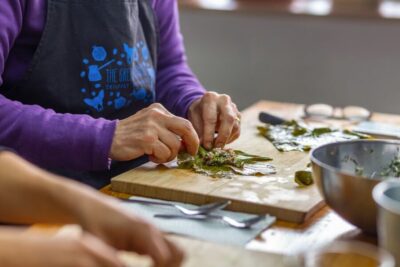
Food Market Visit and Cooking Class with Wine
Read our review →
Greek Cooking Class in Athens Including Rooftop Dinner with Acropolis View
Read our review →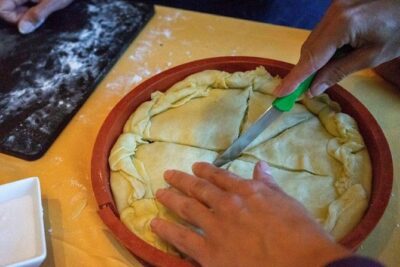
Greek Small-Group Athens Cooking Class & Dinner
Read our review →
Greek Cuisine Cooking Class and 3-Course Dinner
Read our review →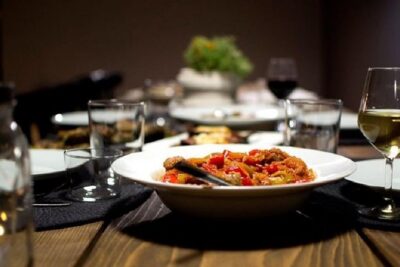
Traditional Greek cooking class and lunch or dinner with an Acropolis view
Read our review →
Athens Greek Cooking Class Pita Gyros from Scratch with a Local
Read our review →Browse the lists this tour appears in