
Review · MARRAKECH COOKING CLASSES
Marrakech: Tajine Cooking Class in a Traditional Riad
The best part of this Marrakech cooking class happens before you touch a knife. You meet your guide at Djemaa El-Fna, walk into the souks, and shop for the ingredients that will become lunch. Then you cook in a traditional riad, often with a local family, rather than in a polished school built only for tourists.
I like the market visit, where you learn spice names, fresh-produce tips, and a little Arabic. I also like the small-group kitchen time, which turns lunch into a shared project. The main drawback is that the four-hour schedule can run long, and the market purchase of a chicken may be confronting for some people.
Key points at a glance
- Market to table: Buy the produce, herbs, spices, and chicken before cooking.
- Traditional riad setting: Prepare lunch in a local home or riad kitchen, often with family members helping.
- Hands-on menu: Make tajine, Moroccan salad, mint tea, and sometimes dessert such as oranges with cinnamon.
- Strong local guides: Samira, Amina, Sanae, Karima, and others are praised for warmth, humor, and clear instruction.
- Flexible food choices: Vegetarian, vegan, gluten-free, and other dietary needs can be accommodated.
- Good-value half day: At $57 per person, you get a market walk, a meal, instruction, tea, and a recipe sheet.
Starting at Café France in Djemaa El-Fna
Your meeting point is outside Café France, a three-story café on the right side of Djemaa El-Fna as you enter through the main entrance. Find the guide with an Urban Adventures sign or badge. This matters here, since unofficial guides often approach people around the square.
There is no hotel pickup, so allow time to reach the square on your own. The meeting point sits in one of Marrakech’s busiest areas, and the class moves quickly from the open square into the souks. If you are staying in the medina, you may be able to walk there. If not, ask your accommodation for clear directions to Djemaa El-Fna.
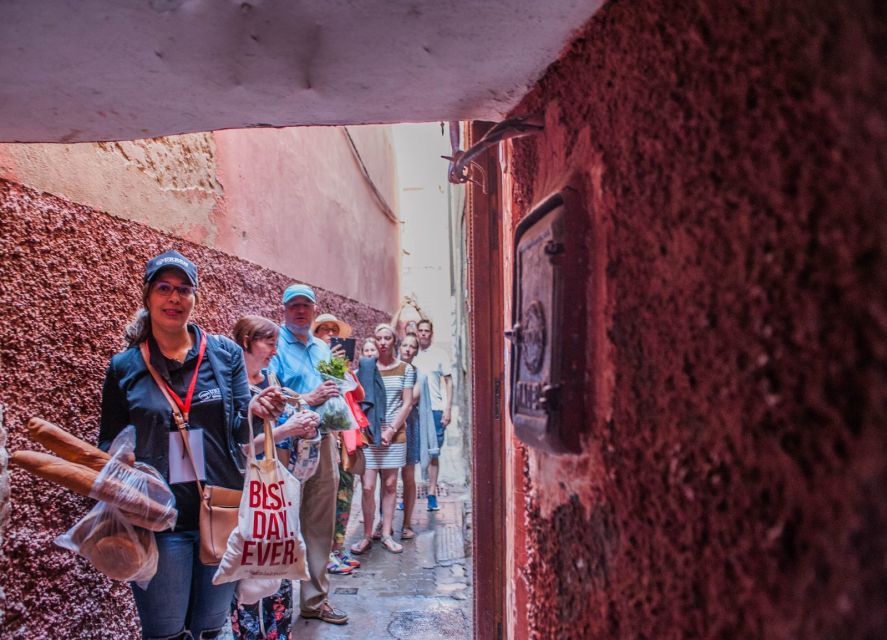
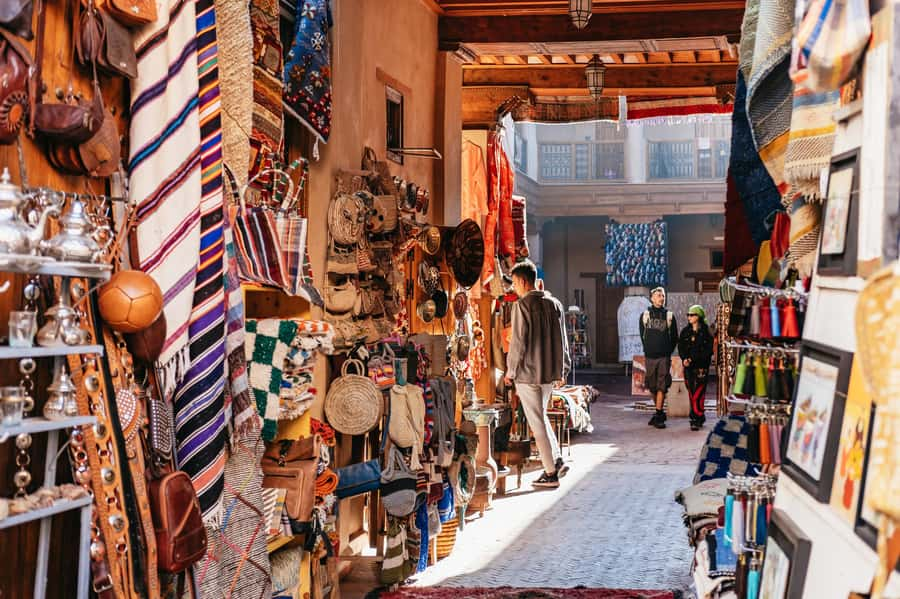
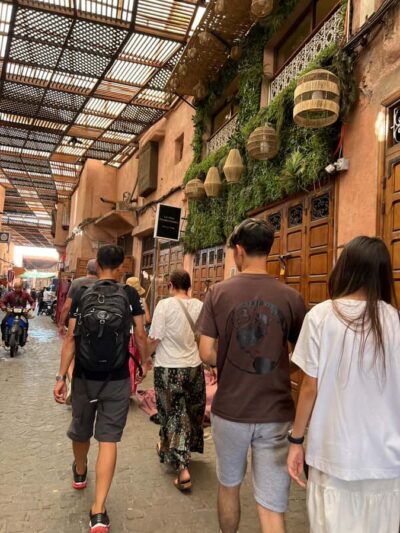
The opening walk gives you a useful introduction to the medina without turning into a long sightseeing tour. Your guide explains where locals shop and points out the ingredients needed for the day’s meal. You also get Arabic food vocabulary, a small but welcome detail that helps you feel less like an onlooker.
More Moroccan Classes in Marrakesh:
- Marrakech: Moroccan Cooking Class with Pickup
★ 4.6 · 1,862 reviews - Marrakech: Traditional Moroccan Cooking Class & Market Visit
★ 4.8 · 1,861 reviews - Marrakesh: Moroccan Dishes Cooking Class with a Local Chef
★ 5.0 · 1,615 reviews
Shopping for tajine ingredients in the souks
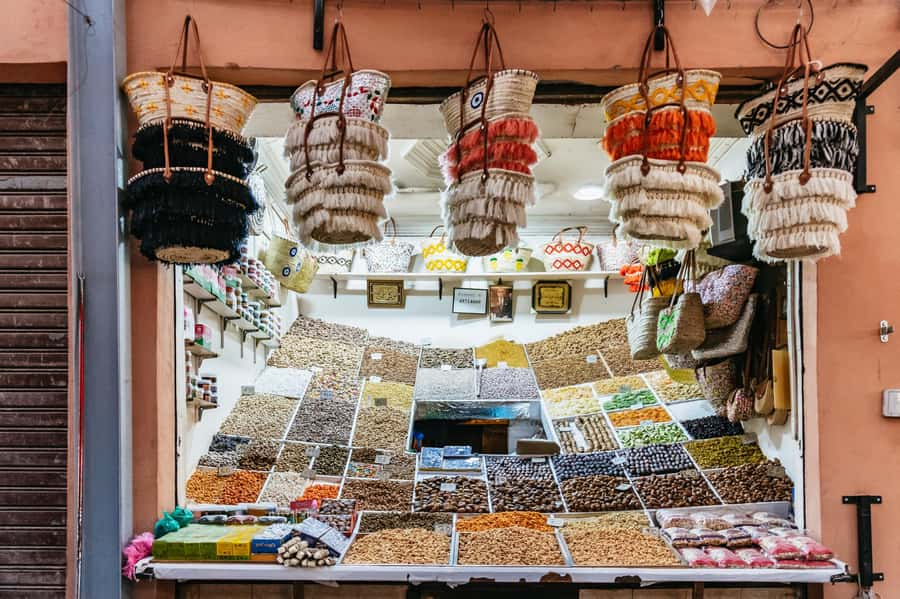
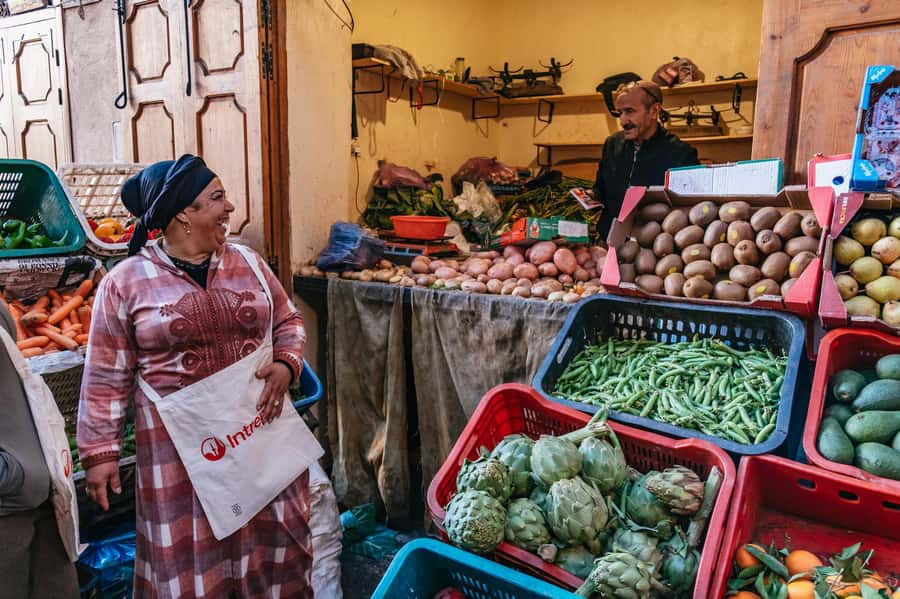
The shopping stop is the part that gives this class its local feel. Instead of arriving at a kitchen where every bowl is already measured, you follow your guide through the market and help choose fresh ingredients.
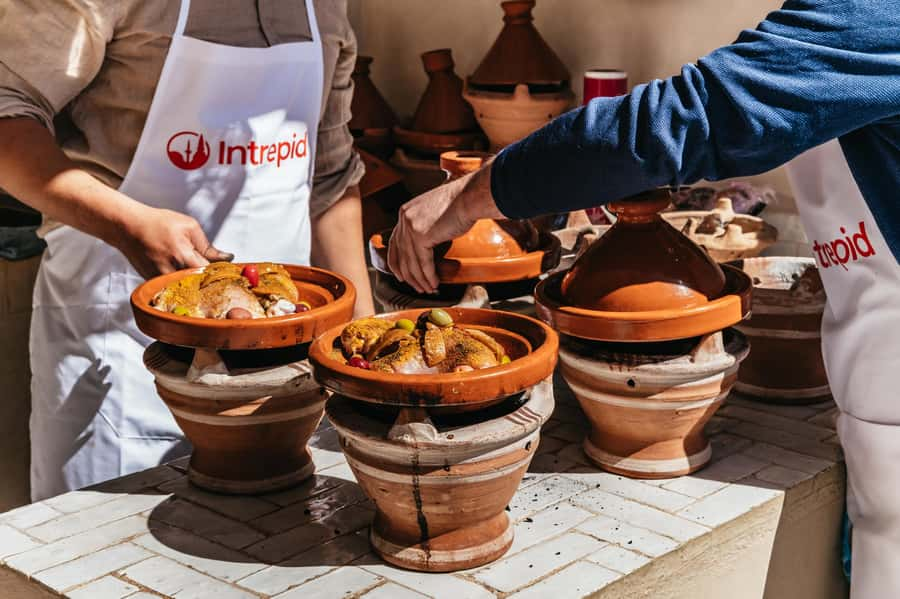
The exact route and food can change with availability. The usual ingredients include vegetables, herbs, spices, and chicken. Past classes have prepared chicken tajine with preserved lemon and olives, along with a Moroccan salad and dessert. Other sessions have made a vegetable tajine for vegetarian diners.
This is also your chance to learn how Moroccan cooks use spices. The class focuses on practical choices, such as selecting fresh vegetables and understanding the seasonings that give tajine its character. You are not simply handed a spice list. You see the ingredients in the place where they are bought and learn how they fit into everyday cooking.
The chicken purchase deserves an honest warning. Fresh meat markets can be direct, and earlier sessions have included buying a live chicken. Some people find this uncomfortable. If you prefer not to eat chicken, tell the guide in advance or at the meeting point. The class can accommodate vegetarian and vegan diets, but the specific menu depends on the day.
I also like the chance to practice bargaining in a useful setting. Your guide can show you how shopping works and explain what is worth buying. This is more useful than a staged bargaining demonstration because you are choosing food for a real meal.
Entering a family riad kitchen
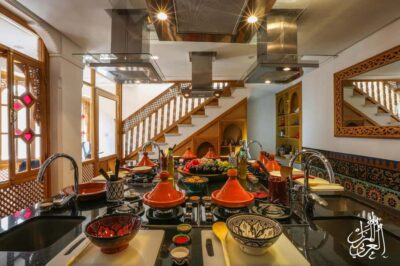
After the market, you head to a traditional Moroccan riad. The setting is a major part of the experience. A riad is built around an interior courtyard, and the quiet rooms feel far removed from the noise of Djemaa El-Fna.
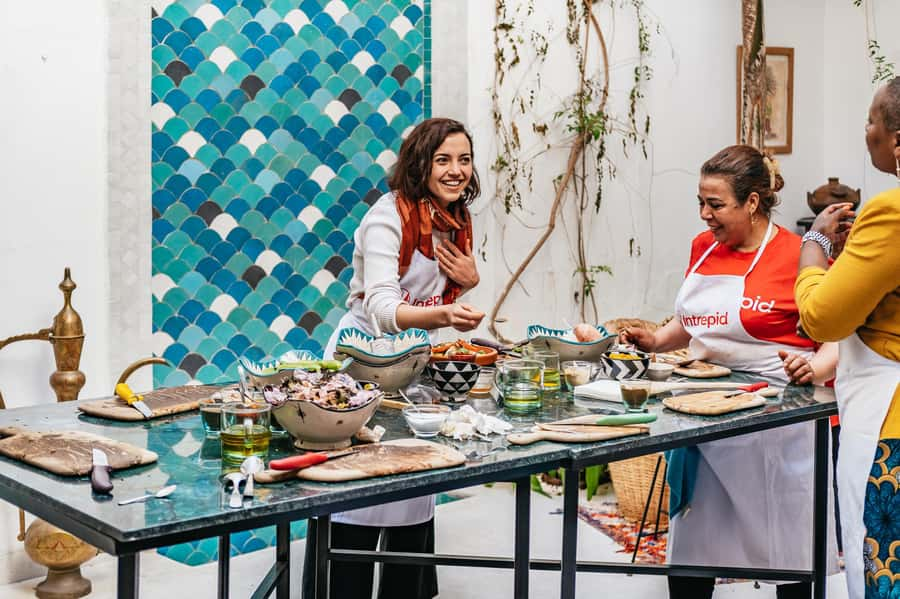
The kitchen may be in a local home or a riad used for the class. In past sessions, visitors have met family members such as Amina’s sisters Khadija and Meriem, who helped prepare the equipment and welcomed the group. Other guides, including Sanae, Karima, and Samira, have worked with assistants who explain each stage and help people at the counter.
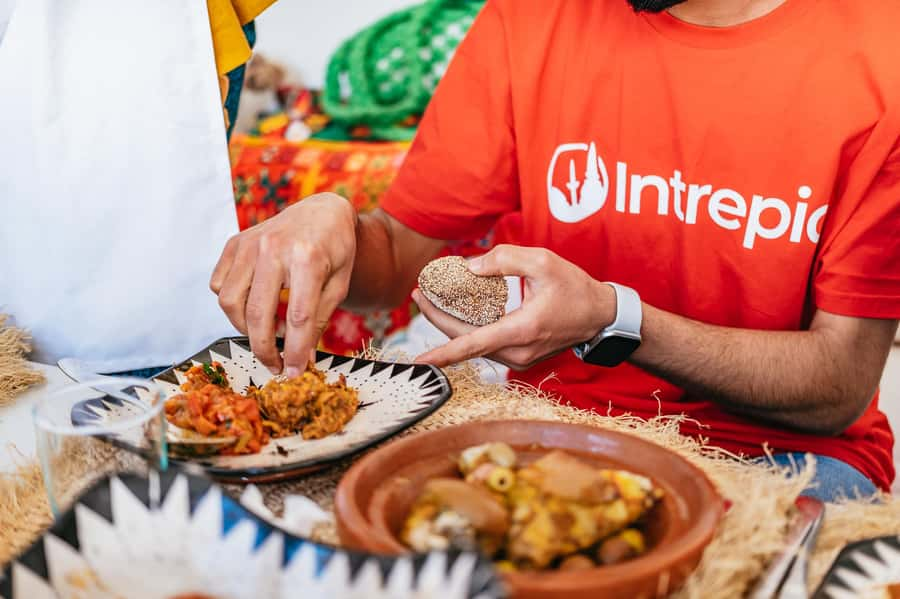
Do not expect a restaurant-style demonstration where you watch from a distance. You chop, arrange, season, and layer the ingredients yourself. The pace is friendly, and you can ask questions as you work. That makes the class suitable for beginners, while confident cooks can still pick up useful ideas about spice combinations and cooking order.
The exact menu is not fixed. Chicken tajine with preserved lemon and olives is a recurring dish, but vegetables and other ingredients depend on availability. A Moroccan salad is included in the stated experience, and several sessions have included dessert. One popular finishing dish uses oranges and cinnamon.
Mint tea, cookies, and the waiting time
Mint tea usually begins the riad portion of the class. You learn how it is brewed and served, then sit with the group while the tajine cooks. Homemade cookies, including ghriba, may accompany the tea.
This pause is not wasted time. Tajine needs time to cook, and the break lets you talk with the guide and the other people in the group. The cooking class becomes a social meal rather than a rushed lesson. You may arrive with strangers from several countries and leave with an easy shared subject: the food you made together.
There is also room to ask about daily life in the medina. The class includes an introduction to local family life and Moroccan food customs, so the conversation can go beyond ingredients. Guides are often the strongest part of the experience. Samira is praised for humor and energy, Amina for her warm welcome, and Sanae and Karima for clear teaching and strong knowledge of local cooking.
Names and staff can change, of course. The important point is that this is led in English by a local guide, with additional help in the riad when needed.
More Cooking Classes in Marrakesh:
- Marrakech: Moroccan Cooking Class with a Local Family
★ 4.9 · 668 reviews - Marrakech: Moroccan Cuisine Cooking Class in Local Home
★ 4.8 · 508 reviews - Marrakech: Moroccan Cooking Workshop at La Maison Arabe
★ 5.0 · 446 reviews - Marrakech: Moroccan Cooking Class with Market Visit and Meal
★ 4.9 · 347 reviews
Eating the meal you prepared
The payoff is lunch. You sit down to eat the tajine you helped make, along with the salad and any additional dishes prepared that day. Moroccan tea is served as part of the experience.
The food tends to feel especially satisfying because you have followed it from market stall to table. You know where the vegetables came from, which spices went in, and how the ingredients were layered. You also get a practical recipe sheet to take home, so the class does not end when you leave Marrakech.
The recipe sheet is useful, but keep your own notes too. Previous sessions have had occasional problems with recipes not arriving by email, and food details can vary. Write down the spice amounts and cooking order while your guide is explaining them.
The meal is generous enough to function as lunch, so plan around it. A morning start may finish near midday, while another scheduled time may run into the afternoon. The food is one of the better reasons to consider this class early in your stay: it gives you a reference point for the tajines you eat elsewhere in Morocco.
Group size, timing, and the $57 price
The standard group can include up to 12 people, though some sessions are smaller. A small group is important here. In a large class, you would spend much of the time watching someone else chop. With up to 12 people, you should have a real task, although the amount of individual attention depends on the group and the kitchen layout.
The activity lasts four hours. That is enough time for the market, the walk to the riad, tea, preparation, cooking, and lunch. It can also run beyond the planned finish. One person had to leave before finishing the meal to meet another tour, so do not schedule a tight appointment immediately afterward.
At $57 per person, the value is solid. You are paying for more than a cooking lesson: the market visit, English-speaking guide, ingredients, riad kitchen, prepared meal, tea, and recipe sheet are all part of the package. Hotel transportation is not included, but the meeting point is central.
A private group is available if you want more control over the pace or menu. The regular small-group format is the better value for most people, especially if you enjoy meeting others and sharing a table.
Clothing, dietary needs, and family suitability
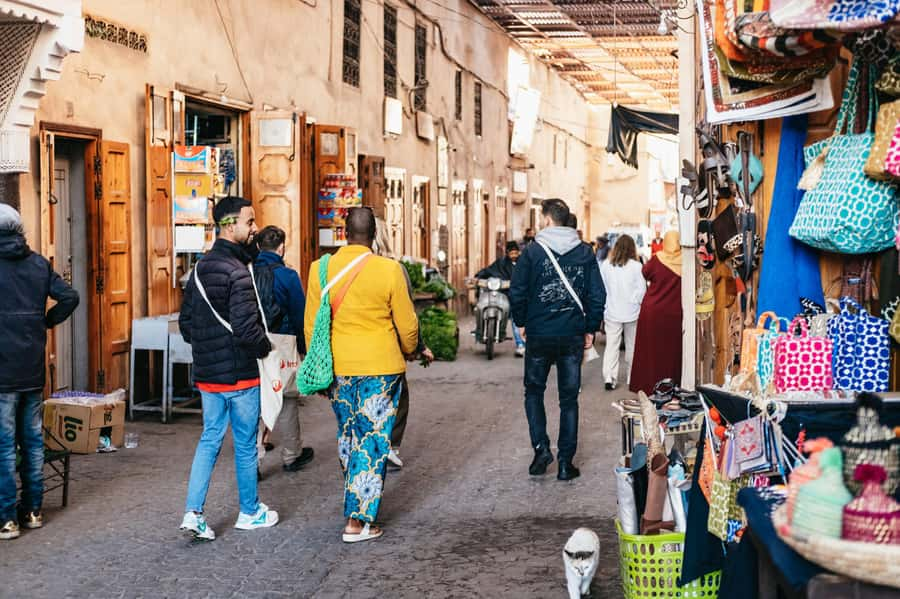
Dress modestly for the market and the home setting. Shorts, short skirts, and sleeveless shirts are not allowed. Lightweight trousers or a longer skirt with covered shoulders will keep you comfortable and avoid an awkward start.
Tell the provider about dietary restrictions when booking. Vegetarian, vegan, gluten-free, and other needs can be accommodated, but the food changes with availability. If you avoid meat, say so clearly before the market visit, especially because the standard ingredients include chicken.
Children are welcome, and children under six can join free of charge. The cooking tasks require attention and some patience, so very young children may get more from the social and food parts than from every step of the lesson. The experience can work well for families who want an activity with a real local setting rather than a formal attraction.
The class is also suitable for solo visitors. A shared cooking table gives you an easy way to meet people, and the guide helps keep the group involved.
A responsible way to spend a half day
The experience is carbon-neutral and operated by a B Corp-certified company. That does not change the taste of the tajine, but it gives you useful context about how the activity is run and where your money goes.
The class supports local guides, cooks, families, and food suppliers. Its value is not only the meal. You are paying for local time, local knowledge, and access to a home or riad setting that you would be unlikely to arrange on your own.
The route and food can change. That flexibility is normal for a market-based experience, where produce and availability cannot be controlled like a restaurant menu. If you need a fixed dish, exact timings, or a highly polished teaching kitchen, this may not suit you.
If you want a more personal look at Marrakech, the changing details are part of the appeal. The class shows how food connects the souks, family homes, tea customs, and the medina’s daily rhythm.
Who should book this Marrakech cooking class?
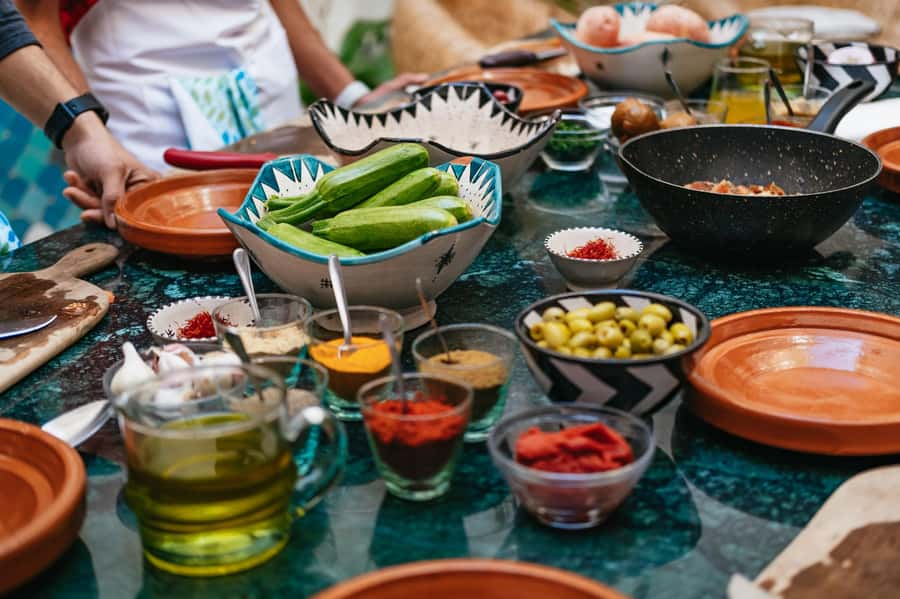
I would choose this for anyone who likes food but does not need to be an experienced cook. The teaching is practical, and the hands-on work makes the meal easy to remember. It is also a smart choice for first-time visitors who want a gentle introduction to the medina with a clear purpose.
You should book it if you want:
- A market visit tied to a real meal
- A local guide rather than a generic cooking demonstration
- A traditional riad or family-home setting
- A social small-group activity
- Moroccan recipes you can try at home
- Help with vegetarian, vegan, or other dietary needs
Think twice if you dislike shared kitchens, need a strict end time, or feel strongly about avoiding direct meat-market scenes. The menu is flexible, but the provider can change the route, ingredients, and places visited.
At $57, this is a strong half-day choice. It combines food, culture, and useful medina skills without requiring a full-day commitment. For many visitors, the market-to-table format will be more memorable than another restaurant meal.
Should you book it?
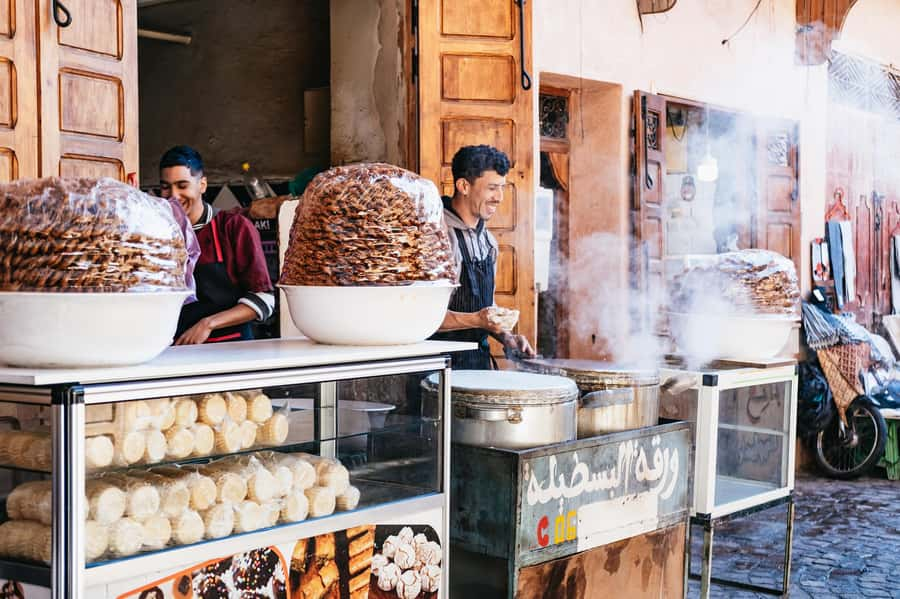
Book this class if you want to understand Moroccan food by handling the ingredients, not just eating the finished dish. The combination of souk shopping, mint tea, family hospitality, and hands-on tajine cooking gives you a real connection to Marrakech.
Skip it only if you need a tightly timed, highly formal class or cannot accept the possibility of seeing how chicken is bought in the market. Otherwise, this is an easy activity to recommend, especially early in your visit, when the recipe, spice tips, and bargaining practice can improve the rest of your time in Morocco.
FAQ
Where does the Marrakech cooking class meet?
The meeting point is outside Café France in Djemaa El-Fna. The guide will hold an Urban Adventures sign or badge.
How long does the cooking experience last?
The activity lasts four hours. Starting times vary, and the class may run over, so avoid booking another appointment immediately afterward.
Is hotel pickup included?
No. Hotel pickup and drop-off are not included. You make your own way to the meeting point at Djemaa El-Fna.
Can vegetarians and vegans join?
Yes. Vegetarian, vegan, gluten-free, and other dietary requirements can be accommodated. Food choices depend on availability on the day, so tell the provider about your needs when booking.
What food do you prepare?
The class includes tajine ingredients such as vegetables, herbs, spices, and chicken. Sessions commonly prepare chicken tajine, Moroccan salad, and sometimes dessert. The exact food may change.
What should I wear?
Shorts, short skirts, and sleeveless shirts are not allowed. Choose clothing that covers your shoulders and knees for the market and riad setting.
Newest classes around Marrakesh
- Marrakech: 3-Hour Open-Air Moroccan Cooking Course★ 4.9 · 74 reviews
- Moroccan Food Cooking Class with a Local Chef in Marrakech★ 4.7 · 90 reviews
- Moroccan cooking class in Marrakech with berber chef★ 5.0 · 16 reviews
- Edgy 8 Dish Private, Fusion Cooking Class, Menu Plan, Market★ 4.9 · 31 reviews
- Marrakech: Moroccan Cooking Class with Amazing Local Chef!★ 4.9 · 100 reviews
- Marrakech: Moroccan Cooking Class with Local Chef★ 4.6 · 87 reviews
- Marrakesh: Private Cooking Class & Local Market Shopping★ 4.7 · 15 reviews
- Marrakech: Cooking Class and Market Visit★ 4.4 · 5 reviews
Marrakech Cooking Classes, compared.

Traditional Moroccan Cooking Class & Market Visit
Read our review →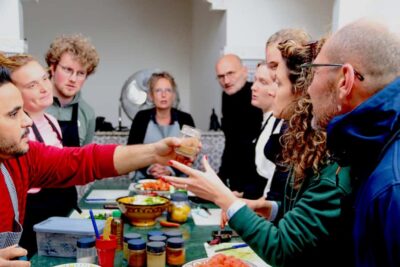
Moroccan Dishes Cooking Class with a Local Chef
Read our review →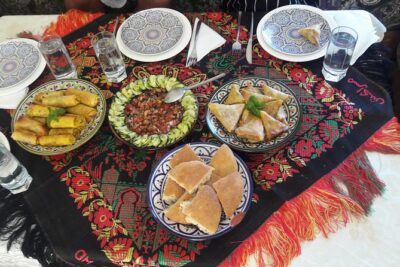
Moroccan Cooking Class & Marrakech Market Visit with Chef Khmisa
Read our review →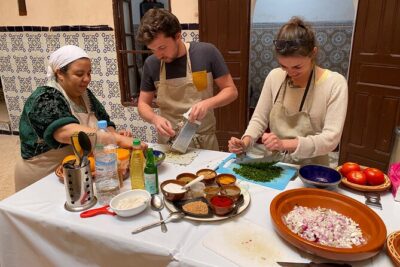
Half-Day Cooking Class with Local Chef Laila in Marrakech
Read our review →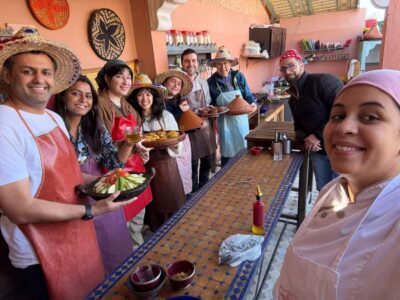
Browse the lists this tour appears in