

Review · INDIA COOKING CLASSES
Kerala: Cooking Class in Munnar
The best part of this Munnar cooking class is its focus on how Kerala food is actually made: fresh spices ground with an ammikallu, coconut oil for aroma, and dishes prepared with your own hands. I like the small format and the practical recipe notes, which make this more useful than a meal where you simply sit and eat. I also like that the chef explains the health benefits behind the food.
The main catch is the wording around transport and diet. Some details mention pickup from your hotel or an office in Kochi, while the itinerary begins and ends at Munnar Info and says pickup is not included. Vegetarian and vegan policies also conflict, so check those points before paying.
Key points to know before booking

- Six Kerala dishes in one session: The chef mainly demonstrates about six dishes, with learners involved in the cooking rather than watching from the sidelines.
- Traditional tools and flavors: You learn about the ammikallu grinding stone, fresh spices, and the use of coconut oil.
- Small class setting: The stated maximum is four people per session, although another detail lists a limit of six, so confirm the final number.
- Recipes are included: Ingredients, pen and paper, and recipes are provided for taking the lesson home.
- A 4.5-hour afternoon: The class is listed from 1:45 pm and returns to Munnar Info after the cooking session.
- Good value at $21: For a half-day lesson with food, instruction, and recipes, the price is appealing, provided transport is not needed.
Why this class is a useful introduction to Kerala food
Kerala cooking is not one narrow style. It includes vegetarian dishes, seafood, breakfast foods, curries, fried items, and the many small preparations served in a traditional sadhya. This class gives you a practical way to see how those parts fit together.
You may hear about foods such as appam, dosa, idli, puttu, and tapioca, which are common Kerala breakfast staples. A full sadhya can include rice with sambar, aviyal, kichadi, thoran, pappadom, curd, rasam, and other side dishes. The class is not described as a complete sadhya meal, so you should think of it as a lesson built around roughly six selected Kerala dishes.
That distinction matters. If you want to sample a wide range of food, a restaurant meal may offer more variety. If you want to understand how the food is prepared, this class gives you something a restaurant cannot: time with the ingredients, the tools, and the cooking process.
I especially like the emphasis on traditional methods. Grinding spices by hand with an ammikallu takes more effort than using a modern blender, but it helps you understand why spice texture and aroma matter. You also get a clearer sense of how coconut oil shapes the scent and character of Kerala cooking.
More Cooking Classes in India:
- Pink City Cooking Class
★ 5.0 · 452 reviews - Five Course Cooking Class & Meal
★ 5.0 · 250 reviews - Veg and Non veg : Private Cooking Class in Delhi home (7 meal)
★ 5.0 · 226 reviews
Arriving at the cooking session near Munnar
The listed meeting point is Munnar Info, with the cooking class held at Creek Way Munnar. The activity lasts about 4.5 hours, and the schedule begins in the afternoon, with pickup noted at 1:45 pm in the supplied details.
This is the first point I would confirm. One description says the guest is picked up from the office at 1:45 pm. Another says you get picked up from your hotel in Kochi and travel to the class. Yet the itinerary begins and ends at Munnar Info, while the inclusion section says hotel pickup and drop-off are not included.
Those details do not line up neatly. Before booking, ask the provider exactly where you must meet, whether transport is available, and if any transfer costs extra. Do not assume that a Kochi hotel pickup is included simply because it appears in one part of the description.
The return point is listed as Munnar Info. That makes the class easier to plan if you are already in Munnar and can reach the meeting point yourself. It is less convenient if you are staying elsewhere or expected a complete transfer from Kochi.
What happens during the 4.5-hour class
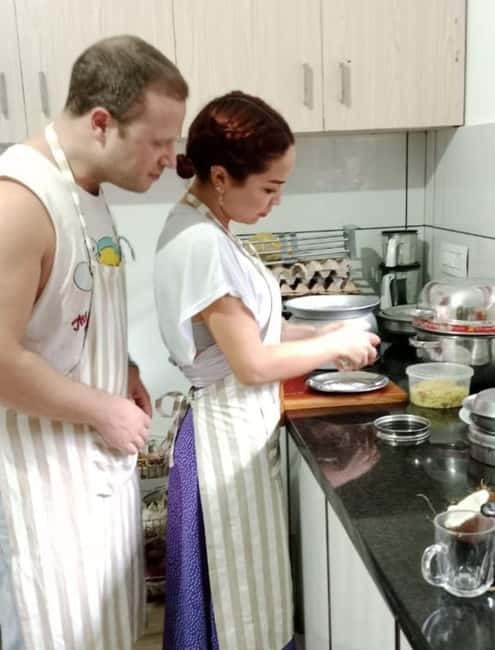
The class is presented as hands-on, not just a cooking demonstration. The chef shows you how to prepare the dishes, and you take part in learning the methods. This format is useful because Kerala cooking often depends on order, texture, and spice balance, not only on a list of ingredients.
About six Kerala dishes are demonstrated in a session. The precise menu is not specified, so you should not book expecting a particular dish such as fish curry, prawn fry, appam, or aviyal unless the provider confirms it.
The broader food theme is wide. Kerala is known for seafood such as fish, prawns, crabs, clams, and squid, along with many vegetable dishes. The class may help you understand this range, but the supplied information does not promise a seafood menu or a vegetarian menu.
A good cooking lesson also teaches the reason behind each step. Here, the chef explains the health benefits of the dishes and traditional cooking methods. That can include learning why certain spices are used, how coconut oil contributes flavor, and how fresh ingredients are handled. The details of those health explanations are not listed, so treat this as an educational feature rather than a medical nutrition course.
You receive ingredients, pen and paper, and recipes. That package adds real value. A dish can taste wonderful during a class and still be hard to recreate later if you leave without measurements or notes. Written recipes give you a way to remember the process once you are back home.
The flavors and tools that make Kerala cooking different
The key flavors here come from fresh spices and coconut oil. The spices are traditionally ground with an ammikallu, a grinding stone used to create a paste or coarse mixture. Seeing that method helps explain the difference between freshly prepared spice mixtures and a jar of powder.
Coconut oil is another important detail. Its aroma becomes part of the dish, rather than acting as a neutral cooking fat. If you normally cook with olive oil, butter, or a flavorless vegetable oil, this may be one of the clearest ways to notice a regional cooking style.
The class also gives you a window into the range of Kerala meals. A sadhya is associated especially with the Onam festival and is served with rice and many vegetable, yogurt, lentil, and spice-based preparations. It is a useful reference point even if your class does not recreate the full feast.
You might also learn about breakfast dishes such as puttu or tapioca, but these are not confirmed as part of the session menu. Ask for the day’s dishes if a particular food is the reason you want to book.
Same region, a different dish to learn:
- Indian Cooking Class in an Authentic Local Home – Learn 6 Dishes
★ 5.0 · 195 reviews - Durga Cooking Class
★ 5.0 · 159 reviews - Private Guided Cooking Workshop Experience in Jodhphur
★ 5.0 · 158 reviews - Jaipur Market Tour & Vegetarian Rajasthani Home Cooking Class
★ 5.0 · 113 reviews
Group size, participation, and the feel of the lesson
The class is intended to be small. One part of the information says a maximum of four people is allowed in a session, while another describes the group limit as six. The more specific session note says four, but I would still confirm the actual number when you reserve.
A four-person class should give you a better chance to see the cooking clearly, ask questions, and handle the ingredients. That matters in a kitchen lesson. With a larger group, you may spend more time waiting for your turn or standing behind someone else.
The activity is described as interactive, with the learner involved in cooking. Still, the exact division between demonstration and hands-on work is not stated. If you want to prepare every dish yourself, ask how much active cooking each person does.
There is no named chef in the supplied details. The class is led by a local chef, but you should not expect a particular instructor unless the provider gives you a name after booking.
The experience is wheelchair accessible according to the activity information. Smoking, alcohol, drugs, and alcoholic drinks in the vehicle are not allowed. Those rules are straightforward and worth noting if your group is arranging transport.
Is $21 a good price for this Munnar activity?
At $21 per person, the class is priced well if you are already near Munnar and the session includes the promised ingredients, instruction, recipes, and cooking notes. A 4.5-hour class gives you enough time for more than a quick demonstration, and the small format makes the price even more appealing.
The value is strongest for people who care about learning how to cook. You are paying for contact with a local chef, traditional techniques, explanations of health benefits, and a set of recipes you can use later. That is more lasting than paying the same amount for a single restaurant meal.
The value drops if you need transport from Kochi or another town and must pay separately for a long transfer. Since pickup details are unclear, confirm the transport arrangement before comparing this with other cooking classes.
You should also remember that personal expenses are not included. The class ingredients are covered, but any other purchases or costs connected with reaching the meeting point are your responsibility.
Dietary rules need clarification before you reserve
The information says vegans and vegetarians should inform the provider before the class. It also lists the activity as not suitable for vegans and vegetarians. Those statements conflict.
This is not a minor detail if you do not eat meat, fish, eggs, or dairy. Kerala has a strong vegetarian food tradition, including dishes served in a sadhya, but the provider has not promised a vegetarian or vegan menu for this session.
Contact the provider before booking and ask three direct questions:
- Can the class provide a fully vegetarian menu?
- Can it provide a fully vegan menu?
- Will the same cooking equipment and ingredients be used for those dishes?
Until you receive a clear answer, I would not recommend this activity to a vegan or vegetarian. The safest choice is to treat the class as unsuitable for those diets, despite the note saying dietary needs can be reported in advance.
Who will get the most from this class
I would recommend this class to you if you are staying in or near Munnar, enjoy food, and want a practical cultural activity with a local connection. It suits curious beginners because you do not need to arrive with advanced kitchen skills.
It is also a good fit for couples, friends, and small families who want something more active than sightseeing. The four-person limit, if confirmed, should make it easier to ask questions and work directly with the chef.
The class may suit you less if you want a fixed menu, a famous instructor, or a full meal with guaranteed seafood. Those details are not promised. It is also a poor match if you need reliable hotel transport without arranging it in advance.
The only direct written praise supplied for the activity is a short, positive assessment from Ryan of the United States, who rated it five out of five and called it amazing. That is encouraging, but it is not enough to prove every logistical detail works perfectly. I would place more weight on the format, the included recipes, and the price, while confirming transport and dietary arrangements.
Booking flexibility and practical checks
The activity allows cancellation up to 24 hours in advance for a full refund. It also offers reserve now and pay later booking, which helps if your Munnar schedule is still changing.
It is valid for one day, with starting times subject to availability. The activity is advertised as allowing you to skip the ticket line, although a cooking class does not involve the kind of entry queue normally associated with a major attraction. I would not treat that phrase as a major benefit.
The class is listed as wheelchair accessible. Because accessibility can depend on the exact kitchen and transfer arrangements, ask the provider for practical details if you use a wheelchair or have mobility needs. The published information confirms accessibility but does not describe entrances, seating, or kitchen work surfaces.
Should you book the Munnar cooking class?
Book it if you want a low-cost, small-group introduction to Kerala cooking and you are happy to confirm a few details first. The strongest features are the hands-on format, traditional spice grinding, coconut oil, health explanations, and recipes you can take home.
I would make the booking only after checking the meeting point, transport cost, final group size, and menu. The $21 price is excellent for a four-and-a-half-hour lesson, but it is less attractive if you must arrange an expensive transfer or discover that the menu does not fit your diet.
For most food-focused visitors already based in Munnar, this is a sensible choice. For vegans, vegetarians, or anyone relying on a Kochi hotel pickup, get written confirmation before committing.
FAQ
Where does the cooking class take place?
The cooking class is listed at Creek Way Munnar. The activity begins and ends at Munnar Info.
How long does the class last?
The cooking class lasts about 4.5 hours.
What time does the activity begin?
The supplied details state that pickup takes place at 1:45 pm. Starting times can vary with availability, so confirm the exact time when booking.
How many dishes are prepared?
About six Kerala dishes are mainly demonstrated during the session.
Are ingredients included?
Yes. Ingredients for the cooking class are included.
Do I receive recipes?
Yes. Pen and paper, along with recipes, are included.
Is hotel pickup included?
The information is inconsistent. One section mentions pickup from a hotel in Kochi, but another says hotel pickup and drop-off are not included. The itinerary lists Munnar Info as the start and end point, so confirm transport before booking.
Can vegans or vegetarians join?
The information says they should inform the provider before the class, but it also lists the activity as not suitable for vegans and vegetarians. Ask the provider for a clear answer about the available menu.
How many people can join a session?
One note says a maximum of four participants per session. Another group-size detail says six participants, so confirm the final limit.
Can I cancel for a refund?
Yes. You can cancel up to 24 hours in advance for a full refund.
Newest classes around India
- Chennai Super Market Tour and Cooking Class with a Fun Local★ 5.0 · 9 reviews
- Private tour to learn Traditional Indian Art, craft & Cooking★ 5.0 · 4 reviews
- Traditional Chettinad Cooking Class in a Local Home near Chennai★ 4.5 · 12 reviews
- Neighborhood Market Tour & South Indian Cooking Class in Chennai★ 5.0 · 7 reviews
- Chennai Dosa Making Class & Home-Dining Experience with Jyashree★ 5.0 · 8 reviews
- Traditional Gowda Cooking Class and Meal in a Bangalore Home★ 5.0 · 31 reviews
- Discover Bangalore’s Cuisine: Private Half-Day Cooking Experience★ 5.0 · 3 reviews
- Private South Indian Cooking Class in Bangalore with a Local★ 5.0 · 11 reviews
India Cooking Classes, compared.
Veg and Non veg : Private Cooking Class in Delhi home (7 meal)
Read our review →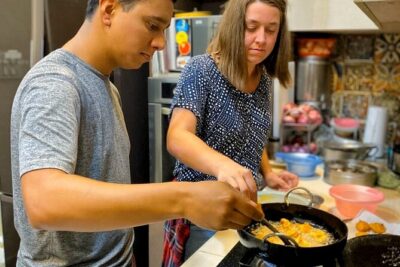
Indian Cooking Class in an Authentic Local Home – Learn 6 Dishes
Read our review →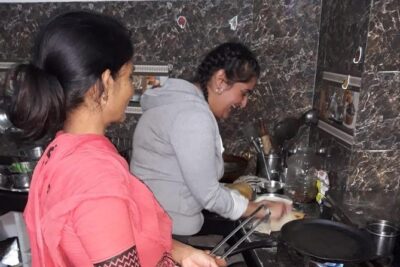
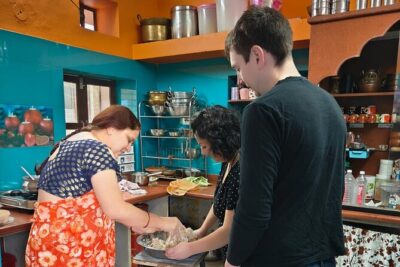
Private Guided Cooking Workshop Experience in Jodhphur
Read our review →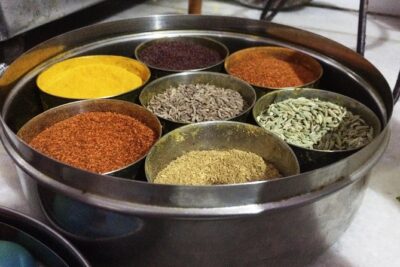
Jaipur Market Tour & Vegetarian Rajasthani Home Cooking Class
Read our review →
Cooking Class in Jaipur – Family Experience with Meal & Transport
Read our review →Browse the lists this tour appears in