Review · ATHENS COOKING CLASSES
Cooking Class in Athens with Shopping in Central Market & Lunch
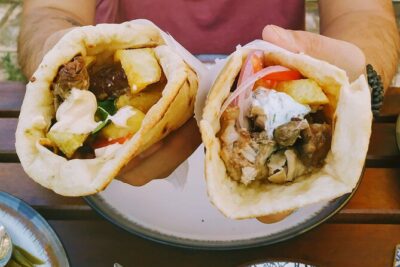
Athens Central Market is the heart of this experience. You walk through the old town with a local facilitator, choose produce and other ingredients, then cook in a working taverna where the chef may speak Greek and your facilitator translates. I like the market-to-table format and the chance to prepare dishes you can repeat at home.
I also like the small maximum of 12 people, the generous lunch, and the recipe booklet. The main catch is that this is not a formal history walk, and the route to the market can feel hot, quick, and awkward on busy Athens streets. The open-air taverna may also feel crowded in warm weather.
Key details before you book
- Market shopping comes first: Walk roughly 15 to 25 minutes from the meeting point through the old town to Central Market, with the facilitator helping choose ingredients.
- Five classic Greek dishes: Prepare tzatziki, mini cheese pies or dolmadakia, Greek salad, stuffed peppers and tomatoes, and chocolate salami.
- Lunch is included: Sit down in the taverna for the food, a glass of wine, and mineral water after the cooking.
- Small English-language group: The group maximum is 12, with aprons, gloves, cookware, and other needed equipment supplied.
- One recipe booklet per booking: The recipes are provided as a souvenir, with a digital copy also used when needed.
- Plan for a warm, informal setting: The taverna is traditional and local, but it is not designed like a polished cooking school.
From Plaka streets to Central Market
The experience starts at Tzireon 12 at 11:30 a.m. in the Plaka area. From there, you walk toward the Central Market, passing through the old town and into a part of Athens that feels more like daily life than a sightseeing stage.
The walk is not just a transfer. It gives you a quick look at the city’s streets, shops, neighborhoods, and food culture before you sit down to cook. Some facilitators, including Nina, Elena, Joanna, George, and Constantina, have added comments about architecture, local life, and the places along the way.
Still, keep your expectations in check. This is not a licensed historical walking tour. The facilitator’s job is to lead the group, shop for ingredients, translate, and connect the food to local life. You may hear useful cultural and city information, but the quality and amount of sightseeing commentary can vary by facilitator.
The walk takes roughly 15 to 25 minutes, depending on the route and pace. That matters in Athens, especially in summer. One account describes the crossing as rushed and uncomfortable in the heat, while others found the walk an enjoyable way to get acquainted with the city. Wear comfortable shoes, bring water, and do not treat the route as a leisurely museum tour.
The group also needs to stay together on busy streets. If you walk slowly, tell the facilitator early so you are not left trying to catch up. This is a simple tip, but it can make the first part far more pleasant.
More Cooking Classes with a Market Tour in Athens
- Athens: Classic Cooking Class with Market Visit and Wine
★ 5.0 · 1,101 reviews - Athens: Food Market Visit and Cooking Class with Wine
★ 4.9 · 1,087 reviews - Athens Market Tour and Cooking Class in a Beautiful Garden
★ 5.0 · 122 reviews
Choosing ingredients at Athens Central Market
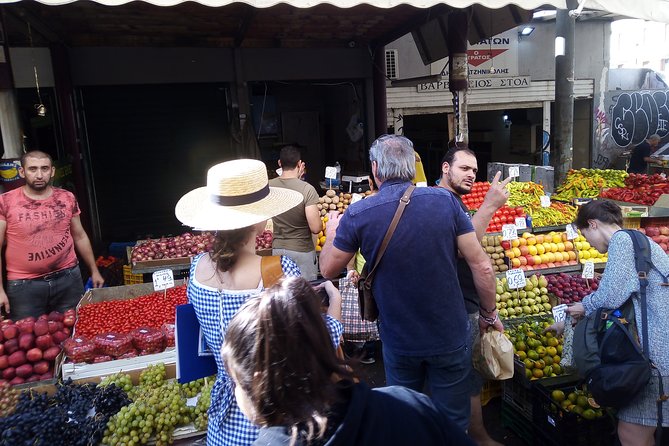
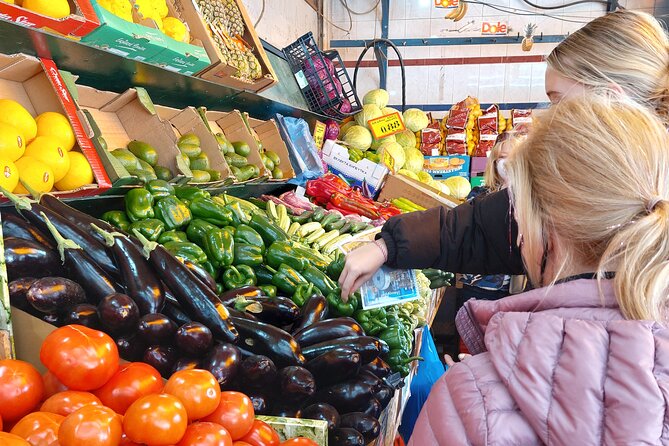
Central Market gives the class its strongest sense of place. Instead of arriving at a classroom with measured ingredients already waiting, you see the shopping side of Greek cooking first.
The menu relies heavily on vegetables, herbs, yogurt, cheese, rice, and other everyday ingredients. You help select items such as tomatoes, cucumbers, peppers, yogurt, olives, and feta. The market portion can also include the vegetable and meat areas and a cheese shop, depending on the route and the day.
This is useful because Greek cooking depends on choosing good basic ingredients. The facilitator may explain how to select produce for the recipes, how to identify suitable feta, or which ingredients are needed for the class dishes. You get a better sense of how a local meal begins, rather than simply learning a set of cooking motions.
Do not expect a full food-market seminar. The main purpose is to buy what you need for lunch. If you want detailed lessons about Greek olive oil, cheese production, meat cuts, or regional food traditions, you may find this market visit too brief.
The shopping is also a good place to ask questions. Ask how to judge ripe tomatoes, which yogurt works best for tzatziki, or what makes Greek feta different from similar cheeses. The facilitator can help translate with vendors and explain the choices tied to the menu.
Cooking in a real Athens taverna
After the market, you continue to a traditional taverna in the historical center, near Monastiraki Square. This is not a purpose-built cooking studio. It is a restaurant where local people eat, and that gives the class a more everyday setting.
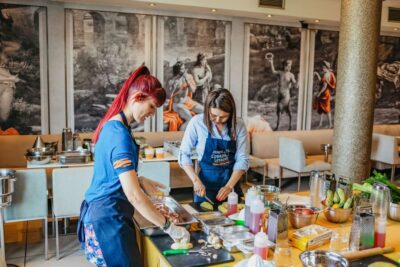
The chef leads the preparation while the English-speaking facilitator translates instructions. Some chefs speak limited English, so the facilitator is an important part of the class. That arrangement can make the class feel less polished than a fully English-language school, but it also puts you in contact with a working local cook rather than a presenter performing a scripted show.
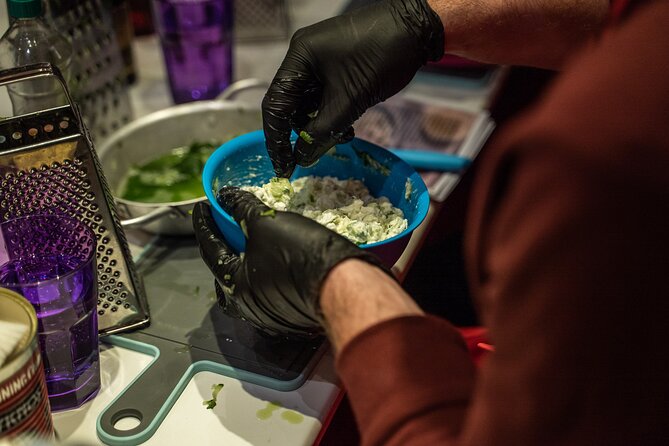
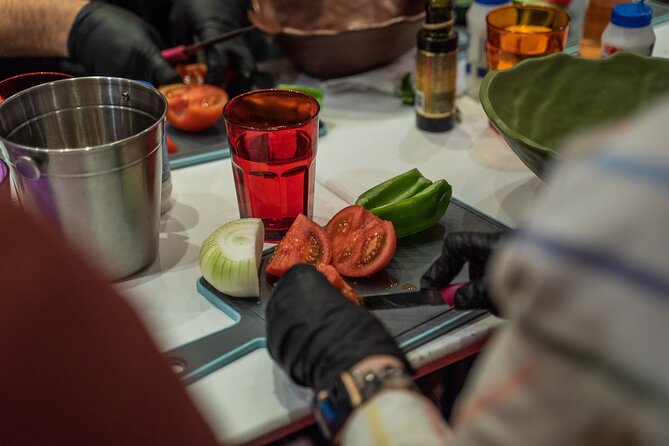
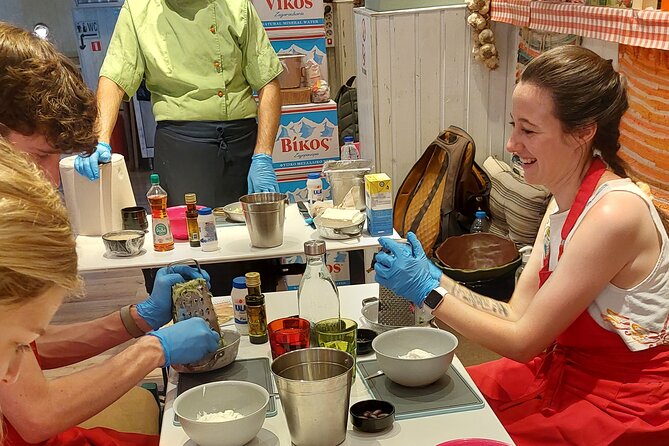
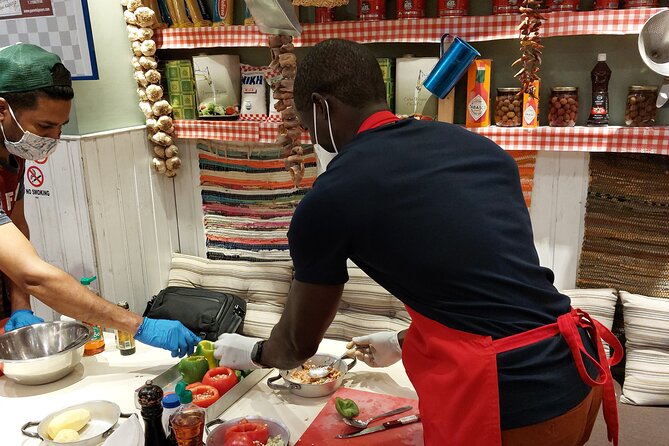
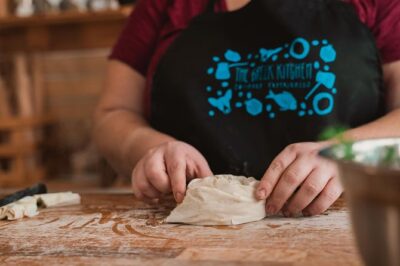
The cooking is hands-on but not technically difficult. You work with familiar steps such as mixing tzatziki, preparing salad, filling vegetables, and handling grape leaves or small cheese pies. One particularly enjoyable task is carving tomatoes for stuffing, a small job that makes the meal feel like your own.
The menu is vegetable-heavy. That is a strength if you want an introduction to Greek vegetarian cooking, but it may disappoint you if you expect grilled meat, fish, or a large protein course. The listed menu contains no meat or fish main dish.
The cooking class takes place in the restaurant’s dining area. Depending on the weather and the group, the open-air setup can be warm and noisy. One account described eight people seated elbow-to-elbow at a table that felt too small for all the ingredients and equipment. Another described the setting as fun and comfortable.
That contrast is worth understanding. You are choosing atmosphere and local character over a quiet, spacious classroom. Aprons, gloves, cookware, and other equipment are supplied, which helps with cleanliness and keeps the activity practical.
What you prepare and eat
The menu is a compact lesson in familiar Greek flavors. You are not making elaborate restaurant food. You are learning dishes built from ingredients that are easy to find and realistic to prepare at home.
More Cooking Classes with a Market Tour in Greece
- Athens: Cooking Class, Market Visit & Lunch at Local Tavern
★ 4.9 · 27 reviews - Athens Market Tour and Cooking Class in a Beautiful Garden
★ 5.0 · 8 reviews - Athens Central Market Tour and Greek Cooking Class with Penelope
★ 5.0 · 4 reviews - Thessaloniki: Greek Cooking Class, Market Visit and Lunch
★ 5.0 · 8 reviews
Tzatziki
This yogurt, cucumber, and garlic dip is one of the easiest dishes to repeat after the trip. The class can show you how to balance the garlic and cucumber with the yogurt, and the dish gives you an immediate taste of the meal before the longer cooking is finished.
Mini cheese pies or dolmadakia
The class may prepare small cheese pies or stuffed vine leaves with rice. Dolmadakia require a little more patience than tzatziki, especially when filling and rolling the leaves. They are a useful introduction to a classic Greek preparation without turning the session into a difficult technical course.
Greek salad
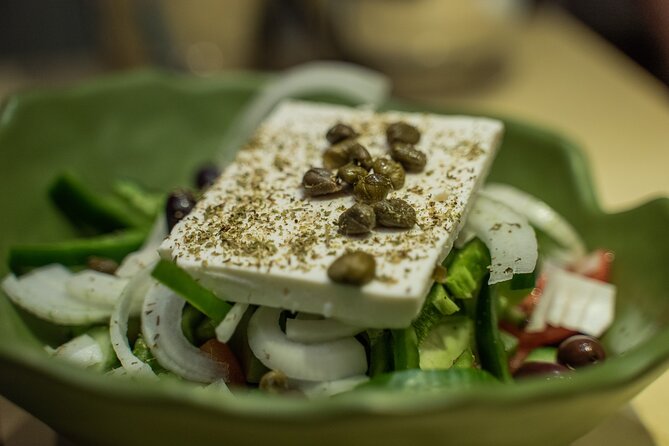
Tomato, cucumber, green pepper, olives, and feta make up this familiar dish. Its value is less about complicated technique and more about proportions and ingredient quality. Fresh produce and good feta do most of the work.
Stuffed peppers and tomatoes
The main dish consists of peppers and tomatoes filled with rice. These take longer to cook than the quicker starters, so the chef may prepare some portions in advance or serve food made by the kitchen while the class samples what it has prepared.
That point is important. You participate in the preparation, but you may not eat only the exact portion you handled. The class is structured to keep lunch moving, not to wait hours for every stuffed vegetable to finish cooking.
Chocolate salami
This cold dessert combines chocolate, biscuit, and walnuts. It is simple, rich, and practical for home cooking. It also gives the class a sweet ending without requiring a full pastry lesson.
Lunch with wine and a generous spread
Once the cooking is finished, you sit at the restaurant and eat. The included meal covers the main dish, two appetizers, salad, dessert, a glass of wine, and mineral water.
The portions can be large. Come hungry, but do not plan a heavy dinner immediately afterward. Some participants have even had enough food to take some home, although that depends on the day and the restaurant.
The meal is one of the better reasons to consider the experience. You get to taste several dishes in one sitting, and the lunch provides a clear payoff after the market and preparation. It is also a relaxed chance to talk with the chef, facilitator, and other members of the group.
The wine inclusion is modest but welcome: one glass per person rather than an open bar. If you do not drink alcohol, the experience still includes mineral water, though the supplied information does not specify other drink choices.
A look at the value for $101.55
At $101.55 per person, this is not the cheapest way to eat lunch in Athens. You can find an excellent Greek meal for far less. The price makes more sense when you add the market visit, the instruction, the food, the equipment, the wine, the facilitator, taxes, and the recipe booklet.
You are paying for an activity that fills about three and a half hours, not simply for a restaurant meal. The value is strongest if you want to learn a few dishes, meet a local facilitator, and have a structured introduction to Greek food.
The price is less attractive if you mainly want an inexpensive lunch or a serious professional cooking course. You are not receiving a private class, and the group can include up to 12 people. The restaurant setting also means the class may feel crowded rather than carefully designed.
The recipe booklet adds useful value. It is one booklet per booking, not one per person. If several people in your party want their own paper copy, clarify that before you arrive. A digital copy may also be provided, and the recipes are practical enough to use for a Greek meal at home.
The experience is often booked about a month in advance, with an average lead time of 32 days. That suggests you should reserve early if the 11:30 a.m. slot is important to your schedule.
Who will enjoy this most
I would choose this class if you want an easy introduction to Greek cooking and prefer local atmosphere to a formal school. It works especially well for couples, families, and small groups who want to share a meal after doing something together.
It also suits vegetarians, since the menu is built around vegetables, rice, yogurt, cheese, and salad. If you need a meat or seafood course, this is not the right menu.
Families can find plenty to do, and one account specifically describes a granddaughter enjoying the cooking. The recipes are simple enough for beginners, and the activity does not require previous kitchen experience.
You should think twice if walking in heat is difficult, if you need a quiet and spacious workspace, or if you want a serious Athens history tour. The facilitator may offer city context, but history and archaeology are not the main purpose.
The experience ends back near Monastiraki Square. That is useful because you can continue exploring the central area afterward, though you should not expect hotel pickup or a separate return transfer.
Practical advice for a smoother class
Wear shoes suited to uneven city streets. The walk through Plaka and toward the market is part of the activity, and the route can be busy.
Use the provided gloves and apron, especially if you are working with several ingredients at once. Ask questions during the market stop, when the choices are right in front of you.
Tell the facilitator about dietary needs before the class begins. The supplied information lists the menu, but it does not promise substitutions. Since the meal is largely vegetarian, this may work well for some diets, but you should not assume every ingredient can be changed.
If you want historical detail, book a separate walking tour. This activity can show you how food fits into local life, but it is not a substitute for a licensed guide.
Finally, remember the cancellation rule. You receive a full refund if you cancel at least 24 hours before the local start time. Changes or cancellations inside that window are not accepted for a refund, and the minimum group requirement applies.
Should you book this Athens cooking class?
Book it if you want to shop for real ingredients, cook straightforward Greek dishes, and eat a generous lunch in a neighborhood taverna. The strongest parts are the market-to-table structure, the friendly facilitators, the translation support, and the recipes you can take home.
Skip it if you want a polished cooking school, a quiet private table, a meat-focused menu, or a detailed history walk. At $101.55, the experience earns its price through the activity and instruction, not through the meal alone.
For most first-time visitors who enjoy food and do not mind a warm, informal setting, this is a useful and tasty way to spend a half-day in Athens.
FAQ
Where does the cooking experience start?
It starts at Tzireon 12, Athens 117 42, Greece, at 11:30 a.m.
How long does the experience last?
The activity lasts approximately 3 hours and 30 minutes.
How large is the group?
The maximum group size is 12 participants.
Is the activity offered in English?
Yes. The experience is offered in English, with the facilitator translating the chef’s instructions when needed.
What dishes will I prepare?
The menu includes tzatziki, mini cheese pies or dolmadakia, Greek salad, stuffed peppers and tomatoes, and chocolate salami.
Is lunch included?
Yes. Lunch includes the main dish, two appetizers, salad, dessert, a glass of wine, and mineral water.
Is a recipe book included?
Yes. One souvenir recipe booklet is included per booking. A digital copy may also be provided when needed.
More Lunches Out in Athens
- Traditional Greek cooking class and lunch or dinner with an Acropolis view
★ 5.0 · 250 reviews - Athens Cooking Class and Lunch in our beautiful garden in Greece
★ 5.0 · 130 reviews - Cooking Class and Lunch at a Tuscan Farmhouse with Local Market Tour from Florence
★ 5.0 · 4,831 reviews - Paris Cooking Class and Lunch with Wine plus Market Visit Option
★ 5.0 · 1,024 reviews
Newest classes around Athens
- Greek Cooking Class with Acropolis View★ 5.0 · 76 reviews
- Private Walking Meze Cooking Course★ 5.0 · 6 reviews
- Cook with Katerina: Authentic Greek Home Cooking Class in Athens★ 5.0 · 15 reviews
- Private Greek Cooking Class in Athens-Learn to Cook with Angelina★ 5.0 · 3 reviews
- Hands On Greek Cooking Classes in Athens★ 5.0 · 7 reviews
- Athens: Traditional Vegan Cooking Class incl. Drinks★ 5.0 · 41 reviews
- Cooking Class in Athens: Learn the Art of Phyllo with Christina★ 5.0 · 24 reviews
- Greek Meze Cooking class and dinner with an Acropolis view★ 5.0 · 41 reviews
Athens Cooking Classes, compared.
Classic Cooking Class with Market Visit and Wine
Read our review →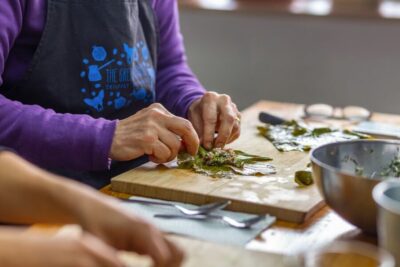
Food Market Visit and Cooking Class with Wine
Read our review →
Greek Cooking Class in Athens Including Rooftop Dinner with Acropolis View
Read our review →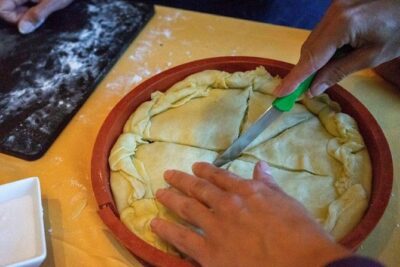
Greek Small-Group Athens Cooking Class & Dinner
Read our review →
Greek Cuisine Cooking Class and 3-Course Dinner
Read our review →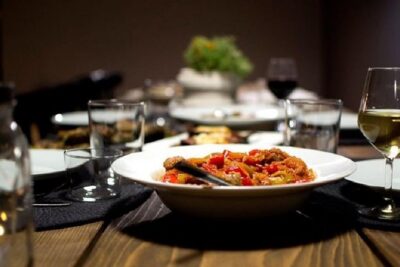
Traditional Greek cooking class and lunch or dinner with an Acropolis view
Read our review →