
Review · PARIS COOKING CLASSES
Paris: Full-Day Cooking Class with 3-Course Lunch
The best part of this Paris cooking class is that the menu starts with the market, not a fixed script. Fresh produce shapes the meal, and you learn how to turn it into an appetizer, main course, and dessert using classic French methods. I like the practical focus on six to eight useful techniques, and I like that the lesson ends around a shared table with wine and cheese. The main drawback is the $222 price, which feels high if you already cook French food confidently.
I also like the warm teaching style. Chefs such as Frédéric, Paulo, Luc, and Luke are not just there to demonstrate recipes. They explain knife work, timing, sauces, meal planning, and the food stories behind French cooking. Group size is often kept intimate, though some sessions have been larger than the advertised three to seven people, so your hands-on time may vary.
Key points at a glance
- Market-led menu: The class uses fresh produce selected that day, so dishes can change with the season and availability.
- Six to eight techniques: You learn practical skills such as sauce making, knife work, meal timing, and dessert preparation.
- Three-course lunch: You cook an appetizer, main course, and dessert, then eat the finished meal with cheese and wine.
- Strong English instruction: Frédéric, Paulo, Luc, Luke, and other instructors explain the food clearly in English.
- Recipes to take home: You receive printed and electronic recipes in English, making the class useful after Paris.
- Five-hour format: The session runs from about 10:30 to 15:00, with time to cook, eat, and talk.
Starting in the Latin Quarter at Le Foodist
You meet at Le Foodist, 59 rue Cardinal Lemoine, in the Latin Quarter. This is a useful setting for a food class because the neighborhood already gives you a sense of everyday Paris, with markets, shops, cafés, and food traditions close by.
The class begins at about 10:30, after the hosts return from a local market with fresh ingredients. That detail matters. You are not simply following a recipe chosen months ago. The food available that day helps shape the menu, which gives the class a more natural connection to French cooking.
On some sessions, the chef has taken the group to the market personally, turning the shopping into a short local walk and a chance to talk about French ingredients. That is a welcome extra, but you should not assume every class includes the same market visit. The consistent feature is that the cooking begins with market produce.
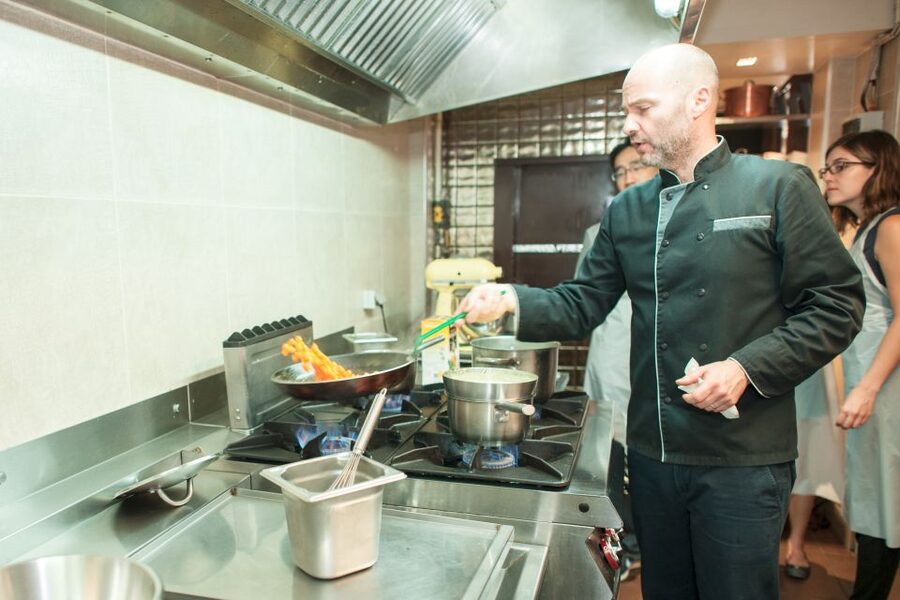
Le Foodist itself is described as a clean, charming teaching space with a well-equipped kitchen and a French country-style dining room. The setting helps the day feel like a meal shared in a private home rather than a hurried demonstration in a large commercial school.
More Lunches Out in Paris:
- Paris Cooking Class and Lunch with Wine plus Market Visit Option
★ 5.0 · 1,024 reviews - Paris French Cuisine Small Group Cooking Class with Lunch
★ 4.5 · 418 reviews - Paris: Full-Day Cooking Class, Market Tour and Lunch
★ 4.9 · 113 reviews
Cooking a menu that changes with the market
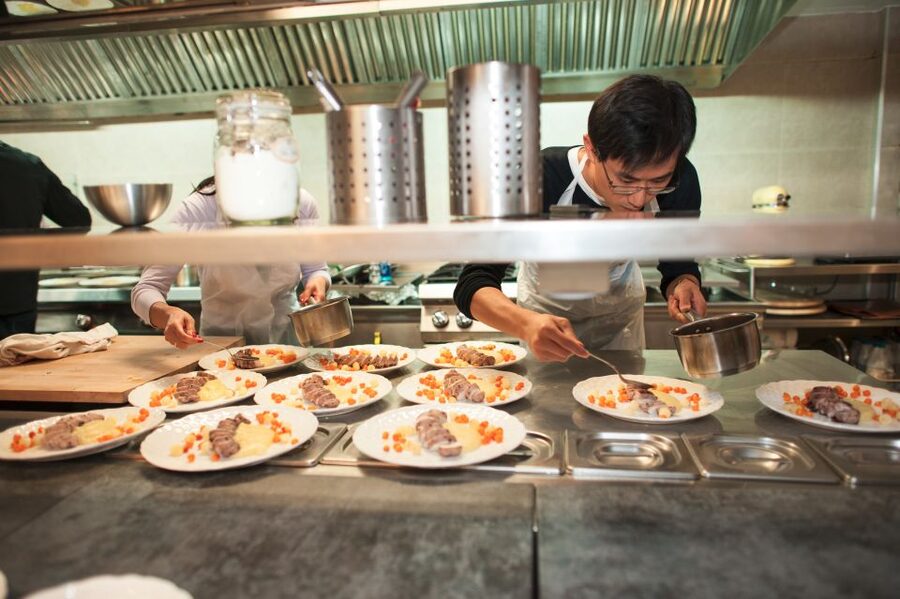
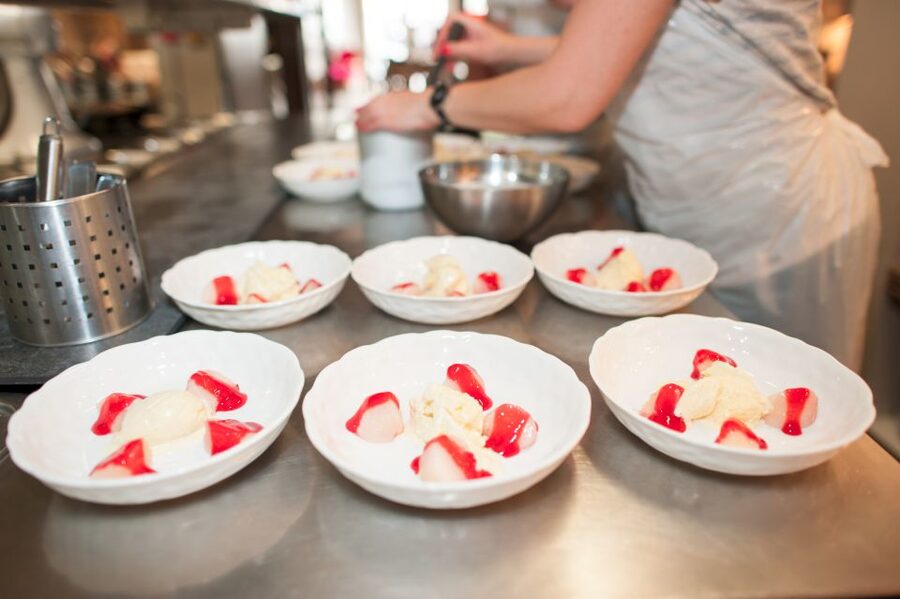
Once the ingredients are ready, the class moves into the kitchen. You work toward a three-course meal: an appetizer, a main course, and dessert. The exact dishes are not fixed in advance, so the class can reflect the season and the market’s selection.
That flexibility is part of the appeal. You learn how to look at ingredients and plan a meal around them, rather than treating a recipe as a rigid set of instructions. You also learn what can be prepared ahead of time and how to organize several dishes so they reach the table together.
The class typically covers six to eight techniques. The examples provided include making ice cream and preparing a wine sauce, along with general cooking skills that you can use in many dishes. Past sessions have also included knife skills, chicken preparation, sauce work, and methods for bringing simple ingredients to the table with more care.
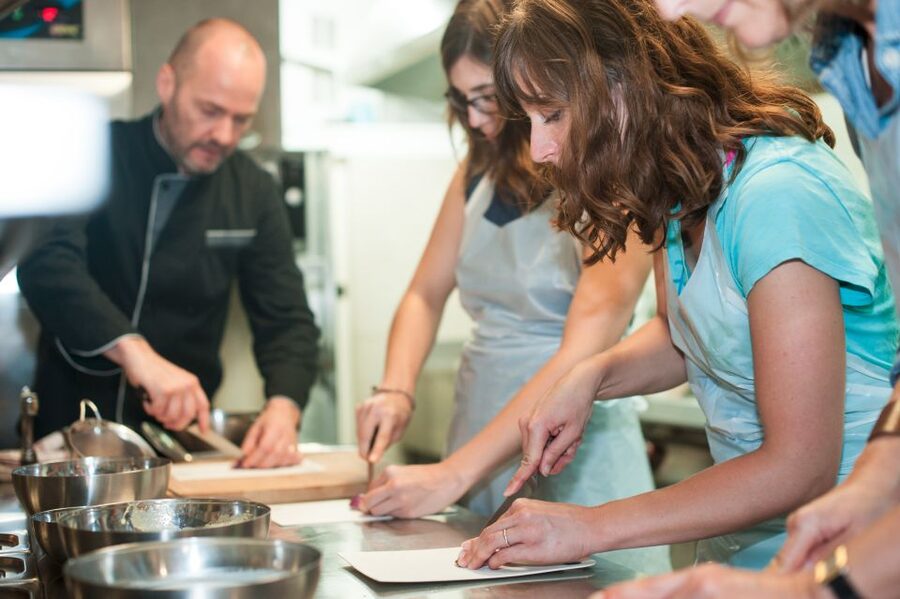
You are not expected to produce restaurant food alone. The chef divides the work among the group, often assigning people to different stations or teams. This keeps the three-course meal moving, though it also means you may not personally perform every step of every dish.
That point is worth considering. If you want to practice each recipe from start to finish, a private class may suit you better. In this group format, you will have hands-on work and shared tasks, but some parts will be demonstrated or completed by another participant. The benefit is a faster, more social class with enough variety to cover several techniques in one morning.
Learning from Frédéric, Paulo, Luc, and Luke
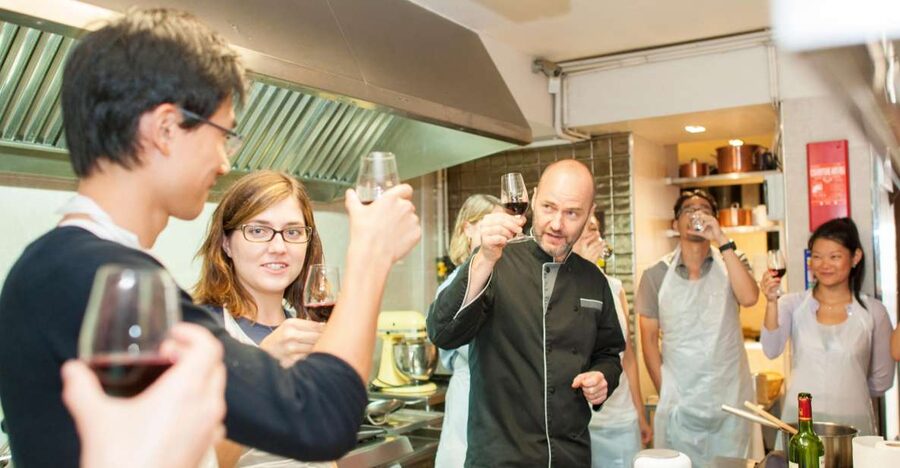
The instructor makes a large difference in a cooking class, and this experience has several chefs who are repeatedly praised for humor, patience, and clear teaching. Frédéric is known for mixing cooking advice with stories about French food and culinary culture. His explanations range from kitchen technique to the long story of French cuisine, stretching across roughly 2,500 years.
Paulo has also led sessions, with a teaching style that focuses on useful tips and market knowledge. Luc and Luke are other instructors named by participants, both described as patient, funny, and willing to answer questions. The exact chef depends on the date, so you should not book expecting one particular instructor unless the operator confirms it.
The English instruction is a major advantage. The host or greeter language is English, and the class is designed for English-speaking visitors. You can ask about technique, timing, ingredients, and food culture without worrying that an important instruction will be lost.
The teaching style is convivial rather than formal. You may hear stories while chopping vegetables, watch a sauce come together, or receive a small correction on knife technique. This makes the class enjoyable, but it also means the pace can feel less structured than a professional culinary school.
One practical note comes from a less enthusiastic assessment: the explanation of how the cooking would progress could have been clearer, and the four-hour experience felt expensive. I would keep that in mind if you prefer a tightly scheduled class with a detailed lesson plan. The five-hour description allows time for lunch and conversation, but the exact rhythm can depend on the group and chef.
Sitting down to the French lunch
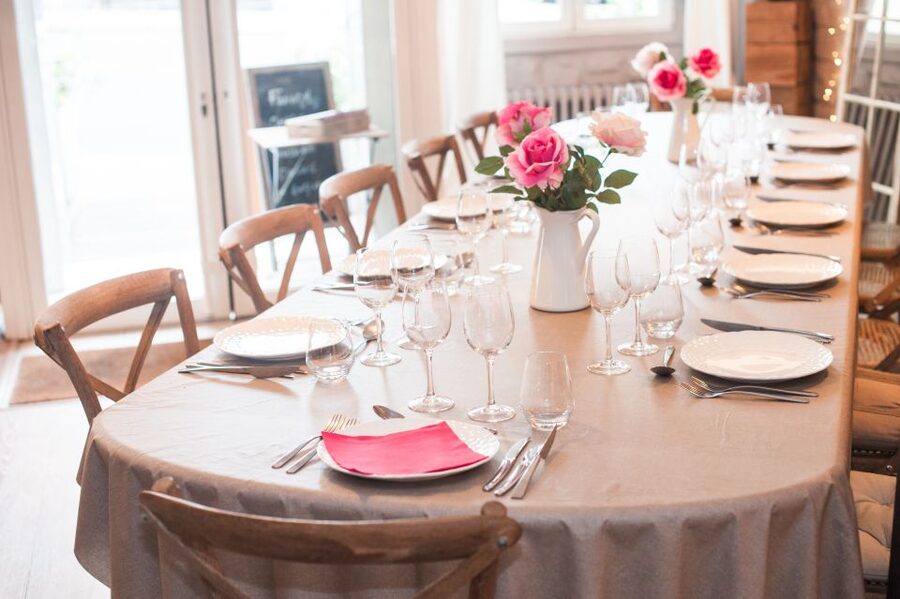
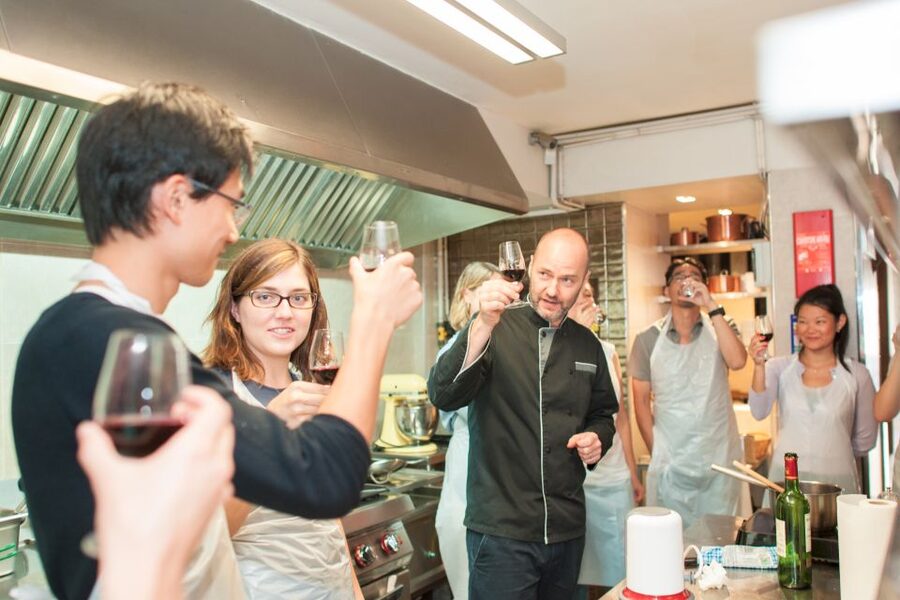
After roughly two hours of cooking, you sit down to eat what the group has prepared. The lunch includes three courses, cheeses, and both red and white wine. The meal is not an extra add-on after the class. It is the payoff for the work you have just done and an important part of learning how French meals are organized.
The shared table changes the feel of the experience. You are no longer watching a demonstration or rushing to the next stop. You can taste the sauces, compare notes, ask the chef questions, and hear more about French food customs.
The cheese course is especially useful for anyone who wants more than a basic cooking lesson. It adds another piece of French food culture to the day without requiring a separate tasting appointment. The wine pairings also help turn the class into a full lunch rather than a snack between activities.
The meal usually finishes around 15:00, and the schedule is not designed to hurry you out immediately. That makes this a poor fit if you have a tightly packed afternoon appointment, but a good fit if you want one substantial food experience rather than several short tastings.
You should also plan your morning accordingly. The class includes wine during the cooking period and again with lunch, so it is best treated as a relaxed food-and-drink event, not a quick activity before a museum visit.
More Full-Day Outings in Paris:
- Full Day Thai Cooking at Farm (Chiang Mai)
★ 5.0 · 1,127 reviews - Full-Day Jeep Safari Tour with Cooking Lesson
★ 5.0 · 284 reviews - Full-Day Experience in Mekong Cycling and Authentic Home Cooking
★ 5.0 · 89 reviews - Private Full-Day Gambian Home Cooking Experience in Banjul
★ 5.0 · 14 reviews
How much hands-on cooking will you get?
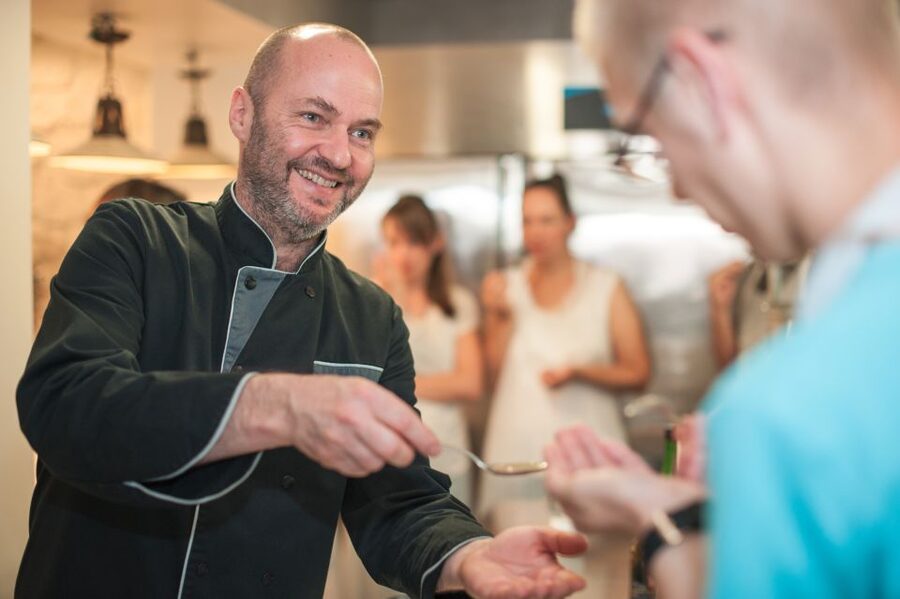
The advertised group size is three to seven people, which should allow for a personal feel and regular contact with the instructor. In practice, some sessions have had 10 or even 12 participants. That does not mean the class cannot work well, but it can affect how often you are at the cutting board or stove.
With a larger group, tasks are commonly split between stations. You may prepare one element while another pair works on the dessert or sauce. This is efficient and encourages cooperation, but it is not the same as having your own cooking bench and individual recipe.
I would recommend the class to a beginner who wants structure and encouragement. You will not need advanced skills, and the dishes are intended to be practical enough to repeat at home. The recipes are not described as overly complicated, which is a strength for someone who wants a successful first attempt at French cooking.
Intermediate home cooks should also find useful material in the knife advice, sauce techniques, timing tips, and meal planning. Very experienced cooks may find the basic steps familiar. Even then, the market-based menu, French culinary stories, wine, and social setting can make the day worthwhile, but the instruction alone may not justify the price.
Recipes and techniques you can use at home
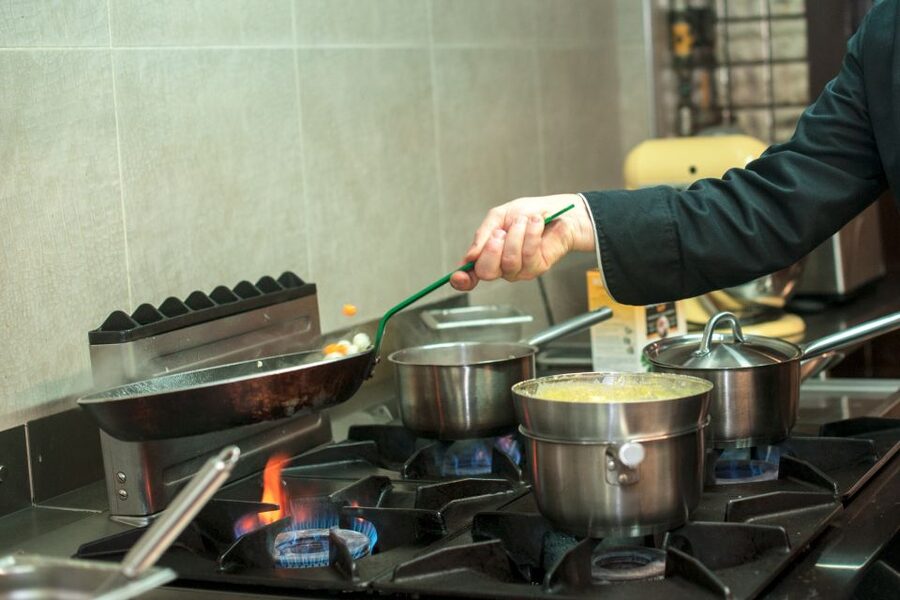
The class supplies recipes in English in both hard copy and electronic form. That is important because a cooking class can be enjoyable in the moment but easy to forget once you return home. Having the recipes gives you a clear way to recreate the dishes and remember the method.
The strongest value here is not just the final menu. It is the explanation of how to organize a meal. You learn which tasks can be done in advance, how to manage several courses, and how sauces and desserts fit into the timing of a lunch.
Some recipes are deliberately practical rather than showy. That makes sense for a visitor who wants to cook French food after returning home. You are more likely to use a well-explained sauce or chicken technique than an elaborate dish requiring rare equipment.
The supplied kitchen equipment and apron are included, so you do not need to bring cooking tools. Dietary restrictions should be provided at least 24 hours before the class. A vegetarian menu has been accommodated in the past, and food allergies have also been handled, but you should communicate clearly before arrival rather than wait until the kitchen session begins.
Value at $222 per person
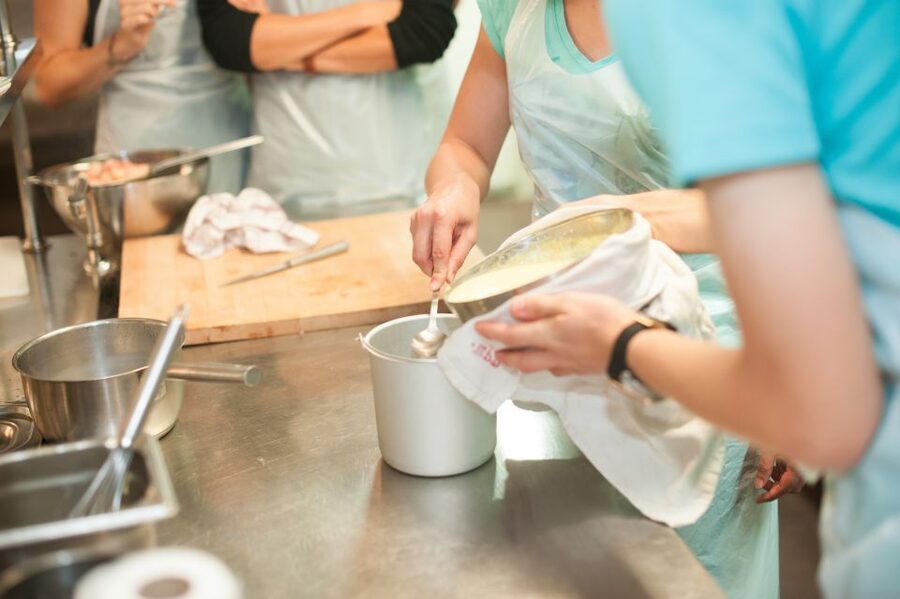
At $222 per person, this is not a budget activity. You are paying for a five-hour experience, instruction in English, use of the kitchen and equipment, a three-course meal, cheese, red and white wine, and recipes to take home.
The value is strongest if you would otherwise pay for a separate lunch, wine tasting, and cultural food activity. You also get several hours of direct contact with a chef and the chance to learn methods you can repeat at home. For a couple or food-focused solo visitor, this can serve as one of the main experiences of a Paris day.
The price is harder to justify if you mainly want to eat a good lunch. Paris has less expensive ways to do that. It is also less compelling for a seasoned home chef who already knows the techniques and wants advanced instruction.
I would compare it with the cost of a standard guided food tour before booking. A food walk gives you more neighborhood movement and usually more tasting stops. This class gives you fewer locations but much more time with the food, including the chance to make the meal yourself.
The rating of 4.9 from 135 ratings supports the idea that the class delivers a strong overall experience, but price remains a personal calculation. You should book it for the combination of cooking, conversation, and lunch, not simply because the food is included.
Who should book this Paris cooking class?
I would choose this experience for:
- Couples who want a shared activity beyond sightseeing
- Solo visitors who enjoy meeting people around a table
- Beginners looking for friendly instruction
- Home cooks who want classic French methods
- Food lovers who enjoy wine, cheese, and culinary stories
- Families with children aged 10 or older, after checking the best arrangement in advance
Children under 10 are not permitted in the cooking class. Families with several children should contact the operator before booking to discuss the best option.
The format also suits people who like a relaxed morning. You will cook, eat, talk, and stay in one place for much of the day. It is not ideal if you want constant sightseeing or a short activity between major attractions.
Practical details before you book
The meeting point is Le Foodist at 59 rue Cardinal Lemoine, 75005 Paris. Check the starting time when booking, as availability can vary.
Tell the operator about dietary restrictions at least 24 hours ahead. This is particularly important for vegetarian meals, allergies, or other needs that require changes to the market shopping and menu.
The operator may cancel if two or fewer people have signed up. In that case, you are offered another date or a full refund. You can also cancel up to 24 hours before the activity for a full refund, and the reserve-now, pay-later option keeps your plans more flexible.
Should you book it?
Book this class if you want to do more than sample French food in Paris. You will learn practical techniques, eat the meal you helped prepare, and spend time with an English-speaking chef who can connect the kitchen to French food culture.
I would be cautious if $222 feels steep, if you need advanced culinary training, or if you want complete control over every step. For most visitors who enjoy cooking and want a sociable day with wine, cheese, and useful recipes, the experience offers a satisfying change from the usual museum-and-monument schedule.
FAQ
Where does the cooking class take place?
The class takes place at Le Foodist, 59 rue Cardinal Lemoine, 75005 Paris, in the Latin Quarter.
How long does the experience last?
The stated duration is five hours. The class generally begins around 10:30 and lunch usually finishes around 15:00.
What food will I prepare?
You will prepare an appetizer, main course, and dessert. The menu is based on fresh ingredients available from the local market, so the exact dishes can vary.
Is wine included?
Yes. The experience includes red and white wine with the meal, along with cheese.
Are recipes provided?
Yes. You receive printed and electronic copies of the recipes in English.
Is the class taught in English?
Yes. The host or greeter language is English, and the cooking instruction is provided in English.
Can dietary restrictions be accommodated?
Dietary restrictions should be provided at least 24 hours before the class. Vegetarian needs and food allergies have been accommodated in past sessions.
Are young children allowed?
Children under 10 are not permitted to take the cooking class. Families with multiple children should advise the operator in advance to discuss the best solution.
Newest classes around Paris
- Paris: Traditional Croissant Cooking Class With Local Baker★ 5.0 · 2 reviews
- Paris: The Soufflé Baking Class with Chef★ 4.5 · 2 reviews
- Paris: Millefeuille baking class with a chef★ 5.0 · 5 reviews
- Paris: Lemon Tart Baking Class with a Pastry Chef★ 5.0 · 4 reviews
- Paris: Macaron Baking Class★ 4.4 · 26 reviews
- Paris: Hands-On Small Group Cooking Class★ 4.9 · 19 reviews
- Paris: Evening Cooking Class with Optional Market Visit★ 4.8 · 19 reviews
- Eclair Baking Class with A Pastry Chef★ 5.0 · 3 reviews
Paris Cooking Classes, compared.
Paris Cooking Class and Lunch with Wine plus Market Visit Option
Read our review →
Paris Croissant Small-Group Baking Class with a Chef
Read our review →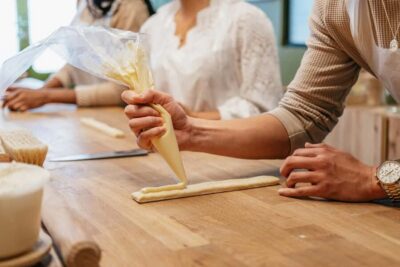
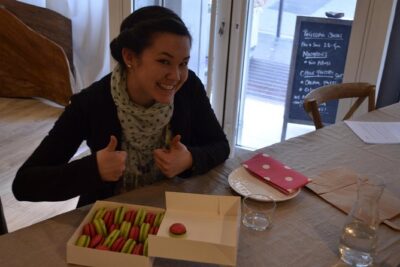
Paris Cooking Class: Learn How to Make Macarons
Read our review →
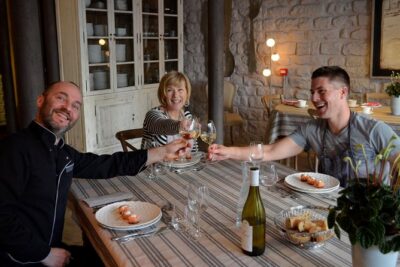
Paris Evening Cooking Class French Dinner and Market Visit Option
Read our review →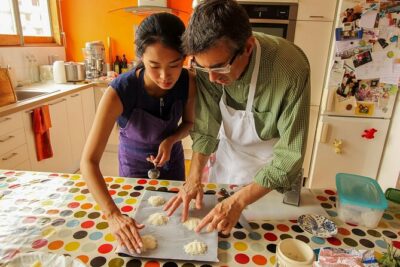
Paris French Cuisine Small Group Cooking Class with Lunch
Read our review →
Paris Macarons Small-Group Baking Class with a Chef
Read our review →Browse the lists this tour appears in