
Review · GREECE COOKING CLASSES
Half-Day Greek Cooking Class of Zakynthian Culture with Lunch
The best part of this Zakynthos experience is that food becomes your guide to the island. You do not simply watch a chef work. You help prepare several dishes, taste local olive oils and cheeses, and hear Alex connect each recipe to Greek customs and Zakynthian life. The family setting at The Green Frog gives the morning a personal feel.
I especially like two things here: the hands-on cooking, which suits first-timers as well as confident cooks, and the generous meal at the end. Alex, Mandy, and the team keep the pace social, with drinks, stories, and plenty of food. The main consideration is the fixed schedule: classes run only Tuesday, Friday, and Saturday, and the outdoor format depends on good weather.
Key points to know before booking
- Five or more Greek dishes: Recipes vary by day, from stifado and spinach pie to moussaka, baklava, and vegetarian Zakynthian comfort food.
- Alex and Mandy lead the experience: Expect cooking instruction mixed with stories about Zakynthos, Greek food, olive oil, and local traditions.
- Lunch is part of the class: You sit down in a shady garden to eat what you helped prepare, with wine and tastings along the way.
- Small group size: The class accepts a maximum of 12 people, so the cooking is more personal than a large demonstration.
- Three weekly themes: Choose Tuesday Greek classics, Friday dishes such as stifado and orange cake, or Saturday vegetarian specialties.
- Plan around the schedule: The class begins at 10:30 a.m. at The Green Frog on the main road in Argassi and lasts about four hours.
Cooking Zakynthos one dish at a time
A cooking class can be a pleasant break from beaches and boat trips, but this one has a wider purpose. It uses food to explain how people in Zakynthos eat, entertain, preserve ingredients, and pass recipes through families.
You meet at The Green Frog in Argassi at 10:30 a.m. The setting is connected to a family-run restaurant and store, and the class takes place in an outdoor kitchen and garden area. It is not a polished culinary school designed for professional chefs. That is part of its appeal. You are there to cook, talk, taste, and share a table.
The maximum group size is 12. That matters because several recipes are prepared at once. A smaller group gives you a better chance to handle filo pastry, mix dips, shape pastries, and ask questions without standing at the back of a crowd.
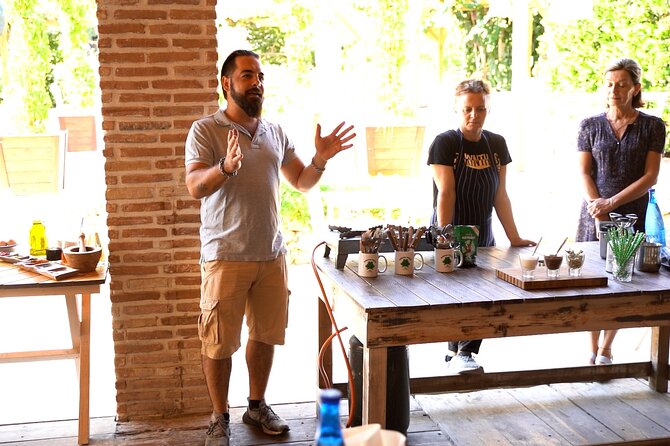
Alex leads much of the teaching, while Mandy and the wider family team help keep the cooking moving. The atmosphere is informal and welcoming. You can expect a blend of demonstrations, hands-on work, tasting breaks, and conversation rather than four straight hours of technical instruction.
More Greek Classes in Greece:
- Greek Cuisine Cooking Class in Santorini with Recipes and Wine
★ 5.0 · 969 reviews - Greek Cooking Class in Athens Including Rooftop Dinner with Acropolis View
★ 5.0 · 826 reviews - Greek Small-Group Athens Cooking Class & Dinner
★ 5.0 · 574 reviews
What happens from 10:30 a.m. onward
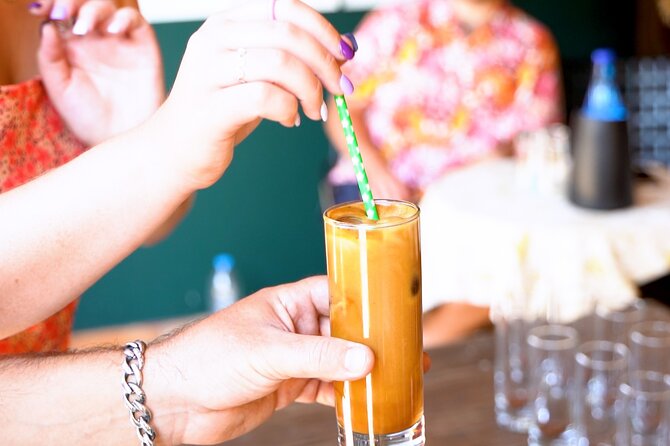
The morning starts in a distinctly Greek fashion on the Friday class, with iced coffee or mountain tea. You make your own drink before introductions and cooking begin. This small opening ritual sets the tone: the point is not to rush through a list of recipes, but to settle into the pace of a long Greek meal.
Alex works stories about Zakynthos and Greek food into the class. You learn how the Mediterranean diet developed and how ingredients fit into everyday cooking. The talks are useful because they explain the reason behind the food, not just the method.
The exact menu depends on the day. Friday is the broadest traditional menu described for the experience. You may prepare stifado, spinach and feta pie, dolmades, a spicy cheese dip, Greek salad, and orange cake. The class also includes tastings of products and wine.
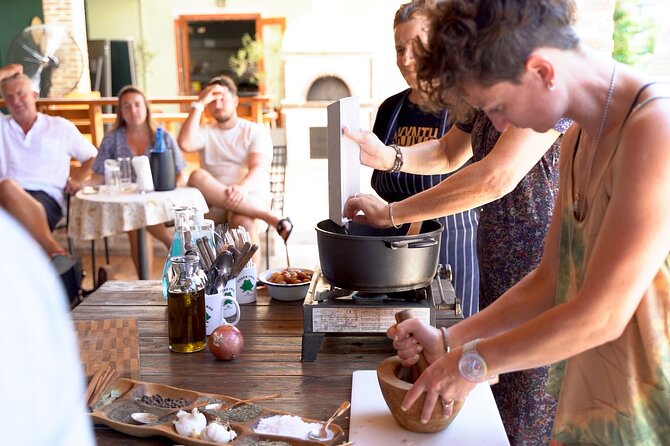
The work is divided between demonstrations and participation. You may see how to handle filo pastry for the spinach pie, prepare fillings, assemble dishes, and combine herbs and spices. The format is suited to people who cook often, but it also works for someone who rarely enters a kitchen. One useful sign is that even reluctant cooks can take part without needing advanced skills.
At the end, you sit down in the shaded garden for lunch. This is not a token tasting. The menu is designed to fill you up, and several dishes are served as a proper shared meal. If there is food left over, you may receive a doggy bag, and the recipes are sent by email so the experience can continue at home.
Friday: stifado, filo pastry, and orange cake
Friday is a good choice if you want a broad look at Greek home cooking. The centerpiece is stifado, a slow-cooked beef and tomato casserole with baby onions, Greek herbs, and spices. It is the sort of dish that rewards patient cooking and works well for a relaxed dinner with friends.
You also prepare spinach and feta pie. This is one of the most useful recipes in the class because it can serve as a snack, picnic food, appetizer, or main course. The filo work adds a practical skill that many home cooks want to learn, though it may require a little care and patience.
Dolmades, a spicy cheese dip, and Greek salad round out the savory dishes. Greek salad may seem familiar, but the class puts it in the context of local ingredients and the wider Mediterranean diet. Tastings of olive oil, cheeses, and olives help you notice how much the quality of basic products affects a simple plate.
Dessert is orange cake, a traditional Zakynthian syrup cake. It is served with ice cream in the suggested menu. The cake is a good final lesson in the Greek preference for syrup-soaked desserts that can be prepared ahead of time.
Tuesday: the Greek classics
Tuesday follows the same general pattern but changes the dishes. The menu includes moussaka, baklava rolls, saganaki, Greek salad, and tzatziki.
Moussaka is the main attraction for many cooks. It is a familiar Greek dish, but preparing it yourself gives you a better feel for the layers and balance than simply ordering it in a restaurant. Baklava rolls provide another chance to work with filo, while saganaki adds a savory cheese dish to the table.
Tzatziki and Greek salad are simpler recipes, but they are valuable because they are easy to recreate at home. You leave with a practical set of dishes rather than one complicated centerpiece. If you want classic Greek flavors that can become part of your regular cooking, Tuesday may be the smartest choice.
More Classes with a Sit-Down Meal in Greece:
- Santorini: Cooking Class with Lunch and Wine Tasting
★ 4.8 · 289 reviews - Traditional Greek cooking class and lunch or dinner with an Acropolis view
★ 5.0 · 250 reviews - Rhodes: Cooking Lesson and Wine Tasting with Lunch
★ 4.9 · 93 reviews - Argassi: Zakynthian Culture & Greek Cooking Class with Lunch
★ 5.0 · 58 reviews
Saturday: vegetarian food from Zakynthos
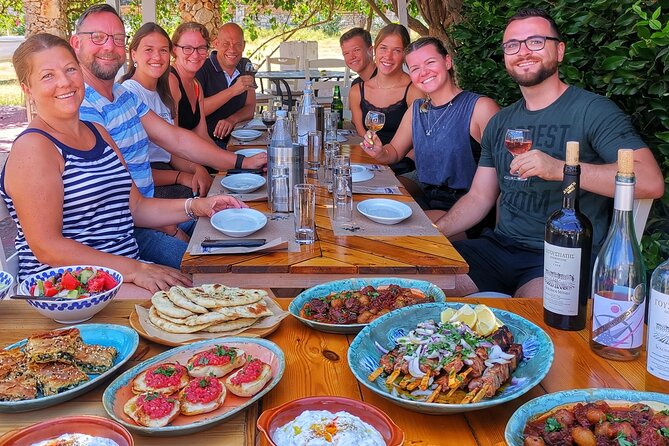
Saturday offers vegetarian Zakynthian comfort food. The menu includes stuffed tomatoes, courgette fritters, spicy baked cheese, and kataifi.
This is more than a meat-free substitute. The dishes show how vegetables, cheese, herbs, pastry, and olive oil can carry a full meal. Stuffed tomatoes and courgette fritters are especially useful for a home kitchen because they can work as lunch, a side dish, or part of a larger spread.
Kataifi gives the class another pastry lesson. If you want a menu that feels different from the standard moussaka and baklava circuit, Saturday is the most distinctive choice. It is also the obvious pick for vegetarians, although the supplied details do not specify every ingredient or accommodation for dietary restrictions, so contact the provider before booking if you have a serious allergy.
Why the food stories matter
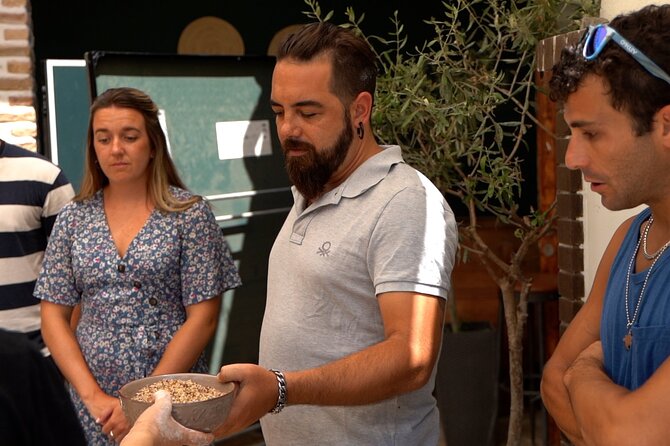
The cooking is only half of the morning. Alex links recipes to the island and to wider Greek culture, explaining how food traditions change over time. This makes the class useful early in your Zakynthos visit, since the discussion can give you more context for dishes you order later.
You also get advice that is practical beyond the class. The team discusses local olive oil and cheeses, and one useful tip is to look for olive oil sold in a tin. You may also leave with suggestions for books and ideas for improving ingredients at home.
The historical material is delivered between cooking tasks, not as a long lecture. That balance keeps the morning moving. You might be mixing a dip, tasting oil, or waiting for a dish while Alex explains an aspect of the island. It gives the class a relaxed rhythm and keeps the information tied to something you can see, smell, or eat.
The social side is another strength. You share the work and meal with people from different countries, which can make the class feel more like a communal table than a formal lesson. If you are visiting Zakynthos alone, this is one of the easier ways to meet people without joining a loud nightlife activity.
Price, group size, and value
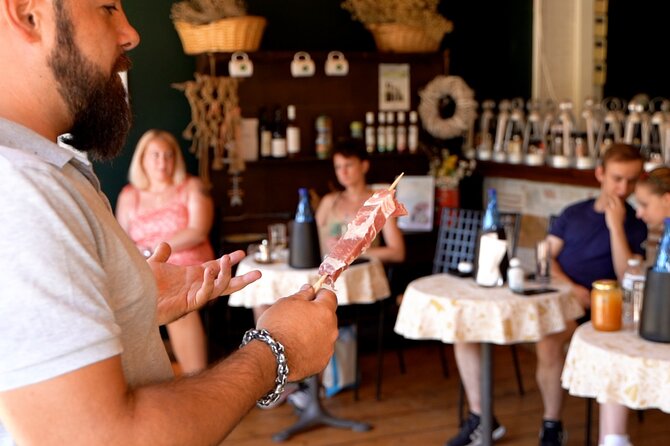
At $108.89 per person, this is not a cheap meal, but it is not priced like a simple restaurant lunch. The four-hour experience includes instruction, several dishes, tastings, drinks, wine, and a full meal. You also receive recipes to use later.
I would judge the value by what you want from the morning. If you only want to eat Greek food, you can spend less at a local restaurant. If you want a personal activity that combines cooking, culture, and lunch, the price is more reasonable.
The maximum group size of 12 helps justify the cost. You are not paying for a seat in a huge demonstration where the chef does everything. You take part in preparing the food and have access to Alex and Mandy for questions.
The class is booked, on average, about 36 days ahead. That suggests you should not leave it until the last day of your holiday, especially since it runs only three days per week. Booking early also lets you choose the menu that best fits your interests.
Practical details that affect your morning
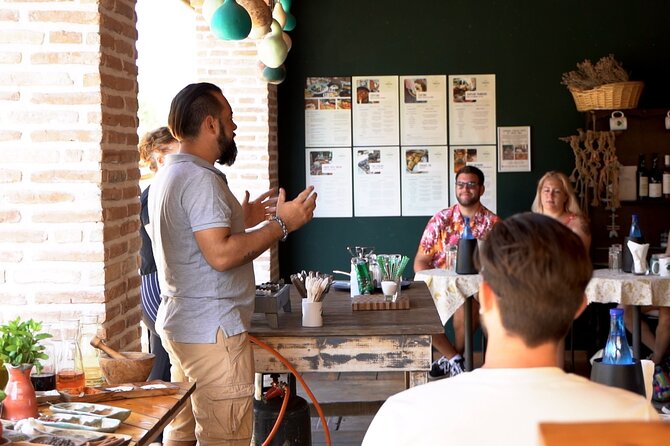
The meeting point is Green Frog, Main Road, Argassi, Zakynthos 291 00. The activity ends at the same place. It is near public transportation, and ample parking is available behind the building according to the practical information shared for the experience.
The class lasts about four hours and begins at 10:30 a.m. You should plan for a substantial lunch rather than a quick snack, so avoid scheduling another major meal immediately afterward.
The outdoor garden is shaded, but the experience still requires good weather. If poor weather forces cancellation, you are offered another date or a full refund. The class also requires a minimum number of participants, and the same alternatives apply if that minimum is not reached.
Free cancellation is available until 24 hours before the start time. Within 24 hours, cancellations and changes are not accepted for a refund. Service animals are allowed.
Dietary needs deserve advance attention. One account of the experience describes the team preparing separate portions for an allergy, which shows a willingness to help. Still, you should provide your requirements before arrival rather than assume every menu can be changed on the spot.
Who will enjoy this class most
I would recommend it to food lovers, couples, families, and solo visitors who enjoy learning by doing. It also suits mixed groups where one person cooks often and another does not. The pace combines easy tasks with more involved recipes, so you do not need professional skills.
Families with older children or teenagers can find it especially worthwhile because the class offers a shared activity rather than another passive sightseeing stop. The supplied information includes a family with two adults and two teenagers enjoying the format.
Choose Friday if you want stifado, spinach pie, dolmades, and orange cake. Choose Tuesday for moussaka, baklava rolls, and saganaki. Choose Saturday for vegetarian dishes with a Zakynthian focus.
I would be less likely to recommend it if you dislike group activities, have a tight morning schedule, or want a silent, highly technical chef lesson. The class is social and conversational. You will spend time eating, talking, and listening, not just chopping ingredients.
Should you book The Green Frog cooking class?
Yes, if you want your Zakynthos holiday to include more than beaches and scenic stops. The strongest reasons to book are the small group, the family-led teaching, the island stories, and the fact that you eat a real lunch made during the class.
Book it near the start of your stay if possible. The food advice can shape the rest of your meals, and the class gives you useful context for Greek ingredients and customs. Just check the class day, allow four hours, and confirm any allergy or dietary needs in advance.
At $108.89, it is best viewed as a half-day cultural experience with lunch, not as a cooking demonstration alone. If that combination appeals to you, this is a warm, practical, and very tasty way to spend a morning in Argassi.
FAQ
Where does the cooking class meet?
It meets at Green Frog, Main Road, Argassi, Zakynthos 291 00, Greece. The activity ends back at the same meeting point.
What time does the class begin?
The class starts at 10:30 a.m. and lasts approximately four hours.
Which days is the cooking class offered?
Classes are offered on Tuesday, Friday, and Saturday. Each day has a different food theme.
What dishes are prepared?
The Friday menu includes stifado, spinach and feta pie, dolmades, a spicy cheese dip, Greek salad, and orange cake. Tuesday includes moussaka, baklava rolls, saganaki, Greek salad, and tzatziki. Saturday focuses on vegetarian dishes such as stuffed tomatoes, courgette fritters, spicy baked cheese, and kataifi.
Is lunch included?
Yes. You sit down for a hearty lunch in a shady garden and eat the dishes prepared during the class. Tastings and wine are also included.
What happens if I need to cancel?
You can cancel up to 24 hours before the start time for a full refund. Cancellations or changes made less than 24 hours before the experience are not accepted for a refund.
More Half-Day Outings in Greece
- Naxos: Half-Day Cooking Class at Basiliko Family Tavern
★ 5.0 · 887 reviews - Naxos:Half-day cooking class at Basiliko
★ 5.0 · 457 reviews - Half-Day Thai Cooking Class at Organic Farm in Chiang Mai
★ 5.0 · 19,087 reviews - Bangkok: Tingly Thai Cooking School Half-Day Cooking Class
★ 4.9 · 1,191 reviews
More Lunches Out in Greece
- Oia: Greek Cooking Class and Lunch with a Local Grandmother
★ 4.9 · 208 reviews - Athens Cooking Class and Lunch in our beautiful garden in Greece
★ 5.0 · 130 reviews - Rhodes Wine & Food Tour: 10 Meal Course Lunch, Wine Tasting, Cooking Class
★ 5.0 · 109 reviews - Rhodes: 1952 Farmhouse Cooking & Lunch with Unlimited Wine
★ 4.9 · 99 reviews
Newest classes around Greece
- Authentic and Traditional Cooking Class in Chania Crete★ 5.0 · 5 reviews
- Chania Cooking Class in Crete with rustic, delicious and homely Cretan food!★ 4.5 · 14 reviews
- Private Cooking Class – A Culinary Journey in Argostoli★ 5.0 · 2 reviews
- Greek Cooking Class with Acropolis View★ 5.0 · 76 reviews
- Private Walking Meze Cooking Course★ 5.0 · 6 reviews
- Cook with Katerina: Authentic Greek Home Cooking Class in Athens★ 5.0 · 15 reviews
- Private Greek Cooking Class in Athens-Learn to Cook with Angelina★ 5.0 · 3 reviews
- Hands On Greek Cooking Classes in Athens★ 5.0 · 7 reviews
Greece Cooking Classes, compared.
Classic Cooking Class with Market Visit and Wine
Read our review →
Food Market Visit and Cooking Class with Wine
Read our review →
Greek Cuisine Cooking Class in Santorini with Recipes and Wine
Read our review →
Naxos: Half-Day Cooking Class at Basiliko Family Tavern
Read our review →
Greek Cooking Class in Athens Including Rooftop Dinner with Acropolis View
Read our review →
Greek Small-Group Athens Cooking Class & Dinner
Read our review →
Exclusive Cooking Experience in our Cave Home by Petra Kouzina
Read our review →
Chania: Authentic Cooking Class in the White Mountains
Read our review →Browse the lists this tour appears in