
Review · SIEM REAP COOKING CLASSES
Afternoon Cooking Class & Village Tour in Siem Reap
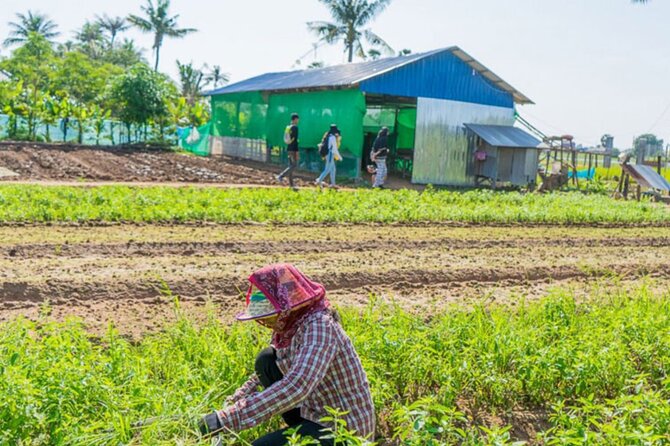
The best part of this four-hour village cooking class is that the meal is only one piece of the experience. You also pass rice paddies and temples, walk through a rural village, visit vegetable and mushroom farms, and see a local rice wine distillation house before cooking with a Cambodian chef.
I like the small group limit of eight, which should make it easier to follow the cooking and ask questions. I also like the honest village setting and the take-home recipe book. The main thing to check is the timing: the details list a 2:00 pm start, while the pickup description says 3:00 pm. Confirm your pickup time before the day of the tour.
Key points
- Three Khmer main dishes and one dessert: You prepare and eat a full Cambodian dinner.
- Village life beyond the kitchen: Visit farms, rice paddies, temples, and a rice wine distillation house.
- A local chef leads the cooking: Learn traditional techniques, sauces, and the use of aromatic herbs.
- Small groups of up to eight: A better setup for hands-on cooking than a large class.
- Hotel pickup and drop-off included: You do not need to arrange your own ride outside Siem Reap.
- Recipe book provided: You can repeat the dishes at home after your trip.
Leaving Siem Reap for the countryside
This experience gets you out of the city without asking you to give up an evening meal. Your driver collects you at your hotel and takes you beyond Siem Reap, through rice paddies and past temples, toward a small local village.
That short ride matters. Siem Reap is the base for Angkor, but the city itself does not show you much of everyday rural Cambodia. Here, the road becomes part of the tour. You get a look at the setting where many of the ingredients and cooking customs have their roots.
The tour description gives two different start times. One section says pickup is at 3:00 pm, while the meeting information lists 2:00 pm. Since this is a pickup-based activity, contact the provider and confirm the exact time, location, and waiting instructions before you go. It is a small practical step, but it avoids losing part of a short afternoon tour.
The four-hour length is sensible. You have enough time for the drive, village visits, cooking, and dinner without turning the outing into an all-day commitment. It also fits neatly after a morning visit to Angkor, though the timing of your earlier plans should leave you plenty of room to return to your hotel.
More Farm Cooking Classes in Cambodia
- Cambodian Village Cooking Class
★ 5.0 · 265 reviews - Siem Reap Guided Day Trip to Local Village and Cooking Class
★ 5.0 · 7 reviews - Full Day Siem Reap Farm Tour with Cooking Class and Monk Blessing
★ 5.0 · 6 reviews
Seeing farms and village life before cooking
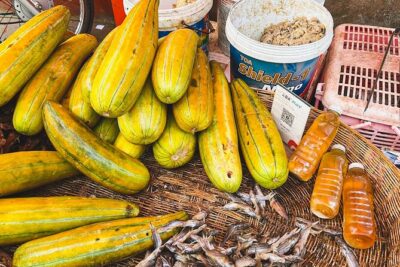
The village tour comes before the meal, giving you a useful introduction to the food you will later prepare. You visit vegetable and mushroom farms, where the focus is on local produce rather than a polished tourist display.
The available details do not name the farms or specify how long you spend at each one. You might find that the visits are brief, but they still give the cooking class more context. Instead of treating Cambodian food as a list of unfamiliar dishes, you see some of the rural setting connected to those ingredients.
You also visit a local rice wine distillation house. This is one of the more unusual stops. Rice is central to Cambodian food and daily life, and rice wine production offers a look at another use for the country’s staple crop. The stop is not described as a tasting session, so do not book this expecting a full drinks tour. Its value is in seeing a local production site as part of the village route.
The route includes local landmarks and temples, though no specific temple names are provided. That means you should think of this as a broad village outing, not a dedicated temple tour. If your main goal is detailed archaeological information, spend your time elsewhere. If you want a change from major monuments and city streets, this is a pleasant counterpoint.
The village portion also helps set expectations. This is a local cooking class held in a countryside kitchen, not a restaurant lesson designed for a large audience. You are visiting working homes and small rural businesses, so the setting may feel simple. That is part of the appeal, but it also means you should not expect a polished culinary school.
Learning Khmer cooking with a local chef
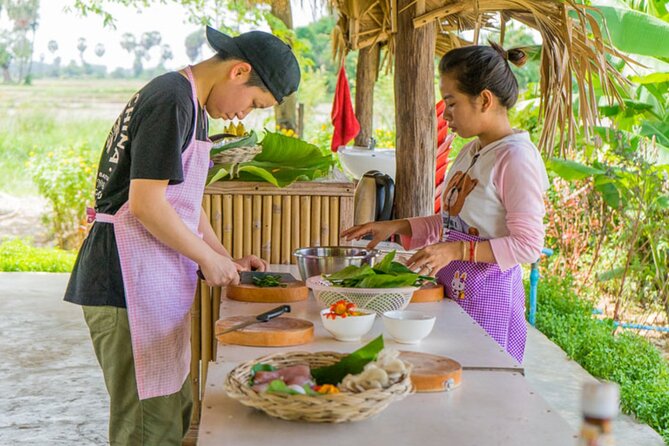
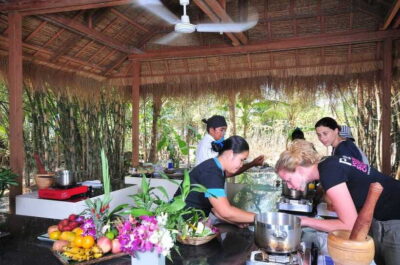
After the village visits, you work with a local chef in a countryside kitchen. The chef helps you taste aromatic herbs and sauces, then shows you traditional techniques used in Khmer cooking.
The exact dishes are not named in the available information. You are promised three main Khmer dishes and one dessert, but the menu may vary. If you have allergies, dietary restrictions, or foods you cannot eat, ask about them before booking or as soon as the provider confirms your place. The information does not promise vegetarian, vegan, gluten-free, or other specialty menus.
The tasting stage should be especially useful. Cambodian cooking often depends on balancing herbs, sauces, and seasoning rather than relying on one dominant flavor. Tasting as you go gives you a better sense of how the dishes are built. You are not simply copying steps from a printed card. You are learning what the food should taste like at different points in the process.
The group size is capped at eight people. That is small enough to make hands-on work realistic, though the amount of individual attention can still depend on the size of the kitchen and the number of participants that day. A private chef and local guide are included in the experience, but their names are not provided. If having a named instructor matters to you, ask the provider for those details before booking.
One strong feature is the chance to prepare a complete meal. Three main dishes and a dessert make this more useful than a class focused on one recipe. You get a broader sense of Khmer food and leave with several ideas rather than a single dish.
Eating the dinner you prepared
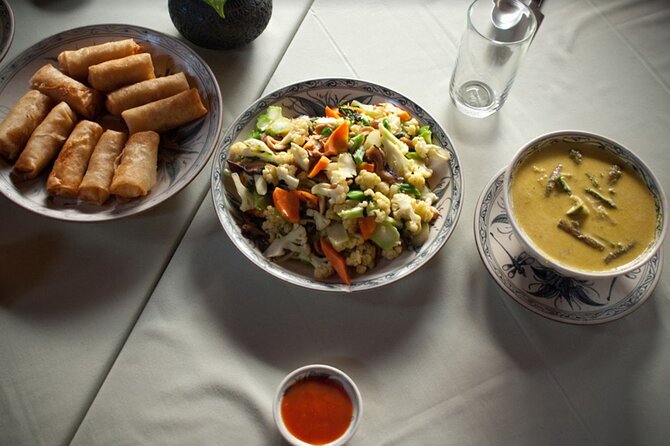
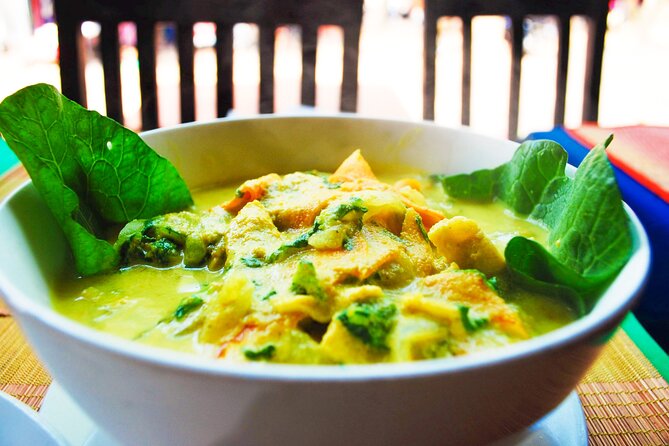
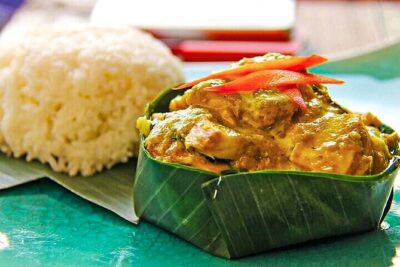
Once the cooking is finished, you sit down to eat your homemade dinner. This is not just a demonstration followed by a quick sample. The included food is three main courses and one Khmer dessert, so the meal forms the natural finish to the afternoon.
I like this format because it connects the work to the result. You taste the herbs and sauces, handle the preparation, and then see how the finished dishes come together on the table. Even if your technique is not perfect, the meal gives you a clear reason to pay attention during the class.
The experience does not list drinks, extra snacks, or a market visit as included items. The safest assumption is that the included food is the cooking menu itself. Ask the provider if you need to know about beverages or other dietary arrangements.
The family setting is another part of the appeal. A five-star rating and full recommendation record accompany the tour, with one especially positive account describing a friendly family, good food, and a satisfying experience for someone taking the class alone. That is useful if you are traveling by yourself. The group format does not require you to arrive with companions, and the local household setting may make the class feel more personal than a standard restaurant lesson.
Still, the family element can mean the pace is less formal. Instructions may be practical and hands-on rather than presented like a professional cooking demonstration. For most people, that is a plus. If you want a highly technical class with exact measurements and restaurant-level plating, this may not be the right fit.
More Farm Cooking Classes in Siem Reap
- Siem Reap: Afternoon Cooking Class & Village Tour
★ 5.0 · 5 reviews - Siem Reap: Guided Day Trip to Local Village & Cooking Class
★ 5.0 · 3 reviews
What the $35 price really covers
At $35, this is a good-value half-day outing if you use the included parts. The price covers hotel pickup and drop-off, a local guide, a local chef, the village visits, a donation to the village, three main courses, one dessert, and the recipe book.
Transport is a meaningful part of the value. The class takes place outside Siem Reap, and arranging a separate car for the countryside would add cost and effort. With pickup and return included, you can focus on the activity rather than negotiating a ride or finding the kitchen yourself.
The meal also matters. You are not paying $35 for a short demonstration and a small taste. The package includes a full dinner, although the exact menu is not stated. The recipe book adds value after the tour, especially if you enjoy cooking at home and want a practical reminder of what you learned.
A village donation is included as well. The available information does not explain the amount or how it is distributed, so I would not treat it as a major reason to book. It is simply a positive part of the package, along with the chance to spend money with a local guide, chef, and family setting.
You should compare this with the cost of a basic restaurant dinner, a private car, and a separate village outing. When you combine those pieces, $35 looks reasonable. The value is strongest for people who want food, transport, and local contact in one compact afternoon.
Who will enjoy this most
This class suits you if you want to understand Cambodian food through people and places, not only through a restaurant menu. It is a good choice for solo visitors, couples, families, and small groups who enjoy trying something practical.
You do not need advanced cooking skills. The chef provides assistance, and the focus is on traditional Khmer dishes rather than professional training. Most people can participate, according to the activity details, and the group limit keeps the class from becoming too crowded.
It also works well for someone who has already seen the major Angkor sites and wants a different side of Siem Reap. The countryside route, farms, rice wine house, and village kitchen offer a change of pace from temples.
You might choose a different activity if you want a named menu in advance, a long market visit, a luxury kitchen, or detailed information about specific temples. None of those features is promised here. You should also think twice if you dislike rural settings or prefer a tightly scheduled class with exact start times, since the timing needs confirmation and the village visits may follow a relaxed local rhythm.
Timing, group size, and useful planning tips
Plan for about four hours from pickup to hotel return. The tour is listed as an afternoon activity, with the pickup description saying 3:00 pm and the start-time field saying 2:00 pm. Confirm the correct time directly with Village Cooking Class before the day of departure.
The maximum group size is eight. That is a useful limit, especially when several people need space around a cooking station. A smaller group can also make it easier to hear the chef and take part in preparation.
Hotel pickup and drop-off are offered, but the details do not list a separate meeting point beyond your hotel arrangement. Give the provider your hotel information when booking and confirm where the driver will meet you.
A mobile ticket is available, so you can keep the booking details on your phone. Confirmation is issued at booking. The activity requires good weather, and it also requires a minimum number of people. If poor weather or low numbers force cancellation, you are offered another date or experience, or a full refund.
Free cancellation is available up to 24 hours before the start time. Within 24 hours, you cannot receive a refund, and changes are not accepted. Since the exact start time may need clarification, sort out the timing early and avoid making last-minute changes.
What to bring and what to expect
Wear clothes that are comfortable for cooking and village visits. The provided information does not specify a dress code, footwear rules, or equipment, so ask the provider if you have concerns about what is supplied in the kitchen.
Bring your phone for the mobile ticket and a little patience for the transport and village portions. The tour is built around local settings, not a fast series of major attractions. The countryside road, farm stops, and family kitchen are part of the experience.
You may also want to note the dishes as you work, even though a recipe book is provided. The book gives you a useful reference, while your own notes can capture small details about herb quantities, sauce balance, or cooking order.
Food allergies should be discussed before the tour. The menu is described only as three Khmer main courses and one dessert, with no promise of adaptations. Clear communication gives the chef the best chance to help.
Should you book the Siem Reap village cooking class?
I would book this for an affordable, small-group afternoon that combines a countryside outing with a proper meal. The strongest reasons are the local kitchen, the farm and rice wine stops, the full cooking menu, and the included transport. The recipe book is a practical extra, not just a souvenir.
The main cautions are simple: confirm whether pickup is at 2:00 pm or 3:00 pm, ask about the menu if you have dietary needs, and keep your expectations rural rather than polished. If you want a personal look at village life and a chance to cook Khmer food with local help, $35 is a fair price. If you want a formal culinary lesson or a detailed temple tour, choose another activity.
FAQ
How long does the cooking class and village tour last?
The experience lasts approximately four hours, including the village visits, cooking class, dinner, and hotel return.
What time does the tour start?
The information lists a 2:00 pm start, while the pickup description says the driver collects you at 3:00 pm. Confirm the exact pickup time with the provider before the tour.
Is hotel pickup and drop-off included?
Yes. Hotel pickup and drop-off are included in the price.
How many people can join the activity?
The group has a maximum of eight participants.
What food is included?
You prepare and eat three main Khmer dishes and one Khmer dessert.
Will a chef lead the cooking class?
Yes. A local chef assists with the cooking and teaches traditional Khmer techniques, herbs, and sauces.
What village sights are included?
The route includes rice paddies, temples, a local village, vegetable and mushroom farms, and a rice wine distillation house.
Do you receive recipes after the class?
Yes. A recipe book is provided at the end of the cooking course.
Can you cancel for a full refund?
Yes, if you cancel at least 24 hours before the experience start time. Cancellations or changes made within 24 hours are not refunded or accepted.
Newest classes around Siem Reap
- Siem Reap: Morning Cooking Class & Market Tour★ 5.0 · 7 reviews
- Siem Reap: Khmer Cooking Class at a Local’s Home★ 5.0 · 2 reviews
- Siem Reap: Guided Day Trip to Local Village & Cooking Class★ 5.0 · 3 reviews
- Siem Reap: Half-Day Cambodian Cooking Class★ 4.9 · 6 reviews
- Siem Reap: Cambodian Desserts Cooking Lesson with Tastings★ 4.8 · 9 reviews
- Cambodian Cooking Class★ 4.9 · 25 reviews
- Siem Reap: Afternoon Cooking Class & Village Tour★ 5.0 · 5 reviews
- Full Day Siem Reap Farm Tour with Cooking Class and Monk Blessing★ 5.0 · 6 reviews
Siem Reap Cooking Classes, compared.
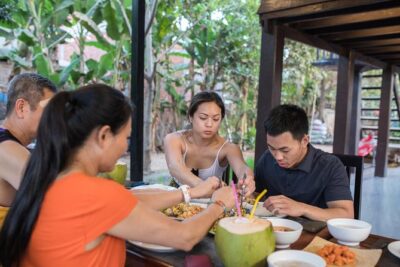
Khmer Cooking Class at a Local’s Home in Krong Siem Reap
Read our review →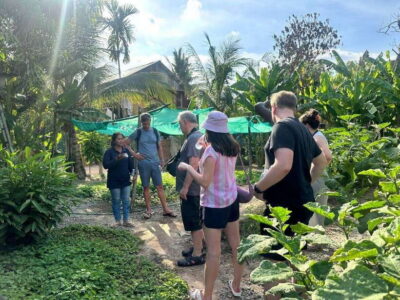
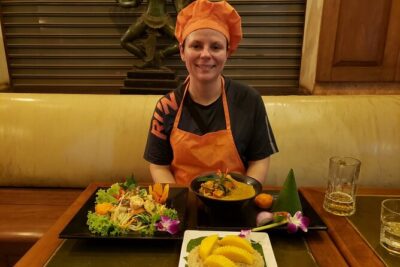
Award-Winning Cooking Class Experience with Professional Teacher
Read our review →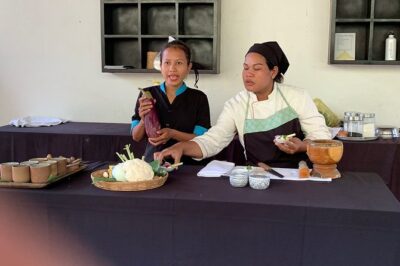
3-Hour Siem Reap Guided Cooking Class and Market with Pick up
Read our review →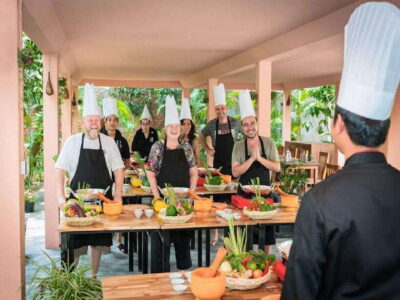
Browse the lists this tour appears in