
Review · PARIS COOKING CLASSES
Paris Cooking Class: Learn How to Make Macarons
Macarons look simple, but they are fussy little pastries. This hands-on Paris class takes you through the real work: whipping meringue, piping even shells, baking them properly, and filling them with buttercream. You do not just watch a chef work. You make the macarons yourself.
I like the small-group format and the generous takeaway box. You also get a friendly drink to start, tea or coffee at the end, and practical Paris food advice from chefs such as Stéphane, Luc, Paulo, Fanny, and Florence. The main thing to consider is the price, $156 per person, and the fact that macarons are naturally very sweet. Your box also needs careful handling on the way home.
Key things to know before booking
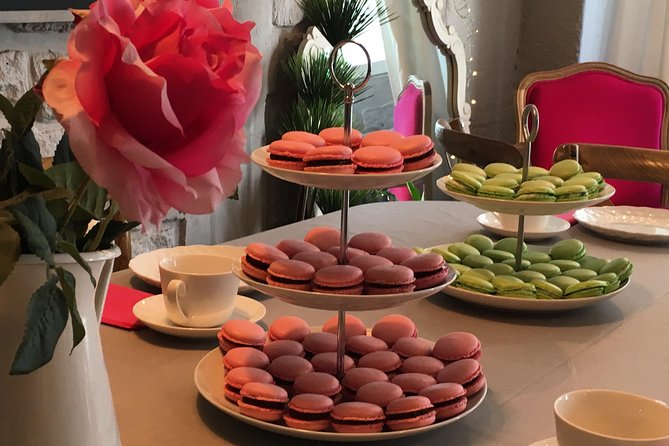
- You make the macarons from scratch: Learn the meringue shells, colors, piping, baking, and buttercream filling.
- The advertised group size is tiny: The class is listed for a maximum of four people, though some past sessions have been larger.
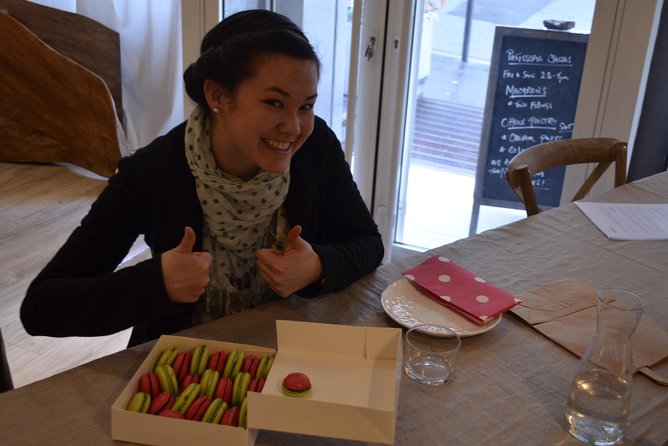
- You take home plenty: Expect a box of about 20 to 30 macarons, depending on the class format and production.
- The class is taught in English: Instructors include Stéphane, Luc, Paulo, Fanny, and other Le Foodist chefs.
- It is more than a recipe lesson: The chef also explains the macaron’s place in French pastry culture and may offer Paris food suggestions.
- Plan for an afternoon activity: The class starts at 3:00 p.m. at Le Foodist, 59 Rue du Cardinal Lemoine.
Making macarons in the Latin Quarter
The class takes place at Le Foodist, a cooking school at 59 Rue du Cardinal Lemoine in the Latin Quarter. The location is near public transportation, so it fits easily into an afternoon around the Left Bank. You meet at the school at 3:00 p.m., and the activity ends at the same address about three hours later.
The setting matters here. This is not a quick demonstration in a crowded shop. You work in a proper cookery-school environment, with the equipment and attire supplied. That lets you focus on the pastry instead of worrying about what tools you need.
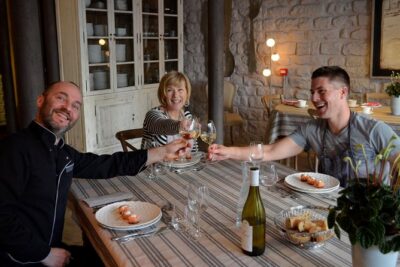
You begin with a welcome drink and meet the chef and the other participants. That first few minutes helps set the tone. Macaron making requires teamwork and patience, and a relaxed introduction makes it easier to ask questions when your meringue looks too loose or your piping seems uneven.
The course is offered in English. Chefs named in class accounts include Stéphane, Luc, Paulo, Fanny, Florence, and Ann. The exact instructor depends on the date, but the teaching style is built around individual help rather than a long lecture.
More Cooking Classes in Paris:
- Paris Cooking Class and Lunch with Wine plus Market Visit Option
★ 5.0 · 1,024 reviews - Paris Croissant Small-Group Baking Class with a Chef
★ 5.0 · 910 reviews - Paris: French Croissant Baking Class with a Chef
★ 4.9 · 712 reviews
Why the small class size matters
The class is advertised for no more than four people. That is a major advantage for a pastry lesson, since the tricky parts happen in your own mixing bowl and piping bag. A chef can watch your technique, correct a mistake early, and explain why the mistake happened.
Some past class descriptions refer to groups of six or eight, with participants paired up. That suggests the format may vary by session or booking channel, so check the current group size if personal attention is your main reason for booking. Even in a paired format, you are still involved in the process rather than sitting at the back of a demonstration.
I especially like the way this kind of class turns a difficult pastry into a shared project. You can come alone and still work alongside other people, or book with a daughter, a parent, a partner, or older children. The minimum age is 12, and children cannot attend without an adult.
The small-group setup also makes the class social without becoming a forced group event. While ingredients mix or shells bake, the chef can talk about French food, pastry work, and places to eat in Paris. Stéphane, in particular, is known for offering suggestions for restaurants and culinary shops, and he has even helped participants with restaurant reservations.
The first challenge: meringue shells
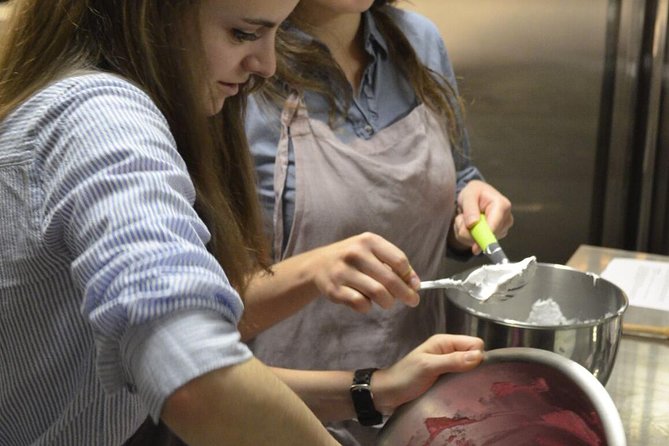
The central lesson is the macaron shell. You learn how to make the meringue from the beginning, then choose colors for the shells. This is where the class earns its keep. Macarons depend on texture and timing, and a few small errors can affect the final shape.
The chef explains the steps as you work. You are shown how to handle the mixture, prepare it for piping, and form shells of a consistent size. Perfect circles are not guaranteed, especially on a first attempt, but the process teaches you what to watch for at home.
The class is useful because it exposes the parts of macaron making that recipes often gloss over. A printed recipe can tell you what ingredients to use, but it cannot always show you the right texture. Watching a chef demonstrate the mixture, then trying it yourself, gives you a much clearer guide.
You also learn that attractive macarons need more than a good flavor. Their shells should be neat, and the filling should be controlled. The chef helps you work toward that balance without making the class feel like a pastry exam.
Piping, buttercream, and the moments that matter
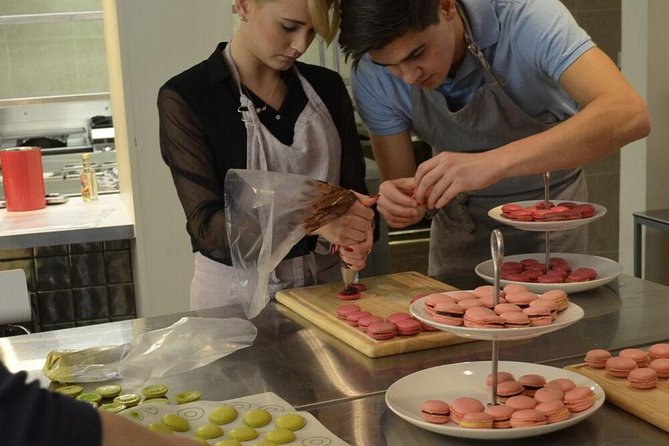
Once the shells are prepared, you work on the buttercream filling. Piping is another skill that looks easy until you try to make every portion the same size. The filling needs to sit neatly between the shells, without spilling out or overwhelming the pastry.
This is a good point to pay attention to your hands. You will get better results by following the chef’s pace instead of rushing. A little patience while piping can make the finished box look much more polished.
The instructors are praised for being patient with different skill levels. Luc, for example, has been particularly effective with teenage participants, while Paulo is known for calmly helping the whole group reach a successful result. Fanny brings humor to the lesson, and Stéphane combines detailed instruction with stories from his pastry career.
Those personal touches are valuable because the class is not only about producing a pretty dessert. You are learning a technique that can be difficult to judge alone. When a chef explains why a shell has cracked or why a filling is uneven, you leave with information you can use in your own kitchen.
Same region, a different dish to learn:
- Paris: French Macaron Culinary Class with a Chef
★ 4.9 · 591 reviews - Paris Evening Cooking Class French Dinner and Market Visit Option
★ 5.0 · 430 reviews - Paris French Cuisine Small Group Cooking Class with Lunch
★ 4.5 · 418 reviews - Paris Macarons Small-Group Baking Class with a Chef
★ 5.0 · 316 reviews
Tea, coffee, and a taste of French pastry culture
After the baking and assembly, you sit down with tea or coffee and taste the finished macarons. This closing session gives you time to compare flavors, admire the results, and enjoy the pastries before packing them up.
The class also places macarons in a French cultural context. You hear about their role in French pastry traditions, which adds meaning to what might otherwise be just a pleasant baking activity. You are not simply copying a recipe. You are learning why this small, colorful pastry has become such a recognizable part of French food culture.
The tasting is also a useful reality check. Macarons are sweet by design, and you may find them richer than expected if you usually prefer less sugary desserts. The tea or coffee helps balance the sweetness, but this is still a dessert-focused experience from beginning to end.
You receive recipes and practical tips in addition to the food itself. That gives the class value after your Paris visit, especially if you want to try the process at home. One participant described leaving with techniques intended to make macarons more reliable, which is exactly the kind of advice a demonstration alone cannot provide.
The box of macarons to take home
The included takeaway is a box of roughly 20 to 30 macarons. That is a generous amount for a three-hour class, particularly when you consider that you also eat some during the tasting.
The box can be shared with family or friends, though you will need to protect it. One important practical tip is to keep it in your carry-on rather than checked luggage. A past participant found the packaging too fragile for rough airport handling. If you are flying home, treat the macarons as delicate food, not as a sturdy souvenir.
You should also consider timing. Since the class starts at 3:00 p.m. and runs about three hours, you will leave around early evening with a box of pastries. That works well before dinner, but it may not suit a tightly planned afternoon museum visit or an evening reservation far across Paris.
The class ends where it begins, so there is no additional transfer to organize. Afterward, you can continue in the Latin Quarter or head elsewhere by public transportation.
Is $156 a fair price?
At $156 per person, this is not a budget pastry stop. You are paying for a three-hour lesson, an English-speaking chef, use of equipment and attire, a welcome drink, tea or coffee, recipes, hands-on instruction, and a substantial box of macarons.
The value depends on what you want from Paris. If you only want to taste macarons, buying a few from a respected pastry shop costs much less. If you want to learn a skill, spend an afternoon in a cooking school, and take part in the process, the price makes more sense.
I see the strongest value in the personal instruction. Macarons are easy to underestimate, and a failed batch can waste both time and ingredients. A chef who can guide your mixing and piping may save you several attempts at home.
The class also offers something a pastry shop cannot: a social afternoon and a story attached to the food. You make the pastries, taste them with the group, and leave with the method as well as the result. For a special Paris trip, that can justify the cost.
The advanced macarons option costs more, but it is intended for people who want to explore additional macaron subtleties. Choose it only if you are especially interested in pastry technique. Beginners should find the standard class sufficient.
Who will enjoy this class most?
This experience suits pastry fans, home bakers, and visitors who prefer doing something rather than simply seeing another monument. It is also a strong choice for a parent and teenage child, an adult daughter and mother, or anyone looking for a shared activity with a clear result.
You do not need professional baking experience. The instruction is designed for different skill levels, and the chef provides help as you work.
It is also a good option if you are traveling alone. The class format gives you an easy way to meet other people, and the work naturally creates conversation.
According to the supplied information, the class is suitable for people with gluten allergies. If your allergy is severe or requires strict kitchen controls, confirm the arrangements with Le Foodist before booking. The provided details do not explain the exact measures used.
This is less suitable for very young children, anyone who dislikes sweet desserts, or visitors who want a completely passive food tour. You will spend much of the three hours standing, mixing, piping, and paying attention to instructions.
Booking details and cancellation terms
Confirmation is provided at booking, and the activity is available with a mobile ticket. It is often booked well ahead, with an average booking lead time of about 57 days, so do not wait until the last moment if your Paris dates are fixed.
The listed cancellation policy allows a full refund when you cancel at least six full days before the start time. Cancelling two to six full days ahead brings a 50 percent refund. Less than two full days before the class is nonrefundable, and late changes are not accepted.
The class also requires a minimum number of participants. If Le Foodist cancels because that minimum is not reached, you are offered another date or experience, or a full refund.
Should you book the Le Foodist macaron class?
Book it if you want a hands-on Paris memory rather than another sightseeing stop. The class gives you real pastry instruction, a generous box to take home, and enough time to taste the results over tea or coffee.
I would book it especially for a parent and older child, a couple, a solo visitor who enjoys food, or anyone who has always wanted to understand how macarons are made. The small format and attentive chefs are the biggest strengths.
Skip it if $156 feels too high for a dessert lesson, if you have little interest in baking, or if your schedule cannot spare a full afternoon. Also plan your return trip carefully, since the macarons are delicate and should not be placed in checked luggage.
For the right person, this is a thoughtful way to spend three hours in Paris. You leave with new skills, a recipe, a box of sweets, and a better sense of why these tiny pastries require so much care.
FAQ
Where does the Paris macaron class take place?
The class takes place at Le Foodist, 59 Rue du Cardinal Lemoine, 75005 Paris, France.
What time does the class begin?
The class starts at 3:00 p.m.
How long does the macaron class last?
The activity lasts approximately three hours.
Is the class taught in English?
Yes. The experience is offered in English.
How many people can attend?
The activity is listed with a maximum of four participants. Some past class formats have used larger groups, so confirm the group size for your selected date if this is important to you.
What is included in the price?
The price includes a welcome drink, use of required equipment and attire, tea or coffee, the macaron class, and a box of approximately 20 to 30 macarons to take home. The advanced class is included only when that option is selected.
What is the minimum age?
Participants must be at least 12 years old. Children cannot attend without an accompanying adult.
Can I cancel for a refund?
You can receive a full refund when cancelling at least six full days before the experience. Cancelling two to six full days before the start time qualifies for a 50 percent refund. Cancellations less than two full days before the class are nonrefundable.
Newest classes around Paris
- Paris: Millefeuille baking class with a chef★ 5.0 · 5 reviews
- Paris: Traditional Croissant Cooking Class With Local Baker★ 5.0 · 2 reviews
- Paris: The Soufflé Baking Class with Chef★ 4.5 · 2 reviews
- Paris: Lemon Tart Baking Class with a Pastry Chef★ 5.0 · 4 reviews
- Paris: Macaron Baking Class★ 4.4 · 26 reviews
- Paris: Hands-On Small Group Cooking Class★ 4.9 · 19 reviews
- Paris: Evening Cooking Class with Optional Market Visit★ 4.8 · 19 reviews
- Eclair Baking Class with A Pastry Chef★ 5.0 · 3 reviews
Paris Cooking Classes, compared.
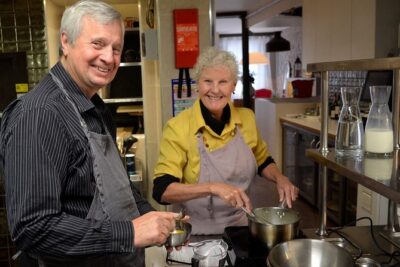
Paris Cooking Class and Lunch with Wine plus Market Visit Option
Read our review →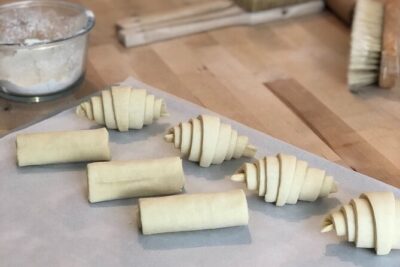
Paris Croissant Small-Group Baking Class with a Chef
Read our review →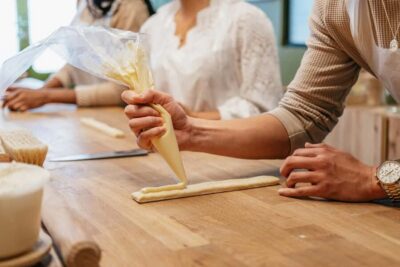
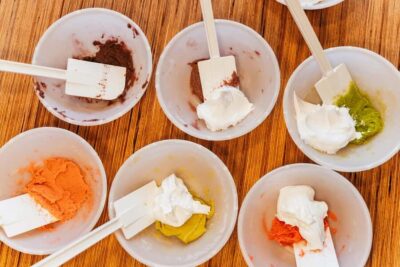
Paris Evening Cooking Class French Dinner and Market Visit Option
Read our review →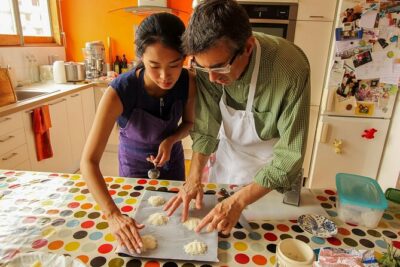
Paris French Cuisine Small Group Cooking Class with Lunch
Read our review →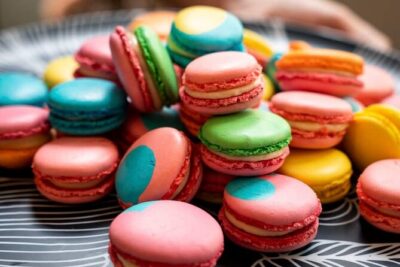
Paris Macarons Small-Group Baking Class with a Chef
Read our review →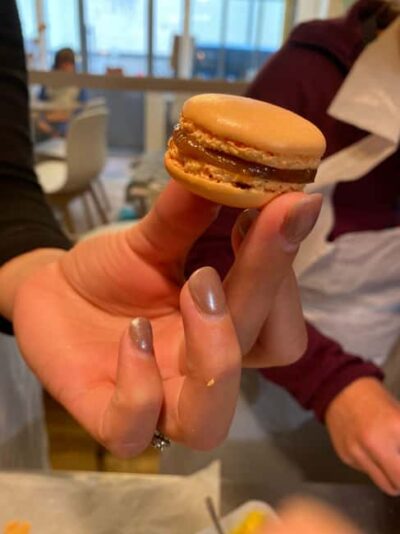
Browse the lists this tour appears in