
Review · MARRAKECH COOKING CLASSES
Moroccan Cooking Workshop in Marrakech
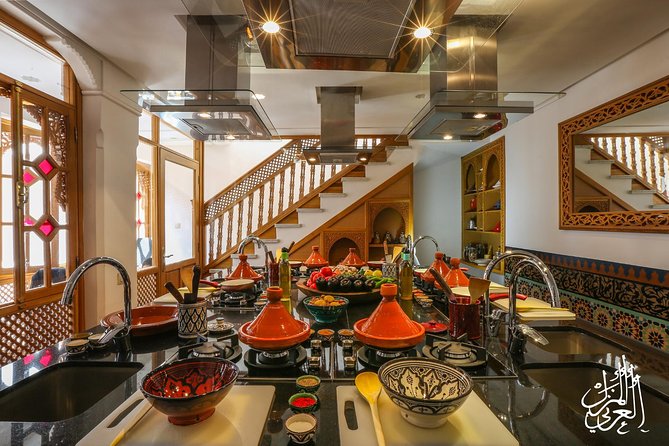
Moroccan cooking is built for the home kitchen, and this class lets you see why. At La Maison Arabe, you prepare a traditional dish with fresh local ingredients, learn the role of Moroccan spices, and then sit down to eat what you made. The tea ceremony and bread demonstration add useful cultural context before the cooking begins.
I like the individual workstations, which give you room to follow along without fighting for space. I also like the mix of hands-on work and food culture, from ceremonial mint tea to the way a tagine is prepared. The main drawback is time: the one-hour version is efficient, but it cannot offer the same leisurely pace as the longer class options.
Key points
- Personal cooking stations: You work at your own station rather than simply watching a chef.
- Tea and bread come first: The session includes a Moroccan tea ceremony and a demonstration of traditional bread making.
- Tagine is a likely highlight: Several sessions focus on tagine, with garlic, spices, and other ingredients adjusted to your taste.
- Several instructors are named: Mohammad, Hasina, Hasna, Wafa, Fatiha, and Dada Habiba have all been praised for patient instruction and warm hosting.
- The meal is part of the lesson: You taste the food you prepare, with Moroccan wine available as an option.
- Compact but popular: The class costs $34.76 per person, is often booked about 21 days ahead, and has earned a perfect rating from 407 reviews.
A Moroccan kitchen inside La Maison Arabe
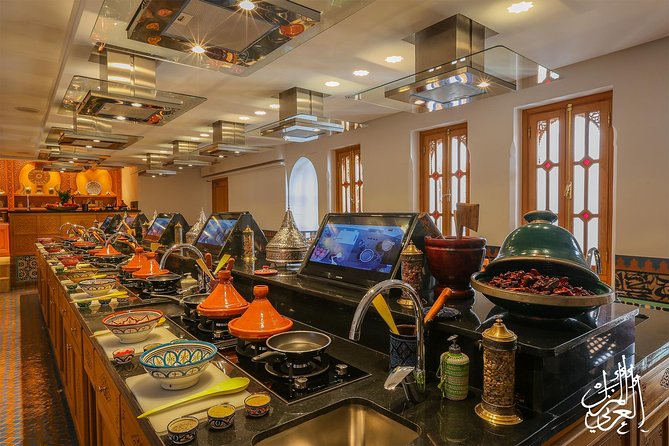
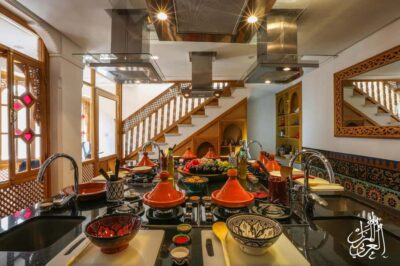
The setting is Hotel La Maison Arabe at 1 Derb Assehbi in Marrakech. That matters because this is not a casual market stall demonstration or a quick sampling stop. You are entering a polished hotel cooking school with proper workstations and a structured class.
The atmosphere sounds friendly but professional. One participant advised arriving early to enjoy coffee, tea, or a cold drink at the hotel, which is a useful tip if you have time before the start. You do not need to arrange transport as part of the booking, but you do need to make your own way to the hotel. The activity ends where it begins.
The class may use a French and English interpreter, or another multilingual guide. Hasina, also spelled Hasna in one account, has helped with interpretation and cultural explanation. Mohammad has led sessions focused on spices and tagine, while Wafa and Fatiha have taught other classes alongside the Dada, the traditional Moroccan cook.
The setting is especially useful for solo participants and couples. You are not lost in a large lecture. The booking information says the maximum is two people, though one account describes a class of 14. Because those details do not match, I would confirm the expected group size before booking if privacy is important to you.
More Moroccan Classes in Marrakech:
- Marrakech: Moroccan Cooking Class with Pickup
★ 4.6 · 1,862 reviews - Marrakech: Traditional Moroccan Cooking Class & Market Visit
★ 4.8 · 1,861 reviews - Marrakesh: Moroccan Dishes Cooking Class with a Local Chef
★ 5.0 · 1,615 reviews
Mint tea sets the tone
The class begins with a welcome and an introduction in French, English, or another available language. Then comes Moroccan tea.
This is more than a drink placed on the table. The tea ceremony is presented as part of Moroccan custom, and the class explains how to make mint tea properly and ceremonially. That opening gives you a little cultural grounding before you start chopping and stirring.
You also receive afternoon tea as part of the experience. Drinks beyond the included tea are not covered, and Moroccan wine is listed as an optional addition during the tasting. If you want wine with the meal, ask about the extra cost or availability before the class begins.
I like this opening because it slows the experience down. A cooking lesson can easily become a race through ingredients and instructions. Starting with tea makes the class feel connected to Moroccan daily life rather than just a recipe exercise.
The bread demonstration shows the everyday side of cooking
After the tea, you watch a demonstration of Moroccan bread making. The supplied details do not specify the exact bread, so you should think of this as a traditional technique demonstration rather than a guaranteed baking project at your own station.
That distinction matters in the one-hour class. You may see how the dough is handled and shaped without having enough time to make a full loaf yourself. The demonstration still adds value because bread is a basic part of Moroccan meals, and it helps explain how food is served beyond the main tagine or salad.
The lesson then shifts from watching to doing. You move to your personal workstation and begin the main cooking task under the Dada’s direction. In Moroccan kitchens, the Dada is traditionally the cook responsible for preparing the food, and here she is the practical center of the class.
Your own workstation keeps the class hands-on
The strongest feature of this workshop is that you do not simply watch someone else cook. You prepare food yourself with fresh local ingredients and receive help as you work through each step.
The individual station is a good design choice. It gives you privacy, makes the class suitable for a solo booking, and lets you control the food more closely. One participant specifically enjoyed being able to add plenty of garlic. That small detail captures the value of the format: you are not just copying a finished plate. You can adjust the result to your taste within the recipe.
The instructors circulate and help when a step causes trouble. That is important in a short class, where a small mistake with seasoning or preparation can eat up your time. The teaching has been described as patient, kind, and professional, with staff willing to explain rather than simply take over.
Names may vary by session, but past classes have included Mohammad, Hasina or Hasna, Wafa, Fatiha, and Dada Habiba. Mohammad has been praised for explaining Moroccan spices. Hasina has helped with interpretation and cultural background. Wafa and Fatiha have been singled out for their warmth in the kitchen, while Dada Habiba has been described as supportive during the cooking.
More Cooking Classes in Marrakech:
- Moroccan Cooking Class & Marrakech Market Visit with Chef Khmisa
★ 5.0 · 1,504 reviews - Half-Day Cooking Class with Local Chef Laila in Marrakech
★ 5.0 · 952 reviews - Marrakech: Moroccan Cooking Class with a Local Family
★ 4.9 · 668 reviews - Marrakech: Moroccan Cuisine Cooking Class in Local Home
★ 4.8 · 508 reviews
Tagine is the practical star of the lesson
Tagine appears to be the dish most closely associated with the short workshop. Several people specifically described cooking chicken tagine, and others praised the finished tagine as the best part of the experience.
The value of making tagine in Marrakech is not just the meal itself. You learn how the ingredients fit together and how Moroccan seasoning creates depth without making every dish taste hot. The class also gives you a recipe you can try at home, and one participant bought the recipe book to continue cooking after returning home.
You should not expect a long chef-school course in the one-hour format. The goal is a clear introduction, not advanced culinary training. You will likely learn the basic method, see how the spices are used, prepare the dish at your station, and then taste the result.
That is enough for many people. If you have only a short stay in Marrakech, the hour gives you a useful local activity without taking over half a day. If you already cook often or want more time to prepare several dishes, choose a longer option if it is available for your date.
What may appear on the plate
The exact menu can vary, so do not book this expecting a fixed list of dishes unless the provider confirms it. The experience description centers on traditional Moroccan food, and the accounts describe tagine, a starter, a side dish, and a dessert prepared by the kitchen in at least one longer session.
The one-hour class may include fewer cooking tasks than the three-hour version. One short class account describes learning about spices, preparing tagine, and making mint tea. Another describes a starter, main course, side dish, and dessert, but that sounds like the longer format rather than a promise for every booking.
You do get a tasting of the food prepared during the class. Lunch is included in the listed inclusions, although the exact timing and menu are not stated. The sensible approach is to view the meal as the final stage of the workshop, not as a separate restaurant lunch with a broad menu.
This tasting is a real strength. Food generally makes more sense when you eat it at the end of the process. You can compare the seasoning with what you expected, see how the ingredients work together, and remember the technique more clearly.
One hour or three hours?
The one-hour option is best for a tight Marrakech schedule. It can fit between sightseeing plans, a shopping visit, or an afternoon at your hotel. It also works well if you want one focused activity rather than a full culinary program.
The tradeoff is pace. Tea, bread, instruction, preparation, and tasting all need to fit into a short window. You will learn a useful method, but you may not have much time for long explanations or relaxed conversation.
The longer class options make more sense if cooking is one of your main reasons for booking. The three-hour lesson has been described as including more dishes and giving the kitchen time to prepare a fuller meal. One participant enjoyed the one-hour class so much that they booked the three-hour lesson a few days later.
That is a useful way to choose:
- Pick one hour if you want a compact introduction and a meal.
- Pick a longer class if you want several dishes and more time with the instructors.
- Ask what dishes are included in your selected duration before paying, since the menu is not fully specified.
Is $34.76 good value?
At $34.76 per person, this is fairly priced for a hotel-based class that includes instruction, tea, food preparation, and a tasting or lunch. You are paying for more than the ingredients. You are also paying for a prepared workstation, interpretation when needed, a cultural introduction, and staff assistance during the cooking.
The value is strongest if you plan to use what you learn. A restaurant meal gives you a finished tagine. This class gives you a method you can repeat at home, plus enough context to understand the tea, spices, and bread that accompany Moroccan food.
It is less compelling if you only want to eat and have no interest in cooking. In that case, a traditional restaurant may offer more choice and a slower meal. Here, part of your time is spent preparing the food, which is exactly the point.
The perfect rating and 100 percent recommendation are unusually strong, but I would still judge the experience by your expectations. The praise focuses on the warm staff, clean organization, tasty food, and personal attention. Those are meaningful strengths, but the short class remains short.
Who will enjoy this most?
I would recommend this class to solo visitors, couples, parents with older children, and anyone who wants an activity with a clear connection to Moroccan home cooking. Children under 12 are not permitted for security reasons, but a 14-year-old has taken the class with a parent and enjoyed it.
It also suits people who prefer structured activities. You arrive at one address, receive a welcome, follow a sequence, cook at your own station, and finish with food. You do not need to know anything about Moroccan cuisine in advance.
The class may appeal to a wide range of cooking abilities. Beginners receive direct help, while confident cooks can focus on seasoning and technique. You can also make choices based on your own taste, such as adding more garlic.
It may be less suitable if you need a fully private class and cannot accept a larger group. The published maximum of two conflicts with one account of a 14-person class, so ask for clarification. It is also not a good fit for anyone with less than 24 hours of flexibility, since late cancellations are not refundable.
Practical details before you book
The meeting point is Hotel La Maison Arabe, 1 Derb Assehbi, Marrakech 40000. The activity finishes there. The location is near public transportation, but transfers to and from attractions are not included.
You receive confirmation within 48 hours, subject to availability. Since the class is often booked about 21 days ahead, I would reserve early if you have only one open afternoon in Marrakech.
Bring an appetite, but do not assume every listed drink is included. Afternoon tea, food tasting, and lunch are included. Other drinks are not. Moroccan wine may be available as an option during the tasting.
Free cancellation applies if you cancel at least 24 hours before the local start time. Inside that 24-hour window, you receive no refund, and changes are not accepted. That is worth noting if your Marrakech schedule depends on flights, especially since one participant chose the one-hour class because a same-day flight ruled out the longer option.
Should you book this Marrakech cooking workshop?
I would book it if you want to do more than photograph Moroccan food. The personal workstation, patient instruction, tea ceremony, spice explanations, and final tasting make the one-hour class a useful introduction to the cuisine.
Choose the longer class if you want several dishes or more time to cook. Choose the one-hour version if your schedule is tight and you mainly want to learn tagine, understand Moroccan tea, and eat a meal you helped prepare.
Before booking, confirm the exact menu, class size, language support, and whether wine is available. If those details suit you, $34.76 is a sensible price for a polished, practical taste of Moroccan cooking at La Maison Arabe.
FAQ
Where does the Moroccan cooking workshop begin and end?
The class begins at Hotel La Maison Arabe, 1 Derb Assehbi, Marrakech 40000, Morocco. It ends back at the same meeting point.
How long is the cooking class?
The listed experience lasts about one hour, and longer cooking options are also available. The exact dishes and activities may differ by duration.
What happens during the class?
You receive a welcome and introduction, take part in a Moroccan tea ceremony, watch a traditional bread-making demonstration, cook with a Moroccan Dada at your own workstation, and taste the food afterward.
Is food included?
Yes. Food tasting and lunch are included, along with afternoon tea. Drinks are not included, and Moroccan wine is available as an option during the tasting.
Are children allowed to join?
Children under 12 are not permitted in the cooking classes for security reasons.
Can I cancel for a full refund?
Yes, if you cancel at least 24 hours before the experience start time. Cancellations or changes made less than 24 hours before the start time are not refunded or accepted.
Newest classes around Marrakech
- Marrakech: 3-Hour Open-Air Moroccan Cooking Course★ 4.9 · 74 reviews
- Moroccan Food Cooking Class with a Local Chef in Marrakech★ 4.7 · 90 reviews
- Moroccan cooking class in Marrakech with berber chef★ 5.0 · 16 reviews
- Edgy 8 Dish Private, Fusion Cooking Class, Menu Plan, Market★ 4.9 · 31 reviews
- Marrakesh: Private Cooking Class & Local Market Shopping★ 4.7 · 15 reviews
- Marrakech: Moroccan Cooking Class with Amazing Local Chef!★ 4.9 · 100 reviews
- Marrakech: Moroccan Cooking Class with Local Chef★ 4.6 · 87 reviews
- Marrakech: Cooking Class and Market Visit★ 4.4 · 5 reviews
Marrakech Cooking Classes, compared.
Traditional Moroccan Cooking Class & Market Visit
Read our review →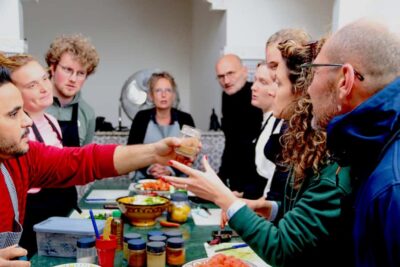
Moroccan Dishes Cooking Class with a Local Chef
Read our review →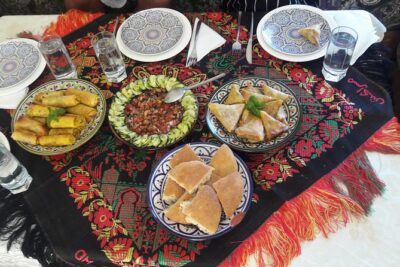
Moroccan Cooking Class & Marrakech Market Visit with Chef Khmisa
Read our review →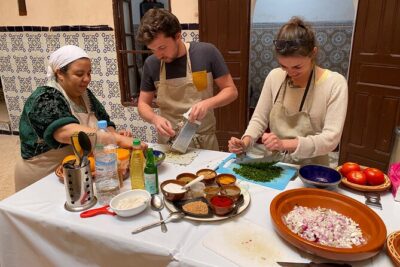
Half-Day Cooking Class with Local Chef Laila in Marrakech
Read our review →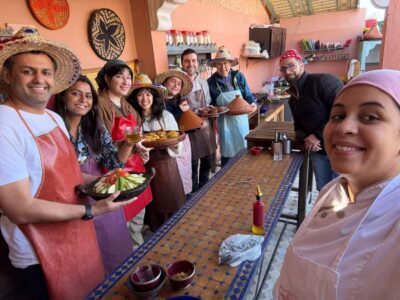
Browse the lists this tour appears in