
Review · MALLORCA COOKING CLASSES
Spanish Cooking Experience in Mallorca
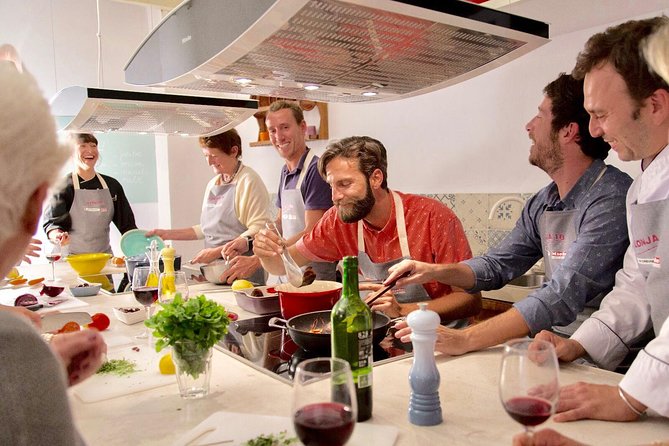
A restored 16th-century flour windmill is an unusual place for a cooking class, and it gives this Palma experience more character than a standard kitchen lesson. You’ll work with a chef guide, prepare several Spanish dishes, then sit down together at a large table to eat what you made.
I like the practical menu, especially the chance to learn tortilla, mixed paella, local sobrasada, and crema catalana in one session. I also like the generous open bar and the friendly teaching style reported for guides including Laura, Vivian, Ricardo, and Carlota. The main drawback is the price, $157.21 per person, which is a lot for three hours if you mainly want a quick meal rather than a full cooking activity.
What makes this Mallorca cooking class worth your time
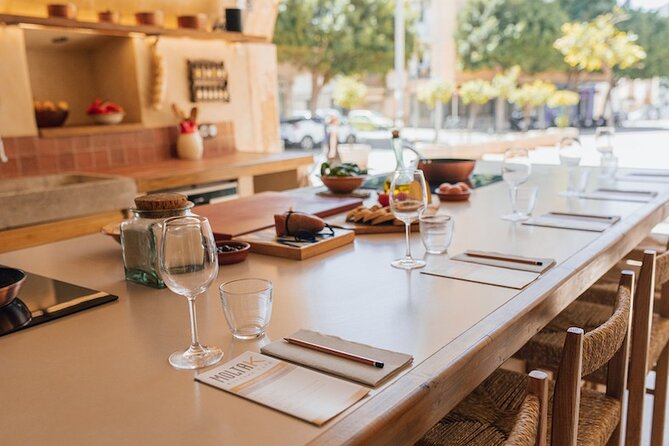
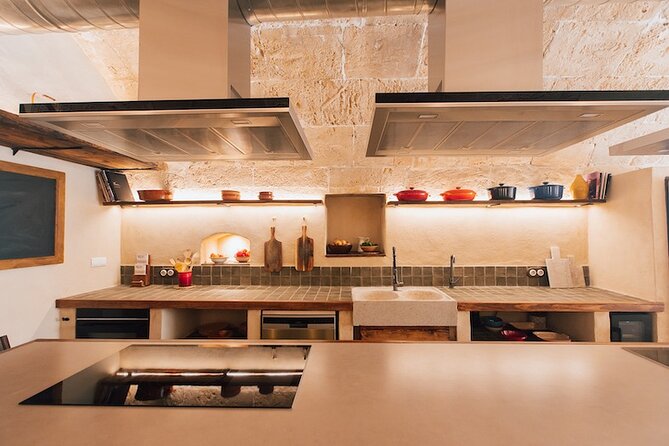
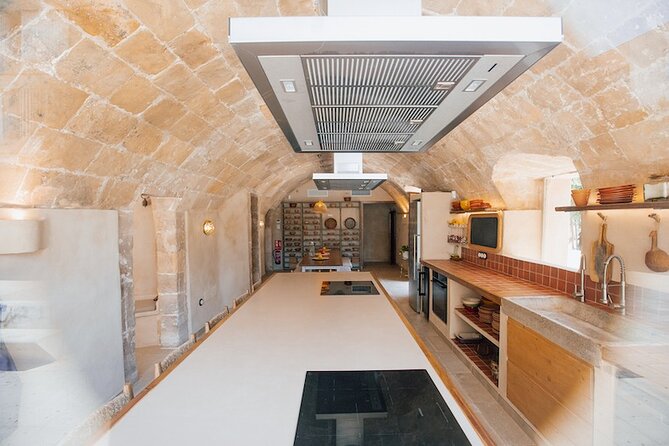
- Cook in a genuine old windmill: The venue is a converted flour windmill with old stonework, arched openings, and a modern kitchen.
- Prepare a five-dish Spanish menu: The session covers welcome snacks, sobrasada, tortilla, paella, and Catalan cream.
- Learn recipes you can repeat at home: Recipe handouts and practical cooking tips help turn the class into a lasting souvenir.
- Drinks are included: Bottled water and unlimited drinks from the open bar are part of the experience.
- Dietary changes are possible: Vegetarian, pescatarian, vegan, and lactose-free adjustments can be arranged if you state your needs when booking.
- The tone is social and relaxed: The chef guides are expected to keep everyone involved, including children from age six and cooks with little experience.
Entering Palma’s old windmill kitchen
The meeting point is at Carrer de la Indústria, 9, in Palma’s Ponent district. The activity begins and ends there, so you do not have to arrange a separate ride between a restaurant and a cooking school.
The setting does much of the early work. This is not a bright commercial classroom with rows of individual workstations. It is an old flour windmill brought back into use, with historic details paired with a modern Mallorcan kitchen and a large central island. One detailed account describes arched doors and windows, a handsome dining table, and a kitchen designed for group preparation.
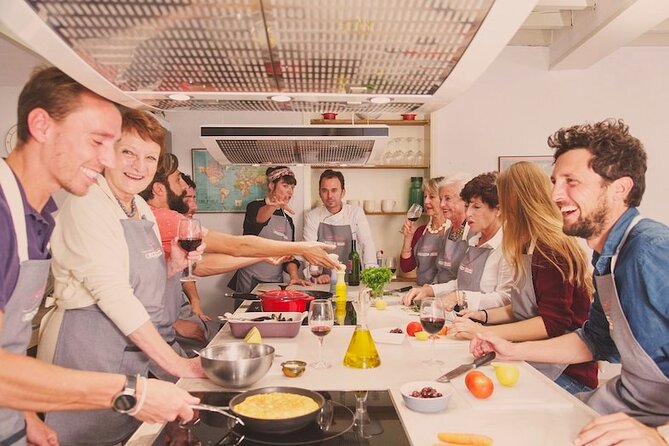
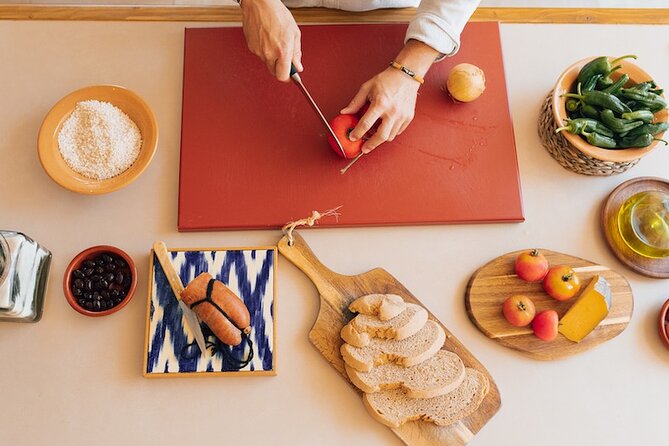
That combination matters. You are not simply being shown how Spanish food is made while standing at the edge of a demonstration counter. The format is hands-on, with people sharing tasks across several dishes. You might chop, stir, prepare seafood, handle potatoes, or help assemble the dessert, depending on the group and the chef’s plan.
The class is offered in English. The chefs named in the experience information include Vivan, Ricc, María, and Luís, while class accounts also identify Laura, Vivian, Ricardo, Carlota, Vanessa, and Roberto. The exact instructor can vary, but the pattern is clear: the teacher is expected to guide the whole room, explain the food, and keep beginners comfortable.
More Paella and Spanish Classes in Spain:
- Barcelona: Paella Cooking Experience & Boqueria Market Tour
★ 4.8 · 3,661 reviews - Barcelona Paella Cooking Class with Market Visit, Tapas & Sangria
★ 5.0 · 2,531 reviews - Barcelona Interactive Spanish Cooking Experience
★ 4.5 · 2,155 reviews
Starting with snacks, wine, and Mallorcan flavor
The class begins with a welcome snack and drinks. This is a useful part of the evening, not just a courtesy. Cooking with strangers can feel stiff for the first few minutes, and a drink at the start gives everyone a chance to settle in before the chopping begins.
The first named dish is a local sobrasada suquet. Sobrasada is a soft, seasoned pork sausage strongly associated with Mallorca. Its flavor and texture are different from the cured sausages many people know, so this is a good introduction to the island’s food traditions.
This starter is not suitable for vegetarians or vegans. If you do not eat meat, tell the provider before booking so the menu can be adjusted. The class also includes small bites along the way, and the exact snacks may vary.
The open bar is one of the better value points. Bottled water and unlimited drinks are included, with wine specifically mentioned in the class accounts. The experience is not simply a cooking lesson followed by a small taste. You are preparing a full menu and sitting down to eat it with drinks included.
Still, pace yourself. A three-hour class with alcohol, several dishes, and a shared meal can feel longer than a normal restaurant dinner. That is part of the appeal for many people, but it may not suit you if you prefer a quick, quiet meal.
Making the authentic Spanish tortilla
Next comes the Spanish tortilla, a thick potato and egg dish often translated as Spanish omelet. It is simple on paper, but the texture depends on details such as potato preparation, timing, and how the eggs and potatoes are combined.
This is one of the most useful dishes to learn at home because it needs no unusual equipment. You can make it in an ordinary kitchen, and the class focuses on the type of small decisions that separate a dry omelet from a soft, satisfying tortilla.
The dish is vegetarian but not vegan. That makes it a good part of the menu for mixed groups, since meat eaters and vegetarians can share the same main preparation. The teaching style is meant to be accessible, so you do not need advanced cooking skills to take part.
The class also has value for experienced home cooks. Several accounts describe chefs offering small technique tips rather than simply handing out a recipe. If you already cook often, you may still pick up a better method for tortilla or a more traditional way to organize a paella.
Preparing mixed paella with local seafood
The paella is the main event. The traditional version served here includes both meat and fish, although it can be adapted for vegetarians and pescatarians. One class account specifically describes learning how to prepare mussels, squid, and monkfish for the dish.
That seafood preparation gives the class a stronger connection to Mallorca than a generic paella demonstration. You are not only mixing rice with stock and seasoning. You are learning how ingredients from the sea fit into a Spanish communal dish.
Paella also works well as a group project. Different people can handle different stages, and the final result is served in the middle of the table. You get a sense of how the dish functions socially, not just how it tastes.
The limitation is that paella is sensitive to timing and quantity. In a group class, you may not personally control every part of the cooking. You should expect shared tasks rather than a private lesson where a chef watches every movement of your own pan.
The menu calls this a mixed paella, and the traditional version includes meat and fish. State your dietary requirements at booking if you need a vegetarian or pescatarian adaptation. Do not wait until the class begins, especially if your whole party has restrictions.
More Cooking Classes in Spain:
- Spanish Cooking Class Paella Tapas and Sangria in Madrid
★ 5.0 · 1,340 reviews - Paella Cooking Class, Wine Tasting & Central Market in Valencia
★ 5.0 · 1,150 reviews - Paella Cooking Class in Madrid with Bottomless Wine Pairing
★ 5.0 · 985 reviews - Seville: Spanish Cooking Class with Dinner
★ 4.9 · 900 reviews
Finishing with Catalan cream
Dessert is Catalan cream, a custard dessert with a crisp caramelized top. It contains lactose in its standard form, but the kitchen can prepare it with plant milk for vegan or lactose-intolerant diners.
The dessert is prepared early enough to chill while the group works on other dishes. That makes good cooking sense and gives you a look at how a multi-course meal is planned. You are not rushing every dish from raw ingredients to the table at the same moment.
A five-dish menu may sound ambitious for three hours, but it is structured around preparation, pauses, and shared work. The menu includes a welcome snack, sobrasada suquet, tortilla, paella, and Catalan cream. You should expect a substantial meal, not just a few samples.
Sitting down at the Mediterranean table
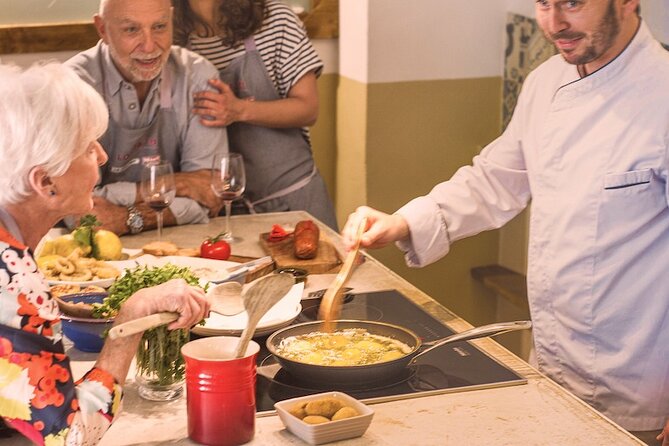
After the cooking, everyone sits together at the large dining table. This final meal is an important part of the experience because Spanish and Mallorcan food is tied to conversation, family gatherings, and long shared meals.
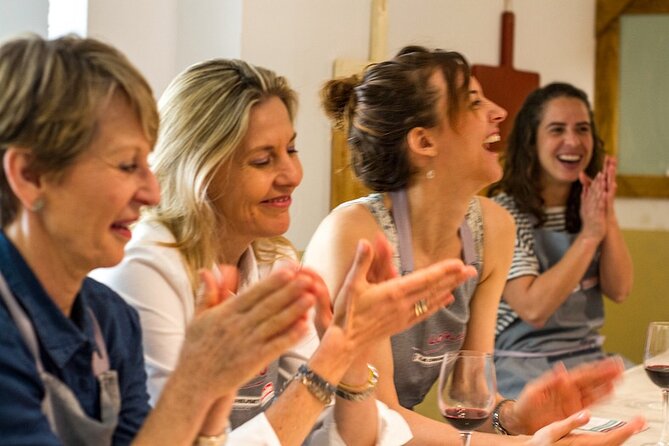
I like that the class does not end when the final pan comes off the heat. You get time to taste the dishes in their finished form, compare the results, and talk with the people who worked beside you. The social side is especially useful for solo visitors, couples, and families who want an evening activity that feels more personal than a restaurant booking.
The class accounts repeatedly describe an encouraging atmosphere, with instructors making people feel at ease and ensuring that everyone has a task. Ricardo is praised for including the whole group, while Vivian and Carlota are described as warm, lively teachers. Laura is also singled out for making the food, organization, and atmosphere work well together.
The exact mood depends partly on the instructor and the people booked for your session. A cooking class is interactive by nature, so it is not the right choice if you want to keep to yourself. You will get more from it if you are happy to share a table and participate.
What you take home besides dinner
The most useful souvenir is the collection of recipes. Class accounts describe receiving recipe pamphlets and later making the dishes at home. That gives the $157.21 price more weight than a simple tasting menu, since you are paying for instruction as well as food and drinks.
The recipes are designed to be approachable. The stated aim is to teach dishes that home cooks can repeat for friends and family, along with the small methods traditionally passed through Spanish households.
You also gain a better idea of how the dishes fit together. Sobrasada introduces Mallorca, tortilla shows the everyday Spanish side of the meal, paella brings in seafood and rice, and Catalan cream finishes with a dessert from the wider Catalan culinary tradition.
That regional mix is worth noting. This is not a narrow lesson devoted only to one Mallorcan dish. It uses Mallorca as a starting point, then moves around Spain through familiar national foods before returning to local flavors.
Is $157.21 a fair price?
At $157.21 per person, this is not a budget meal. You could eat more cheaply in Palma, especially if you are only comparing the price with an ordinary restaurant dinner.
The better comparison is a three-hour cooking class with a chef guide, a full multi-course menu, food tasting, an open bar, and a distinctive venue. You are also paying for instruction, the chance to cook rather than watch, and recipes you can use after your holiday.
I consider it fair value for someone who would otherwise book both a food tour and a dinner, or for anyone who places a high value on cooking experiences. It is less convincing for a person who dislikes group activities, does not drink, or simply wants to sample Mallorcan food without preparing it.
The free drinks matter more for some people than others. If you would normally order several drinks with dinner, the inclusion improves the value. If you do not drink alcohol, the price still includes bottled water and the food, but the open bar will not add much for you.
Timing, transport, and practical planning
The listed duration is about three hours, though one class account describes an experience lasting around four hours. Allow extra time rather than scheduling a tight evening connection immediately afterward.
The meeting point is near public transportation. Transportation to and from attractions is not included, so you need to make your own way to Carrer de la Indústria, 9. Parking can be difficult in Palma. One account advises allowing about 30 minutes to find a space and walk to the class, while the provider says it sends nearby parking information after booking.
The minimum age is six. That makes this a possible family activity, but younger children may enjoy it most when an adult helps them with shared tasks. A teenager, in particular, may find the class more rewarding than a standard sightseeing stop because the result is something everyone eats together.
The booking information says this is a private activity for your group, although class accounts describe sessions with people from several countries and other couples. Confirm the exact group arrangement if privacy is important to you.
You can cancel for a full refund up to 24 hours before the start time. Late cancellations and late changes are not accepted. The experience also depends on good weather and a minimum number of participants, so a cancellation by the provider may lead to another date, another experience, or a full refund.
Who should book this experience?
I would recommend it most strongly to:
- Couples looking for a shared evening activity
- Families with children aged six and older
- Solo visitors who enjoy meeting people around food
- Home cooks who want recipes they can repeat
- Anyone who wants a meal with instruction rather than just a restaurant table
- Visitors who appreciate unusual historic settings
You should think twice if you want a quiet meal, have serious dietary restrictions that were not discussed in advance, or need the activity to end at an exact time. The open bar and shared format may also be less useful if you do not drink or dislike group participation.
Should you book the Windmill Kitchen class?
Book it if you want to turn dinner into an activity. The restored windmill, hands-on preparation, full menu, and time at the shared table make this more memorable than a standard meal. I especially like that you learn dishes with a real chance of making them again at home.
Before paying, confirm the instructor, start time, dietary adaptations, and group arrangement. Arrive by public transport if possible, or leave generous time for parking. With those points handled, this is a strong pick for a food-focused afternoon or evening in Palma, particularly if you value practical skills, local ingredients, and good conversation as much as the meal itself.
FAQ
Where does the Spanish cooking experience take place?
It takes place at MOLTAK, The Windmill Kitchen, at Carrer de la Indústria, 9, Ponent, 07013 Palma, Mallorca. The venue is a restored 16th-century flour windmill.
How long does the cooking class last?
The listed duration is approximately three hours. One class account describes a session lasting around four hours, so allow some extra time.
What food will I prepare?
The menu includes a welcome snack, local sobrasada suquet, Spanish tortilla, mixed paella, and Catalan cream.
Are drinks included?
Yes. Food tasting, bottled water, and unlimited drinks from an open bar are included.
Is the experience offered in English?
Yes. The experience is offered in English.
Can vegetarians take part?
Yes. Vegetarian options are available if you advise the provider when booking. The sobrasada starter is not suitable for vegetarians or vegans, and the standard tortilla is vegetarian but not vegan.
Can the paella be adapted?
Yes. The traditional mixed paella includes meat and fish, but it can be adapted for vegetarians and pescatarians. State your needs at booking.
Can the Catalan cream be made without dairy?
Yes. The dessert contains lactose in its standard form, but it can be made with plant milk for vegan or lactose-intolerant diners.
What is the minimum age?
The minimum age is six years old.
Can I cancel for a refund?
You can cancel at least 24 hours before the local start time for a full refund. Cancellations or changes made less than 24 hours before the experience are not accepted.
Newest classes around Spain
- Pintxos and Tapas Cooking Class in Bilbao★ 5.0 · 38 reviews
- Basque Pintxos and Tapas Cooking Class in Bilbao★ 5.0 · 73 reviews
- Small-group Immersive Basque Cooking Class in Bilbao with Open Bar★ 5.0 · 65 reviews
- Paella and Burnt Basque Cheesecake Cooking Class (in Bilbao)★ 5.0 · 46 reviews
- Rooftop Paella Seafood Cooking Class Experience in Barcelona★ 5.0 · 59 reviews
- Private Authentic Paella Cooking Class in Barcelona with Josh★ 5.0 · 3 reviews
- Barcelona Tapas Cooking & Cocktail Class with Veronique & Mattias★ 5.0 · 3 reviews
- Premium Paella & Tapas Feast: Unlimited Wine & Rambla Views★ 5.0 · 13 reviews
Mallorca Cooking Classes, compared.
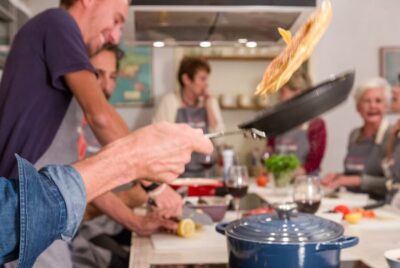
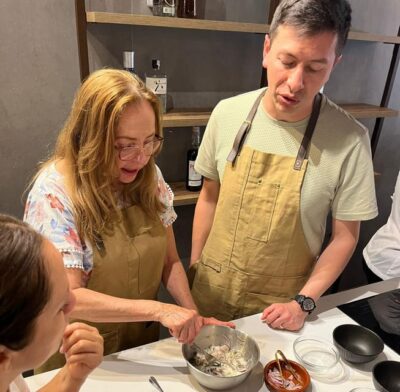
Palma: Mediterranean Cooking Class with Drinks
Read our review →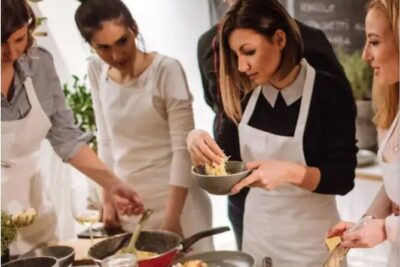
Spanish Cooking Class Palma meals+drinks 7 dishes Full meals
Read our review →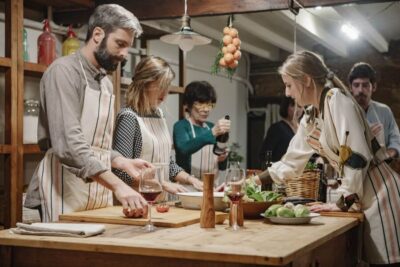
Mallorca: Market Visit and Traditional Cooking Workshop
Read our review →
Mallorca: Paella Cooking Class in the Tramuntana Mountains
Read our review →Browse the lists this tour appears in