Review · LISBON COOKING CLASSES
Private Lisbon Market Tour & Portuguese Cooking Class with Paula
The most interesting part of this experience is not the cooking alone. You cross the Tagus from Lisbon to Cacilhas, meet Paula at the ferry stop, shop in the market she has used for decades, and then cook in her own home. I like the personal connection and the chance to choose between Portuguese and Goan dishes. I also like that the market visit gives the meal a real local setting instead of dropping you into a standard cooking school.
The main consideration is comfort. This is a working family home, not a polished culinary studio, and Paula has a cat. One less-positive account found the apartment cluttered and the cooking somewhat unfocused, so you should book this for warmth and conversation, not for a spotless professional kitchen.
Key points at a glance
- Cross the Tagus to Cacilhas: The short ferry ride from central Lisbon gives you a pleasant change of scene and fine bridge views.
- Meet Paula at the ferry stop: She walks with you through Almada and shares local stories on the way to the market and her home.
- Shop before you cook: You help select ingredients at the covered market near Paula’s apartment.
- Choose your food focus: The menu can include Portuguese classics, Goan dishes, or a mix of both.
- Cook in a real home kitchen: Expect a relaxed, informal lesson rather than a formal class with stations and uniforms.
- Share a full meal afterward: Appetizers, a main dish, dessert, and coffee or tea are part of the experience.
Crossing the Tagus for a different side of Lisbon
This four-and-a-half-hour experience starts at 10:00 in the morning at the Cacilhas ferry meeting point, listed at Largo Alfredo Dinis in Almada. From central Lisbon, you take the ferry from Cais do Sodré across the Tagus. The crossing is short, roughly seven to ten minutes, but it changes the feel of the morning.
You get a broad view of the river, Lisbon’s waterfront, and the bridge as you leave the city behind. The ride is also simple for visitors who already have a suitable public transport pass, although you should confirm your ticket needs before setting out.
Paula meets you when you arrive at Cacilhas. That matters. You are not left to find an unfamiliar apartment or market on your own. From the ferry stop, she leads you on a walk of about ten minutes through central Cacilhas to her neighborhood.
The walk is part of the experience, not just transport. Paula points out places connected to the area’s past, including old fish-related buildings, and introduces you to the town at a human pace. You are seeing Almada as a place where people live, shop, and greet one another, rather than simply as a viewpoint across the river.
More Cooking Classes with a Market Tour in Lisbon
- Lisbon Market and Food Tour with Cooking Class and Lunch
★ 5.0 · 117 reviews - Market Tour, Cooking Class And Lunch At Mercado de Arroios
★ 5.0 · 23 reviews - Lisbon Cooking Class with Market Experience
★ 5.0 · 13 reviews
Cacilhas market, where lunch begins
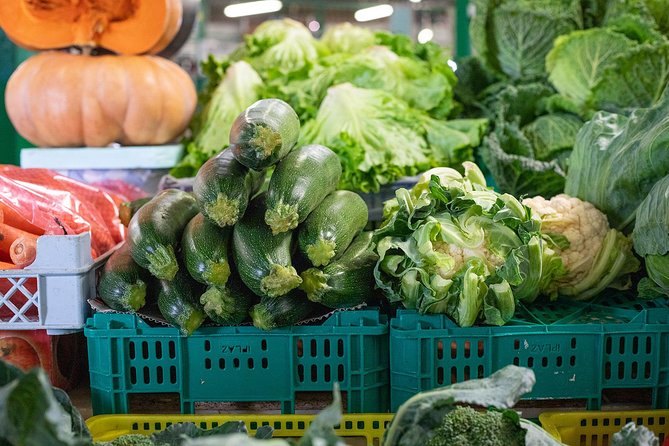
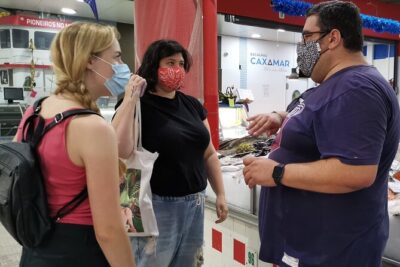
Paula’s apartment sits only a few meters from the neighborhood’s covered market. She has shopped there for decades, so the visit is personal rather than a quick look at stalls for photographs.
You can expect to see the ingredients that shape the meal, including fresh fish, shellfish, fruit, vegetables, and pantry items. Depending on the menu, you may help choose fish and other foods for the cooking session. One useful part of the market visit is learning how Paula judges ingredients, including how to identify bad clams.
The market also gives you a little social context. Paula knows the people working there, and the visit can feel like joining a local on her regular shopping trip. That is a stronger experience than simply being told the names of Portuguese foods in a classroom.
Still, keep your expectations practical. This is a neighborhood market, not a restored food hall designed for tourists. One account found it dirty and under-serviced, so the condition of the market may not match the polished food-market experience you might expect in a major European capital.
I would also allow some flexibility in your schedule. The market stop can take longer than expected if Paula is explaining ingredients, greeting people, or adjusting the menu. That relaxed pace is part of the appeal, but it may frustrate you if you want a tightly timed class.
A home kitchen instead of a cooking school
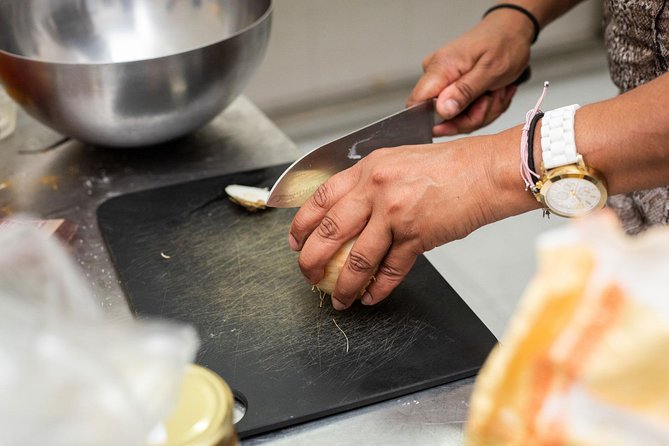
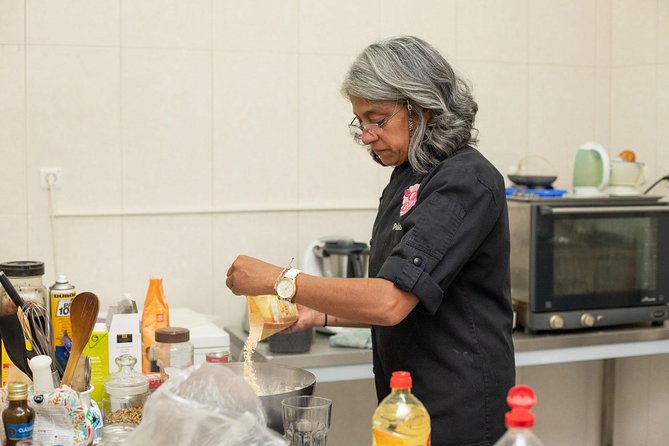
After shopping, you head to Paula’s apartment, or in some cases use her cooking studio table across the street. This distinction is important when deciding if the experience suits you.
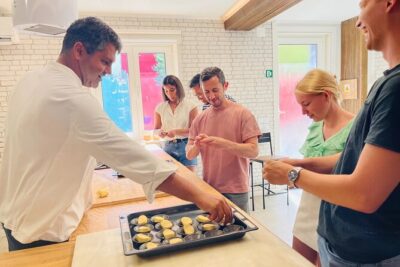
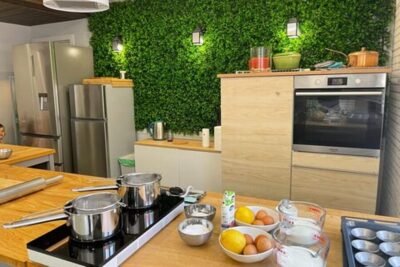
You are not signing up for a formal cooking school. You will not be in a commercial classroom with identical workstations, a fixed lesson plan, and a polished demonstration kitchen. Instead, you cook with Paula in an informal home setting, where the conversation and the meal are as important as the techniques.
That setting helps explain why the experience earns such strong marks overall, with a 4.8 rating from 89 ratings and 96 percent recommendation. Paula’s hospitality is the central feature. She welcomes you into her daily world, adapts dishes to your preferences, and works to include everyone in the cooking, including children.
The relaxed approach also has limits. A home kitchen can be cramped or cluttered, and Paula lives with family and a cat. If you have allergies, dislike cats, or need a highly organized cooking setup, contact Paula before booking. Service animals are allowed, but the presence of a household pet remains relevant for comfort and allergies.
What you may cook with Paula
The planned meal generally includes two appetizers, one main dish, and a dessert. The exact choices can be discussed with Paula, and the experience is designed to let you select Portuguese food, Goan food, or a combination.
Possible appetizers include:
- Pataniscas de bacalhau: Portuguese cod fritters with a crisp exterior and savory fish center.
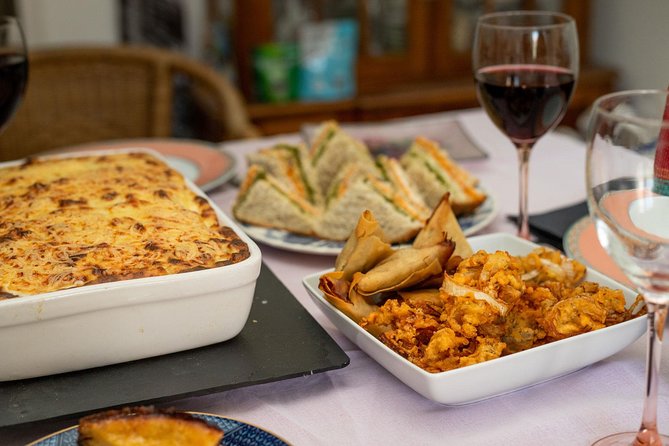
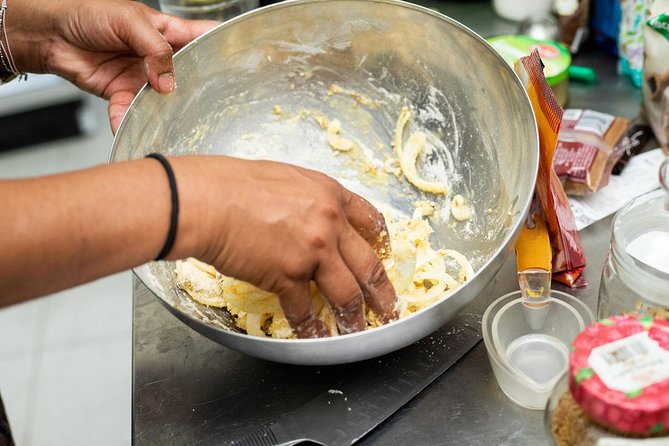
- Goan bojas: Gram flour fritters made with onion and cumin seeds.
For the main course, you may choose a Portuguese dish such as bacalhau com natas, cod with cream, or bacalhau à Brás. You may also choose a Goan dish, such as a fish or crab curry served with rice.
The menu can shift to suit your group. Accounts of the experience describe dishes including grouper-based Goan fish curry, sukhem clams, chorizo, rice, fresh bread, and cooking fish in salt. Those examples suggest that the final meal depends on market availability, your preferences, and the conversation you have with Paula before the class.
Dessert is often a major part of the lesson. Pastel de nata, Portugal’s famous custard tart, appears frequently in the cooking stories connected with this experience. You may learn pastry handling, custard preparation, or techniques involving puff pastry. Coffee or tea finishes the meal.
Do not assume you will receive the exact sample menu every time. The advertised examples include bacalhau com natas or Goan crab curry, but the menu is flexible. Send Paula a WhatsApp message before the experience if you have questions about seafood, spice, pastry, or dietary needs.
More Cooking Classes with a Market Tour in Portugal
- Lisbon: Setúbal Market and Wine tour with Cooking class
★ 5.0 · 4 reviews - Porto Local Market Visit & Cooking Class / Showcooking
★ 5.0 · 206 reviews - Porto: Local Market Tour & Cooking Class/Showcooking
★ 4.9 · 32 reviews - From Market to Table with Paula (Loulé) – Private Cookery Class
★ 5.0 · 21 reviews
The value of learning Portuguese and Goan food together
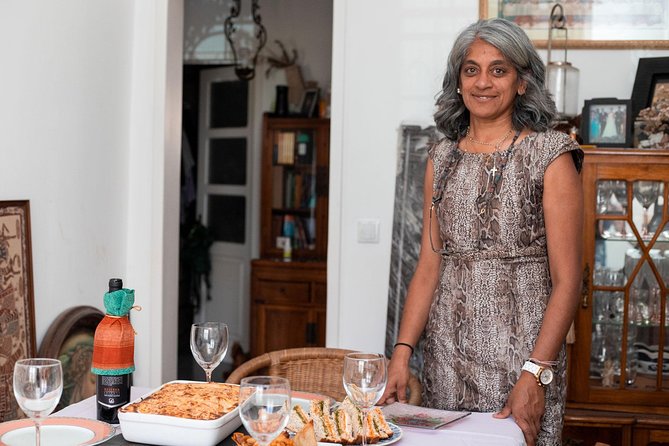
Lisbon has no shortage of cooking classes. Many focus on familiar Portuguese dishes, often in a professional kitchen. This experience adds another layer by connecting Portuguese food with Goan cooking.
Paula can show you how ingredients and methods from two food traditions work side by side. You might prepare cod fritters and Goan bojas, then move from a Portuguese main dish to a curry seasoned with Goan spices. That combination gives you a broader understanding of the food than a class focused on one national menu.
The lesson is also useful for experienced home cooks. You may pick up small but valuable techniques, such as whisking methods, pastry handling, custard preparation, fish preparation, and ways to judge shellfish. The instruction is practical and tied to the dish in front of you.
Beginners should feel comfortable here, too. Paula adjusts the work to the group, and the cooking is described as patient and inclusive. If you have children with you, the informal setting may work better than a formal class because they can take part without needing advanced skills.
The tradeoff is that the lesson may not follow a neat sequence. Paula may be preparing several components at once, answering questions, or handling other household matters. One account found the pace rushed and the focus divided while she catered for others. This seems to be the risk of choosing an in-home experience: you gain personality and flexibility, but lose some professional structure.
Sitting down to eat what you made
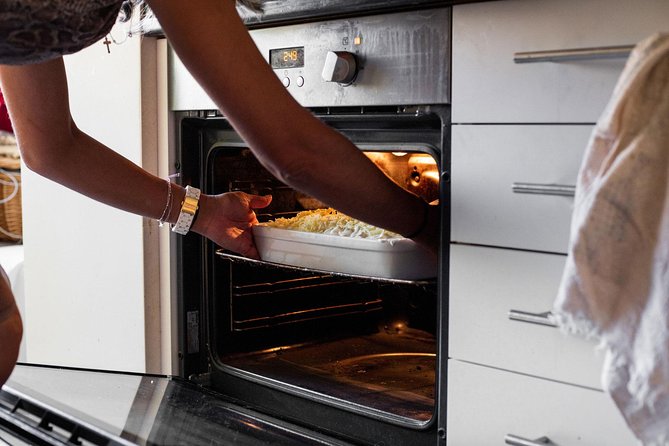
After the cooking, you sit at Paula’s dining table or at a table in the cooking studio across the street. The meal is the payoff, but it is also where the cultural part becomes clearer.
You have time to taste the dishes together, ask about ingredients, and hear Paula’s stories about family, food, and life in Almada. The meal may include wine, fresh bread, rice, appetizers, a main course, and dessert, depending on the menu selected.
I like this format because you are not hurried out after the lesson. Several accounts describe the meal and conversation continuing beyond the planned time. That can turn a four-and-a-half-hour booking into a fuller morning and afternoon, although you should not count on a major schedule overrun if you have another fixed tour afterward.
The food is prepared by the group, so the result will not be identical to a restaurant meal. That is part of the point. You learn how a local cook builds a meal, then sit down with the person who taught you. The memory comes from the process as much as from the plate.
What the $99 price includes in practical terms
At $99 per person, this is not the cheapest way to eat in Lisbon. You can have a good Portuguese lunch for much less, and a group cooking class may cost less per person.
The price makes more sense if you value the full package: ferry crossing, guided walk through Cacilhas, market shopping, private instruction, ingredients, a multi-course meal, dessert, and several hours of conversation with Paula. Since this is a private activity, only your group takes part. That gives you room to shape the menu and ask questions without sharing the lesson with strangers.
For couples, families, and small groups, the private format can be worthwhile. Group discounts may also be available, so check the current price for your party rather than assuming every person pays the same amount.
The value is weaker if you mainly want a polished technical class. You are paying for access to Paula’s home, local connections, and personal stories, not just for recipes. If that sounds like what you want, the price is reasonable. If you want a spotless studio, strict timing, and formal chef-led instruction, choose another class.
Who will enjoy this experience most
I would recommend this experience for people who want a slower, more personal morning away from Lisbon’s central tourist routes. It suits you especially well if you like markets, home cooking, local stories, and meals that develop through conversation.
It is a good choice for:
- Couples looking for a private food experience
- Families who want children involved in cooking
- Home cooks interested in seafood, pastry, or curry
- Visitors who have already seen Lisbon’s main sights
- People curious about both Portuguese and Goan cuisine
- Anyone happy to trade polish for personality
You should think twice if you have severe cat allergies, need a highly tidy environment, or dislike flexible scheduling. You should also contact Paula directly if you have dietary restrictions, since seafood appears often in the sample dishes and the menu is arranged personally.
Booking, meeting, and cancellation details
The activity is offered in English and uses a mobile ticket. Confirmation arrives when you book, and it is wise to contact Paula through WhatsApp with menu questions or any concern about the meeting point.
You meet at Dá Cacilhas, Largo Alfredo Dinis, 2800-252 Almada, at 10:00 in the morning. The experience ends back at the meeting point, so you can return to Lisbon by ferry after the meal.
Free cancellation is available if you cancel at least 24 hours before the start time. Cancellations or changes made inside that 24-hour window are not refunded or accepted.
Should you book Paula’s Lisbon cooking experience?
Book it if you want a local relationship built around food, not a formal lesson in a professional school. The ferry ride, Cacilhas market, flexible menu, and meal in Paula’s home create a side of Lisbon that most sightseeing plans miss.
I would choose it for a couple, family, or small private group with a half-day to spare. Go in expecting a cat, a lived-in home, and an informal pace. If you can accept those details, Paula’s cooking and hospitality may become one of the most personal parts of your time near Lisbon.
FAQ
Where does the cooking experience take place?
It takes place in Almada, across the Tagus from central Lisbon. Paula’s apartment is near the main covered market in Cacilhas, and the cooking may also use her cooking studio table across the street.
How do I get to the meeting point?
You take a short ferry ride from Lisbon to Cacilhas. Paula meets you at the Cacilhas ferry stop and walks with you through town to the market and her home.
What time does the activity start?
The activity starts at 10:00 in the morning.
How long does the experience last?
The planned duration is approximately four hours and 30 minutes. The experience may run longer if the cooking and meal continue at a relaxed pace.
Is this a private activity?
Yes. Only your group participates in the activity.
What food will I learn to cook?
The menu usually includes two appetizers, a main dish, and dessert. Possible dishes include pataniscas de bacalhau, Goan bojas, bacalhau com natas, Goan curry, and pastel de nata.
Can I choose the menu?
Yes. You can choose Portuguese or Goan main dishes, and you should contact Paula through WhatsApp if you have questions about the menu.
Is this a professional cooking school?
No. This is an in-home cooking and cultural experience with Paula, not a class in a commercial cooking school.
What is the cancellation policy?
You can cancel for a full refund up to 24 hours before the experience starts. Cancellations or changes made less than 24 hours in advance are not accepted or refunded.
More Private Cooking Classes in Lisbon
- PRIVATE Authentic Balinese Cooking Class in Ubud at Putu’s Home
★ 5.0 · 644 reviews - Rome: Pasta Making Class with Tiramisu & Wine PRIVATE OPTION
★ 4.8 · 404 reviews - Private Market Tour & Cooking Class in Puerto Vallarta with Manu
★ 5.0 · 241 reviews - Private Cooking Class with 5 dishes of your choice
★ 5.0 · 227 reviews
More Private Cooking Classes in Portugal
- Private Traditional Portuguese Cooking Class in Lisbon with Paula
★ 5.0 · 50 reviews - Private Portuguese Cooking and Wine Experience in Porto
★ 5.0 · 30 reviews
Newest classes around Lisbon
- Lisbon: Portuguese Petiscos Cooking Class★ 4.7 · 6 reviews
- Lisbon: Traditional Portuguese Cooking Class★ 5.0 · 41 reviews
- Lisbon: Setúbal Market and Wine tour with Cooking class★ 5.0 · 4 reviews
- Lisbon: Portuguese Cooking Class with Wine Tasting★ 5.0 · 4 reviews
- Lisbon: Portuguese street food cooking class with Drinks★ 4.9 · 37 reviews
- Lisbon: Portuguese Cooking Class for Beginners★ 4.9 · 78 reviews
- Lisbon: Pasteis de Nata Baking Class★ 5.0 · 134 reviews
- Private Traditional Portuguese Cooking Class in Lisbon with Paula★ 5.0 · 50 reviews
Lisbon Cooking Classes, compared.
Lisbon Portuguese Cooking Class with 3-Course Dinner
Read our review →
Traditional Portuguese Cooking Class in Lisbon
Read our review →