Review · LISBON COOKING CLASSES
Market Tour, Cooking Class And Lunch At Mercado de Arroios
Lisbon’s Arroios Market is the starting point for a meal that you help shape. With Antónia, a food editor, recipe developer, cook, and Alentejo native, you choose ingredients at the stalls before walking to her home to prepare lunch. I like the tiny group of four and the freedom to influence the menu. The main consideration is that this is a home-based meal, not a formal cooking school.
I also like the market-to-table flow: you taste local products, buy what looks best, then sit down with wine and the people who cooked beside you. Some past sessions have stretched well beyond four hours, so keep your afternoon open. Dietary restrictions must be shared ahead of time.
Key points to know before booking
- Start at Mercado de Arroios: Meet at R. Ângela Pinto 40D at 11 a.m. and shop for the meal with your host.
- Choose the menu together: Your preferences help shape dishes such as fish stew, pork and sausage stew, codfish cakes, clams, or octopus.
- Small means personal: The maximum group size is four, giving you plenty of time to ask questions and take part.
- Lunch takes place in a Portuguese home: Expect a relaxed meal with Antónia, Luis, and possibly their friendly dog.
- Wine and recipes are part of the day: You eat with Portuguese wines and leave with recipes to try at home.
- Plan for extra time: The advertised length is about four hours, though the social meal may run longer.
From Arroios Market to a Portuguese kitchen
The clever part of this Lisbon activity is its order. You do not begin with a fixed menu and a pile of pre-measured ingredients. You begin at Mercado de Arroios, where the food sets the direction.
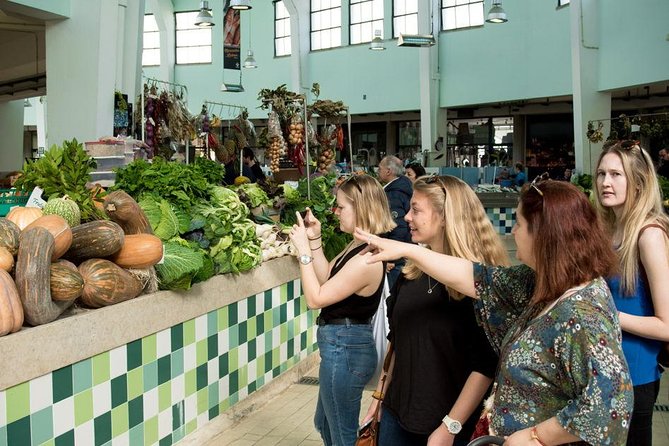
At R. Ângela Pinto 40D, you meet your host at 11 a.m. The market stop is free as a separate admission, but it is central to the experience. You browse produce, seafood, bread, cheese, cured meats, olives, and other Portuguese products while Antónia explains what she likes to buy and why.
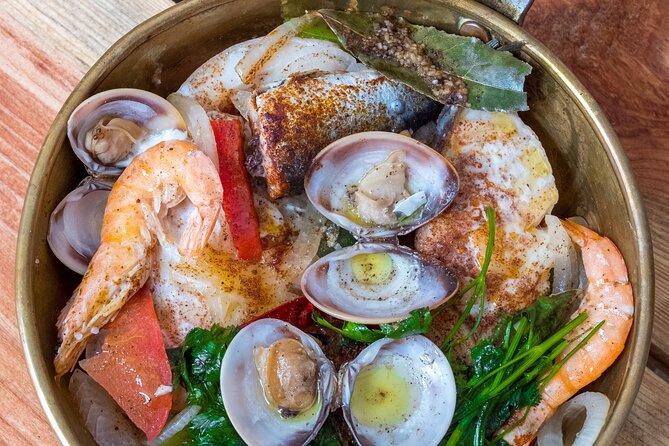
You also have a say in lunch. That matters. If you are curious about clams, sardines, octopus, or a traditional fish stew, this is the moment to ask. Past menus have included fresh sardines, fried mackerel, cod with potatoes, mussels, shrimp, and a fish dish made with onions, tomatoes, herbs, and several kinds of fish.
The exact food depends on what you prefer and what looks good that day. That makes the meal feel less like a cooking demonstration and more like a shared decision. It also means you should not book this expecting one guaranteed, unchanging menu.
More Cooking Classes with a Market Tour in Lisbon
- Lisbon Market and Food Tour with Cooking Class and Lunch
★ 5.0 · 117 reviews - Private Lisbon Market Tour & Portuguese Cooking Class with Paula
★ 5.0 · 89 reviews - Lisbon Cooking Class with Market Experience
★ 5.0 · 13 reviews
What makes Mercado de Arroios worth your time
Arroios gives you a look at everyday food shopping in Lisbon rather than a polished tasting room. You are there to see the products, speak with your host about Portuguese cooking, and select the building blocks of lunch.
The market is especially useful if you are still getting your bearings with Portuguese food. You may encounter the ingredients behind familiar dishes without having to decode a restaurant menu. Salt cod, sausages, seafood, cheeses, olives, and bread all make more sense when you can handle them, taste them, and hear how they are used.
Antónia’s background adds useful context. She was born in Alentejo, a region known for hearty cooking and strong use of bread, pork, herbs, olive oil, and simple seasonal ingredients. Her work as a publisher, food developer, editor, and cook gives the class more depth than a casual home meal alone.
Still, do not expect a long guided tour of the entire neighborhood. The market is a practical starting point for lunch. The focus stays on shopping and food, not on monuments or formal sightseeing.
Choosing a menu that fits your appetite
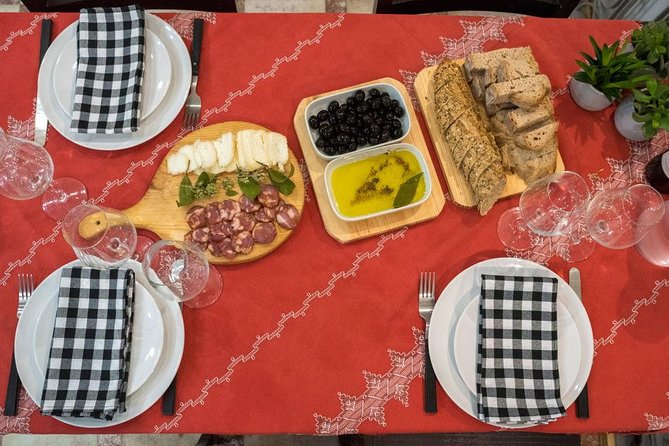
The sample menu gives you a good sense of the range. You might begin with olives, cheeses, bread, cured meats, and small tastings from the market. Codfish cakes with salad, chorizo with scrambled eggs, clams, and other shared starters may follow.
For the main course, the listed choices include caldeirada à fragateira, a Portuguese-style fish stew, or a pork and sausage stew with potatoes and salad. The cooking can also shift toward seafood dishes such as cataplana, octopus, fried sardines, mackerel, mussels, or shrimp if that suits the group.
Dessert is Portuguese-style crème brûlée, described as a creamy custard with a firm burnt-sugar crust. Other sessions have included pastéis de nata, so dessert may vary with the host’s plan and the ingredients available.
The important point is that the menu is not a rigid restaurant order. You help define it. If one member of your party does not eat pork, dislikes shellfish, or has always wanted to cook octopus, say so before the shopping begins. You are asked to communicate food allergies and special diets in advance, and that is particularly important when a menu is being built around fresh purchases.
The short walk to Antónia’s home

After shopping, you walk to the host’s home, only a few blocks away in accounts of the experience. The change from market stall to private kitchen is quick, but it changes the mood.
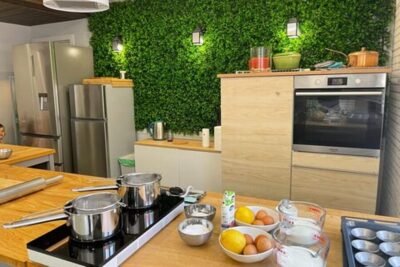
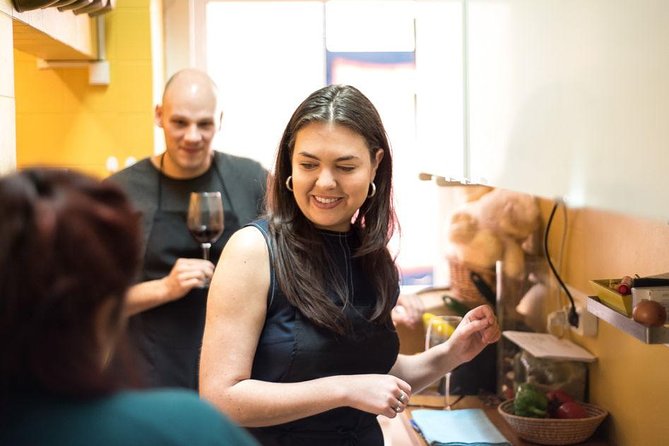
This is not a cooking studio with numbered stations and a class bell. You enter a real home, meet the household, and help prepare lunch in a more informal setting. Luis may welcome you, pour wine, and join the conversation. A dog is also part of the household, so this detail matters if anyone in your group has allergies or discomfort around pets.
You may chop vegetables, prepare seafood, arrange starters, or follow Antónia’s instructions while she handles the more technical work. You are not required to cook every dish. If you enjoy kitchen work, there is room to participate. If you would rather watch and talk, that is acceptable too.
That flexibility makes the class suitable for mixed groups. One person can be keen on cooking while another is mainly interested in Portuguese food and conversation. The tradeoff is that the amount of hands-on instruction may differ from a formal lesson, depending on the menu and your level of interest.
More Cooking Classes with a Market Tour in Portugal
- Lisbon: Setúbal Market and Wine tour with Cooking class
★ 5.0 · 4 reviews - Porto Local Market Visit & Cooking Class / Showcooking
★ 5.0 · 206 reviews - Porto: Local Market Tour & Cooking Class/Showcooking
★ 4.9 · 32 reviews - From Market to Table with Paula (Loulé) – Private Cookery Class
★ 5.0 · 21 reviews
Lunch with wine, conversation, and family recipes
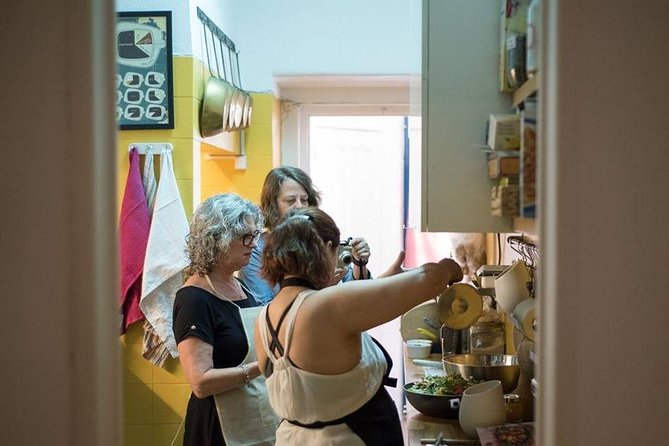
The meal is the heart of the afternoon. Once the food is ready, you sit down to eat what you helped select and prepare. Local wines are served with lunch, and the table may include more than the main dishes: fruit, jams, bread, olives, cheeses, chorizo, and other small plates.
I like this format because it connects cooking with ordinary Portuguese hospitality. You are not simply shown how to make a dish and then sent away. You eat it in the same setting where it was prepared, with time for conversation about Portugal, food, daily life, and the hosts’ own work.
The social side can be substantial. Some sessions have continued for seven hours rather than four, with the extra time taken up by wine, conversation, and a leisurely lunch. That is not guaranteed, but it tells you what kind of afternoon this can become. Do not schedule a timed museum entry or airport transfer soon afterward.
The meal can also be the most personal part of the day. Past menus have included fish stews, clams in garlic and butter, roasted shrimp, fried sardines, chorizo and eggs, and generous boards of cheese and cured meat. The food is not presented as a tiny chef’s tasting. You should expect a full, hearty lunch.
Recipes and practical cooking value
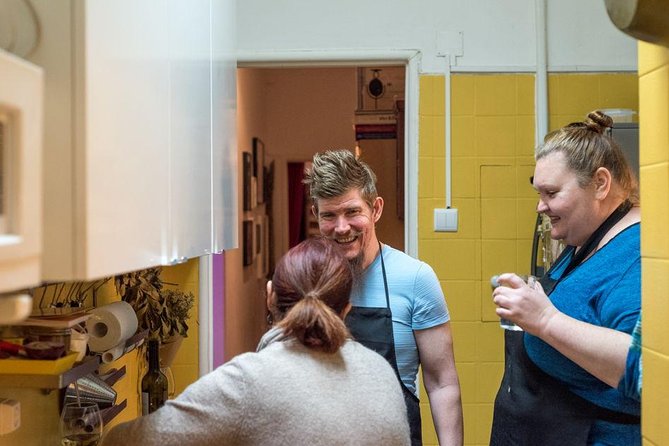
You receive recipes so you can repeat some of the dishes at home. This is more useful than a cooking lesson that ends with a meal and no record of what happened.
Antónia’s publishing and food-development work also suggests that the recipes are a meaningful part of the activity, not an afterthought. One past participant learned that the host had written a Portuguese cookbook, which helps explain why the class can cover more than basic chopping and stirring.
Even so, the value is not only in precise technique. You learn how Portuguese cooks combine seafood, vegetables, potatoes, sausages, herbs, bread, and olive oil into food meant to be shared. You also learn how a menu changes according to market availability and personal preference.
If you want a strict lesson in knife skills, measurements, or professional kitchen technique, this may feel loose. If you want recipes connected to a meal, a household, and a real market, it is a better fit.
How much value do you get for $206.72?

At $206.72 per person, this costs more than a standard market visit or a basic group cooking class. The price makes more sense when you count the full package: a market visit, ingredient selection, tastings, cooking instruction, a multi-course lunch, wine, recipes, and a private-home setting.
The group limit is four people. For a couple or a small family, that creates a level of attention you rarely receive in a large culinary class. You can ask about a particular ingredient, request a change in the menu, or spend more time discussing a dish without competing with a room full of students.
The value is strongest if you care about personal contact and food culture. It is weaker if you only want a fast lunch, a short market walk, or the lowest possible price. You are paying for time, hospitality, and the chance to help shape the meal, not just for the food on the plate.
Keep in mind that the host receives only a portion of the platform fee, according to one account. If you feel the afternoon was generous and personal, bring cash for a tip. Tipping is not listed as part of the price, so treat it as your own choice rather than an included charge.
Who should book this Lisbon cooking class?
I would recommend this for couples, solo visitors, food-focused families, and small groups who want contact with Lisbon beyond the main sights. Children are welcome, making it a workable option for families, although the relaxed meal and market shopping may suit older children better than very young ones.
It is also a good choice for people who want to learn by watching and helping rather than sitting through a formal lecture. You can participate as much as you like, and the small group gives you room to shape the pace.
The activity may not suit you if you need a tightly timed schedule, a guaranteed dish, or a restaurant-style setting. Pets are in the home, and the meal may extend well past the advertised four hours. Share allergies and dietary needs before arrival, and ask about the expected menu if you have strong food preferences.
The meeting point is near public transportation, and the activity returns to the same location area after lunch. You receive confirmation at booking, and free cancellation is available up to 24 hours before the start time. Changes or cancellations inside that window are not accepted for a refund.
My verdict on this market-to-table afternoon
Book this if you want Portuguese food connected to real people, a local market, and a home kitchen. The strongest parts are the menu planning, the maximum group size of four, the warm role of Antónia and Luis, and the chance to leave with recipes rather than only photographs.
I would especially choose it early in a Lisbon stay. The market introduces ingredients you may see for the rest of your trip, and the hosts can give you a practical feel for Portuguese eating habits. Just leave your schedule open, tell the hosts about food restrictions, and arrive ready for a long lunch rather than a quick class.
FAQ
Where does the activity begin?
It begins at R. Ângela Pinto 40D, 1900-069 Lisboa, Portugal.
What time does the experience start?
The start time is 11 a.m.
How long does the experience last?
The listed duration is about four hours. Some sessions have lasted longer because lunch and conversation continued into the afternoon.
How many people can join?
The maximum group size is four travelers.
Is the experience offered in English?
Yes. The activity is offered in English.
Can children join?
Yes. The experience is family-friendly, and children are welcome.
Can I request a special diet or report an allergy?
Yes. You need to communicate food allergies, special diets, and other food restrictions in advance.
What is the cancellation policy?
You can cancel up to 24 hours before the start time for a full refund. Cancellations or changes made less than 24 hours before the start time are not accepted for a refund.
More Lunches Out in Lisbon
- Cooking Class and Lunch at a Tuscan Farmhouse with Local Market Tour from Florence
★ 5.0 · 4,831 reviews - Paris Cooking Class and Lunch with Wine plus Market Visit Option
★ 5.0 · 1,024 reviews - Austrian Apple Strudel Cooking Class including Lunch in Salzburg
★ 5.0 · 929 reviews - Phuket: Elephant Sanctuary Tour, Cooking Class & Lunch
★ 4.9 · 856 reviews
Newest classes around Lisbon
- Lisbon: Portuguese Petiscos Cooking Class★ 4.7 · 6 reviews
- Lisbon: Traditional Portuguese Cooking Class★ 5.0 · 41 reviews
- Lisbon: Portuguese street food cooking class with Drinks★ 4.9 · 37 reviews
- Lisbon: Setúbal Market and Wine tour with Cooking class★ 5.0 · 4 reviews
- Lisbon: Portuguese Cooking Class with Wine Tasting★ 5.0 · 4 reviews
- Lisbon: Portuguese Cooking Class for Beginners★ 4.9 · 78 reviews
- Lisbon: Pasteis de Nata Baking Class★ 5.0 · 134 reviews
- Private Traditional Portuguese Cooking Class in Lisbon with Paula★ 5.0 · 50 reviews
Lisbon Cooking Classes, compared.


Lisbon Portuguese Cooking Class with 3-Course Dinner
Read our review →
Traditional Portuguese Cooking Class in Lisbon
Read our review →