
Review · ALBANIA COOKING CLASSES
Cook Like a Local – Authentic Cooking Class in Gjirokastra
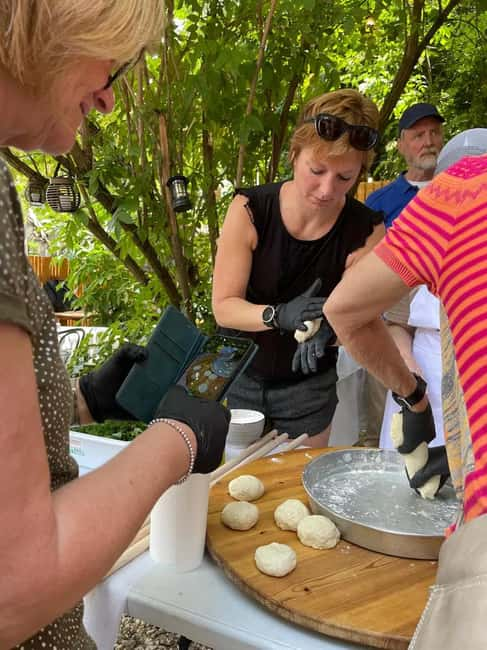
Gjirokastra’s most memorable food may not be found on a restaurant menu. In this two-hour cooking class, you work with a local chef in the Old Bazaar, preparing qifqi rice balls, hand-rolled pasta with lamb, and a seasonal dessert before sitting down to eat. The setting, in an old stone house or family-run guesthouse, adds real character.
I like the focus on family recipes and local ingredients, not just a quick demonstration. I also like that the meal is included, along with drinks and recipe cards. The main drawback is the short schedule: you will learn and eat at a brisk pace, and the class is not suitable for wheelchair users or people with mobility impairments.
Key points to know
- Qifqi is the star lesson: You prepare Gjirokastra’s herb-seasoned rice balls and fry them in a traditional cast-iron mold.
- The main meal is substantial: Hand-rolled pasta with tender lamb is served with qifqi, seasonal salad, dessert, and drinks.
- The setting matters: Cooking takes place in or near the atmospheric Old Bazaar, among cobbled lanes and Ottoman-era buildings.
- The food comes with context: Your host explains family customs, hospitality, herbs, spices, and the stories behind each dish.
- The class suits curious beginners: You do not need to arrive as a trained cook, but expect hands-on work rather than a passive tasting.
- The practical details are flexible: English, Italian, Greek, and Albanian are available, with free cancellation up to 24 hours before the start.
Cooking in Gjirokastra’s Old Bazaar
Gjirokastra is a town best understood on foot, one stone lane at a time. The Old Bazaar gives this class a fitting address, with cobblestones, old Ottoman-era buildings, and the worn-in atmosphere of southern Albania’s historic hill town.
The cooking setting may be an old stone house or a family-run guesthouse tucked into the bazaar. That detail matters. You are not simply seated in a modern kitchen for a timed demonstration. The surroundings help connect the meal to the town, its homes, and the way food is prepared for family and friends.
The class lasts two hours, so the pace is fairly tight. You should expect an efficient sequence of preparation, cooking, and eating rather than a leisurely half-day workshop. That is useful if you are fitting Gjirokastra into a busy Albania itinerary, but it also means there may not be time for long detours into every ingredient or technique.
More Cooking Classes in Albania:
- Tirana: Traditional Cooking Class with Wine & Raki Tasting
★ 5.0 · 284 reviews - Cooking Classes and Traditional food tasting in Tirana
★ 5.0 · 282 reviews - Traditional Albanian Cooking Class in Tirana & Raki Tasting
★ 5.0 · 266 reviews
Qifqi, Gjirokastra’s Herb-Filled Rice Balls
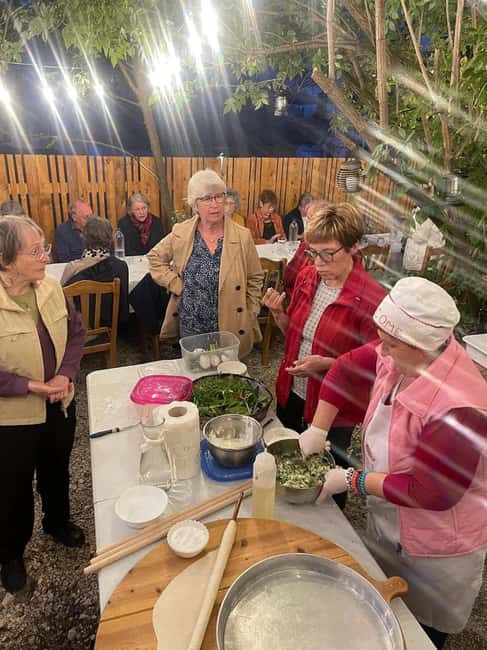
The first major dish is qifqi, a local specialty made from rice, fresh herbs, and seasoning. The rice balls are shaped and fried in a traditional cast-iron mold, a tool closely associated with the dish and the region.
This is the kind of lesson that makes a cooking class worthwhile. You are not only tasting a finished food. You are learning how the dish gets its texture, shape, and flavor. Fresh mint and oregano give qifqi a clear herbal note, while the mold gives the rice balls their familiar form.
You may already know rice dishes from elsewhere in the Balkans, but qifqi has its own identity. The lesson also shows how a few modest ingredients can become a food with a strong local connection. In a home kitchen, the right mold may be hard to find, so pay attention to the method and collect the recipe card carefully.
The class includes the finished qifqi as part of lunch. That lets you compare your work with the host’s technique, though the short format means the emphasis is likely on participation and shared cooking rather than a long technical lesson.
Hand-Rolled Pasta With Slow-Cooked Lamb
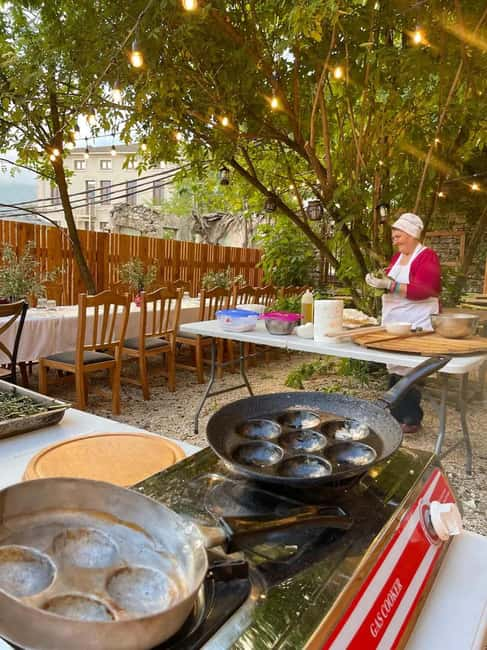
The second main dish is osa me mish qengji, hand-rolled pasta served with tender, slow-cooked lamb. It is a hearty dish, well suited to the mountain traditions of southern Albania and to a meal meant to be shared around a table.
The pasta is the hands-on part. You learn how the dough is handled and shaped, while the lamb brings the deeper flavor to the plate. Local spices connect the dish to the area’s food traditions, and the slow cooking gives the meat a comforting, substantial quality.
This course makes the class more than a snack-making session. Along with qifqi, it gives you a full taste of Gjirokastrian cooking: herb-filled rice, handmade pasta, lamb, salad, and something sweet at the end.
One practical point is worth keeping in mind. If you prefer a light lunch, this may feel like a large meal for a two-hour activity. The pasta and lamb are the centerpiece, and the class is designed to feed you properly, not simply offer a few small samples.
A Seasonal Dessert and the Logic of Albanian Meals
Dessert depends on the season and on what fresh ingredients are available. You might prepare a fruit compote with local honey and nuts, or a traditional sweet such as sheqerpare.
That flexibility is a positive feature for a food-focused experience. The dessert is not treated as a fixed factory-style item that must appear in every season. Instead, the final course can reflect what is available locally at the time of your visit.
You may also hear about how ingredients are dried, preserved, and blended. Herbs and spices are not just added at random. They form part of a household system, with food prepared for the season and stored for later use.
The class also places the food within Albanian hospitality. Your host explains the role of meals in family life, the meaning attached to certain ingredients, and the way recipes pass from one generation to the next. Those details help you understand why a dish such as qifqi matters beyond its ingredients.
Same region, a different dish to learn:
- Berat Cooking Class
★ 4.9 · 131 reviews - Traditional Albanian Cooking Class in Tirana with Raki Tasting
★ 5.0 · 125 reviews - Tirana Cooking Class – Traditional Albanian Recipes
★ 5.0 · 33 reviews - The secrets of Albanian cuisine: cooking lesson in Tirana
★ 5.0 · 21 reviews
The Meal: Salad, Drinks, Tea, and Raki
After the cooking, you sit down to eat the meal you helped prepare. Lunch includes the pasta with lamb, qifqi, a seasonal salad, and dessert.
Drinks are included as well. Depending on the arrangement, you can have wine, tea, or raki. Raki is a traditional Albanian spirit, so this is a chance to try it in the setting where it belongs, though you can choose tea if alcohol is not your preference.
The shared table is an important part of the experience. Food in Albania is closely tied to welcome and conversation, and the meal gives you time to talk with your host and the other people in the class.
The strongest praise attached to this experience focuses on the host’s friendliness and the quality of the food. That combination matters. A cooking class can have a good menu but feel stiff, or a warm host but ordinary food. Here, the available feedback points most clearly to a friendly welcome and an enjoyable meal, with one verified booking describing the class as very private.
That private feel may appeal to you if you want personal contact rather than a large group production. At the same time, the advertised information does not promise a particular group size, so do not book expecting a guaranteed one-to-one lesson.
What You Learn Beyond the Recipes
The recipes are the practical core, but the cultural material gives the class its wider value. Your host discusses family secrets, folklore, hospitality, and the way cooking practices have changed while remaining tied to tradition.
You also learn about local herbs and spices, including how they are dried, preserved, and combined. This is useful for anyone who enjoys cooking at home because it gives you a better sense of how flavor is built gradually, rather than simply telling you which ingredients to buy.
The class is also a good way to place Gjirokastra’s food within southern Albania. The lamb, herbs, handmade pasta, and preserved ingredients reflect a cuisine shaped by local produce and mountain surroundings. You are not getting a general Albanian cooking lesson with a few regional names added at the end. The menu is centered on dishes associated with Gjirokastra.
Still, expectations should remain sensible. A two-hour session cannot cover every cooking technique or give you a full course in Albanian food history. Think of it as a focused introduction, built around three dishes and a shared meal.
Recipe Cards Make the Experience Last Longer
Before leaving, you receive written recipes for the food prepared during the class. This is a small but useful inclusion.
Without written instructions, a cooking class can fade into a pleasant memory. Recipe cards give you a way to try qifqi, the lamb pasta, or the dessert at home. You may not have the same cast-iron mold for qifqi, and ingredients can vary outside Albania, but the cards help you remember the method and proportions.
If you enjoy bringing food memories home, keep the cards with your travel notes. Write down any extra advice from the host while it is fresh, especially details about herbs, seasoning, and the texture the dishes should have when ready.
Is $73 a Fair Price?
At $73 per person, the price is not bargain-level for a two-hour activity in Albania. But the comparison should not be made with the cost of a simple restaurant lunch.
The fee includes instruction, hands-on preparation, a full lunch, a seasonal salad, dessert, drinks, tea or raki, and recipe cards. You are also paying for access to a local host and a historic setting in the Old Bazaar. If you would otherwise pay separately for a good meal and a cultural activity, the value becomes more reasonable.
The price makes the most sense for you if you care about the process as much as the plate. If you only want to eat qifqi and lamb pasta, you may find a restaurant meal cheaper and faster. If you want to understand how the dishes are made and hear the stories tied to them, the added cost is easier to justify.
The friendly host and enjoyable food are the clearest strengths in the available feedback. Since the overall rating is mixed at 3.2 from four ratings, I would keep expectations measured. This is a compact, personal food experience, not a polished culinary school or a long chef-led course.
Who Should Book This Class?
I would recommend it most strongly to:
- People who want a local meal with cultural context
- Curious beginners who enjoy hands-on cooking
- Couples and small groups looking for a shared activity
- Food-focused visitors with only a short window in Gjirokastra
- Anyone who wants to take regional recipes home
- Visitors interested in Albanian hospitality and family cooking traditions
You should think twice if you dislike lamb, avoid alcohol and want no alternative drinks, or prefer a relaxed class with plenty of time for questions. The meal includes lamb and the schedule is only two hours, so the experience will not suit every eating style or travel rhythm.
The activity is not suitable for wheelchair users or people with mobility impairments. Gjirokastra’s old bazaar setting, with its historic streets and stone-built surroundings, is an important part of the appeal, but it may also make movement difficult.
Timing, Languages, and Cancellation
Starting times vary, so check availability before you book. The two-hour length works well before or after sightseeing in Gjirokastra, especially if you want to keep the rest of the day open for the town’s other sights.
Instruction is available in English, Italian, Greek, and Albanian. That gives you a useful choice, though the supplied information does not name a specific chef or guide. If language is important to your decision, select the language you need when checking the available session.
You can cancel up to 24 hours in advance for a full refund. You can also reserve now and pay later, which helps if your Albania route is still changing.
Should You Book Cook Like a Local?
Book this class if you want to cook regional food, eat a proper meal, and meet a local host in one of Gjirokastra’s most atmospheric areas. The qifqi lesson, lamb pasta, seasonal dessert, and recipe cards give the experience a clear shape, while the food stories add meaning to the meal.
Skip it if you want a long, highly technical cooking course, a guaranteed private class, or an activity suited to limited mobility. For everyone else, the best reason to book is simple: you leave with a full lunch, a few useful recipes, and a better sense of how food fits into daily life in southern Albania.
FAQ
How long does the cooking class last?
The class lasts two hours. Check availability for the specific starting time.
What dishes will I prepare?
You will prepare qifqi, savory rice balls flavored with herbs, hand-rolled pasta with slow-cooked lamb, and a seasonal Albanian dessert.
What is included with lunch?
Lunch includes the pasta with lamb, qifqi, seasonal salad, and dessert. Drinks, tea, or raki are also included.
Where does the class take place?
The class takes place in Gjirokastra’s Old Bazaar, a UNESCO World Heritage site. The cooking setting may be an old stone house or a family-run guesthouse in the bazaar.
Which languages are available?
Instruction is available in English, Italian, Greek, and Albanian.
Can I cancel the booking?
Yes. You can cancel up to 24 hours in advance for a full refund.
Is the activity suitable for wheelchair users?
No. The activity is not suitable for wheelchair users or people with mobility impairments.
Newest classes around Albania
- Family Mandarin Farming Tour with Traditional Cooking Lunch★ 4.5 · 9 reviews
- Gourmet Lunch Farm Tour with Cooking Class★ 4.5 · 8 reviews
- Tirana Cooking Class – Traditional Albanian Recipes★ 5.0 · 33 reviews
- The secrets of Albanian cuisine: cooking lesson in Tirana★ 5.0 · 21 reviews
- Gjirokastër: Traditional Albanian Vegetarian Cooking Class★ 4.4 · 17 reviews
- Berat: Farm-to-Table Cooking Class with Local Family★ 5.0 · 6 reviews
- Berat: Traditional Cooking Class with Wine Tasting★ 5.0 · 5 reviews
- Berat: Discover Albania with Cooking Class w/ Drink Tastings★ 5.0 · 19 reviews
Albania Cooking Classes, compared.
Tirana: Traditional Cooking Class with Wine & Raki Tasting
Read our review →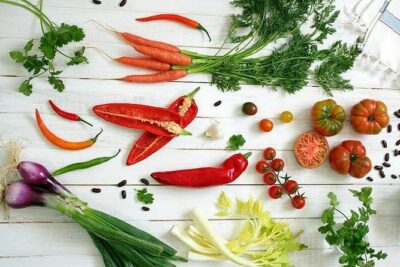
Cooking Classes and Traditional food tasting in Tirana
Read our review →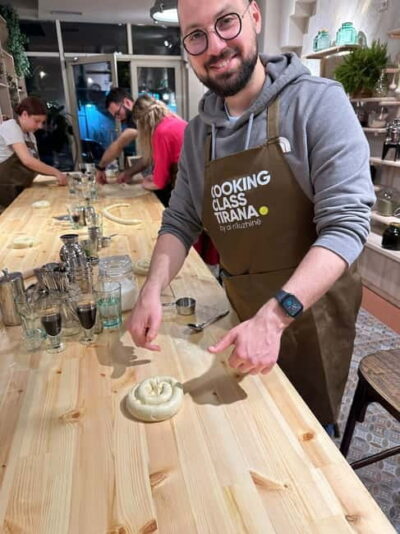
Traditional Albanian Cooking Class in Tirana & Raki Tasting
Read our review →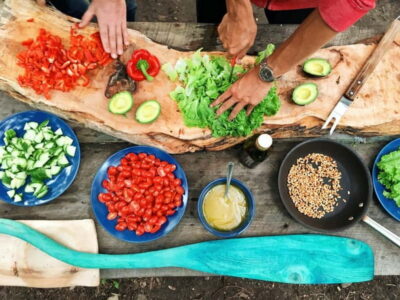
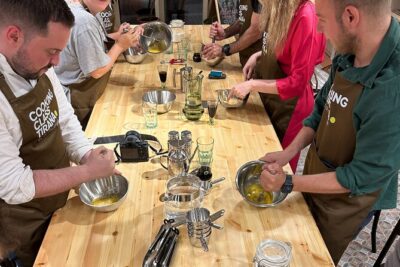
Traditional Albanian Cooking Class in Tirana with Raki Tasting
Read our review →
Tirana Cooking Class – Traditional Albanian Recipes
Read our review →
The secrets of Albanian cuisine: cooking lesson in Tirana
Read our review →
Berat: Discover Albania with Cooking Class w/ Drink Tastings
Read our review →Browse the lists this tour appears in