
Review · ALBANIA COOKING CLASSES
Berat: Traditional Cooking Class with Wine Tasting
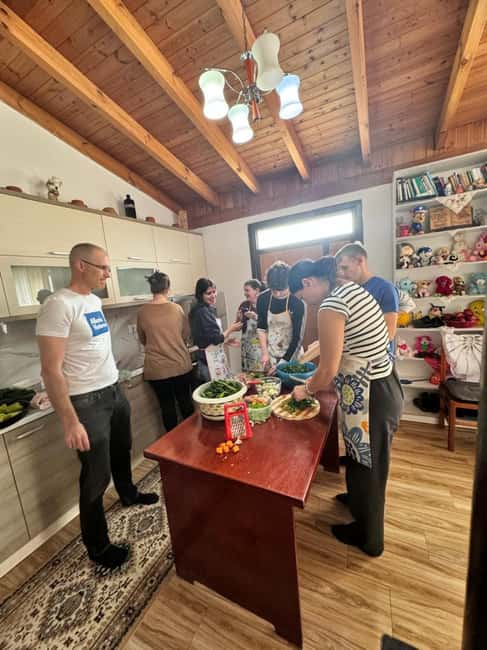
The best part of this Berat experience is that the cooking happens in a local family setting, not just a classroom. You prepare three Albanian dishes, sit down to eat them together, and get a personal look at how food, family, and hospitality fit together in Berat.
I like the hands-on work with seasonal ingredients, and I like the small group size, limited to 10 people. The local wine and two raki tastings add useful context to the meal, especially if you want to understand Albania beyond its restaurant menus.
The main consideration is that this is a social family meal as much as a cooking lesson. Translation is available in English, but conversations may move between family members, so you should book it for warmth and cultural contact rather than a highly technical chef-led course.
Key points to know before booking
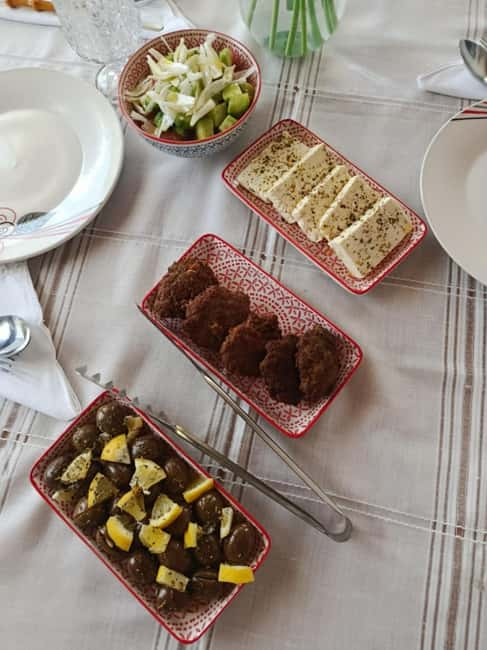
- Cook three traditional Albanian dishes: The menu can include byrek, meatballs, stuffed peppers, tavë kosi, fërgesë, or lakror.
- Meet a welcoming local family: Xhulia and her mother have hosted cooking sessions, with family members helping make communication easy.
- Taste Berat-area wine and raki: The standard tasting includes one wine and two raki, with grape, plum, or mulberry spirits depending on the day.
- Eat what you prepare: The class ends with a shared meal, which gives the recipes a practical and tasty finish.
- Keep the group small: No more than 10 people join, and hotel or guesthouse pickup in Berat may be arranged.
- Take home useful extras: You receive a photo from the activity and the cooking recipes afterward.
Cooking with a Berat family
This experience gives you a different way to meet Berat. Instead of spending the whole evening looking at Ottoman-era houses and stone streets, you spend several hours at a family home, preparing food with people who cook it as part of ordinary life.
That setting matters. Albanian dishes often carry family habits, regional preferences, and stories that do not appear on a restaurant menu. As you work, your host explains the cultural meaning behind the recipes. The result feels less like a formal demonstration and more like being invited into someone’s kitchen.
The cooking group is capped at 10 people, which is a sensible size for a shared kitchen. You should have a better chance to handle ingredients, ask questions, and watch the preparation than you would in a large class. Still, this is a family-led activity, so the pace may depend on the menu and the rhythm of the household.
The people involved can include Xhulia and her mother, while other family members help with welcoming visitors and translation. The warm family atmosphere is one of the strongest reasons to choose this activity. It also means you should arrive ready to talk, laugh, and share the table, not just follow instructions silently.
More Cooking Classes with Wine Tasting in Albania:
- Tirana: Traditional Cooking Class with Wine & Raki Tasting
★ 5.0 · 284 reviews - Florence: Pasta Cooking Class with Unlimited Wine
★ 4.9 · 10,285 reviews - Florence: Pasta & Tiramisu Cooking Class with Unlimited Wine
★ 4.9 · 6,708 reviews
Three Albanian dishes, with the menu changing by day
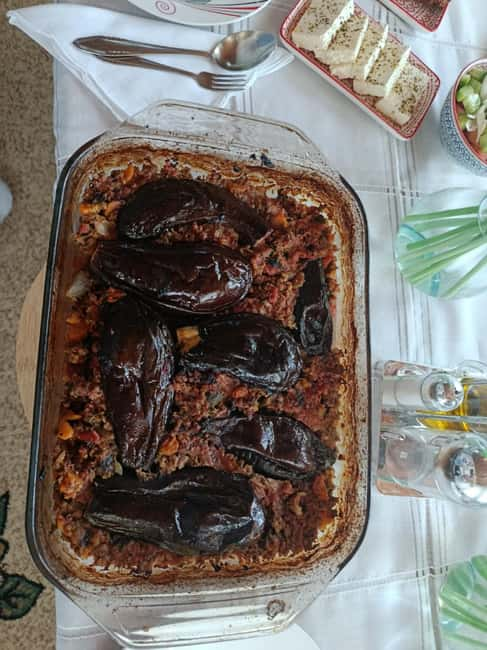
The class includes preparation of three traditional dishes. The exact combination can vary, but possible choices include byrek, meatballs, stuffed peppers, tavë kosi, fërgesë, and lakror.
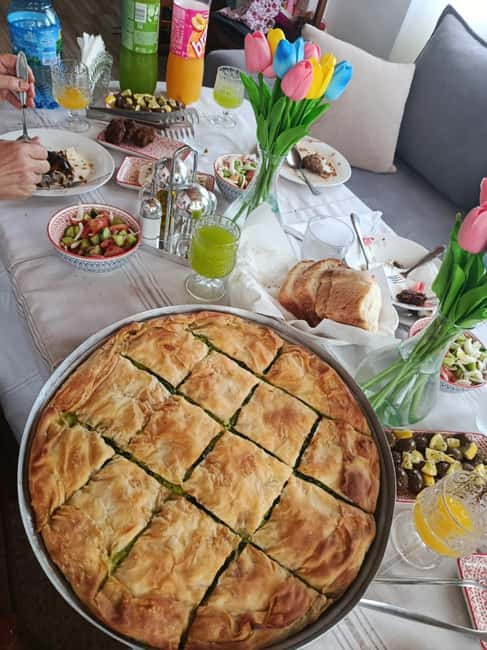
Byrek is one of the most familiar Albanian foods for visitors. It is a filled pastry, and making it yourself helps you appreciate the work behind something that can look simple when served in a bakery or restaurant. The filling and preparation style may vary with the day’s menu.
Stuffed peppers offer another useful lesson in home cooking. They show how vegetables can become the center of a substantial meal, while meatballs bring a more familiar format with local seasoning and preparation. You may also prepare tavë kosi, a well-known Albanian baked dish made with lamb and yogurt, though the exact menu is not guaranteed.
Fërgesë and lakror give the class a wider regional range. Fërgesë is associated with a thick, savory mixture often made with peppers, tomatoes, and cheese, while lakror is a traditional filled pie. The point is not to cover every Albanian dish in one afternoon. It is to learn a few recipes well enough to understand their place at an Albanian table.
Fresh, seasonal ingredients are used, so the menu is not completely fixed. That is a benefit if you want food connected to the season, but it is worth noting if you have your heart set on one particular dish. Ask ahead if there is something you especially want to prepare.
You are not simply watching a host cook. You take part in the preparation, then eat the finished food with the family. That shared meal is important because it lets you taste the difference between a recipe explained in theory and one prepared in the setting where it belongs.
The wine and raki tasting while the food cooks
While your dishes are simmering or baking, you take part in a guided tasting of local drinks. The listed tasting includes one wine and two raki, with the wine selection depending on the menu and what is available from the Berat area.
The wine discussion may include native grapes such as Puls, Shesh i Zi, Shesh i Bardhë, or Kallmet. These names are useful to remember if you plan to visit Albanian wine shops or wineries later in your trip. You also learn how the wine works with the food, rather than tasting it as an unrelated extra.
The tasting is modest, not a winery tour. You should expect a guided introduction to local varieties during the cooking session, not a long series of formal pours. That keeps the focus on the meal and the family setting.
Then comes raki, Albania’s famous fruit spirit. The samples may be made from grapes, plums, or mulberries. The type depends on what is being served, but the stories behind the drink are part of the activity. Raki is tied to welcome, family gatherings, and traditional hospitality, so tasting it here gives the drink more meaning than ordering a small glass at a bar.
Use some care with the alcohol. You receive one wine and two raki tastings, and the meal follows, but the experience is still a poor match for anyone avoiding alcohol. The host can explain the drinks in English, and the small group makes it easier to ask about production and local customs.
A four-hour evening with a shared meal
The full activity takes about four hours, with roughly three and a half hours devoted to the cooking class in Berat. The usual meeting point is the Qato Tours office, though pickup from a hotel or guesthouse in Berat can be arranged.
The session begins with the journey to the cooking location and a welcome from the family. In some cases, this is a short ride to a family courtyard or home outside the immediate town setting. Once you arrive, the class moves into food preparation, conversation, and the tasting.
The timing works well for an afternoon or evening plan. You have enough time to prepare several dishes without turning the session into a rushed demonstration. Food takes time to cook, and that pause gives room for the wine and raki portion.
After cooking, everyone sits down to eat. This is where the activity shifts from lesson to shared hospitality. You can compare what you made with the way the family serves it, ask about the dishes, and enjoy a meal that came directly from your own work.
Past participants have also received restaurant and bar suggestions, and a ride back into the city may be available. Treat that as a helpful possibility rather than a guaranteed part of the main program, since the stated inclusions are the class, tastings, photo, and recipes.
More Food and Drink Outings in Albania:
- Cooking Classes and Traditional food tasting in Tirana
★ 5.0 · 282 reviews - Traditional Albanian Cooking Class in Tirana & Raki Tasting
★ 5.0 · 266 reviews - Traditional Albanian Cooking Class in Tirana with Raki Tasting
★ 5.0 · 125 reviews - Small Group Cooking Class & Market Food Tour in Florence
★ 5.0 · 1,574 reviews
Why the family setting matters in Berat
Berat is a UNESCO World Heritage City, known for its historic houses and hillside setting. A cooking class adds a human side to that visit. You are not only looking at preserved buildings. You are spending time with a family and learning how food helps carry local customs forward.
The strongest part of the experience is the welcome. The family can include several generations, and that changes the tone from a standard paid activity to a personal exchange. The shared laughter and conversation are not decorative extras. They are the reason the class feels connected to daily Albanian life.
English is the stated tour language. Family members may assist with translation, including the organizer’s daughter or other relatives, so communication is made easier when several people are present. You should still expect some informal back-and-forth rather than a polished, scripted presentation.
That balance will suit you if you enjoy meeting people and learning through conversation. It may be less suitable if you want a precise culinary curriculum, professional equipment, or a chef who explains every technique in formal detail.
What you get for $45
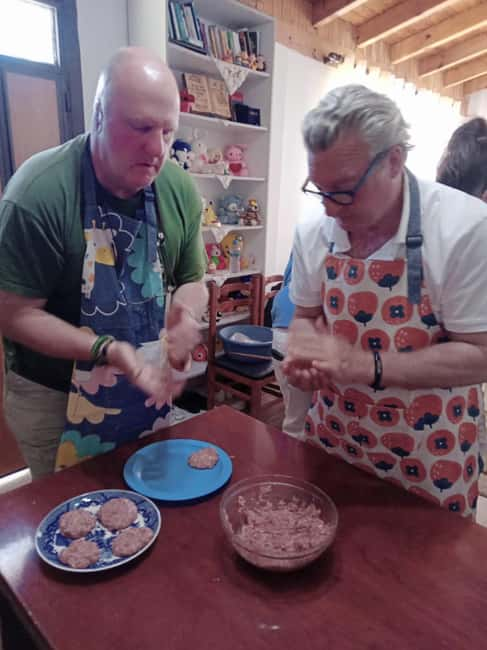
At $45 per person, the price includes a four-hour experience, hands-on preparation of three dishes, a shared meal, one local wine, two raki tastings, recipes, and a photo from the activity. The value is strongest if you would otherwise pay separately for dinner, drinks, and a guided cultural activity.
The meal is not an afterthought. You help prepare it, then eat with the family, so the food has both practical and social value. The recipes also give you something useful to take home, especially if you want to repeat a dish after your Albania trip.
A formal cooking school might give you more detailed technique and better control over the menu. This activity offers something different: access to a local household, family stories, regional drinks, and a meal shared with the people who prepared it. For many visitors, that is a fair exchange for the $45 cost.
The price also becomes more attractive for solo visitors or couples who want an evening activity that does not feel like another restaurant meal. Since the group is limited to 10, you are paying for a small-group setting rather than a large tour bus experience.
Who will enjoy this most
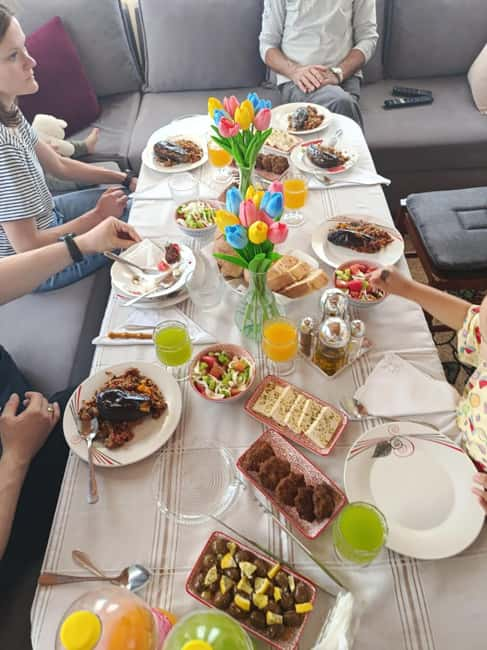
I would recommend this class to you if food is one of your main ways of understanding a place. You will get the most from it if you enjoy asking questions, trying unfamiliar dishes, and sitting at a table with people you have just met.
It is also a good fit for couples, families, and small groups who want a relaxed cultural activity in Berat. The hands-on format gives children and adults something to do, though the alcohol tasting means the adults will be the main participants in that portion.
Wine fans and anyone curious about raki will find extra value in the tasting. You may not become an expert on Albanian grapes in one sitting, but you will leave knowing more about Puls, Shesh i Zi, Shesh i Bardhë, Kallmet, and fruit-based raki than you did before.
You should think twice if you need strict dietary control or a fixed menu, since the dishes depend on the day. The available information does not set out a vegetarian, vegan, gluten-free, or allergy-specific menu, so ask before booking if that matters to you.
Comfortable clothes and shoes are the sensible choice. Cooking can be messy, and the activity lasts several hours. Wheelchair access is listed, but you should confirm the practical arrangements for the specific pickup and cooking location when you reserve.
Useful planning details before you go
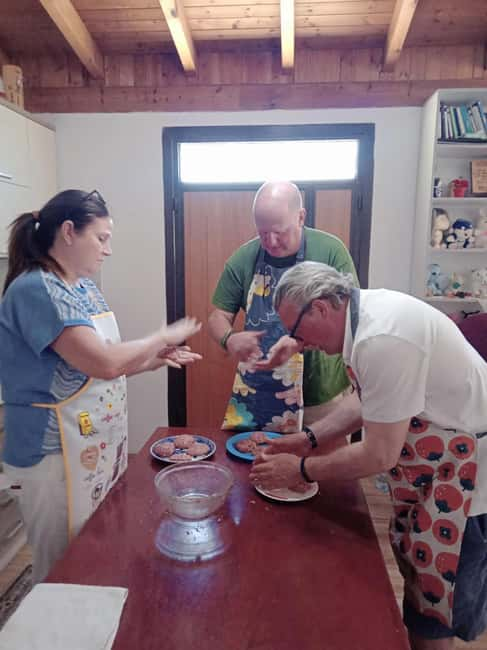
The meeting point is the Qato Tours office, with flexible pickup from a hotel or guesthouse in Berat. Confirm the pickup arrangement rather than assuming it is automatic.
The activity is offered in English and uses a small group of up to 10 participants. Starting times depend on availability, so check the schedule when booking. Four hours is a meaningful part of your day, but it is long enough for cooking, tasting, eating, and conversation without cramming everything together.
You can cancel up to 24 hours in advance for a full refund, and the reserve-now, pay-later option keeps your plans flexible. Those terms are useful in Berat, where you may be arranging several day trips around weather and transport.
The class is wheelchair accessible according to the activity information. Because the session may take place at a family home or courtyard, ask the operator about the exact route and surfaces if you need detailed access information.
At the end, you receive a photo from the activity and the recipes. The photo is a small touch, but it helps preserve the family connection. The recipes are the more practical souvenir, since they let you bring a taste of Berat into your own kitchen.
Should you book this Berat cooking class?
Book it if you want a personal family welcome, hands-on food preparation, and a shared Albanian meal rather than a polished restaurant performance. The combination of three dishes, local wine, raki, recipes, and a four-hour visit makes the $45 price reasonable.
Choose another activity if you want a fixed menu, advanced culinary training, or a full winery visit. For everyone else, this is one of the better ways to spend an evening in Berat: you cook, talk, taste, and leave with food memories that a standard sightseeing walk cannot provide.
FAQ
Where does the cooking class take place?
The experience takes place in Berat, in a local family setting. You meet at the Qato Tours office, and pickup from a hotel or guesthouse in Berat may be arranged.
How long does the activity last?
The full experience lasts about four hours. The cooking class itself takes approximately three and a half hours.
How many dishes will I prepare?
You will help prepare three traditional Albanian dishes. Possible dishes include byrek, meatballs, stuffed peppers, tavë kosi, fërgesë, and lakror.
Is the menu fixed?
No. The menu can vary by day and by the seasonal ingredients available. Ask ahead if you need a specific dish or have dietary requirements.
What drinks are included?
The tasting includes one local wine and two raki. The wine may feature grapes such as Puls, Shesh i Zi, Shesh i Bardhë, or Kallmet, while the raki may be made from grapes, plums, or mulberries.
Is the activity offered in English?
Yes. The live tour guide language is English, and family members may help with translation during the cooking and meal.
Is the activity suitable for wheelchair users?
The activity is listed as wheelchair accessible. You should still confirm the exact pickup and cooking location if you need detailed access information.
What happens if I need to cancel?
You can cancel up to 24 hours in advance for a full refund. You can also reserve now and pay later, which keeps your plans flexible.
Newest classes around Albania
- Family Mandarin Farming Tour with Traditional Cooking Lunch★ 4.5 · 9 reviews
- Gourmet Lunch Farm Tour with Cooking Class★ 4.5 · 8 reviews
- Tirana Cooking Class – Traditional Albanian Recipes★ 5.0 · 33 reviews
- The secrets of Albanian cuisine: cooking lesson in Tirana★ 5.0 · 21 reviews
- Gjirokastër: Traditional Albanian Vegetarian Cooking Class★ 4.4 · 17 reviews
- Cook Like a Local – Authentic Cooking Class in Gjirokastra★ 3.2 · 4 reviews
- Berat: Farm-to-Table Cooking Class with Local Family★ 5.0 · 6 reviews
- Berat: Discover Albania with Cooking Class w/ Drink Tastings★ 5.0 · 19 reviews
Albania Cooking Classes, compared.
Tirana: Traditional Cooking Class with Wine & Raki Tasting
Read our review →
Cooking Classes and Traditional food tasting in Tirana
Read our review →
Traditional Albanian Cooking Class in Tirana & Raki Tasting
Read our review →
Traditional Albanian Cooking Class in Tirana with Raki Tasting
Read our review →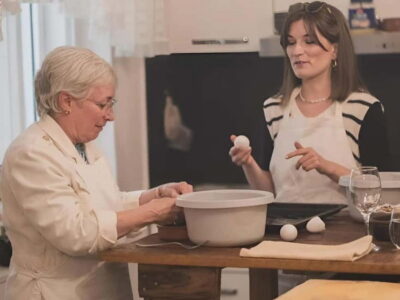
Tirana Cooking Class – Traditional Albanian Recipes
Read our review →
The secrets of Albanian cuisine: cooking lesson in Tirana
Read our review →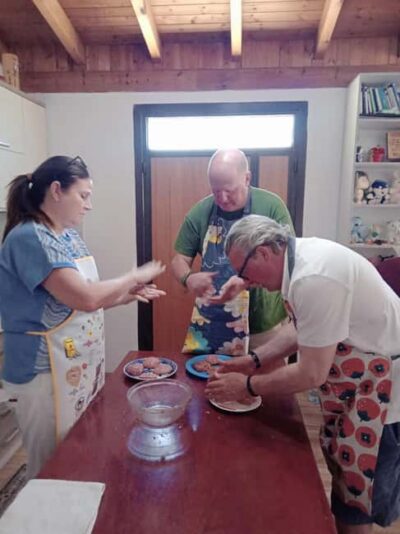
Berat: Discover Albania with Cooking Class w/ Drink Tastings
Read our review →Browse the lists this tour appears in